
Achilles Tendinitis: What It Is and How to Find Relief
December 5, 2025
The Shoulder Shocker: Unraveling Nerve Pain Mysteries
December 8, 2025
Back pain specialist MN: Ultimate Relief 2025
Why Finding the Right Back Pain Specialist MN Matters for Your Recovery
Back pain affects four out of five Americans at some point, and whether you’re dealing with a sudden injury or years of chronic discomfort, the right care is crucial. While general care is a good starting point, a back pain specialist MN clinic offers targeted expertise that can transform your journey from discomfort to lasting relief.
A specialist brings focused experience to diagnose the precise source of your pain—whether it’s a herniated disc, degenerative changes, or a muscle strain. They use advanced diagnostic tools like MRI and CT scans, offer a full spectrum of treatments from physical therapy to targeted injections, and know exactly when surgical intervention is the best path forward.
This guide will walk you through understanding your back pain, finding the right specialist, exploring treatment options, and taking concrete steps toward recovery—all within Minnesota’s network of spine care providers.
I’m Dr. Corey Welchlin, a board-certified orthopedic surgeon and founder of the Center for Specialty Care in Fairmont, Minnesota. Since 1990, I’ve served as the region’s first permanent orthopedic surgeon, specializing in spinal decompression and minimally invasive techniques. My team and I have helped thousands of patients throughout southern Minnesota and northern Iowa find relief, becoming the trusted back pain specialist MN patients rely on for comprehensive orthopedic care.
Understanding the Source of Your Back Pain
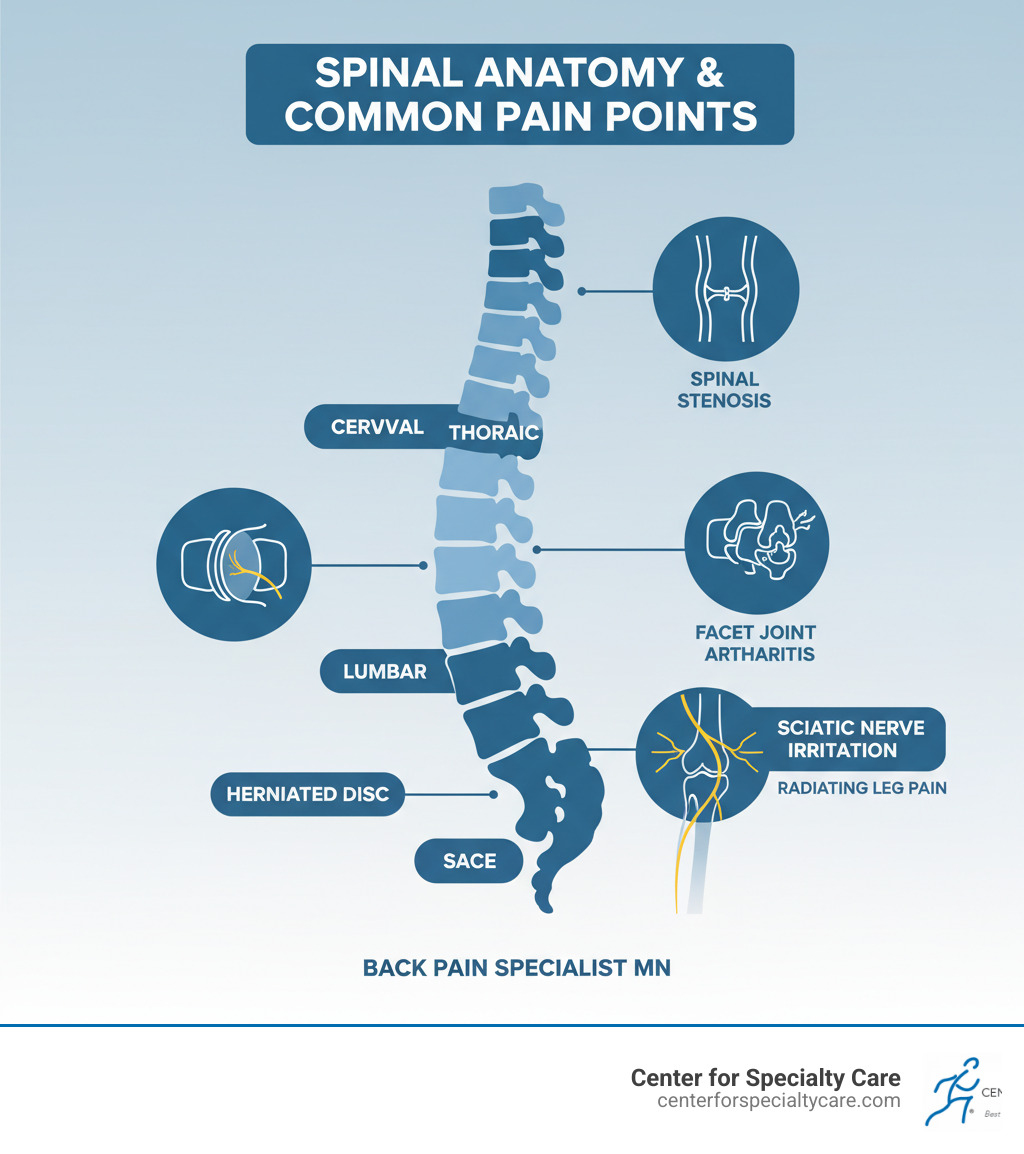
Back pain can stop you in your tracks. It might be a sudden, sharp pain from lifting something, or a dull ache that has crept in over years. Because back pain isn’t one-size-fits-all, finding a qualified back pain specialist MN to pinpoint the exact cause is the first step toward recovery.
A key distinction is acute versus chronic pain. Acute pain arrives suddenly and usually resolves within a few weeks with rest and proper care. Chronic pain persists for three months or longer, often indicating a more complex underlying issue.
Common causes we treat include:
- Muscle strains and ligament sprains: These occur when you overstretch or tear the muscles or ligaments supporting your back. The pain can be intense, but these injuries typically heal well with proper care.
- Degenerative disc disease: As we age, the cushioning discs between our vertebrae can lose hydration and elasticity, leading to pain and stiffness. While it’s a normal part of aging, it can be very uncomfortable. You can learn more about this and other common spinal conditions here.
Understanding the cause of your pain is the first step toward effective treatment. That’s where specialized diagnostic expertise becomes invaluable.
Specific Conditions Frequently Treated at Center for Specialty Care
At Center for Specialty Care, our back pain specialist MN team regularly treats a wide range of conditions that cause back and neck pain.
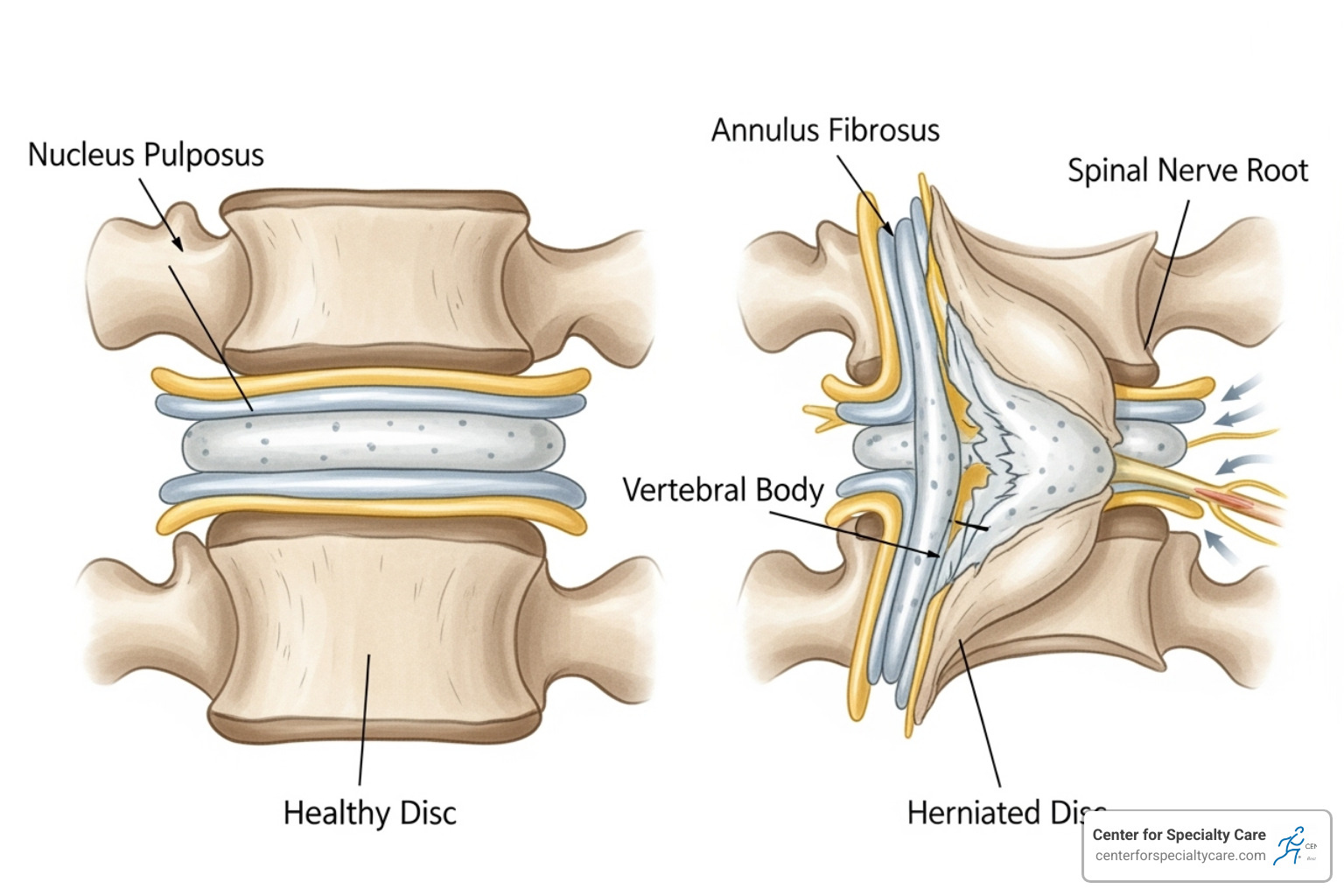
- Herniated lumbar discs occur when a spinal disc’s soft center pushes through its tough outer layer, often pressing on nerves and causing localized or radiating pain.
- Sciatica is not a condition itself, but a symptom of nerve compression—usually from a herniated disc or spinal stenosis. It causes sharp, shooting pain that travels from the lower back down the leg. We offer guidance on managing radiating pain like sciatica.
- Spinal stenosis is the narrowing of spaces within your spine, which puts pressure on the spinal cord and nerves. This can cause pain, numbness, or weakness, particularly in the legs.
- Vertebral compression fractures are collapses in the bones of your spine, often resulting from osteoporosis or trauma. They can cause sudden, severe pain and may lead to a stooped posture.
- Whiplash injuries, common in car accidents, happen when the head is jerked forcefully, straining the soft tissues in the neck and upper back and causing lasting pain and stiffness.
Each of these conditions requires a unique treatment approach, which is why an accurate diagnosis from a specialist is so crucial.
Your Team of Experts: Finding the Right Back Pain Specialist MN
When back pain persists, it may be time to see a specialist. While your primary care provider is an excellent starting point, a back pain specialist MN clinic offers concentrated expertise. Spine specialists work with back and neck conditions daily, allowing them to recognize patterns quickly and stay current on the latest treatments.
At Center for Specialty Care, we’ve built our practice around this specialized, multidisciplinary approach. Our 100% patient satisfaction rating reflects our commitment to personalized care and getting you seen quickly. Your orthopedic surgeon, pain management physician, and physical therapist collaborate to explore every option, from conservative therapies to advanced procedures, all coordinated under one roof. You can learn more about our orthopedic services here.

Types of Specialists for Your Back Pain
Your care team may include several types of specialists, each with unique expertise:
- Physiatrists (Physical Medicine & Rehabilitation physicians) specialize in non-surgical treatments, focusing on rehabilitation and pain management to restore function.
- Orthopedic surgeons are experts in the entire musculoskeletal system, including the spine. While trained as surgeons, they explore every conservative option first. When you need an expert bone specialist doctor, an orthopedic surgeon provides both surgical and non-surgical wisdom.
- Pain management physicians specialize in diagnosing and treating pain, often using interventional procedures like targeted injections and nerve blocks for relief.
- Physical therapists are essential partners in recovery. They guide you through exercises to strengthen muscles, improve flexibility, and restore proper movement.
What to Look for in a Back Pain Specialist MN
When choosing your back pain specialist MN, consider the following:
- Board Certification: This ensures your physician has met rigorous training and examination standards in their specialty.
- A Conservative-First Philosophy: The best specialists explore non-surgical options thoroughly before considering surgery. Surgery is a powerful tool, but it isn’t always the first or best answer.
- Personalized Treatment Plans: Your condition, lifestyle, and goals are unique. Your treatment should be too, not a cookie-cutter approach.
- Access to Advanced Diagnostics: Accurate diagnosis requires tools like MRI, CT scans, and X-rays to pinpoint the source of your pain.
- A Multidisciplinary Approach: A team of specialists collaborating on your case often leads to better, more comprehensive outcomes.
- Patient-Centered Care: This means quick appointment availability, clear communication, and a genuine commitment to your satisfaction. We invite you to learn more about our providers and their approach to patient care.
The Path to Relief: Diagnosis and Non-Surgical Treatments
Relief from back pain begins with a precise diagnosis. Your journey at Center for Specialty Care starts with a conversation. Our back pain specialist MN team listens to your symptoms, how they affect your life, and what you’ve tried before. This is followed by a thorough physical exam and a review of your medical history to get a complete picture of your health.
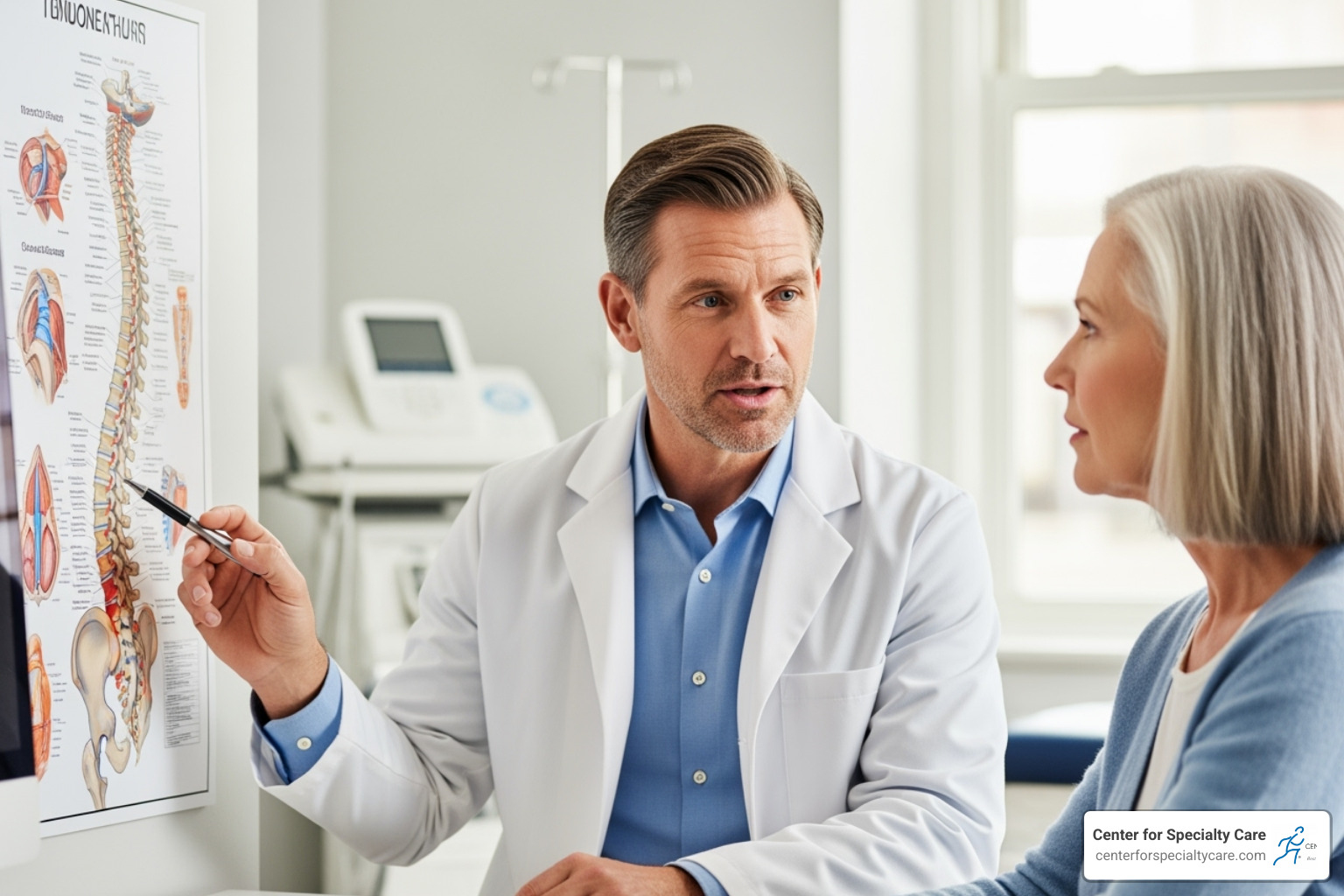
Diagnostic Methods Used by a Back Pain Specialist MN
To find the root cause of your pain, we use advanced diagnostic tools:
- X-rays show bones, revealing fractures, arthritis, or alignment issues.
- MRI scans provide detailed images of soft tissues like discs, ligaments, and nerves, ideal for identifying herniation or stenosis.
- CT scans create cross-sectional views, offering exceptional detail of bone structures.
- Electromyography (EMG) and nerve conduction studies measure electrical activity to detect nerve damage.
- Diagnostic injections use an anesthetic to confirm if a specific joint or nerve is the source of your pain.
This helpful video explains when to seek treatment for back pain and what signs to watch for.
Conservative and Interventional Pain Management
Once we have a diagnosis, we focus on non-surgical treatments. Research shows that 87 percent of spine patients find relief through conservative therapies.
- Physical therapy is the foundation of most plans, strengthening core muscles and improving flexibility.
- Medication management may include anti-inflammatories, muscle relaxants, or nerve pain medications to control symptoms.
- Interventional procedures deliver medication directly to the source of pain. These include epidural steroid injections for inflammation, facet joint injections for arthritic joints, and nerve blocks to interrupt pain signals. For longer-lasting relief, radiofrequency ablation uses heat to disable specific pain-sensing nerves.
These minimally invasive procedures are performed in our clinic, allowing you to return home the same day. Learn more on our pain management page. Simple stretches like the knee-to-chest, cat-cow, and pelvic tilts can also complement your professional treatment.
The Crucial Role of Physical Therapy and Rehabilitation
Physical therapy is often the key to lasting relief. It helps you rebuild strength, restore function, and prevent future injuries. A therapist guides you in strengthening core muscles to support your spine, improving flexibility to ease movement, and enhancing mobility for daily activities. Most importantly, physical therapy provides patient education on proper posture and body mechanics, empowering you to manage your spinal health long-term. Our physical therapy team works hand-in-hand with our physicians to ensure your care is coordinated and effective. Learn more about the role of physical therapy in comprehensive care.
When is Surgery the Answer? Advanced Spine Interventions
While most patients won’t need surgery, it can be a transformative option when conservative treatments fail to provide relief. At Center for Specialty Care, our back pain specialist MN team and orthopedic surgeons view surgery as a carefully considered tool, not a first resort.
Surgery may be recommended in these scenarios:
- Failure of conservative treatments: If months of physical therapy, medications, and injections haven’t brought meaningful improvement.
- Progressive neurological symptoms: Worsening numbness, leg weakness, or loss of bladder/bowel control suggest nerve compression that may require urgent surgical attention.
- Severe, debilitating pain: When pain prevents you from working, caring for family, or living your life, surgery can offer a path back to normalcy.
- Specific structural problems: Conditions like severe spinal stenosis, unstable fractures, or certain herniated discs may require surgical correction.
If you’re exploring your options, we encourage you to find an expert orthopedic surgeon with experience in spinal procedures.
Common and Innovative Surgical Procedures at Center for Specialty Care
Modern spinal surgery is more precise and less invasive than ever before, designed to get you back on your feet faster.
- Minimally Invasive Surgery: Uses small incisions and specialized tools to reduce muscle damage, shorten hospital stays, and speed up recovery.
- Discectomy: Removes the portion of a herniated disc pressing on a nerve, relieving sciatica. The microdiscectomy version is a common minimally invasive option.
- Laminectomy: Creates more space for the spinal cord and nerves by removing a small piece of vertebral bone, which is highly effective for spinal stenosis.
- Spinal Fusion: Permanently connects two or more vertebrae to eliminate painful motion, providing stability for conditions like degenerative disc disease or spondylolisthesis.
- Kyphoplasty: A minimally invasive procedure for vertebral compression fractures. A balloon restores the vertebra’s height, and bone cement provides stability, often resulting in dramatic pain relief. This technique has revolutionized spinal treatment through orthopedic expertise.
- Artificial Disc Replacement: An alternative to fusion for some patients, this procedure replaces a damaged disc with an artificial one to preserve spinal motion.
We tailor every surgical approach to your specific condition and goals, providing a personalized solution to help you reclaim your life from back pain.
Frequently Asked Questions about Minnesota Back Pain Care
As a back pain specialist MN clinic, we hear many questions from our patients at Center for Specialty Care. Here are answers to some of the most common ones.
Should I go to urgent care for severe back pain?
While most back pain can wait for a scheduled appointment, some symptoms require immediate evaluation. Seek urgent or emergency care if you experience:
- Sudden, severe pain after a fall or injury
- New or worsening weakness or numbness in your legs or arms
- Loss of bladder or bowel control
- Pain accompanied by fever, chills, or unexplained weight loss
These can signal serious conditions like nerve damage or infection. For most other cases, you are better served by scheduling an appointment with a specialist who can provide a comprehensive diagnosis and treatment plan, not just temporary relief. Our guide can help you recognize the signs you should go to urgent care for back pain.
How long does recovery from back pain treatment take?
Recovery time depends on your condition, the treatment, and your body’s response. A simple muscle strain might improve in a few weeks, while chronic conditions treated with physical therapy or injections may show gradual improvement over several months.
Surgical recovery varies. A minimally invasive microdiscectomy may take two to three months for a full return to activity, while a spinal fusion can take six months to a year. The single most important factor in any recovery is consistently following your physical therapy plan. It is the key to rebuilding strength, restoring function, and preventing recurrence.
Does losing weight help with back pain?
Yes, absolutely. Extra weight, especially around your midsection, places significant stress on your spine. For every extra pound of body weight, your lower back experiences about four pounds of pressure.
Losing weight reduces this mechanical load, decreases systemic inflammation that can worsen pain, and improves your posture. It also makes it easier to engage in the physical activities that keep your spine healthy. Our team can help you incorporate safe exercises and nutrition strategies to support weight management as part of your overall back pain treatment. For more expert insight on weight loss and back pain, check out our video resources.
Take the First Step Towards a Pain-Free Life in MN
Living with back pain can steal the moments that matter most. We understand how frustrating and isolating it can be when discomfort keeps you from playing with your grandkids, enjoying the outdoors, or focusing at work. Relief is within reach.
Your path to recovery starts with a back pain specialist MN who can provide an accurate diagnosis and a personalized treatment plan. At Center for Specialty Care, our unwavering commitment is to you. We don’t use cookie-cutter approaches because your pain, your body, and your goals are unique.
Our team provides comprehensive orthopedic and pain management services with quick appointment availability—because when you’re in pain, you shouldn’t have to wait. Our 100% patient satisfaction rating is a promise that your comfort and recovery are our top priorities.
Whether you need physical therapy, targeted injections, or minimally invasive surgery, our passionate physicians have the expertise to help you get back to the life you love. Don’t let another day go by accepting pain as your new normal.
The most important step is the first one. We invite you to schedule your new patient consult today at one of our locations in Fairmont, MN, Estherville, IA, Buffalo Center, IA, or St. James, MN.
Your journey from chronic discomfort to lasting relief starts with a conversation. Let’s get you moving again.