
Your Guide to Pain Relief: MN Back and Chronic Pain Clinics
December 5, 2025
The Stiff Truth About Your Popping Shoulder
December 9, 2025
Nerve pain shoulder: Unraveling 2025’s mysteries
Why Nerve Pain in the Shoulder Demands Your Attention
Nerve pain shoulder affects millions, causing sharp, radiating discomfort that can make simple tasks nearly impossible. When a nerve in your shoulder area is compressed, you may experience pain, numbness, tingling, or weakness radiating down your arm. Understanding the cause is the first step toward relief.
Quick Answer: What You Need to Know About Nerve Pain Shoulder
- What it is: Compression or irritation of nerves in the shoulder, neck, or brachial plexus (the nerve network from spine to arm).
- Common symptoms: Sharp or burning pain, tingling, numbness, muscle weakness, pain radiating to the arm or fingers.
- Main causes: Herniated discs, bone spurs, repetitive motion, poor posture, acute injury, or inflammation.
- Typical duration: Most cases resolve in 8-12 weeks with conservative care.
- When to seek help: If pain lasts beyond a few days, numbness spreads, or weakness develops.
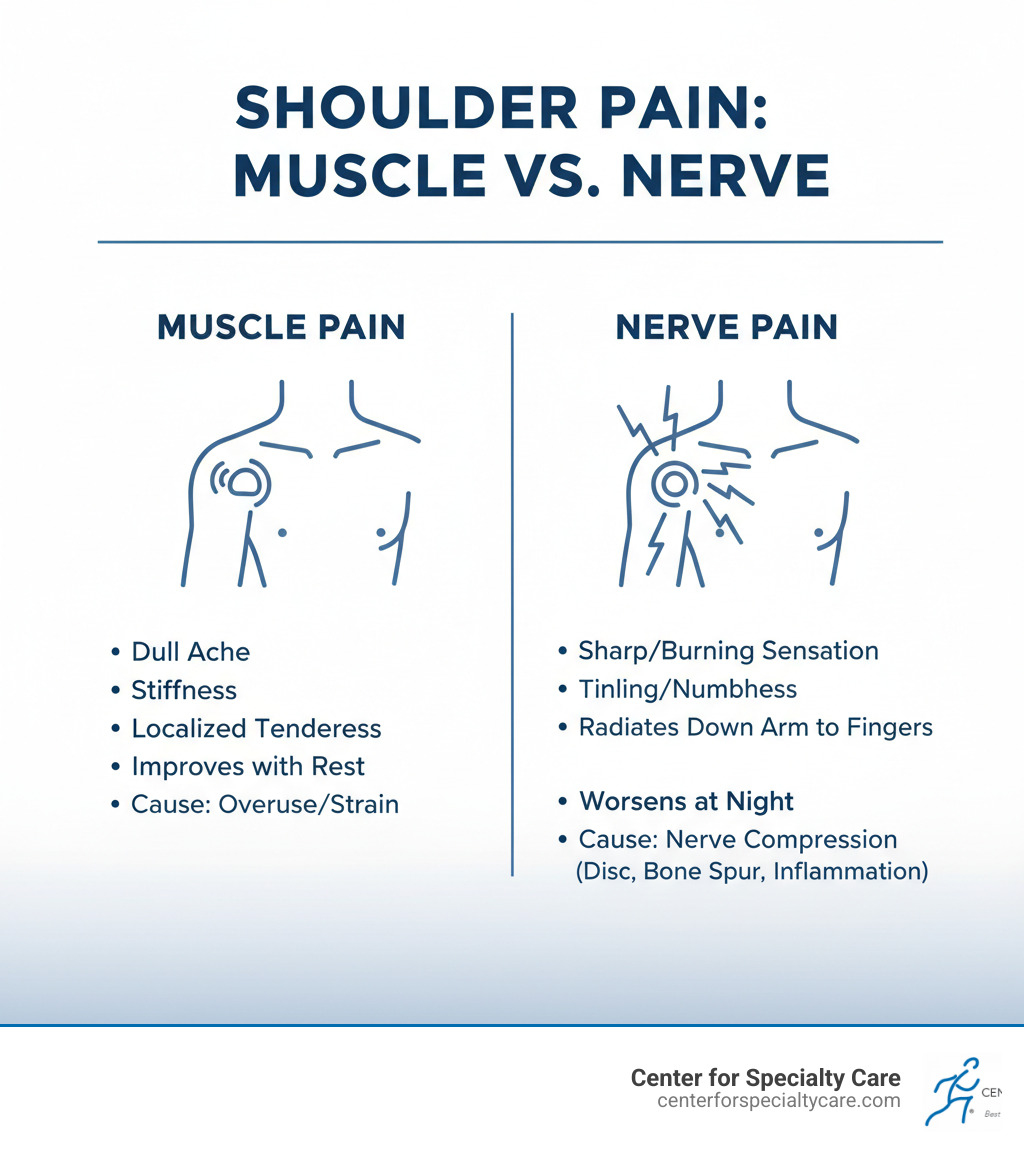
The shoulder is a complex system of bones, muscles, and nerves, making it vulnerable to mechanical compression. Unlike muscle soreness, nerve pain creates distinct sensations like radiating discomfort or “pins and needles.”
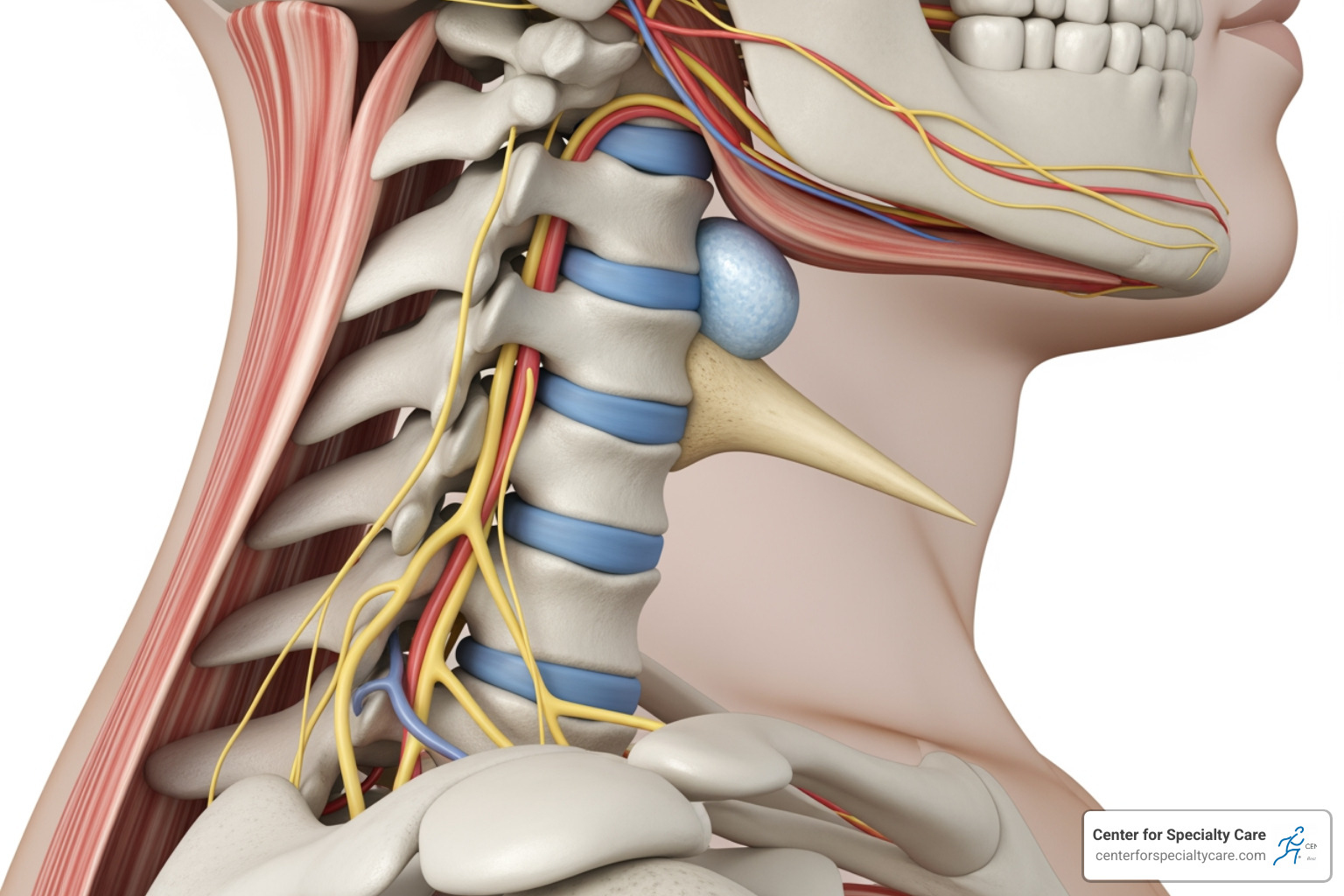
Often, shoulder pain originates in your neck. The cervical spine houses nerve roots that extend into the shoulder and arm. When disc herniation, degeneration, or bone spurs pressure these nerve roots, the pain is felt in the shoulder, even if the problem starts elsewhere.
I’m Dr. Corey Welchlin, a board-certified orthopedic surgeon who has spent over three decades diagnosing and treating nerve pain shoulder conditions in southern Minnesota and northern Iowa. At the Center for Specialty Care, I’ve helped thousands of patients find relief through both conservative treatments and advanced surgical techniques.
Easy nerve pain shoulder glossary:
Understanding the “Pinched” Nerve: Symptoms and Sensations
When a nerve is “pinched,” it means it is being compressed by surrounding tissue or bone. This pressure disrupts the nerve’s signals, leading to the uncomfortable sensations associated with nerve pain.
What is a Pinched Nerve in the Shoulder?
A “pinched nerve” occurs when a nerve in the shoulder area is squeezed, preventing it from functioning properly. The result is pain, tingling, numbness, or weakness.
The primary nerve network involved is the brachial plexus, a bundle of nerves running from the neck, through the shoulder, and down to the fingertips. These nerves are vulnerable to pressure at multiple points along their path.
As the American Academy of Orthopaedic Surgeons notes, a pinched nerve can cause pain, tingling, and numbness that radiates from the shoulder into the arm.
Common Symptoms of Nerve Pain in the Shoulder
Nerve pain shoulder feels different from muscle soreness. Instead of a dull ache, nerve pain has distinct characteristics:
- Sharp, burning pain that can shoot down the arm, sometimes triggered by neck or shoulder movements.
- A radiating sensation that travels from the shoulder down to the fingers.
- Tingling or “pins and needles” in the arm, hand, or fingers.
- Numbness, or a loss of sensation to touch and temperature.
- Muscle weakness, which may affect grip strength or the ability to lift objects. If nerve compression continues, it can lead to muscle atrophy (shrinking).
These symptoms are important clues that help doctors distinguish nerve issues from other shoulder problems.
How Pain from the Neck Affects the Shoulder
Shoulder pain can originate in the neck, a phenomenon known as referred pain. The nerves supplying the shoulder begin in the cervical spine (the neck). When a nerve root is compressed in the neck, the pain is felt wherever that nerve travels, including the shoulder and arm.
Common causes of this compression include:
- Herniated discs: The soft center of a spinal disc pushes out and presses on a nerve root.
- Bone spurs: Bony growths narrow the spaces where nerves exit the spine.
- Spinal degeneration and arthritis: Age-related wear-and-tear can lead to inflammation and nerve compression.
The Cleveland Clinic explains that degeneration in the spine or arthritis are common causes of pinched nerves. When this occurs in the neck, it’s called cervical radiculopathy. A thorough evaluation is crucial to trace the pain to its source and create an effective treatment plan.
Decoding the Causes and Diagnosis of Nerve Pain in the Shoulder
Identifying the cause of nerve pain shoulder is the key to effective treatment. At the Center for Specialty Care, our team investigates the source to create a plan that works for you.

Primary Causes of Nerve Compression
The shoulder’s complex structure creates multiple opportunities for nerve compression. Key causes include:
- Acute injuries and trauma: A fall, sports collision, or car accident can directly damage nerves or cause surrounding structures to compress them.
- Repetitive motion and overuse: Jobs or sports involving overhead reaching or repetitive shoulder movements can cause inflammation and muscle imbalances that press on nerves.
- Poor posture: Slouching or “text neck” from looking down at phones creates chronic tension that compresses nerve roots in the cervical spine.
- Herniated discs and bone spurs: In the neck, these can press directly on nerve roots. Degeneration in the spine or arthritis increases this risk with age.
- Cysts or inflammation: Fluid-filled sacs or swelling from conditions like bursitis can compress adjacent nerves.
The Diagnostic Process: How Doctors Identify the Source
Doctors will start diagnosis by taking a history and performing a physical exam. We’ll ask about your symptoms, activities, and recent injuries to gather clues.
During the physical exam, we assess your range of motion, test muscle strength, check reflexes, and map out areas of numbness. Specific tests help us reproduce your symptoms to pinpoint which nerve is affected.
An important step is ruling out other conditions like arthritis or rotator cuff tears, which can have overlapping symptoms. As the AAOS notes, these tests help in differentiating from other shoulder problems. An accurate diagnosis is essential for effective treatment.
Advanced Diagnostic Tools
When a physical exam isn’t enough, we use advanced imaging and nerve function tests:
- X-rays: Reveal bone spurs, arthritis, or narrowing of the spinal canal.
- CT scans: Provide detailed images of bone structures to identify subtle changes or fractures.
- MRI scans: The gold standard for visualizing soft tissues like nerves, discs, and muscles. An MRI can clearly show disc herniations or nerve inflammation.
- Electrodiagnostic studies (EMG/NCV): These tests measure nerve and muscle function to confirm nerve damage, determine its severity, and identify the specific nerve involved.
Combining your history, physical exam, and diagnostic test results allows us to create a comprehensive picture of what’s causing your nerve pain shoulder and plan the best path to recovery.
Specific Conditions That Cause Shoulder Nerve Pain
While “pinched nerve” is a common term, several specific conditions can cause nerve pain shoulder. Each has unique characteristics and treatment approaches.
Brachial Neuritis (Parsonage-Turner Syndrome)
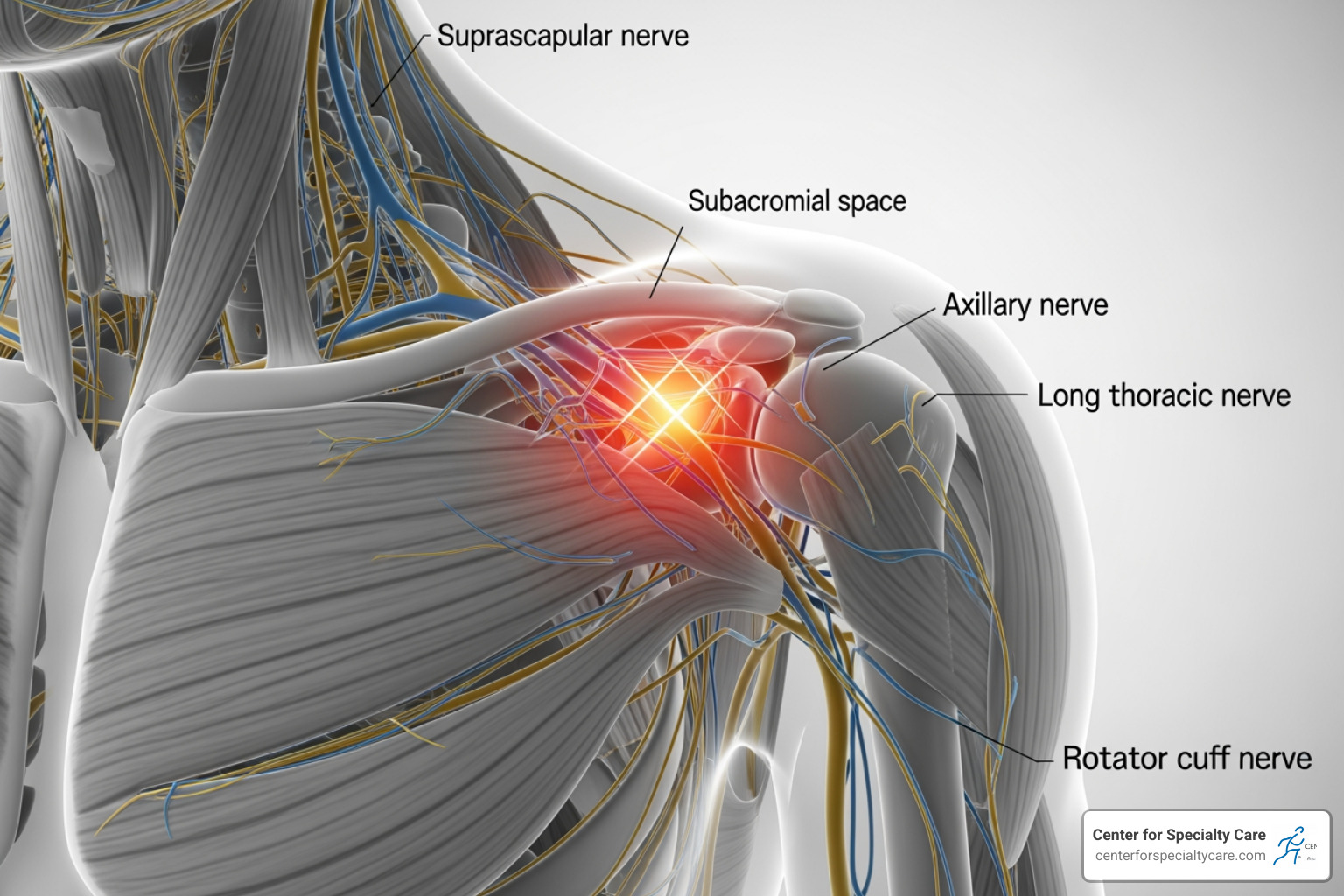
This rare condition, also called neuralgic amyotrophy, involves sudden, severe pain in the shoulder or upper arm, affecting the brachial plexus nerve network. The intense pain typically subsides within days or weeks, but is followed by significant weakness or even paralysis in the affected muscles. The exact cause is unknown but is thought to be an abnormal immune response attacking the nerves. Recovery is possible but can take months or years. You can find more information on Brachial Plexus Injuries.
Suprascapular Nerve Compression
The suprascapular nerve supplies two key rotator cuff muscles. When compressed, it causes pain in the back and top of the shoulder, often radiating to the shoulder blade. The pain worsens with overhead activities or arm rotation. In chronic cases, rotator cuff weakness develops, making it hard to rotate the arm externally. Compression often occurs where the nerve passes under a ligament or is pressed by a cyst. For more details, see this information on Suprascapular Neuropathy. Treatment may involve physical therapy or arthroscopic surgery to release the nerve.
Thoracic Outlet Syndrome (TOS)
TOS occurs when nerves and blood vessels are compressed between the collarbone and first rib.
- Neurogenic TOS, the most common type, involves nerve compression, leading to numbness, tingling, and pain in the shoulder, arm, and hand.
- Venous TOS involves vein compression, causing swelling and discoloration in the arm.
- Arterial TOS, the most serious type, involves artery compression, leading to coldness and poor circulation.
TOS can be caused by trauma, repetitive injuries, or anatomical variations. Recovery is possible, as shown in stories like this one from Mayo Clinic, where a patient recovers from thoracic outlet syndrome.
Axillary Nerve Dysfunction
The axillary nerve activates the deltoid muscle (for lifting the arm) and provides sensation to the outer shoulder. Damage to this nerve causes weakness when lifting the arm away from the body and numbness over the outer shoulder. Common causes include shoulder dislocations, humerus fractures, or prolonged pressure on the nerve, such as from improper crutch use. With early diagnosis and treatment, full recovery is achievable, though it may take several months. MedlinePlus offers more details on Axillary nerve dysfunction.
Treatment and Management Strategies
Most cases of nerve pain shoulder respond well to conservative treatment, and surgery is rarely the first option. At the Center for Specialty Care, we prioritize the gentlest, most effective approaches to get you back to your normal activities.

Home Remedies and Self-Care for Relief
Initial relief often begins at home with simple, effective strategies:
- Rest: Avoid activities that trigger pain to give the nerve time to heal.
- Temperature Therapy: Use ice for the first 48 hours to reduce inflammation, then switch to heat to relax muscles and improve blood flow.
- Gentle Stretching: Slow, deliberate neck tilts and shoulder rolls can release tension. Avoid any movement that causes sharp pain.
- Over-the-Counter Pain Relievers: NSAIDs like ibuprofen or naproxen can reduce pain and inflammation.
- Posture Awareness: Sit up straight and adjust your workspace to be more ergonomic. This reduces chronic strain on your neck and shoulders.
- Massage Therapy: Gentle massage can loosen tight muscles that may be compressing nerves.
Non-Surgical Treatments for Nerve Pain in the Shoulder
If home care is not enough, we offer several effective non-surgical treatments at our clinics in Fairmont, Estherville, Buffalo Center, and St. James.
- Physical Therapy: A personalized program of strengthening exercises, stretches, and manual therapy can correct posture, improve flexibility, and reduce nerve compression.
- Corticosteroid Injections: A powerful anti-inflammatory medication is injected near the compressed nerve to reduce swelling and provide significant pain relief.
- Prescription Medications: We may prescribe stronger anti-inflammatories, muscle relaxants, or medications designed specifically for nerve pain.
- Cervical Collar or Splint: Limiting movement for a short period can allow acute inflammation to subside.
Research shows that most people with a pinched nerve will see symptoms resolve within 8 to 12 weeks with conservative care.
When is Surgery the Right Option?
We consider surgery only when conservative treatments fail to provide relief and it offers the best chance for a lasting solution. Surgery may be the right choice in these situations:
- Persistent pain that continues for months despite non-surgical treatment.
- Progressive weakness in the arm or hand, which is a red flag for potential permanent nerve damage.
- Significant nerve compression seen on diagnostic imaging, such as from a large herniated disc or severe bone spurs.
The goal of nerve decompression surgery is to relieve pressure on the nerve by removing the offending bone or tissue. At the Center for Specialty Care, we have extensive experience with these procedures, including specialized techniques for complex cases like those discussed in resources on Peripheral Nerve Surgery. When indicated, surgery can eliminate chronic pain and restore function, dramatically improving quality of life.
Frequently Asked Questions about Shoulder Nerve Pain
Here are straightforward answers to the most common questions we hear about nerve pain shoulder.
How long does a pinched nerve in the shoulder last?
The duration varies. Many acute cases resolve within a few days or weeks with proper rest and self-care. According to the AAOS, how long a pinched nerve may last is variable, but most resolve within 8-12 weeks. However, more severe cases can last for several months. The recovery timeline depends on the cause and severity of the compression and how quickly treatment begins. Early intervention improves the chances of a quick recovery.
What are the complications of untreated nerve pain shoulder?
Ignoring persistent nerve pain shoulder can lead to serious complications. Prolonged nerve compression can cause permanent nerve damage, resulting in lasting numbness or weakness. Muscle atrophy (wasting away) can occur when a nerve can’t properly signal a muscle, leading to significant weakness and loss of function. This can also lead to chronic pain that interferes with sleep, work, and overall quality of life. Most of these complications are preventable with timely medical care.
When should I see a doctor for my shoulder pain?
You should see a doctor if shoulder pain lasts more than a few days. Seek medical attention promptly if you experience any of the following warning signs:
- Pain that persists beyond a week despite home care.
- Numbness or weakness that is spreading down your arm or into your hand.
- Symptoms that interfere with daily activities like dressing, working, or sleeping.
- Pain that follows a direct trauma, such as a fall or accident.
- Intense, sudden pain that appears without a clear cause.
- A noticeable loss of coordination or range of motion.
It’s always better to get an evaluation than to risk long-term complications. Our team at the Center for Specialty Care in Fairmont, Estherville, Buffalo Center, and St. James is here to provide a diagnosis and get you on the path to recovery.
Your Path to Recovery from Shoulder Pain
Understanding your nerve pain shoulder is the first step toward recovery, and relief is within reach. At the Center for Specialty Care, we are committed to providing personalized care that puts your needs first.
Our approach begins with listening to understand your unique situation. We then develop a comprehensive treatment plan custom to you, starting with conservative options like physical therapy or injections. If needed, we have the surgical expertise to address more complex nerve compression issues.
Shoulder pain is common, with a lifetime prevalence of 70%. You are not alone in this struggle, and effective treatments exist. We have helped thousands of patients in southern Minnesota and northern Iowa find lasting relief.
What sets us apart is our commitment to 100% patient satisfaction. Whether your goal is returning to a favorite sport or simply lifting your grandchild without pain, we are here to help you achieve it.
Don’t let nerve pain shoulder control your life. Waiting increases the risk of complications like permanent nerve damage. Early intervention offers the best chance for a full recovery.
Find expert care for your shoulder pain at the Center for Specialty Care today. Our team is ready to guide you on your path to recovery with quick appointment availability. Let’s make your pain-free future a reality.