
Cracking the Code: How to Safely Pop Your Shoulder
September 1, 2025
Cool Down or Warm Up? Deciding on Heat or Ice for Peroneal Tendonitis
September 3, 2025
Scapula Pain: Top 1 Guide to Relief
Understanding Scapula Pain: Your First Step to Relief
Scapula pain can range from a dull ache between your shoulder blades to sharp sensations that disrupt daily life. This discomfort can stem from simple muscle strain, poor posture, or more complex issues like nerve compression or rotator cuff problems.
Quick Answer: What Causes Scapula Pain?
- Muscle strain – Poor posture, overuse, or sudden movements
- Scapular dyskinesis – Abnormal shoulder blade movement
- Rotator cuff injuries – Tears or inflammation in surrounding muscles
- Nerve compression – From the neck or brachial plexus
- Referred pain – From heart, lung, or gallbladder conditions
- Bursitis – Inflammation of fluid-filled sacs around the joint
The good news is that research shows 90% of patients with scapula pain respond well to non-surgical treatments like physical therapy and lifestyle changes. Your scapula, the triangular bone in your upper back, is vital for shoulder movement and stability. Understanding the cause of your pain is the first step toward effective treatment.
As Dr. Corey Welchlin, a board-certified orthopedic surgeon, I’ve seen that early diagnosis and proper treatment can restore function and eliminate pain for nearly everyone with shoulder blade discomfort. My experience has shown that a conservative approach is often all that’s needed to achieve significant relief.
What is the Scapula and Why is it Important?
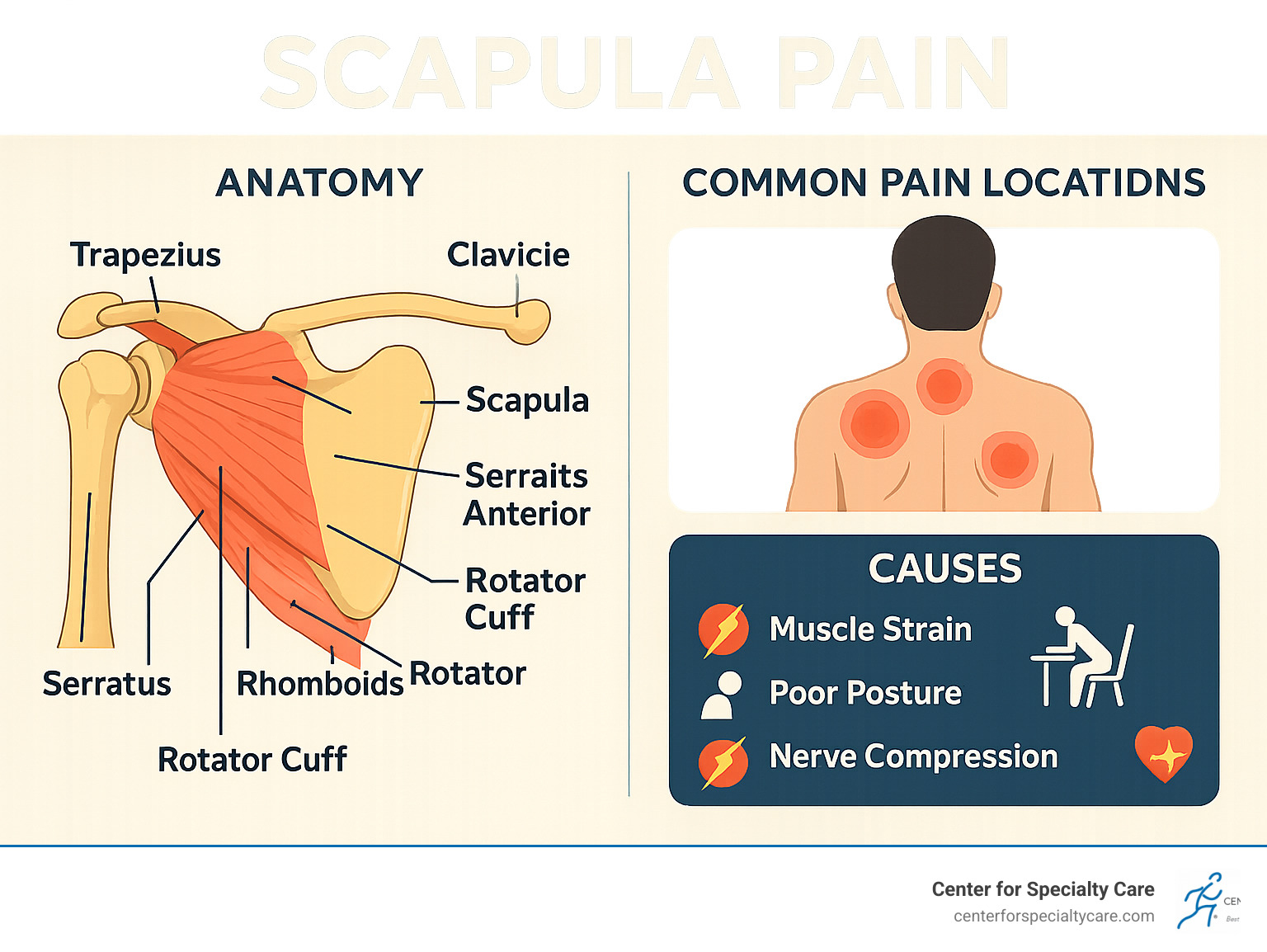
Your scapula, or shoulder blade, is the triangular bone in your upper back that acts as the foundation for all arm movements. It connects your clavicle (collarbone) and humerus (upper arm bone) to form the highly mobile ball-and-socket shoulder joint. The scapula serves as an attachment point for 18 different muscles, including the rotator cuff, trapezius, and rhomboids. These muscles work together to create a stable platform for smooth, powerful arm motion.
When this muscular coordination breaks down, your shoulder can become unstable and prone to injury, leading to scapula pain. For more details, the American Academy of Orthopaedic Surgeons’ guide on scapular disorders is a useful resource.
The Mechanics of Shoulder Movement
Shoulder movement is a coordinated effort known as glenohumeral rhythm. When you lift your arm, about two-thirds of the motion comes from the ball-and-socket joint, while the remaining third comes from your scapula gliding across your ribcage (scapulothoracic articulation). This synchronized movement keeps the shoulder stable throughout its range of motion.
This system relies on muscle balance. Poor posture, such as hunching over a computer, can cause some muscles to tighten while others weaken. This imbalance leads to scapular dyskinesis, an abnormal movement pattern of the shoulder blade. The result is often pain, stiffness, and a feeling of instability in the shoulder. If you also experience clicking sounds, our guide on Shoulder Clicking and Pain: Causes, Effective Relief offers further insights.
Common Causes of Scapula Pain
Scapula pain can originate directly from the shoulder area (musculoskeletal issues) or be referred from another part of the body. Identifying the source is key to effective treatment.

Musculoskeletal and Mechanical Issues
These problems arise from the muscles, bones, and tendons in the shoulder blade region.
- Poor posture and muscle strain: Slouching at a desk or overusing your shoulder muscles from activities like painting or sports can strain the muscles around the scapula, causing a familiar ache. Hours spent working on a laptop are a common trigger.
- Rotator cuff tears: Injuries to the rotator cuff muscles often radiate pain to the shoulder blade.
- Scapular dyskinesis: This is an improper movement pattern of the shoulder blade due to muscle imbalances, leading to weakness and pain.
- Winged scapula: A more severe form of dyskinesis where the shoulder blade visibly sticks out from the back, often due to nerve damage or significant muscle weakness.
- Snapping scapula syndrome (bursitis): Inflammation of the bursa (fluid-filled sacs) between the scapula and ribs causes a dull ache and a grinding or “snapping” sound with arm movement. For more on muscle-related issues, see our guide on Muscle Kink in Shoulder Blade: Causes, Effective Relief.
- Shoulder blade fractures: Though rare, a significant trauma like a car accident can fracture the scapula, causing intense, localized pain and swelling.
Referred Pain and Underlying Conditions
Sometimes, the pain you feel in your shoulder blade is a symptom of a problem elsewhere.
- Cervical spine problems: A herniated disc or arthritis in the neck can press on nerves, sending sharp or aching pain toward the scapula.
- Nerve compression: Compression of the brachial plexus (a nerve network) can cause pain that radiates to the shoulder blade.
- Heart conditions: This is a serious cause. A heart attack can cause pain under the left shoulder blade, especially in women. Sudden, severe pain with chest discomfort, shortness of breath, or nausea requires immediate medical attention. Learn more from the National Heart, Lung, and Blood Institute: What is a heart attack?.
- Lung issues: A pulmonary embolism or collapsed lung can refer pain to the shoulder area.
- Gallbladder disease: Typically causes sharp pain under the right shoulder blade, often after fatty meals.
- Fibromyalgia: This condition causes widespread pain, and the scapula is a common site for discomfort.
Symptoms, Diagnosis, and When to See a Doctor
Accurate diagnosis is the foundation of effective treatment for scapula pain. Paying attention to your specific symptoms can help your doctor pinpoint the cause.

Recognizing the Symptoms of Scapula Pain
Your symptoms provide important clues about the source of your pain:
- Dull, aching pain: Often suggests muscle strain, poor posture, or overuse.
- Sharp or burning pain: May indicate nerve involvement, like a pinched nerve.
- Weakness in the arm: Difficulty lifting your arm could signal nerve damage or significant muscle dysfunction.
- Limited range of motion: Trouble reaching behind your back or overhead often accompanies scapular issues.
- Popping or grinding sounds: A telltale sign of snapping scapula syndrome. For more on this, see our guide: Shoulder Joint Pain, Popping: Causes, Effective Relief.
- Visible changes like winging: When the shoulder blade protrudes, it’s a clear sign of muscle imbalance or nerve issues.
How Doctors Diagnose the Cause of Your Scapula Pain
At Center for Specialty Care, our diagnostic process is thorough and personalized. If you need to find a Doctor for Shoulder Problems: Your Guide to Specialized Care, here’s what to expect:
- Medical History Review: We start by listening to your experience—when the pain began, what makes it better or worse, and your daily activities.
- Physical Examination: We observe how your shoulder blade moves, check for asymmetries, and perform tests like the Scapular Assistance Test. We also examine your neck, a common source of referred shoulder pain.
- Imaging Tests: When necessary, X-rays can identify fractures or arthritis, while an MRI provides a detailed look at soft tissues like muscles and nerves.
Red Flags: When to Seek Immediate Medical Help
Most scapula pain is not an emergency, but seek immediate medical help if you experience it with any of the following:
- Chest pain or tightness, especially on the left side
- Shortness of breath
- Sudden, severe pain after an injury
- Inability to move your arm
- Numbness or tingling down your arm into your hand
- Dizziness, rapid pulse, sweating, or nausea
- Fever, chills, or unexplained weight loss
These symptoms could signal a heart attack or other serious condition. Call 911 or go to the nearest emergency room.
Your Path to Relief: Treatment and Management
The encouraging news about scapula pain is that most people find relief without surgery. Conservative treatments are highly effective for the vast majority of shoulder blade issues. At Center for Specialty Care, we focus on personalized, non-surgical plans to find the Best Therapy for Shoulder Pain: Expert Solutions, Relief for you.
Non-Surgical Treatment Options
Most patients find relief through a combination of these conservative approaches:
- Rest and Activity Modification: Temporarily avoiding activities that cause pain, like overhead lifting, allows the area to heal.
- Physical Therapy: This is a cornerstone of treatment. A physical therapist guides you through targeted strengthening and stretching exercises to restore proper muscle function and coordination. Learn more about our approach to Shoulder Treatment with Physical Therapy: Recovery, Pain Relief.
- Anti-inflammatory Medications (NSAIDs): Over-the-counter medications like ibuprofen can reduce pain and inflammation.
- Heat and Ice Therapy: Applying heat can loosen tight muscles, while ice can reduce inflammation after activity.
- Corticosteroid Injections: For persistent pain, an injection can deliver powerful anti-inflammatory medication directly to the source of discomfort, providing relief that allows you to engage more effectively in physical therapy. We offer several Types of Injections for Shoulder Pain Relief: Treatment Options.
- Postural and Ergonomic Adjustments: Simple changes to your workstation or daily habits can prevent pain from returning.
When is Surgery Considered?
Surgery for scapula pain is rare, needed in only about 10% of cases. It may be considered for:
- Severe fractures: A significantly displaced fractured shoulder blade may require surgery to heal correctly.
- Significant nerve damage: If nerve damage causes scapular winging that doesn’t improve with conservative care, surgery may be an option.
- Failed conservative treatment: If pain persists after months of non-surgical treatment, we will discuss if surgery is the right next step.
- Chronic instability or snapping scapula syndrome: In rare cases where these conditions don’t respond to other treatments, surgery might be recommended.
If surgery is necessary, our experienced Rotator Cuff Surgeon Near Me: Your Guide to Finding Expert Shoulder Care will ensure you receive the highest level of care.
Prevention and Long-Term Shoulder Health
Preventing scapula pain is easier than treating it. Proactive care through lifestyle modifications, proper ergonomics, and consistent exercise is key to long-term shoulder health.

Exercises to Prevent Scapula Pain
Shoulder health depends on muscle balance. Many people develop imbalances from daily habits and workouts. A simple rule for weightlifters is to balance pushing exercises (like push-ups) with pulling exercises (like rows) to counteract forward-hunching posture. For more tips, see our guide on How to Get Rid of Shoulder Pain From Lifting Weights: Tips, Exercises.
Perform a maintenance routine of the following exercises three times per week for best results.
| Exercise Type | Strengthening Exercises | Stretching Exercises |
|---|---|---|
| Focus | Build strength and endurance in scapular support muscles. | Improve flexibility and reduce tightness in chest and shoulder muscles. |
| Examples | – Shoulder Blade Squeezes: Gently squeeze shoulder blades together. Hold 5-10 seconds. | – Chest Stretch: Stand in a doorway, place forearms on the frame, and lean forward. Hold 20-30 seconds. |
| – Rows: Use a resistance band to pull elbows back, squeezing shoulder blades. | – Cross-Body Arm Stretch: Pull one arm across your chest. Hold 20-30 seconds. | |
| – Wall Push-ups: Perform a push-up against a wall, focusing on scapular movement. | – Overhead Triceps/Lat Stretch: Reach one arm overhead and gently push the elbow down with the other hand. | |
| – Band Pull-aparts: Hold a resistance band and pull it apart by squeezing shoulder blades. | – Doorway Pec Stretch: Place hands on a door frame and lean forward to stretch the chest. |
Potential Complications of Untreated Pain
Ignoring scapula pain can lead to more significant problems:
- Chronic Pain: An occasional ache can become constant, making daily activities difficult.
- Decreased Shoulder Function: Your arm’s range of motion can decline, limiting your ability to reach or lift.
- Muscle Atrophy: The muscles around the shoulder blade can weaken and shrink from disuse, creating a cycle of more pain and dysfunction.
- Frozen Shoulder (Adhesive Capsulitis): A severe condition causing stiffness and pain that can last for months or years.
- Reduced Quality of Life: Chronic shoulder issues can affect sleep, hobbies, work, and emotional well-being.
Early diagnosis and treatment are the best ways to prevent these complications.
Frequently Asked Questions about Shoulder Blade Pain
Here are answers to common questions about scapula pain.
What is the difference between scapular dyskinesis and a winged scapula?
Scapular dyskinesis is a general term for any abnormal movement or positioning of the shoulder blade. It can be subtle and may only be noticed by a trained professional.
A winged scapula is a specific, more obvious type of dyskinesis where the inner edge of the shoulder blade visibly protrudes from the back, like a wing. This often indicates a more significant issue, such as nerve damage or severe muscle weakness. In short, all winged scapulas are a form of dyskinesis, but not all dyskinesis involves winging.
Can stress cause pain between the shoulder blades?
Yes. When you’re stressed, you may unconsciously tense the muscles around your shoulder blades, like the trapezius and rhomboids. This chronic tension, often combined with poor posture from stress (like hunching), can lead to muscle knots (trigger points) and persistent scapula pain.
How should I sleep to relieve shoulder blade pain?
Your sleeping position can significantly impact your pain. Try these adjustments:
- Sleep on your back: This is often the best position as it keeps your spine neutral and avoids pressure on the shoulders. A small pillow under your knees can improve alignment.
- Avoid sleeping on the painful side: This puts direct pressure on the affected area, which can increase inflammation and pain.
- If you sleep on your side: Sleep on the non-painful side. Place a pillow between your knees to align your hips and hug another pillow to support your top arm and shoulder.
Take Control of Your Shoulder Health
Understanding your scapula pain is the first step toward relief. As we’ve covered, this discomfort is complex but highly treatable, with most cases resolving through non-surgical care like physical therapy and targeted exercises. You don’t have to live with shoulder blade pain.
Early and accurate diagnosis is the key to a fast and complete recovery. Identifying the root cause—whether it’s muscle strain, scapular dyskinesis, or referred pain—allows for a targeted treatment plan that brings lasting relief.
At Center for Specialty Care, we know that scapula pain can be frustrating. Our patient-focused approach means we listen to your concerns to develop a personalized treatment plan. Our specialists in Fairmont, MN, St. James, MN, and our Iowa locations in Estherville and Buffalo Center are committed to your satisfaction through expert care and quick appointment availability.
Our goal is to help you achieve long-term shoulder health and return to the activities you love. Don’t let scapula pain limit your life. Take the first step toward relief by scheduling a consultation with our experienced team. Learn more about our comprehensive shoulder care options and find how we can help you feel your best.