
The Ultimate Rhomboid Muscle Strain Recovery Plan
April 24, 2026
The Shoulder Joint’s Secret Support Squad
April 30, 2026
Why Your Shoulder Blade Hurts and How to Fix It
Why Pain Underneath the Scapula Is More Than Just a Sore Muscle
Pain underneath the scapula is one of those symptoms that’s easy to brush off — until it isn’t. It could be a pulled muscle from a tough workout. Or it could be something that needs immediate attention.
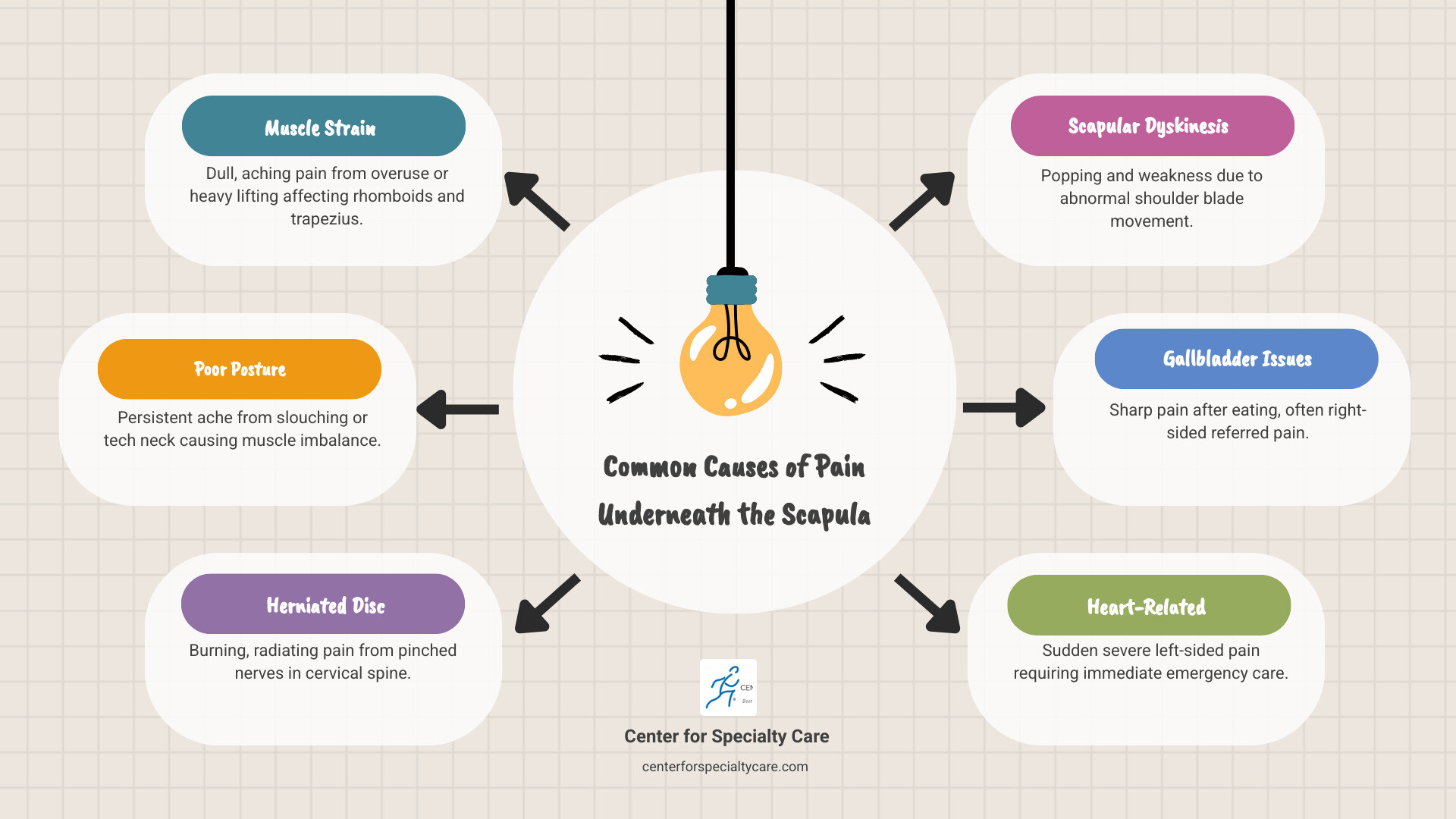
Here are the most common causes at a glance:
| Cause | Type of Pain | Urgency |
|---|---|---|
| Muscle strain or overuse | Dull, aching, tender | Low — self-care often works |
| Poor posture / tech neck | Persistent dull ache | Low to moderate |
| Herniated disc or pinched nerve | Burning, electric, radiating | Moderate — see a doctor |
| Scapular dyskinesis | Popping, weakness, limited motion | Moderate |
| Gallbladder or GERD | Sharp, central, after eating | Moderate — see a doctor |
| Heart attack or aortic dissection | Sudden, severe, left-sided | Emergency — call 911 |
| Pulmonary embolism | Severe, with breathing difficulty | Emergency — call 911 |
Most cases come down to muscles, posture, or the spine. But some causes are serious enough that knowing the difference could save your life.
The pain itself can range from a nagging dull ache to a sharp, burning sensation that makes it hard to sleep, work, or move your arm normally. It affects millions of people — and for very different reasons.
I’m Dr. Corey Welchlin, a board-certified orthopedic surgeon with over 30 years of experience treating musculoskeletal conditions, including pain underneath the scapula, at the Center for Specialty Care in Fairmont, Minnesota. In this guide, I’ll walk you through exactly what’s going on, how to tell the difference between a minor strain and something serious, and what your best options are for lasting relief.
Understanding the Scapula and Pain Underneath It
When we talk about the scapula, we are talking about your shoulder blade. It is a flat, sturdy, triangle-shaped bone located on your upper back. While it might look like it just sits there, the scapula is actually a vital hub for movement. It connects your upper arm bone (humerus) to your collarbone (clavicle), forming the socket of the ball-and-socket shoulder joint.
Because it is so central to how you move your arms, the scapula is surrounded and supported by a complex system of muscles. When you feel pain “underneath” it, you are usually feeling issues in the space between the shoulder blade and the rib cage, or along the inner edge of the bone near your spine. Understanding what is the cause of pain beneath the scapula? starts with recognizing that this area is a high-traffic zone for nerves, muscles, and connective tissues.
Anatomy of the Shoulder Blade
The shoulder is more than just one joint; it is a mechanical marvel. The scapula provides a platform for the rotator cuff muscles, which allow you to lift and rotate your arm. Large muscles like the rhomboids and trapezius attach the scapula to your spine, acting like guide wires that keep the bone stable.
If these muscles become weak or imbalanced, the scapula cannot move correctly. This often leads to secondary issues in the shoulder joint itself. At the Center for Specialty Care, we see how these interconnected parts affect your mobility. You can learn more about our comprehensive shoulder services to see how we address these complex mechanical issues.
Common Locations for Subscapular Pain
Pain isn’t always a “one size fits all” sensation. Depending on where you feel it, we can often narrow down the culprit:
- The Medial Border: This is the inner edge of the shoulder blade closest to your spine. Pain here is frequently tied to the rhomboid muscles or “knots” (trigger points).
- The Inferior Angle: This is the bottom “point” of the triangle. Pain here can indicate issues with the serratus anterior muscle or even referred pain from the gallbladder.
- Under the Blade: Feeling pain deep behind the bone often points to inflammation of the bursa (scapulothoracic bursitis) or issues with the ribs and thoracic spine.
Common Causes of pain underneath scapula
In our Fairmont and Estherville clinics, we find that most patients suffering from pain underneath scapula are victims of modern life. We spend hours hunched over screens, which wreaks havoc on the upper back.

Muscle Strain and Overuse
This is the single most likely diagnosis. If you’ve recently moved furniture, started a new pickleball routine, or spent the weekend gardening, you might have strained your rhomboids or middle trapezius. These muscles are responsible for pulling your shoulder blades together. When they are overloaded, they develop micro-tears and painful knots.
For those who enjoy staying active, it’s important to know how to get rid of shoulder pain from lifting weights. Often, a combination of rest, proper form, and specific stretches can resolve acute strains within a few days to two weeks.
Posture and “Tech Neck”
“Tech neck” isn’t just a buzzword; it’s a real physical condition. When you tilt your head down to look at a phone, the effective weight of your head on your neck muscles increases from about 12 pounds to nearly 60 pounds. This constant pull creates a muscle imbalance. Your chest muscles become tight, and your upper back muscles become overstretched and weak. This leads to a persistent, burning pain underneath scapula as those back muscles desperately try to hold your head up.
Scapular Dyskinesis and Winging
Sometimes the issue isn’t just pain, but movement. Scapular dyskinesis is a medical term for the “alteration of normal scapular motion.” You might notice a “winged scapula,” where the edge of the bone sticks out prominently like a bird’s wing. This is often accompanied by popping, snapping, or grinding sounds (known as scapular crepitus) when you move your arm. It’s a sign that the muscles aren’t firing in the right order, which can lead to shoulder instability.
| Feature | Muscle Strain | Nerve Compression |
|---|---|---|
| Sensation | Dull, achy, sore | Sharp, electric, burning |
| Trigger | Movement or touch | Certain neck positions |
| Associated Symptoms | Stiffness | Tingling or numbness in arm |
Identifying pain underneath scapula from Nerve Compression
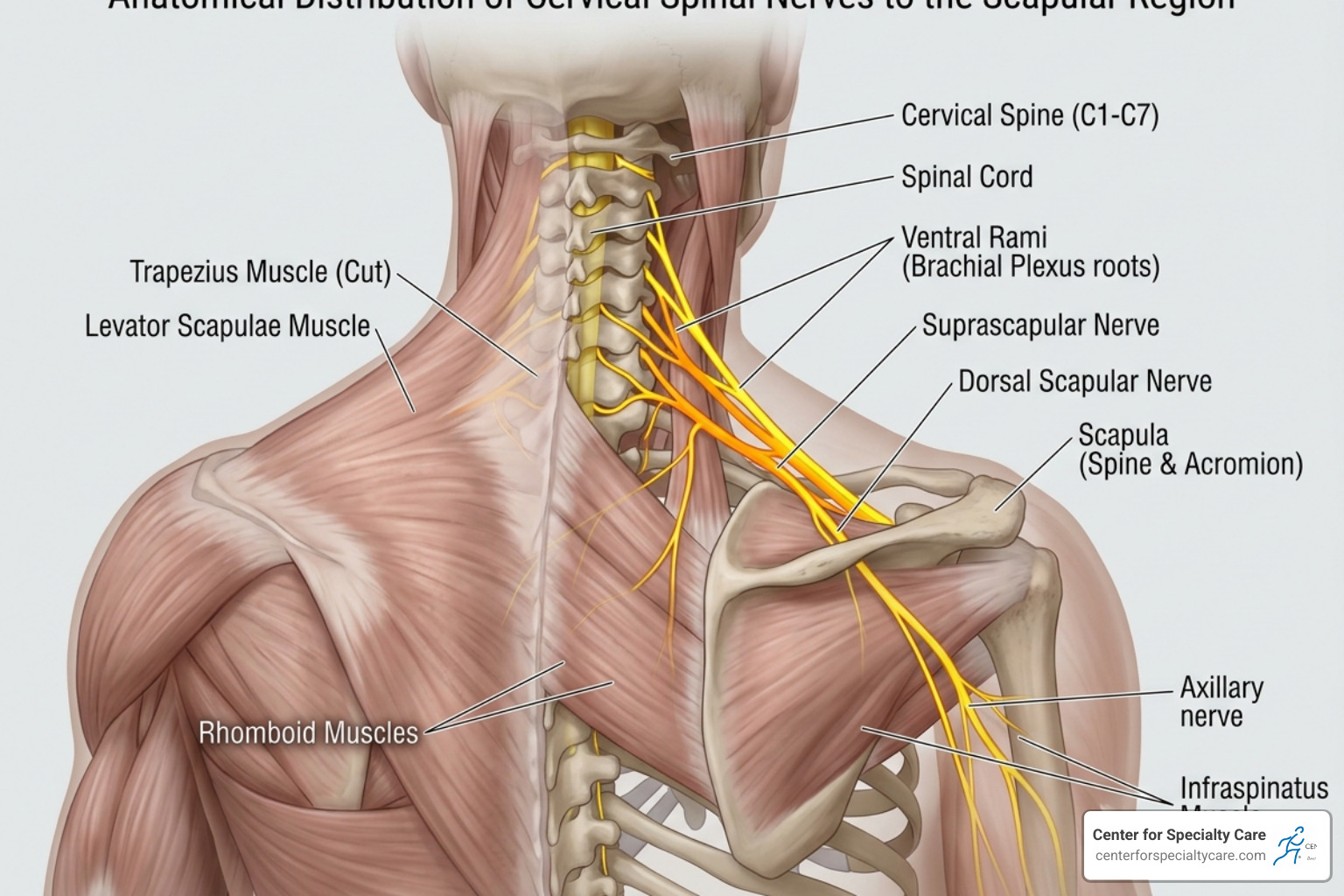
Sometimes the problem isn’t in the back at all — it’s in the neck. The nerves that provide sensation to your shoulder blade area originate in the cervical spine (neck).
Cervical Herniated Discs
If a disc in your neck (usually between the C5, C6, or C7 vertebrae) herniates or “slips,” it can press on a nerve root. This doesn’t always cause neck pain. Instead, it can send “referred pain” down to the shoulder blade. This pain is typically described as stinging, burning, or like an electric shock. If you feel this pain traveling down your arm or into your fingers, a pinched nerve is a likely suspect. There are 7 possible causes of pain under your shoulder blade that involve the spine, and a professional evaluation is the best way to distinguish between them.
Dorsal Scapular Nerve Entrapment
The dorsal scapular nerve specifically powers the muscles that move the shoulder blade. If this nerve becomes trapped or inflamed — perhaps from a heavy backpack or repetitive overhead reaching — it can cause a deep, localized ache along the inner border of the scapula. You might also notice your rhomboid muscles feel “mushy” or weak.
When Pain Under the Shoulder Blade Is an Emergency
While most cases of pain underneath scapula are musculoskeletal, we must never ignore the “red flags.” Because the nerves in our chest and back are so interconnected, the brain can sometimes confuse pain from internal organs with pain in the back.
Referred Pain from Internal Organs
Your internal organs don’t have many pain receptors, so they “borrow” the nerve pathways of your skin and muscles.
- Gallbladder: Problems like gallstones often cause sharp pain under the right shoulder blade, especially after a fatty meal.
- GERD/Acid Reflux: Severe heartburn can cause a burning sensation in the center of the back that mimics a muscle pull.
- Lung Issues: A pulmonary embolism (a blood clot in the lung) can cause sudden, severe pain between the shoulder blades, usually accompanied by shortness of breath. Rare conditions like a Pancoast tumor (a type of lung cancer at the very top of the lung) can also press on nerves and cause chronic scapular pain.
Cardiac Symptoms in Women
This is a critical point: heart attacks don’t always look like they do in the movies. Especially in women, a heart attack may not cause crushing chest pain. Instead, it can present as an intense, heavy, or “squeezing” pain underneath scapula on the left side. If this pain comes on suddenly and is accompanied by shortness of breath, nausea, or lightheadedness, call 911 immediately. Understanding why your shoulder blade hurts and the medically approved next steps can be life-saving.
Diagnosing and Treating pain underneath scapula
When you visit us at the Center for Specialty Care, our goal is to solve the “puzzle” of your pain. We don’t just treat symptoms; we look for the root cause. If you are looking for the best orthopedic shoulder specialist near you in Southern Minnesota or Northern Iowa, our team is ready to help.
Diagnostic Testing and Imaging
Diagnosis starts with a physical exam. We will look at your posture, check for “winging,” and perform provocative tests (specific movements designed to see which tissue is irritated).
- X-rays: Good for ruling out fractures or arthritis in the spine.
- MRI: The gold standard for seeing herniated discs, muscle tears, or inflammation.
- EMG/Nerve Conduction Studies: Used if we suspect a pinched nerve or nerve entrapment.
Effective Treatment Options
The good news? Most scapula pain responds beautifully to conservative care.
- Physical Therapy: This is our most powerful tool. A therapist can help you strengthen the “scapular stabilizers” and stretch the tight chest muscles that cause poor posture. You can learn more about our Physical Therapy programs designed for back and shoulder health.
- Medications: Short-term use of NSAIDs (like ibuprofen) can break the cycle of inflammation.
- Heat and Ice: Use ice for the first 48 hours of a new injury to reduce swelling. Switch to heat for chronic muscle tightness to increase blood flow.
- Injections: If “knots” or trigger points won’t let go, a targeted injection can provide immediate relief.
Frequently Asked Questions about Scapula Pain
Can stress cause pain under the shoulder blade?
Absolutely. When we are stressed, we subconsciously “armor” ourselves by hiking our shoulders toward our ears. This keeps the levator scapulae and trapezius muscles in a state of constant contraction. Over time, this leads to painful trigger points and knots underneath the shoulder blade. Relaxation techniques and ergonomic adjustments are key here.
How long does it take for scapula pain to resolve?
For a simple muscle strain, you should see significant improvement within 1 to 2 weeks of rest and home care. If the pain is caused by a herniated disc or chronic postural issues, it may take several months of physical therapy to fully resolve. If your pain lasts longer than two weeks without improvement, it’s time to see a specialist.
Is pain under the left shoulder blade always a heart issue?
No, but it should be taken seriously. If the pain is “positional” (meaning it hurts more when you move your arm or touch the spot), it is likely musculoskeletal. If the pain is deep, heavy, and unaffected by movement or touch, and you have other symptoms like chest pressure, seek emergency care.
Conclusion
Pain underneath scapula can be a literal pain in the neck, but it doesn’t have to be a permanent part of your life. Whether your pain stems from a weekend of heavy lifting, years of sitting at a desk, or a more complex spinal issue, there is a path to relief.
At the Center for Specialty Care, we pride ourselves on providing personalized, expert care to our neighbors in Fairmont, Estherville, and the surrounding communities. We offer both surgical and non-surgical options, with a focus on getting you back to the activities you love as quickly as possible. Don’t let a “nagging ache” turn into a chronic limitation. Schedule a consultation for back and shoulder relief today and let us help you find the lasting solution you deserve.