
Getting Your Shoulder Back in the Game with Expert Rotator Cuff Care
August 11, 2026
Left-Sided Scapula Pain Explained and When It’s Not Just a Muscle Strain
August 13, 2026
Dry Spell? How to Find the Best IV for Dehydration Near Me
When You Need an IV for Dehydration Near Me: Quick Answer
If you’re dealing with severe dehydration and need IV fluids fast, here are your main options:
| Option | Best For | Appointment Needed? | Insurance? |
|---|---|---|---|
| Urgent Care Clinic | Moderate dehydration, illness recovery | Usually same-day | Often yes, if medically indicated |
| Emergency Room | Severe or life-threatening dehydration | No — walk in 24/7 | Yes |
| Mobile IV Service | Mild-to-moderate dehydration, convenience | Yes | Typically self-pay |
| IV Wellness Clinic | Elective hydration and recovery | Yes | Self-pay / HSA / FSA |
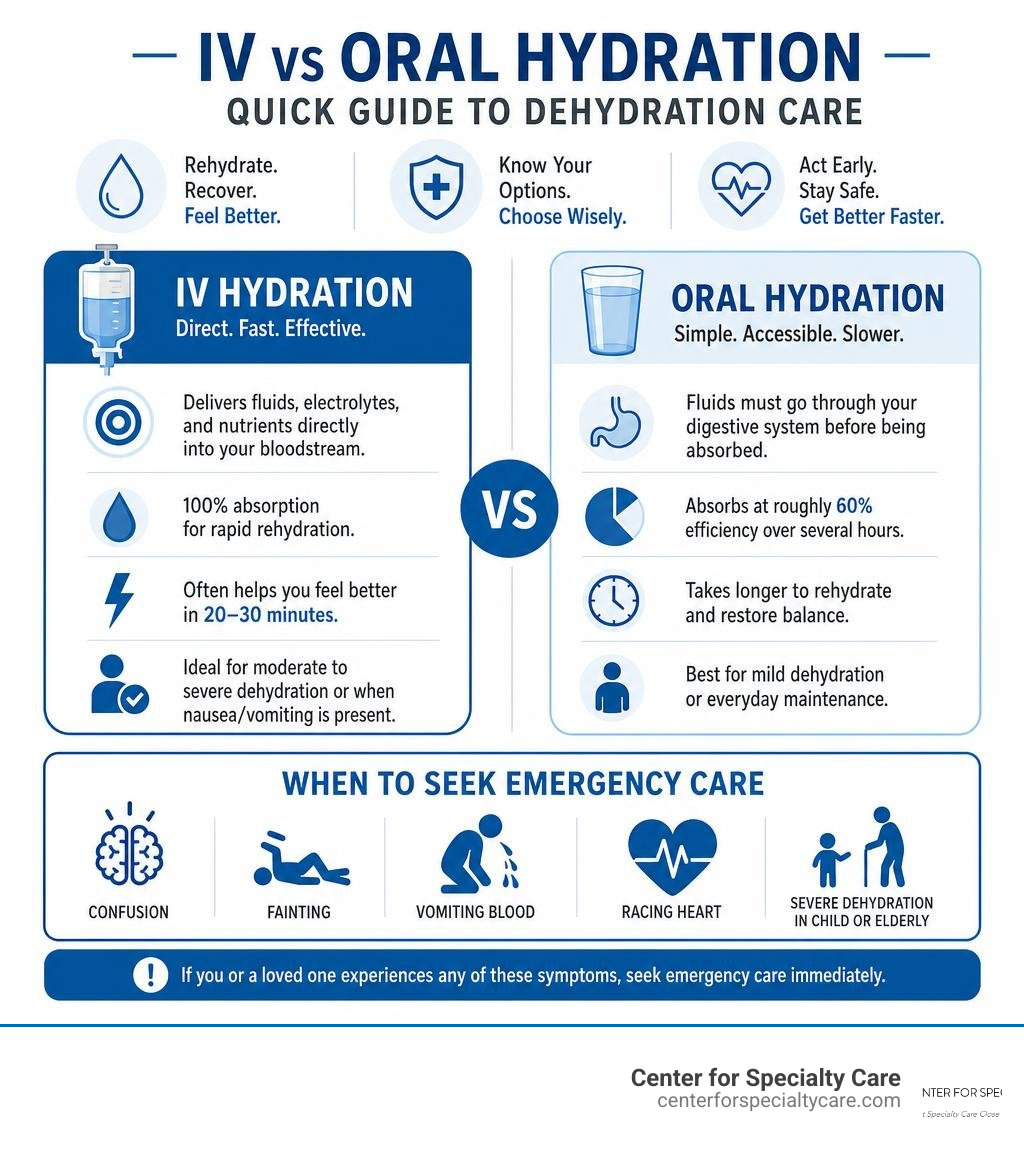
Go to the ER immediately if you have: confusion, fainting, vomiting blood, a racing heart, or signs of severe dehydration in a child or elderly person.
For moderate dehydration from illness, heat, or exercise — an urgent care clinic is usually your fastest, most affordable option.
Finding iv for dehydration near me is easier than most people think, and it can make a dramatic difference in how quickly you recover. Whether you’re worn down from a stomach bug, heat exhaustion, or days of poor fluid intake, there are times when sipping water simply isn’t enough to turn things around.
IV fluids bypass your digestive system entirely and deliver hydration directly into your bloodstream — giving your body 100% of what it needs, right away. Oral hydration, by comparison, absorbs at roughly 60% efficiency over several hours. When you’re already struggling, that gap matters.
Many patients report feeling meaningfully better within 20 to 30 minutes of starting an IV infusion. That kind of rapid relief isn’t something a sports drink or hydration packet can match, especially when nausea or vomiting makes it hard to keep anything down.
I’m Dr. Corey Welchlin, a board-certified orthopedic surgeon and founder of the Center for Specialty Care in Fairmont, Minnesota — and over my 30+ years of clinical practice, I’ve seen how dehydration compounds pain, slows recovery, and complicates musculoskeletal conditions that bring patients to our door. In this guide, I’ll walk you through everything you need to know about finding the right iv for dehydration near me, so you can get the care you need with confidence.
What is IV Hydration Therapy and How Does It Work?
To understand why intravenous (IV) therapy is the gold standard for rapid rehydration, we have to look at how our bodies process water. When you drink a glass of water, an electrolyte drink, or a sports beverage, it must travel down your esophagus, into your stomach, and through your gastrointestinal tract. Only when it reaches your small and large intestines can the water be absorbed into your bloodstream and distributed to your organs, joints, and tissues.
If your digestive system is compromised—whether by a sudden stomach bug, intense nausea, or the inflammatory stress of extreme physical exertion—this absorption process slows to a crawl. In some cases, your body might reject oral fluids entirely.
IV hydration therapy completely sidesteps this biological bottleneck. By placing a small, flexible catheter directly into a vein, medical professionals can introduce a sterile liquid solution straight into your circulatory system.
This process achieves 100% bioavailability. Bioavailability refers to the proportion of a substance that enters your circulation and is able to have an active effect. When you receive fluids intravenously, there is zero wait time for digestion, zero cellular filtration loss, and no metabolic energy expended by your stomach or intestines to absorb the water. For a detailed breakdown of how this process works on a cellular level, you can read this scientific explanation of IV hydration.
Once in the bloodstream, the saline and electrolytes immediately restore your blood volume. This makes it much easier for your heart to pump oxygen-rich blood to your brain, muscles, and vital organs, correcting cellular dehydration almost instantly.
Oral Rehydration vs. IV for Dehydration Near Me
For mild dehydration, drinking water or using oral rehydration packets is usually the first line of defense. These packets rely on a specific ratio of sodium and glucose (sugar) to utilize the body’s sodium-glucose co-transport system in the small intestine, which pulls water through the intestinal wall faster than plain water alone.
However, oral rehydration has clear biological limits. The human digestive tract can only absorb a certain volume of fluid per hour. If you are losing fluids rapidly through sweating, vomiting, or diarrhea, your rate of fluid loss can easily outpace your maximum rate of oral absorption.
Furthermore, patients who have undergone gastric bypass surgery or suffer from chronic malabsorption syndromes have altered digestive anatomy, making oral rehydration even less efficient.
To help visualize these differences, let’s look at how oral rehydration compares directly to searching for an iv for dehydration near me:
| Feature | Oral Rehydration (Water, Sports Drinks, Packets) | IV Hydration Therapy (Intravenous Infusion) |
|---|---|---|
| Bioavailability | Approximately 50% to 60% | 100% (Immediate bloodstream access) |
| Speed of Relief | 1 to 2 hours (requires digestive transit) | 15 to 30 minutes (immediate systemic distribution) |
| Gastrointestinal Demand | High (can worsen nausea or trigger vomiting) | None (completely bypasses the stomach) |
| Medication Delivery | Limited to oral pills (slow-acting) | Can include rapid-acting anti-nausea or pain meds |
| Electrolyte Correction | Slow and dependent on intestinal absorption | Highly customizable, precise, and instantaneous |
When to Seek an IV for Dehydration Near Me

Knowing when to transition from drinking fluids to seeking professional medical intervention is critical. Mild dehydration makes you feel thirsty or slightly tired, but moderate-to-severe dehydration impairs your cognitive function, strains your cardiovascular system, and can even lead to acute kidney injury if left unaddressed.
In a clinical setting, we evaluate several key indicators to determine if a patient requires intravenous fluids rather than oral fluids. One of the most reliable diagnostic tools we use is checking your orthostatic vital signs. This involves measuring your blood pressure and heart rate while you are lying down, sitting, and standing.
If your blood pressure drops significantly or your heart rate jumps by more than 20 beats per minute when you stand up, it is a clear sign of intravascular volume depletion. Your body simply does not have enough fluid in the bloodstream to maintain stable blood pressure against gravity.
To learn more about how clinical teams evaluate these physical signs, you can review these clinical guidelines on dehydration treatment.
Common Symptoms Indicating a Need for IV Fluids
If you are trying to decide whether to look for an iv for dehydration near me, keep a close eye out for these moderate-to-severe symptoms:
- Dark, Concentrated Urine or No Urination: If you have not urinated in 8 hours (or if your urine resembles the color of apple juice or tea), your kidneys are desperately trying to conserve water.
- Extreme, Debilitating Fatigue: Lacking the physical energy to stand up, walk across the room, or keep your eyes open.
- Dizziness or Lightheadedness: Feeling like the room is spinning when you sit up or stand, which indicates poor blood flow to the brain.
- A Rapid Heart Rate: A resting pulse that feels like it is racing or pounding in your chest as your heart tries to compensate for low blood volume.
- Dry Mouth, Sticky Saliva, and Sunken Eyes: Physical signs that your body’s mucous membranes and tissues have lost their baseline moisture.
- Inability to Keep Fluids Down: If you take a sip of water and immediately vomit, oral rehydration is no longer a viable option.
Severe Dehydration and Emergency Warning Signs
While moderate dehydration can be treated comfortably in an urgent care setting or via a localized clinical service, severe dehydration is a true medical emergency that requires immediate intervention. If you or a loved one experiences any of the following warning signs, do not wait for an appointment—go straight to the nearest emergency department:
- Confusion, Lethargy, or Altered Mental Status: Extreme sleepiness, difficulty answering simple questions, or disorientation.
- Fainting or Loss of Consciousness: Any episode of passing out is a sign of critical blood pressure drops.
- Vomiting Blood or Passing Black, Tarry Stools: These symptoms point to gastrointestinal bleeding, which requires urgent diagnostic workups.
- Chest Pain or Shortness of Breath: Severe electrolyte imbalances can affect the electrical conduction of your heart, leading to dangerous arrhythmias.
For patients experiencing these critical symptoms, seeking professional emergency care is paramount. You can explore how hospital teams manage these crises through these emergency IV therapy services.
Types of IV Fluids and What to Expect During Treatment

If you have never received an IV before, it is completely normal to feel a bit nervous. Understanding what goes into the IV bag and how the process works can help put your mind at ease.
Medical providers do not just use “plain water” for IV therapy. Injecting pure water directly into a vein would cause your red blood cells to rapidly absorb the water and burst (a process called hemolysis). Instead, we use highly precise, sterile solutions that match the natural osmolarity of your blood. The most common IV fluids include:
- Normal Saline (0.9% Sodium Chloride): This is an isotonic solution containing water, sodium, and chloride in concentrations that closely mirror your body’s extracellular fluid. It is excellent for rapid volume expansion.
- Lactated Ringer’s (LR): Widely considered a more physiological fluid than normal saline, Lactated Ringer’s contains sodium, chloride, potassium, calcium, and lactate. The lactate is metabolized by the liver into bicarbonate, which helps buffer acid in the body. This is highly preferred for dehydration caused by severe illness, vomiting, or intense athletic exertion.
- D5W (5% Dextrose in Water): This solution combines sugar with water. Once your body metabolizes the dextrose, the remaining free water can cross cellular membranes to rehydrate cells that have shrunk due to dehydration.
To tailor the treatment to your specific symptoms, medical professionals can add various medications and nutrients directly to your IV bag. Common additives include:
- Ondansetron (Zofran): A highly effective, fast-acting medication that blocks the signals in your body that cause nausea and vomiting. It typically starts working within 15 minutes, allowing you to tolerate oral fluids again.
- Toradol (Ketorolac): A powerful, non-steroidal anti-inflammatory drug (NSAID) used to treat moderate-to-severe pain, such as the intense headaches that accompany dehydration or migraines.
- B-Complex Vitamins & Vitamin B12: Essential for cellular energy production, helping to clear brain fog and alleviate extreme fatigue.
- Magnesium and Calcium: Crucial electrolytes that help regulate muscle contractions, prevent cramping, and support nerve function.
The IV Infusion Process and Timeline
When you arrive at a clinic for an iv for dehydration near me, the entire visit is designed to be streamlined and comfortable. Here is what you can expect:
- Medical Screening: A licensed nurse or clinician will review your medical history, check your vital signs (heart rate, blood pressure, oxygen saturation), and perform a brief physical assessment to confirm that IV therapy is safe for you.
- IV Insertion: The nurse will clean a small area on your arm or hand, apply a tourniquet to make the vein visible, and gently insert a small needle. Once the vein is accessed, the needle is completely withdrawn, leaving only a tiny, soft, flexible plastic tube (catheter) in your arm. Most patients describe this as a quick pinch, similar to a routine blood draw.
- The Infusion: The catheter is secured with medical tape, and the IV line is connected to your fluid bag. The fluid will begin dripping down. Depending on the size of the IV catheter and your clinical needs, the infusion itself typically takes between 30 to 45 minutes per liter.
- Immediate Relief: Because the fluids are going straight into your circulation, you will likely start feeling the benefits—such as reduced headache pain, decreased heart rate, and an improved sense of alertness—within the first 20 minutes of the session.
Potential Risks and Side Effects of IV Therapy
While IV hydration is incredibly safe when performed in a clinical setting, it is still a medical procedure that carries minor risks. This is why it should always be administered by licensed professionals. Potential issues include:
- Infiltration or Phlebitis: If the tiny plastic catheter moves out of the vein, fluid can leak into the surrounding tissue (infiltration), causing temporary swelling and mild discomfort. Phlebitis refers to a mild irritation of the vein wall, which can feel like a warm, tender spot but resolves quickly with warm compresses.
- Fluid Overload: If fluids are infused too quickly or in too large a volume—especially in patients with underlying heart or kidney conditions—it can strain the cardiovascular system. Licensed providers carefully calculate fluid volumes to prevent this.
- Infection: Any time the skin barrier is broken, there is a microscopic risk of infection. Using strict sterile techniques and medical-grade equipment keeps this risk exceptionally low.
Where to Get IV Fluids: Urgent Care, ER, or Mobile Services?
When you are searching for an iv for dehydration near me, you will find a few different types of providers. Choosing the right one depends on how sick you feel, your budget, and where you live.
- Urgent Care Clinics: For the vast majority of people dealing with moderate dehydration from food poisoning, a stomach bug, or heat exposure, an urgent care center is the ideal choice. They offer on-site medical providers, can run basic lab tests if needed, and are far less expensive than an emergency room. You can read more about how these clinics manage care by visiting this guide on urgent care IV treatment options.
- Emergency Rooms (ER): The ER is designed for life-threatening crises. If you are experiencing chest pain, confusion, fainting, severe abdominal pain, or are unable to stand up, you need the comprehensive diagnostic capabilities of an emergency department.
- Mobile IV Services & Wellness Bars: These services have grown in popularity for elective hydration, hangover recovery, and wellness boosts. They offer incredible convenience by sending a nurse directly to your home or office. However, they are almost exclusively self-pay, can be quite expensive, and do not have on-site doctors to handle complex underlying medical conditions.
If you live in our service areas across Minnesota and Iowa—including Fairmont, MN, St. James, MN, Estherville, IA, and Buffalo Center, IA—you have access to exceptional clinical infusion resources. For instance, you can learn about regional hospital-affiliated services by looking at Infusion Therapy in Fairmont through the Mayo Clinic Health System or Infusion Therapy in St. James through the Mayo Clinic Health System.
Additionally, if you are looking for dedicated wellness-focused hydration in the region, you can explore options like Minnesota IV Hydration And Wellness or Iowa IV: IV Therapy Des Moines | Hydration IV. If you are recovering from an injury or surgery and need localized physical rehab near our Buffalo Center location, you can check the 20 Best Physical Therapists Near Buffalo Center, IA on Healthgrades.
Insurance Coverage vs. Self-Pay Options
A common question patients ask is whether their health insurance will cover the cost of IV fluids. The answer depends entirely on medical necessity.
If you visit an urgent care center or emergency room because you have a medical diagnosis—such as acute gastroenteritis, food poisoning, heat exhaustion, or severe dehydration from an illness—the medical provider will document this diagnosis. In these cases, the IV fluids, medications, and clinical evaluation are typically billed to your health insurance, and they are covered under your standard plan benefits (subject to your normal copays or deductibles).
Conversely, if you visit a wellness spa or order a mobile IV service for elective recovery—such as rehydrating after a marathon, treating a hangover, or getting a vitamin boost—insurance companies do not consider this medically necessary. These services are strictly self-pay. However, many wellness clinics do allow you to pay using your Health Savings Account (HSA) or Flexible Spending Account (FSA) cards, as long as the therapy meets their internal guidelines.
Frequently Asked Questions about IV Hydration
How quickly does an iv for dehydration near me work?
IV hydration works incredibly fast. Because the fluid is delivered directly into your bloodstream, it bypasses the hours-long process of digestion. Most patients report feeling a noticeable improvement in their symptoms—such as a decrease in dizziness, relief from a pounding headache, and a boost in energy—within 15 to 20 minutes of the infusion starting. By the time the 30-to-45-minute session is complete, you will likely feel completely revitalized.
Can I get IV fluids at an urgent care center?
Yes! Most fully licensed urgent care centers are equipped to administer IV fluids for dehydration daily. They have licensed nurses on staff to start the IV and on-site physicians or nurse practitioners to evaluate your symptoms and select the correct fluid formulation. This is a highly convenient, walk-in option that avoids the long wait times and high costs of an emergency room. To see an example of how urgent care centers structure these services, you can read about urgent care IV fluids in Wichita.
Is IV hydration therapy safe for everyone?
While IV hydration is highly safe for the vast majority of people, it does require a brief medical screening beforehand. Patients with certain underlying medical conditions—such as congestive heart failure, severe kidney disease, or advanced liver disease—must be monitored very carefully, as their bodies cannot easily process large shifts in fluid volume. Having a licensed professional perform a medical screening ensures that the fluid volume and drip rate are perfectly tailored to your health history. You can learn more about clinical safety standards by reading about infusion therapy safety.
Conclusion
Dehydration is more than just a temporary thirst; it is a systemic drain that impacts your energy, your cognitive clarity, and your physical recovery. As we often emphasize at the Center for Specialty Care, maintaining optimal hydration is a cornerstone of overall wellness, pain management, and musculoskeletal health. When your body is dehydrated, your joints lose their natural lubrication, muscles cramp more easily, and the inflammatory pathways that drive chronic pain can become highly sensitive.
Whether you are recovering from a grueling athletic event, bouncing back from a stubborn stomach bug, or looking to support your body during a medical wellness program, finding the right care matters. If you are exploring comprehensive wellness strategies, you may also be interested in how specialized therapies, such as our Weight Loss Iv program, can play a role in your health journey.
At our clinics in Fairmont, MN, Estherville, IA, Buffalo Center, IA, and St. James, MN, we are dedicated to providing personalized care, quick appointment availability, and 100% patient satisfaction. If you are dealing with chronic joint pain, back pain, or recovering from an injury, let us help you get back on your feet. Explore our comprehensive Pain Management Guide to learn more about our surgical and non-surgical pain relief options, or contact us today to schedule your personalized consultation.