

Say Goodbye to Tendonitis Pain: Your Relief Toolkit
December 12, 2025
Step Up to Relief: Top Orthopedic Clinics in MN
December 16, 2025
Ankle Sprain Recovery: 3 Steps to Confident Healing
Why Understanding Ankle Sprain Recovery Matters
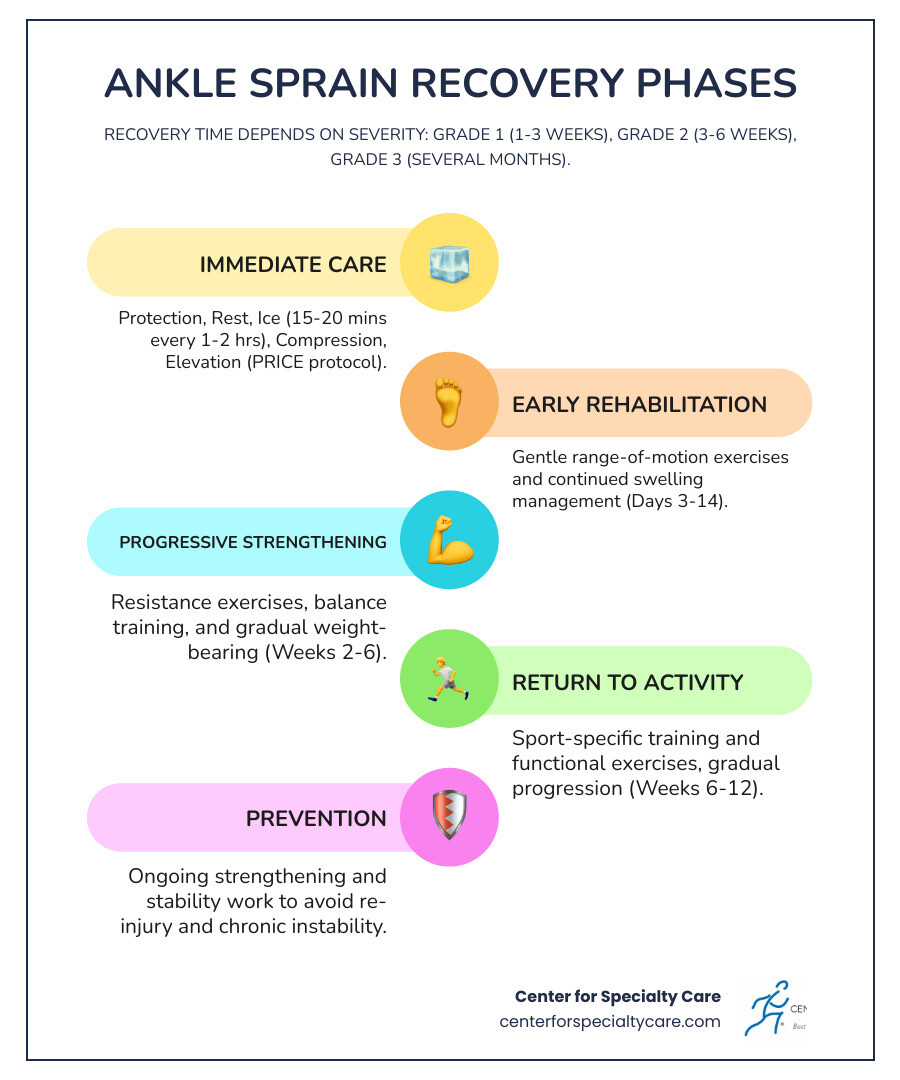
Ankle sprain recovery typically follows these key steps:
- Immediate care (First 24-48 hours) – PRICE protocol: Protection, Rest, Ice (15-20 minutes every 1-2 hours), Compression, Elevation
- Early rehabilitation (Days 3-14) – Gentle range-of-motion exercises and continued swelling management
- Progressive strengthening (Weeks 2-6) – Resistance exercises, balance training, and gradual weight-bearing
- Return to activity (Weeks 6-12) – Sport-specific training and functional exercises
- Prevention – Ongoing strengthening and stability work to avoid re-injury
Recovery time depends on severity: Grade 1 sprains heal in 1-3 weeks, Grade 2 sprains take 3-6 weeks, and Grade 3 sprains may require several months.
A simple misstep can lead to a sprained ankle, one of the most common musculoskeletal injuries. It happens when you twist or roll your ankle, stretching or tearing the ligaments that support it, resulting in pain, swelling, and bruising.
Fortunately, most ankle sprains heal completely with proper care. Research shows that starting the right exercises immediately after an injury can lead to a faster, better recovery. The key is understanding the rehabilitation plan, from immediate care to long-term prevention.
I’m Dr. Corey Welchlin, a board-certified orthopedic surgeon at the Center for Specialty Care in Fairmont, Minnesota. With over 30 years of experience in sports medicine and joint injuries, I’ve guided hundreds of patients through successful ankle sprain recovery using evidence-based treatments.
First Steps: Immediate At-Home Treatment
What you do in the first few hours after an ankle sprain can significantly impact your ankle sprain recovery. The main goals are to reduce swelling, manage pain, and protect the injured ligaments. This is where the PRICE protocol is essential.
- Protection: Keep your ankle safe from further injury. Use crutches to avoid putting weight on it or wear a supportive brace.
- Rest: Give the ankle a break, especially for the first 24-48 hours.
- Ice: Apply ice or a cold pack for 15-20 minutes every one to two hours to reduce swelling and pain. Place a thin towel between the ice and your skin.
- Compression: Use an elastic wrap to gently limit swelling. Ensure it’s snug but not so tight that it causes numbness or tingling. Remove it at night.
- Elevation: Prop your ankle on pillows so it’s above the level of your heart. This helps drain excess fluid.
Just as important is knowing what to avoid. For the first 72 hours, remember the HARM protocol: avoid Heat, Alcohol, Running, and Massage, as these can increase swelling and slow down healing.
Over-the-counter medications like ibuprofen can help manage pain and inflammation. Follow the label’s dosage instructions and consult a healthcare provider if you have any concerns.
If your pain is severe or doesn’t improve with home care, our team is here to help. We offer comprehensive pain management solutions custom to your situation. For more details on home care, the Sprained ankle aftercare instructions from MedlinePlus are a helpful resource.
Understanding the Severity: When to See a Doctor
While most ankle sprains heal with home care, some symptoms warrant a professional evaluation to rule out a more serious injury like a fracture. Ignoring these signs can lead to chronic pain and instability.
Schedule an appointment with a doctor if you experience:
- Severe pain or swelling that doesn’t improve after 24-48 hours of PRICE therapy.
- Inability to put any weight on your foot.
- A distinct “pop” sound or feeling at the time of injury.
- Numbness or tingling in your foot or toes.
- Any visible deformity where the ankle looks misshapen or out of place.
- Symptoms that do not improve after a week of self-care.
Our [More info about Orthopedics](https://centerforspecialtycare.com/orthopedics/) team can provide an accurate diagnosis and a treatment plan for your specific injury.
Grades of Ankle Sprains
Ankle sprains are classified into three grades based on ligament damage, which helps predict your ankle sprain recovery timeline.
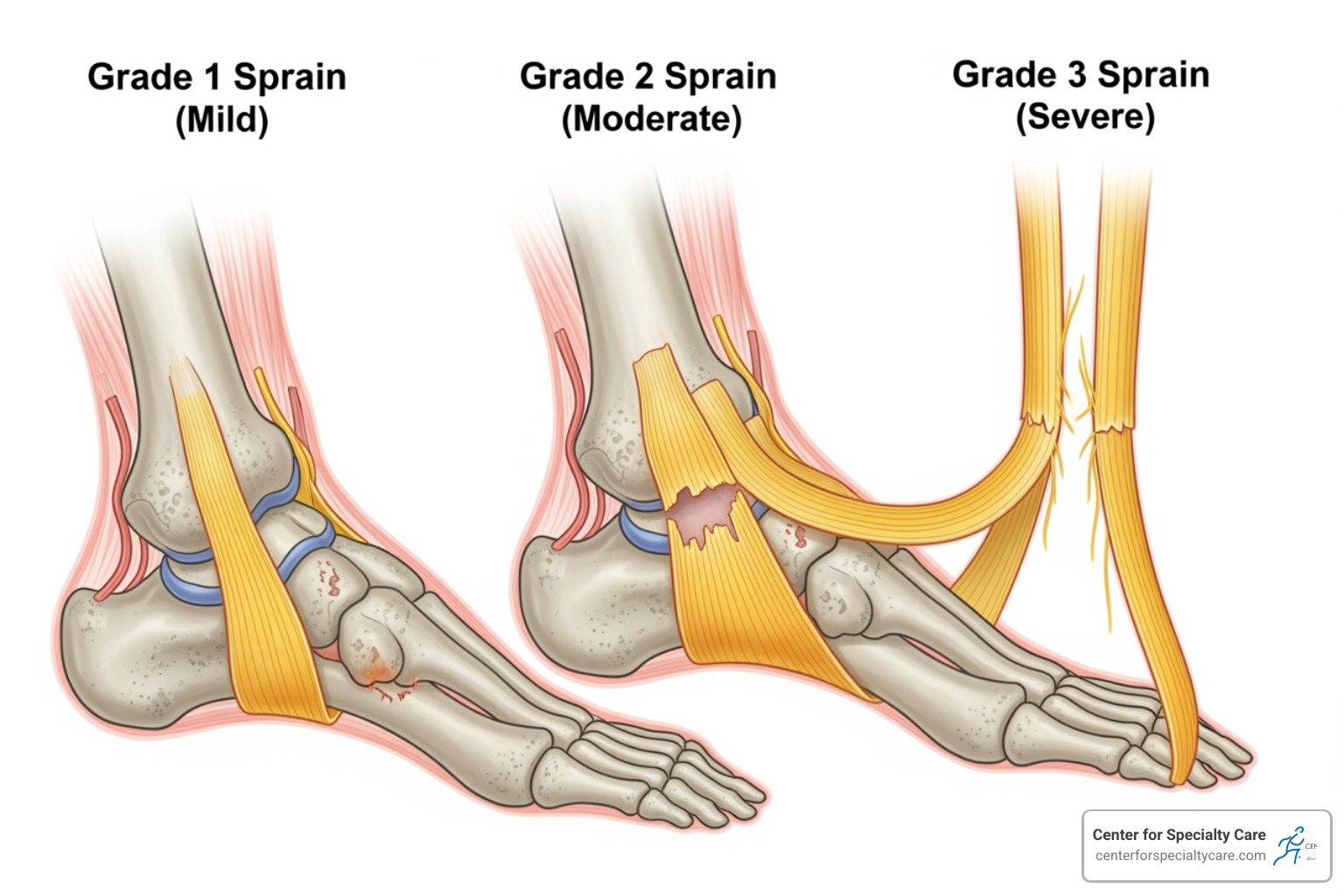
- Grade 1 (Mild): Ligaments are stretched with microscopic tears. You’ll have mild tenderness and swelling but can usually walk with discomfort. Recovery is typically 1-3 weeks.
- Grade 2 (Moderate): A partial ligament tear causes moderate pain, swelling, bruising, and some instability. Walking is difficult. Recovery usually takes 3-6 weeks.
- Grade 3 (Severe): A complete ligament tear results in severe pain, significant swelling, and major instability. Walking without support is often impossible. Recovery can take several weeks to months.
High ankle sprains, which involve the ligaments above the ankle joint, are often more severe and require longer recovery periods.
Sprained Ankle vs. Broken Ankle
It can be difficult to tell the difference between a sprain (ligament injury) and a break (bone fracture), as symptoms like pain and swelling are similar. The treatment is very different, so a correct diagnosis is crucial.
| Feature | Sprained Ankle | Broken Ankle (Fracture) |
|---|---|---|
| Injury Type | Ligaments (stretched or torn) | Bone (cracked or broken) |
| Pain Location | Often in the soft tissue around the joint | Tenderness directly over the ankle bone |
| Swelling | Common, can be mild to severe | Common, often more immediate and severe |
| Bruising | Common, can appear hours or days later | Common, may be more widespread |
| Weight-bearing | May be possible with Grade 1, difficult with Grade 2/3 | Often impossible or extremely painful |
| Deformity | Rare, ankle usually looks normal | Possible if bones are displaced, ankle may look misshapen |
| Numbness/Tingling | Less common | More common, can indicate nerve involvement |
| “Pop” Sound | Can occur with severe sprains | Can occur, often louder or more distinct |
Key indicators of a fracture include pain directly over the bone, a visible deformity, or numbness. However, self-diagnosis is unreliable. An X-ray is the only way to be certain. Our [More info about our diagnostic imaging services](https://centerforspecialtycare.com/mri-bone-density-xray-nerve-conduct/) can provide a definitive answer, ensuring you get the right treatment from the start.
The Road to Recovery: Your Ankle Sprain Recovery Plan
After the initial phase of rest and ice, the active part of ankle sprain recovery begins. This is a structured rehabilitation process designed to restore your ankle’s strength, flexibility, and balance to prevent future injuries. Rushing this process can lead to chronic instability and repeated sprains.
Your recovery plan will move through distinct phases, from gentle range-of-motion exercises to strengthening and balance training. Our dedicated physical therapy team creates personalized programs custom to your injury and goals. You can learn more about our [More info about Physical Therapy](https://centerforspecialtycare.com/physical-therapy/) services and how we integrate orthopedic expertise via our [Diagnosis and treatment options from our team](https://centerforspecialtycare.com/orthopedics/) to ensure you receive comprehensive care.
Typical Timelines for Ankle Sprain Recovery
Recovery time varies based on the sprain’s severity, your age, health, and commitment to rehabilitation.
- Grade 1 sprains: Typically 1-3 weeks. Pain and swelling subside quickly, allowing for a swift return to normal activities.
- Grade 2 sprains: Usually 3-6 weeks. These require more time for the partially torn ligament to heal, with a gradual progression of weight-bearing and exercises.
- Grade 3 sprains: Can take several weeks to several months. These severe injuries often require a period of immobilization followed by extensive physical therapy.
High ankle sprains are known for longer recovery times, often taking several months to heal fully due to their complexity.
Key Exercises for Ankle Sprain Recovery
Once your doctor gives you the okay, starting controlled exercises is essential for a full recovery. These exercises focus on restoring range of motion, rebuilding strength, and retraining balance.

-
Range of Motion Exercises: Start with these to regain flexibility. Examples include the ankle alphabet (tracing letters in the air with your big toe), ankle circles, and gentle side-to-side movements.
-
Strengthening Exercises: Once your ankle is more flexible, rebuild muscle support. Start with towel curls (using your toes to scrunch a towel). Progress to resistance band exercises (pushing and pulling against a band in all directions) and calf raises (rising onto your toes), eventually on a single leg.
-
Balance and Stability (Proprioception) Training: This is crucial for preventing re-injury. Begin with a single-leg stance, holding for 30 seconds. To increase the challenge, try it with your eyes closed or while reaching with your other foot to touch points on an imaginary clock face. Using a wobble board can further improve your ankle’s reactive stability.
Always perform exercises within a pain-free range. Our [More info about Sports Medicine](https://centerforspecialtycare.com/sports-medicine/) team can design a progressive program that challenges you safely.
Returning to Sports and Normal Activities
Returning to sports too soon is a common cause of re-injury. Before resuming high-impact activities, you should have full, pain-free range of motion and strength that matches your uninjured ankle.
A gradual progression is key:
- Start with brisk walking, then light jogging on a flat surface.
- Progress to running drills, introducing gentle changes of direction.
- Incorporate agility training like cone drills and sport-specific movements.
- Finally, return to full training, including jumping and cutting.
Functional tests, like hopping on the injured leg without pain or instability, can help gauge your readiness. Some athletes use bracing or taping for extra support during this phase. Always consult your doctor or physical therapist before returning to your sport to avoid setbacks.
Preventing Future Sprains and Long-Term Complications
After one ankle sprain, you are more likely to have another. Repeated sprains can lead to chronic ankle instability (CAI) and increase the risk of post-traumatic osteoarthritis later in life. Fortunately, most of these complications are preventable.
Here are key strategies to protect your ankles:
- Proper Footwear: Choose supportive shoes appropriate for your activity. Replace worn-out athletic shoes regularly.
- Warm-Up and Stretching: Always warm up before physical activity with dynamic stretches to prepare your muscles and ligaments.
- Consistent Strengthening: Continue with exercises like resistance band work and calf raises to maintain the strength of the muscles supporting your ankle.
- Balance Training: Regularly practice balance exercises, such as single-leg stances or using a wobble board, to maintain your ankle’s proprioception (its ability to sense its position).
- Situational Awareness: Pay attention when walking on uneven ground, stairs, or slippery surfaces.
- Listen to Your Body: Rest when your ankle feels tired or unstable. Pushing through fatigue increases your risk of injury.
Prevention is always easier than treatment. For more tips on foot health, see our article on A Walk Towards Healthy Feet: Common Foot Problems and Solutions.
Frequently Asked Questions about Ankle Sprains
Here are answers to some of the most common questions about ankle sprain recovery.
How long should a sprained ankle stay swollen?
Swelling typically peaks within the first 24 to 72 hours. For mild sprains, most swelling resolves within a week. For moderate to severe sprains, some swelling can linger for several weeks, especially at the end of the day. If swelling is severe, worsening, or accompanied by signs of infection (like red streaks or warmth), seek a professional evaluation.
Can you walk on a sprained ankle?
It depends on the severity. With a Grade 1 sprain, you can often walk with some discomfort. With Grade 2 or 3 sprains, walking is usually too painful and can cause further damage. In these cases, crutches or a walking boot are necessary to offload the ankle. Listen to your body: if walking causes sharp pain or instability, you should not be putting weight on it.
Should I wrap a sprained ankle overnight?
Generally, no. While a compression wrap is helpful during the day to control swelling, it’s best to remove it at night. This allows for better circulation, which is essential for healing. An exception is if your doctor has prescribed a specific brace or boot to be worn continuously for protection. For mild sprains, you might transition to a lighter brace for daytime support once the initial swelling subsides.
Get Back on Your Feet with Confidence
Proper ankle sprain recovery is a journey from immediate care to structured rehabilitation. Healing correctly means more than just eliminating pain; it involves rebuilding strength, flexibility, and balance to protect yourself from future injuries and long-term complications.
At Center for Specialty Care, we understand that every recovery is unique. Our team of orthopedic specialists, sports medicine physicians, and physical therapists in Fairmont is dedicated to providing personalized care to help you achieve your goals, whether that’s returning to sports or simply walking without pain.
We are committed to patient satisfaction and providing quick access to appointments because we know waiting is difficult when you’re in pain.
Don’t let an ankle sprain keep you sidelined. If you’re dealing with a new injury, persistent pain, or instability, we’re ready to help you take the next step with confidence.
[Contact our Podiatry specialists to start your journey back to full strength](https://centerforspecialtycare.com/podiatry/)