
Shoulder Pain Explained: Causes, Symptoms, and Relief
December 11, 2025
From Ouch to Onward: A Complete Guide to Ankle Sprain Recovery
December 15, 2025
Pain relief for tendonitis: 4 Proven Steps
Why Pain Relief for Tendonitis Matters
Pain relief for tendonitis is a critical need for the thousands of people affected by this condition each year. Tendonitis occurs when the fibrous cords connecting muscles to bones become inflamed, causing a dull ache that worsens with movement and limits daily activities. Common areas include the shoulders, elbows, knees, wrists, and heels.
Quick Pain Relief Options:
- Rest: Stop the painful activity for 2-3 days.
- Ice: Apply ice packs for 15-20 minutes, 3-4 times daily.
- Compression: Use snug, but not tight, elastic bandages.
- Elevation: Raise the affected area above heart level.
- Over-the-counter NSAIDs: Use ibuprofen or naproxen for short-term relief.
- Physical therapy: Perform eccentric strengthening exercises for long-term healing.
Most cases respond well to care, with mild tendonitis improving in 2-3 weeks. Severe cases may take a few months to heal fully.
As Dr. Corey Welchlin, I have over 30 years of experience treating orthopedic conditions in southern Minnesota and northern Iowa. My team at the Center for Specialty Care helps patients find effective pain relief for tendonitis by combining immediate pain management with customized, long-term healing strategies.
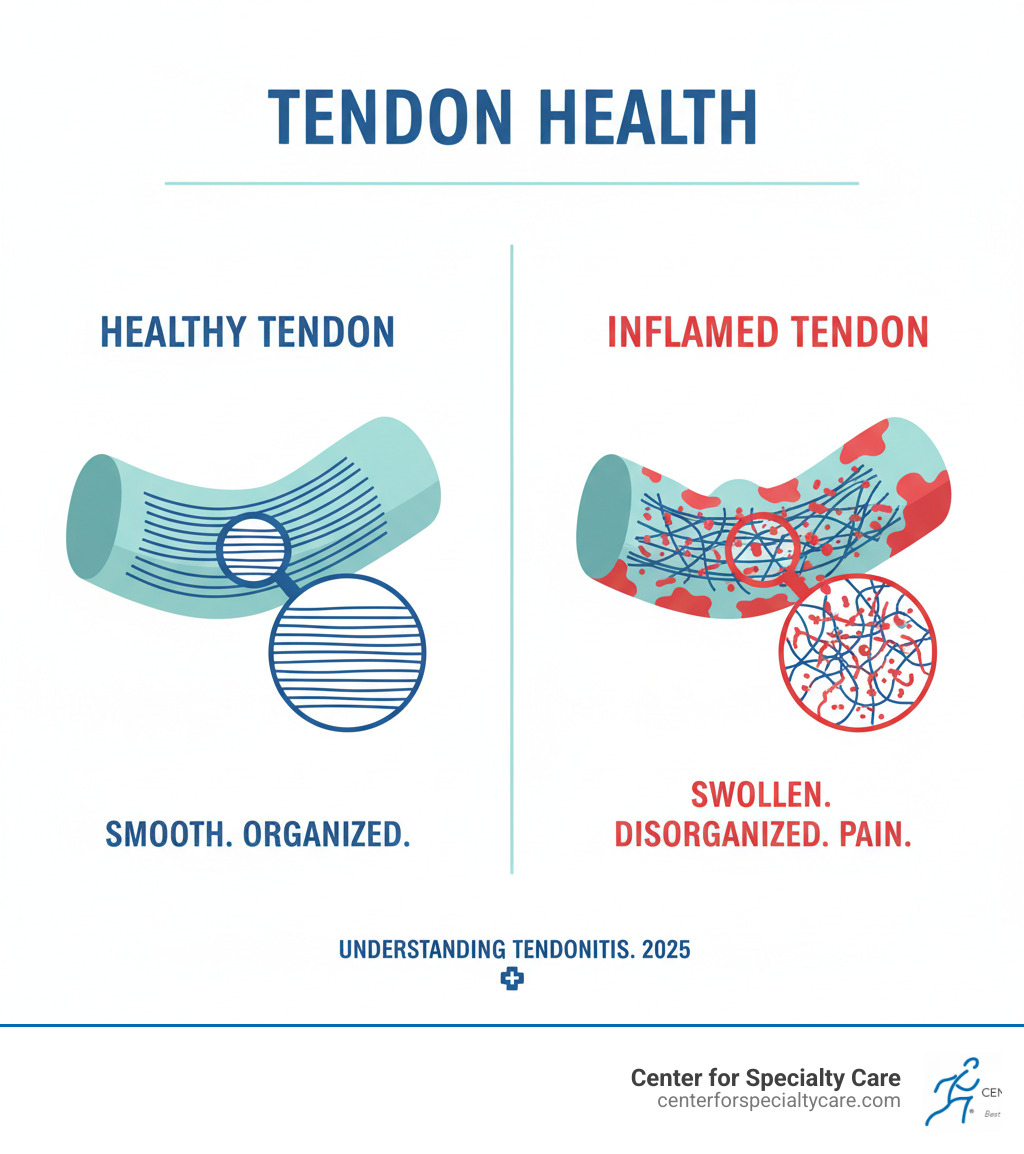
Know your Pain relief for tendonitis terms:
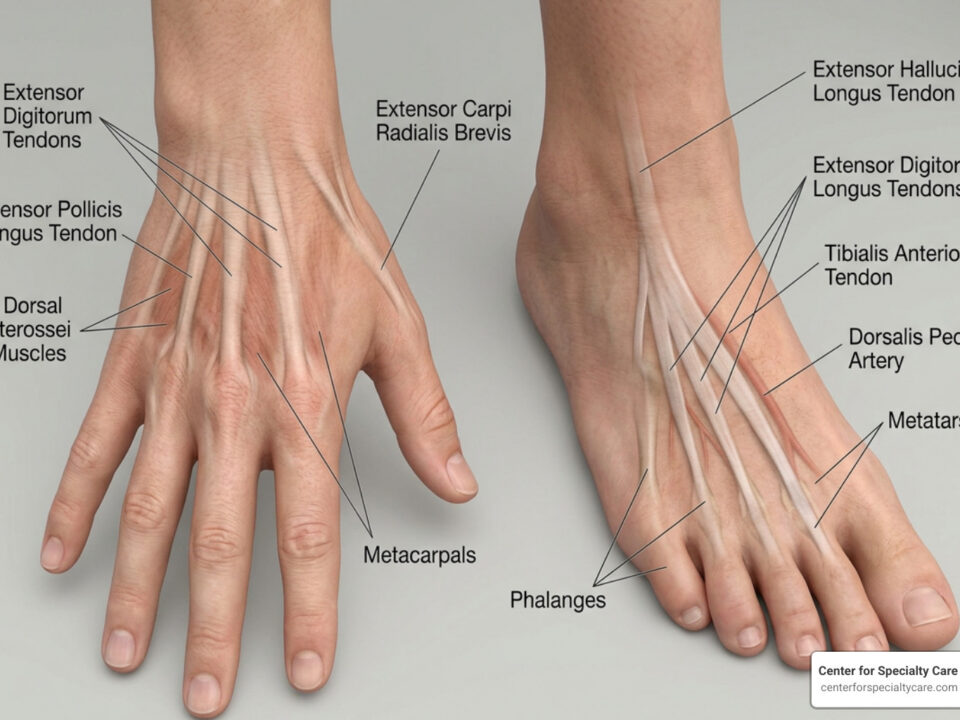
Understanding Tendonitis: What It Is and Why It Hurts
Your tendons are the body’s sturdy cables, connecting muscles to bones to enable movement. They are most vulnerable near joints like the elbows, knees, shoulders, wrists, and heels.
Tendonitis occurs when these cords become inflamed or irritated. While the “-itis” implies inflammation, modern research shows many cases involve tendon degeneration (tendinosis). Either way, the result is pain that disrupts your life.
The primary cause is repetitive motion, making tendonitis a common overuse injury, especially without proper conditioning. Risk factors include:
- Age over 40, as tendons lose flexibility.
- Forceful exertion or frequent overhead reaching.
- Poor posture or body mechanics.
- Certain medications and underlying conditions like diabetes or arthritis.
Symptoms are straightforward: a dull ache that worsens with movement, tenderness to the touch, stiffness, and sometimes swelling or a cracking sensation.
Common Types of Tendonitis
Tendonitis is often named for the activity that causes it. You may have heard of tennis elbow (outer elbow pain), golfer’s elbow (inner elbow pain), jumper’s knee (pain below the kneecap), swimmer’s shoulder (from overhead arm motion), or Achilles tendonitis (pain in the back of the heel).
How Doctors Diagnose Tendonitis
An accurate diagnosis is the first step toward effective pain relief for tendonitis. We start by listening to your history and performing a physical exam. This is often enough to make a diagnosis. If needed, we may use imaging tests to get a clearer picture:
- X-rays rule out bone issues like fractures or arthritis.
- An MRI provides detailed images of soft tissues, revealing tendon degeneration or tears.
- Ultrasound visualizes the tendon in real-time to identify inflammation or other abnormalities.
Once we identify the root cause, we can create a targeted treatment plan to get you back to your life.
Immediate Pain Relief for Tendonitis at Home
When tendonitis pain strikes, effective treatment can begin at home. These proven remedies can provide relief and start the healing process.
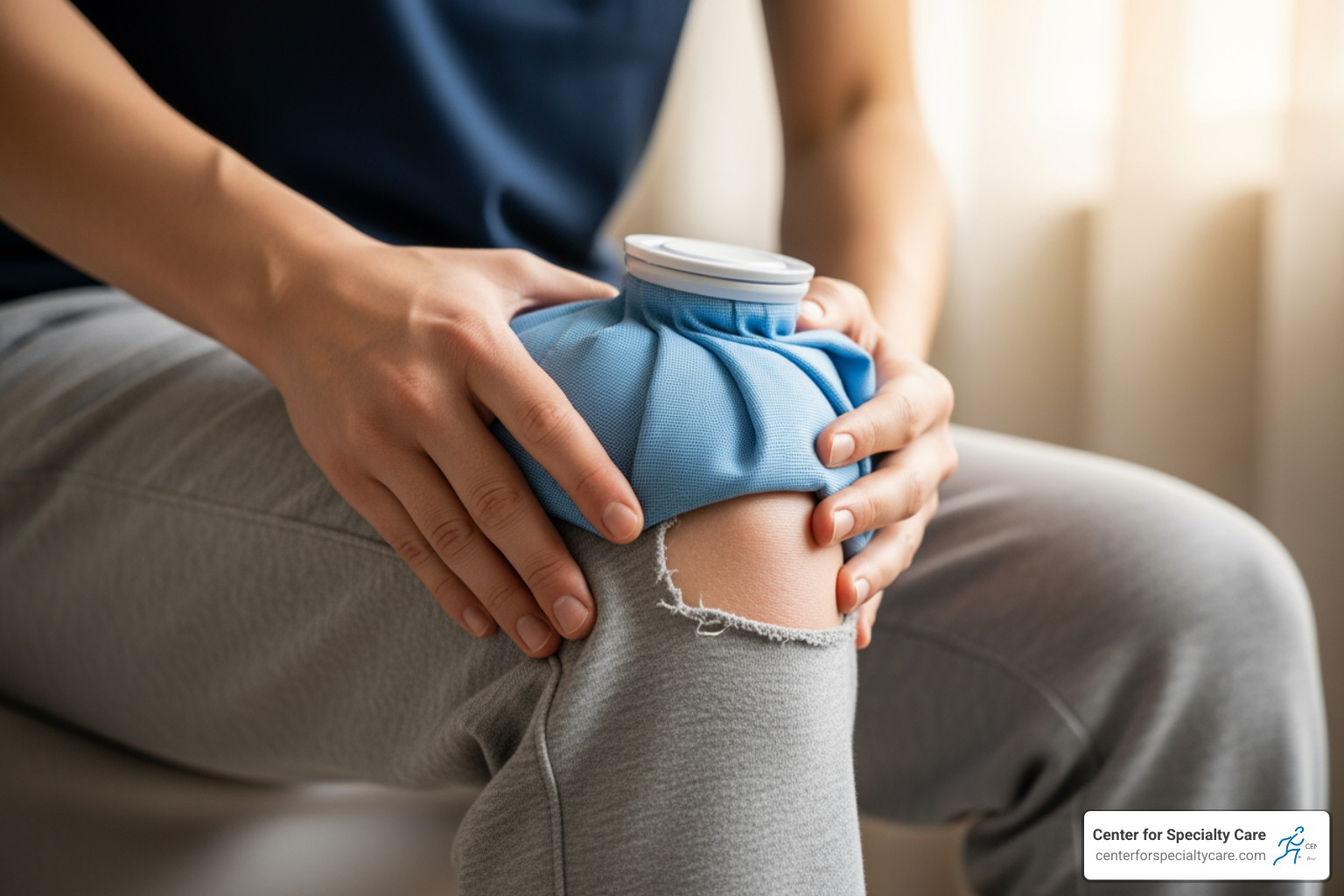
The RICE Protocol: Your First Line of Defense
The RICE method—Rest, Ice, Compression, and Elevation—is a simple, effective first response to tendon pain.
- Rest: This means relative rest. Avoid the specific activity causing pain for 2-3 days, but stay active with other movements. For Achilles tendonitis from running, you might switch to swimming.
- Ice: In the first 48-72 hours, apply an ice pack wrapped in a towel for 15-20 minutes, 3-4 times daily. This numbs pain and reduces swelling. The American College of Rheumatology still recommends ice for acute symptoms.
- Compression: An elastic bandage or sleeve helps control swelling and supports the joint. Ensure it’s snug, not tight, and remove it at night.
- Elevation: Prop the injured limb above heart level to help drain excess fluid and reduce swelling.
Over-the-Counter Medications for Quick Pain Relief for Tendonitis
For extra help with discomfort, over-the-counter (OTC) medications are a good option.
NSAIDs (nonsteroidal anti-inflammatory drugs) like ibuprofen (Advil) and naproxen sodium (Aleve) target both pain and inflammation. They are effective for short-term pain relief for tendonitis (1-2 weeks). For longer use, consult a doctor due to potential side effects.
Topical creams containing pain relievers are an alternative if you prefer to avoid pills. They deliver medication directly to the painful area with fewer systemic side effects.
These common treatments for tendonitis manage symptoms and create an environment for healing. If pain persists beyond a few weeks, it’s time to consult our team for more comprehensive care.
Professional Care: Medical Treatments That Work
When home care isn’t enough, professional medical treatments can provide lasting relief. At the Center for Specialty Care, we create customized plans that combine proven therapies to get you back to your activities.
Effective professional treatments include physical therapy, bracing, and corticosteroid injections for rapid inflammation control.
Physical Therapy: The Cornerstone of Recovery
Physical therapy is the gold standard for lasting tendonitis recovery. It not only heals the injury but also builds resilience against future problems.
Our physical therapy team in Fairmont, Estherville, Buffalo Center, and St. James will create a plan focused on:
- Improving flexibility with guided stretching to restore normal function.
- Strengthening surrounding muscles to take pressure off the injured tendon.
- Eccentric strengthening exercises, a specialized technique where a muscle lengthens as it contracts (like slowly lowering a weight). Scientific research on eccentric training shows it can normalize tendon structure, making it highly effective for chronic conditions like patellar tendinopathy and Achilles tendonitis.
We may also use bracing and splinting to rest the tendon while allowing you to continue daily activities.
Corticosteroid Injections: Weighing the Pros and Cons
For severe pain and inflammation, corticosteroid injections can offer rapid pain relief for tendonitis. They deliver powerful anti-inflammatory medication directly to the site of pain, with many patients feeling significant relief within days.
However, these injections come with trade-offs. While they provide excellent short-term pain relief (up to six weeks), their long-term effectiveness is questionable. More importantly, repeated injections can lead to tendon weakening and increase the risk of a tendon rupture, a much more serious injury.
Because of these risks, we are very selective, typically reserving injections for acute, severe pain. We avoid them for chronic tendonitis (lasting over three months) where strengthening is more important. Our priority is your long-term tendon health, not just a quick fix.
On the Horizon: Advanced and Emerging Therapies
When standard treatments don’t resolve tendon pain, advanced therapies that harness the body’s healing power offer new hope. At the Center for Specialty Care, we stay at the forefront of these innovations to provide the most promising pain relief for tendonitis options.
Regenerative Medicine: PRP and Stem Cells
Regenerative medicine amplifies your body’s natural repair mechanisms.
Platelet-Rich Plasma (PRP) is a promising treatment for chronic tendon pain. We draw a small amount of your blood, concentrate the platelets (which are rich in healing growth factors), and inject the platelet-rich plasma into the injured tendon to stimulate tissue regeneration. Research shows encouraging results for conditions like tennis elbow and jumper’s knee. Our orthopedics specialists can determine if you are a good candidate.
Stem Cell Therapy is on the cutting edge of research. These cells can potentially transform into new tendon cells and promote healing. While still largely experimental for routine use, we are watching its development.
Innovative Procedures for Advanced Pain Relief for Tendonitis
Several established procedures offer hope for stubborn tendon problems:
- Extracorporeal Shockwave Therapy (ESWT): This non-invasive therapy uses acoustic waves to stimulate blood flow and tissue repair. It is particularly effective for calcific tendinopathy of the shoulder.
- Sclerotherapy for neovessels: In chronic cases, abnormal new blood vessels can cause pain. This procedure involves injecting a substance to close off these vessels, showing good results for chronic Achilles tendinopathy.
- Dry needling: Using a fine needle under ultrasound guidance, a doctor makes tiny punctures in the damaged tendon. This controlled micro-trauma triggers the body’s natural healing response, stimulating blood flow and new tissue growth.
These advanced options, explored in medical literature like this review of tendinopathy treatments, expand the possibilities for relief from chronic tendon pain.
Prevention and When to Seek Help
Preventing tendonitis is always better than treating it. Most cases develop gradually, so you can often take steps to avoid pain before it starts. By respecting your body’s limits and making smart adjustments, you can keep your tendons healthy.
Smart Habits to Prevent Future Flare-Ups
Prevention starts with preparing your body properly for activity.
- Warm-up and Stretch: Always warm up for 5-10 minutes before physical activity and stretch gently afterward to maintain flexibility.
- Use Correct Technique: Poor form in sports or at work puts unnecessary stress on tendons. Our sports medicine team can help you refine your movements.
- Make Ergonomic Adjustments: If you have a desk job, adjust your chair and monitor, and take regular movement breaks to reduce tendon stress.
- Progress Gradually: When starting a new exercise, increase intensity and duration slowly to allow your tendons to adapt.
- Cross-Train: Vary your activities (e.g., mix running with swimming or cycling) to avoid overstressing the same tendons.
- Listen to Your Body: Pain is a warning sign. Stop if an activity hurts. Pushing through pain can turn a minor issue into a chronic one.
When to See a Doctor for Tendon Pain
While home care is effective for mild cases, you should seek professional help in Fairmont, Estherville, Buffalo Center, or St. James if you experience the following:
- Pain that doesn’t improve after 2-3 weeks of home care.
- Severe symptoms like intense pain, major swelling, or inability to move the joint.
- A sudden, severe pain with a popping or snapping sound, which could signal a tendon rupture and is a medical emergency.
- Signs of infection, such as redness, warmth, or a fever.
- Pain in multiple tendons, which might indicate a systemic condition like rheumatoid arthritis.
Early intervention leads to a faster, more complete recovery. Don’t let untreated tendonitis progress to chronic pain or a rupture.
Frequently Asked Questions about Tendonitis
It’s natural to have questions about tendon pain. Here are answers to the most common ones we hear at the Center for Specialty Care.
How long does tendonitis take to heal?
Healing time varies. With proper home care, mild cases often improve within 2 to 3 weeks. However, more severe cases can take a few months to fully recover. Factors influencing recovery include the injury’s severity, your adherence to the treatment plan, underlying health conditions, and avoiding a premature return to strenuous activity. Proper treatment is key to a full recovery.
Is heat or ice better for tendonitis pain?
The answer depends on the stage of your injury.
- Use ice for the acute phase (the first 48-72 hours or during a flare-up). Ice numbs pain and reduces swelling. Apply an ice pack wrapped in a cloth for 15-20 minutes at a time.
- Use heat for chronic stiffness and before activity. Heat increases blood flow, relaxes muscles, and can be applied with a warm compress before stretching or exercise.
Remember the rule: ice for new injuries and swelling, heat for chronic stiffness and pre-activity warm-ups.
Can tendonitis go away on its own?
While a very mild case might resolve with sufficient rest, it’s risky to simply wait and see. If you continue the irritating activity, the condition can become chronic. This often leads to tendinosis, a degeneration of the tendon’s structure that is much harder to treat.
Ignoring tendon pain increases your risk of chronic pain, weakness, and even a complete tendon rupture, which may require surgery. It’s always best to get a proper diagnosis to ensure complete healing and prevent long-term complications. Don’t gamble with your health; if pain persists after a few days of home care, it’s time to see a professional.
Conclusion: Your Path to a Pain-Free Future
Living with tendon pain is not a requirement. We’ve covered the full roadmap to recovery, from immediate home care to advanced medical treatments, all aimed at providing lasting pain relief for tendonitis.
The best approach combines immediate symptom management (like the RICE protocol) with long-term rehabilitation (like physical therapy) and smart prevention strategies. While mild cases may heal in a few weeks, severe tendonitis requires patience and consistent care over several months to prevent chronic issues.
At the Center for Specialty Care, we know every patient’s journey is unique. In Fairmont, MN, Estherville, IA, Buffalo Center, IA, and St. James, MN, our team, led by Dr. Corey Welchlin with his three decades of orthopedic expertise, provides personalized care. We are committed to 100% patient satisfaction, partnering with you to address the root cause of your pain.
With quick appointment availability, you won’t have to wait in pain. We explore every option to help you reclaim your active, pain-free life.
Don’t let tendonitis keep you on the sidelines. Your path to a pain-free future starts today.
Discover comprehensive orthopedic care with our specialists today!