
Tendinitis Pain: Should You Apply Ice or Heat for Fast Relief?
May 9, 2026
The Complete Guide to Relieving Rhomboid Pain
May 15, 2026
Why Your Rotator Cuff Injury Hurts More at Night
When Rotator Cuff Injury Pain at Night Steals Your Sleep
Rotator cuff injury pain at night is one of the most common complaints we hear from shoulder patients — and for good reason. Studies show that up to 93% of people with shoulder injuries report their pain gets significantly worse when they try to sleep.
Here’s why it happens and what helps most:
- Gravity disappears when you lie down, removing the natural decompression it provides during the day — putting new stress on damaged tendons
- Blood flow and fluid shift toward the shoulder, increasing pressure on inflamed tissue
- Cortisol (your body’s natural anti-inflammatory hormone) drops at night, leaving pain less suppressed
- Your brain has no distractions, so the pain signal feels louder
- Sleep position compresses the shoulder joint, especially if you roll onto the injured side
The result? Throbbing, aching, and frequent wake-ups that leave you exhausted and frustrated.
This isn’t just uncomfortable — poor sleep slows healing, affects mood, and makes the injury feel worse than it is. Research confirms that people with rotator cuff tears experience more frequent nighttime awakenings and shorter total sleep time than healthy individuals.
I’m Dr. Corey Welchlin, a board-certified orthopedic surgeon with over 30 years of experience treating rotator cuff injuries at the Center for Specialty Care in Fairmont, Minnesota — and rotator cuff injury pain at night is something I help patients manage every week. In this guide, I’ll walk you through exactly why the pain spikes after dark and what you can do about it starting tonight.
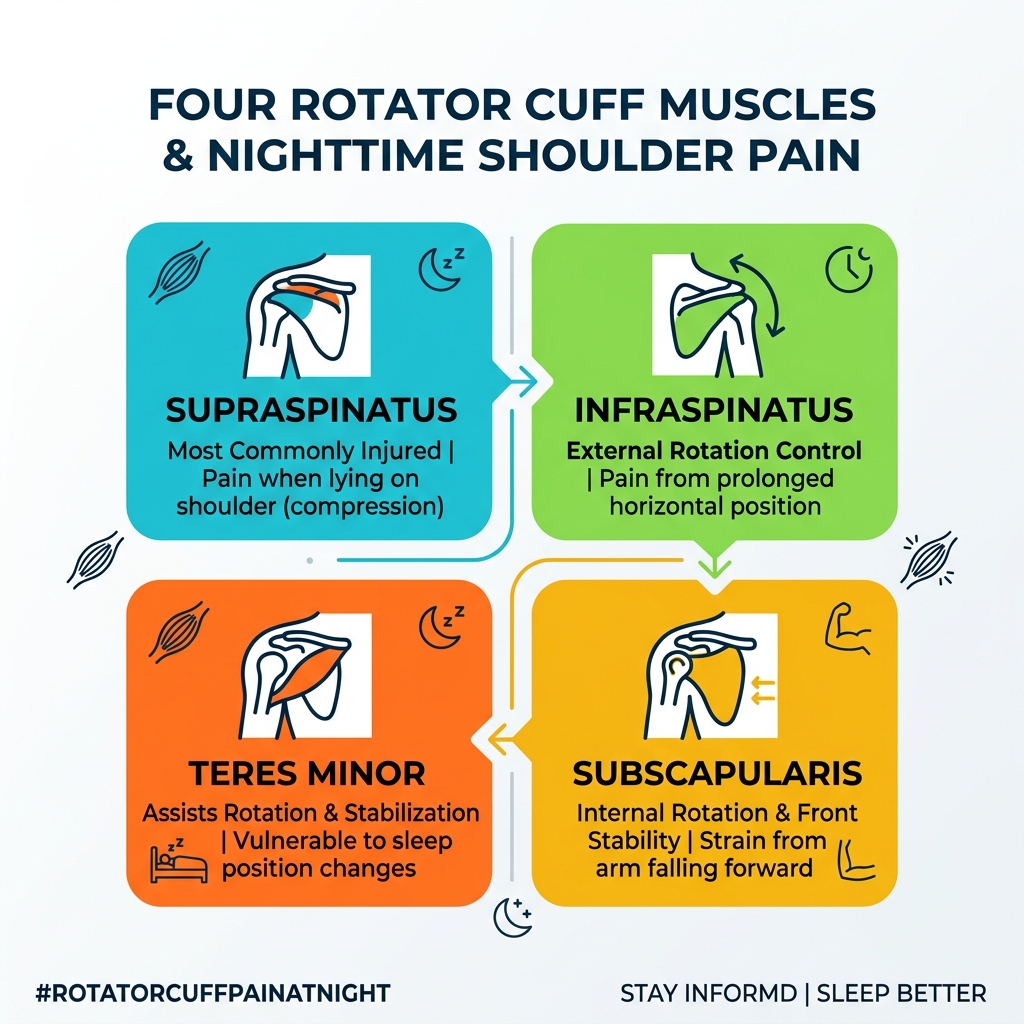
Simple rotator cuff injury pain at night word guide:
Understanding Why Rotator Cuff Injury Pain at Night Occurs
If you feel like your shoulder is throwing a tantrum the moment your head hits the pillow, you aren’t imagining it. There are several physiological and biomechanical reasons why a rotator cuff injury seems to “scream” at night.
During the day, gravity actually helps you. When you are standing or sitting, the weight of your arm pulls the humerus (upper arm bone) slightly downward, creating a bit of extra space in the shoulder joint. When you lie down, that gravitational decompression vanishes. The structures in your shoulder—the tendons, ligaments, and the fluid-filled sac called the bursa—suddenly have less room.
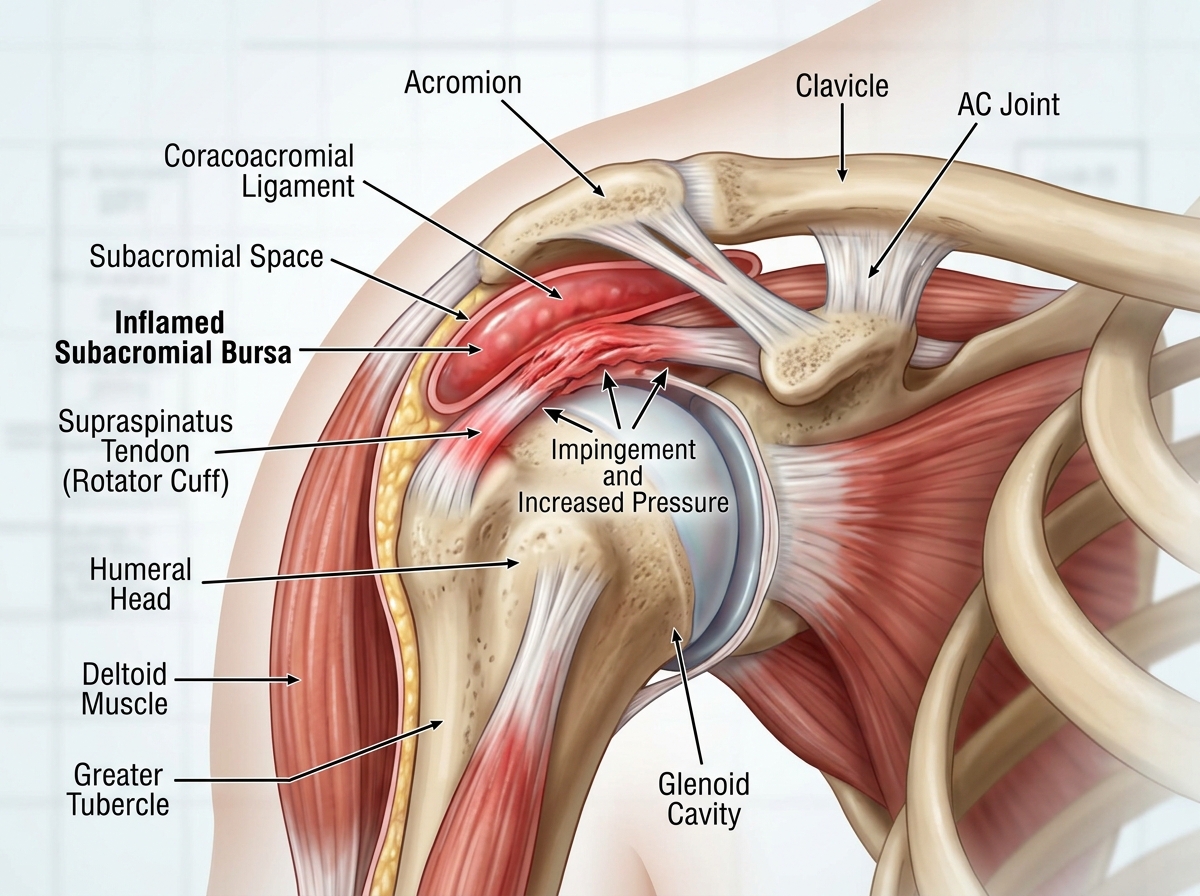
Furthermore, fluid redistribution plays a major role. When you are horizontal, interstitial fluid and blood flow can pool around the injured site. This increased volume in a tight space increases pressure on sensitive nerve endings. There is also a hormonal component: your body’s levels of cortisol, a natural anti-inflammatory, are at their lowest during the late night and early morning hours. This means your body is naturally less equipped to fight off the throbbing sensation of a tear or tendonitis while you sleep.
For a deeper dive into these mechanisms, you can explore Why does a rotator cuff injury cause nocturnal pain? to understand the biological shift that occurs at bedtime.
Biomechanical Factors and Inflammation
Inflammation is the primary driver of rotator cuff injury pain at night. When a tendon is frayed or torn, the body sends pro-inflammatory cytokines to the area to begin the repair process. One specific protein, tumor necrosis factor (TNF)-α, has been found in much higher levels in patients who report severe sleep disturbances.
Conditions like bursitis (inflammation of the cushion sac) and tendonitis (inflammation of the tendon) are particularly sensitive to nighttime positioning. In the quiet of the night, without the distractions of work, family, or television, your brain becomes hyper-focused on these inflammatory signals. Scientific research on sleep disturbances in rotator cuff pathology highlights that 70% to 89% of patients experience significant sleep loss, often underestimating their actual wake time by as much as 90 minutes.
The Role of Sleep Position in Shoulder Strain
Your preferred sleeping position might be your shoulder’s worst enemy. Side-sleeping is the most common culprit. When you lie on the affected side, your entire upper body weight compresses the subacromial space, essentially squashing the injured rotator cuff.
Even sleeping on your “good” side can cause issues if the injured arm drapes across your body, which pulls on the rotator cuff tendons and strains the joint. This awkward positioning can lead to nerve compression, resulting in that annoying numbness or tingling that wakes you up at 3:00 AM. Your body’s circadian rhythm also triggers an inflammatory response during sleep, making any position that puts tension on the joint feel twice as painful as it would during the day.
Best Sleeping Positions to Manage Rotator Cuff Injury Pain at Night
The goal of a good sleep position for a shoulder injury is to maintain “neutral alignment.” This means keeping the shoulder in a position where the tendons are not being stretched or compressed.
- The Back Sleeper (Supine): This is generally considered the “gold standard” for shoulder pain. By lying on your back, your weight is distributed evenly. We recommend placing a small pillow or rolled-up towel under the elbow of the injured arm. This props the arm up slightly, preventing it from falling backward and pulling on the rotator cuff.
- The Recliner Option: If lying flat is too painful, many of our patients in Fairmont and Estherville find relief by sleeping in a recliner or using a wedge pillow. This semi-upright position (about 45 degrees) uses gravity to keep the arm bone from sliding up into the shoulder socket.
- The Unaffected Side: If you must sleep on your side, sleep on the healthy shoulder only.
For more detailed tips on positioning, you can check out this guide on How to Relieve Rotator Cuff Pain at Night.
Supporting the Affected Arm
Pillow propping is an art form when dealing with rotator cuff injury pain at night. If you are on your back, the goal is “midline support.” You want your arm to rest comfortably at your side, perhaps slightly tucked toward your stomach. This prevents the “dangling” effect where the weight of the arm stretches the damaged supraspinatus tendon.
Creating a “Pillow Wall” for Side Sleepers
For those who naturally roll over in their sleep, we suggest building a “pillow wall.” Place a long body pillow behind your back to prevent you from rolling onto the injured shoulder. Then, place another pillow in front of your chest to “hug.” This keeps the injured arm from falling forward and prevents scapular (shoulder blade) instability throughout the night.
At-Home Remedies for Rotator Cuff Injury Pain at Night
Managing pain at home involves a combination of temperature therapy and strategic medication.
- Ice Therapy: Apply an ice pack for 15–20 minutes right before you get into bed. This numbs the area and reduces the inflammatory “heat” that builds up after a day of use.
- Heat Application: If your shoulder feels stiff rather than throbbing, a heating pad for 15 minutes can relax the muscles and improve blood flow.
- Activity Modification: Avoid heavy lifting or overhead reaching in the two hours before bed. Give your shoulder a “cool down” period.
It is also helpful to understand what kind of pain you are dealing with. For example, bursitis often feels like a sharp, localized pinch, while osteoarthritis feels like a deep, grinding ache. You can read more about Decoding Osteoarthritis: Insights from Orthopedic Specialists to see if your nighttime pain might be joint-related rather than just a soft tissue injury.
| Feature | Bursitis | Osteoarthritis |
|---|---|---|
| Pain Type | Sharp, pinching, or throbbing | Dull, deep ache, “grinding” |
| Night Pain | Severe when lying on the side | Persistent, regardless of position |
| Movement | Pain during specific reaches | Stiffness after inactivity |
| Cause | Inflamed fluid sac | Cartilage wear and tear |
Pre-Bedtime Stretching Routine
Gentle movement can actually help “grease” the joint and reduce nighttime stiffness. We recommend these three simple movements:
- Pendulum Swings: Lean over a table, letting your injured arm hang down. Gently swing it in small circles. This uses gravity to create space in the joint.
- Doorway Stretches: Place your hand on a door frame and gently turn your body away to stretch the front of the shoulder.
- Cross-Body Stretches: Gently pull the injured arm across your chest with your healthy hand.
Medication and Topical Relief
Timing is everything. If you take over-the-counter NSAIDs like ibuprofen or naproxen, try taking them about 30 to 60 minutes before you intend to sleep. This allows the medication to reach peak effectiveness just as you are trying to drift off. Always consult with us or your primary doctor before starting a daily NSAID regimen, especially if you have heart or stomach concerns. Topical gels can also provide localized relief without the systemic side effects of pills.
Professional Treatment Options and Surgical Outcomes
When at-home remedies aren’t enough, it’s time to look at professional interventions. At the Center for Specialty Care, we prioritize conservative, non-surgical treatments whenever possible. Over 80% of rotator cuff injuries can fully recover within 3 to 6 months with the right approach.
Non-Surgical Interventions
- Physical Therapy: A customized program focusing on eccentric strengthening (strengthening the muscle as it lengthens) is highly effective for tendon healing.
- Corticosteroid Injections: These can provide dramatic relief for acute inflammation, often lasting up to two months—giving you the “window” of sleep you need to participate effectively in physical therapy.
- Sleep Hygiene: We work with patients to improve their overall sleep environment, which is crucial for the body’s tissue repair processes.
For residents in the Minneapolis area or those seeking specialized surgical opinions, Rotator Cuff Tear Treatment Minneapolis, MN – Dr. David Hartigan provides excellent insights into modern orthopedic approaches.
Improving Sleep Quality Through Surgery
If a tear is full-thickness or fails to respond to conservative care, arthroscopic repair may be the best path forward. The good news? Surgery is incredibly effective at restoring sleep.
Statistics show that while nearly 90% of patients have severe sleep disturbances before surgery (as measured by the Pittsburgh Sleep Quality Index or PSQI), those numbers improve significantly post-op. By 6 months after a rotator cuff repair, only about 38% of patients report poor sleep—a rate nearly identical to the general population. By the one-year mark, 89% of patients report they are sleeping better than they have in years.
Frequently Asked Questions about Nighttime Shoulder Pain
Can I tear my rotator cuff while sleeping?
It is very unlikely to cause a brand-new, traumatic tear just by sleeping. However, if you already have a “frayed” or partial tear, sleeping in an awkward position or suddenly reaching for a bedside lamp can certainly exacerbate the injury or turn a partial tear into a larger one.
How long does it take for rotator cuff pain at night to go away?
This depends on the severity. Minor strains may resolve in a few weeks with rest and ice. Partial tears often take 2 to 4 months of physical therapy to stop hurting at night. Full-thickness tears rarely stop hurting until they are surgically repaired or the inflammation is medically managed.
Is it better to wear a sling to bed for a shoulder injury?
In the first few days after an acute injury or immediately following surgery, a sling is essential to keep the arm immobilized. However, for chronic rotator cuff pain, a sling can sometimes cause more stiffness (frozen shoulder). Using pillows for support is usually a more comfortable and flexible option for long-term management.
Conclusion
At the Center for Specialty Care, we understand that rotator cuff injury pain at night is about more than just a sore shoulder—it’s about your ability to function, work, and enjoy life in Fairmont, Estherville, and our surrounding communities. You don’t have to “just live with it.”
From personalized physical therapy to minimally invasive arthroscopic surgery, our goal is 100% patient satisfaction and a quick return to pain-free nights. Our providers are here to help you find the specific solution that fits your lifestyle.
Ready to finally get a full night’s rest? Our Providers are ready to see you.
Schedule a Shoulder Consultation today and take the first step toward reclaiming your sleep.