

Beyond the Ache: Recognizing the Many Faces of Shoulder Pain Symptoms
January 13, 2026
Intracept Procedure Near Me: Connecting with the Right Doctor
January 15, 2026
Exercises for shoulder pain: Effective Relief 2025
Why Shoulder Pain Is So Common—And What You Can Do About It
Exercises for shoulder pain can help you find relief, improve mobility, and prevent future injuries. Here are the most effective exercises to start with:
- Pendulum Stretch – Gentle swinging motion to reduce stiffness
- Shoulder Blade Squeeze – Strengthens upper back muscles
- External Rotation with Band – Targets rotator cuff muscles
- Wall Push-ups – Builds shoulder stability
- Crossover Arm Stretch – Improves flexibility across the chest
Start with 2-3 repetitions of each exercise, practicing small amounts throughout the day. Progress gradually to 2 sets of 15 repetitions as your strength improves.
Close your eyes, take a deep breath, and bring your awareness to your shoulders. Notice how they feel. Chances are you’ll feel some pain, tension, or sensation in this area.
You’re not alone. Shoulder pain affects roughly 18% of people worldwide, making it one of the most common musculoskeletal complaints. Whether you’re dealing with a dull ache that won’t go away or sharp pain that limits your daily activities, shoulder discomfort can significantly impact your quality of life.
The good news? You have more control than you might think. Gentle exercises and stretches can lengthen and strengthen shoulder muscles, relieve pain and tightness, improve flexibility, increase range of motion, and bring greater comfort and ease to your movements.
This article will guide you through effective, proven exercises for shoulder pain relief. You’ll learn which exercises target specific conditions, how to perform them safely, and when it’s time to seek professional help. We’ll also explore the anatomy behind your pain, preventive strategies, and treatment options available to you.
I’m Dr. Corey Welchlin, a board-certified orthopedic surgeon with over three decades of experience treating shoulder conditions in Fairmont, Minnesota. Throughout my career, I’ve helped countless patients recover from shoulder pain through a combination of conservative therapies, including exercises for shoulder pain, and when necessary, minimally invasive surgical techniques.
Exercises for shoulder pain terms you need:
Understanding the Source of Your Shoulder Pain
The shoulder is an incredibly complex joint, boasting the greatest range of motion of any joint in the human body. This flexibility, however, comes at a cost: it makes the shoulder prone to various injuries and conditions. Understanding the common causes of shoulder pain is the first step toward effective treatment.
At Center for Specialty Care, we frequently see patients struggling with:
- Rotator Cuff Injuries: The rotator cuff is a group of four muscles and their tendons that surround the shoulder joint, holding the arm bone (humerus) in place and enabling a wide range of movements. Injuries can include:
- Tendinitis: Irritation and swelling of these tendons, often due to overuse.
- Impingement: Occurs when the rotator cuff tendons get pinched between the bones of your shoulder.
- Tears: Can range from partial to full thickness, often caused by injury, overuse, or natural wear and tear over time.
- Bursitis: Bursae are small, fluid-filled sacs that cushion bones, tendons, and muscles around your joints. When the bursa in your shoulder becomes inflamed, it causes pain and tenderness, a condition known as bursitis.
- Arthritis: This condition involves inflammation of the joint, leading to pain, stiffness, and reduced mobility. Common types affecting the shoulder include osteoarthritis (wear-and-tear arthritis) and rheumatoid arthritis (an autoimmune condition).
- Shoulder Instability and Dislocation: The shoulder joint’s shallow socket means it relies heavily on soft tissues (muscles, ligaments, labrum) for stability. If these tissues are stretched or torn, the shoulder can become unstable, leading to recurrent subluxations (partial dislocations) or full dislocations.
- Frozen Shoulder (Adhesive Capsulitis): This mysterious condition causes progressive stiffness and pain. We’ll dig deeper into frozen shoulder later in this article, but it’s a significant cause of long-term discomfort.
- Referred Pain: Sometimes, the pain you feel in your shoulder isn’t originating from the shoulder itself. Problems in your neck, upper back, or even conditions like a heart attack can cause pain that radiates to the shoulder.
Identifying the specific cause of your shoulder pain is crucial for us to recommend the most effective treatment plan, which often includes targeted exercises for shoulder pain.
A Step-by-Step Guide to Effective Exercises for Shoulder Pain
Starting any exercise program, especially when you’re in pain, requires a thoughtful approach. Our goal at Center for Specialty Care is to empower you with the tools to manage your pain and regain function safely. Always begin with a gentle warm-up, and most importantly, listen to your body. Pain is a signal; a small, manageable discomfort during an exercise might be acceptable, but sharp or increasing pain means you should stop.
We often recommend a comprehensive shoulder conditioning program that includes both stretching and strengthening exercises for shoulder pain. While we can’t provide specific video demonstrations directly within this article, your provider at Center for Specialty Care can guide you to relevant resources, including videos from reputable medical organizations, to ensure you’re performing the movements correctly.
Getting Started Safely: How Often and How Many Reps?
When you’re new to exercises for shoulder pain, or recovering from an injury, gradual progression is key. We want to build your strength and flexibility without overwhelming your healing tissues.
- Start Small: Begin with just 2 to 3 repetitions of each exercise. This might seem like a small number, but it allows your body to adapt.
- Frequency Over Intensity: Instead of doing many repetitions all at once, it’s often more beneficial to do small amounts throughout the day. For example, you might practice your repetitions every hour.
- Gradual Increase: As the exercises become easier and you feel able, add 1 or 2 repetitions every few days.
- Building to Sets: Over time, you can progress to doing exercises in sets. For instance, perform 8 repetitions, rest for about a minute, and repeat this 2 to 3 times a day. This approach helps build strength more effectively.
- Our Goal: Eventually, we aim for a maximum of 2 sets of 15 repetitions for most strengthening exercises for shoulder pain.
What about pain during exercise? A small increase in pain is generally okay, as long as it goes away within 30 minutes of completing the exercise and isn’t worse the next day. If you notice your pain increasing or becoming sharper, reduce your repetitions or the intensity of the exercise, and gradually build up again. If pain persists or worsens, it’s time to check in with us.
Gentle Stretching Exercises for Shoulder Pain Relief
Stretching is vital for restoring range of motion, reducing stiffness, and improving overall flexibility. Perform these gentle exercises for shoulder pain slowly and smoothly, holding each stretch without bouncing.
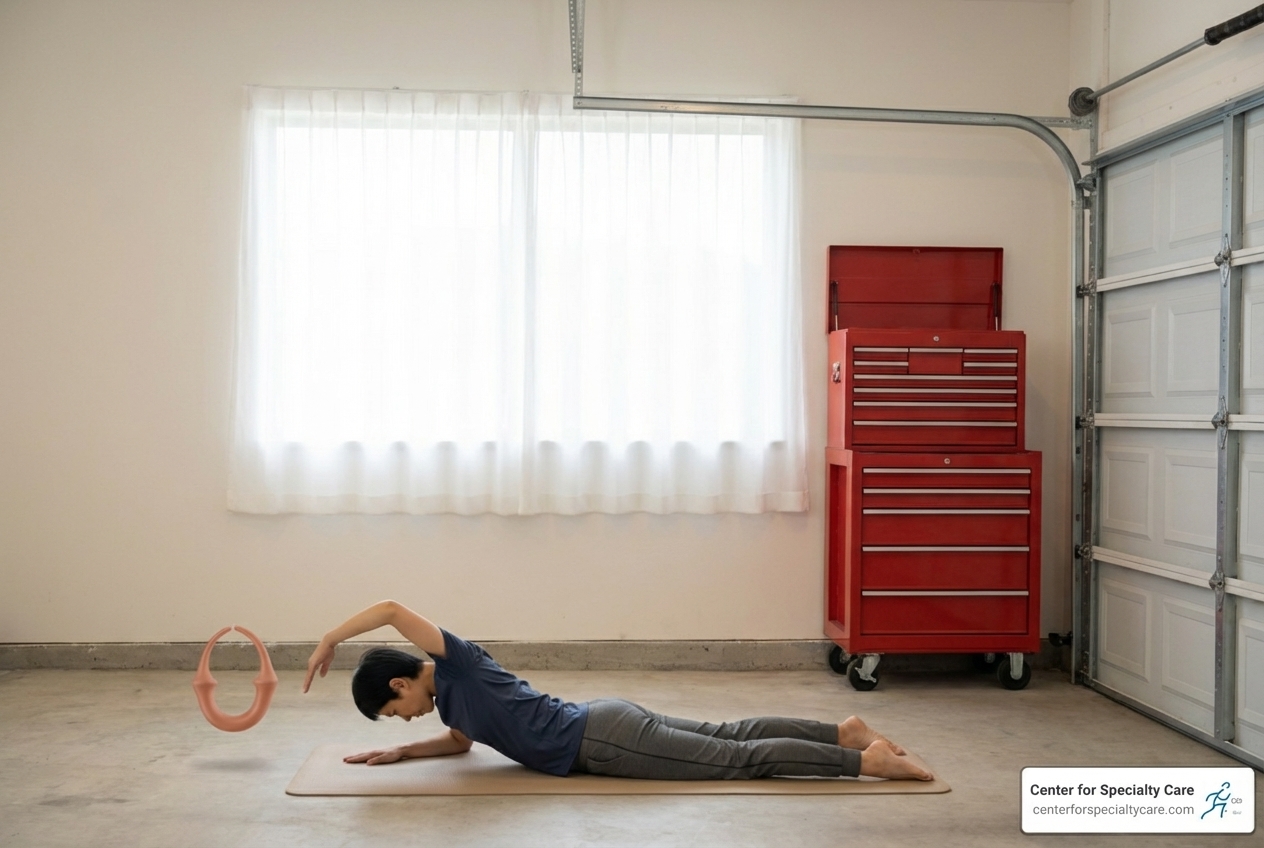
- Pendulum Stretch:
- Lean forward, letting your affected arm hang freely.
- Gently swing your arm forward and backward, then side to side, and finally in small circles (clockwise and counter-clockwise).
- Perform 2 sets of 10 swings in each direction, 5-6 days a week.
- Tip: Keep your back straight and avoid rounding. Don’t use your shoulder muscles; let gravity do the work.
- Crossover Arm Stretch:
- Relax your shoulders. Use your unaffected hand to gently pull your affected arm across your body at chest level.
- You should feel a gentle stretch across the back of your affected shoulder.
- Hold for 30 seconds. Repeat 4 times for each side, 5-6 days a week.
- Tip: Do not pull or put pressure on your elbow.
- Sleeper Stretch:
- Lie on your side with the affected shoulder underneath you. Bend your affected elbow to 90 degrees, with your forearm pointing up.
- Use your unaffected hand to gently push your affected forearm down towards the bed.
- Hold for 30 seconds. Repeat 4 times, 3 times a day, daily.
- Tip: Keep your wrist straight and don’t press directly on the wrist.
- Towel Stretch:
- Hold one end of a towel behind your back with your affected arm. Grab the other end of the towel with your unaffected arm over your shoulder.
- Gently pull the towel upward with your unaffected arm, stretching the affected arm.
- Hold for 15-30 seconds. Repeat 2-4 times.
- Finger Walk up a Wall:
- Stand facing a wall, about an arm’s length away.
- Place the fingertips of your affected hand on the wall.
- Slowly “walk” your fingers up the wall, raising your arm as high as comfortable without pain.
- Hold briefly at the highest point, then slowly “walk” your fingers back down.
- Repeat 8-12 times.
Remember to breathe deeply and evenly throughout these stretches. If you feel pain when attempting a stretch, discontinue it immediately. You can find more stretching activities, such as a pendulum stretch, towel stretch or finger walk, beneficial for various shoulder issues.
Strengthening Exercises for Shoulder Pain and Stability
Strengthening the muscles around your shoulder is crucial for long-term stability, pain relief, and preventing future injuries. For rotator cuff muscles, we often recommend focusing on smaller weights and higher repetitions. These exercises for shoulder pain should be performed 3-5 days a week.
- External Rotation with Band:
- Anchor a resistance band to a door or sturdy object at waist height.
- Stand sideways to the anchor point, holding the band with your affected arm, elbow bent at 90 degrees and tucked into your side.
- Slowly pull the band outward, rotating your forearm away from your body. Keep your elbow at your side.
- Return slowly to the start. Perform 3-4 sets of 20 repetitions initially, progressing to 3 sets of 15 repetitions as you get stronger.
- Muscles worked: Infraspinatus, teres minor, posterior deltoid.

- Internal Rotation with Band:
- Anchor a resistance band to a door or sturdy object at waist height.
- Stand facing the anchor point, holding the band with your affected arm, elbow bent at 90 degrees and tucked into your side.
- Slowly pull the band across your body towards your stomach. Keep your elbow at your side.
- Return slowly to the start. Perform 3-4 sets of 20 repetitions initially, progressing to 3 sets of 15 repetitions.
- Muscles worked: Anterior deltoid, pectoralis, subscapularis, latissimus.
- Wall Push-ups:
- Stand facing a wall, about an arm’s length away. Place your hands on the wall slightly wider than shoulder-width apart.
- Keeping your body straight, slowly bend your elbows and lower your chest towards the wall.
- Push back to the starting position. Repeat 8-12 times.
- Progression: Move your feet further from the wall to increase difficulty.
- Shoulder Blade Squeeze (Scapular Retraction):
- Sit or stand tall with your arms relaxed at your sides.
- Gently squeeze your shoulder blades together and down, as if trying to hold a pencil between them. Avoid shrugging your shoulders up.
- Hold for 6 seconds, then relax. Repeat 8-12 times.
- Standing Row with Band:
- Anchor a resistance band at about waist level. Stand or sit facing the anchor, holding one end of the band in each hand.
- With your arms extended forward and shoulders relaxed, pull the bands back, squeezing your shoulder blades together. Your elbows should pass along your waist.
- Slowly return to the starting position. Repeat 8-12 times.
For a more comprehensive program, including detailed instructions for rotator cuff exercises and a full rotator cuff and shoulder conditioning program, we encourage you to consult with our specialists at Center for Specialty Care. They can tailor a program specifically for your needs.
A Deeper Look: Understanding Frozen Shoulder (Adhesive Capsulitis)
Imagine your shoulder joint gradually losing its ability to move, becoming stiff and incredibly painful. This is the reality for individuals with frozen shoulder, also known as adhesive capsulitis. This condition progresses, causing pain, stiffness, and extreme discomfort in the shoulder joint, which tends to worsen over time if left untreated. However, the good news is that it often resolves, usually within one to three years.
Risk Factors for Frozen Shoulder
While the exact cause of frozen shoulder isn’t always clear, certain factors that enhance your likelihood of developing frozen shoulder are as follows:
- Age and Gender: People over the age of 40 are more prone to frozen shoulder, and women are more likely to develop it than men.
- Reduced Mobility: Individuals who have undergone a medical procedure or suffered an injury that limits arm movement are at higher risk. This includes recovery from surgery, a broken arm, or a stroke where the arm is immobilized for a period.
- Systemic Diseases: Certain health conditions increase the risk, including diabetes, thyroid problems (hyperthyroidism or hypothyroidism), cardiovascular disease, and Parkinson’s disease.
The Three Stages of Frozen Shoulder
Frozen shoulder typically progresses through three distinct stages, each with its own characteristics and duration:
| Stage | Duration | Stage | ||
|---|---|---|---|---|
| Freezing Stage (Lasting between 3 to 9 months) |
Pain when moving the joint begins to increase, and range of motion becomes notably limited. Pain is often worse at night. | The initial stage where pain is the primary symptom, gradually worsening and restricting movement. | ||
| Freezing Stage (Lasting between 3 to 9 months) |
Pain when moving the joint begins to increase, and range of motion becomes notably limited. Pain is often worse at night. | The initial stage where pain is the primary symptom, gradually worsening and restricting movement. | ||
| Frozen Stage (Lasting between 4 to 12 months) |
The shoulder remains stiff, and the pain may actually begin to reduce during this stage. Movement is significantly restricted. | While pain might lessen, stiffness and limited range of motion are the dominant features. | ||
| Freezing Stage (Lasting between 3 to 9 months) |
Pain when moving the joint begins to increase, and range of motion becomes notably limited. Pain is often worse at night. | The initial stage where pain is the primary symptom, gradually worsening and restricting movement. | ||
| Frozen Stage (Lasting between 4 to 12 months) |
The shoulder remains stiff, and the pain may actually begin to reduce during this stage. Movement is significantly restricted. | While pain might lessen, stiffness and limited range of motion are the dominant features. | ||
| Thawing Stage (Lasting between 12 to 42 months) |
Gradual return of range of motion and strength. Pain typically subsides significantly. | The recovery phase where mobility slowly returns, and discomfort decreases. |
Recommended Treatments and Exercises
Managing frozen shoulder requires patience and a multi-faceted approach. At Center for Specialty Care, our team in Fairmont, Estherville, Buffalo Center, and St. James can provide a personalized care plan.
- Role of Physical Therapy: Physical therapy is a cornerstone of frozen shoulder treatment. We focus on gentle range-of-motion exercises and specific stretches to help maintain and slowly regain mobility.
- Targeted Exercises: Stretching exercises like the pendulum stretch, towel stretch or finger walk are particularly beneficial for increasing the shoulder’s flexibility. We’ll guide you on how to perform these safely and effectively.
- Medical Evaluation: For an accurate diagnosis and to rule out other conditions, we may recommend diagnostic imaging such as X-rays or an MRI. This helps us understand the extent of the capsular involvement.
- Other Treatments: Depending on your stage and symptoms, treatments can also include pain-relieving medications (NSAIDs), corticosteroid injections to reduce inflammation and pain, and in some persistent cases, surgical options. Our goal is always to explore conservative treatments first.
Preventing Future Aches: Tips for Long-Term Shoulder Health
While exercises for shoulder pain can be incredibly effective for relief and recovery, preventing future issues is always our preferred approach. Here are some practical tips we share with our patients across Minnesota and Iowa to maintain long-term shoulder health:
- Maintain Good Posture: Poor posture puts unnecessary strain on your shoulders and neck. Stand tall with your shoulders down and gently back. When sitting, use a cushion for lower back support and avoid slouching.
- Proper Lifting Techniques: When lifting heavy objects, bend your knees and use your legs, keeping the object close to your body. Avoid twisting while lifting.
- Avoid Overuse and Repetitive Overhead Motions: If your job or hobbies involve repetitive arm movements, especially overhead, take frequent breaks. Alternate tasks or hands if possible to reduce strain.
- Regular Stretching and Strengthening: Incorporate a routine of gentle stretches and strengthening exercises for shoulder pain into your daily life, even when you’re not experiencing discomfort. This keeps your muscles balanced and flexible.
- Warm-up Before Activity: Always warm up your muscles for 5-10 minutes with light cardio or dynamic stretches before engaging in any strenuous physical activity or sport.
- Ergonomic Adjustments: Evaluate your workspace and home environment. Adjust your chair, desk, and computer monitor to promote good posture and reduce strain on your shoulders.
By adopting these preventative measures, you can significantly reduce your risk of developing shoulder pain and enjoy a more active, pain-free life.
When to Seek Professional Medical Help
While many cases of shoulder pain can improve with self-care and exercises for shoulder pain, there are times when professional medical attention is necessary. Knowing when to consult a specialist can prevent minor issues from becoming major problems.
We recommend you see a doctor if your shoulder pain is getting worse, does not improve after 2 weeks, or if it’s very difficult to move your arm or shoulder. If your self-care efforts aren’t yielding results within this timeframe, or if your ability to move your arm is severely limited, it’s time for an expert evaluation.
Urgent Warning Signs for Shoulder Pain
Sometimes, shoulder pain can be a symptom of a more serious underlying condition that requires immediate medical attention. Don’t hesitate to seek urgent care if you experience any of the following:
- Sudden or Very Severe Pain: Especially if it comes on without a clear cause.
- Inability to Move Your Arm: If you can’t lift your arm at all.
- Arm or Shoulder Has Changed Shape: This could indicate a dislocation or fracture.
- Bad Swelling: Significant, unexplained swelling around the shoulder.
- Pins and Needles That Don’t Go Away: Persistent numbness or tingling in your arm or hand.
- Arm is Hot or Cold to Touch: Changes in skin temperature can signal circulation issues.
- Pain After an Injury or Fall: Especially if you suspect a fracture or severe soft tissue damage.
- Severe Pain in Both Shoulders: While less common, this can be a red flag.
- Feeling Feverish or Unwell: Accompanied by shoulder pain, this could indicate an infection.
- Crushing sensation radiating to arm, jaw, or neck, dizziness, shortness of breath, or sweating: These could be symptoms of a heart attack and require immediate emergency medical attention (call 9-1-1).
In such cases, you should immediately seek medical help. For non-emergency but concerning symptoms, contact your primary care provider or our specialists at Center for Specialty Care.
The Role of Orthopedic and Rehabilitation Care at Center for Specialty Care
At Center for Specialty Care, serving communities like Fairmont, Estherville, Buffalo Center, and St. James, we play a crucial role in managing shoulder pain. Our comprehensive approach goes beyond just treating symptoms. We aim to understand the root cause of your pain and provide personalized care.
- Comprehensive Evaluation: Our specialists conduct thorough examinations, which may include physical tests and advanced imaging, to accurately diagnose your condition.
- Manual Therapy: Our physiotherapists use techniques like soft tissue mobilization and joint mobilization to reduce pain, improve tissue flexibility, and restore joint mechanics.
- Personalized Exercise Programs: We develop custom exercises for shoulder pain programs to strengthen weak muscles, improve range of motion, and improve overall shoulder function. We ensure you understand how to perform these exercises correctly for maximum benefit and safety.
- Modalities: We may incorporate modalities like heat/cold therapy, ultrasound, or electrical stimulation to manage pain and inflammation, supporting your rehabilitation journey.
- Patient Education: Empowering you with knowledge about your condition, self-care strategies, and ergonomic advice is a key part of our process. We provide home exercise instructions and guidance on activity modification to prevent recurrence.
Our commitment is to 100% patient satisfaction, personalized care, and quick appointment availability. We are dedicated to getting you moving and keeping you moving, addressing both the symptoms and the underlying causes of your shoulder pain.
Frequently Asked Questions about Exercises for Shoulder Pain
How long does it take for shoulder exercises to work?
The timeline for improvement with exercises for shoulder pain can vary significantly depending on the cause and severity of your condition, as well as your consistency with the program. Generally, you should start to feel some improvement within 6 to 12 weeks of consistently performing the exercises. However, for some conditions, like a frozen shoulder, full recovery can take 6 months or even longer. Consistency is truly key; building these exercises into your daily routine is essential for optimal results.
Is it normal to feel some pain when exercising my shoulder?
It’s common to feel a mild, temporary increase in discomfort when starting exercises for shoulder pain. This is generally acceptable if the pain subsides within 30 minutes after you finish exercising and is not worse the next day. If you experience sharp, severe, or increasing pain during an exercise, stop immediately. This is your body telling you to ease off. If pain increases, reduce the number of repetitions or the intensity, and gradually build up again. Always prioritize pain-free movement.
Should I use ice or heat for my shoulder pain?
Both ice and heat can be effective for shoulder pain, but they serve different purposes:
- Ice Packs: Best for acute injuries, fresh inflammation, or after strenuous activity. Ice helps to reduce swelling and numb the area, providing pain relief. Apply ice (wrapped in a cloth to protect your skin) for 15-20 minutes at a time, taking at least 15-20 minute breaks between applications.
- Heat Packs: Ideal for chronic muscle soreness, stiffness, and relaxing tight muscles. Heat increases blood flow to the area, promoting healing and easing discomfort. Apply heat for 15-20 minutes at a time.
For some, alternating between ice and heat can be beneficial. Listen to your body and use what feels most comfortable and effective for your specific type of pain.
Take Control of Your Shoulder Health
Shoulder pain can be debilitating, but as we’ve explored, you have many tools at your disposal for relief and recovery. From understanding the common causes to implementing targeted exercises for shoulder pain, you can take significant steps toward better shoulder health. Remember to listen to your body, progress gradually, and integrate these practices into your daily life.
Don’t let persistent shoulder pain limit your activities or diminish your quality of life. If your pain doesn’t improve with self-care, worsens, or if you experience any urgent warning signs, don’t hesitate to seek professional help. Our team at Center for Specialty Care in Fairmont, Estherville, Buffalo Center, and St. James is here to provide comprehensive, personalized care, ensuring your satisfaction and guiding you on your journey to recovery.
Learn more about our comprehensive shoulder care options and let us help you move beyond the ache.