
Beyond the Ache: A Guide to Pain Management Doctors and Their Expertise
January 12, 2026
Beyond the Ache: Effective Exercises and Home Remedies for Shoulder Pain
January 14, 2026
Shoulder pain symptoms: 3 Urgent Warning Signs
Understanding Shoulder Pain Symptoms: Why Recognition Matters
Shoulder pain symptoms are the body’s way of signaling something is wrong with the most movable joint in your body. Every year, millions of Americans seek medical care for shoulder injuries, ranging from everyday wear and tear to acute trauma. Because the shoulder has more mobility than any other joint, it’s particularly prone to injury and discomfort.
Quick Answer: Common Shoulder Pain Symptoms Include:
- Dull, aching pain that may worsen at night
- Sharp or stabbing pain during movement
- Stiffness that limits your range of motion
- Weakness when lifting your arm or reaching overhead
- Swelling, bruising, or tenderness around the joint
- Popping, clicking, or grinding sensations
- Pain radiating into your neck, arm, or hand
- Numbness or tingling in your shoulder or arm
The challenge with shoulder pain symptoms is that they can stem from many different causes—from a simple muscle strain to a torn rotator cuff, arthritis, or even referred pain from your heart or gallbladder. Understanding what your specific symptoms mean is the first step toward finding relief and preventing further damage.
As Dr. Corey Welchlin, founder of Center for Specialty Care in Fairmont, Minnesota, I’ve spent over three decades diagnosing and treating shoulder pain symptoms through arthroscopic surgery, joint replacement, and minimally invasive techniques. My goal is to help you understand what your shoulder is trying to tell you so you can make informed decisions about your care.
Related content about shoulder pain symptoms:
Decoding Your Discomfort: Common Shoulder Pain Symptoms
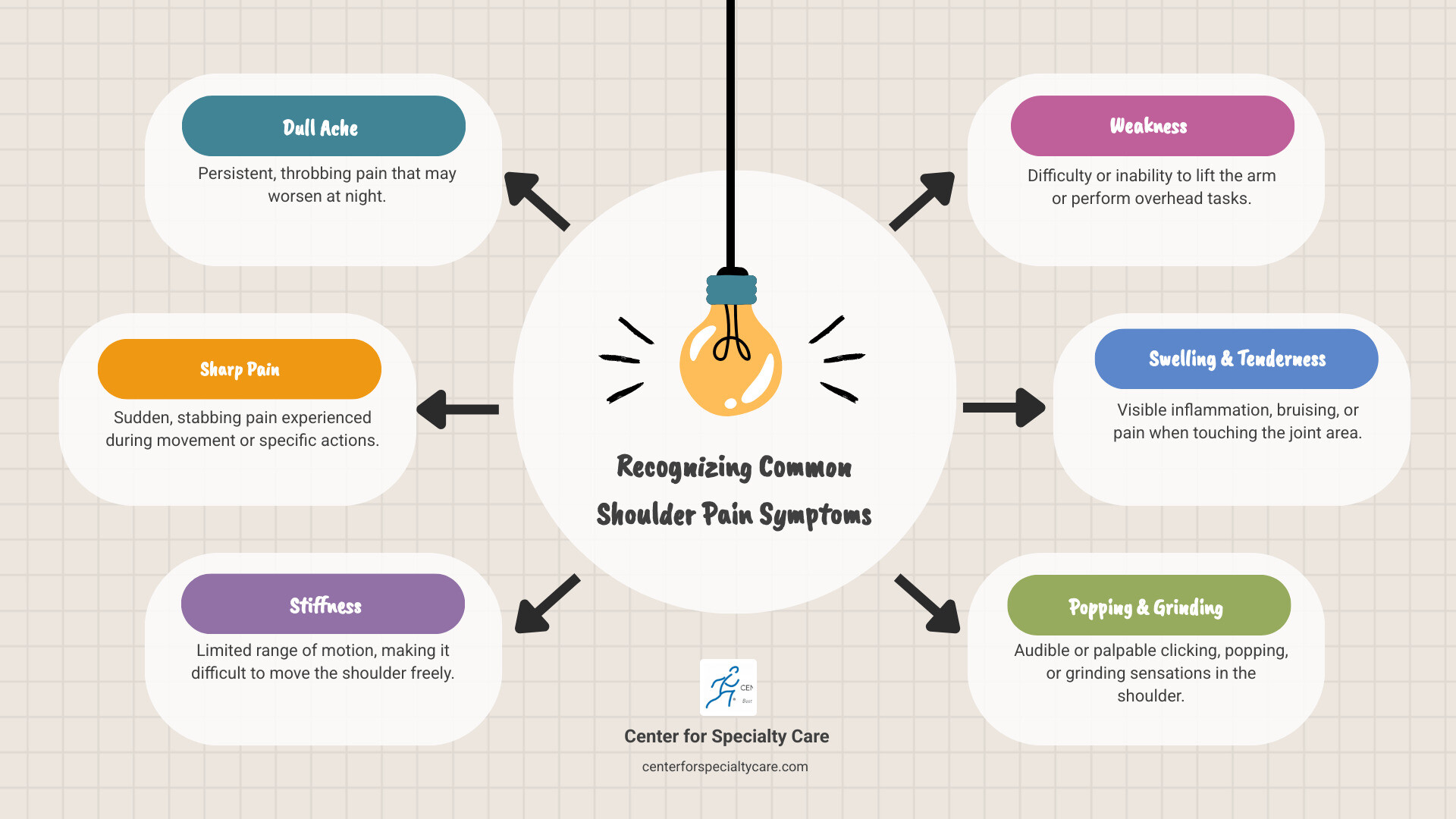
When your shoulder starts to complain, it can manifest in various ways, each offering clues about the underlying issue. Recognizing these shoulder pain symptoms is crucial for understanding what’s happening and when to seek help. Here’s a breakdown of the common sensations and signs you might experience:
- Dull ache or throbbing: This type of pain is often associated with overuse, inflammation (like tendinitis or bursitis), or general wear and tear. It might be constant or worsen with certain movements. Many people describe it as a deep, persistent discomfort that can be particularly bothersome at rest.
- Sharp or stabbing pain: A sudden, intense pain, especially during specific movements, often indicates an acute injury like a muscle strain, tendon tear, or impingement. This can make everyday activities, such as reaching overhead or lifting objects, incredibly difficult.
- Stiffness or freezing: If your shoulder feels rigid and loses its normal range of motion, you might be experiencing stiffness. This can be a sign of conditions like frozen shoulder (adhesive capsulitis) or arthritis, where the joint capsule or cartilage becomes inflamed or damaged, limiting movement.
- Weakness in the arm: Feeling like you can’t lift your arm, reach overhead, or carry objects as easily as before can be a significant shoulder pain symptom. This weakness often points to issues with the rotator cuff muscles or tendons, which are vital for shoulder strength and movement.
- Popping, clicking, or grinding sensations: While some shoulder noises can be harmless, if they come with pain, they warrant attention. These sensations can indicate issues with the cartilage, ligaments, or tendons, such as a labral tear or instability. If you’re experiencing a Shoulder Clicking and Pain: Causes, Effective Relief, it’s a good idea to have it checked out.
- Swelling, bruising, or tenderness: Visible signs like swelling, bruising, or tenderness to the touch usually point to an acute injury, such as a sprain, strain, or fracture. These external signs indicate inflammation and tissue damage.
- Pain that worsens at night: Many shoulder conditions, particularly rotator cuff injuries or bursitis, tend to cause more significant pain at night, especially when lying on the affected side. This can severely disrupt sleep and impact your overall well-being. If you’re struggling with this, explore How to Relieve Rotator Cuff Pain at Night: Expert Tips for Better Sleep.
- Pain radiating into the neck or down the arm: The shoulder is intimately connected to the neck and arm. Pain can travel from the shoulder up into the neck or down into the arm, sometimes even reaching the hand. This radiating pain can be a shoulder pain symptom of nerve involvement, referred pain from the neck, or extensive muscle and tendon irritation.

Understanding these various shoulder pain symptoms is the first step in identifying the potential problem and seeking appropriate care. We encourage you to pay attention to how your pain feels, when it occurs, and what activities make it better or worse.
When to Seek Medical Help for Shoulder Pain
Knowing when to seek medical attention for shoulder pain symptoms is critical. While some minor aches might resolve with rest and self-care, others require prompt professional evaluation. Delaying care for certain conditions can lead to worsening symptoms or long-term complications. We’ve outlined clear guidelines to help you decide.
Emergency Red Flags: Go to the ER
Certain shoulder pain symptoms demand immediate medical attention. If you experience any of the following, especially after an injury or accident, head to the emergency room or call 911 right away.
- Pain from a major injury or trauma: If your shoulder pain is the result of a significant fall, car accident, or direct blow, get it checked immediately. This includes injuries that may involve high-energy impact, like those seen in motor vehicle collisions or contact sports.
- A joint that looks deformed: If your shoulder appears twisted, out of place, or has an unusual bulge, it could indicate a dislocation or a severe fracture. This is a clear sign that the bones are not aligned correctly.
- Inability to use your arm: If you cannot move your arm away from your body, lift it, or bear any weight, it suggests a severe injury to the bones, tendons, or nerves.
- Intense, unbearable pain: Pain that is so severe you can’t sleep, focus, or find any relief, even with over-the-counter pain relievers, is a red flag.
- Sudden swelling: Rapid and significant swelling around the shoulder joint, especially after an injury, can indicate internal bleeding or severe inflammation.
- Pain with chest tightness or difficulty breathing (heart attack sign): This is a critical point we want to emphasize. Sudden left shoulder pain symptoms, especially when accompanied by difficulty breathing, chest tightness, sweating, light-headedness, or nausea, can be a sign of a heart attack. If you experience these combined symptoms, call 911 immediately. It’s always better to be safe than sorry when it comes to potential cardiac emergencies. For more on urgent care, see Should I Go to Urgent Care for Shoulder Pain? Signs, Treatment Options. The American Academy of Orthopaedic Surgeons also offers resources on when to consult a doctor for shoulder pain.
When to Schedule a Doctor’s Appointment
For less acute but persistent shoulder pain symptoms, scheduling an appointment with one of our specialists in Fairmont, Estherville, Buffalo Center, or St. James is the appropriate next step. Don’t let these issues linger, as early diagnosis often leads to better outcomes.
- Pain persists for more than a few days: If your shoulder pain symptoms don’t improve after a few days of rest and self-care, it’s time for a professional evaluation. This is particularly true if the pain lasts more than two to four weeks.
- Pain worsens despite rest: If your discomfort continues to increase even when you’re trying to rest the shoulder, it indicates an underlying problem that needs attention.
- Discomfort interferes with daily activities: If shoulder pain symptoms make it difficult to perform everyday tasks like dressing, reaching, sleeping comfortably, or working, it’s impacting your quality of life and warrants a visit to the doctor.
- Swelling, redness, or warmth around the joint: These signs indicate inflammation or potential infection, which require medical assessment and treatment.
- Numbness or tingling: If you experience numbness, tingling, or weakness that extends into your arm or hand, it could suggest nerve involvement, such as a pinched nerve, which needs to be addressed.
Ignoring these symptoms can lead to chronic pain and further damage. We are here to help you get to the bottom of your shoulder pain symptoms. To learn more about seeking specialized care, check out Finding the Best Shoulder Doctor Near Me: What You Need to Know.
The Root of the Problem: Causes of Shoulder Pain
To truly understand shoulder pain symptoms, we must first appreciate the intricate design of the shoulder joint and the various factors that can lead to its dysfunction.
A Look Inside: The Anatomy of Your Shoulder
The shoulder is not just one joint but a complex system of bones, muscles, tendons, and ligaments working together to provide an incredible range of motion.
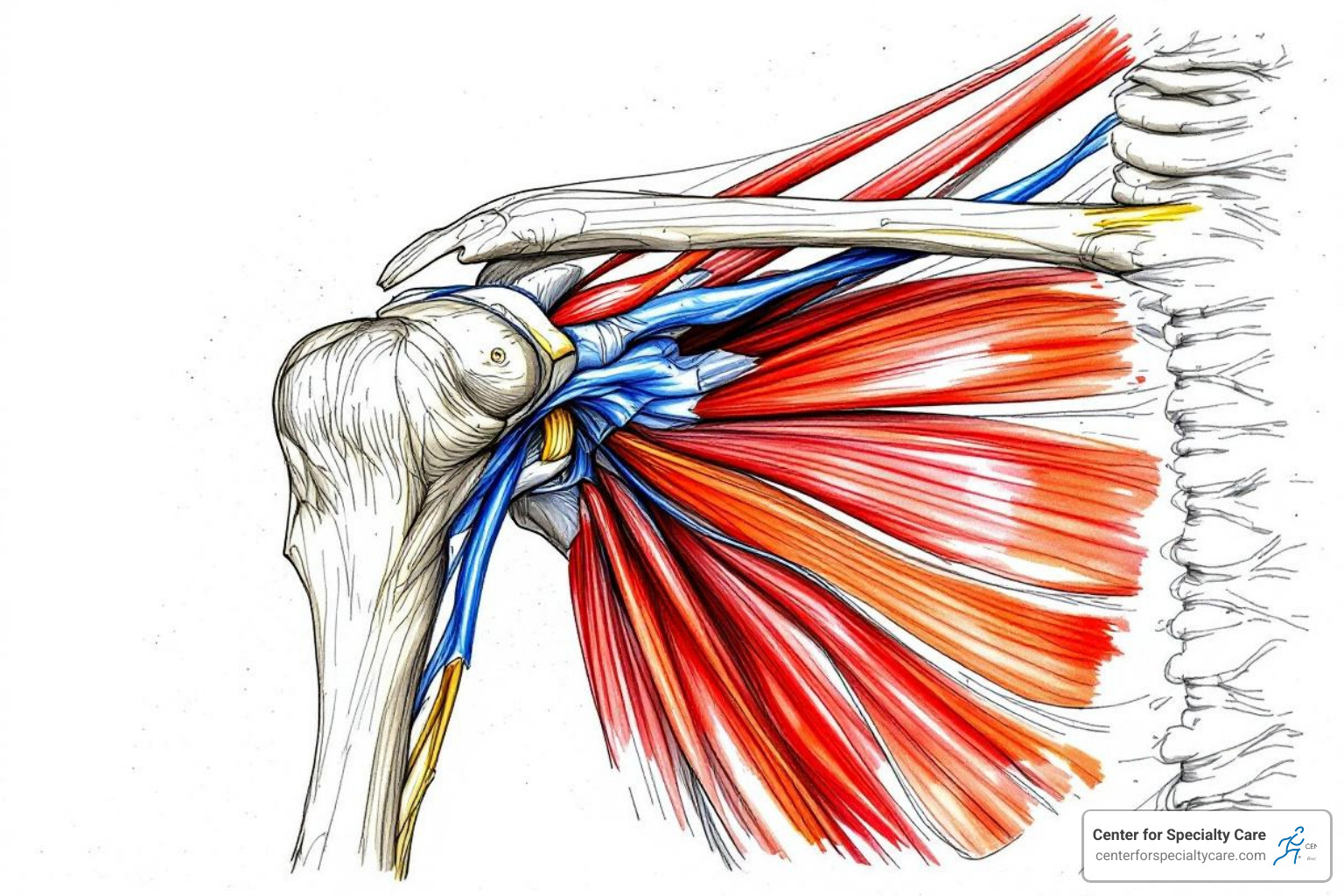
- Ball-and-socket joint: The primary joint of the shoulder, the glenohumeral joint, is a ball-and-socket mechanism. This design allows for extensive movement in multiple directions, but it also makes the shoulder less stable than other joints, increasing its vulnerability to injury.
- Bones: Three main bones form the shoulder:
- Humerus: The long bone of your upper arm, with its rounded head forming the “ball” of the joint.
- Scapula (shoulder blade): A flat, triangular bone that provides the “socket” (glenoid) for the humerus.
- Clavicle (collarbone): Connects the shoulder blade to the breastbone, providing stability and support.
- Rotator cuff muscles and tendons: This is a crucial group of four muscles and their tendons that surround the head of the humerus. They hold the “ball” firmly in the “socket” and enable you to lift and rotate your arm. Many shoulder pain symptoms originate here.
- Bursa sacs: Small, fluid-filled sacs called bursae act as cushions between bones, tendons, and muscles, reducing friction during movement. When inflamed, they cause bursitis.
- Labrum cartilage: A ring of cartilage that surrounds the glenoid socket, deepening it and providing additional stability for the humeral head. Tears in the labrum can cause significant shoulder pain symptoms.
Common Causes of Shoulder Pain Symptoms
Given its complex anatomy and constant use, the shoulder is susceptible to a variety of issues. Most shoulder pain symptoms fall into four major categories: tendon inflammation or tear, instability, arthritis, and fracture. Here are the most common culprits:
- Overuse or repetitive motion: Many shoulder pain symptoms develop from activities that involve repeated overhead movements, such as sports (swimming, tennis, baseball), certain occupations (painters, construction workers), or even hobbies. This constant stress can lead to inflammation and micro-trauma in tendons and bursae. For instance, How to Get Rid of Shoulder Pain From Lifting Weights: Tips, Exercises discusses how improper form or excessive lifting can contribute to overuse injuries.
- Acute injury (falls, accidents): Sudden, traumatic events like falls onto an outstretched arm, direct blows to the shoulder, or car accidents can cause immediate and severe shoulder pain symptoms. These can result in fractures, dislocations, or significant soft tissue tears. If you’ve experienced Shoulder Pain After Car Accident: Causes, Recovery Tips, we can help assess and treat your injuries.
- Age-related wear and tear (degeneration): As we age, the tissues in our shoulders naturally undergo degenerative changes. Tendons can weaken, cartilage can thin, and bone spurs can develop, all contributing to chronic shoulder pain symptoms.
- Poor posture: Chronic poor posture can put undue stress on the shoulder muscles and joints, leading to muscle imbalances, impingement, and persistent aches.
Specific Conditions and Injuries
Here’s a list of specific conditions and injuries that frequently cause shoulder pain symptoms:
- Rotator cuff tendinitis or tears: Inflammation of the rotator cuff tendons (tendinitis) or a partial/complete tear in one or more of these tendons. Tears can result from acute injury or degenerative changes over time. Many patients ask, Will a Torn Rotator Cuff Heal on Its Own? Key Recovery Facts – the answer often depends on the severity.
- Bursitis: Inflammation of a bursa sac, most commonly the subacromial bursa, which causes pain and tenderness, especially with arm movement.
- Shoulder impingement: Occurs when the top of the shoulder blade (acromion) puts pressure on the underlying soft tissues (rotator cuff tendons and bursa) when the arm is lifted, causing pain and limiting movement.
- Arthritis: The most common type is osteoarthritis, characterized by the wear and tear of cartilage, leading to pain, stiffness, and reduced range of motion.
- Frozen shoulder (adhesive capsulitis): A condition where the shoulder joint capsule thickens and tightens around the joint, severely restricting movement and causing significant pain. It typically progresses through “freezing,” “frozen,” and “thawing” stages.
- Shoulder instability or dislocation: When the head of the upper arm bone is forced out of the shoulder socket, either partially (subluxation) or completely (dislocation). Once dislocated, the shoulder is more prone to future episodes.
- Fractures: Breaks in any of the shoulder bones (humerus, scapula, or clavicle), often caused by falls or direct trauma.
- SLAP tear: A tear in the labrum, the cartilage rim around the shoulder socket, usually caused by repetitive overhead activities or acute trauma.
Is It Really Your Shoulder? Referred Pain
Sometimes, shoulder pain symptoms aren’t actually coming from the shoulder itself, but are referred from other parts of the body. This means a problem elsewhere is manifesting as pain in your shoulder.
- Pain originating from other body parts: This type of pain typically doesn’t worsen with shoulder movement, which can be a key differentiator.
- Neck issues (herniated disc): A pinched nerve in your neck due to a herniated disc or cervical spondylosis can send pain signals down to your shoulder, arm, or even hand.
- Gallbladder or liver problems: Issues with your gallbladder or liver can sometimes cause referred pain in your right shoulder.
- Heart conditions: As mentioned earlier, sudden left shoulder pain symptoms, especially if accompanied by chest pressure, shortness of breath, or sweating, can be a sign of a heart attack. This is a medical emergency.
Understanding the distinction between local and referred shoulder pain symptoms is vital for an accurate diagnosis.
The Path to Relief: Diagnosis, Treatment, and Prevention
Once you recognize your shoulder pain symptoms, the next crucial step is to seek an accurate diagnosis and develop a plan for relief. Our team at Center for Specialty Care is dedicated to guiding you through this process.
Getting an Accurate Diagnosis
An accurate diagnosis is the cornerstone of effective treatment for shoulder pain symptoms. Our specialists will conduct a thorough evaluation to pinpoint the exact cause of your discomfort.
- Physical examination: We will carefully assess your shoulder, looking for signs of swelling, tenderness, or deformity. We’ll check your skin for discoloration and evaluate your muscle strength.
- Medical history review: We’ll ask detailed questions about your shoulder pain symptoms, including when they started, what makes them better or worse, any previous injuries, and your activity level.
- Range of motion tests: We’ll gently move your arm in various directions to assess your active and passive range of motion, identifying any limitations or painful arcs.
- Strength tests: We’ll test the strength of your shoulder and arm muscles to detect any weakness that might indicate a tendon injury.
- Imaging studies: Depending on our findings, we may recommend imaging tests such as:
- X-ray: To visualize bones and identify fractures, dislocations, or signs of arthritis.
- MRI (Magnetic Resonance Imaging): To get detailed images of soft tissues like tendons, ligaments, and cartilage, which can reveal rotator cuff tears, labral tears, or inflammation.
- Ultrasound: Often used to evaluate tendons and bursae for inflammation or tears in real-time.
Our goal is to understand your unique situation completely. For more on finding specialized care for your shoulder pain symptoms, visit Doctor for Shoulder Problems: Your Guide to Specialized Care.
Professional Treatment Options for Shoulder Pain Symptoms
Once we have a clear diagnosis, we can discuss the most effective treatment plan for your shoulder pain symptoms. We offer a comprehensive range of options, from conservative non-surgical approaches to advanced surgical interventions.
- Physical therapy: Often the first line of treatment, physical therapy is essential for restoring strength, flexibility, and range of motion. Our physical therapists will design a personalized program of exercises and stretches to address your specific condition. This can be incredibly effective for managing Shoulder Treatment with Physical Therapy: Recovery, Pain Relief.
- Anti-inflammatory medications: Over-the-counter or prescription non-steroidal anti-inflammatory drugs (NSAIDs) can help reduce pain and inflammation.
- Corticosteroid injections: For localized inflammation and pain, a corticosteroid injection can provide significant relief, especially for conditions like bursitis or tendinitis. We offer various Types of Injections for Shoulder Pain Relief: Treatment Options custom to your needs.
- Minimally invasive procedures: For certain conditions, we can use minimally invasive techniques to repair damage with smaller incisions, leading to quicker recovery times.
- Surgery: When conservative treatments don’t provide sufficient relief, or for severe injuries like complete rotator cuff tears or complex fractures, surgery may be necessary. Our surgeons are highly skilled in various shoulder procedures, aiming for the best possible outcomes. Learn more about our surgical approaches at Surgery.
Self-Care and Injury Prevention
While professional care is vital, there’s a lot you can do at home to manage minor shoulder pain symptoms and prevent future injuries.
- RICE method (Rest, Ice, Compression, Elevation): For acute injuries or flare-ups, apply the RICE protocol:
- Rest: Avoid activities that worsen your pain.
- Ice: Apply ice packs for 15-20 minutes several times a day to reduce swelling and pain. Wrap the ice in a cloth to prevent skin damage.
- Compression: Light compression may help reduce swelling, but ensure it’s not too tight.
- Elevation: Keep your shoulder liftd if possible to aid in reducing swelling.
- Gentle stretching and mobility exercises: Once the acute pain subsides, gentle exercises, such as pendulum swings (letting your arm hang and gently swing in circles), can help maintain range of motion and prevent stiffness.
- Strengthening surrounding muscles: A strong core and back muscles can support your shoulder and improve overall stability. Our physical therapists can guide you on appropriate exercises.
- Improving posture: Maintaining good posture, especially if you sit for long periods, can alleviate stress on your shoulders. Stand tall, pull your shoulders back and down, and engage your core.
- Ergonomic adjustments at work: Ensure your workstation is set up to support good posture and minimize repetitive strain on your shoulders. Adjust chair height, monitor position, and keyboard/mouse placement.
- Proper warm-ups before exercise: Always warm up your muscles before engaging in physical activity, especially those involving overhead movements. This increases blood flow and prepares your tendons and muscles for exertion, helping to prevent shoulder pain symptoms.
Frequently Asked Questions about Shoulder Pain
We often hear similar questions from our patients in Fairmont, Estherville, Buffalo Center, and St. James when they come to us with shoulder pain symptoms. Here are answers to some of the most common ones:
Can shoulder pain go away on its own?
Minor strains and aches might resolve with rest and self-care within a few days or weeks. However, if your shoulder pain symptoms are severe, persistent (lasting more than a couple of days), accompanied by swelling, or limit your motion, it’s crucial to seek a professional diagnosis. Ignoring conditions like rotator cuff tears or impingement can lead to the problem worsening over time and potentially requiring more invasive treatments.
What is the most common cause of shoulder pain?
The most common causes of shoulder pain symptoms typically involve the rotator cuff. This includes conditions like rotator cuff tendinitis (inflammation of the tendons) and bursitis (inflammation of the bursa sacs), often resulting from overuse, repetitive motion, or impingement. Rotator cuff tears are also highly prevalent, especially in individuals over 40.
Can stress cause shoulder pain?
Yes, absolutely. Stress can significantly contribute to shoulder pain symptoms. When we are stressed, our bodies tend to tense up, particularly in the neck and shoulders. This chronic muscle tension can lead to stiffness, soreness, and even a feeling like a muscle kink in the shoulder blade. Over time, this sustained tension can exacerbate existing shoulder issues or create new ones. Learning stress management techniques can be a valuable part of preventing and alleviating certain types of shoulder discomfort.
Take Control of Your Shoulder Health
Recognizing shoulder pain symptoms is the first step toward recovery. While minor aches may resolve with self-care, persistent or severe pain should not be ignored. A proper diagnosis is key to finding the right treatment path and preventing long-term damage. At Center for Specialty Care, our specialists are dedicated to providing personalized care to help you regain mobility and live pain-free. Don’t let shoulder pain hold you back. Learn more about our comprehensive shoulder care options.