
Step-by-Step Guide to Intracept Procedure
October 9, 2025
Don’t Let Rhomboid Pain Tie You Down: A Comprehensive Guide
October 13, 2025
Frozen shoulder at night: Ultimate Sleep Relief 2025
Why Frozen Shoulder Pain Disrupts Your Sleep
Frozen shoulder at night can mean hours of tossing and turning. If you have this condition, you know the frustration of finding a comfortable position that doesn’t trigger sharp, aching pain.
Quick Solutions for Frozen Shoulder at Night:
- Sleep on your back with a pillow under your affected arm
- Sleep on your unaffected side with pillows for support
- Apply heat therapy 15-20 minutes before bed
- Avoid sleeping on the affected shoulder
- Use gentle stretches like pendulum swings before bedtime
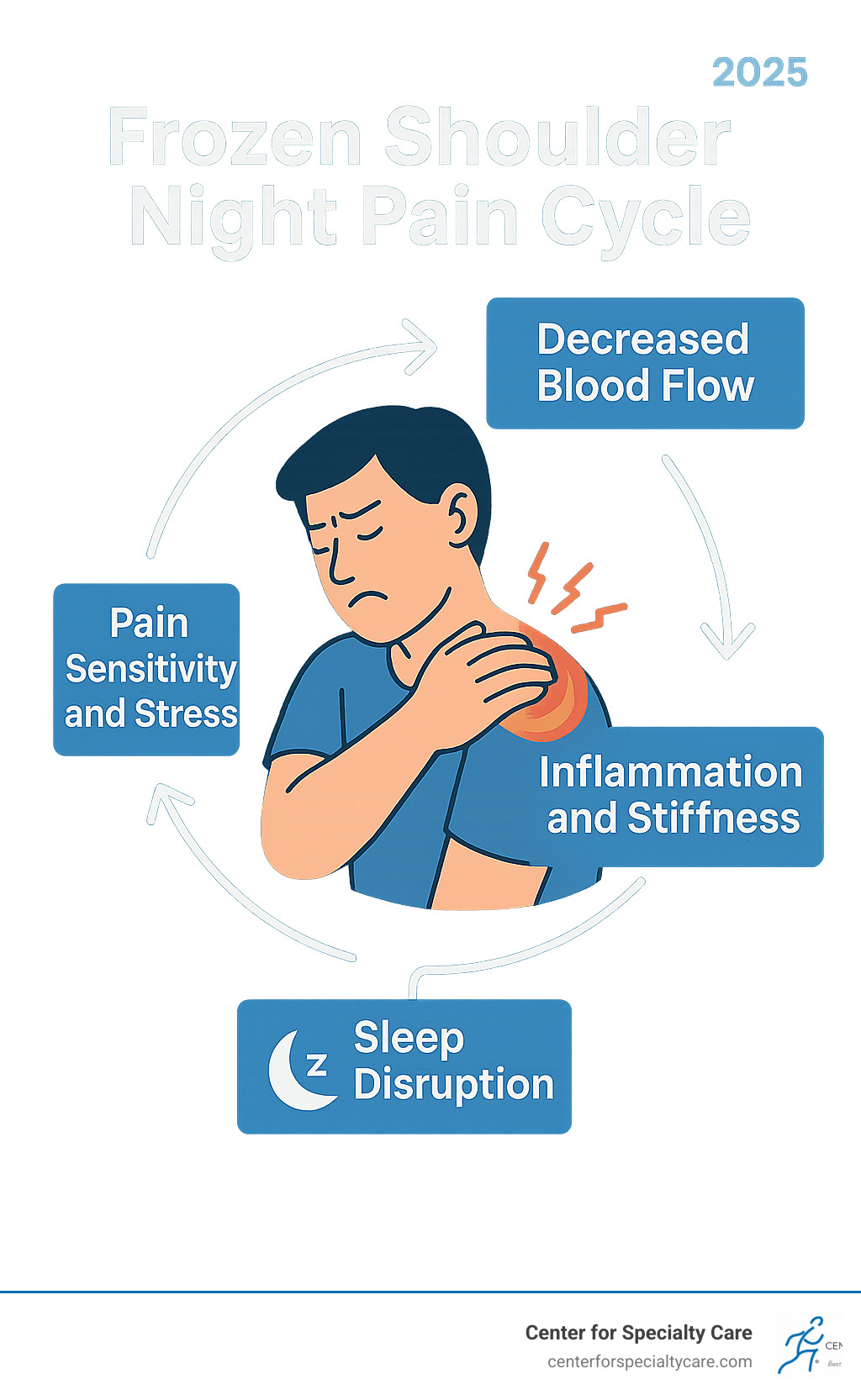
Frozen shoulder pain often worsens at night due to decreased blood flow and increased internal pressure when lying down. Your shoulder capsule—the connective tissue surrounding your joint—becomes inflamed and tight, making slight movements painful enough to wake you.
Nighttime pain intensifies because your body’s circulation slows at rest. This increases pressure in the shoulder joint, creating a deep, aching sensation that seems worse when you lie down.
I’m Dr. Corey Welchlin, a board-certified orthopedic surgeon at the Center for Specialty Care. Over my three decades of practice, I’ve treated countless patients with frozen shoulder at night. My experience shows that the right combination of sleep positioning, home remedies, and professional treatment can dramatically improve pain and sleep quality.
Basic Frozen shoulder at night terms:
Understanding Frozen Shoulder and Why It Worsens at Night
Frozen shoulder at night is a nightmare because of what’s happening inside your shoulder joint. Medically called adhesive capsulitis, this condition affects the shoulder capsule—the tough connective tissue wrapping around your joint.
When frozen shoulder develops, this capsule becomes thick, tight, and inflamed. The inflammation creates constant irritation, while the tightening capsule severely limits your arm’s movement.
But why is the pain worse at night? When you lie down, your body’s blood flow slows, meaning less healing circulation reaches the inflamed shoulder. This reduced blood flow allows inflammation to build, creating more pressure inside the joint.
Immobility during sleep also works against you. While awake, you naturally move your arm to stay comfortable. But during sleep, your shoulder stays in one position for hours, allowing stiffness to set in. This creates increased joint pressure that can wake you with sharp, aching pain.
The Three Stages of Frozen Shoulder
Frozen shoulder doesn’t happen overnight; it progresses through three distinct phases, which helps you understand what to expect with nighttime pain.
The freezing stage is often the most painful, lasting six weeks to nine months. During this time, any movement hurts, and your range of motion starts to decrease. Pain levels are typically highest, making frozen shoulder at night particularly brutal. You may wake up multiple times as small movements trigger sharp pain.
The frozen stage brings a trade-off: the intense pain often lessens, but stiffness progression peaks. This phase can last four to twelve months. While you might sleep better with less sharp pain, finding a comfortable position is challenging because your shoulder feels locked.
In the thawing stage, your range of motion gradually returns over five to twenty-four months. The recovery timeline varies, but nighttime pain typically improves during this phase.
Common Risk Factors
Several factors increase your risk of developing frozen shoulder.
Age and sex are significant factors. Frozen shoulder most commonly affects people between 40 and 60, with women affected more often than men. If you are in this demographic, your statistical risk is higher.
Immobility is another major factor. Your risk increases dramatically if you’ve had your arm in a sling, been bedridden, or avoided moving your shoulder due to injury. This includes recovery from surgery or accidents. Even shoulder pain after car accident: causes, recovery tips can lead to the immobility that triggers frozen shoulder.
Systemic diseases increase the risk of frozen shoulder. For example, 10% to 20% of people with diabetes develop this condition. Thyroid disorders (both overactive and underactive) also significantly increase your risk. Other conditions like heart disease and Parkinson’s disease also make you more susceptible.
The Best Sleeping Positions and Setups for Frozen Shoulder at Night
When frozen shoulder at night keeps you tossing and turning, finding the right sleeping position can make the difference between a restful night and hours of discomfort. Think of it like finding the perfect angle for a creaky door – sometimes just a small adjustment can eliminate the pain entirely.
The key is avoiding direct pressure on your affected shoulder while keeping everything properly aligned. I’ve seen patients transform their sleep quality simply by making a few strategic changes to how they position themselves in bed.

Sleeping on Your Back
Back sleeping is often the gold standard for frozen shoulder at night relief because it keeps your shoulder in a neutral, stress-free position. It’s like giving your shoulder a comfortable resting place instead of forcing it into awkward angles.
Pillow under your affected arm is the most important adjustment you can make. Place a small, firm pillow or rolled towel from your armpit all the way down to your hand. This gentle lift prevents your arm from rotating inward, which can create painful tension in an already inflamed joint.
Your head and neck need proper support too. An ergonomic neck pillow that maintains neutral spine alignment prevents additional strain that can radiate down to your shoulder. Think of your spine as a straight line – any kinks or curves can create tension that travels throughout your body.
Adding a small pillow under your knees might seem unrelated to shoulder pain, but it helps your entire body relax. When your lower back is comfortable, you’re less likely to unconsciously tense up other muscles, including those around your shoulder.
Some of my patients find relief sleeping in a reclined position using wedge pillows to lift their upper body. This reduces gravitational pressure on the shoulder joint and can significantly decrease nighttime pain intensity.
Sleeping on Your Unaffected Side
If you’re naturally a side sleeper, you can still get comfortable – just make sure you’re sleeping on your good shoulder. Direct pressure on your affected side will likely wake you up with sharp pain.
A pillow between your arms acts like a gentle support system for your affected shoulder. It prevents your arm from falling forward or backward, which can twist the joint in painful ways. Think of it as creating a soft shelf for your arm to rest on.
Body pillows are game-changers for side sleepers with frozen shoulder. Hugging a full-length pillow provides support for your entire body while keeping your spine aligned. It also creates a natural barrier that prevents you from rolling onto your painful shoulder during deep sleep.
Don’t forget about pillows between your knees – they maintain proper hip and spinal alignment, which reduces overall body tension. When your whole body is aligned, there’s less compensatory stress on your shoulder.
If you tend to roll around at night, create what I call a “pillow fortress” to prevent rolling over onto your affected side. Strategic pillow placement around your body acts as gentle bumpers that keep you in the right position all night long.
Optimizing Your Sleep Environment
Your bedroom setup is just as important as your sleeping position when dealing with frozen shoulder at night. A supportive mattress with medium firmness provides the right balance – firm enough to maintain alignment but soft enough to avoid creating pressure points.
Your ergonomic neck pillow should work in harmony with your mattress to keep your head and neck properly aligned. An old, flat pillow can force your neck into unnatural positions that increase shoulder tension.
Creating a dark and quiet room helps your body focus on healing rather than processing distractions. Pain can make it harder to fall asleep, so eliminating environmental obstacles gives you the best chance at quality rest.
Maintaining a consistent sleep schedule trains your body’s internal clock, making it easier to fall asleep despite discomfort. Going to bed and waking up at the same time every day, even on weekends, helps regulate your natural sleep-wake cycle and can improve your overall pain tolerance.
Home Remedies and Stretches for Nighttime Pain Relief
The hours before bedtime can make or break your night’s sleep when you’re dealing with frozen shoulder at night. Think of your evening routine as preparing your shoulder for the marathon of staying still for eight hours – a little preparation goes a long way.
The good news is that simple home remedies can significantly reduce your pain before you even hit the pillow. These natural approaches work by relaxing tense muscles, reducing inflammation, and improving blood flow to your shoulder joint.

Therapeutic Home Remedies
Heat therapy is often your best friend when dealing with frozen shoulder at night. Warmth increases blood flow to your shoulder, helping tight muscles relax and reducing that deep, aching stiffness. Try using a heating pad set to a comfortable temperature for 15-20 minutes before bed – just remember to turn it off before you fall asleep. A warm shower can work wonders too, letting the heat penetrate your entire shoulder area while you unwind from the day.
Sometimes cold therapy is exactly what your shoulder needs, especially when inflammation is causing sharp pain. An ice pack wrapped in a thin towel and applied for 15-20 minutes can numb the pain and reduce swelling. The key is listening to your body – if heat feels better, go with heat. If cold provides more relief, that’s your answer.
An Epsom salt bath combines the benefits of heat with magnesium, which can help reduce muscle soreness and joint inflammation. It’s like getting a warm hug for your entire body, and who doesn’t need that after a day of shoulder pain?
Your diet plays a bigger role than you might think in managing inflammation. Anti-inflammatory foods like fatty fish rich in omega-3s, leafy greens, and spices like turmeric can help reduce overall inflammation in your body. On the flip side, avoiding alcohol and excessive caffeine before bed will help you sleep more soundly.
Gentle Pre-Bed Stretches to Ease Frozen Shoulder at Night
Gentle stretching before bed is like telling your shoulder, “We’re going to be still for a while, so let’s get comfortable first.” These stretches should never cause sharp pain – think of moving to the point of gentle tension, not beyond it.
The pendulum stretch is particularly helpful because it uses gravity to gently mobilize your shoulder joint. Simply lean forward slightly, let your affected arm hang down, and gently swing it in small circles or back and forth like a pendulum. Start small and gradually increase the movement as your shoulder allows.
For a towel stretch, grab a long towel and hold one end behind your back with your good hand, and the other end with your affected hand. Use your unaffected hand to gently pull the towel upward, stretching your affected arm up your back. Hold for 15-20 seconds – it’s like giving your shoulder a gentle wake-up call.
The finger walk exercise involves standing arm’s length from a wall and slowly “walking” your fingertips up the wall as high as you comfortably can. You can learn more about these techniques, including the pendulum stretch, towel stretch or finger walk, which are proven methods for maintaining shoulder mobility.
A cross-body reach helps stretch the back of your shoulder by using your unaffected hand to gently bring your affected arm across your body. The doorway stretch is excellent for opening up tight chest muscles that often contribute to shoulder pain – simply place your forearms on a doorframe and gently lean forward.
These stretches can also help with related issues like shoulder clicking and pain: causes & effective relief when tightness is contributing to your discomfort.
Consistency matters more than intensity with these stretches. Performing them gently each night creates a routine that your body will begin to anticipate and respond to, often leading to better sleep and reduced morning stiffness.
When to See a Doctor: Professional Treatment Options
While home remedies and self-care can provide significant relief for frozen shoulder at night, sometimes your shoulder needs more help than what you can provide at home. Think of it this way: you wouldn’t try to fix a complex car problem with just a screwdriver, and the same goes for persistent shoulder pain that’s stealing your sleep night after night.
The good news is that frozen shoulder is highly treatable when you have the right medical team on your side. At the Center for Specialty Care, we’ve helped countless patients reclaim their sleep and get back to the activities they love.

Signs You Need Professional Help
Your body has a way of telling you when it’s time to call in the experts. Persistent pain that feels like a constant companion, especially pain that doesn’t budge with over-the-counter medications or your best home remedies, is your shoulder’s way of asking for professional help.
When worsening stiffness makes you feel like your shoulder is trapped in concrete, despite your faithful stretching routine, it’s time to see us. We often hear patients say they feel frustrated when their range of motion keeps shrinking, no matter how hard they try to maintain it.
If you’re struggling with the inability to perform daily tasks like reaching for your coffee mug, getting dressed, or even brushing your teeth, your frozen shoulder has crossed the line from inconvenience to life disruption. Nobody should have to live that way.
Pain that doesn’t respond to home care after several weeks of consistent effort is another clear signal. You’ve done your homework with stretches, heat therapy, and proper sleep positioning, but your frozen shoulder at night continues to wake you up like an unwelcome alarm clock.
Perhaps most importantly, when sleep disruption becomes your new normal, robbing you of the rest your body needs to heal, it’s time to seek help. Chronic sleep loss affects everything from your immune system to your mood, creating a cycle that makes recovery even harder.
Finding the right doctor for shoulder problems: your guide to specialized care can be the turning point in your recovery journey.
Diagnosis and Professional Treatments for Frozen Shoulder at Night
When you visit us at one of our convenient locations in Fairmont, MN, Estherville, IA, or our other clinics, we start with a comprehensive evaluation that feels more like a conversation than an interrogation. We want to understand not just what hurts, but how it’s affecting your daily life and sleep.
During your physical exam and range of motion tests, we’ll gently assess both your active movement (what you can do on your own) and passive movement (what we can help your shoulder do). This hands-on evaluation usually tells us everything we need to know about your frozen shoulder. Don’t worry – we’re gentle and work within your comfort zone.
Sometimes we recommend imaging tests like X-rays or an MRI to make sure we’re not missing anything else that might be causing your symptoms. While these tests can’t show frozen shoulder directly, they help us rule out other conditions like arthritis or rotator cuff tears that can masquerade as frozen shoulder.
Physical therapy becomes your new best friend in the fight against frozen shoulder. Our skilled therapists understand exactly how frozen shoulder at night affects your sleep and daily activities. They’ll design a personalized program that focuses on shoulder treatment with physical therapy: recovery & pain relief. The exercises they teach you are specifically chosen to work with your body’s natural healing process, not against it.
When pain is particularly stubborn, especially during that brutal “freezing” stage, corticosteroid injections can be game-changers. These powerful anti-inflammatory medications are delivered directly into your shoulder joint, often providing relief that lasts from days to months. Think of it as giving your shoulder a much-needed break from inflammation so it can focus on healing.
For the small percentage of patients who don’t respond to conservative treatments after 6-12 months, arthroscopic surgery might be the answer. This minimally invasive procedure allows us to release the tightened parts of your joint capsule, essentially freeing your shoulder from its frozen prison. Recovery includes intensive physical therapy, but many patients are amazed at how much better they sleep almost immediately after surgery.
Our philosophy is simple: we always start with the gentlest effective treatment and only escalate when necessary. With our commitment to 100% patient satisfaction, personalized care, and quick appointment availability, you won’t have to wait weeks to start your journey toward pain-free nights.
Frequently Asked Questions about Frozen Shoulder Pain
After treating hundreds of patients with frozen shoulder over my three decades of practice, I’ve noticed the same concerns come up time and again. Let me address the questions that keep my patients up at night – literally and figuratively.
How long does the nighttime pain from a frozen shoulder last?
This is probably the question I hear most often, and I completely understand why. When you’re lying awake at 2 AM with throbbing shoulder pain, you desperately want to know when it will end.
The truth is, pain duration varies significantly based on which stage you’re experiencing and your individual healing process. During the freezing stage, which can stretch from 6 weeks to 9 months, nighttime pain is typically at its worst. This is when frozen shoulder at night becomes a real nightmare, disrupting your sleep cycle and leaving you exhausted.
As you move into the frozen stage, something interesting happens. The sharp, stabbing pain often begins to ease, but stiffness takes center stage. You might find it easier to fall asleep, but waking up feeling like your shoulder is locked in place becomes the new challenge.
The good news? Once you reach the thawing stage, most patients notice significant improvement in their nighttime comfort. This recovery phase can take anywhere from 6 months to 2 years, but the severe sleep disruption typically lessens much sooner with proper treatment and positioning techniques.
Can I make my frozen shoulder worse by sleeping on it?
Absolutely, and this is one of the most important things to understand about managing frozen shoulder at night. When you sleep directly on your affected shoulder, you’re essentially adding insult to injury.
Direct pressure from your body weight compresses the already inflamed shoulder capsule, which can intensify pain and potentially increase inflammation. Think of it like pressing on a bruise – it’s going to hurt more and potentially slow down healing.
What’s particularly concerning is how this affects blood flow. When you lie on your shoulder for hours, you’re restricting circulation to an area that already has compromised blood flow due to inflammation. This impeded blood flow can actually delay the healing process and make your recovery take longer.
The importance of proper positioning cannot be overstated. I’ve seen patients who made remarkable improvements simply by switching to sleeping on their back or unaffected side with proper pillow support. It’s one of those simple changes that can make a dramatic difference in your recovery timeline.
Is heat or cold better for frozen shoulder pain before bed?
This question always sparks interesting discussions with my patients because the answer isn’t one-size-fits-all. Both heat and cold have their place in managing frozen shoulder pain, and the best choice depends on what your shoulder is telling you.
Heat therapy is your friend when dealing with stiffness and muscle tension. If your shoulder feels tight and locked up before bed, applying a heating pad for 15-20 minutes can work wonders. Heat increases blood flow and promotes muscle relaxation, making your joint feel more pliable and comfortable. Many of my patients find that a warm shower before bed becomes part of their nightly ritual.
On the other hand, cold therapy shines when you’re dealing with acute pain and inflammation. If your shoulder is throbbing, feels swollen, or has that deep, aching sensation, an ice pack can provide significant relief. Cold therapy offers a numbing effect while reducing inflammation at the cellular level.
Some patients find that alternating between the two works best for them. They’ll start with heat to loosen things up, then finish with a brief cold application to calm any lingering inflammation. Just remember to always protect your skin – wrap ice packs in a thin towel and never fall asleep with a heating pad on.
The key is listening to your body and experimenting safely to find what brings you the most relief for a better night’s sleep.
Reclaim Your Sleep and Accelerate Your Recovery
You don’t have to let frozen shoulder at night control your life anymore. After years of helping patients just like you, I’ve seen how the right combination of proper sleep positioning, gentle home remedies, and professional care can transform sleepless nights into restful recovery time.
The journey back to comfortable sleep starts with the fundamentals we’ve covered – sleeping on your back with pillow support or on your unaffected side, creating a sleep sanctuary with the right mattress and pillows, and establishing a consistent bedtime routine. These aren’t just suggestions; they’re proven strategies that have helped thousands of our patients finally get the rest they desperately need.
Your evening routine matters just as much as your sleeping position. Those gentle pre-bed stretches like pendulum swings and cross-body reaches, combined with heat therapy from a warm shower or heating pad, can make the difference between tossing and turning all night and actually sleeping through until morning.
But here’s what I want you to remember – you don’t have to steer this alone. While home care strategies are incredibly valuable, sometimes frozen shoulder at night requires professional intervention to break the cycle of pain and sleeplessness. If your symptoms persist despite your best efforts, or if the pain is preventing you from performing daily activities, it’s time to seek specialized care.
At the Center for Specialty Care, we understand that every patient’s journey with frozen shoulder is unique. That’s why we create personalized treatment plans that might include physical therapy, corticosteroid injections, or other advanced treatments – all designed to get you back to pain-free nights and productive days.
Don’t wait for the pain to magically disappear. Take control of your recovery today. Find expert care for your shoulder pain at our locations in Fairmont, MN, Estherville, IA, Buffalo Center, IA, or St. James, MN. With our commitment to 100% patient satisfaction and quick appointment availability, you could be on your way to better sleep sooner than you think.
Sweet dreams and pain-free mornings are within your reach. Let us help you get there.