
Cool Down That Achilles: The Ultimate Ice Pack Guide
October 8, 2025
Sweet Dreams, No Pain: Your Guide to Sleeping with Frozen Shoulder
October 10, 2025
Intracept Procedure: Ultimate 5-Year Relief
A New Solution for Chronic Low Back Pain
The intracept procedure is a minimally invasive, outpatient treatment that targets the basivertebral nerve to provide long-lasting relief from chronic vertebrogenic low back pain. This FDA-cleared procedure uses radiofrequency energy to stop pain signals at their source within the vertebrae.
Quick Overview:
- What it treats: Chronic low back pain caused by damaged vertebral endplates (vertebrogenic pain)
- How it works: Radiofrequency ablation of the basivertebral nerve to stop pain signals
- Procedure time: 60-90 minutes, same-day outpatient procedure
- Recovery: Most patients return to normal activities within 1-2 weeks
- Success rate: 65% of patients report at least 50% pain reduction; 34% achieve complete pain resolution at 5 years
- Ideal candidates: Chronic low back pain for 6+ months, failed conservative care, MRI showing Modic changes
For millions of Americans, chronic low back pain becomes a daily struggle that limits work, family time, and simple pleasures. When traditional treatments like physical therapy, injections, and medications fail to provide lasting relief, many feel trapped between ongoing pain and invasive spine surgery.
The Intracept procedure offers a targeted solution for a specific type of back pain called vertebrogenic pain. Unlike general back pain treatments, this procedure directly addresses pain signals from damaged vertebral endplates – the protective barriers between your vertebrae and spinal discs.
As Dr. Corey Welchlin, founder of the Center for Specialty Care, I’ve witnessed how the intracept procedure can transform patients’ lives by providing lasting relief without the risks and recovery time of traditional spine surgery. With over three decades of orthopedic experience in southern Minnesota and northern Iowa, I specialize in minimally invasive techniques that help patients return to their active lifestyles.
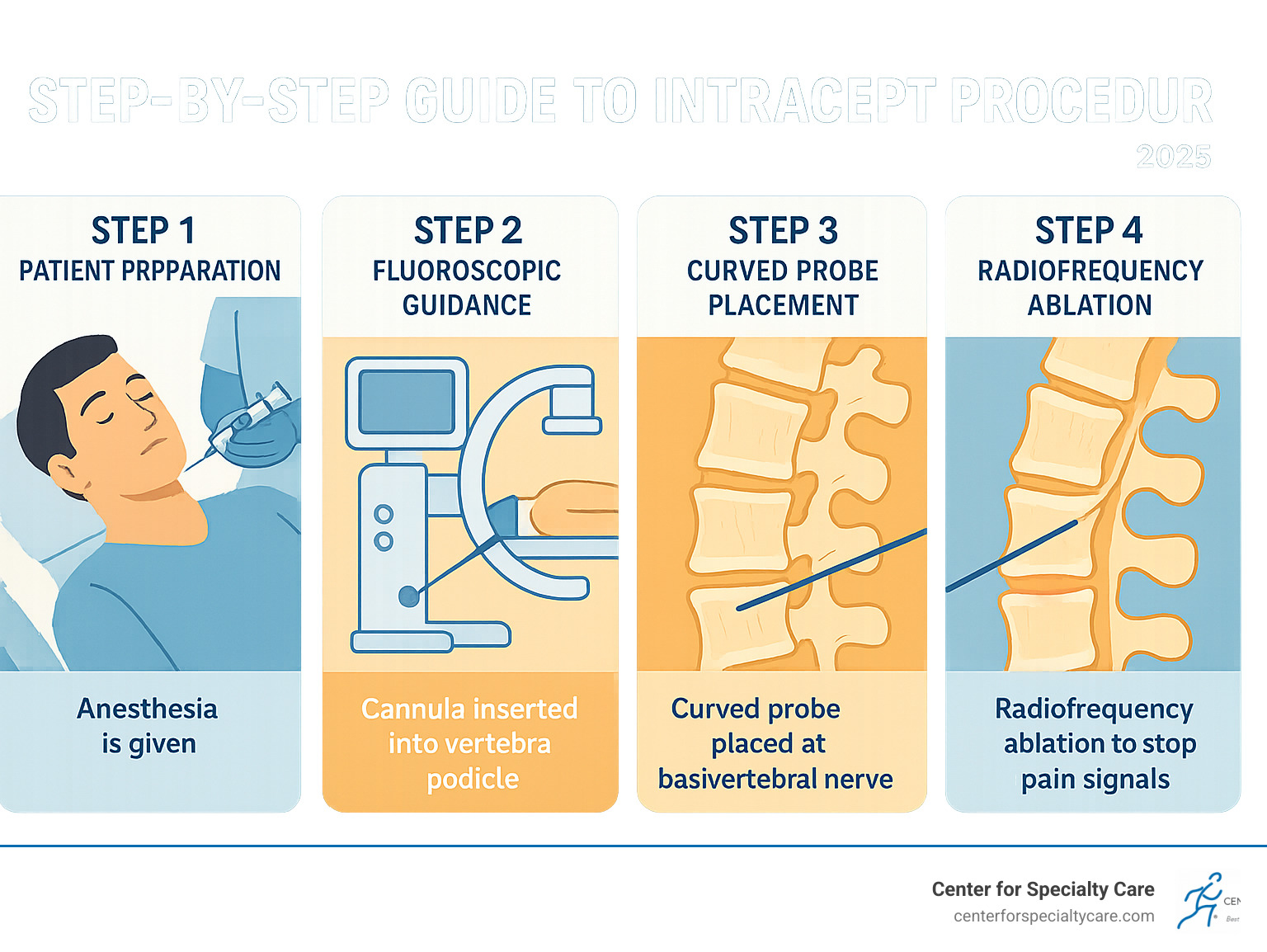
Intracept procedure terms simplified:
Understanding Vertebrogenic Pain and Candidacy
If you’ve been dealing with chronic low back pain, you’ve probably wondered where exactly that pain is coming from. For many patients, the answer lies in something called vertebrogenic pain – a specific type of back pain that starts deep within your vertebrae.
Think of your spine like a stack of cushioned blocks. Between each vertebral bone and your spinal discs are protective barriers called vertebral endplates. These endplates do the important job of keeping your discs healthy and your spine stable. But when these endplates get damaged or inflamed, they become a source of persistent pain.
The pain signals from damaged endplates travel through a small nerve called the basivertebral nerve (BVN). This nerve runs right through the center of each vertebra and connects to the endplates. When your endplates are irritated, this nerve acts like a pain highway, constantly sending uncomfortable signals to your brain.
Diagnosing vertebrogenic pain requires more than just describing your symptoms. We use MRI scans to look for specific changes in your vertebrae called Modic changes. These changes show up as bright or dark areas on the MRI and tell us that your endplates are damaged.
Type 1 Modic changes appear as inflammation and swelling, while Type 2 Modic changes show fatty degeneration where healthy bone tissue used to be. When we see these changes on your MRI, along with your pain symptoms, it’s a strong sign that the intracept procedure could provide the relief you’ve been searching for.
Before we consider this advanced treatment, we want to make sure you’ve given conservative care a fair chance. This means at least six months of treatments like physical therapy, medications, and injections. We understand how frustrating it can be when these treatments don’t provide lasting relief – that’s exactly why we offer targeted solutions like the intracept procedure.
Who is an Ideal Candidate for the Intracept Procedure?
Finding the right treatment starts with determining if you’re a good candidate for the intracept procedure. We take a thorough approach to make sure this targeted treatment will give you the best chance for success.
You might be an ideal candidate if your chronic low back pain has lasted at least six months and hasn’t responded well to conservative treatments. We’re looking for patients who have tried physical therapy, medications, or injections for at least six months without finding significant or lasting relief.
The most important factor is what we see on your MRI scan. We need to see Type 1 or Type 2 Modic changes at the L3 through S1 vertebrae – these are the lower vertebrae in your lumbar spine. These specific changes tell us that your vertebral endplates are the source of your pain.
Your pain pattern also matters. Vertebrogenic pain typically feels like it’s coming from the middle of your lower back, and it often gets worse with activities like sitting for long periods, bending forward, or physical activity. If this sounds like your experience, you could be a great candidate for this procedure.
Who is Not a Candidate?
While the intracept procedure has helped many patients find relief, it’s not the right choice for everyone. We carefully evaluate each patient to ensure both safety and effectiveness.
Pregnancy is an absolute contraindication for this procedure. We also cannot perform the procedure if you have any active infections, especially in or around your spine area.
If you have implantable pulse generators like pacemakers or defibrillators, the intracept procedure isn’t safe for you. The radiofrequency energy we use during the procedure could interfere with these life-saving devices and cause serious complications.
Severe heart or lung problems may also make you unsuitable for the procedure, as would skeletal immaturity – we typically don’t perform this procedure on patients under 18 years of age.
During your consultation at Center for Specialty Care, we’ll review your complete medical history and current health status to determine if the intracept procedure is the right path forward for your pain relief journey.
The Intracept Procedure: A Step-by-Step Breakdown
The intracept procedure represents a breakthrough in minimally invasive spine care. This outpatient treatment allows you to return home the same day, getting back to your life without the extended hospital stays that traditional spine surgery requires.
What makes this procedure so precise is our use of fluoroscopic guidance – think of it as a real-time X-ray movie that lets us see exactly where we’re working throughout the entire process. Combined with radiofrequency energy technology, we can target the exact source of your vertebrogenic pain with remarkable accuracy.
The entire process typically takes 60 to 90 minutes, depending on how many vertebrae need treatment. While that might seem long, this single procedure could provide years of pain relief.
Step 1: Preparation and Anesthesia
Your intracept procedure journey begins well before you arrive at our facility. During your pre-procedure consultation, we’ll walk through your complete medical history and review every medication and supplement you’re taking. Some medications may need to be temporarily paused, and we’ll give you clear instructions about this ahead of time.
On procedure day, our first priority is making sure you’re completely comfortable. We’ll discuss whether sedation or general anesthesia works best for your specific situation. Most patients do wonderfully with either option.
Before we begin, we’ll apply a local anesthetic to numb the small incision area. This extra step ensures you won’t feel any discomfort, even after the main anesthesia wears off.
Step 2: Accessing the Vertebra
Once you’re relaxed and comfortable, we make a tiny incision – usually less than a centimeter long. That’s smaller than most paper cuts you’ve probably had.
Here’s where our fluoroscopic guidance really shines. Using these real-time images of your spine, we carefully guide a specialized cannula (a thin, hollow tube) into the pedicle of your affected vertebra. The pedicle is one of the strongest parts of your vertebral bone, making it the perfect safe entry point for our instruments.
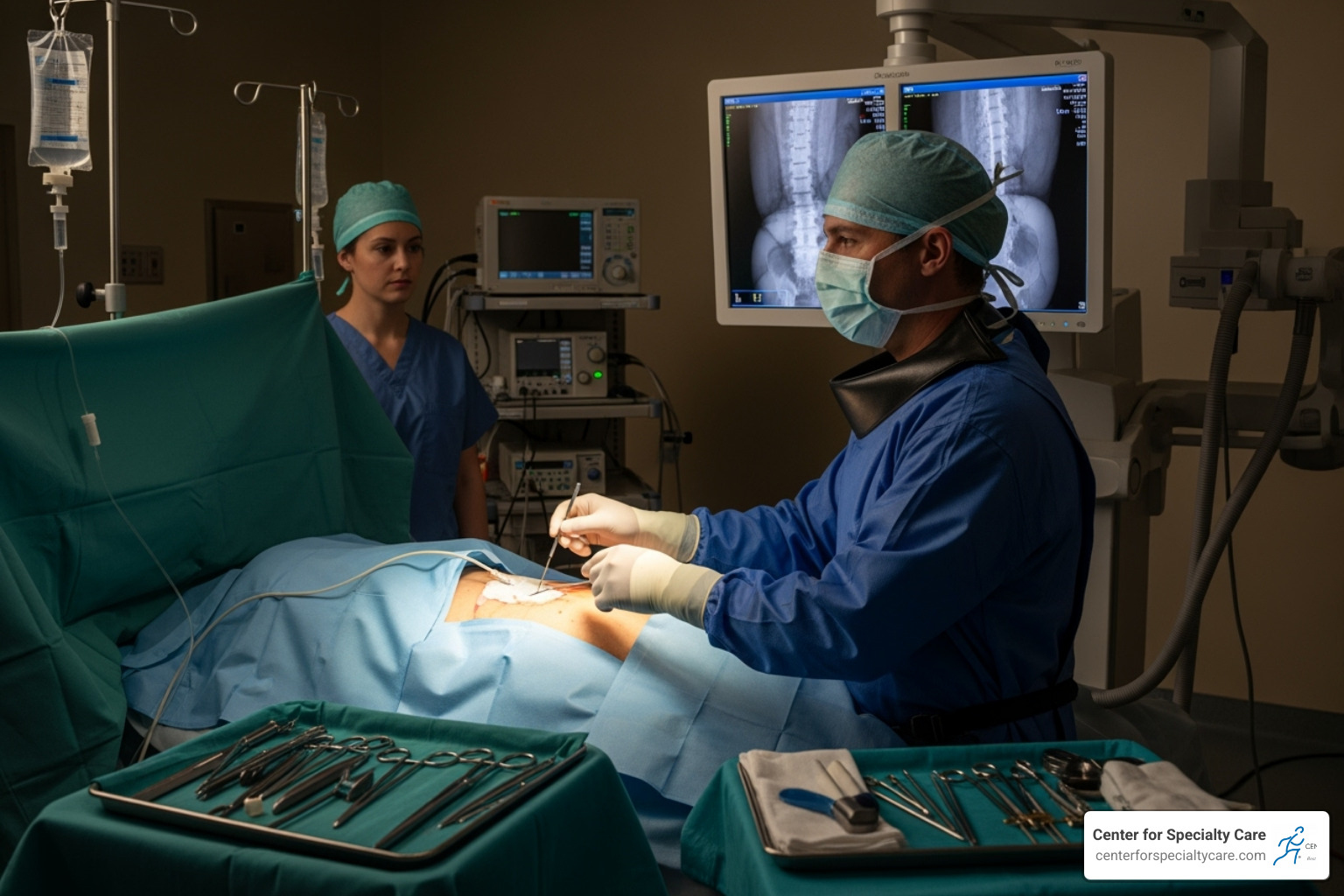
This step requires patience and precision, but it’s what allows us to reach the exact location causing your pain without disturbing healthy tissue.
Step 3: Creating a Path to the Basivertebral Nerve
With our cannula securely positioned, we use specially designed curved instruments to create a precise pathway within your vertebral body. This isn’t random – we’re creating a direct route to the trunk of your basivertebral nerve (BVN).
Think of this step like creating a highway that leads straight to the source of your pain signals. The curved design of our instruments allows us to steer the natural anatomy of your vertebra safely and efficiently.
This targeted approach means we’re only affecting the specific nerve responsible for your vertebrogenic pain, leaving all other structures completely untouched.
Step 4: Ablation of the Nerve
This is where the real magic of the intracept procedure happens. We carefully advance a radiofrequency probe through the channel we’ve created, positioning it precisely at the base of your basivertebral nerve.
The radiofrequency energy creates controlled, targeted heat that gently disrupts the nerve’s ability to send pain signals. It’s not destroying anything important – we’re simply interrupting the communication pathway between your damaged endplates and your brain.
The beauty of this approach is its precision. We’re targeting only the nerve fibers responsible for your chronic pain, while preserving all the structural integrity of your spine. No hardware, no fusion, no permanent changes to your spine’s mechanics.
The ablation itself takes just a few minutes, but the relief it can provide may last for years. Many of our patients describe it as finally having the “pain switch” turned off after months or years of constant discomfort.
Efficacy, Recovery, and Potential Risks
The intracept procedure has emerged as a truly promising option for patients suffering from chronic vertebrogenic low back pain. One of its most appealing aspects is that it’s implant-free, meaning no foreign objects are left in your body, preserving future treatment options if ever needed. It also maintains the overall structure of your spine, unlike more invasive surgeries.
Benefits and Success Rates
The benefits of the intracept procedure are well-documented through extensive clinical studies, demonstrating significant pain reduction and improved function for patients. We’ve seen remarkable outcomes, with:
- 65% of people reporting at least a 50% reduction in back pain.
- 36.2% of people reporting at least a 75% reduction in back pain.
- A remarkable 22.4% of people reporting 100% pain relief six months after the procedure.
What’s even more impressive is the long-term efficacy. A 5-year follow-up study, a hallmark of robust clinical evidence, showed that the improvements are durable:
- 34% of patients had complete pain resolution.
- 47% of patients had greater than 75% pain reduction at the 5-year follow-up.
- The procedure has proven to decrease pain by an average of 44% at the 3-month follow-up and 53% at the 24-month follow-up.
- Roughly two-thirds of patients said their pain was reduced by 50%, and roughly one-third of patients were 100% pain-free at five years.
Beyond pain relief, the intracept procedure empowers patients to reclaim their lives:
- 70% of patients were able to resume the activity level they enjoyed prior to the onset of their low back pain.
- Nearly 80% of patients who have undergone the Intracept® Procedure indicated that they would undergo the procedure again for the same condition.
- The improvements in pain and function are durable, lasting more than five years post-procedure.
We are proud to offer a treatment with such compelling evidence of long-term success. You can explore more about these findings in the long-term outcomes study.
Recovery and Life After Intracept
One of the most appealing aspects of the intracept procedure is its relatively quick recovery time. Since it’s an outpatient procedure, you’ll be monitored for a short period, typically up to 60 minutes, as the anesthesia wears off, and then you’ll be able to go home the same day. We recommend having someone drive you home and taking it easy for the remainder of the day.
Most patients experience only minor soreness, bruising, or swelling around the small incision site, which can usually be managed with over-the-counter pain relievers and ice packs. While some individuals may experience immediate relief, others find that the full benefits become apparent over two weeks to three months.
You’ll typically be able to resume your normal, light daily activities the very next day. For many, this means getting back to work or school within two to three days, though those with physically demanding jobs might need a little more time off. Most people recover fully and return to their usual routines within one to two weeks. We’ll provide you with detailed post-procedure instructions, including any specific movement restrictions, to ensure a smooth and effective recovery.

Potential Risks and Complications
As with any medical procedure, the intracept procedure carries some potential risks, though serious complications are rare. In clinical trials, the rate of serious device or procedure-related complications was less than 0.3%. We will discuss all potential risks with you in detail before the procedure, but generally, they can include:
- Bleeding: Minor bleeding at the incision site.
- Infection: Although sterile techniques are used, any incision carries a small risk of infection.
- Nerve Damage: While the procedure specifically targets the basivertebral nerve, there’s a very small risk of damage to surrounding nerves.
- Increased Back Pain: Some patients may experience a temporary increase in pain at the procedure site, which typically subsides within a few days or weeks.
It’s important to us that you feel fully informed and comfortable with your treatment plan. Our team takes every precaution to minimize these risks and ensure your safety.
How Intracept Compares to Other Back Pain Treatments
When you’re dealing with chronic low back pain, it can feel like you’re drowning in treatment options. Physical therapy, injections, medications, surgery – where do you even start? The intracept procedure offers something different: a targeted treatment that goes straight to the source of vertebrogenic pain.
Unlike general back pain treatments that cast a wide net, the intracept procedure focuses specifically on the basivertebral nerve. This precision matters because vertebrogenic pain has a very specific cause – damaged vertebral endplates. When you target the exact nerve sending those pain signals, you get better results.
What makes this approach special is that it’s a true non-surgical alternative to major spine surgery. You get significant pain relief without the risks, long recovery, or permanent changes that come with traditional spinal operations. Plus, because the intracept procedure doesn’t use any implants and preserves your spine’s natural structure, it keeps all your future treatment doors open.
Intracept vs. Conservative Care and Surgery
Let’s break down how the intracept procedure stacks up against other common treatments you might have tried or considered:
| Comparison Point | Physical Therapy | Injections (e.g., epidurals) | Spinal Fusion Surgery | Intracept Procedure |
|---|---|---|---|---|
| Invasiveness | Non-invasive | Minimally invasive | Highly invasive | Minimally invasive |
| Recovery Time | Ongoing | Hours to days | Months | 1-2 weeks |
| Target | Muscle strength, flexibility, posture | Nerve inflammation, pain pathways (general) | Spinal stability, nerve decompression | Basivertebral nerve (specific pain signal) |
| Permanence | Temporary/requires ongoing effort | Temporary (weeks to months) | Permanent alteration of spine | Long-lasting (5+ years), but nerve can regenerate |
| Implant | No | No | Screws, rods, cages | No |
Physical therapy is fantastic for building strength and improving movement patterns, but it can’t fix damaged vertebral endplates. If you’ve been through months of PT without lasting relief, it might be because the real problem lies deeper – in those nerve signals from your vertebrae.
Spinal injections can provide temporary relief by reducing inflammation around nerves. However, they’re like putting a band-aid on the problem. They might quiet the pain for weeks or months, but they don’t address why those basivertebral nerves keep sending pain signals in the first place.
Spinal fusion surgery is the heavy-duty option – permanently joining vertebrae together with screws, rods, and bone grafts. While it can be life-changing for the right conditions, it comes with months of recovery, permanent changes to how your spine moves, and significant surgical risks. It’s designed for spinal instability or severe nerve compression, not specifically for vertebrogenic pain.
The intracept procedure finds that sweet spot between conservative care and major surgery. It directly stops the pain signals at their source, provides relief that can last five years or more, and gets you back to your normal activities within weeks, not months. Best of all, your spine stays structurally unchanged, so you haven’t burned any bridges for future treatment if needed.
Frequently Asked Questions about the Intracept Procedure
When you’re considering a new treatment for chronic back pain, it’s completely natural to have questions. After all, you’ve likely been dealing with this pain for months or even years, and you want to make sure any procedure you choose will truly help. Let me address the questions we hear most often about the intracept procedure.
How long does the pain relief from the Intracept procedure last?
This is probably the most important question on your mind – and I’m excited to share some really encouraging news. The intracept procedure provides remarkably durable results that go far beyond temporary fixes.
Clinical studies show that pain relief from the intracept procedure lasts for more than five years after just a single treatment. That’s not a typo – we’re talking about long-term relief from one outpatient procedure. The majority of patients maintain their improvements in both pain levels and daily function throughout this entire period.
What makes this even more impressive is that these aren’t just modest improvements. Many patients experience substantial pain reduction that allows them to return to activities they thought they’d lost forever. This durability means you’re not looking at repeated procedures every few months like you might with injections.
Is the Intracept procedure the same as other nerve ablations?
Great question, and the short answer is no – the intracept procedure is quite different from other nerve ablation treatments you may have heard about.
While the intracept procedure does use radiofrequency energy to ablate (disable) a nerve, it targets a very specific nerve in a unique location. Most nerve ablations for back pain target nerves outside the bone, like the medial branch nerves around facet joints. The intracept procedure, however, is what we call an intraosseous treatment – meaning it works inside the bone itself.
The procedure specifically targets the basivertebral nerve (BVN), which lives within your vertebral body and sends pain signals from damaged vertebral endplates. This makes it a highly specialized treatment for vertebrogenic pain, rather than a general approach to back pain. It’s this precise targeting that makes the intracept procedure so effective for patients with Modic changes on their MRI.
What does recovery feel like?
I think you’ll be pleasantly surprised by how manageable the recovery process is. Most of our patients tell us it’s much easier than they expected, especially compared to what they imagined spine treatment would involve.
Right after the procedure, you’ll feel some soreness at the small incision site – think of it like a mild bruise. This tenderness typically lasts just a few days and responds well to over-the-counter pain relievers and ice packs. We recommend taking it easy for the first day or two, but most patients find they can handle light activities the very next day.
The timeline for getting back to your normal routine is refreshingly quick. Most people return to work within two to three days (longer if you have a physically demanding job), and you’ll likely feel completely recovered within one to two weeks. It’s truly minimal downtime, especially when you consider the potential for years of pain relief.
Some patients notice improvement right away, while others find their pain relief develops gradually over the first two to three months. Every person’s healing process is unique, but the overall recovery experience is generally smooth and straightforward.
Take the Next Step Towards a Pain-Free Life
Living with chronic low back pain can feel overwhelming. It affects your work, your relationships, and those simple moments that make life enjoyable. The intracept procedure has helped thousands of patients break free from this cycle of pain and reclaim their active lifestyles.
If you’ve been struggling with persistent back pain for months or years, trying different treatments without lasting success, you’re not alone. Many of our patients come to us feeling frustrated and wondering if they’ll ever find real relief. The good news is that advances in medical technology, like the intracept procedure, offer new hope for people who haven’t found answers with traditional treatments.
What makes the intracept procedure particularly encouraging is its track record. With 65% of patients experiencing at least 50% pain reduction and 34% achieving complete pain resolution at five years, this isn’t just temporary relief – it’s the chance to get your life back.
At Center for Specialty Care, we understand that no two patients are exactly alike. Your pain story is unique, and so should be your treatment plan. That’s why we take time to listen, thoroughly evaluate your condition, and explore all available options together. Our commitment to 100% patient satisfaction means we’re not satisfied until you’re feeling better and living the life you want.
Dr. Corey Welchlin and our expert team bring over three decades of orthopedic experience to every consultation. We’ve seen how the right diagnosis and treatment can transform someone’s entire outlook on life. Whether you’re dealing with pain that worsens when sitting, struggling to bend forward without discomfort, or simply tired of planning your day around your back pain, we’re here to help.
Start Your Journey to Recovery
Taking the first step toward relief doesn’t have to be complicated. We’ve designed our consultation process to be thorough yet comfortable, giving you all the information you need to make confident decisions about your care.
During your evaluation, we’ll review your medical history, discuss your current symptoms, and examine any previous imaging studies like MRI scans. If you have Modic changes visible on your MRI and meet the other criteria for the intracept procedure, we’ll walk you through exactly what to expect and answer all your questions.
Our clinics in Fairmont, MN, Estherville, IA, Buffalo Center, IA, and St. James, MN offer convenient access to specialized care throughout southern Minnesota and northern Iowa. We pride ourselves on quick appointment availability because we know that when you’re ready to address your pain, you shouldn’t have to wait weeks for answers.
Learn more about the Intracept procedure at Center for Specialty Care and find how this innovative treatment could be the solution you’ve been searching for. Contact us today to schedule your consultation – it might just be the conversation that changes everything.