
Say Goodbye to That Knot in Your Rhomboid: A Step-by-Step Guide
October 7, 2025
Step-by-Step Guide to Intracept Procedure
October 9, 2025
Ice Pack for Achilles Tendon: #1 Ultimate Relief
Why Ice Therapy Works for Achilles Pain Relief
An ice pack for achilles tendon pain is one of the most effective first-aid treatments you can use at home. When your Achilles tendon becomes inflamed or injured, applying cold therapy helps numb nerve endings, reduce swelling, and provide much-needed pain relief.
Quick Answer for Immediate Relief:
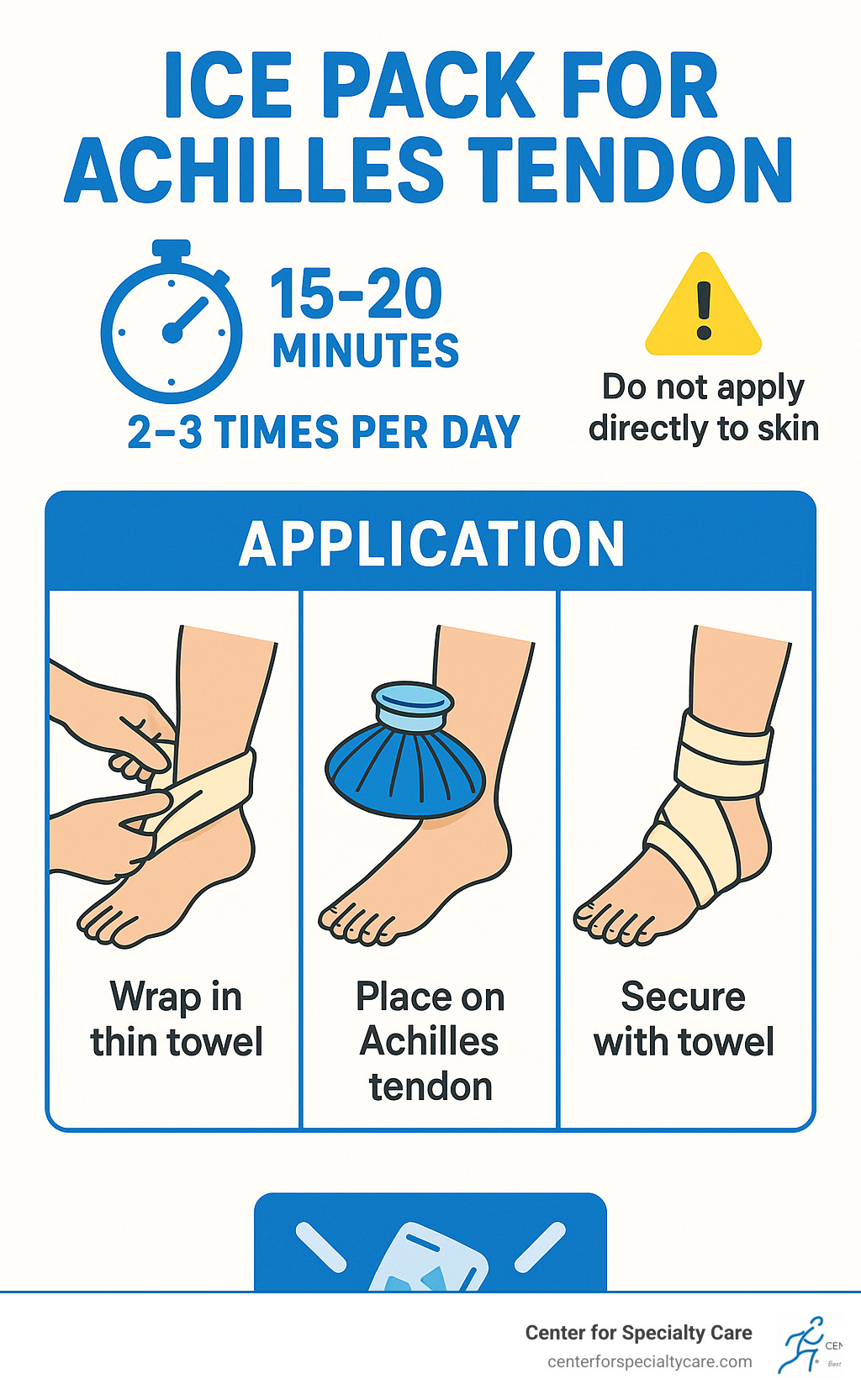
- Apply ice for 15-20 minutes at a time
- Use 2-3 times per day for acute pain
- Always wrap ice pack in a thin towel
- Leave at least 6 hours between sessions
- Remove immediately if you feel sharp pain or numbness
Research shows that icing can reduce pain significantly, helping you stay consistent with rehabilitation exercises that are crucial for recovery. However, it’s important to use ice correctly – applying it for too long or too frequently can actually slow healing and make you more vulnerable to injury.
The key is understanding when and how to ice your Achilles tendon safely. While ice won’t speed up tendon healing directly, it serves as an excellent pain management tool that allows you to focus on the treatments that do promote recovery.
As Dr. Corey Welchlin, a board-certified orthopedic surgeon with over three decades of experience treating sports injuries and tendon conditions, I’ve seen countless patients benefit from proper ice pack for achilles tendon application as part of their comprehensive treatment plan. My experience at the Center for Specialty Care has shown me that patients who understand correct icing techniques recover more comfortably and stay more engaged with their rehabilitation.
Ice pack for achilles tendon vocabulary:
Understanding Achilles Tendonitis and Why Cold Therapy Helps
Before we jump into the how-to of icing, let’s take a moment to understand what’s actually happening in your heel. Your Achilles tendon is quite the workhorse – it’s the largest, strongest tendon in your entire body, connecting your calf muscles to your heel bone. Every time you walk, run, jump, or even stand on your tiptoes, this remarkable band of tissue is doing the heavy lifting.
What is Achilles Tendonitis?
Achilles tendonitis is what happens when this hardworking tendon gets irritated and inflamed. Now, here’s where it gets a bit interesting from a medical standpoint. While we often use the term “tendonitis” (with that “-itis” ending suggesting inflammation), research has shown us that chronic Achilles pain often involves more degeneration than inflammation. You might also hear terms like tendinosis or tendinopathy thrown around – these describe the actual breakdown of tendon fibers that happens over time.
But don’t worry about getting caught up in the terminology. What matters is that your tendon hurts, and we’re here to help you feel better.
Most Achilles tendon pain develops as an overuse injury. Think of it like this: your tendon can handle a lot, but when you repeatedly ask it to do more than it’s prepared for – whether that’s increasing your running mileage too quickly, jumping back into sports after time off, or even just wearing different shoes – it can get overwhelmed and start to complain.
Recognizing the Signs
Your Achilles tendon has a pretty clear way of letting you know something’s wrong. Morning stiffness is often the first clue – you wake up and those first few steps feel like you’re walking on broken glass. The pain with movement typically gets a bit better as you warm up, but it’s still there, nagging at you.
You might notice swelling along the back of your heel or feel tenderness when you press on the tendon itself. Some people describe a sharp, shooting pain, while others feel more of a dull ache that just won’t quit. The pain often gets worse with activity and better with rest, which is your tendon’s way of asking for a break.
For a deeper dive into all the ins and outs of this condition, check out our comprehensive guide: More info about Achilles Tendonitis.
Why Cold Therapy Actually Works
Now here’s where that ice pack for achilles tendon becomes your new best friend. Cold therapy isn’t just an old wives’ tale – there’s real science behind why it helps you feel better.
When you apply ice to your painful Achilles tendon, several helpful things happen at once. First, the cold numbs nerve endings, which directly dials down your pain signals. It’s like turning down the volume on your body’s alarm system – the problem is still there, but it’s not screaming at you quite so loudly.
The cold also causes vasoconstriction – a fancy way of saying it makes your blood vessels get smaller. This reduces blood flow to the area, which helps control swelling and inflammation, especially in newer injuries. Think of it as applying the brakes to the inflammatory process.
Perhaps most importantly, by reducing pain signals, ice helps break the cycle of pain and muscle guarding that can keep you stuck. When you’re not constantly wincing, you’re more likely to move normally and participate in the rehabilitation exercises that actually promote healing.
Here’s the thing though – and this is important to understand – ice doesn’t directly speed up tendon healing. The continuum model of tendon pathology helps us understand that tendon problems are complex, and while ice is excellent for managing symptoms, the real healing happens through other treatments like proper loading exercises and physical therapy.
But don’t underestimate the value of feeling better! When your pain is under control, you can focus on the activities and treatments that will actually get you back to doing what you love.
The Right Way to Use an Ice Pack for Achilles Tendon Pain
When your Achilles tendon is screaming for relief, it’s tempting to grab the nearest frozen item and slap it on there. But hold on! Using an ice pack for achilles tendon pain effectively requires a bit more finesse than that. Think of it as a gentle art rather than a desperate scramble – proper technique makes all the difference between sweet relief and potential harm.
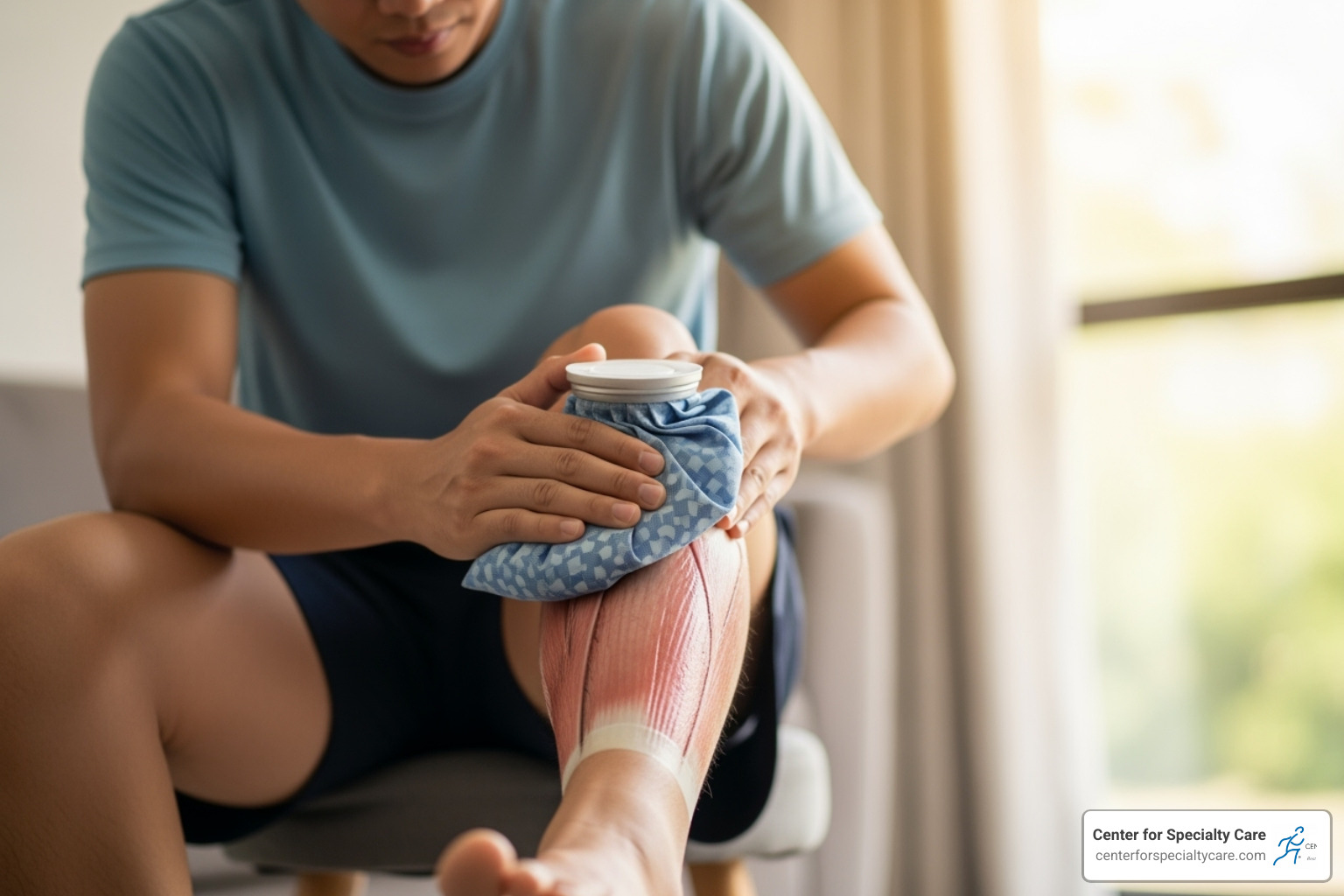
The beauty of cold therapy lies in following the RICE principle – Rest, Ice, Compression, and Elevation. When done correctly, icing becomes a powerful ally in your recovery journey. Safety always comes first, so let’s walk through this together step by step.
What are the best types of ice pack for achilles tendon injuries?
Choosing the right ice pack for achilles tendon pain can feel overwhelming with so many options available. The truth is, the “best” type often depends on what works for your lifestyle and comfort preferences.
Gel packs are my personal favorite recommendation for most patients. They stay wonderfully flexible even when frozen, which means they’ll hug the curves of your ankle and Achilles area perfectly. Many come with convenient straps, so you can secure them hands-free while you relax. The bonus? Many gel packs work for both hot and cold therapy, giving you versatility as your healing progresses.
Traditional ice bags remain a classic choice for good reason. Simply fill a plastic bag with ice cubes (crushed ice works even better for contouring), squeeze out the extra air, and seal it up. They provide intense, focused cold and are always available when you need them.
Here’s a fun trick that surprises many people: frozen peas or other small frozen vegetables make excellent ice packs! Those little green spheres conform beautifully to your ankle’s shape, and they’re reusable. Just remember to label the bag clearly so nobody accidentally serves them for dinner after they’ve been your therapeutic companion.
Reusable wraps with built-in gel packs offer the ultimate in convenience and coverage. These specialized wraps are designed specifically with ankles and Achilles tendons in mind. They often provide both cold therapy and gentle compression simultaneously, which can improve the pain-relieving effects. The hands-free design means you can ice while reading, working, or just relaxing.
Step-by-Step Application Guide
Ready to give your Achilles tendon the cooling relief it deserves? Here’s how to apply your ice pack for achilles tendon pain safely and effectively.
Start by gathering everything you’ll need: your chosen ice pack, a thin damp towel (damp works better than dry for cold transfer), a timer, and a comfortable spot where you can lift your foot slightly. Having everything ready beforehand prevents that awkward hop-around-the-house routine while you’re in pain.
Find a cozy spot where you can sit comfortably and prop your foot up. This elevation helps reduce swelling, giving you double the benefit. A recliner, couch, or even your bed with some pillows works perfectly.
Here’s the most important safety rule: never apply ice directly to your bare skin. I can’t stress this enough! Wrap your ice pack in that thin, damp towel first. This protective barrier prevents frostbite and skin damage while still allowing effective cold transfer. If you’re using a specialized wrap, make sure the protective layer sits properly between the cold source and your skin.
Gently place the wrapped ice pack over the most painful area of your Achilles tendon – typically along the back of your ankle, just above the heel. If you’re using a wrap system, secure it snugly but not tightly. You want gentle, comfortable compression, not a death grip that cuts off circulation.
Now comes the crucial part: set your timer for 15 to 20 minutes. This isn’t negotiable! Your phone timer works perfectly for this. Some people prefer an intermittent approach – 10 minutes on, 10 minutes off, then another 10 minutes on. Both methods work well for pain relief.
During your icing session, this is your time to relax. Read a book, watch something entertaining, or just close your eyes and rest. When that timer goes off, remove the ice pack and let your skin return to normal temperature.
How long and how often should I use an ice pack for achilles tendon?
Getting the timing right with your ice pack for achilles tendon routine is crucial for both effectiveness and safety. Too little time won’t give you the relief you need, but too much can actually harm your recovery.
Stick to 15 to 20 minutes per session as your sweet spot. This duration provides enough time to numb the area and reduce swelling without overcooling the tissues. Think of it like Goldilocks – not too little, not too much, but just right.
For frequency, 2 to 3 times per day works well for acute pain or flare-ups. The key is spacing these sessions properly – leave at least 6 hours between each icing session. This gives your skin and deeper tissues time to return to normal temperature and prevents the complications that come with over-icing.
When should you reach for that ice pack? The most effective times are after activity when your pain flares up, and before rehabilitation exercises when pain might prevent you from doing your prescribed stretches and strengthening work. If your Achilles pain is so intense that it stops you from staying consistent with your recovery plan, strategic icing can help reduce that discomfort enough to keep you on track.
We’re not talking about routine icing after every single workout. Research suggests that regular post-exercise icing might actually blunt some of the beneficial training adaptations your body is trying to make. Use ice as a tool when you need it, not as a daily habit regardless of how you feel.
The goal is using ice strategically – when pain is interfering with your daily activities or preventing you from doing the rehabilitation work that will actually help your Achilles tendon heal in the long run.
Common Mistakes to Avoid When Icing Your Achilles
While an ice pack for achilles tendon can be a powerful ally, misusing it can turn it into a foe. I’ve seen countless patients make these same mistakes over the years, and trust me, avoiding them will save you both discomfort and setbacks in your recovery.

Never apply ice directly to your skin – this is the mistake I see most often, and it’s completely preventable. Without that protective towel barrier, you’re risking frostbite, ice burns, or even nerve damage. Your skin should feel comfortably cold, not burning or completely numb. If you experience sharp pain or total numbness, remove that ice immediately.
Icing for too long is another common trap. I get it – when something hurts, it feels logical that more treatment equals faster healing. But keeping that ice pack for achilles tendon on for longer than 20 minutes actually works against you. Extended cooling slows circulation so much that essential nutrients and healing cells can’t reach your injured tendon effectively. This can delay your recovery and leave your tendon more vulnerable to re-injury.
Here’s one that might surprise you: icing routinely after every workout can actually sabotage your progress. Research shows that consistently cooling tissue immediately after strength training can blunt the positive training effects your tendon needs to get stronger. As research on post-exercise cooling demonstrates, this routine icing can interfere with the beneficial adaptations that exercise creates in your tissues.
If you find yourself reaching for ice after every single rehabilitation session, that’s usually a red flag. Your exercises might be too intense for your tendon’s current healing stage. Rather than masking the problem with constant icing, it’s better to dial back the intensity and let your tendon build strength gradually.
Ignoring persistent pain while relying on ice for relief is a mistake that can cost you weeks or months of recovery time. Ice is fantastic for managing symptoms, but it shouldn’t become a crutch that masks worsening problems. If your pain isn’t improving or keeps getting worse despite proper icing and other self-care measures, your body is telling you something important.
Finally, some people simply shouldn’t use ice therapy at all. Avoid using an ice pack for achilles tendon if you have conditions like Raynaud’s disease, open wounds in the area, or loss of sensation from neuropathy. Without normal feeling in the area, you can’t tell if the ice is causing damage until it’s too late.
The bottom line? Listen to your body. Ice should provide relief, not create new problems. When used correctly, it’s an excellent tool for managing Achilles pain – but like any tool, technique matters.
Ice vs. Heat: What’s Best for Your Achilles Tendon?
One of the most common questions I hear from patients is whether they should use ice or heat for their Achilles pain. It’s a great question, and honestly, the answer isn’t always black and white. The best choice depends on whether you’re dealing with a fresh injury or something that’s been bothering you for a while.
Ice for New Injuries (Acute Pain)
When your Achilles tendon pain is relatively new – we’re talking days to weeks – an ice pack for achilles tendon is usually your best friend. Fresh injuries are more likely to involve actual inflammation and swelling, which is where ice really shines.
Ice works beautifully for new injuries because it numbs those screaming nerve endings, reduces swelling by tightening up blood vessels, and helps prevent additional tissue damage. Think of it as your first line of defense when your Achilles is angry and inflamed.
Heat for Long-Term Stiffness (Chronic Pain)
Now, if your Achilles has been giving you trouble for more than a month, you’re dealing with what we call chronic pain. At this point, the problem is less about inflammation and more about stiffness, tight muscles, and changes in the tendon itself.
Heat therapy can be helpful here because it increases blood flow to the area, bringing more healing nutrients and oxygen. It also does wonders for relaxing those tight calf muscles that connect to your Achilles tendon, which can provide soothing relief from chronic discomfort.
However, I want to add a word of caution here. While heat can be great for muscle relaxation and chronic stiffness, be careful about applying it directly to the tendon itself. Heat penetrates skin better than it reaches deep tendon tissue, and too much heat could potentially cause damage to delicate tissues.
When to Switch or Use Both
Here’s the thing to remember: neither ice nor heat will magically speed up your Achilles tendon healing. They’re both pain management tools, and pretty good ones at that.
For acute pain (those first few days or weeks), stick with ice. For chronic pain (over a month), consider heat if it helps with stiffness and muscle tightness. But always listen to your body – if heat makes things worse, go back to ice.
If you experience a new flare-up of an old injury, treat it like it’s acute again and return to using your ice pack for achilles tendon.
| Feature | Ice for Achilles Pain | Heat for Achilles Pain |
|---|---|---|
| When to Use | New injuries (first few days/weeks) or acute pain flare-ups | Chronic pain (over 1 month) with stiffness and muscle tightness |
| Benefits | Numbs pain, reduces swelling and inflammation, limits secondary tissue damage | Increases blood flow, relaxes tight calf muscles, soothes chronic discomfort |
| Risks | Frostbite if applied directly to skin, can slow healing if overused | May worsen acute inflammation, potential tissue damage from excessive heat |
The bottom line? Start with ice for new pain, and consider heat for long-term stiffness. But remember, both are just part of the puzzle. For comprehensive treatment that addresses the root cause of your Achilles pain, you’ll want to explore our guide on does heat help tendonitis for more detailed information about heat therapy options.