
Decoding Neck Lumps: Why You Might Have a Knot on the Back of Your Neck
August 26, 2025
The Essential Guide to Intracept CPT Codes
August 28, 2025
Ice or Heat for Strained Tendon: 1 Best Guide
When Pain Strikes: Your First Critical Decision
Ice or heat for strained tendon pain? This common question has a simple answer that depends on one key factor: timing.
Quick Answer:
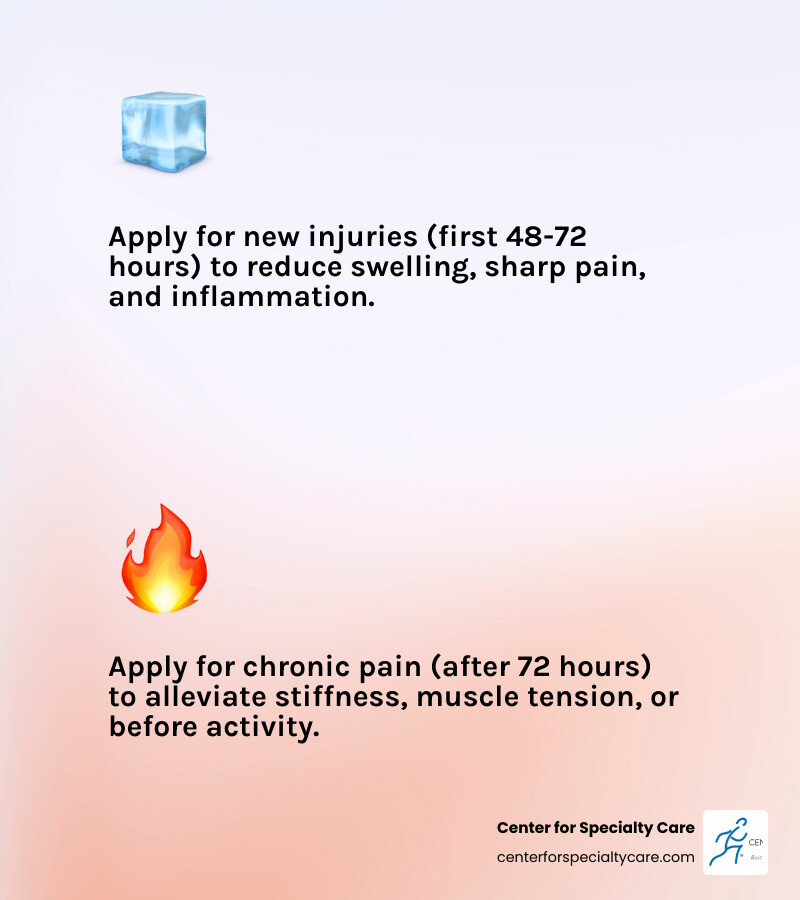
- Use ICE for: New injuries (first 48-72 hours), swelling, sharp pain, inflammation
- Use HEAT for: Chronic pain (after 72 hours), stiffness, muscle tension, before activity
The basic rule is: Ice first, heat later. Ice reduces inflammation and numbs acute pain, while heat increases blood flow to relax tight muscles. Using the wrong therapy at the wrong time can make your pain worse.
Whether it’s a sharp twinge in your shoulder or nagging elbow pain, you’ve likely faced this dilemma. Getting it wrong can delay healing or even worsen the injury. That’s why understanding the difference between acute tendinitis and chronic tendinosis is crucial for making the right choice.
I’m Dr. Corey Welchlin, a board-certified orthopedic surgeon with over 30 years of experience treating tendon injuries in southern Minnesota and northern Iowa. I’ve helped countless patients decide between ice or heat for strained tendon pain, guiding them toward faster, more effective recovery.
Understanding Your Tendon Injury: Tendinitis vs. Tendinosis
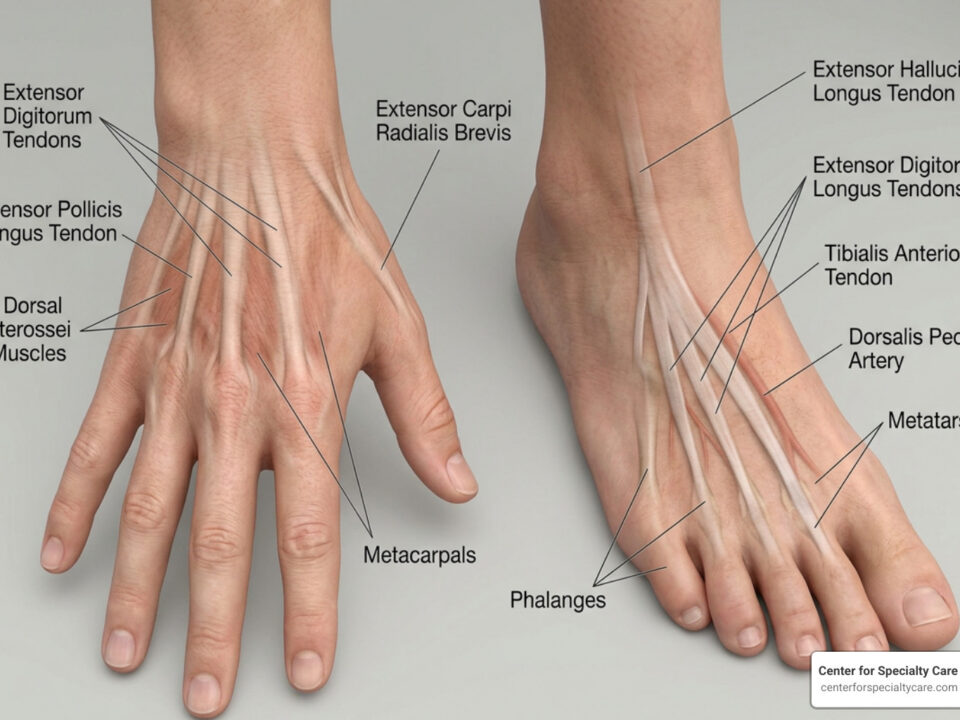
To decide between ice or heat for your strained tendon, you first need to understand your injury. Tendons are the tough, rope-like tissues connecting muscles to bones, enabling movement. Not all tendon problems are the same, and the two main types, tendinitis and tendinosis, require different treatments.
What is Tendinitis?
Tendinitis is an acute condition involving inflammation. It often appears suddenly after overuse, repetitive motion (like “tennis elbow”), or sudden trauma. Your body’s inflammatory response causes the classic signs of swelling, redness, and pain as it rushes healing cells to the area. For comprehensive evaluation and treatment of these conditions, our orthopedic care team can provide expert guidance.
What is Tendinosis?
Tendinosis is a chronic condition characterized by the degeneration of the tendon’s collagen, not inflammation. It’s like a rope slowly fraying from wear and tear. This often develops when acute tendinitis doesn’t heal properly or from continued repetitive stress without adequate rest. Understanding this difference is crucial, as scientific research on tendinopathy shows these conditions require different therapeutic approaches.
Common Symptoms of Tendinitis (Acute Injury)
Your body sends clear signals with tendinitis. Key symptoms include:
- Sharp, stabbing pain that worsens with movement or touch.
- Visible swelling, puffiness, or a feeling of tightness.
- Redness and warmth at the injury site due to increased blood flow.
- A grating or crackling sensation (crepitus) when you move the tendon.
These signs typically appear within hours or a day of the triggering activity.
Common Symptoms of Tendinosis (Chronic Injury)
Tendinosis symptoms develop more gradually over weeks or months:
- Dull, aching pain that is persistent and nagging.
- Morning stiffness and restricted movement.
- A tender lump or thickening along the tendon.
- Pain that often improves with activity but worsens after periods of rest.
The Cold Truth: When and How to Use Ice
When dealing with a new injury, ice is your first line of defense for ice or heat for strained tendon relief. It’s most effective during the acute phase—the first 48 to 72 hours when the tendon is inflamed and painful.
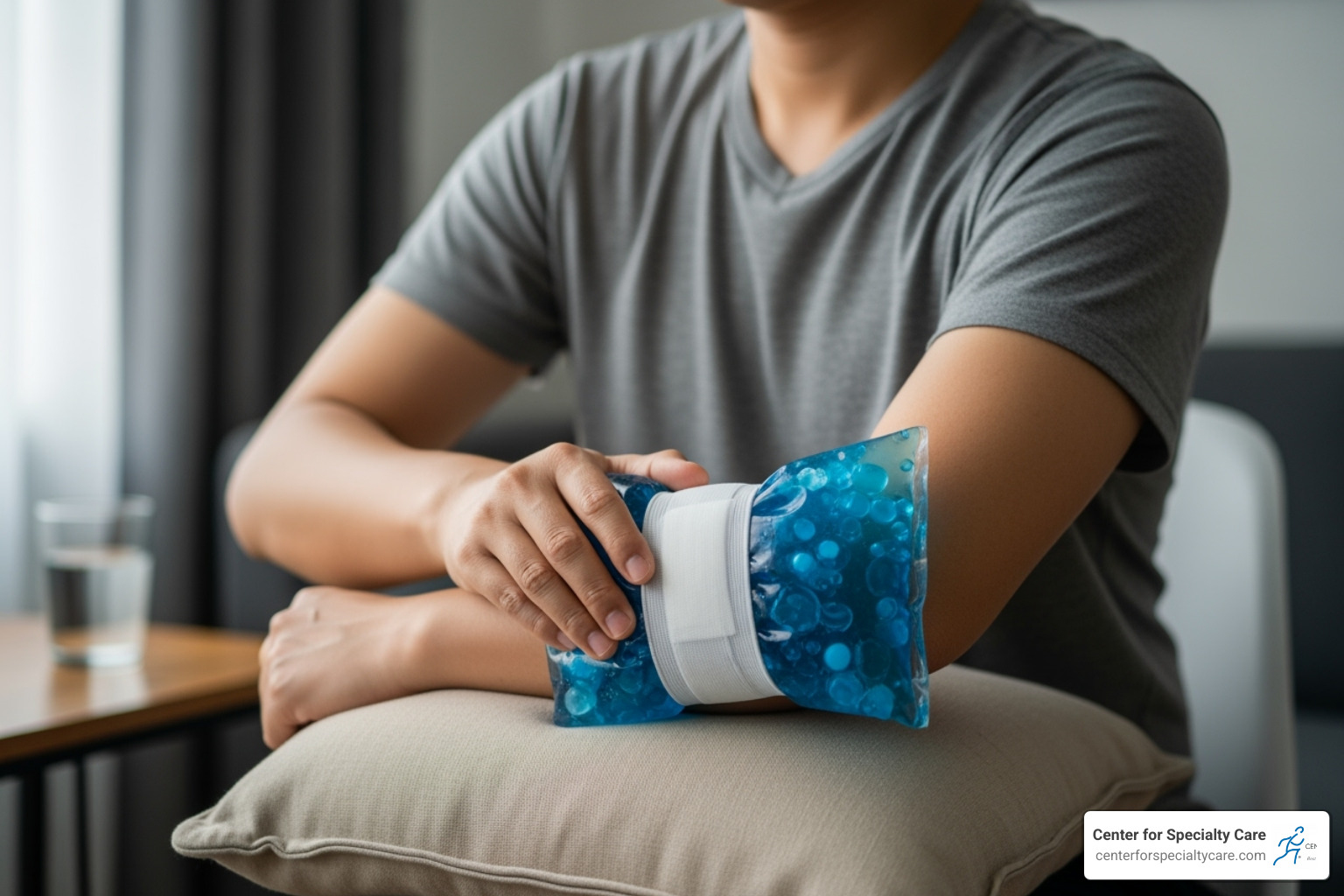
Ice causes vasoconstriction, which is the narrowing of blood vessels. This reduces blood flow, which in turn minimizes swelling. The cold also numbs the area, providing pain relief, and helps control the inflammatory response, preventing it from becoming excessive. While ice doesn’t speed up healing directly, it creates an optimal environment for your body’s natural repair process.
Best Practices for Icing a Strained Tendon
To maximize benefits and stay safe, follow these steps:
- Use a barrier: Always place a thin towel between the ice pack and your skin to prevent frostbite. A bag of frozen peas works well as it conforms to the body.
- Time your sessions: Apply ice for 15-20 minutes at a time. This is the optimal duration for effectiveness without causing harm.
- Be consistent: Repeat every 2-4 hours during the first few days for consistent relief.
- Lift the area: If possible, lift the injured area above your heart to help drain excess fluid.
- Listen to your body: Remove the ice if the area becomes numb. Wait at least 30 minutes before reapplying.
Turning Up the Heat: When and How to Use Heat Therapy
After the first 72 hours, when the initial inflammation has subsided, it’s time to switch to heat therapy. For the chronic, nagging pain associated with tendinosis, heat is your best ally in the ice or heat for strained tendon debate.
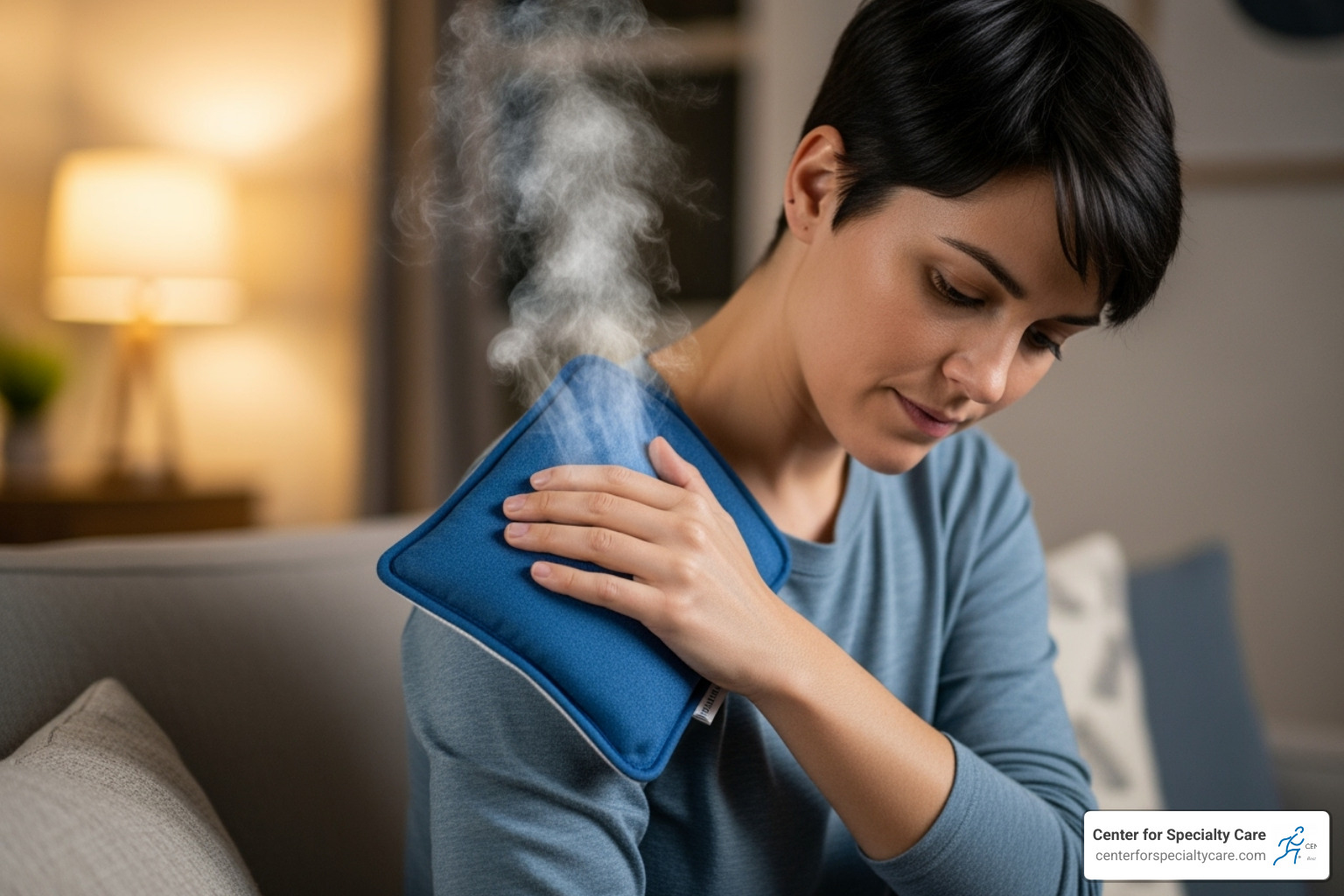
Heat causes vasodilation, which widens blood vessels. This increased blood flow delivers fresh oxygen and nutrients to the tissue. Heat also promotes muscle relaxation, reduces stiffness, and improves flexibility by making tendon fibers more pliable. This is especially useful before gentle stretching or physical therapy. For comprehensive strategies to manage persistent discomfort, our pain management team can help.
Best Practices for Applying Heat
To get the most out of heat therapy safely:
- Choose moist heat: A warm, damp towel or a moist heating pad is often more effective as it penetrates deeper than dry heat.
- Use a protective layer: Never apply a heat source directly to your skin. Always use a towel or cloth as a barrier to prevent burns.
- Stick to 15-20 minute sessions: Apply heat for 15-20 minutes, 2-3 times daily. A warm bath can also be effective for general stiffness.
- Stay safe: Never fall asleep with a heating pad on. Set a timer to avoid accidental burns.
Can Heat Make a Tendon Injury Worse?
Yes, applying heat at the wrong time can make an injury worse. If you apply heat to a new, inflamed injury (within the first 48-72 hours), the increased blood flow will worsen swelling and pain. This is why it’s critical to avoid heat if the injury is fresh, red, warm to the touch, or visibly swollen. Save heat therapy for when things have cooled down.
The Ultimate Guide: Deciding Between Ice or Heat for Strained Tendon Pain
Choosing between ice or heat for strained tendon pain isn’t about which is better overall, but which is right for the stage of your injury. Timing is everything. For a new injury with inflammation, use ice to reduce the swelling. For an older, stiff injury, use heat to restore flexibility.
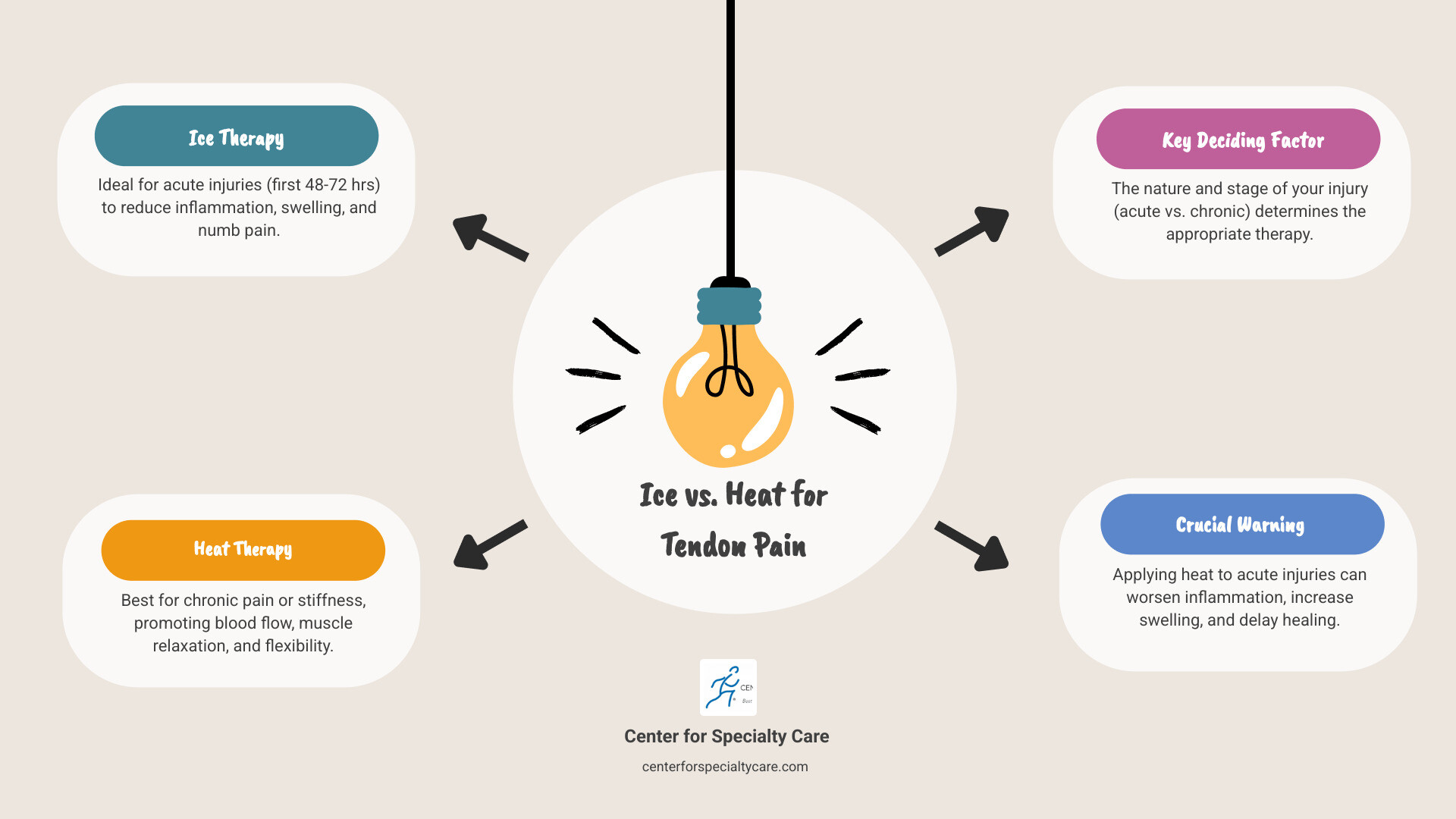
The injury timeline is your best guide. According to the Mayo Clinic’s guidance on tendinitis pain, ice can reduce pain and swelling in a sudden tendon injury, while heat may be more helpful for chronic tendon pain by increasing blood flow and relaxing muscles.
When to Choose Ice or Heat for a Strained Tendon
Let your symptoms guide your choice:
- Acute pain and swelling: Use ice for new injuries (first 48-72 hours) that are sharp, swollen, warm, and red.
- Chronic stiffness and aches: Use heat for older, nagging injuries characterized by a dull ache and morning stiffness.
- Before activity: Applying heat to a chronic injury before gentle exercise can warm up stiff tendons and make them more pliable.
- After activity: Use ice after exercise to manage any resulting inflammation or soreness, even with chronic issues.
Using Both: Contrast Therapy for a Strained Tendon
Sometimes, the best answer is both. Contrast therapy, or alternating between hot and cold, can be highly effective after the initial acute phase.
This technique creates a “pumping” action in the blood vessels, which boosts circulation and can help reduce both pain and stiffness. It’s particularly useful when you have some minor swelling but find that heat generally makes you feel better.
To perform contrast therapy, alternate 3-4 minutes of heat with 1 minute of cold. Repeat this cycle for 20-30 minutes, always ending with the cold application to minimize any lingering inflammation.
Beyond Ice and Heat: Supporting Your Recovery
While choosing ice or heat for strained tendon pain is a key step, these therapies are only part of a complete recovery plan. To fully heal, you’ll need to incorporate other strategies.

- Rest: For the first 2-3 days, avoid activities that cause pain to allow the healing process to begin.
- Activity Modification: Identify and change movements that aggravate your tendon.
- Gentle Stretching: Once acute pain subsides, perform gentle, pain-free stretches to restore flexibility. Applying heat beforehand can help.
- Strengthening Exercises: Gradually strengthen the muscles around the tendon to provide support and prevent re-injury.
- Ergonomic Adjustments: Modify your workspace or daily habits to reduce strain on the tendon.
- Support: Bracing or taping can provide stability during healing, but ensure it’s not too tight.
Our More info about Physical Therapy team specializes in guiding you through these recovery strategies safely and effectively.
When to See a Doctor for Tendon Pain
Home care isn’t always enough. It’s time to see a doctor if you experience any of the following:
- Pain that persists for more than two weeks despite self-care.
- Severe, sudden pain, especially after an accident.
- Inability to move the joint or bear weight on the affected limb.
- A “pop” or “snapping” sound at the time of injury.
- Significant weakness or loss of mobility that doesn’t improve.
At Center for Specialty Care, our More info about Sports Medicine specialists can diagnose your condition and create a personalized treatment plan.
Frequently Asked Questions about Tendon Pain Treatment
Here are answers to the most common questions about using ice or heat for strained tendon treatment.
How long should I apply ice or heat to a strained tendon?
The rule of thumb for both ice and heat is 15-20 minutes per session.
For ice, apply for 15-20 minutes every 2-3 hours during the first 48-72 hours of an acute injury. Always allow your skin to return to normal temperature between sessions to prevent skin damage.
For heat, apply for 15-20 minutes, 2-3 times daily, only after the initial inflammatory phase has passed. Consistency is more important than long, intense sessions.
Can I exercise with a strained tendon?
Yes, but with caution. Gentle movement is beneficial after the acute pain subsides, as complete rest can lead to stiffness and weakness.
Let pain be your guide. If an activity hurts, stop. Start with simple, pain-free movements and progress gradually. Avoid high-impact activities like jumping or heavy lifting until you are fully healed.
Professional guidance is crucial. A physical therapist can design a safe, personalized exercise program to aid your recovery. Our physical therapy team specializes in creating these plans.
Is it better to use ice or heat for Achilles tendonitis?
The choice for Achilles tendonitis follows the same timing principles.
For acute Achilles tendonitis—sudden, sharp pain with swelling, often after a new or increased activity—use ice. Apply it for 15-20 minutes every few hours to control inflammation and relieve pain.
For chronic Achilles tendinosis—a persistent, dull ache with morning stiffness but no significant swelling—use heat. This will increase blood flow, relax the tendon, and ease stiffness.
For chronic issues that flare up after activity, you can use heat before exercise to warm up and ice afterward to calm any irritation. The Achilles is a critical tendon, so if pain is severe or doesn’t improve, seek professional help from our Achilles Tendonitis specialists.
Get Expert Guidance for Your Tendon Pain
Knowing when to use ice or heat for strained tendon pain is a great first step. Ice is for the first 48-72 hours of an acute injury with inflammation, while heat is for chronic stiffness and aches that follow.
However, these therapies are supportive tools, not a cure. They cannot replace a proper diagnosis from a medical professional, which is essential for effective treatment that addresses the root cause of your pain, whether it’s tendinitis or tendinosis.
At Center for Specialty Care, we understand how tendon pain can disrupt your life. Our practice is built on 100% patient satisfaction, truly personalized care, and quick appointment availability.
We serve communities across southern Minnesota and northern Iowa, with convenient locations in Fairmont, MN, Estherville, IA, Buffalo Center, IA, and St. James, MN, offering accessible, high-quality care.
We look beyond the injury to understand your lifestyle and recovery goals. Our comprehensive approach may include physical therapy, pain management, or orthopedic interventions, along with expert guidance on home care.
Don’t let persistent tendon pain control your life. Whether it’s a new injury or a chronic problem, we are here to provide real solutions.
Contact our orthopedic specialists for a consultation today, and let’s work together to get you back to moving freely and living fully.