
How to Bounce Back with Physical Therapy for Your Torn Rotator Cuff
April 14, 2026
Foot Tendons Explained: What You Need to Know
April 16, 2026
Will my Intracept results last forever
Is the Intracept Procedure Permanent? Here’s the Short Answer
Is the Intracept procedure permanent is one of the most common questions patients ask before committing to treatment — and the answer is closer to “yes” than almost any other back pain treatment available today.
Quick answer:
- The basivertebral nerve (BVN) that is ablated during the procedure has not shown an ability to regrow after treatment
- Most patients experience pain relief lasting five years or longer from a single procedure
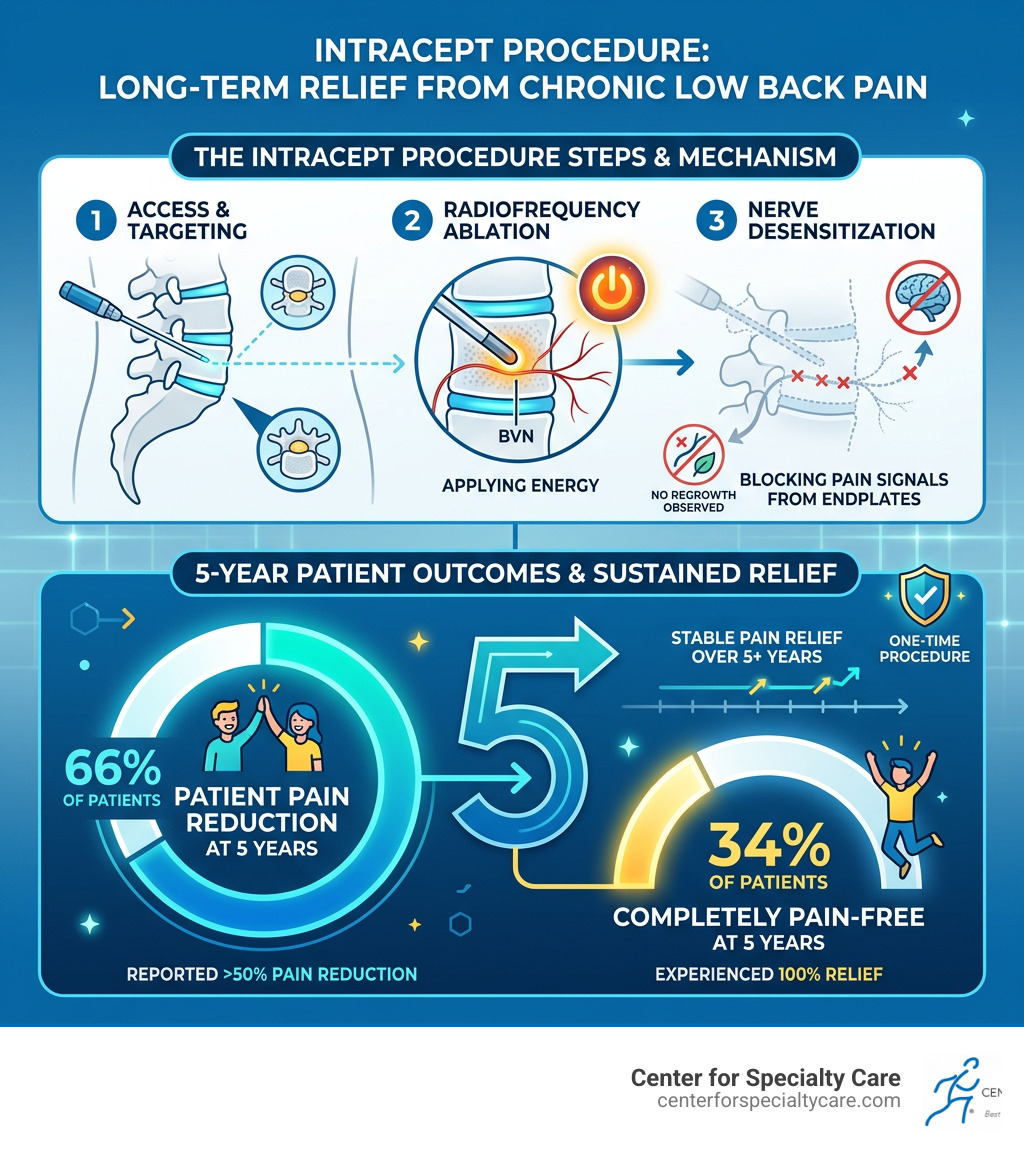
- 66% of patients reported more than 50% pain reduction at the 5-year mark
- 34% of patients were completely pain-free at 5 years
- The procedure typically only needs to be done once, unlike other nerve ablation treatments
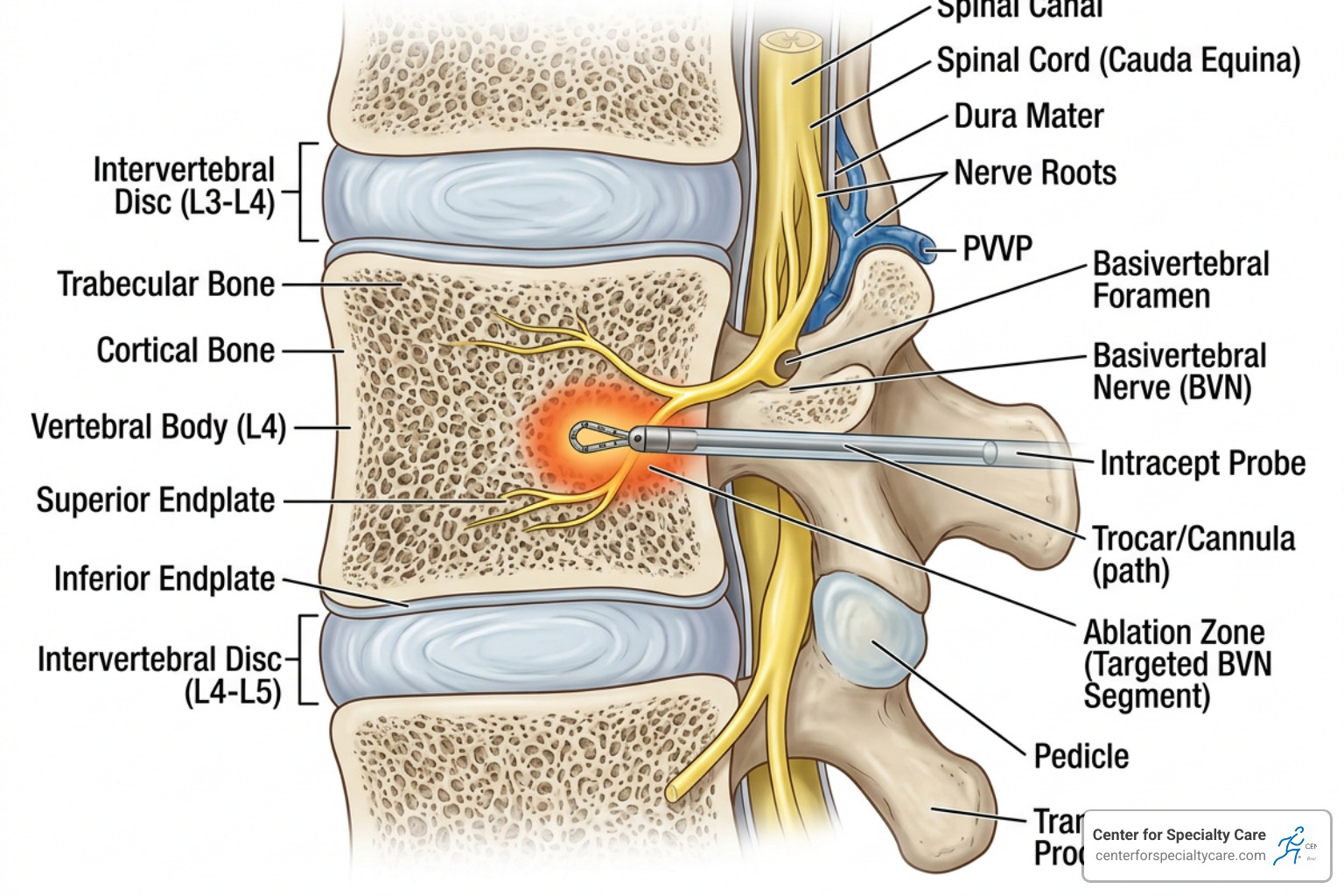
The Intracept procedure works by using radiofrequency energy to destroy the basivertebral nerve — the nerve responsible for sending chronic pain signals from damaged vertebral endplates to your brain. Once that nerve is gone, so is the pain signal. And because the nerve rarely regenerates in the dense bone environment where it lives, the relief tends to stick.
That said, results aren’t identical for everyone. Your diagnosis, overall health, and how closely you follow post-procedure care all play a role in how long your relief lasts.
I’m Dr. Corey Welchlin, a board-certified orthopedic surgeon with over 30 years of experience in minimally invasive spine and joint treatments — including patients asking whether is the Intracept procedure permanent a reasonable expectation for their specific condition. In the sections below, I’ll walk you through exactly what the research says and what you can realistically expect.
Common is intracept procedure permanent vocab:
- intracept procedure recovery
- pain after intracept procedure
- what is the success rate of the intracept procedure
What is the Intracept Procedure and How Does It Work?
To understand if the results are permanent, we first have to look at what we are actually doing during the procedure. For years, doctors thought most back pain came from the spinal discs. We now know that in many cases, the pain actually comes from the vertebral bodies (the bones of your spine) and the “endplates” that sit between the bone and the disc.
When these endplates become inflamed or damaged — a condition known as vertebrogenic pain — the basivertebral nerve (BVN) starts sending “ouch” signals to your brain. It’s like a faulty wire in your house that keeps tripping the breaker.
The Intracept procedure is a minimally invasive, outpatient treatment designed to “cut the wire.” Here is the step-by-step process:
- Access: We make a tiny incision (about the size of a pencil eraser) and use a specialized tube to reach the center of the vertebral body.
- Targeting: Using real-time X-ray guidance (fluoroscopy), we ensure we are in the exact spot where the basivertebral nerve enters the bone.
- Ablation: We insert a radiofrequency probe. This probe uses thermal energy (heat) to ablate, or deactivate, the nerve.
- Completion: The probe is removed, and the tiny incision is closed. No implants, screws, or cages are left behind.
The entire process takes about 60 to 90 minutes. For more technical specifics, you can view the Details on the minimally invasive ablation process provided by the device developers. Because we aren’t changing the structure of your spine, you don’t have the long, painful recovery associated with traditional surgery.
Is the Intracept Procedure Permanent? Understanding Long-Term Relief
When we talk about medical procedures, the word “permanent” can be tricky. However, in nerve treatments, Intracept is about as close as it gets.
Most traditional nerve ablations (like those for facet joints) have to be repeated every 6 to 12 months. Why? Because those nerves live in soft tissue and have a nasty habit of growing back. The basivertebral nerve is different. It lives inside the hard, dense bone of your vertebrae.
Once we ablate the BVN trunk within that bony channel, the nerve has a very difficult time finding its way back. Clinical data suggests that this one-time procedure provides durable relief that doesn’t just last for a few months, but for many years. To Embrace life beyond back pain, many patients find that a single session is all they ever need.
Why the Basivertebral Nerve Doesn’t Regrow: Is Intracept Procedure Permanent?
The reason the Intracept procedure is so durable comes down to biology. Most nerves in the body are like weeds; if you cut them, they try to find a way to sprout again. However, the basivertebral nerve is located deep within the intraosseous (inside the bone) environment.
When we apply thermal energy to the nerve trunk inside the bone, we create a zone of treated tissue. Because bone is so dense and the nerve is so specialized, the body generally does not regenerate that specific nerve pathway. This leads to a permanent disruption of the pain signals. While we continue to monitor patients long-term, current evidence shows no signs of the nerve “waking back up” once it has been properly treated.
Factors That Influence Whether Your Is Intracept Procedure Permanent
While the nerve ablation itself is permanent, your experience of pain relief depends on a few factors:
- Diagnostic Accuracy: The procedure only works if your pain is actually coming from the vertebral endplates. We verify this by looking for “Modic changes” on an MRI. If your pain is actually coming from a muscle strain or a different joint, Intracept won’t fix it.
- Vertebral Health: While we treat the specific levels causing pain (usually L3 through S1), other levels of your spine can develop issues over time as you age.
- Adherence to Post-Care: Following our recovery guidelines ensures the area heals correctly without complications.
You can check the official Indications for use to see if you meet the medical criteria that lead to the most permanent results.
Clinical Evidence: What Studies Say About Longevity
We don’t just “hope” the results last; we have the data to prove it. The most significant study on this topic is the 5-year SMART study. This study followed 249 patients to see how they were doing long after their procedure.
The results were, frankly, staggering for a back pain treatment:
- 66% of patients reported that their pain was cut by at least half after five years.
- 34% of patients reported being 100% pain-free.
- 70% of patients were able to return to the activities they loved before the pain started.
Patients also saw a 53% improvement in their “ODI” score — a fancy medical term for how much your back pain interferes with your daily life (like putting on socks or driving). For a deeper dive into these statistics, the Cleveland Clinic has a great summary on whether the Intracept Procedure can intercept your chronic low back pain.
Pain Score Comparison: 6 Months vs. 5 Years
| Metric | 6 Months Post-Op | 5 Years Post-Op |
|---|---|---|
| 50% Pain Reduction | 65% of patients | 66% of patients |
| 75% Pain Reduction | 36% of patients | 32% of patients |
| 100% Pain-Free | 22% of patients | 34% of patients |
| Average ODI Improvement | 20+ points | 25+ points |
As you can see in the table, the number of people who were completely pain-free actually increased between the six-month mark and the five-year mark. This suggests that as the inflammation in the bone subsides, the results only get better.
Candidacy and Recovery: Ensuring Lasting Success
The key to a “permanent” fix is making sure you are the right candidate. We specifically look for Modic Type 1 or Type 2 changes on your MRI. These are markers that show us your vertebral endplates are inflamed or degenerating. If you’ve had chronic low back pain for more than six months and haven’t found relief with physical therapy or injections, you might be the perfect candidate.
The Recovery Timeline
One of the reasons we love this procedure at the Center for Specialty Care is the recovery. Because there are no implants and we aren’t cutting through major muscles:
- The first 48 hours: We ask you to rest. You might feel some soreness at the injection site, similar to a flu shot or a deep bruise.
- Days 3-7: Most patients return to light daily activities. If you have a desk job, you can usually head back to work.
- 2 Weeks: This is the “magic” window where many patients start noticing their old “bone pain” is simply gone.
- Full Activity: Most patients are back to 100% of their normal activity levels within a couple of weeks.
For more details on what to expect during those first few days, visit The Intracept™ Procedure | Intracept Patient Website.
Comparing Intracept to Other Back Pain Treatments
If you’ve been dealing with back pain in Fairmont or the surrounding Iowa areas, you’ve probably tried a laundry list of treatments. Here’s how Intracept stacks up in terms of permanence:
- Epidural Steroid Injections: These are like putting a Band-Aid on a leaky pipe. They reduce inflammation temporarily, but the “leak” (the nerve signal) usually comes back in a few months.
- Spinal Fusion: This is a major surgery where bones are bolted together. While it can be permanent, it changes the structure of your spine and can lead to “adjacent segment disease,” where the levels above and below the fusion start to wear out.
- Radiofrequency Ablation (RFA) of Facet Nerves: As mentioned earlier, these nerves usually grow back, requiring you to repeat the procedure every year.
- Intracept: It targets the specific source of vertebrogenic pain without changing the structure of your spine. It’s a “one and done” solution for the vast majority of patients.
Many experts agree that Intracept offers new hope for low back pain because it fills the gap between “conservative care that isn’t working” and “major surgery that is too risky.”
Frequently Asked Questions about Intracept Longevity
Can the Intracept procedure be repeated if pain returns?
Technically, yes, but it’s rarely necessary. Because the basivertebral nerve doesn’t show a tendency to regrow, we usually don’t need to treat the same level twice. However, if you develop pain at a different level of your spine (for example, if we treated L4-L5 but you later develop issues at L3-L4), we can certainly treat that new area.
When can I expect to feel the full results of the procedure?
Patience is a virtue! While some people feel better within days, most of our patients see significant relief starting at the two-week mark. The results usually peak around three months as the internal inflammation in the bone fully settles down.
What are the risks that could affect my long-term outcome?
No procedure is without risk, though Intracept has a very high safety profile (serious complications are less than 0.3%). Potential risks include:
- Infection at the site (very rare with proper care).
- Temporary soreness.
- Hardware interference (if you have a pacemaker, we need to take extra precautions).
- Diagnostic error (if the pain wasn’t vertebrogenic to begin with).
You can find more Details on the minimally invasive ablation process and safety warnings on the manufacturer’s site.
Conclusion
At the Center for Specialty Care, we know that chronic back pain doesn’t just hurt your body; it steals your time, your hobbies, and your happiness. If you are tired of temporary fixes and are looking for a solution where you can honestly ask, “is the Intracept procedure permanent?” and get a confident “yes” for the long term, we are here to help.
We pride ourselves on 100% patient satisfaction and personalized care. Whether you are in Fairmont, MN, or coming to see us from Estherville, St. James, or Buffalo Center, we offer quick appointment availability to get you back on your feet.
Stop managing your pain and start ending it. For More info about the Intracept Procedure or to schedule a consultation with our team, reach out to us today. Let’s see if those Modic changes on your MRI are the key to unlocking a pain-free future.