
Shoulder Blade Knots: Why Your Back Is Acting Like a Pre-Tangled Slinky
April 11, 2026
Will my Intracept results last forever
April 15, 2026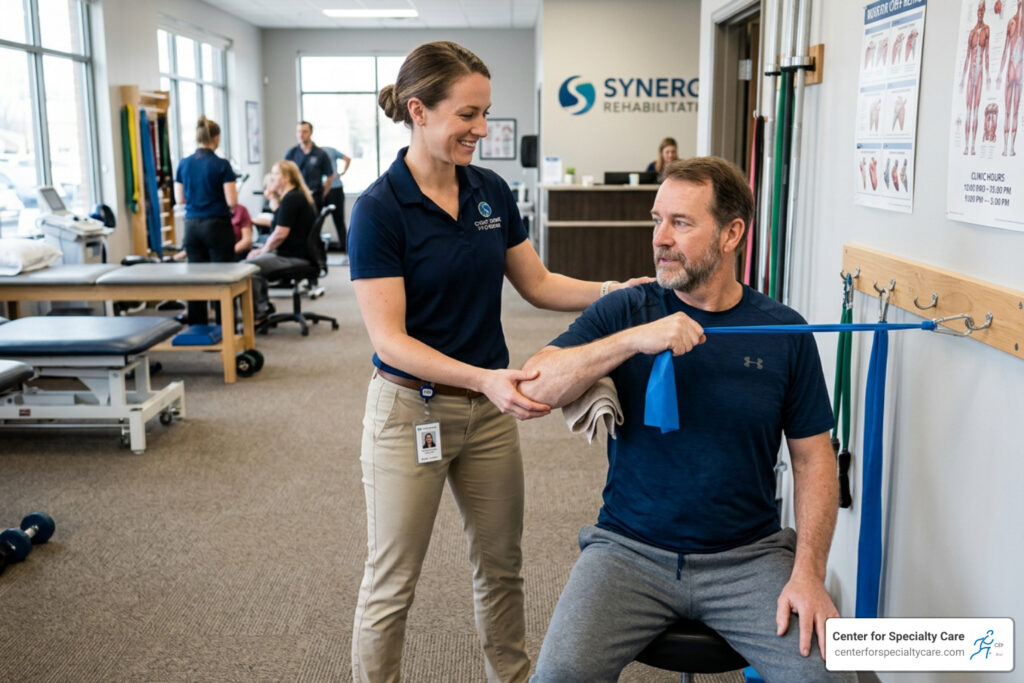
How to Bounce Back with Physical Therapy for Your Torn Rotator Cuff
What You Need to Know About Physical Therapy for Torn Rotator Cuff Rehabilitation
Physical therapy for torn rotator cuff rehabilitation is one of the most effective ways to restore shoulder strength, reduce pain, and get back to daily life — often without surgery.
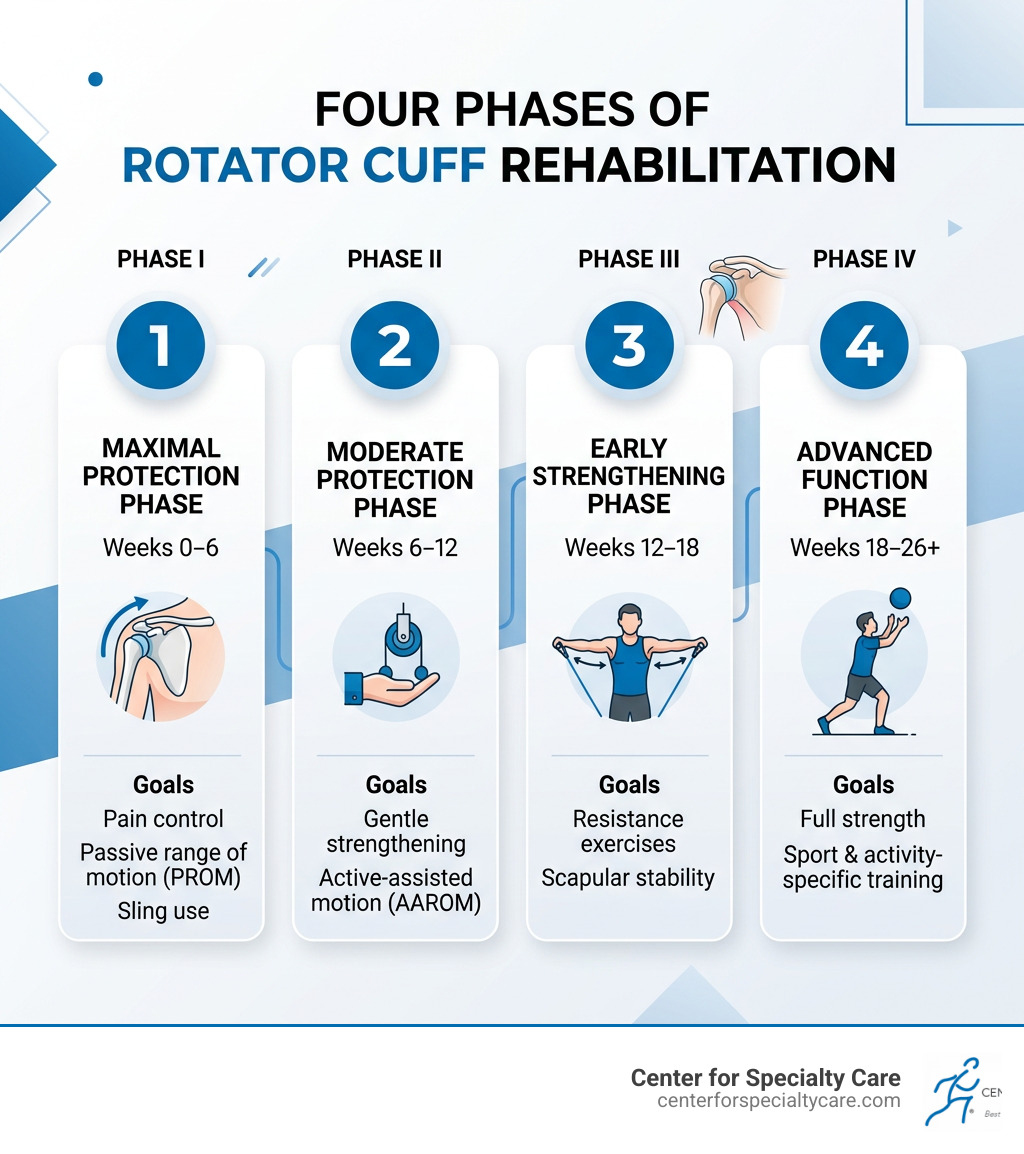
Here is a quick overview of what the rehabilitation process looks like:
| Phase | Timeline | Focus |
|---|---|---|
| Phase I: Maximal Protection | Weeks 0–6 | Pain control, passive range of motion, sling use |
| Phase II: Moderate Protection | Weeks 6–12 | Gentle strengthening, active-assisted motion |
| Phase III: Early Strengthening | Weeks 12–18 | Resistance exercises, scapular stability |
| Phase IV: Advanced Function | Weeks 18–26+ | Full strength, sport and activity-specific training |
Full recovery typically takes 9 to 12 months, though most patients see significant strength gains within the first six months.
Around 2 million Americans seek medical care for rotator cuff tears every year. The rotator cuff is a group of four muscles — the supraspinatus, infraspinatus, teres minor, and subscapularis (sometimes called the SITS muscles) — that work together to keep your shoulder stable and moving correctly. When one or more of these tendons tears, even simple tasks like reaching overhead or sleeping on your side can become painful and difficult.
The good news? A structured physical therapy program can make a real difference — whether you’re recovering from surgery or managing a tear without it.
I’m Dr. Corey Welchlin, a board-certified orthopedic surgeon with over 30 years of experience in rotator cuff repair and rehabilitation at the Center for Specialty Care in Fairmont, Minnesota. Overseeing a multidisciplinary team that includes both surgeons and physical therapists, I’ve guided countless patients through physical therapy for torn rotator cuff rehabilitation — from first diagnosis to full return to activity.
Key physical therapy for torn rotator cuff rehabilitation vocabulary:
Understanding Rotator Cuff Tears and Their Causes
To understand why your shoulder hurts, we first have to look at the “SITS” muscles. These four muscles—the Supraspinatus, Infraspinatus, Teres minor, and Subscapularis—are the workhorses of your shoulder. They originate on your shoulder blade (scapula) and attach to the top of your arm bone (humerus), forming a “cuff” that holds the ball of your arm securely in the socket.
When we talk about a rotator cuff injury, we are usually talking about a tear in one of these tendons. The supraspinatus is the most commonly injured muscle because it sits right at the top of the shoulder where it can get pinched by the bone above it.
Why Do Tears Happen?
Tears generally fall into two categories:
- Acute Trauma: This is the “oops” moment. You trip and fall on an outstretched hand, or you try to lift something way too heavy with a jerking motion.
- Degenerative Wear: This is more common as we age. Like a favorite pair of jeans that eventually thins out at the knees, our tendons can wear down over time. This is often accelerated by repetitive overhead motions—think of painters, carpenters, or avid tennis players.
Recognizing the Symptoms
How do you know if it’s a tear and not just a sore muscle? Common signs include:
- Night Pain: A dull ache that makes it impossible to sleep on the affected side.
- Shoulder Weakness: Finding it hard to lift your arm to brush your hair or reach into a cupboard.
- Clicking or Popping: A “crunchy” sensation (crepitus) when moving the arm in certain directions.
The Role of Physical Therapy for Torn Rotator Cuff Rehabilitation
At the Center for Specialty Care, we often view physical therapy as the “cornerstone” of recovery. For many patients with partial-thickness tears, physical therapy for torn rotator cuff rehabilitation is the first line of treatment and can actually help you avoid the operating room entirely.
Non-Surgical Benefits
Physical therapy isn’t just about “doing exercises.” It’s a comprehensive approach to healing. We focus on:
- Pain Management: Using modalities like ice or heat. You might wonder, does heat help tendonitis? While ice is great for acute swelling, heat can help relax stiff muscles and improve blood flow during the chronic stages of rehab.
- Inflammation Reduction: Through guided movement that doesn’t aggravate the tear.
- Manual Therapy: Our therapists use hands-on techniques like joint mobilization to ensure your shoulder joint is gliding properly.
Diagnosis and Guidelines
Before starting rehab, a proper diagnosis is vital. We utilize MRI and diagnostic imaging to see the exact size and location of the tear. Following the AAOS clinical guidelines for management, we tailor the program to whether the tear is small, large, or massive, ensuring we never push the tissue beyond what it can handle.
The Four Phases of Rotator Cuff Recovery
Whether you’ve had surgery or are taking the conservative route, recovery follows a predictable path. We follow evidence-based protocols, such as the ASSET consensus statement on rehabilitation, to ensure safety.
Phase I: Maximal Protection (Weeks 0–6)
The goal here is simple: don’t mess up the healing process. If you’ve had a surgical repair, the tendon-to-bone healing requires at least 12 weeks for adequate strength. During these first six weeks, we focus on:
- Sling Use: Keeping the arm supported to prevent accidental strain.
- Passive Range of Motion (PROM): The therapist moves your arm for you so the muscles don’t have to contract.
- Pain Control: Education on how to position yourself for sleep and daily activities.
Phase II: Moderate Protection (Weeks 6–12)
Now we start to move a bit more. We introduce Active-Assisted Range of Motion (AAROM), where you use your “good” arm or a cane to help move the injured arm. We want to restore motion without putting heavy loads on the cuff.
Phase III: Early Strengthening (Weeks 12–18)
Once the tissue has achieved enough “pull-out strength,” we start light resistance. This usually begins with isometrics (squeezing the muscle without moving the joint) and progresses to light resistance bands.
Phase IV: Advanced Functional Return (Weeks 18–26+)
This is where we prepare you for the “real world.” We focus on task-specific movements, whether that’s returning to golf, lifting groceries, or overhead work.
Early-Stage Physical Therapy for Torn Rotator Cuff Rehabilitation
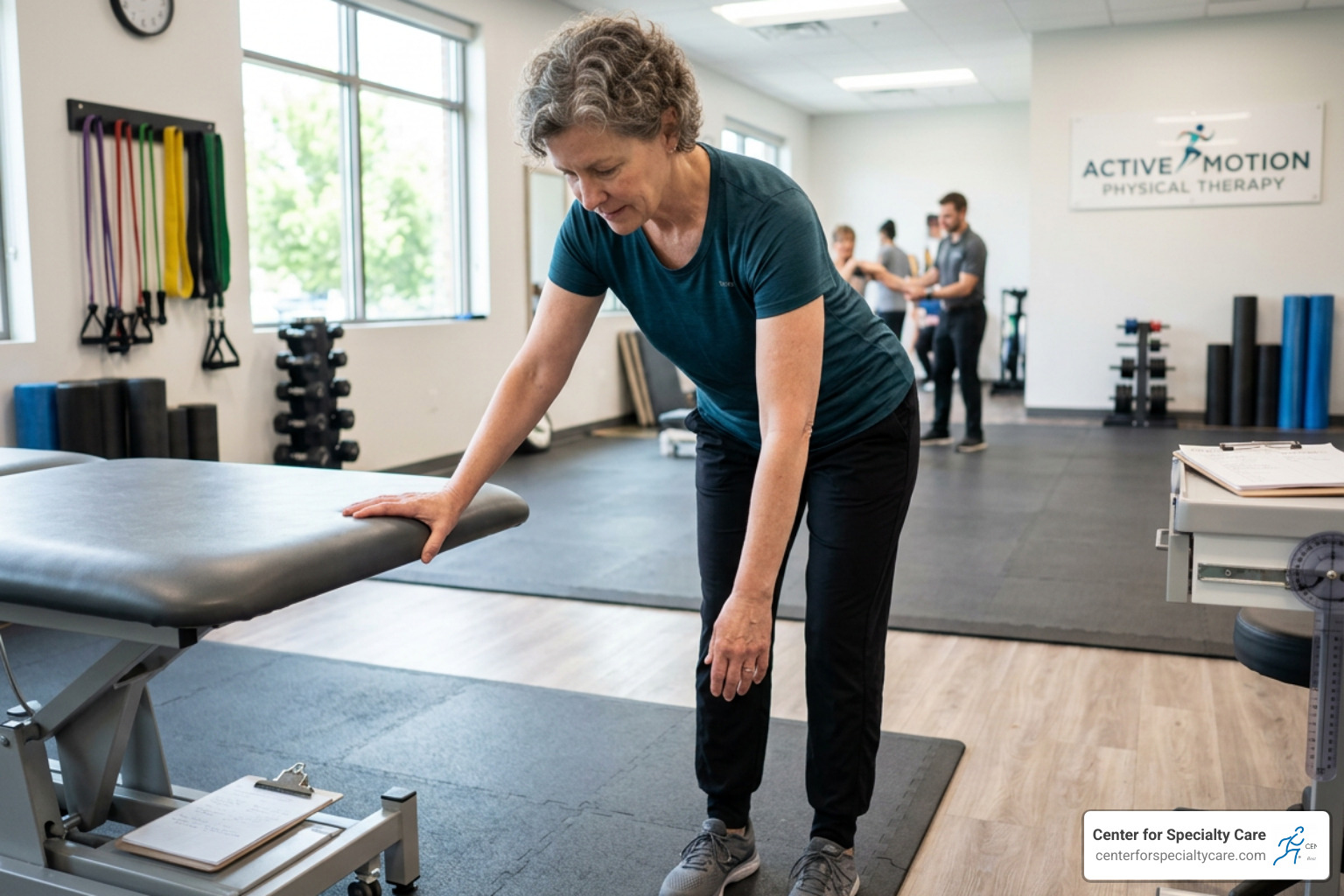
In the early days, “less is more.” We use specific movements designed to keep the joint lubricated without stressing the tear.
- Pendulum Swings: You lean over a table, letting your arm hang down like a pendulum, and gently shift your body weight to make the arm swing in small circles.
- Table Slides: While sitting, you slide your hand forward on a table to gently stretch the shoulder.
- Scapular Squeezes: Simply squeezing your shoulder blades together. This strengthens the “foundation” of the shoulder.
- Cross-Body Stretch: Gently pulling the arm across the chest to maintain flexibility in the back of the shoulder.
Research on EMG studies for post-op rehab shows that these specific movements keep muscle activity low enough to protect the repair while preventing the dreaded “frozen shoulder.”
Advanced Exercises in Physical Therapy for Torn Rotator Cuff Rehabilitation
As you progress into the later stages of physical therapy for torn rotator cuff rehabilitation, the focus shifts to building a “bulletproof” shoulder.
Key Strengthening Moves:
- External/Internal Rotation: Using resistance bands to target the infraspinatus and subscapularis.
- Wall Push-ups: A great way to build weight-bearing stability.
- Prone Horizontal Abduction: Lying on your stomach and lifting the arm out to the side to strengthen the back of the shoulder.
- Empty Can Exercise: Lifting the arm at a 30-degree angle (like you’re emptying a soda can) to target the supraspinatus—though we do this carefully and only when the patient is ready.
We also incorporate Neuromuscular Re-education. This sounds fancy, but it basically means teaching your brain and muscles to coordinate again. We use proprioceptive training (like balancing a ball against a wall) to improve joint stability. It’s important to note that strength recovery correlation to tear size is a real factor; small tears often recover near-full strength within a year, while massive tears may require a more patient, adaptive approach.
Recovery Timeline and Preventing Re-injury
Patience is a virtue in shoulder rehab. While you’ll feel much better by the 6-month strength milestone, near-maximum strength recovery can take up to a full year.
How to Stay Safe
To avoid a re-tear, we emphasize:
- Posture Correction: Slumping forward closes the space in your shoulder joint, making impingement more likely. Stand tall!
- Activity Modification: Learn to lift with your legs and keep objects close to your body.
- Smoking Cessation: This is a big one. Smoking decreases blood flow to tendons, which are already “low-flow” areas, significantly slowing down the healing process.
- Ergonomics: If you work at a desk or in a trade, we help you set up your environment to avoid constant overhead strain.
Understanding the natural history of rotator cuff tears tells us that tears can progress if not managed. That’s why continuing your home exercise program even after “graduation” from PT is so important.
Frequently Asked Questions about Rotator Cuff Rehab
How long does physical therapy take for a torn rotator cuff?
Most formal PT programs last 3 to 4 months, with sessions 2-3 times a week. However, you will likely continue a home exercise program for up to a year to reach maximum strength.
Can a rotator cuff tear heal without surgery?
Partial tears can often be managed successfully with PT. While the tendon might not “knit” back together perfectly on its own, PT strengthens the surrounding muscles to compensate, effectively eliminating pain and restoring function. Full-thickness tears in young, active individuals usually require surgery.
When should I see a doctor for shoulder pain?
If you can’t lift your arm, if the pain is keeping you up at night, or if you had a sudden injury followed by weakness, it’s time for a professional evaluation.
Conclusion
Bouncing back from a shoulder injury doesn’t happen overnight, but with the right team, it does happen. At the Center for Specialty Care, we pride ourselves on providing personalized treatment plans that focus on 100% patient satisfaction.
Whether you are seeing Thomas Carpenter, DO for a consultation or working with our expert physical therapy team in Fairmont or our other locations in Minnesota and Iowa, we are here to support you every step of the way. Don’t let shoulder pain keep you from the activities you love. Schedule your shoulder consultation with us today and let’s get you back in the game!