
Bad Back? Target Pain with Radiofrequency Neurotomy
September 18, 2025
Why Does My Shoulder Pop When I Lift, Throw, or Rotate?
September 22, 2025
Supraspinatus Tear: Conquer Pain 2025
Understanding Your Shoulder’s Most Vulnerable Tendon
A supraspinatus tear is one of the most common shoulder injuries, affecting the tendon that connects your supraspinatus muscle to the top of your arm bone. This injury can cause significant pain, weakness, and difficulty with everyday activities.
This injury is the most frequent type of rotator cuff tear, often affecting people over 40 due to age-related degeneration. Tears can be partial or full-thickness, but the good news is that 80-85% of cases improve with conservative treatment. The pain is often a dull ache that worsens when sleeping on the affected side, making it hard to reach overhead or behind your back.
Understanding your condition is the first step toward recovery. A supraspinatus tear doesn’t have to sideline you permanently.
As Dr. Corey Welchlin, I’ve been treating supraspinatus tears and other rotator cuff injuries for over three decades at the Center for Specialty Care in Fairmont, Minnesota. My experience with arthroscopic rotator cuff repair and minimally invasive techniques has helped countless patients return to pain-free movement.
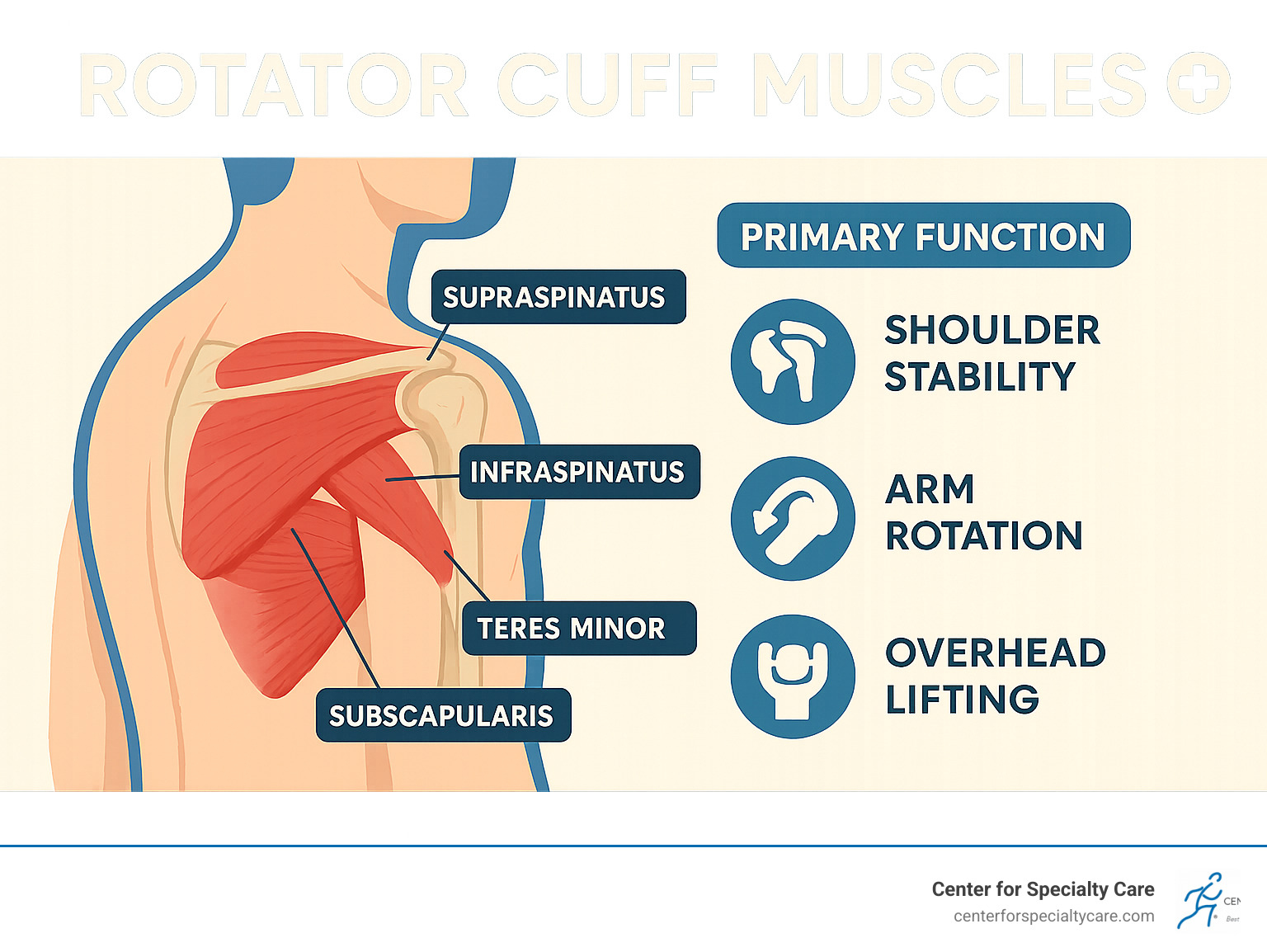
Understanding the Supraspinatus and How It Tears
Your shoulder’s flexibility makes it prone to injury, with the rotator cuff—a team of four muscles and tendons—at the center of its stability. A supraspinatus tear damages the tendon connecting the supraspinatus muscle to the top of your arm bone.
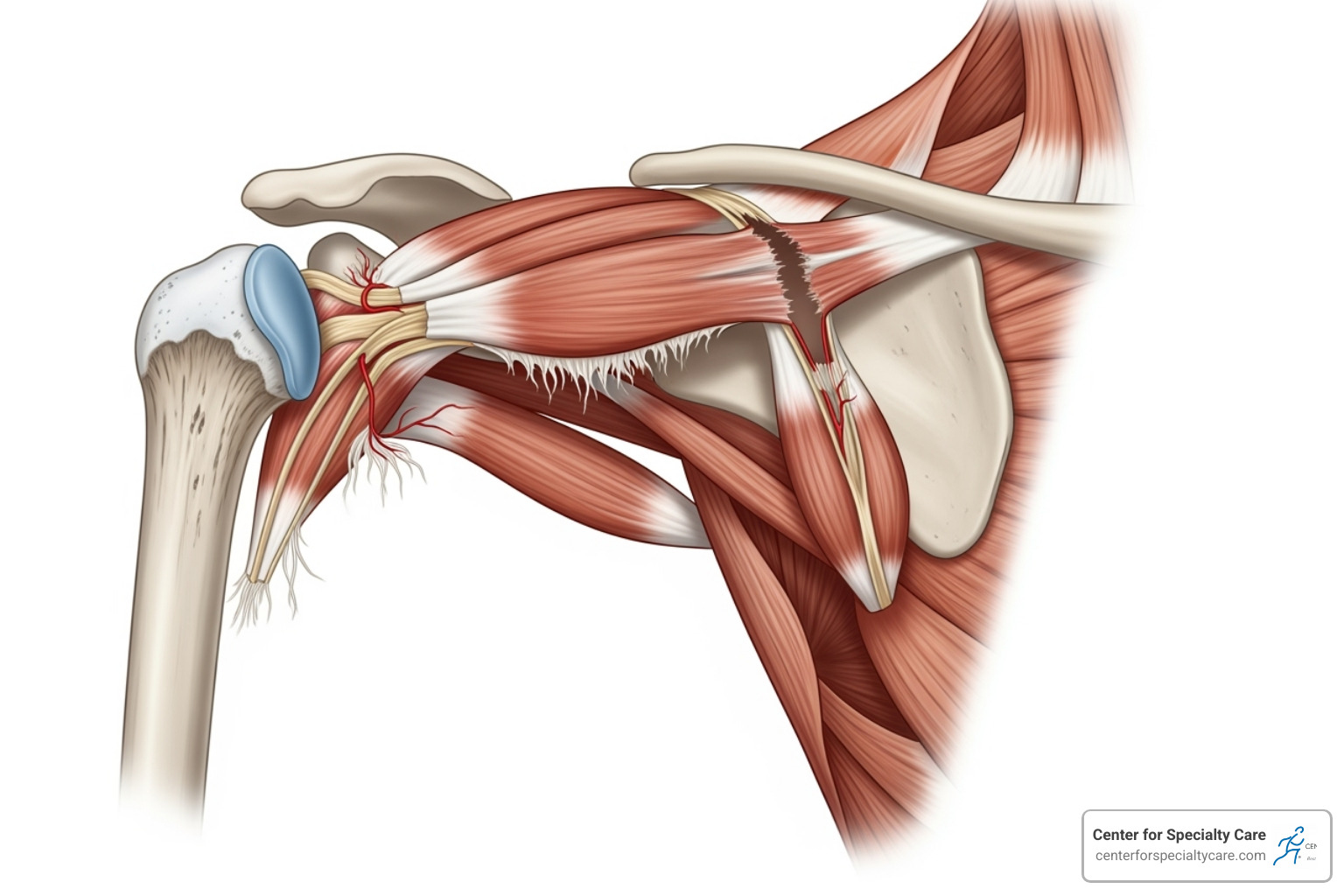
A partial-thickness tear involves frayed fibers, while a full-thickness tear is a complete separation from the bone. This distinction is critical for your treatment plan.
What is the Supraspinatus?
The supraspinatus muscle sits above your shoulder blade, and its tendon passes through a narrow space to attach to your arm bone. It’s essential for lifting your arm away from your side (arm abduction) and plays a key role in overall shoulder stability. Its location in a tight tunnel makes it vulnerable to wear and tear.
Causes and Risk Factors for a Supraspinatus Tear
Supraspinatus tears happen in two main ways:
- Acute tears result from sudden trauma, like a fall on an outstretched arm or lifting a heavy object improperly. These are common sports injuries.
- Degenerative tears develop gradually from wear and tear. Aging is a major factor, with risk increasing significantly for those over 40 due to decreased blood supply to the tendons. Repetitive overhead activities (common in painters or tennis players) and bone spurs also contribute. Genetics and smoking can increase your risk as well.
How Supraspinatus Tears Differ from Other Rotator Cuff Injuries
The supraspinatus is the most commonly torn tendon in the rotator cuff. While other tendons (infraspinatus, teres minor, subscapularis) handle different rotational movements, a supraspinatus injury uniquely impacts your ability to lift your arm to the side and overhead. This distinct pattern of weakness helps your doctor pinpoint the problem.
If you’re experiencing clicking or popping sounds along with your shoulder pain, you might find our guide on Shoulder Clicking and Pain: Causes and Effective Relief helpful in understanding what’s happening in your shoulder.
Recognizing the Signs: Symptoms and Professional Diagnosis
When a supraspinatus tear develops, your shoulder sends clear signals. Precise diagnosis combines your symptoms, a physical exam, and imaging to create an effective treatment plan for your specific situation.

Common Symptoms of a Supraspinatus Tear
- A dull, persistent ache deep in the front or side of your shoulder, sometimes radiating down your arm.
- Pain at night, especially when lying on the affected shoulder, disrupting sleep. Our guide on How to Relieve Rotator Cuff Pain at Night: Expert Tips for Better Sleep offers helpful strategies.
- Weakness when lifting your arm, combing your hair, or reaching overhead.
- Limited range of motion and avoiding certain movements due to pain.
- Clicking, popping, or catching sensations during movement.
How Doctors Diagnose the Injury
Diagnosis begins with understanding your medical history—when the pain started, what makes it worse, and if there was a specific injury.
The physical examination is key. We assess your range of motion and strength. Specific maneuvers like the Drop Arm Test and Jobe’s Test (or “Empty Can Test”) help isolate weakness in the supraspinatus.
Imaging tests confirm the diagnosis:
- X-rays rule out other issues like arthritis or bone spurs.
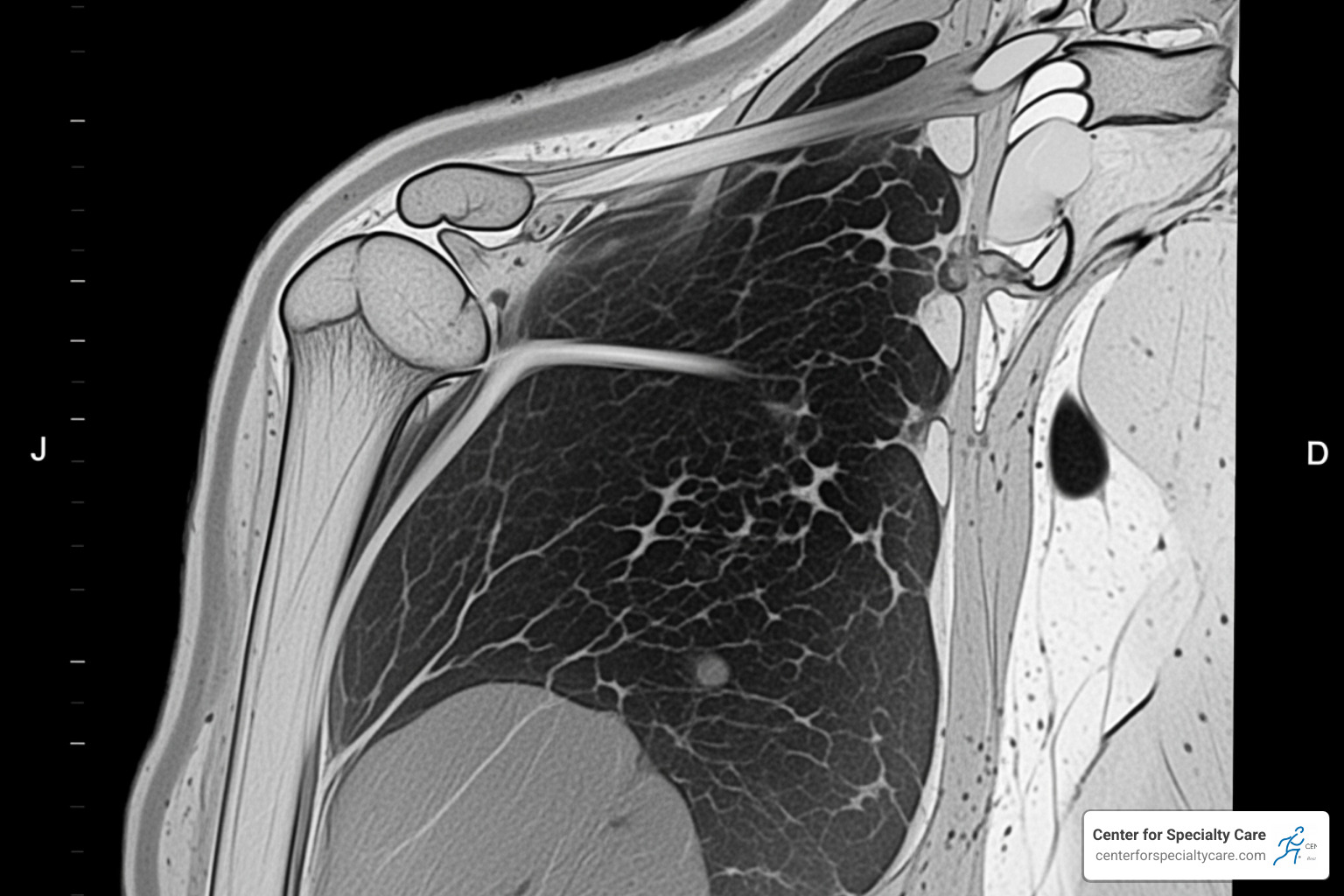
- MRI scans are the gold standard, showing the tear’s location, size (partial or full-thickness), and any muscle changes.
- Ultrasound provides real-time images of the soft tissues.
For more information, the American Academy of Orthopaedic Surgeons offers excellent patient resources. And if you’re seeking expert shoulder care in our area, our guide on Finding the Best Orthopedic Shoulder Specialist Near Me can help you understand what to look for in quality care.
Your Path to Recovery: Treatment for a Supraspinatus Tear
Receiving a supraspinatus tear diagnosis can be daunting, but many proven treatments can help you heal. Your age, activity level, and tear size all factor into creating the right plan for you. At Center for Specialty Care, we start with the most conservative, effective options first.
Conservative (Non-Surgical) Treatments
The great news is that 80-85% of people with partial supraspinatus tears improve without surgery. Recovery takes patience, but the results are often excellent. Conservative care includes:
- Rest and activity modification: Temporarily avoiding overhead activities and sometimes using a sling to allow the shoulder to heal.
- Anti-inflammatory medications: Over-the-counter options like ibuprofen can reduce pain and swelling.
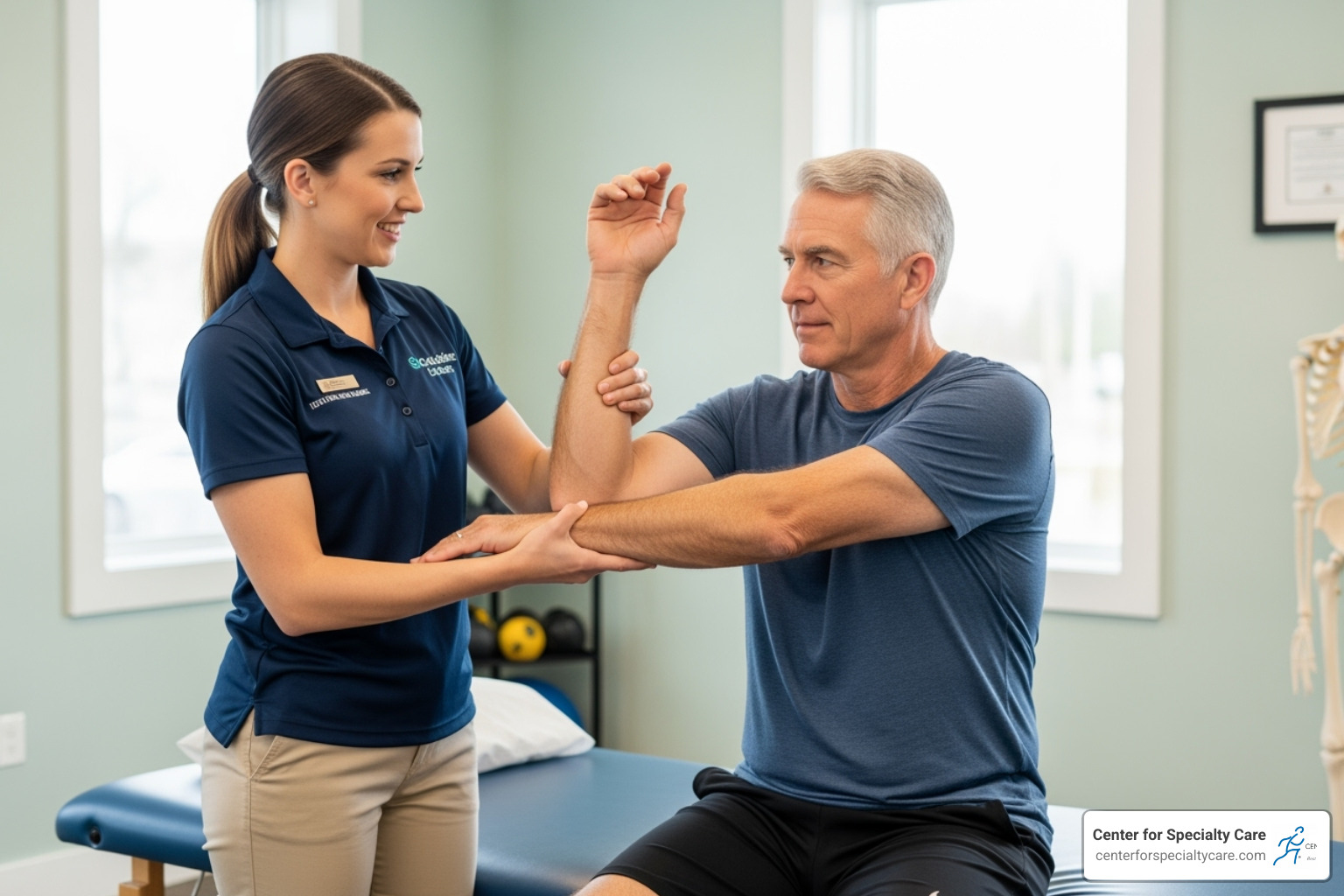
- Physical therapy: This is the cornerstone of conservative treatment. A therapist guides you through stretching to restore motion and then strengthening exercises for the rotator cuff and supporting muscles. Our guide on Shoulder Treatment Physical Therapy Tips for Fast Recovery provides more detail.
- Corticosteroid injections: When pain persists, these injections can reduce inflammation and provide significant pain relief, allowing you to participate more effectively in physical therapy. Learn more in our guide to Types of Injections for Shoulder Pain Relief: Treatment Options.
When is Surgery Recommended?
Surgery is considered when conservative treatments fail to provide relief after 6-12 months. It’s also recommended for:
- Large full-thickness tears (over 3 cm) that won’t heal on their own.
- Significant weakness or loss of function that impacts daily life.
- Acute tears in younger, active individuals whose work or athletic performance is affected.
Our article on Rotator Cuff Surgeon Near Me – Your Guide to Finding Expert Shoulder Care can help you explore this option.
Surgical Procedures Explained
The most common procedure is arthroscopic repair, a minimally invasive technique. We make a few small incisions, insert a tiny camera (arthroscope) to see inside the joint, and use specialized suture anchors to reattach the torn tendon to the bone. For some partial tears, we may perform debridement, which involves smoothing the frayed edges of the tendon. This approach leads to smaller scars and a smoother early recovery.
Life After Treatment: Recovery, Prevention, and Long-Term Outlook
Completing treatment for a supraspinatus tear is the start of a new chapter. Recovery is about rebuilding strength and confidence. Having a clear roadmap makes all the difference in achieving the best possible outcome.
The Surgical Recovery Timeline
Recovery after surgery is a phased process that requires patience. Rushing can lead to setbacks.
- Phase 1: Protection (First 4-6 weeks): Your arm is in a sling to protect the repair as the tendon heals to the bone. A physical therapist will perform passive motion exercises.
- Phase 2: Active Motion (Weeks 6-12): You begin moving your arm on your own. Most people can return to light daily activities around the 12-week mark.
- Phase 3: Strengthening (Months 3-6): The focus shifts to rebuilding lost strength.
- Phase 4: Return to Full Activity (Months 6-18): This final phase is about returning to sports and demanding activities. Full recovery can take up to 18 months for large tears.
Success depends on consistent physical therapy and following your rehabilitation plan.
Preventing Future Shoulder Injuries
Once you’ve recovered, preventing re-injury is key.
- Perform regular rotator cuff and scapular stabilization exercises to build a strong support system for your shoulder.
- Always use a proper warm-up routine before physical activity.
- Maintain good posture to reduce strain on your shoulders.
- Use smart lifting techniques, keeping objects close to your body. Our guide on How to Get Rid of Shoulder Pain From Lifting Weights: Tips and Exercises has useful strategies.
- Listen to your body and don’t push through pain.
Long-Term Prognosis
The long-term outlook for a supraspinatus tear is excellent. Most people, whether treated conservatively or surgically, achieve significant pain relief and restored function. The success of your outcome is closely tied to your commitment to rehabilitation. It’s important to address tears early, as an untreated tear can enlarge over time, making future repair more difficult. With proper care, your tear can become a past chapter, not a lifelong story.
Frequently Asked Questions about Supraspinatus Tears
Over my three decades at Center for Specialty Care, I’ve found that patients with supraspinatus tears often have the same key questions. Here are the answers to the most common ones.
Will a supraspinatus tear heal on its own?
It depends on the tear’s severity.
- Partial tears often can heal without surgery. With rest and physical therapy, about 80% of patients improve as the body repairs the frayed tendon.
- Full-thickness tears, where the tendon is completely detached, typically will not heal on their own. The torn ends retract, and poor blood supply prevents the gap from closing.
Leaving a full-thickness tear untreated can cause it to enlarge and the muscle to weaken, making future repair more complex. For more details, see our guide: Will a Torn Rotator Cuff Heal on Its Own? Key Recovery Facts.
What activities should I avoid with a supraspinatus tear?
To avoid worsening the tear and allow it to heal, you should avoid:
- Overhead lifting or reaching for high shelves.
- Reaching behind your back (e.g., tucking in a shirt).
- Sudden, jerky movements like throwing or catching.
- Sleeping on the affected side, which puts direct pressure on the tendon.
The most important rule is: if an activity causes pain, stop. Pushing through pain will only set back your recovery.
How long does it take to recover from a supraspinatus tear without surgery?
Recovery time varies based on the tear’s severity, your age, and your overall health. However, the biggest factor you can control is your commitment to physical therapy. Patients who are diligent with their exercises recover faster. While many patients see significant improvement in a few months, a full recovery with a complete return to all activities can take several months to a year. Patience and consistency are essential for restoring full strength and function.
Take the Next Step Towards a Pain-Free Shoulder
Living with a supraspinatus tear doesn’t have to be your reality. As we’ve covered, this common and highly treatable injury causes a dull ache, night pain, and weakness, but effective treatments are available.
The great news is that most partial tears (80-85%) improve with conservative care like physical therapy. For larger tears or persistent pain, minimally invasive arthroscopic surgery offers excellent outcomes. Recovery requires patience, but the long-term outlook is positive, with most people returning to a pain-free, active life. The key is to seek treatment early, as untreated tears can worsen.
At Center for Specialty Care, we create personalized treatment plans to fit your lifestyle and goals, backed by our commitment to 100% patient satisfaction. With convenient locations in Fairmont, Minnesota, Estherville, Iowa, Buffalo Center, Iowa, and St. James, Minnesota, expert shoulder care is accessible.
Don’t let shoulder pain hold you back. The sooner you start treatment, the better your chance of a full recovery.