

Supraspinatus Tear: Your Guide to Understanding This Common Injury
September 19, 2025
Nerve Niggles: Releasing a Pinched Nerve Near Your Shoulder Blade
September 23, 2025
Shoulder popping when rotating: 1 Warning Sign
Understanding Shoulder Popping During Movement
Shoulder popping when rotating is one of the most common joint sounds people experience. While it can be alarming, this clicking, popping, or crackling noise – medically called crepitus – is often completely normal and harmless.
Quick Answer: When to Worry About Shoulder Popping
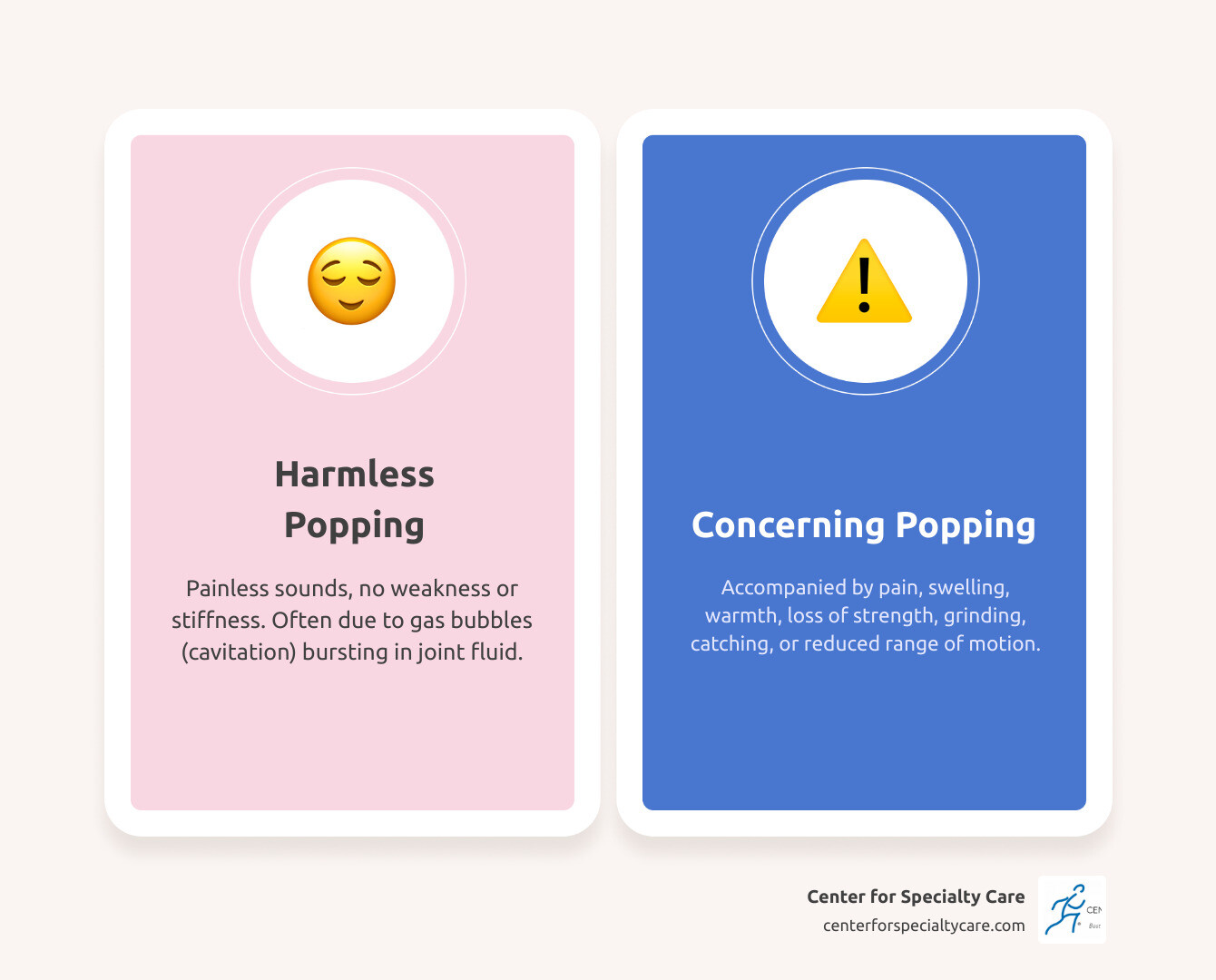
- Normal (Usually Safe): Painless popping without weakness or stiffness
- Concerning (Seek Help): Popping with pain, swelling, warmth, or loss of strength
- Red Flags: Grinding sounds, catching sensations, or reduced range of motion
Most shoulder popping occurs due to cavitation – the same harmless process that makes your knuckles crack when gas bubbles burst in the joint fluid. However, when popping comes with pain or other symptoms, it may signal underlying issues like labral tears, rotator cuff problems, or arthritis.
The shoulder is a complex ball-and-socket joint. Its rotator cuff muscles, tendons, and ligaments provide an incredible range of motion, and these structures can sometimes create sounds as they move over bones or shift position during rotation.
“Popping sounds/sensations in the shoulder are common. If it is not painful and does not limit mobility or strength, it is usually not concerning,” according to physical therapy research.
I’m Dr. Corey Welchlin, a board-certified orthopedic surgeon with over three decades of experience treating shoulder conditions, including shoulder popping when rotating. As the founder of the Center for Specialty Care in Fairmont, Minnesota, I’ve helped countless patients understand and treat their shoulder concerns through both surgical and non-surgical approaches.
Glossary for shoulder popping when rotating:
- partially dislocated shoulder symptoms
- shoulder feels out of place but not dislocated
- what does a dislocated shoulder look like
Understanding the “Pop”: Normal vs. Concerning Shoulder Sounds
You’re reaching for a book on the top shelf, and suddenly – pop! Your shoulder makes a sound that stops you in your tracks. This phenomenon, called shoulder crepitus, is common and often harmless. The key question we ask patients at the Center for Specialty Care is simple: “Does it hurt?” This often tells us if your shoulder popping is a concern.
Normal shoulder sounds are typically painless and don’t involve weakness or a feeling that your shoulder might give out. You might hear them occasionally, but if you can move your arm freely, your shoulder is likely fine.
However, certain warning signs mean it’s time for a closer look. Pain is the biggest red flag. Other concerning symptoms include weakness, a feeling of instability (like your shoulder might slip out of place), or visible changes like swelling, warmth, or redness.
| Harmless Popping Symptoms | Concerning Popping Symptoms |
|---|---|
| Painless | Accompanied by pain (sharp, dull, aching) |
| No limitation in movement | Limited range of motion or stiffness |
| No weakness or instability | Weakness or feeling of instability/looseness |
| Occasional or consistent but benign sounds | Grinding, grating, or catching sensations |
| No visible changes | Swelling, warmth, redness, or deformity around the joint |
| No impact on daily activities | Interferes with daily activities or sleep |
Harmless Causes of Shoulder Popping When Rotating
The most common cause of harmless shoulder popping when rotating is cavitation. Your shoulder joint contains synovial fluid, a lubricant that also has dissolved gases. When you move your arm, pressure changes can cause these gases to form small bubbles that quickly pop—the same harmless process as cracking your knuckles.
Your tendons and ligaments can also cause popping. These tough tissues normally glide smoothly over bones, but they can sometimes catch or snap over a bony prominence as you move, creating a harmless click if there’s no inflammation.
Aging and immobility can also cause more popping. With age, cartilage becomes less smooth. Similarly, after periods of inactivity, joints can be stiffer and noisier as they regain mobility. These changes are usually benign unless accompanied by pain.
When Popping Signals a Problem
While most shoulder popping when rotating is harmless, certain warning signs require attention. The biggest red flag is pain. If popping is accompanied by sharp, dull, aching, or burning pain, it may signal a more serious issue.
A grinding or grating sensation, unlike a simple pop, often means cartilage surfaces are rubbing together, which can signal arthritis. If your shoulder feels like it’s catching or locking, a loose piece of cartilage or bone could be interfering with movement.
A feeling of instability—like your shoulder might pop out of its socket—is another serious concern. Some people experience partial or complete dislocations, which require immediate medical attention.
Visible signs like swelling, warmth, or redness are classic indicators of inflammation or infection.
Loss of strength or reduced range of motion can indicate damage like a rotator cuff tear. Difficulty lifting your arm or noticeable weakness shouldn’t be ignored. Early treatment can prevent complications like frozen shoulder, which severely restricts movement.
If you’re experiencing any of these concerning symptoms with your shoulder popping when rotating, we encourage you to seek professional help. Ignoring these signs can lead to more damage and complex treatment later.
More info about shoulder joint pain and popping.
Common Causes of Shoulder Popping When Rotating
When shoulder popping when rotating is painful, it usually signals an underlying issue. These problems often stem from overuse, traumatic injuries, or age-related degenerative changes. Fortunately, most of these conditions are treatable, especially with early diagnosis. Understanding the cause is the first step toward recovery.

Injury-Related Causes of Shoulder Popping When Rotating
Let’s explore the most common culprits behind painful shoulder popping when rotating.
Labral tears are a frequent cause of painful popping. The labrum is a cartilage gasket lining your shoulder socket that provides stability. When it tears (e.g., a SLAP tear or Bankart tear), the rough edge can catch during movement, often causing a painful grinding or popping sound.
An overview of labral tears provides detailed medical information about these injuries.
Rotator cuff injuries are another major cause. The rotator cuff’s four muscles and tendons stabilize the shoulder. When these tendons become inflamed (tendinitis) or tear, they no longer glide smoothly. Impingement, where tendons are pinched between bones, also causes clicking as inflamed tissues move.
Bursitis is another source of popping. Bursae are small, fluid-filled sacs that reduce friction in the joint. When they become inflamed and swollen, tendons can snap painfully as they glide over them.
Snapping Scapula Syndrome occurs when the shoulder blade rubs against the rib cage, creating snapping or grinding sounds. It often results from poor posture, muscular imbalances, or trauma.
Osteoarthritis is a common age-related cause. As the protective cartilage in the joint breaks down, bones can rub directly against each other. This bone-on-bone friction can cause a painful snapping or cracking sound in the shoulder.
More info about rotator cuff surgeons.
Other Potential Causes
Sometimes shoulder popping when rotating comes from less common but important sources.
Biceps tendon instability is a less common cause. The long head of the biceps tendon runs in a groove in the arm bone, secured by ligaments. If these ligaments are damaged, the tendon can slip out of its groove, causing a distinct click or pop, especially when reaching or lifting.
Subluxation and dislocation are serious instability issues where the shoulder joint partially or completely separates. After healing, the joint may remain loose, leading to ongoing popping and a feeling that the shoulder might “give out.”
Malunion of old fractures can cause issues long after an injury. If a fracture in the shoulder area heals improperly, it can create an irregular bony surface that soft tissues rub against during movement, causing popping.
Osteochondroma is a benign bone growth that can form near growth plates. While rare in the shoulder, it can create a popping sound if it develops where tendons glide.
Diagnosis and Professional Treatment Options
When shoulder popping when rotating interferes with your daily life, it’s time to get answers. At the Center for Specialty Care, we take a thorough approach to determine the cause of your shoulder issues.
Our diagnostic process begins with a physical examination. We will assess your shoulder’s movement, strength, and stability, and may ask you to perform movements that recreate the pop to pinpoint the source of the issue.
We will also review your medical history, discussing when your symptoms began, what affects them, and any past injuries. A history of shoulder trauma can be significant, even if the current popping is painless.
Imaging tests provide a detailed look inside your shoulder. X-rays show bones, revealing fractures or arthritis. An MRI offers a detailed view of soft tissues like tendons and ligaments. We also use in-office ultrasound to observe your shoulder in real-time as it moves, which is excellent for diagnosing issues like biceps tendon instability.
While most shoulder popping when rotating isn’t an emergency, seek immediate medical care for red-flag symptoms like sudden severe pain with popping, visible shoulder deformity, inability to move your arm, numbness or tingling, or signs of infection (fever, chills, warmth).
More info about finding a shoulder doctor.
How Physical Therapy Can Help
Physical therapy is a cornerstone of treatment for shoulder popping when rotating. Our physical therapists and orthopedic specialists collaborate to create personalized treatment plans.
Strengthening exercises are key. They focus on the rotator cuff and scapular stabilizers. Stronger muscles improve joint stability and reduce the abnormal movements that cause popping.
Stretching and flexibility work is also important. When tendons and muscles are tight, they can snap over bones. Gentle stretching helps restore smooth, pain-free movement and full range of motion.
Postural correction plays a huge role in shoulder health. Poor posture from hunching over a computer can throw off shoulder mechanics. Our therapists teach proper posture and exercises to strengthen alignment muscles.
With manual therapy, our therapists use hands-on techniques like joint mobilization and soft tissue massage. This can reduce tightness, improve joint movement, and ease tension causing the pop. This approach is effective for improving flexibility and reducing scar tissue.
We’ll also work with you on activity modification to identify and adjust activities that aggravate your shoulder.
Shoulder treatment with physical therapy.
Medical Interventions for Painful Popping
When conservative treatments aren’t enough for shoulder popping when rotating, we have other options.
Anti-inflammatory medications, like over-the-counter ibuprofen, are often a first step for conditions like bursitis or tendinitis. We may recommend prescription-strength options for more stubborn cases.
Corticosteroid injections deliver powerful anti-inflammatory medication directly into the problem area, such as a bursa or around a tendon. An ultrasound-guided injection can provide months of relief for issues like biceps instability. While it may not eliminate the pop, it can make it painless.
At the Center for Specialty Care, we prioritize non-surgical treatments. We offer advanced options like image-guided injections of Platelet-Rich Plasma (PRP) or bone marrow concentrate to promote natural healing. We advise addressing pain early to avoid more significant problems later.
Surgery becomes an option when non-surgical treatments fail or the injury is severe (e.g., a complete rotator cuff tear or large labral tear). Many shoulder surgeries today use arthroscopy—minimally invasive techniques. For example, a biceps tenodesis to fix an unstable biceps tendon is a quick outpatient procedure.
Types of injections for shoulder pain.
Prevention and At-Home Shoulder Care
Taking care of your shoulders with regular attention can prevent bigger problems. When it comes to shoulder popping when rotating, prevention is the best medicine.

Good posture is crucial. Habitually hunching over a desk puts tremendous strain on your shoulder joints and can lead to popping. Your workspace setup is a major factor; an improperly positioned screen or keyboard forces your shoulders to compensate, creating problems over time.
Proper lifting technique is another game-changer. Use your legs, not your back, and keep loads close to your body to protect your shoulders. Also, warm-ups and cool-downs are for everyone, not just athletes. A few minutes of gentle shoulder movement before and after activities can prevent stiffness.
Exercises to Reduce Shoulder Popping
Simple exercises can significantly reduce shoulder popping when rotating. Your rotator cuff muscles are key for stability. Strengthening them with exercises like external rotation using a light resistance band can make a big difference.
Scapular stability is also vital. Your shoulder blade is the foundation for your arm’s movement. Simple rowing motions strengthen the muscles that pull your shoulder blades back and down, countering a forward-rounded posture.
Stretching deserves equal attention. The cross-body stretch is simple: gently pull one arm across your chest. The pendulum stretch is great for stiff shoulders: lean forward, let your arm hang, and make gentle circles.
Another great exercise is the doorway stretch. Stand in a doorway, place your forearms on the frame, and lean forward to open up your chest and the front of your shoulders.
Tips for relieving shoulder pain from lifting.
Lifestyle and Posture Adjustments
Daily habits are just as important as exercises for preventing shoulder problems.
Avoiding overuse is crucial, especially in jobs with repetitive motions. Take regular breaks and vary your activities when possible.
Slouching forces your shoulder joints to work in an unnatural position, creating muscle imbalances that can contribute to clicking or popping.
Core strength is important because your body is a connected system. A weak core forces your shoulders to compensate. Simple exercises like planks or bridges can support better shoulder function.
Proper sleeping positions also matter. Avoid sleeping on your stomach with an arm tucked under you. If you’re a side sleeper, try not to lie on the affected shoulder.
Conclusion
Understanding shoulder popping when rotating helps you know when to be concerned. The bottom line is simple: painless popping is usually harmless, caused by natural mechanics like gas bubbles in the joint fluid or tendons gliding over bone.
Pain changes everything. When shoulder popping comes with discomfort, weakness, or instability, your body is sending an important message. Symptoms like grinding, catching, or inflammation deserve professional attention.
At the Center for Specialty Care, we provide personalized, comprehensive care. We take the time to understand your shoulder popping when rotating through careful examination and advanced imaging, ensuring your shoulder health is our priority.
Our approach is thorough yet practical. We start with conservative treatments like targeted physical therapy and strategic injections, exploring non-surgical options first. When surgery is necessary, our minimally invasive techniques help you return to your active life as quickly as possible.
Don’t put off your shoulder health. Daily activities depend on healthy, pain-free shoulder function.
If shoulder popping when rotating is causing you concern or limiting your life, we’re here to help. Our commitment to 100% patient satisfaction and quick appointment availability means you’ll get the care you need without a long wait.