
Why Does My Shoulder Pop When I Lift, Throw, or Rotate?
September 22, 2025
Ice or Heat for Jumper’s Knee? A Definitive Answer
September 24, 2025
Pinched Nerve Scapula: 1 Guide to Relief
Understanding Your Shoulder Blade Pain: What You Need to Know
Pinched nerve scapula pain can turn simple daily tasks like brushing your teeth or reaching for a high shelf into uncomfortable challenges. You may not realize how much your shoulders do every day until pain makes every movement difficult.
Quick Answer: What is a pinched nerve in the scapula?
- Location: Nerve compression near or around the shoulder blade area.
- Common Cause: Often originates from cervical spine (neck) issues, not the shoulder blade itself.
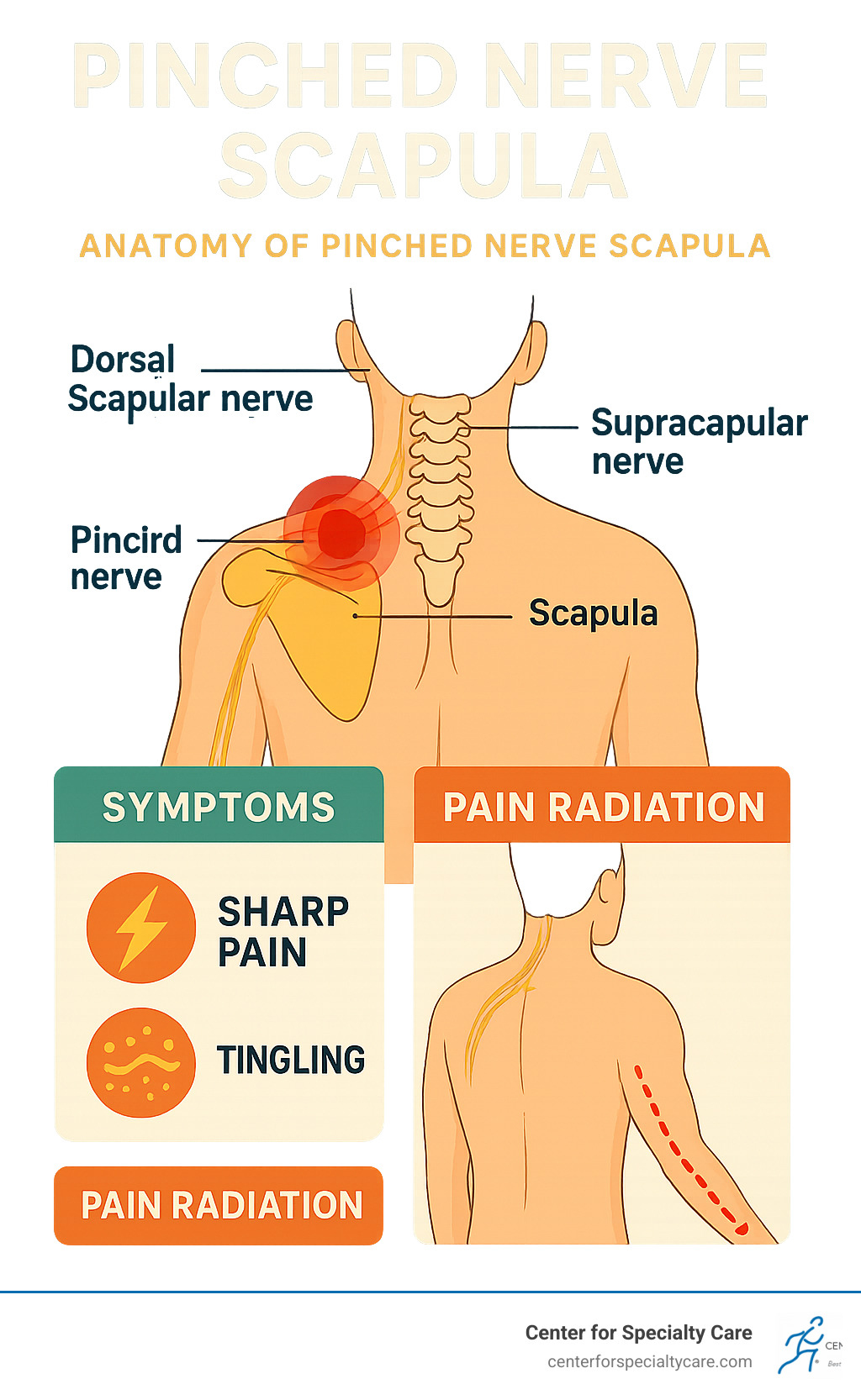
- Main Nerves Involved: Dorsal scapular nerve, suprascapular nerve, or cervical nerve roots.
- Symptoms: Sharp pain, burning sensation, numbness, tingling, muscle weakness.
- Pain Pattern: May radiate from the neck to the shoulder blade and down the arm.
- Treatment: Most cases resolve with conservative care in 8-12 weeks.
What feels like a “pinched nerve” in your shoulder blade is often a problem starting in your neck. When nerves in the cervical spine get compressed, they send pain signals to your shoulder blade—a phenomenon called referred pain. This is very common, and research shows most pinched nerve symptoms resolve without invasive treatment. In fact, nearly half of middle-aged and older adults have asymptomatic nerve compression.
I’m Dr. Corey Welchlin, a board-certified orthopedic surgeon with over 30 years of experience. At the Center for Specialty Care, serving the Fairmont, Minnesota region since 1990, I’ve helped countless patients find relief from pinched nerve scapula pain. We specialize in diagnosing and treating complex nerve and spine conditions with both conservative and surgical approaches.
Simple pinched nerve scapula word guide:
Understanding the “Why”: Common Causes and Symptoms
This section explores what a pinched nerve near the shoulder blade is, what causes it, and the tell-tale signs you might be experiencing one.
What Is a Pinched Nerve in the Scapula?
A “pinched nerve” occurs when a nerve is squeezed or irritated by surrounding tissues like bones, muscles, or tendons, disrupting its signals. Interestingly, the pain you feel around your shoulder blade often originates in your neck, or cervical spine. This is called referred pain.
Nerves branch out from your neck’s seven vertebrae to control your shoulders, arms, and hands. When one of these nerves is compressed, you can feel the pain in your shoulder blade. The dorsal scapular nerve, which starts at the C5 vertebra, is a key player, controlling muscles around the scapula. The suprascapular nerve is another common source of shoulder blade pain when compressed.
This condition is medically known as cervical radiculopathy—nerve irritation in the neck causing symptoms elsewhere. You can learn more about what is cervical radiculopathy and explore our comprehensive back and spine care information.
Key Causes of Nerve Compression
Understanding the cause of pinched nerve scapula pain can help prevent recurrence. Here are the most common reasons for nerve compression.
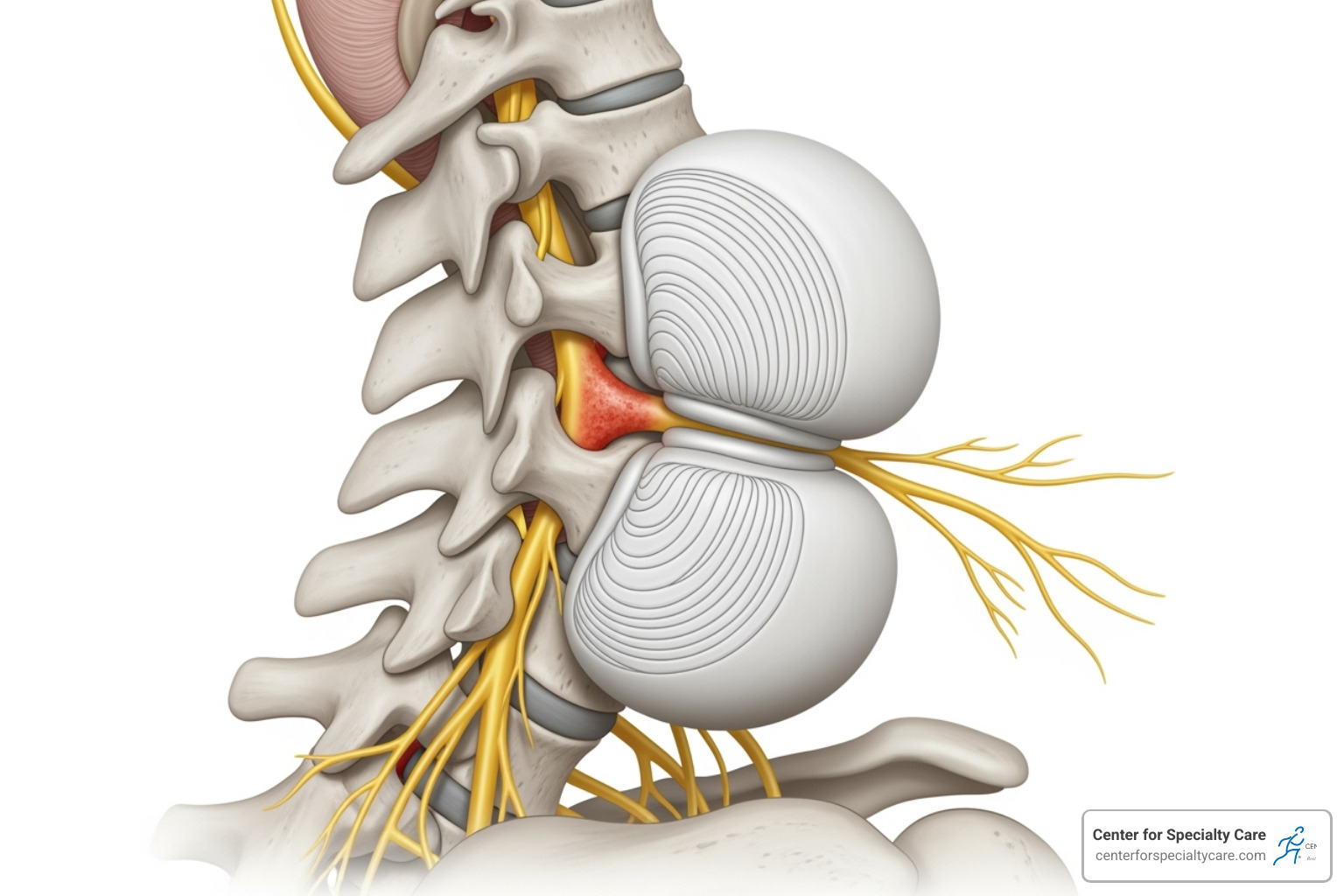
- Herniated discs: The soft, gel-like center of a spinal disc pushes through its tough outer layer, pressing on a nerve. This is more common in younger people, often due to sudden movements.
- Bone spurs: As spinal discs wear down with age, the body may grow extra bone. These spurs can narrow the space for nerves, causing compression.
- Degenerative changes: Natural aging can lead to spinal arthritis and narrowing of the spinal canal, reducing the space for nerve roots.
- Poor posture: Spending hours hunched over a computer or phone puts constant stress on your neck and upper back, causing muscles to tighten and squeeze nerves like the dorsal scapular nerve.
- Repetitive overhead movements: Activities common in painting or construction can cause muscles to become inflamed, putting pressure on nerve pathways.
- Acute injuries: Car accidents, falls, or sports injuries can directly damage or inflame nerves. Whiplash is a common cause of cervical nerve irritation. If you have shoulder pain from an accident, it’s important to get it checked.
Research shows that nearly half of middle-aged and older adults have asymptomatic disc problems and nerve compression. Pain indicates active irritation that needs attention.
Recognizing the Symptoms
Nerve pain feels different from typical muscle pain. Knowing what to look for is key.
- Sharp, burning pain: This is the classic sign of nerve irritation, often described as an electric shock shooting from your neck into your shoulder blade, arm, or hand.
- Dull ache: Sometimes the pain is a persistent, deep ache around the inner edge of the shoulder blade, feeling like a stubborn knot.
- Numbness and tingling: You might experience a “pins and needles” sensation or a loss of feeling in your arm or hand.
- Muscle weakness: A compressed nerve can’t signal muscles properly, making it harder to lift objects, reach overhead, or grip things.
- Radiating pain: The pain often follows a specific nerve pathway down your arm. Many patients find temporary relief by placing their hand on top of their head, a sign called “abduction relief.”
- Scapular winging: A more serious sign where the shoulder blade sticks out abnormally from the back. This indicates significant weakness in the rhomboid muscles due to dorsal scapular nerve issues.
Nerve pain may worsen with certain neck movements, feel more intense at night, or come and go unpredictably. If you experience these symptoms, a professional evaluation is recommended.
Getting a Diagnosis and Differentiating from Other Issues
A proper diagnosis is the first step toward effective relief. Here’s how healthcare professionals identify a pinched nerve and distinguish it from other conditions.
How Is a Pinched Nerve in the Scapula Diagnosed?
Pinpointing the cause of pinched nerve scapula pain requires a thorough, step-by-step approach, as several conditions can cause similar discomfort. At Center for Specialty Care, our process includes:
- Medical History: We start with a detailed conversation about your symptoms: when the pain began, what makes it better or worse, and if you’ve noticed weakness or tingling. This history provides crucial clues.
- Physical Examination: We assess your neck, shoulder, and arm, testing your range of motion, reflexes, and muscle strength. A key test is Spurling’s maneuver, where turning your head to one side while gentle pressure is applied may reproduce your symptoms, indicating nerve compression. If placing your hand on your head relieves the pain, it’s a strong sign of cervical radiculopathy.
- Imaging Tests: While a physical exam is revealing, imaging helps us see the internal structures. X-rays show bones and can reveal spurs or narrowing between vertebrae. However, MRI scans are the gold standard, providing detailed images of soft tissues like discs, nerves, and muscles.
- Electrodiagnostic Studies: If needed, an EMG (electromyography) can measure electrical activity in muscles and nerves to pinpoint the affected nerve and the severity of compression.
We use the right diagnostic tools to get answers quickly. Learn more about how doctors diagnose a pinched nerve and explore our diagnostic imaging services.
Pinched Nerve vs. Muscle Knot: What’s the Difference?
It’s common to mistake the pain of a pinched nerve scapula for a stubborn muscle knot. Understanding the differences in how they feel is key to identifying the true source of your pain.
Nerve pain and muscle pain have distinct characteristics. Nerve pain is often sharp, burning, or electric, and it frequently radiates down the arm with associated tingling or numbness. Muscular pain is typically a dull, localized ache that feels tight and tender to the touch. Cervical radiculopathy (a pinched nerve in the neck) can cause secondary muscle trigger points, making diagnosis tricky.
| Pinched Nerve Signs | Muscle Knot Signs |
|---|---|
| Sharp, burning, electric pain | Dull, aching, tight sensation |
| Radiates down your arm | Stays localized to one spot |
| Tingling, numbness, weakness | Tender to touch, stiff |
| Little relief from massage | Temporarily better with pressure |
One revealing clue is your response to massage. If direct pressure provides only fleeting relief or even worsens the pain, a nerve issue is more likely. A true muscle knot usually feels better, at least temporarily, with massage.
Significant arm weakness or dropping objects is a major red flag for a nerve problem, as muscle knots don’t typically cause this. If you’ve been trying to treat a persistent “knot” without success, the real culprit may be nerve compression in your neck. We can help you find relief for muscle knots or determine if it’s a nerve problem in disguise.
Your Roadmap to Relief: Treatment for a Pinched Nerve Scapula
From home remedies to medical care, there are many ways to treat pinched nerve scapula pain. The good news is that most people find relief without surgery. At Center for Specialty Care, we start with the least invasive, most effective treatments.
At-Home Care and Lifestyle Adjustments
Many cases respond well to consistent at-home care. These strategies create an ideal environment for the nerve to heal.
![IMAGE] of a person at an ergonomically correct workstation – pinched nerve scapula](https://images.bannerbear.com/direct/4mGpW3zwpg0ZK0AxQw/requests/000/101/369/154/nGPeXKvLJY7WnlXbYd81p93OM/6564e1bb713fa058a89a247bc9920ae3b15cdf8c.jpg)
- Rest: Avoid activities that worsen your pain, especially repetitive overhead movements, to give the nerve a chance to calm down.
- Ice and Heat: Use ice for the first 48 hours to reduce inflammation. Afterward, switch to heat to relax tight muscles and improve blood flow.
- Posture Correction: Good posture is a powerful tool. Sit with back support and feet flat on the floor. Stand with your shoulders back and head balanced over your spine.
- Sleeping Position: Sleep on your back or side with a supportive pillow that maintains your neck’s natural curve. Avoid sleeping on your stomach.
- Ergonomic Setup: If you work at a desk, position your monitor at eye level, use a supportive chair, and keep your keyboard and mouse within easy reach. Take frequent breaks to stretch.
- OTC Pain Relievers: Medications like ibuprofen or naproxen can help reduce pain and inflammation as part of your recovery plan.
If you often wake with a stiff neck, see our Tips for a stiff neck after sleeping.
Stretches and Exercises for a Pinched Nerve Scapula
Once acute pain subsides, gentle stretches and exercises can create space for the nerve and strengthen supporting muscles.
- Chin Tucks: Sit or stand tall and gently pull your chin straight back, creating a double chin. Hold for 5 seconds and repeat 10-15 times.
- Scapular Squeezes: With relaxed arms, gently squeeze your shoulder blades together. Hold for 5 seconds and repeat 10-15 times.
- Corner Stretch: Stand facing a corner, place your forearms on each wall, and lean forward gently to feel a stretch across your chest. Hold for 20-30 seconds.
- Serratus Slides: This advanced exercise strengthens a key muscle for shoulder blade movement. See a guide in this Serratus Slides exercise video.
Perform exercises gently and stop if you feel sharp pain. For a structured program, our team offers Physical therapy for shoulder treatment.
Professional Medical Treatments
When home care isn’t enough, we offer a range of professional treatments for pinched nerve scapula pain.
- Physical Therapy: This is often the cornerstone of treatment. A physical therapist designs a personalized program with manual therapy, therapeutic exercises, and modalities like ultrasound to reduce pain and restore function.
- Medications: For severe inflammation, oral corticosteroids may be prescribed. For chronic nerve pain, neuropathic medications like gabapentin can calm overactive nerve signals.
- Corticosteroid Injections: Targeted injections, such as epidural steroid injections, deliver powerful anti-inflammatory medication directly to the irritated nerve root, often providing significant relief.
- Surgical Options: Surgery is reserved for cases where conservative treatments fail after 6-12 weeks or if there are signs of progressive neurological problems. Procedures like discectomy or fusion aim to decompress the nerve and stabilize the spine.
Our approach is comprehensive and customized. We explore all non-surgical options first. Learn more about our Expert pain management options.
Frequently Asked Questions about Scapular Nerve Pain
Here are answers to common questions about recovery from pinched nerve scapula pain.
How long does it take for a pinched nerve in the scapula to heal?
Healing time varies. For mild cases with prompt care, relief may come within a few days to a couple of weeks.
The majority of acute pinched nerves from cervical radiculopathy respond well to conservative treatment within 8-12 weeks. Research shows over half of these cases resolve without invasive treatments in this timeframe. Consistency with physical therapy and good posture is key to seeing significant improvement within three months.
More severe or chronic cases may take several months to fully resolve. This typically involves gradual improvement, with good days becoming more frequent over time. It’s important to maintain good habits even after you feel better to prevent recurrence. You can find more information on the Prognosis for pinched nerves.
Can a pinched nerve in the scapula be prevented?
Yes, many cases of pinched nerve scapula are preventable. While you can’t stop aging or prevent all injuries, these strategies can significantly reduce your risk:
- Maintain good posture: Keep your ears aligned over your shoulders, whether sitting or standing.
- Move and stretch regularly: Incorporate gentle neck and shoulder stretches into your daily routine to prevent muscle tightness.
- Create an ergonomic workspace: Adjust your chair, monitor, and keyboard to support a neutral posture and prevent strain.
- Take breaks: Avoid repetitive strain by taking frequent breaks from static positions or overhead work.
- Use proper lifting technique: Always bend at your knees and let your legs do the work.
- Stay healthy: Maintaining a healthy weight and staying hydrated supports overall spine health.
When should I see a doctor for my shoulder blade pain?
While some aches resolve on their own, certain warning signs warrant professional medical care. You should see a doctor if you experience any of the following:
- Pain that persists for more than a few days despite rest, or pain that is getting worse.
- New or worsening weakness in your arm, shoulder, or hand, such as difficulty lifting objects.
- Loss of dexterity or frequently dropping things, which suggests motor function is affected.
- Numbness or tingling that is spreading or becoming more intense.
- Pain that disrupts your sleep or significantly interferes with your daily activities.
- Symptoms that began after an injury, such as a fall or car accident.
Seek immediate medical attention if you experience any changes in bowel or bladder control along with your pain, as this can indicate serious spinal cord compression.
At Center for Specialty Care, we offer quick appointments because we know waiting can be frustrating. For more guidance, read about When to seek urgent care for shoulder pain.
Conclusion: Taking the Next Step Towards a Pain-Free Shoulder
Living with pinched nerve scapula pain is not something you have to accept. As we’ve explored, this discomfort often originates from a nerve issue in your neck, a condition known as cervical radiculopathy. Understanding this is the key to effective treatment.
Relief is achievable. Whether your symptoms are caused by a herniated disc, poor posture, or repetitive movements, there are solutions. Most people improve significantly with conservative care, including posture correction, targeted exercises, and professional physical therapy.
A correct diagnosis is essential. At Center for Specialty Care, Dr. Corey Welchlin and our team use comprehensive evaluations and advanced diagnostics to find the true source of your pain. Our personalized care approach means your treatment plan is custom to your specific needs and goals.
Regaining comfortable movement is within reach. With locations in Fairmont MN, Estherville IA, Buffalo Center IA, and St James MN, we are committed to providing quick appointment availability and 100% patient satisfaction.
If your shoulder blade pain persists, includes numbness or weakness, or interferes with your life, don’t wait. Early intervention leads to a faster recovery. Take the next step toward a pain-free life—Learn more about our comprehensive shoulder care and let us help you reclaim the active lifestyle you deserve.