
From Fiery Shoulders to Tender Knots: Unraveling Your Pain Mysteries
August 12, 2025
Is It Just a Pop? Symptoms of a Partially Dislocated Shoulder
August 13, 2025
What are knots in muscles: Ultimate Relief 2025
Understanding What Muscle Knots Really Are
What are knots in muscles is a question we hear daily. The simple answer: muscle knots aren’t actually knots. They’re tight, contracted areas of muscle fibers called myofascial trigger points.
Quick Facts About Muscle Knots:
- Medical term: Myofascial trigger points or hyperirritable spots
- Feel like: Small, hard lumps or nodules under the skin
- Common locations: Neck, shoulders, upper back, and calves
- Cause: Muscle fibers that contract and stay shortened
- Symptoms: Pain, stiffness, tenderness, and sometimes referred pain
- Prevalence: Up to 85% of people experience them at some point
Have you ever felt that stubborn ache in your neck or shoulder? You might describe it as feeling “all knotted up.” These painful spots occur when muscle fibers contract and refuse to relax, creating tension that can cause significant discomfort. The term “knot” is misleading since muscles can’t literally tie themselves into knots. What you’re feeling is a hyperirritable spot where fibers have become tight, often reducing blood flow and causing a familiar ache.
I’m Dr. Corey Welchlin, a board-certified orthopedic surgeon. With over three decades of experience at the Center for Specialty Care, I’ve helped countless patients understand what are knots in muscles and find effective relief from the pain and limitation they cause.
What Are Knots in Muscles? The Science Behind the Sensation
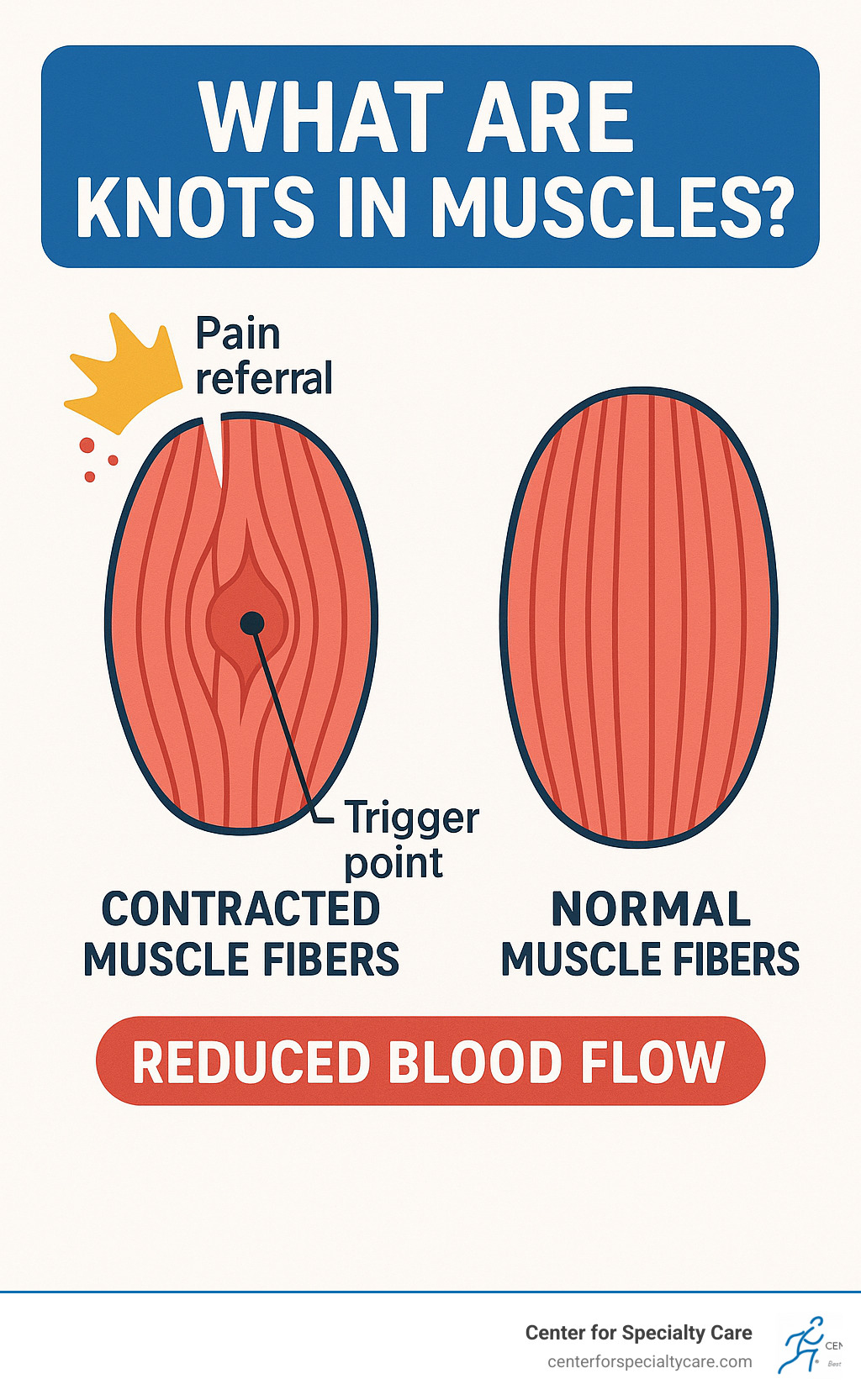
Understanding what are knots in muscles starts with what’s happening beneath your skin. Your muscle fibers normally contract and relax smoothly. But sometimes, a small group of fibers contracts into a tight bundle called a myofascial trigger point—what we call a muscle knot. This is a hyperirritable spot where contracted fibers form a taut band that you can feel as a palpable nodule.
This constant tension creates a vicious cycle: the contracted fibers squeeze tiny blood vessels, causing reduced blood flow. Without proper circulation, waste products build up, and oxygen can’t get through, resulting in a deep, throbbing ache. Unlike regular muscle soreness that improves with rest, these trigger points can persist for weeks or months without proper treatment, as they are stuck in a state of contraction.

The Medical Definition and Types
Medically, muscle knots are called myofascial trigger points. They have specific characteristics that set them apart from general muscle pain. A key feature is their ability to cause referred pain, meaning a knot in your neck might cause a headache, or one in your shoulder could make your arm ache. This helps distinguish them from tender points, which only hurt where you press.
- Active trigger points cause pain even at rest. They are often the source of constant, deep, and persistent aches that can disrupt your day.
- Latent trigger points are sneakier. They don’t hurt on their own but are tender when pressed. While seemingly harmless, they can still cause stiffness, weakness, and limited movement, and can easily become active if aggravated.
Diagnosing muscle knots requires a hands-on examination to feel for the characteristic taut band and tender nodule, as they don’t show up on X-rays or MRI scans.
Where Do Muscle Knots Typically Develop?
While knots can form in any skeletal muscle, they favor areas that are overworked, held in one position too long, or subject to repetitive stress.
- Neck and Shoulders: Prime real estate for knots, especially from poor posture at a computer or looking down at a phone. The trapezius muscle, which spans from your neck to your mid-back, is a common hotspot. For persistent knots here, our guide on Muscle Knots in Shoulder Blade: Causes and Effective Relief offers targeted solutions.
- Upper and Lower Back: Upper back knots often accompany shoulder issues. Lower back knots are common in those who sit for long periods, lift heavy objects, or have a weak core.
- Calves and Glutes: Runners and people who stand all day often develop knots in their calves. The glutes can also harbor trigger points, particularly from prolonged sitting.
Uncovering the Causes, Symptoms, and Risk Factors
Muscle knots are your body’s red flag, signaling that something about your movement, work, or stress is off-balance. They rarely appear overnight and are usually the result of daily habits.

The Common Culprits: What Causes Knots in Muscles?
Understanding the cause is the first step toward prevention. Here are the most common triggers I see in my practice:
- Poor posture: Slouching at a desk, craning your neck to view a phone, or sleeping awkwardly puts constant strain on muscles, causing them to get “stuck” in unnatural positions.
- Sedentary lifestyles and overexertion: Sitting for hours reduces blood flow and can cause muscle fibers to adhere. Conversely, intense workouts, heavy lifting, or repetitive motions can overwhelm muscles.
- Dehydration: Muscles are about 75% water. Insufficient fluid makes them less flexible and more prone to cramping and tightening.
- Stress and anxiety: When you’re stressed, your body tenses, especially in the neck, shoulders, and jaw. Chronic stress means these muscles rarely get a chance to relax.
- Sleep disturbances and direct injuries: Poor sleep hinders muscle recovery, while trauma from an accident or injury can cause muscles to guard the affected area, leading to knots.
Recognizing the Symptoms
Identifying muscle knots involves more than just finding a sore spot. Look for these common signs:
- Localized pain and tenderness: A specific spot that aches, throbs, or feels tight and is tender to the touch.
- Referred pain: A knot in one area causing pain elsewhere. A trigger point in your neck might cause headaches, or a back knot could send pain down your leg. Our guide on Managing Radiating Pain: Tips for Relief can help you understand this phenomenon.
- Limited range of motion: A knot in your shoulder might make it hard to reach overhead, or a tight neck could prevent you from looking over your shoulder.
- Muscle weakness: Despite feeling tight, the affected muscle often can’t generate its normal strength.
- Sleep disruption: Active trigger points can cause persistent pain that interferes with sleep.
Are You at Risk?
While anyone can get muscle knots, certain factors increase your susceptibility:
- Age: Muscles naturally lose elasticity over time.
- Chronic stress: Constant muscle tension creates a perfect environment for knots.
- Sedentary or physically demanding jobs: Office workers and truck drivers are at high risk due to prolonged sitting, while athletes and laborers are at risk from repetitive motions and micro-injuries.
- Joint problems and chronic pain: Conditions like arthritis or fibromyalgia often lead to compensatory muscle knots. Research shows that many people with chronic pain also have trigger points.
- Poor sleep and nutrition: Muscles need adequate rest and nutrients to stay healthy and flexible.
At Center for Specialty Care, we understand these risk factors and develop personalized treatment plans for patients from all backgrounds to help them find relief.
Finding Relief: At-Home and Professional Treatments
When you’re dealing with what are knots in muscles, the good news is that you have plenty of options for relief. The most effective strategy is often a multimodal approach, combining different techniques to tackle stubborn spots from multiple angles.

Many knots respond well to simple home treatments, but for persistent issues, professional help can make all the difference.
Effective Home Remedies for Muscle Knots
Your journey to relief can start at home with these methods that relax muscle fibers, boost blood flow, and break the pain cycle.
- Rest: Giving overworked muscles a chance to recover can be highly effective.
- Gentle stretching: Elongate tight, contracted fibers by holding gentle stretches for 15-30 seconds. Avoid forcing the muscle.
- Heat and ice therapy: Heat (warm compress, bath) increases circulation to the area. Apply for 15-20 minutes. For more on this, see our guide on Does Heat Help Tendonitis? Answers and Tips for Effective Relief. Ice can reduce inflammation and numb pain; apply an ice pack wrapped in a cloth for 10-15 minutes.
- Self-massage: Use your fingers, thumbs, or an elbow to apply firm, sustained pressure directly to the knot.
- Foam rollers and tennis balls: These tools are excellent for applying pressure to knots in larger muscle groups like your back, glutes, and legs. Roll gently or hold sustained pressure on tender spots for 30-60 seconds.
- Over-the-counter pain relievers: Medications like ibuprofen or naproxen can help reduce pain and inflammation.
- Hydration: Water keeps muscle tissues supple and helps flush out waste products.
Professional Treatments for Persistent Muscle Knots
When home remedies aren’t enough, it’s time to see a professional. At Center for Specialty Care, we offer effective solutions for stubborn knots.
- Physical therapy: A physical therapist can identify the root cause of your knots, such as postural imbalances or muscle weakness. They provide hands-on manual therapy and create a personalized exercise plan. Our guide on Shoulder Treatment with Physical Therapy: Recovery and Pain Relief shows how this can help.
- Therapeutic massage: Techniques like deep tissue massage and myofascial release therapy are designed to break up adhesions, release trigger points, and restore proper blood flow.
- Dry needling: This technique involves inserting very thin needles directly into the trigger point, which can cause the muscle to twitch and then relax, often providing immediate relief.
- Trigger point injections: For very stubborn knots, an injection of a local anesthetic can relax the muscle and break the pain-spasm cycle.
- Ultrasound therapy: Sound waves generate gentle, deep heat within the muscle tissue to increase circulation and promote relaxation.
- TENS unit: A TENS (transcutaneous electrical nerve stimulation) unit delivers mild electrical currents to the skin to help block pain signals and stimulate the release of natural painkillers.
Chronic knots often require a combination of these treatments. The important thing is that we have the tools and expertise to help you find lasting relief.
Prevention and When to Seek Medical Attention
Understanding what are knots in muscles is not just about treatment; it’s about prevention. Proactive care and healthy habits can keep your muscles running smoothly and knot-free.

How to Prevent Muscle Knots
Prevention is your best defense. Most strategies are simple changes to your daily routine.
- Good posture and ergonomics: Maintain good posture, especially at a desk. Keep your shoulders relaxed and ensure your workspace is ergonomic. Take regular breaks to stand, stretch, and move.
- Regular exercise: A mix of strength training, cardio, and flexibility work keeps muscles strong, flexible, and well-circulated.
- Stretching breaks: If you’re stuck in one position, a few gentle stretches every hour can prevent tension from building up in your neck, shoulders, and back. For morning stiffness, our guide on How to Relieve a Stiff Neck After Waking Up offers helpful tips.
- Stress management: Find healthy ways to manage stress—such as meditation, deep breathing, or taking a walk—to help keep both your mind and muscles relaxed.
- Hydration and nutrition: Well-hydrated muscles move more freely. Essential minerals like magnesium and potassium support healthy muscle function.
- Listen to your body: Address early signs of muscle tightness with a quick stretch or self-massage to prevent a full-blown knot from forming.
When to Call a Doctor
While most knots respond to home care, some situations require professional attention. Don’t ignore these warning signs from your body.
Seek medical help for:
- Persistent or worsening pain that doesn’t improve with home remedies after a week.
- Pain that disrupts your sleep consistently.
- Numbness, tingling, or weakness in the affected limb.
- Redness, swelling, or heat around the knot, which could indicate infection.
- Pain accompanied by fever or other systemic symptoms like unexplained weight loss.
- Pain that severely limits your daily activities and impacts your quality of life.
At Center for Specialty Care, we understand that muscle pain can be complex. Our team is dedicated to 100% patient satisfaction and personalized care, with locations in Fairmont, MN, Estherville, IA, Buffalo Center, IA, and St. James, MN. We offer quick appointment availability because we know waiting isn’t an option when you’re in pain. Our comprehensive orthopedics services can help you find lasting relief. If you’re looking for expert guidance, our guide on Pain Management Dr Near Me: A Comprehensive Guide can help you understand your options.
Frequently Asked Questions about Muscle Knots
These are some of the most common questions we hear from patients at our clinics in Minnesota and Iowa about what are knots in muscles.
How long do muscle knots last?
The duration varies. An acute knot from a minor strain, like sleeping funny, may resolve in a few days to a week with home care. However, chronic knots, often caused by ongoing issues like poor posture or stress, can persist for weeks, months, or even longer if the underlying cause isn’t addressed.
Can muscle knots go away on their own?
Sometimes, very mild knots may resolve with rest and gentle movement. However, most knots, particularly those from chronic issues, tend to be persistent and require intervention. Without addressing the root cause, untreated knots can become more entrenched and even trigger other knots in surrounding muscles. Early intervention is always recommended over a “wait and see” approach.
Are muscle knots dangerous?
The good news is that muscle knots themselves are not dangerous or life-threatening. However, they can cause significant pain and limited mobility that can severely impact your work, sleep, and quality of life. Because muscles with knots are tighter and less flexible, they can also be more vulnerable to strains or tears. It’s always worth addressing a knot before it becomes a chronic source of discomfort.
At Center for Specialty Care, we’ve helped countless patients in Fairmont, MN, Estherville, IA, Buffalo Center, IA, and St. James, MN find relief from these persistent problems.
Conclusion
Understanding what are knots in muscles is the first step toward relief. These common but frustrating myofascial trigger points are highly treatable. A combination of home remedies like gentle stretching and professional treatments such as physical therapy or therapeutic massage can provide lasting relief.
Prevention is your best strategy. Good posture, regular movement, and stress management go a long way in keeping trigger points at bay. However, when knots cause persistent pain, sleep disruption, or limit your daily activities, it’s time to seek professional help. While not dangerous, you don’t have to simply live with the discomfort.
At Center for Specialty Care, we are committed to 100% patient satisfaction and personalized care. With locations in Fairmont, MN, Estherville, IA, Buffalo Center, IA, and St. James, MN, our team is ready to help you find the relief you deserve.
Don’t let muscle knots keep you from the activities you love. Explore our comprehensive shoulder care options and take the first step toward feeling like yourself again.