

Spotting a Dislocation: Visual and Sensory Clues
August 12, 2025
Untangling the Mystery: A Guide to Muscle Knots
August 12, 2025
Burning Shoulder Pain: 2025 Ultimate Relief
Understanding the Mystery Behind Your Burning Shoulder
Burning shoulder pain affects millions of people, with shoulder pain prevalence estimated between 4% and 26% of the population. If you’re experiencing that distinct fiery sensation in your shoulder – different from the typical aching or stabbing pain – you’re likely dealing with nerve irritation or inflammation that requires specific attention.
Quick Answer: Common causes of burning shoulder pain include:
- Nerve irritation – Pinched nerves, brachial plexus injuries, or cervical radiculopathy
- Inflammation – Shoulder bursitis, tendinitis, or frozen shoulder
- Injuries – Rotator cuff tears, fractures, or SLAP tears
- Referred pain – Heart conditions (angina), fibromyalgia, or gallbladder issues
- Serious warning signs – Seek immediate care for chest pain, shortness of breath, or sudden severe pain
That burning sensation often signals that something more complex is happening than simple muscle strain. While aching pain typically comes from overused muscles or joints, burning pain usually means nerves are involved – either compressed, damaged, or inflamed.
The shoulder’s intricate network of bones, muscles, tendons, and nerves makes it prone to various conditions that can create this uncomfortable burning feeling. Understanding what’s causing your specific pain is the first step toward finding relief.
I’m Dr. Corey Welchlin, and over my three decades as a board-certified orthopedic surgeon, I’ve helped countless patients overcome burning shoulder pain through precise diagnosis and targeted treatment. My experience has shown me that identifying the root cause – whether it’s nerve compression, inflammation, or referred pain – is crucial for effective relief.

Decoding the Causes of Burning Shoulder Pain
That fiery sensation in your shoulder isn’t just “one of those things” – it’s your body sending a specific message. Burning shoulder pain typically points to underlying issues that are different from regular aches. Let’s explore what might be causing that uncomfortable feeling.
Nerve-Related Causes: From Pinched to Inflamed
When something goes wrong with your body’s nerve network, you’ll often feel it as a burning, tingling, or shooting sensation.
Brachial plexus injuries, often called “burners” or “stingers,” happen when the nerve network from your neck to your arm is stretched or compressed. This injury to a bundle of nerves in the neck is common in contact sports and causes a sharp, burning pain that shoots down your arm, sometimes with temporary weakness.
Parsonage-Turner Syndrome, or brachial neuritis, is a rare inflammatory condition. It starts suddenly with intense burning shoulder pain, followed by muscle weakness, as the immune system attacks the nerve network.
Suprascapular nerve entrapment occurs when this nerve gets trapped, often from repetitive overhead activities. It causes a deep, burning pain in the back or side of the shoulder that worsens when you raise your arm.
Cervical radiculopathy, a pinched nerve in your neck, can send burning pain down to your shoulder and arm. It’s often caused by a herniated disc or bone spurs and may include tingling, numbness, or weakness. You can learn more on muscle knots and nerve pain to understand how these issues connect.

Inflammatory Conditions Causing Burning Shoulder Pain
When inflammation becomes chronic or excessive, it can create a persistent burning sensation.
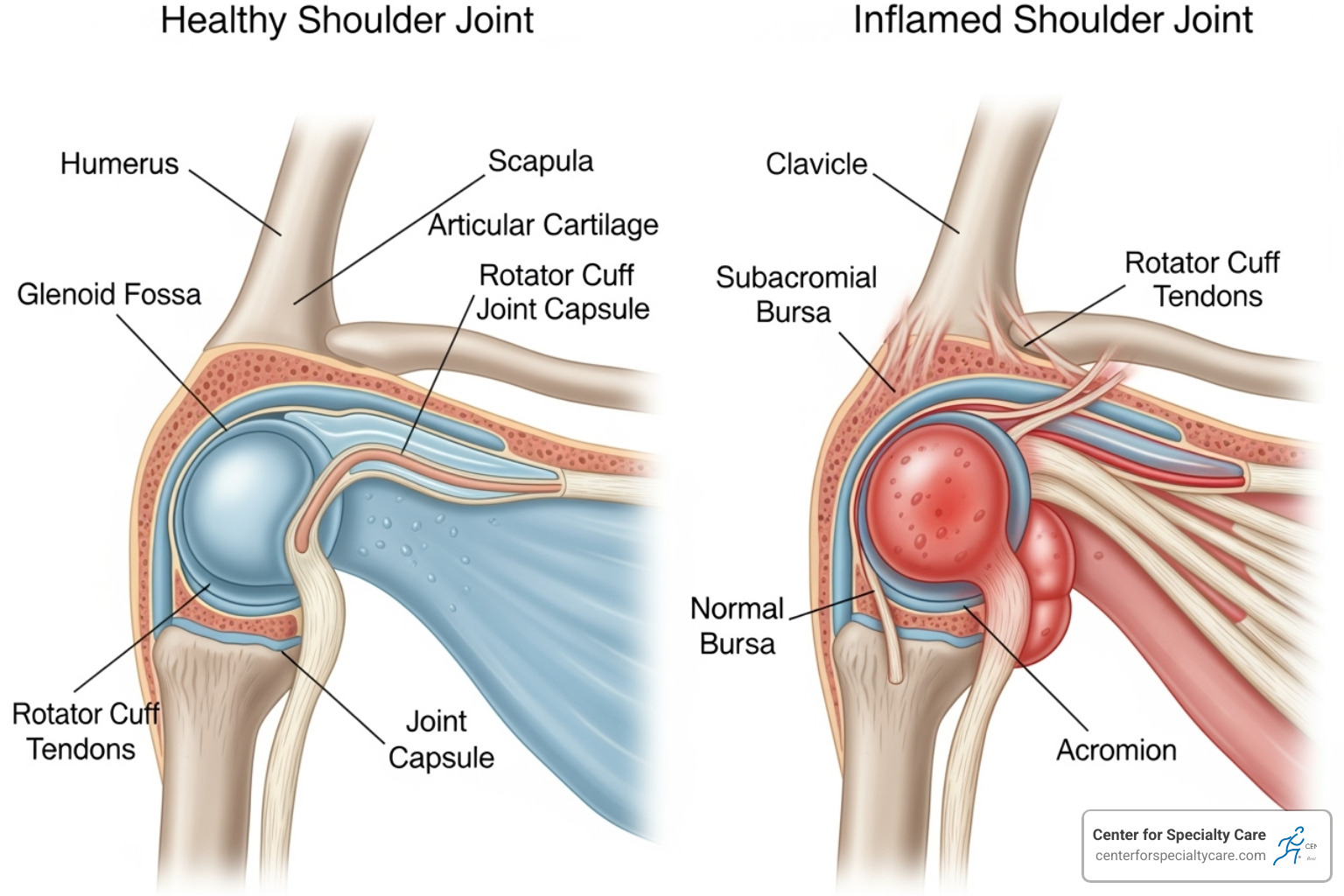
Shoulder bursitis is inflammation of the bursa, the fluid-filled sacs that cushion the shoulder joint. It causes aching or burning pain that worsens when you raise your arm, and the area may feel tender and warm.
Rotator cuff tendinitis is inflammation of the rotator cuff tendons from overuse or injury. It results in a diffuse burning pain, stiffness, and weakness, especially when lifting or rotating your arm.
Frozen shoulder (adhesive capsulitis) involves the thickening and tightening of the shoulder’s connective tissue. The initial “freezing” stage brings severe, increasing burning pain and significant stiffness.
Rheumatoid arthritis is an autoimmune disease that causes the immune system to attack the joint lining. This leads to chronic inflammation, persistent burning pain, stiffness, and swelling in the shoulder. If you’re hearing unusual sounds, you might want to explore more on shoulder clicking and pain.
Injury and Trauma
Direct injuries can cause burning shoulder pain, especially when they involve nerve damage or significant inflammation.
Rotator cuff tears are common in adults and can be sudden or gradual. They cause weakness, limited motion, and significant pain that can feel like burning, especially at night. If you suspect a tear, learning about finding a specialist for tears can help.
Shoulder fractures of the collarbone, shoulder blade, or upper arm bone cause immediate, severe burning pain. They are usually accompanied by swelling, bruising, and inability to move the arm.
Shoulder dislocations occur when the upper arm bone pops out of its socket, causing intense burning pain, visible deformity, and loss of arm function. It’s the body’s most frequently dislocated major joint.
SLAP tears are tears in the cartilage ring (labrum) in the shoulder socket. Often resulting from falls or repetitive overhead motion, they cause a deep, sometimes burning pain and a catching sensation.
Referred and Systemic Pain
Sometimes burning shoulder pain isn’t a shoulder problem at all.
Angina, a symptom of coronary heart disease, is a critical condition to recognize. Burning pain in the left shoulder, especially with chest tightness, shortness of breath, nausea, or sweating, requires immediate medical attention.
Fibromyalgia is a chronic condition that causes widespread burning pain, including in the shoulders, along with fatigue and sleep issues. It involves changes in how the brain processes pain signals.
Gallbladder issues like gallstones can cause referred pain, sometimes described as burning, in the right shoulder or shoulder blade area.
Shingles, caused by the chickenpox virus, can create a painful rash. Before the rash appears, you might feel burning or shooting pain in the affected area, which can include the shoulder.
Diagnosis and When to See a Doctor
When you’re dealing with burning shoulder pain, getting the right diagnosis is key. While it might be tempting to guess what’s wrong, shoulder pain can be tricky to diagnose on your own.
Seeking a Professional Diagnosis
At Center for Specialty Care, we conduct a thorough investigation to find the source of your burning shoulder pain.
Physical Examination is where we start. We’ll assess your shoulder’s movement, strength, and check for tenderness. Specific tests help us identify which structures might be causing the pain.
Your Medical History is crucial. We’ll ask about when the pain started, what makes it better or worse, and if you have other symptoms like tingling. These details help us narrow down the possible causes.
Imaging Tests let us see inside your shoulder. X-rays show bones and joints, while an MRI provides detailed images of soft tissues like tendons and cartilage, revealing tears or inflammation.
If we suspect nerve involvement, Nerve Conduction Studies measure the electrical activity in your nerves and muscles to check how well they are functioning.
Finding the right shoulder doctor who listens carefully makes all the difference in getting an accurate diagnosis and effective treatment plan.
Red Flags: When to Seek Immediate Care
While most burning shoulder pain isn’t an emergency, some symptoms are red flags that require immediate medical attention.
- Chest pain, tightness, or shortness of breath alongside your shoulder pain, especially if the pain spreads to your left arm, jaw, or back. This could signal a heart problem.
- Severe, sudden, and unbearable pain, which can indicate a serious injury.
- Visible deformity of the shoulder, complete inability to move your arm, or severe weakness.
- Signs of infection, such as fever, chills, or red, warm skin around the joint.
- Severe numbness or weakness that doesn’t improve, which could indicate nerve damage.
If you’re experiencing any of these warning signs, don’t wait—seek emergency care right away. For other concerning symptoms, it’s helpful to know when to consider urgent care for shoulder pain.
When in doubt, it’s always better to err on the side of caution. Your health and safety are our top priority.
Pathways to Relief: Treating Shoulder Pain
Once we’ve pinpointed the cause of your burning shoulder pain, we can create a custom treatment plan. At Center for Specialty Care, we believe in starting with the gentlest, most effective approaches first.
At-Home and Conservative Treatments for Burning Shoulder Pain
Many effective treatments for burning shoulder pain can be done at home. These conservative approaches are often the first line of defense.
Rest and activity modification is essential for healing. Giving your shoulder a break from activities that trigger pain can be as simple as adjusting how you reach for things or changing your sleeping position.
Ice and heat therapy are nature’s pain relievers. For the first 48 hours, apply ice for 15-20 minutes at a time to reduce inflammation. Afterward, gentle heat can relax tight muscles and improve blood flow.
Over-the-counter anti-inflammatory medications like ibuprofen or naproxen can help manage pain and inflammation. Always follow dosage instructions and consult a doctor if you have other health conditions.
Posture correction is often overlooked. Poor posture can compress nerves and strain muscles, contributing to burning pain. Being mindful of how you sit and creating an ergonomic workspace can make a significant difference. If pain disrupts your sleep, you can find helpful tips for relieving rotator cuff pain at night.

The Role of Physical Therapy
Physical therapy is a key component of recovery for many of our patients with burning shoulder pain. Our therapists treat your symptoms and empower you with tools to prevent future issues.
Stretching exercises gradually improve flexibility and range of motion, helping to overcome the stiffness associated with conditions like frozen shoulder or tendinitis.
Strengthening exercises focus on building up the rotator cuff and surrounding muscles to better protect the joint from strain. Exercises are custom to challenge you safely.
Range of motion work involves gradually reintroducing movement to your shoulder to restore function without pain, requiring patience and persistence.
Manual therapy techniques use hands-on methods like massage and joint mobilization to reduce pain, improve tissue movement, and release muscle tension.
The beauty of physical therapy is that it empowers you with knowledge and skills you can use long after your sessions end. You can find more about the benefits of physical therapy for shoulders and how it supports recovery.
Advanced Medical Interventions
For more complex conditions or when conservative treatments aren’t enough, we offer advanced options for significant relief from burning shoulder pain.
Corticosteroid injections deliver powerful anti-inflammatory medication directly to the source of pain, like an inflamed bursa or tendon. The relief can be a breakthrough that allows for more effective physical therapy.
Nerve blocks are used for persistent nerve-related pain. By temporarily numbing specific nerves, we can provide relief and help diagnose which nerve is the problem.
Minimally invasive arthroscopic surgery uses small incisions and specialized tools to repair issues like rotator cuff tears or impingement. This approach leads to faster recovery times than traditional open surgery.
Shoulder replacement surgery is our most comprehensive solution for severe arthritis or irreparable joint damage. Replacing the joint can be life-changing, and we use minimally invasive techniques when possible for faster recovery.
We offer various types of injections for shoulder pain relief and treatment options. Our philosophy is to match the treatment to your specific condition and lifestyle.
Preventing Future Flare-Ups
Once you’ve found relief, prevention is key. These daily habits can help keep burning shoulder pain from returning.
Proper posture is your first line of defense. Slouching puts stress on nerves and muscles. Keep your shoulders relaxed and back, as if a string is pulling your head upward.
Ergonomic adjustments at your desk can make a huge difference. Position your screen at eye level and your keyboard and mouse to keep your shoulders relaxed.
Regular stretching maintains flexibility and prevents stiffness. A few minutes each day focusing on your chest and the back of your shoulders can help.
Strengthening exercises are vital for joint support. Simple exercises targeting your rotator cuff and shoulder blade muscles build a protective shield around the joint.
Always perform proper warm-ups before physical activity. Gentle stretches and arm circles prepare your muscles and reduce injury risk.
Most importantly, avoid overuse by listening to your body. If an activity causes discomfort, modify it or take a break. Pushing through pain can lead to bigger problems.

Frequently Asked Questions about Burning Shoulder Pain
Here are answers to common questions about burning shoulder pain.
How do I know if my shoulder pain is nerve-related?
Nerve-related pain feels different from muscle soreness. Look for these telltale signs:
- Radiating pain: The pain travels or shoots down your arm, sometimes to your hand.
- Tingling or numbness: A “pins and needles” sensation in your arm or fingers.
- Weakness: Difficulty gripping objects or lifting your arm that isn’t just from pain.
- Specific triggers: Pain that worsens with certain movements, like turning your head.
While these symptoms are strong indicators, a proper medical evaluation, including imaging or nerve studies, is needed for a definitive diagnosis.
Can burning shoulder pain be a sign of a heart problem?
Yes, burning shoulder pain, especially on the left side, can be a sign of a heart problem. This is called referred pain.
Seek emergency care immediately if your shoulder pain is accompanied by chest tightness or pressure, shortness of breath, nausea, sweating, or lightheadedness. Pain that worsens with activity and improves with rest is another classic sign of angina, a symptom of heart disease.
If you have new or severe burning left shoulder pain with any of these symptoms, call 911 or go to an emergency room immediately. It’s always better to be safe.
What is the fastest way to relieve burning shoulder pain at home?
For quick relief at home (if you don’t have any serious warning signs), you can try the following:
- Rest: Stop the activity that triggered the pain.
- Ice: Apply an ice pack for 15-20 minutes to reduce inflammation and numb the pain.
- NSAIDs: Over-the-counter medications like ibuprofen can reduce pain and inflammation.
- Posture: Correcting your posture while sitting or standing can provide relief.
- Gentle Stretching: If it doesn’t increase the pain, gentle stretching can ease muscle tension.
These are temporary fixes. If your burning shoulder pain persists or worsens, seek a professional evaluation to determine the underlying cause and get the right treatment.
Conclusion: Your Next Step Towards a Pain-Free Life
Burning shoulder pain doesn’t have to be your constant companion. As we’ve discussed, it can stem from many causes, including nerve issues, inflammation, injuries, or even referred pain from other organs.
The most important step is getting an accurate diagnosis. Treating a pinched nerve like simple bursitis won’t bring relief, which is why self-diagnosis is often ineffective. Every patient’s pain is unique, which is why we reject one-size-fits-all solutions.
At Center for Specialty Care, our approach is straightforward: we listen, perform thorough evaluations, and create personalized treatment plans. Whether you need conservative care like physical therapy, targeted injections, or surgical intervention, we’ll guide you through every option.
Our team combines orthopedic expertise with genuine care. We understand that burning shoulder pain impacts your entire life, which is why we are committed to 100% patient satisfaction and providing quick appointments when you’re hurting.
You don’t have to live with this pain. Our locations in Fairmont MN, Estherville IA, Buffalo Center IA, and St James MN are ready to help you reclaim your comfort and mobility.
Ready to solve the mystery behind your burning shoulder pain? Find expert shoulder care and start your recovery with us today. Your pain-free life is closer than you think.