
Will a Torn Rotator Cuff Heal on Its Own? Key Recovery Facts
May 30, 2025
From Fiery Shoulders to Tender Knots: Unraveling Your Pain Mysteries
August 12, 2025
What does a dislocated shoulder look like: Warning Signs 2025
Recognizing the Signs: When Your Shoulder Is Out of Place
What does a dislocated shoulder look like is often the first question after a sudden, painful shoulder injury. The shoulder is the body’s most mobile joint, but this flexibility also makes it the most commonly dislocated major joint. This occurs when the upper arm bone (humerus) pops out of its cup-shaped socket in the shoulder blade, resulting in immediate, severe pain and a visible deformity.
Recognizing the signs of a dislocation—from a change in the shoulder’s shape to an inability to move the arm—is the first step toward getting the right care. Prompt medical attention is crucial for a full and successful recovery.
I’m Dr. Corey Welchlin, an orthopedic surgeon with over three decades of experience. I’ve treated hundreds of shoulder dislocations, and I know that early recognition and proper treatment are key to helping patients return to their active lives. This guide will help you understand the telltale signs of a dislocated shoulder and what to do next.

What Does a Dislocated Shoulder Look Like? The Telltale Signs
When someone asks “what does a dislocated shoulder look like?” they’re usually dealing with an injury that’s both visually striking and incredibly painful. The moment your upper arm bone (humerus) pops out of its socket, your body sends unmistakable signals. As the body’s most mobile joint, the shoulder’s flexibility comes at a cost: shoulder dislocations represent 50% of all major joint dislocations.
The signs are immediate and intense. Severe, sharp pain is the most dominant symptom, making it impossible to move the arm. Any attempt to do so causes waves of agony. This is often accompanied by swelling, bruising, and muscle spasms around the joint. A particularly concerning sign is numbness or tingling down the arm, which indicates pressure on nearby nerves and requires immediate medical attention.
The Visual Deformity: What Does a Dislocated Shoulder Look Like from the Outside?
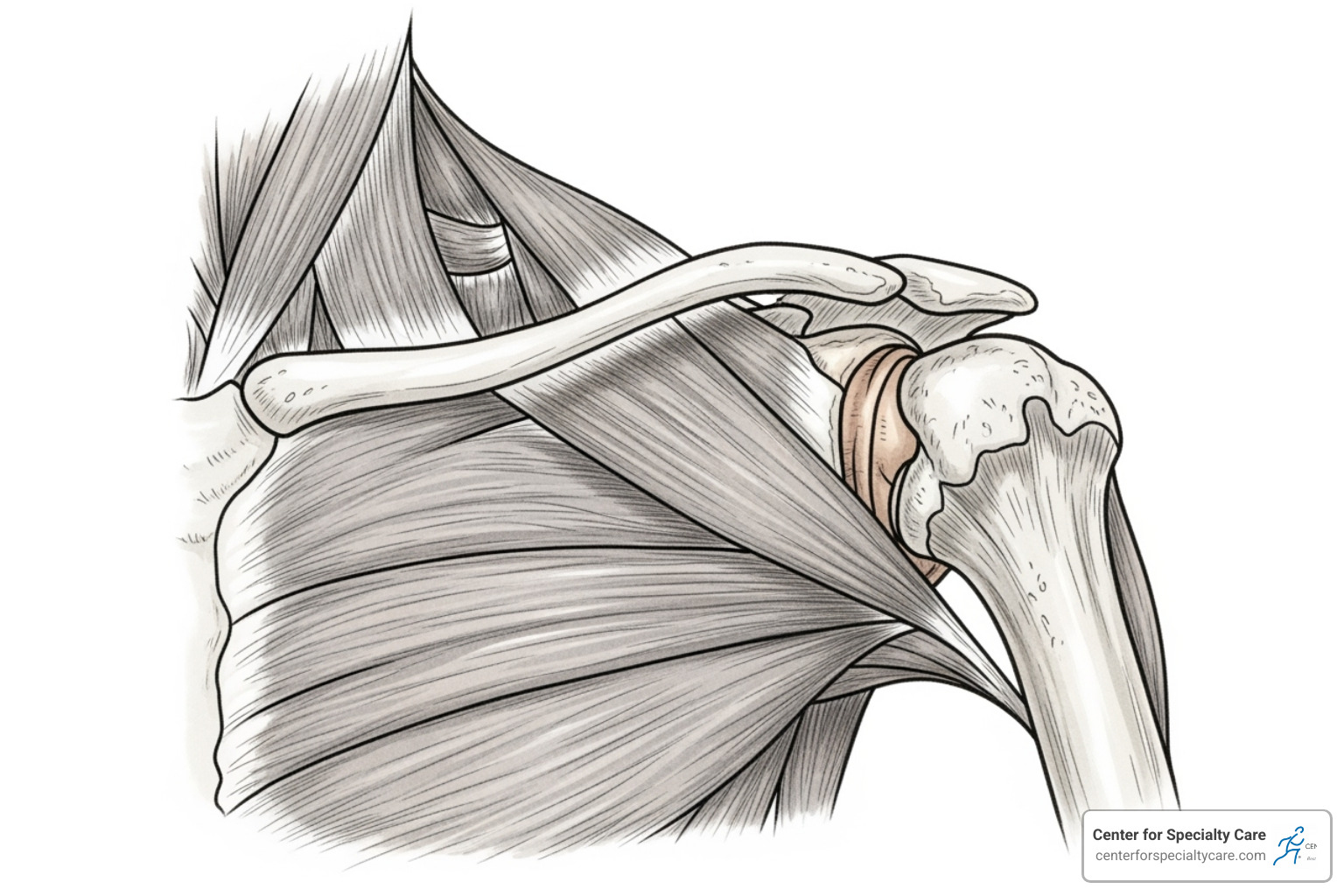
The most obvious answer to “what does a dislocated shoulder look like?” is the dramatic change in its appearance. Instead of a smooth, rounded contour, the shoulder takes on a squared-off appearance, as if flattened. This happens because the deltoid muscle loses the support of the underlying bone.
You may also see a visible lump or bulge where the displaced bone now sits, often near the collarbone or armpit. The acromion bone (the bony tip of your shoulder blade) becomes sharp and prominent. Most people instinctively hold their arm away from their body in a guarded position, supporting it with their other hand to minimize pain. In some cases, a sulcus sign—a noticeable groove below the acromion—may appear, clearly indicating the joint has been disrupted.
Sensory Clues: Beyond What a Dislocated Shoulder Looks Like
While the visual changes are stark, the sensory experience is what drives people to seek help. The sharp, stabbing pain is often described as the worst pain ever experienced. This is coupled with profound weakness in the arm; the muscles simply cannot function with the joint out of place.
Many people feel a pins and needles sensation or numbness traveling down the arm into the fingers, caused by nerve compression from the displaced bone. There’s also an unmistakable feeling of instability, a sense that the joint is loose or “wrong.” Often, the injury is accompanied by a distinct popping sound or sensation as the arm bone leaves its socket. These sensory and visual clues make a dislocated shoulder a frightening but recognizable injury. At Center for Specialty Care, we understand these symptoms and are here to provide expert care.
Dislocated Shoulder vs. Separated Shoulder: Key Differences
Patients often arrive at our clinic convinced they have a dislocated shoulder when it’s actually a separated shoulder, or vice versa. It’s a common point of confusion. While both injuries are painful and can make your shoulder look “wrong,” they affect different parts of your shoulder anatomy.
- A dislocated shoulder occurs when the ball of your upper arm bone (humerus) pops out of the main shoulder joint socket.
- A separated shoulder is an injury to the acromioclavicular (AC) joint, where your collarbone meets your shoulder blade. The ligaments are torn, causing the collarbone to stick up.
Understanding the difference helps you communicate with your doctor. While only a medical professional can provide a definitive diagnosis, you can observe some key differences.
How to Tell Them Apart
| Feature | Dislocated Shoulder (Glenohumeral Dislocation) | Separated Shoulder (AC Joint Separation) |
|---|---|---|
| Location of the Bump | A bulge in the front or back of the shoulder where the humeral head has moved. The shoulder contour looks “squared-off.” | A bump on the very top of the shoulder, at the end of the collarbone. |
| Type of Pain | Intense, sharp, deep pain throughout the entire shoulder joint and upper arm. | Pain localized to the top of the shoulder, directly over the AC joint. |
| Mechanism of Injury | Usually a forceful twisting of the arm or a fall onto an outstretched arm. | Typically a direct blow or fall onto the top of the shoulder. |
| Arm Position | Arm held in an unnatural, guarded position, away from the body. Movement is nearly impossible. | Arm held close to the body. Some movement is often possible, though painful. |
| Overall Appearance | Obvious deformity and loss of the normal rounded shoulder contour. | Less dramatic deformity, primarily a visible bump on top of the shoulder. |
With a dislocated shoulder, the deformity is dramatic, creating the telltale squared-off look, and the pain affects the whole arm. With a separated shoulder, the key sign is a specific bump on top of the shoulder, with more localized pain. A simple test: if you can shrug your shoulders (even painfully), it’s more likely a separation. A true dislocation makes shrugging impossible.
Regardless of the injury, you need immediate medical attention. At Center for Specialty Care, we can provide an accurate diagnosis and the right treatment to get you on the road to recovery.
Common Causes and Immediate First Aid
The shoulder’s incredible range of motion makes it vulnerable to dislocation from significant force. Common causes include:
- Sports injuries: Contact sports like football and hockey, or falls in sports like volleyball and baseball, are frequent culprits.
- Falls: Falling onto an outstretched arm can easily pop the shoulder out of its socket.
- Trauma: Car accidents or other high-impact events can generate the force needed to dislocate a shoulder.
- Recurrent instability: Once a shoulder has been dislocated, the supporting tissues can remain loose, making future dislocations more likely, sometimes from simple movements like reaching or rolling over in bed.
What to Do Immediately (and What Not to Do)
If you suspect a dislocation, knowing what to do in the first few minutes is crucial for preventing further damage. Follow these first aid steps while you await professional care.
- Seek immediate medical attention. This is not an injury that can wait. Go to an emergency room or urgent care facility.
- Do not move the joint. Resist any urge to test its movement, as this can damage nerves, blood vessels, or bones.
- NEVER try to pop it back in yourself. This is extremely dangerous and should only be performed by a trained medical professional.
- Immobilize the arm. Use a sling, or even a towel or shirt, to support the arm in the most comfortable position close to your body.
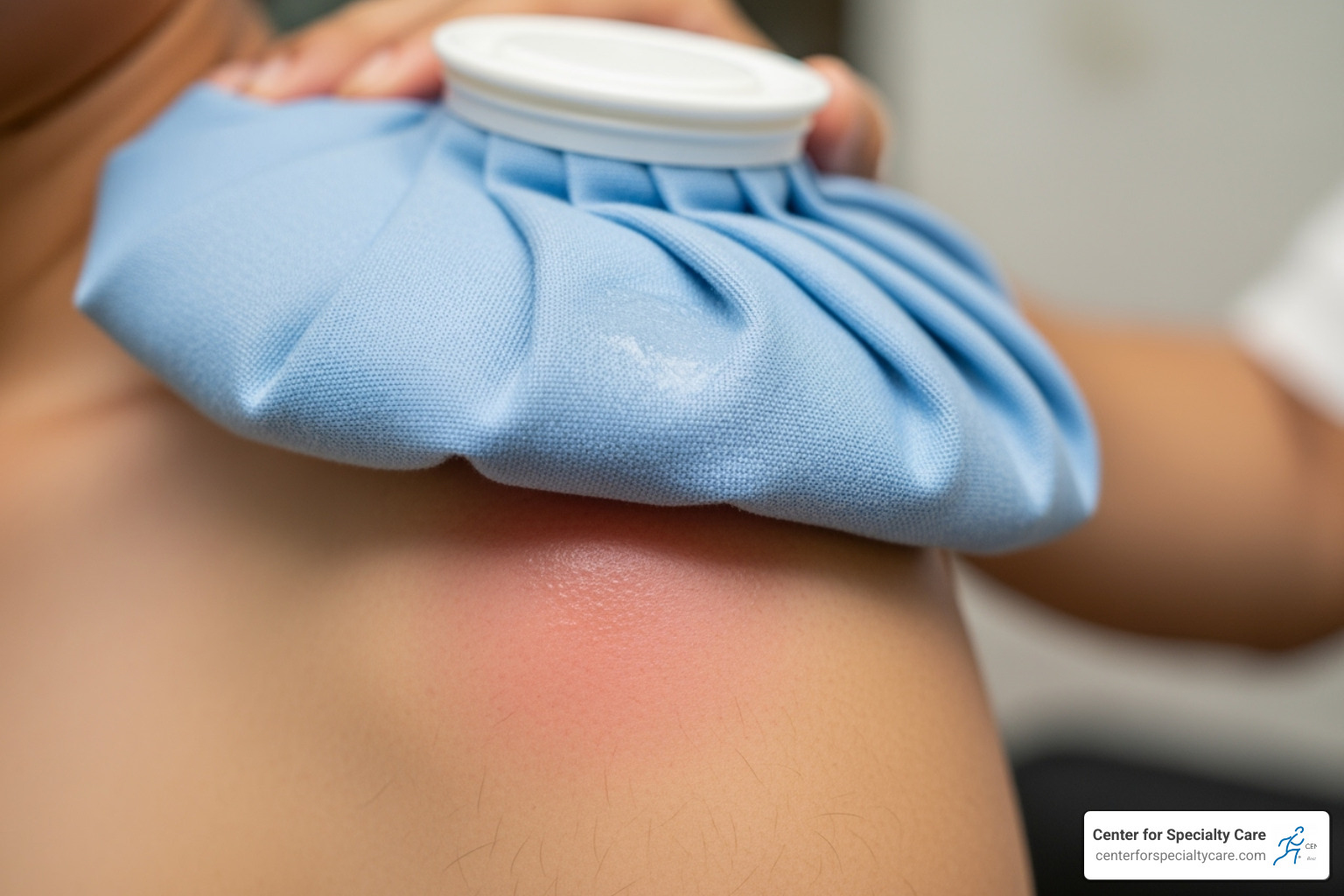
- Apply ice. A cold pack wrapped in a cloth, applied for 20 minutes at a time, can help reduce pain and swelling.
- Take over-the-counter pain relievers. Ibuprofen or acetaminophen can help manage discomfort, but they are not a substitute for professional medical evaluation.
These steps are temporary measures. The real treatment begins once a medical professional can safely relocate your shoulder and assess the injury.
Professional Diagnosis and the Path to Recovery
When you arrive at our facility with a suspected shoulder dislocation, our first priority is to assess your injury and manage your pain. A trained medical professional’s view of what does a dislocated shoulder look like goes beyond the obvious visual signs.
Our diagnostic process includes:
- Physical Examination: We gently assess the shoulder’s appearance, check for tenderness, and evaluate for any nerve or blood vessel damage by testing sensation and checking your pulse.
- X-rays: This is a standard step to confirm the dislocation and rule out any associated fractures, which occur in about 15% of cases.
- MRI or CT Scans: If we suspect significant damage to soft tissues (ligaments, tendons) or complex fractures, an MRI or CT scan can provide more detailed images to guide treatment.
How a Dislocated Shoulder is Treated
Once we have a clear diagnosis, the immediate goal is to return the shoulder to its proper position. This process is called closed reduction.
- Anesthesia or Sedation: To minimize pain and relax the surrounding muscles, we use pain medication, muscle relaxants, or light sedation to make the procedure as comfortable as possible.
- Closed Reduction: Our specialists use gentle, proven maneuvers to guide the humeral head back into its socket. Patients often feel immediate relief once the joint is relocated.
- Immobilization: After reduction, we’ll place your arm in a sling or immobilizer for a few weeks. This stabilizes the joint and allows the stretched or torn tissues to begin healing.
- Pain Management: We will prescribe appropriate medication to manage discomfort during the initial healing phase.
- Physical Therapy: This is a critical part of recovery. A customized physical therapy program is essential for restoring range of motion, strengthening the rotator cuff muscles, and preventing future dislocations.
- Surgery: For some patients, particularly young athletes or those with recurrent dislocations or significant structural damage, surgery may be necessary to repair torn ligaments and stabilize the joint.

At Center for Specialty Care, we offer comprehensive shoulder treatment from diagnosis through recovery. You can find more info about our shoulder treatment options on our website.
The Recovery Timeline and Preventing Re-injury
Recovery from a dislocated shoulder requires patience and can take anywhere from a few weeks to several months. The timeline generally follows these phases:
- Immobilization (1-4 weeks): Your arm rests in a sling to allow initial healing.
- Range of Motion (starts weeks 2-8): Gentle, guided exercises begin to restore movement.
- Strengthening (starts weeks 6-12): Focus shifts to strengthening the rotator cuff and other stabilizing muscles.
- Return to Activity (months 3-6+): A gradual, planned progression back to daily tasks, work, and sports.
Preventing re-injury is crucial, as the risk is high, especially for young athletes. The most important steps are completing your full physical therapy program and avoiding a premature return to strenuous activities. Maintaining shoulder strength and listening to your body are key to long-term stability. Our team creates a personalized recovery plan to help you return to your activities safely and confidently.
Frequently Asked Questions about Shoulder Dislocations
We understand that a dislocated shoulder can bring a lot of questions. Here are answers to some of the most common inquiries.
Can a dislocated shoulder pop back in on its own?
While extremely rare, a shoulder might spontaneously reduce (pop back in) immediately after the injury. However, this is highly uncommon for first-time dislocations due to intense muscle spasms. The vast majority of cases require manual manipulation by a healthcare professional. Never attempt to reduce it yourself, as this can cause severe nerve, blood vessel, or bone damage.
Will I need surgery for a dislocated shoulder?
Not always. Most first-time dislocations are treated successfully without surgery, using closed reduction, immobilization, and physical therapy. Surgery is typically considered for:
- Recurrent Dislocations: If your shoulder dislocates repeatedly despite proper rehab.
- Significant Structural Damage: If the injury caused major tears to ligaments or cartilage (like the labrum) or resulted in bone fractures.
- High-Risk Athletes: For young athletes in contact or overhead sports, surgery may be considered to provide the stability needed to return to play safely.
Our specialists will help you determine the best treatment path for your specific injury and lifestyle.
What are the long-term complications?
With proper treatment, most people recover well. However, potential long-term complications can include:
- Chronic Instability: The most common issue, where the shoulder feels loose and is prone to dislocating again.
- Increased Risk of Arthritis: Recurrent dislocations can wear down cartilage, leading to osteoarthritis over time.
- Rotator Cuff Tears: A dislocation can tear the rotator cuff tendons, especially in patients over 40, causing persistent pain and weakness.
- Nerve Damage: Though rare, severe dislocations can cause lasting numbness or weakness if nerves are permanently damaged.
- Stiffness (Frozen Shoulder): Inadequate rehabilitation can lead to a stiff, painful shoulder with severely restricted movement.
Prompt expert care and diligent physical therapy are the best ways to minimize these risks and ensure a healthy long-term outcome.
Get an Expert Diagnosis for Your Shoulder Injury
Now that you know what does a dislocated shoulder look like, the most important step is getting professional medical care. While recognizing the signs is helpful, only a trained orthopedic specialist can provide the accurate diagnosis and personalized treatment plan needed for a full recovery.
At Center for Specialty Care, we understand how a shoulder injury can disrupt your life. Our team of orthopedic and pain management specialists is dedicated to getting you answers and relief quickly. We offer quick appointment availability across our locations in Fairmont MN, Estherville IA, Buffalo Center IA, and St James MN because we know that waiting only adds to the stress.
Our commitment is to 100% patient satisfaction through personalized care. We create a custom treatment plan that fits your injury, lifestyle, and goals. From initial diagnosis to surgical and non-surgical treatments and rehabilitation, we provide comprehensive, streamlined care under one roof.
Don’t let shoulder pain keep you on the sidelines. The sooner you get proper care, the better your chances for a complete recovery.
Request an appointment for your shoulder pain today and take the first step toward getting back to the activities you love. Our specialists in Minnesota and Iowa are ready to help you regain your mobility and live pain-free.