
When Your Shoulder Won’t Quit: A Guide to Persistent Pain
February 24, 2026
Am I a Candidate for Intracept? Unpacking the Criteria for This Minimally Invasive Surgery
February 26, 2026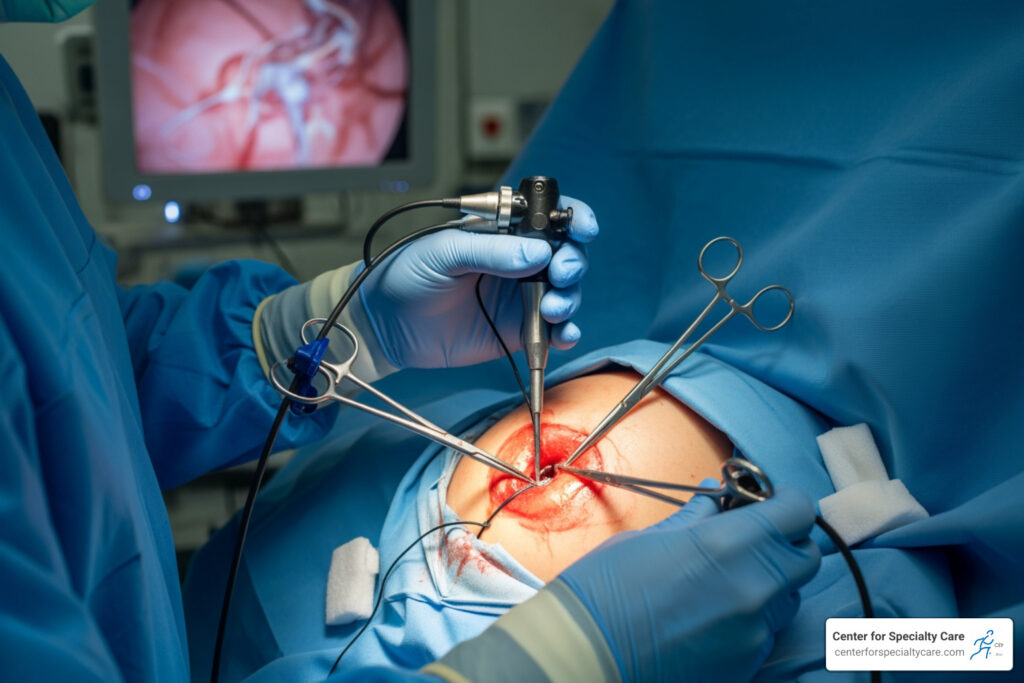
Rotator Cuff Surgery: Complete 2026 Guide
Why Rotator Cuff Surgery Matters for Shoulder Pain Relief
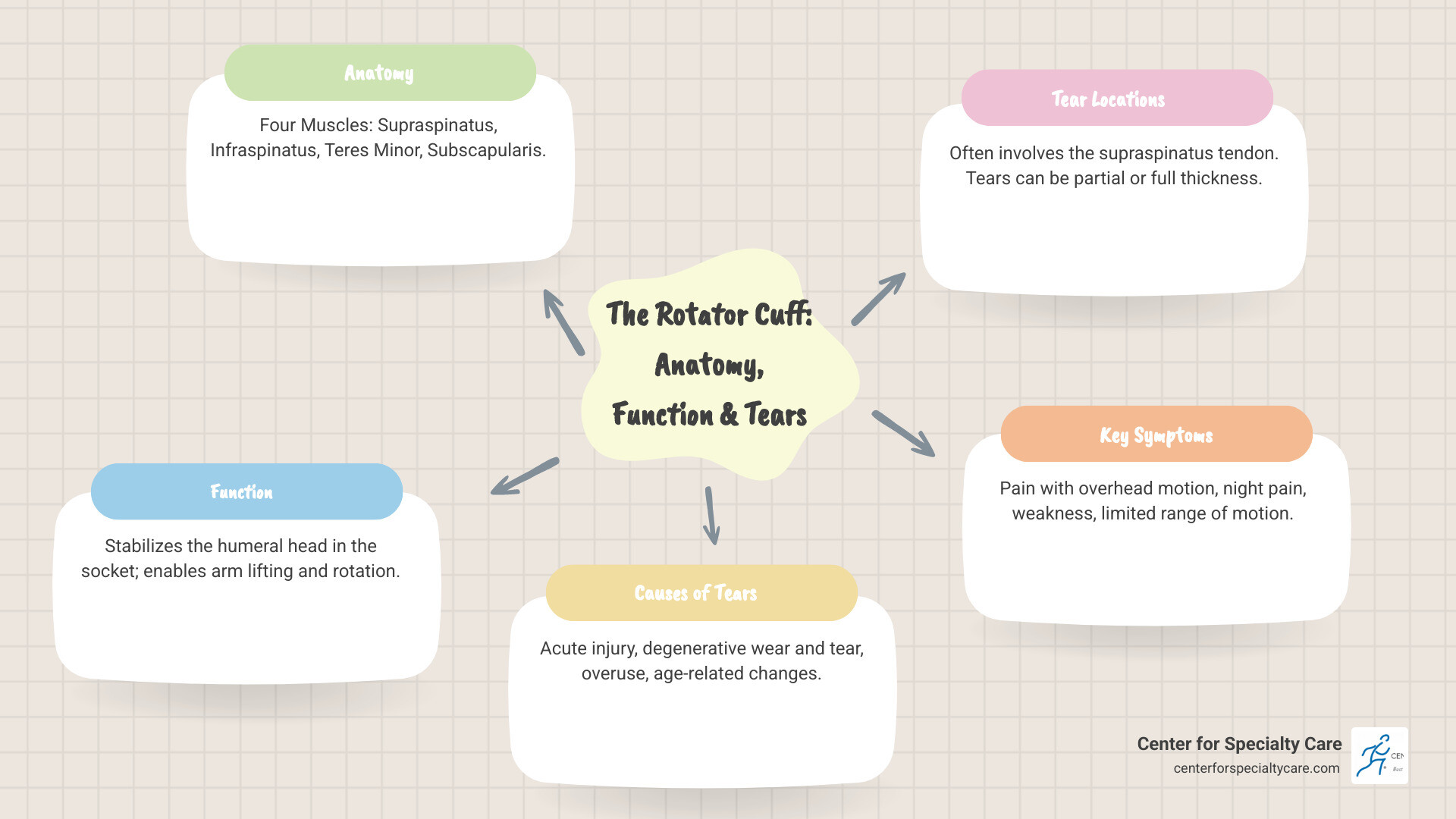
Rotator cuff surgery is a procedure to repair torn tendons in your shoulder, restoring pain-free movement and strength. When the rotator cuff—a group of four muscles and tendons that stabilize your shoulder—is torn, it can cause chronic pain and weakness that disrupts your life.
Quick Answer: Understanding Rotator Cuff Surgery
- What it treats: Torn rotator cuff tendons causing pain, weakness, and limited motion.
- When it’s needed: For large, acute tears or when conservative treatments fail.
- Types of surgery: Arthroscopic (minimally invasive), open, or mini-open repair.
- Recovery time: 4-6 weeks in a sling, with a return to most activities in 3-6 months.
- Success rate: Over 95% for small tears and 70%+ for larger tears.
- Procedure: Typically an outpatient procedure using suture anchors to reattach the tendon to the bone.
While surgery isn’t always the first step, modern arthroscopic techniques have made it a highly successful option for the right candidates. Understanding the procedure, recovery, and when it’s necessary is key to making an informed decision.
I’m Dr. Corey Welchlin, founder of the Center for Specialty Care in Fairmont, Minnesota. For over 30 years, I’ve specialized in helping patients in southern Minnesota and northern Iowa regain pain-free shoulder function through both surgical and non-surgical treatments.
Know your rotator cuff surgery terms:
Understanding Your Shoulder: The Rotator Cuff and Its Injuries
The rotator cuff is a group of four muscles and their tendons that stabilize your shoulder joint, allowing you to lift and rotate your arm. When these tendons tear, it can cause significant pain and disability. Tears can happen suddenly from an injury or develop slowly over time from overuse or age-related wear.
Signs and Symptoms of a Rotator Cuff Tear
Common symptoms that may indicate a rotator cuff tear include:
- A dull, persistent ache deep in the shoulder.
- Pain that worsens at night, often disrupting sleep. Learn how to relieve rotator cuff pain at night.
- Weakness when lifting or rotating your arm.
- Difficulty with overhead movements or reaching behind your back.
- A popping or clicking sensation during movement. If you have shoulder clicking and pain, it’s best to get it evaluated.
- Limited range of motion.
If you’re experiencing persistent shoulder discomfort, we encourage you to explore more info about shoulder pain.
The Diagnostic Process: How a Tear is Confirmed
An accurate diagnosis is the first step toward effective treatment. The process typically includes:
- Physical Examination: We will assess your shoulder’s range of motion, strength, and tenderness, and discuss your medical history and symptoms.
- Imaging Tests: To confirm the diagnosis and determine the severity of the tear, we may use X-rays, ultrasound, or an MRI. An MRI provides the most detailed images of the soft tissues.
At our clinic, we offer comprehensive imaging services, including MRI, Bone Density, X-Ray, and Nerve Conduction studies, to ensure a convenient and efficient diagnosis.
The Path to a Surgical Decision
Deciding on rotator cuff surgery involves careful consideration, and we always explore non-surgical options first.
Non-Surgical Treatments
For many patients, especially those with partial tears, conservative treatments are highly effective. These include:
- Rest and Activity Modification: Avoiding activities that aggravate the shoulder.
- Physical Therapy: A customized program to improve range of motion and strengthen surrounding muscles. See our shoulder treatment physical therapy tips.
- Medications: Anti-inflammatory drugs (NSAIDs) to manage pain.
- Steroid Injections: To reduce inflammation and pain, allowing for more effective physical therapy. Learn about types of injections for shoulder pain.
When Surgery is Recommended
We consider rotator cuff surgery when conservative treatments fail, the tear causes significant weakness, or for large, acute tears from a recent injury. While some partial tears may heal, most full-thickness tears require surgery to reattach the tendon to the bone. You can learn more about whether a torn rotator cuff can heal on its own?.
Special Case: Reverse Shoulder Replacement
For patients with severe, irreparable rotator cuff damage, often combined with arthritis (cuff tear arthropathy), a traditional repair may not be possible. In these cases, a reverse shoulder replacement is an excellent option. This procedure reverses the ball-and-socket structure of the shoulder, allowing the powerful deltoid muscle to lift the arm instead of the damaged rotator cuff. This can dramatically reduce pain and restore function for patients with complex shoulder problems. We encourage you to explore an explanation of reverse shoulder replacement for a visual overview of this innovative procedure.
A Deep Dive into Rotator Cuff Surgery
When rotator cuff surgery is recommended, it’s typically a highly effective procedure designed to alleviate pain and restore your shoulder’s function.
Benefits of Surgery
The primary goals and benefits of rotator cuff surgery include:
- Pain Relief: Eliminating chronic shoulder pain.
- Restored Function: Regaining the ability to lift, reach, and rotate your arm.
- Improved Stability: Repairing the torn tendons to stabilize the shoulder joint.
- Preventing Further Damage: Stopping the tear from getting larger and preventing related issues like muscle atrophy or arthritis.
We are committed to providing exceptional care with consistently positive outcomes. You can learn more about our surgical services.
Types of Surgical Repair
The method your surgeon chooses for your rotator cuff surgery depends on several factors, including the size and location of your tear, the quality of your tendon tissue, and your individual anatomy. Here’s a comparison of the main approaches:
| Surgical Approach | Description –
| Arthroscopic Repair | Minimally Invasive: Uses a small camera and instruments inserted through tiny incisions. Benefits: Less post-operative pain, lower infection risk, and often a faster initial recovery. This is the most common technique used today. –
| Open Repair | Traditional Approach: Involves a larger incision over the shoulder. When it’s used: Typically reserved for very large, complex, or revision tears that require extensive reconstruction. It is more invasive than arthroscopic repair. –
| Mini-Open Repair | Hybrid Technique: Combines arthroscopy to assess the joint with a small, open incision (3-5 cm) to perform the repair. This avoids detaching the deltoid muscle, offering a less invasive option than a full open repair for certain types of tears. For more details, see the American Academy of Orthopaedic Surgeons (AAOS). |
Understanding Your Shoulder: The Rotator Cuff and Its Injuries
Our shoulder is an incredibly complex and mobile joint, allowing us to perform a vast range of movements, from reaching for a glass to throwing a baseball. At the heart of this mobility and stability is the rotator cuff.
The rotator cuff is a group of four muscles and their tendons—the supraspinatus, infraspinatus, subscapularis, and teres minor. These muscles originate from the shoulder blade and attach to the humerus (upper arm bone). Their primary function is to stabilize the head of the humerus within the glenoid socket of the shoulder blade, providing both strength and control for arm movement, especially when lifting and rotating the arm. Think of them as the unsung heroes that keep your arm firmly in place while allowing it to perform intricate maneuvers.
Unfortunately, these vital tendons are also prone to injury. Rotator cuff tears can occur in several ways:
- Acute Injury: A sudden, traumatic event, such as a fall onto an outstretched arm, lifting something too heavy with a jerking motion, or a direct blow to the shoulder, can cause an immediate tear. For these types of tears, especially if complete, early intervention is often key for the best outcomes.
- Degenerative Wear and Tear: This is the most common cause, particularly as we age. Over time, the tendons can naturally fray and weaken due to repetitive motions, reduced blood supply, and bone spurs that rub against the tendons. This degradation makes them more susceptible to tearing, even from minor stresses. People over 40 are especially vulnerable to these types of injuries.
- Overuse: Athletes involved in overhead sports (like baseball, tennis, or swimming) and individuals whose jobs require frequent overhead lifting (such as construction workers or hairdressers) can experience chronic stress on their rotator cuff tendons. This repetitive strain can lead to inflammation (tendinitis) and eventually tears.
Regardless of the cause, a torn rotator cuff can significantly impact your quality of life, bringing with it a host of uncomfortable symptoms. If you’re experiencing persistent shoulder discomfort, we encourage you to explore more info about shoulder pain.
Signs and Symptoms of a Rotator Cuff Tear
Recognizing the signs of a rotator cuff tear is the first step toward finding relief. While not everyone with a tear will experience all symptoms, common indicators include:
- Dull Ache: This is often the most prevalent symptom. You might feel a persistent, dull ache deep in your shoulder, which can radiate down your arm.
- Pain at Night: Many of our patients report that their shoulder pain worsens at night, especially when lying on the affected side. This can severely disrupt sleep patterns. If you’re struggling with this, we have some great tips on how to relieve rotator cuff pain at night.
- Arm Weakness: You might notice a significant weakness when trying to lift or rotate your arm. Simple tasks like reaching for an object on a high shelf, combing your hair, or even dressing can become challenging.
- Difficulty Lifting Arm: Raising your arm overhead, or lifting objects away from your body, often exacerbates the pain and reveals the extent of weakness.
- Popping or Clicking Sounds: Some individuals experience popping or clicking sensations within the shoulder joint, sometimes accompanied by pain, especially during certain movements. If you’re experiencing shoulder clicking and pain, it’s worth getting it checked out.
- Limited Range of Motion: Over time, your ability to move your arm through its full range of motion may decrease, making everyday activities difficult.
These symptoms can range from mild to severe and may develop gradually or appear suddenly after an injury. If you notice any of these signs, particularly if they persist or worsen, it’s wise to seek professional medical advice.
The Diagnostic Process: How a Tear is Confirmed
When you visit us with shoulder pain, our goal is to accurately diagnose the problem so we can tailor the most effective treatment plan for you. The diagnostic process typically involves:
- Physical Examination: We will carefully examine your shoulder, assessing its range of motion, strength, and tenderness. We’ll perform specific tests to evaluate the integrity of your rotator cuff tendons and rule out other shoulder conditions. We’ll also discuss your medical history, including any previous injuries, activities, and the nature of your pain.
-
Imaging Tests: To confirm a rotator cuff tear and assess its severity, we often rely on advanced imaging.
- X-rays: While X-rays don’t show a tear, they can help us identify any bone spurs or signs of arthritis that might be contributing to your pain or rubbing against the rotator cuff.
- Ultrasound: This can provide real-time images of the tendons and muscles, allowing us to see tears and inflammation.
- MRI (Magnetic Resonance Imaging): This is often the most reliable imaging technique for diagnosing rotator cuff tears. An MRI provides detailed images of soft tissues, clearly showing the size and location of a tear, as well as any associated muscle atrophy or fatty infiltration.
- At our clinic, we offer comprehensive imaging services, including MRI, Bone Density, X-Ray, Nerve Conduct studies, right here, making your diagnostic journey convenient and efficient.
-
Differentiating from other conditions: It’s important to remember that other shoulder issues can cause similar symptoms. For example, biceps tendinitis often causes pain in the front of the shoulder, while acromioclavicular (AC) joint injuries typically result in pain on top of the shoulder. Our thorough examination helps us pinpoint the exact source of your discomfort.
The Path to a Surgical Decision
Deciding on rotator cuff surgery involves careful consideration, and we always explore non-surgical options first.
Non-Surgical Treatments
For many patients, especially those with partial tears, conservative treatments are highly effective. These include:
- Rest and Activity Modification: Avoiding activities that aggravate the shoulder.
- Physical Therapy: A customized program to improve range of motion and strengthen surrounding muscles. See our shoulder treatment physical therapy tips.
- Medications: Anti-inflammatory drugs (NSAIDs) to manage pain.
- Steroid Injections: To reduce inflammation and pain, allowing for more effective physical therapy. Learn about types of injections for shoulder pain.
When Surgery is Recommended
We consider rotator cuff surgery when conservative treatments fail, the tear causes significant weakness, or for large, acute tears from a recent injury. While some partial tears may heal, most full-thickness tears require surgery to reattach the tendon to the bone. You can learn more about whether a torn rotator cuff can heal on its own?.
Special Case: Reverse Shoulder Replacement
For patients with severe, irreparable rotator cuff damage, often combined with arthritis (cuff tear arthropathy), a traditional repair may not be possible. In these cases, a reverse shoulder replacement is an excellent option. This procedure reverses the ball-and-socket structure of the shoulder, allowing the powerful deltoid muscle to lift the arm instead of the damaged rotator cuff. This can dramatically reduce pain and restore function for patients with complex shoulder problems. We encourage you to explore an explanation of reverse shoulder replacement for a visual overview of this innovative procedure.
A Deep Dive into Rotator Cuff Surgery
When rotator cuff surgery is recommended, it’s typically a highly effective procedure designed to alleviate pain and restore your shoulder’s function.
Benefits of Surgery
The primary goals and benefits of rotator cuff surgery include:
- Pain Relief: Eliminating chronic shoulder pain.
- Restored Function: Regaining the ability to lift, reach, and rotate your arm.
- Improved Stability: Repairing the torn tendons to stabilize the shoulder joint.
- Preventing Further Damage: Stopping the tear from getting larger and preventing related issues like muscle atrophy or arthritis.
We are committed to providing exceptional care with consistently positive outcomes. You can learn more about our surgical services.
Types of Surgical Repair
The method your surgeon chooses for your rotator cuff surgery depends on several factors, including the size and location of your tear, the quality of your tendon tissue, and your individual anatomy. Here’s a comparison of the main approaches:
| Surgical Approach | Description –
| Arthroscopic Repair | Minimally Invasive: Uses a small camera and instruments inserted through tiny incisions. Benefits: Less post-operative pain, lower infection risk, and often a faster initial recovery. This is the most common technique used today. –
| Open Repair | Traditional Approach: Involves a larger incision over the shoulder. When it’s used: Typically reserved for very large, complex, or revision tears that require extensive reconstruction. It is more invasive than arthroscopic repair. –
| Mini-Open Repair | Hybrid Technique: Combines arthroscopy to assess the joint with a small, open incision (3-5 cm) to perform the repair. This avoids detaching the deltoid muscle, offering a less invasive option than a full open repair for certain types of tears. For more details, see the American Academy of Orthopaedic Surgeons (AAOS). |
The Rotator Cuff and Its Function
The rotator cuff is a group of four muscles and their tendons that surround the shoulder joint. Its primary functions are to stabilize the ball-and-socket joint and to allow for a wide range of arm movements, such as lifting and rotating. It provides both the power and control for most shoulder activities.
Common Causes of Rotator Cuff Tears
Rotator cuff tears can result from a single traumatic event or from gradual degeneration over time. The main causes include:
- Acute Injury: A fall on an outstretched arm or lifting a heavy object improperly can cause a sudden tear.
- Degenerative Wear and Tear: This is the most common cause, as tendons can weaken with age due to repetitive stress, reduced blood supply, or the formation of bone spurs that rub on the tendons.
- Overuse: Repetitive overhead motions from sports or work can lead to chronic inflammation and tearing.
Understanding the cause helps determine the best course of treatment, whether it’s conservative management or considering rotator cuff surgery.
Symptoms of a Rotator Cuff Tear
Recognizing the signs of a rotator cuff tear is the first step toward finding relief. Common indicators include:
- A dull, persistent ache deep in the shoulder.
- Pain that worsens at night, often disrupting sleep. Learn how to relieve rotator cuff pain at night.
- Weakness when lifting or rotating your arm.
- Difficulty with overhead movements or reaching behind your back.
- A popping or clicking sensation during movement. If you’re experiencing shoulder clicking and pain, it’s worth getting it checked out.
- Limited range of motion.
These symptoms can develop gradually or appear suddenly. If you notice any of these signs, particularly if they persist or worsen, it’s wise to seek professional medical advice.
When Is Rotator Cuff Surgery Recommended?
While non-surgical treatments are often successful, rotator cuff surgery becomes the recommended course of action in specific situations. Generally, we consider surgery if:
- Failure of Conservative Treatment: Your symptoms have persisted for 6 months or more despite consistent non-surgical management.
- Significant Weakness: The tear causes severe weakness in your arm, making it difficult to perform daily activities.
- Acute, Large Tears: If you’ve suffered a sudden, complete tear, surgery within a few weeks of the injury often yields the best results, as delaying can make the repair more challenging.
- Need for Full Function: If your profession or lifestyle demands full shoulder strength and mobility that conservative treatments haven’t restored.
For full-thickness tears, surgical repair is often needed to reattach the tendon to the bone, as they rarely heal on their own. Learn more by reading: will a torn rotator cuff heal on its own?
A Deep Dive into Rotator Cuff Surgery
When rotator cuff surgery is recommended, it’s typically a highly effective procedure designed to alleviate pain and restore your shoulder’s function.
Benefits of Surgery
The primary goals and benefits of rotator cuff surgery include:
- Pain Relief: Eliminating chronic shoulder pain.
- Restored Function: Regaining the ability to lift, reach, and rotate your arm.
- Improved Stability: Repairing the torn tendons to stabilize the shoulder joint.
- Preventing Further Damage: Stopping the tear from getting larger and preventing related issues like muscle atrophy or arthritis.
We are committed to providing exceptional care with consistently positive outcomes. You can learn more about our surgical services.
Types of Surgical Repair
The method your surgeon chooses for your rotator cuff surgery depends on several factors, including the size and location of your tear, the quality of your tendon tissue, and your individual anatomy. Here’s a comparison of the main approaches:
| Surgical Approach | Description –
| Arthroscopic Repair | Minimally Invasive: Uses a small camera and instruments inserted through tiny incisions. Benefits: Less post-operative pain, lower infection risk, and often a faster initial recovery. This is the most common technique used today. –
| Open Repair | Traditional Approach: Involves a larger incision over the shoulder. When it’s used: Typically reserved for very large, complex, or revision tears that require extensive reconstruction. It is more invasive than arthroscopic repair. –
| Mini-Open Repair | Hybrid Technique: Combines arthroscopy to assess the joint with a small, open incision (3-5 cm) to perform the repair. This avoids detaching the deltoid muscle, offering a less invasive option than a full open repair for certain types of tears. For more details, see the American Academy of Orthopaedic Surgeons (AAOS). |
The Road to Recovery: Life After Your Operation
The journey after your rotator cuff surgery is just as important as the procedure itself. A structured recovery is essential for the best possible outcome.
Immediate Post-Op Care
Most rotator cuff surgeries are outpatient procedures. Your initial care will involve:
- Pain Management: We use nerve blocks and prescribe medication to manage discomfort. Our Pain Management services are available to ensure your comfort.
- Sling Immobilization: You will wear a sling for 4 to 6 weeks to protect the healing tendon. It is crucial to wear this as instructed.
- Incision Care: You’ll receive instructions on keeping your surgical incisions clean and dry.
The Rehabilitation Timeline
Recovery is a phased process guided by our Physical Therapy team.
- Phase 1: Passive Motion (0-6 weeks): The focus is on protecting the repair while a therapist performs gentle motion exercises.
- Phase 2: Active Motion (6-12 weeks): After the sling is removed, you will begin to move your arm on your own to restore flexibility.
- Phase 3: Strengthening (3-6+ months): This phase focuses on rebuilding strength. Most patients return to daily activities within 3-4 months, with a return to sports taking 4-6 months.
Effectiveness and Long-Term Outcomes
Rotator cuff surgery is highly effective, with success rates often exceeding 95% for smaller tears. Success depends on the tear size, tissue quality, and your commitment to rehabilitation. Most patients experience significant pain relief and can return to their desired activities.
Frequently Asked Questions about Rotator Cuff Repair
It’s natural to have questions when considering rotator cuff surgery. Here are some of the most common inquiries we receive:
How successful is rotator cuff surgery?
Rotator cuff surgery is highly successful, with rates over 95% for small tears and 70%+ for larger ones. Success depends on the tear size, tissue quality, and your commitment to the post-operative rehabilitation program. The goal is to relieve pain and restore function.
How painful is the recovery?
While some pain is expected, we manage it with nerve blocks and medication. The most significant discomfort usually subsides within a few weeks. Minimally invasive arthroscopic surgery generally leads to a more comfortable recovery than traditional open surgery.
Can a rotator cuff tear get worse if you wait for surgery?
Yes. A tear can enlarge over time, and the attached muscle can weaken or atrophy. This can make a successful repair more difficult. For tears from a sudden injury, surgery within a few weeks often yields the best results.
Your Next Steps Toward a Pain-Free Shoulder
Navigating shoulder pain and the potential need for rotator cuff surgery can feel overwhelming, but you don’t have to do it alone. Our team at Center for Specialty Care in Fairmont, Minnesota, and Estherville, Iowa, is here to guide you through every step of the process.
Making an informed decision about your health is paramount. We believe in transparent communication, ensuring you fully understand your diagnosis, all available treatment options (both surgical and non-surgical), and what to expect from each path.
The importance of a skilled surgeon cannot be overstated. With decades of experience in arthroscopic and joint-replacement surgery, Dr. Welchlin and our team are committed to providing you with the highest standard of care, utilizing advanced, minimally invasive techniques to optimize your recovery.
We are proud of our commitment to personalized care, ensuring that your treatment plan is custom to your unique needs, lifestyle, and recovery goals. Our aim is 100% patient satisfaction, delivered with compassion and a focus on getting you back to the activities you love.
If shoulder pain is limiting your life, don’t wait. We offer quick appointment availability and are ready to provide the expert care you deserve. Learn more about our comprehensive shoulder care and take the first step toward a pain-free shoulder today.