
Is Intracept a Success? A Deep Dive into Its Efficacy for Back Pain
October 15, 2025
The Full Spectrum: What to Expect from Comprehensive Pain Treatment
October 17, 2025
Rotator cuff pain relief: Effective 2025 Solutions
Why Rotator Cuff Pain Relief Matters for Your Quality of Life
Rotator cuff pain relief is a critical concern for the millions of Americans who experience shoulder problems annually. If a dull ache deep in your shoulder, difficulty reaching overhead, or pain that worsens at night is impacting your life, you’re not alone in seeking effective solutions.
Quick rotator cuff pain relief options include:
- Immediate relief – Apply ice for 15-20 minutes, rest the shoulder, take NSAIDs like ibuprofen
- Gentle exercises – Pendulum swings, doorway stretches, resistance band rotations
- Sleep adjustments – Sleep on your back or unaffected side with pillow support
- Professional care – Physical therapy, injections, or surgical options when needed
- Activity modification – Avoid overhead lifting and repetitive motions
The good news? About 8 out of 10 people with partial tears get better with non-surgical treatments. Whether you’re dealing with an acute injury or degenerative wear, there are proven strategies to help you regain pain-free shoulder function.
Simple activities like getting dressed or lifting everyday objects shouldn’t cause pain. Yet for many, rotator cuff injuries make these basic movements a daily challenge.
I’m Dr. Corey Welchlin, a board-certified orthopedic surgeon with over three decades of experience specializing in rotator cuff pain relief through both surgical and non-surgical approaches. As the founder of the Center for Specialty Care in Fairmont, Minnesota, I’ve helped thousands of patients return to pain-free shoulder function using minimally invasive techniques and comprehensive treatment plans.
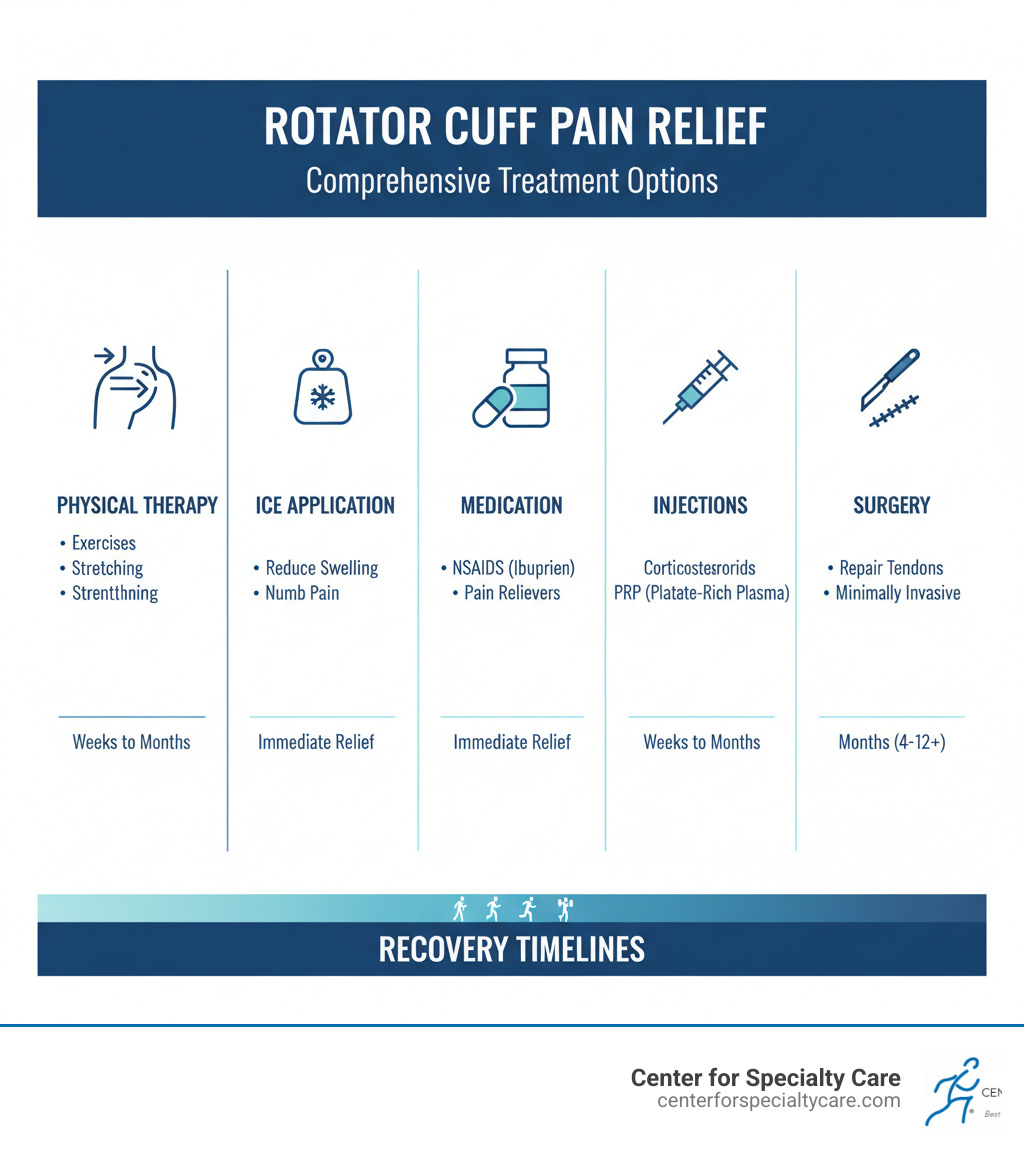
Rotator cuff pain relief definitions:
Understanding Your Shoulder Pain: Causes, Symptoms, and Diagnosis
Your shoulder is the most mobile joint in your body. This remarkable range of motion comes from the rotator cuff, a group of four muscles and their tendons (SITS: Supraspinatus, Infraspinatus, Teres Minor, and Subscapularis) that keep the joint stable. However, this mobility also makes it vulnerable to injury, which is why so many people need rotator cuff pain relief.
Injuries can be acute, happening suddenly from a fall or impact, or due to degenerative wear and tear that builds up over time. Repetitive overhead motions, the natural aging process, and bone spurs that rub against the tendons are common culprits. Sometimes, early warning signs appear as shoulder clicking and pain, or problems arise from events like shoulder pain after a car accident.
Common Symptoms of a Rotator Cuff Injury
Recognizing the symptoms is the first step toward getting the rotator cuff pain relief you need. Common signs include:
- A dull, deep ache in the shoulder, often radiating down the arm.
- Pain that worsens at night, especially when lying on the affected side.
- Arm weakness that makes lifting everyday objects difficult.
- Difficulty reaching behind your back for simple tasks like tucking in a shirt.
- Clicking or popping sounds when you move your shoulder, which you can learn more about in our guide to why your shoulder is popping.
- A reduced range of motion, where your arm feels restricted or painful when lifted.
These symptoms can turn daily tasks into sources of frustration, making proper treatment essential for your quality of life.
How a Specialist Diagnoses Rotator Cuff Pain
At Center for Specialty Care, we take a personalized approach to diagnosing your shoulder problem. We start with a comprehensive physical exam to assess your strength and range of motion, identify tender spots, and discuss your symptoms.
To get a clear picture of what’s happening inside your shoulder, we may recommend imaging tests.
- X-rays help us see bone structures and can reveal issues like bone spurs or arthritis.
- Ultrasound allows us to examine soft tissues like tendons in real-time as your shoulder moves.
- An MRI (Magnetic Resonance Imaging) provides the most detailed images of all shoulder structures and is our most comprehensive tool for assessing a tear.
Our goal is to accurately diagnose the cause of your pain to create a custom treatment plan. Getting a thorough initial assessment from a shoulder specialist is the crucial first step on your journey toward relief.
At-Home and Non-Surgical Rotator Cuff Pain Relief
The good news is that rotator cuff pain relief doesn’t always require surgery. In fact, about 8 out of 10 people with partial tears find significant improvement through conservative treatments alone. The foundation of early treatment is rest and activity modification. This means temporarily stepping away from activities that trigger pain, like overhead reaching or heavy lifting, and making small lifestyle adjustments, such as improving posture. For those who lift weights, learning how to get rid of shoulder pain from lifting weights involves smart modifications.
Immediate At-Home Remedies for Rotator Cuff Pain Relief
When shoulder pain strikes, several home remedies can provide relief.

The R.I.C.E. method is a highly recommended first-aid approach. Rest your shoulder. Apply Ice for 15-20 minutes at a time to reduce pain and inflammation. Gentle Compression with an elastic bandage can offer support, and Elevation while sleeping (propping your upper body up) can reduce swelling. Over-the-counter NSAIDs like ibuprofen or naproxen can also help manage pain and inflammation.
Knowing when to use heat versus ice is key:
| Treatment | When to Use It | Benefits |
|---|---|---|
| Ice | First 24-48 hours after injury, when there’s swelling or sharp pain | Reduces inflammation, numbs pain, controls swelling |
| Heat | After initial inflammation subsides, for chronic stiffness or before gentle exercises | Relaxes muscles, increases blood flow, reduces stiffness |
For more detailed information, check out our guide on does heat help tendonitis?
Best Exercises for Rotator Cuff Pain
Once acute pain subsides, gentle exercises are key for long-term rotator cuff pain relief. The goal is to restore mobility and gradually rebuild strength.
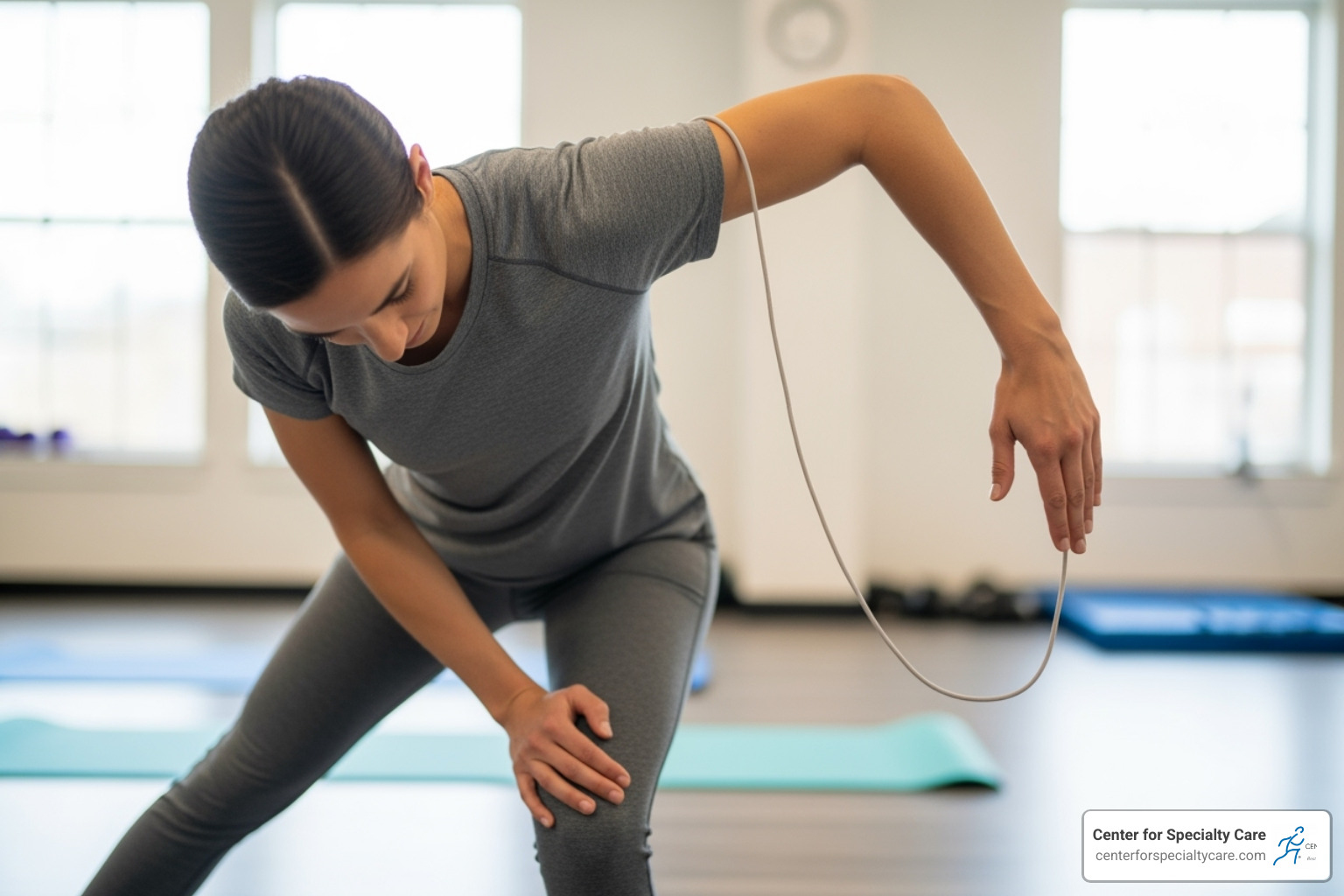
- Pendulum swings: Lean forward, let your arm hang, and use your body to create small, gentle circles. Perform 10 circles in each direction daily.
- Doorway stretch: Stand in a doorway with forearms on the frame. Step forward gently until you feel a stretch across your chest. Hold for 15-20 seconds.
- External/Internal rotation: Use a resistance band to strengthen rotation muscles. For external rotation, pull the band away from your body. For internal rotation, pull it across your body. Keep your elbow tucked at your side for both.
- Shoulder blade squeezes: Sit or stand tall and gently pull your shoulder blades back and down. Hold for 5 seconds.
Research has shown that specific yoga-based maneuvers for rotator cuff pain can also provide significant relief. For a personalized program, consider shoulder treatment with physical therapy.
Exercises to Avoid with a Rotator Cuff Injury
Just as important as knowing what to do is knowing what not to do. To prevent further injury, avoid these movements:
- Heavy overhead lifting (e.g., military press)
- Upright rows
- Behind-the-neck exercises
- High-impact or jerking motions
- Heavy bench presses
- Aggressive stretching
The golden rule is simple: if any movement causes sharp or increasing pain, stop immediately.
Advanced Non-Surgical and Surgical Treatment Options
When home remedies aren’t providing the rotator cuff pain relief you need, it’s time to explore more advanced options. At Center for Specialty Care, we create personalized treatment plans, as many people find relief through advanced non-surgical treatments, often avoiding surgery entirely. Our approach to finding the best therapy for shoulder pain starts with listening to your experience.
Advanced Non-Surgical Options for Rotator Cuff Pain Relief
- Physical therapy: A skilled therapist will create a custom program to restore flexibility, strengthen supporting muscles, and regain range of motion safely. It’s like personal training for your injured shoulder.
- Corticosteroid injections: These powerful anti-inflammatory medications are delivered directly into the shoulder joint, providing significant short-term relief from acute pain. We use them judiciously as part of a broader treatment plan. Learn more about the types of injections for shoulder pain relief.
- Regenerative medicine: These treatments harness your body’s own healing power. Platelet-Rich Plasma (PRP) therapy uses concentrated healing platelets from your blood, while Bone Marrow Aspirate Concentrate (BMAC) uses stem cells from your bone marrow to promote tissue repair. Research on treatments like Prolotherapy for rotator cuff pain continues to show promise.
When Is Surgery Recommended?
Surgery is a significant step, but sometimes it’s the clearest path to recovery. We may recommend surgery when:
- Conservative treatments fail after 6 to 12 months of dedicated effort.
- You have a large or complete tear, especially from a sudden injury.
- You experience significant weakness or loss of function that impacts your daily life.

Whenever possible, we use minimally invasive arthroscopic repair. For more complex cases, options include open tendon repair, tendon transfer, or reverse shoulder replacement for massive tears with severe arthritis. Understanding that a torn rotator cuff will not heal on its own helps many patients decide to proceed with surgery when needed.
Recovery After Rotator Cuff Surgery
Recovery requires patience and commitment. You’ll typically wear a sling for several weeks to protect the repair. Physical therapy is crucial for recovery, starting with passive motion and gradually progressing to active exercises. While you may regain useful function in 4 to 6 months, full recovery can take up to a year. We guide your gradual return to activities to ensure a safe and successful outcome.
Our experienced surgical team at Center for Specialty Care is with you every step of the way. You can learn more about finding the right expert for your shoulder care here. We serve patients throughout Fairmont MN, Estherville IA, Buffalo Center IA, and St James MN, providing comprehensive support for the best possible outcome.
Frequently Asked Questions about Rotator Cuff Pain
At Center for Specialty Care, we hear many of the same questions from patients seeking relief. Here are answers to the most common ones.
Why is rotator cuff pain worse at night?
This incredibly common issue happens for a few reasons. When you lie down, you may put direct pressure on the injured tendons. Without gravity’s help, inflammatory fluids can pool in the joint, increasing discomfort. Reduced blood flow in certain positions and fewer daytime distractions also make the pain more noticeable at night. Following specific strategies for how to relieve rotator cuff pain at night can make a real difference.
What is the best sleeping position for rotator cuff pain?
Finding a comfortable position is key to healing. The goal is to take all pressure off the injured joint.
- Sleeping on your back is usually the best option. Placing a small pillow under your affected arm can provide extra support and comfort.
- If you must sleep on your side, lie on your unaffected side and hug a pillow to your chest to prevent your injured arm from rolling forward.
- Some people find significant rotator cuff pain relief by sleeping in a reclined position, such as in a recliner or adjustable bed.
The one absolute rule: Never sleep directly on your injured shoulder.
Can a rotator cuff tear heal on its own?
This is a crucial question, and the answer depends entirely on the injury.
Minor strains and tendinitis can absolutely heal on their own with proper care, including rest, ice, and gentle exercises. Many people with partial tears also see significant improvement without surgery.
Complete tears, however, are a different story. When a tendon is fully torn and pulled away from the bone, it cannot reattach itself. Think of it like a cut rope—the ends won’t reconnect without help. While the symptoms of a full tear can sometimes be managed non-surgically, the tear itself will not heal.
The most important thing is getting a proper diagnosis to understand your specific situation. You can learn more about whether a torn rotator cuff will heal on its own and what factors influence healing. An early evaluation almost always leads to better outcomes and faster rotator cuff pain relief.
Take the Next Step Towards a Pain-Free Shoulder
Living with rotator cuff pain doesn’t have to be your new normal. We’ve explored numerous pathways to rotator cuff pain relief, and the encouraging reality is that non-surgical options are highly effective for the vast majority of people. About 8 out of 10 individuals with partial tears find significant improvement without ever needing surgery.
However, the foundation of successful treatment is a proper diagnosis. Without understanding what’s causing your pain, it’s difficult to choose the most effective path. At Center for Specialty Care, Dr. Corey Welchlin and our team develop personalized care plans because no two shoulder injuries are alike.
We know that when you’re in pain, waiting for an appointment isn’t an option. That’s why we offer quick appointment availability across our locations in Fairmont MN, Estherville IA, Buffalo Center IA, and St James MN. Our commitment to 100% patient satisfaction means we’re partnering with you for long-term success.
Don’t let shoulder pain continue to limit your life. The sooner you begin your journey toward rotator cuff pain relief, the sooner you can get back to the activities that bring you joy.
Learn more about our advanced shoulder treatments and take that important first step. Your pain-free shoulder is waiting – let’s work together to make it a reality.