
Your Guide to the Coolest Ice Packs on the Market
October 14, 2025
Beyond the Ache: Comprehensive Strategies for Rotator Cuff Pain Relief
October 16, 2025
What is the success rate of the Intracept procedure: #1!
Understanding the Success Rate of the Intracept Procedure for Back Pain Relief
What is the success rate of the intracept procedure is a critical question for anyone considering this treatment for chronic back pain. Clinical trials show impressive success rates for the Intracept procedure:
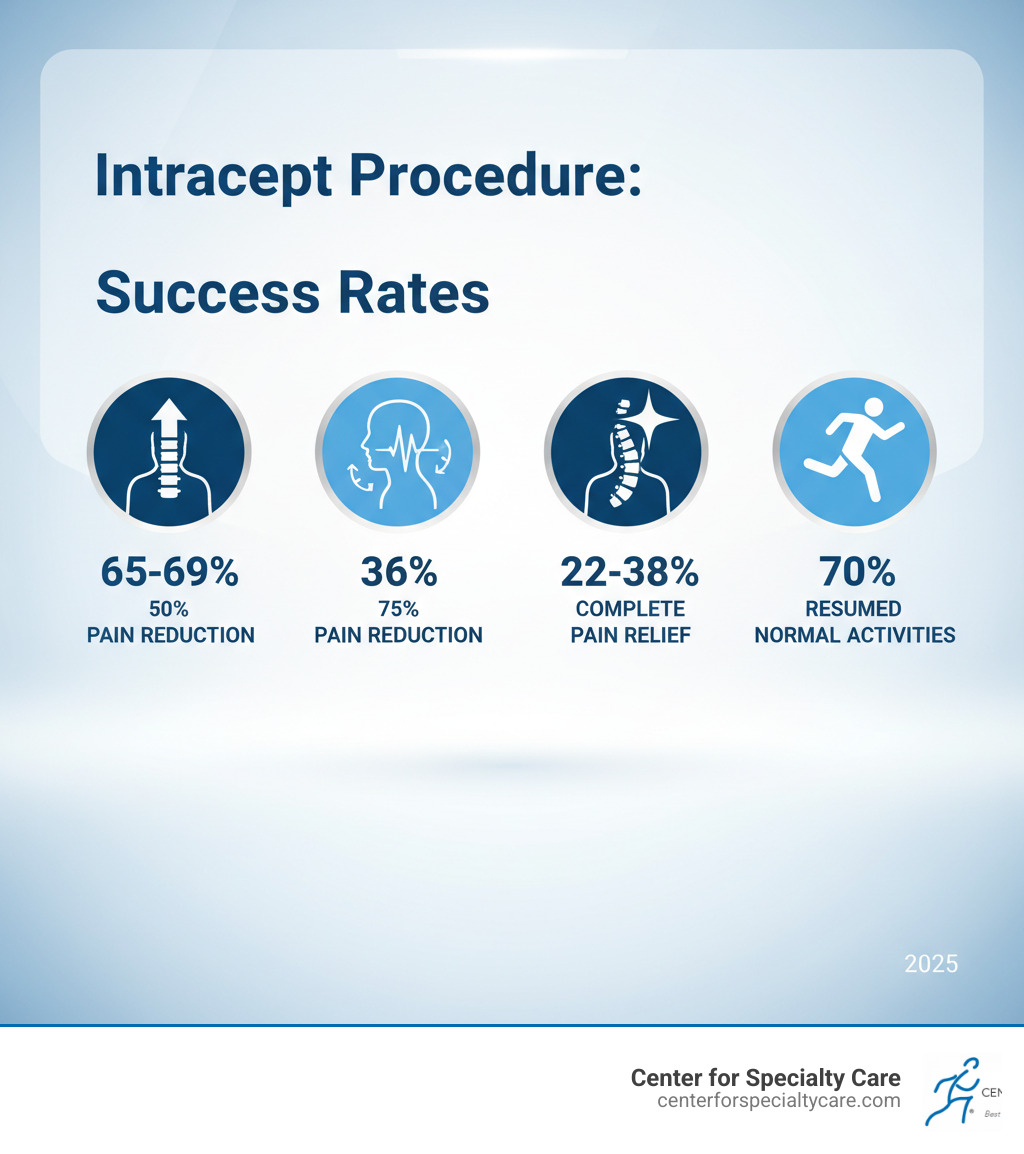
- 65-69% of patients experience at least 50% pain reduction
- 36% of patients achieve at least 75% pain reduction
- 22-38% of patients report complete pain relief
- Nearly 70% of patients can resume their previous activity levels
- Long-term effectiveness is maintained for up to 5 years in approximately 66% of patients
The Intracept procedure is a breakthrough for vertebrogenic pain—chronic back pain from damaged vertebral endplates. This minimally invasive treatment targets the basivertebral nerve, using radiofrequency energy to block pain signals at their source.
When conservative treatments like physical therapy and injections fail, the Intracept procedure offers hope. Clinical data shows superior outcomes compared to standard care, making it a game-changing option for the right candidates.
I’m Dr. Corey Welchlin, a board-certified orthopedic surgeon with over three decades of experience. I’ve seen how understanding what is the success rate of the intracept procedure helps patients make informed decisions. At our Center for Specialty Care, we specialize in advanced minimally invasive treatments to help patients reclaim their quality of life.
Simple guide to what is the success rate of the intracept procedure:
- does medicare cover intracept procedure
- intracept cpt code
- what is intracept procedure for back pain
Understanding Vertebrogenic Pain and the Intracept Solution
Chronic low back pain affects 30 million Americans. While herniated discs and pinched nerves are common culprits, another source often overlooked is vertebrogenic pain.
Your spine’s vertebrae are separated by discs. The surfaces where they meet, called vertebral endplates, can become a significant source of pain when damaged or irritated.
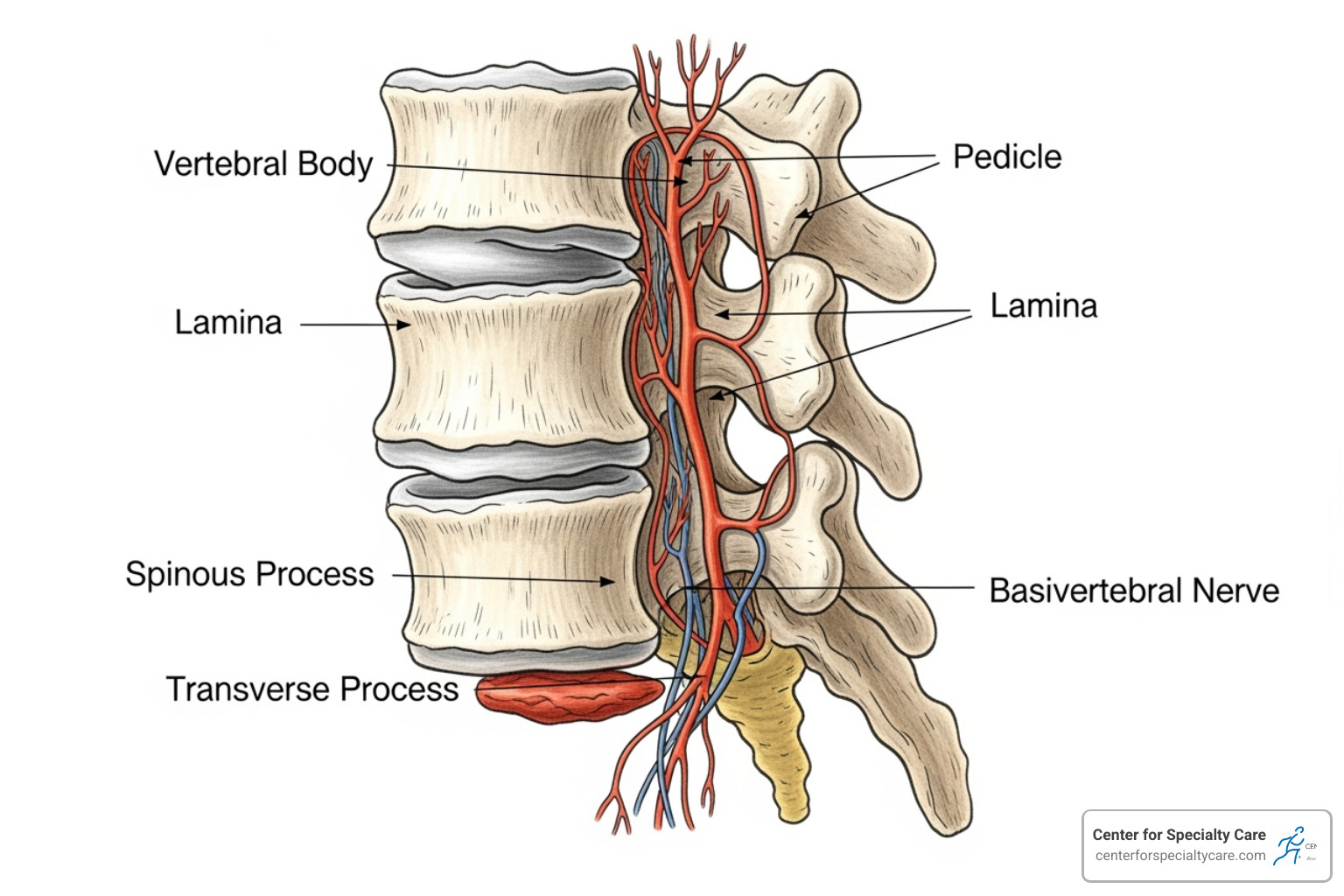
Tiny basivertebral nerves (BVN) run through each vertebra. When endplates are damaged, these nerves send constant pain signals to the brain.
Vertebrogenic pain presents as a deep, aching pain in the middle of the lower back, often worsening with sitting, bending, or activity. Research suggests this affects one in six Americans with chronic low back pain.
Once vertebrogenic pain is identified, we can target it with the Intracept procedure. This minimally invasive treatment uses radiofrequency ablation to turn off the overactive basivertebral nerves, stopping pain signals at the source. At our center, understanding your specific pain source is our starting point.
What is the Intracept Procedure?
The Intracept procedure is the first and only FDA-approved therapy for chronic vertebrogenic low back pain. Approved in 2016, it was a breakthrough for patients who had exhausted other options.
During this outpatient procedure, your surgeon makes a tiny 3-5 millimeter incision. Using X-ray guidance, they insert a thin tube through the vertebra to reach the basivertebral nerve.
A specialized probe then delivers radiofrequency energy (controlled heat) to the nerve. This desensitizes the nerve, preventing it from sending pain signals.
A key benefit is that Intracept involves no implants, leaving the spine’s natural structure intact. The process takes two hours or less, and you go home the same day. As a minimally invasive procedure, it offers a faster recovery than traditional surgery. You can learn more about the specific details of the Intracept Procedure.
Who is a Candidate for Intracept?
We know how frustrating it is to live with pain after trying everything. The Intracept procedure isn’t for everyone, but for the right person, it can be life-changing. You may be a good candidate if you meet the following criteria:
- You have chronic low back pain that has lasted at least six months and significantly impacts your life.
- You have tried conservative treatments for at least six months (like physical therapy, medications, or injections) without getting enough relief.
- Your MRI shows specific findings called Modic Type 1 or Type 2 changes. These are key indicators of vertebral endplate damage that this procedure targets.
- Your pain is primarily in the middle of your lower back and worsens when you sit or bend forward.
- You are in good overall health, without active infections or other contraindications.
If this sounds like your situation, our specialists can provide a personalized assessment to determine if Intracept is your path to relief. Our comprehensive orthopedic care is designed to help you make the best decision for your unique situation.
What is the Success Rate of the Intracept Procedure According to Clinical Data?
When considering this treatment, understanding what is the success rate of the Intracept procedure is crucial. The good news is that this treatment is supported by extensive clinical research involving thousands of patients over many years.
The clinical data consistently shows impressive, life-changing outcomes. These results represent real people returning to their favorite activities, reducing their reliance on pain medication, and reclaiming their quality of life. The consistency of these results across multiple independent clinical trials gives us confidence that the outcomes are reliable.

Significant Pain Reduction: How Many Patients Find Relief?
Does the Intracept procedure actually reduce pain? For most patients, the answer is a resounding yes. Clinical trials show substantial relief, often beyond what patients experience with other treatments.
-
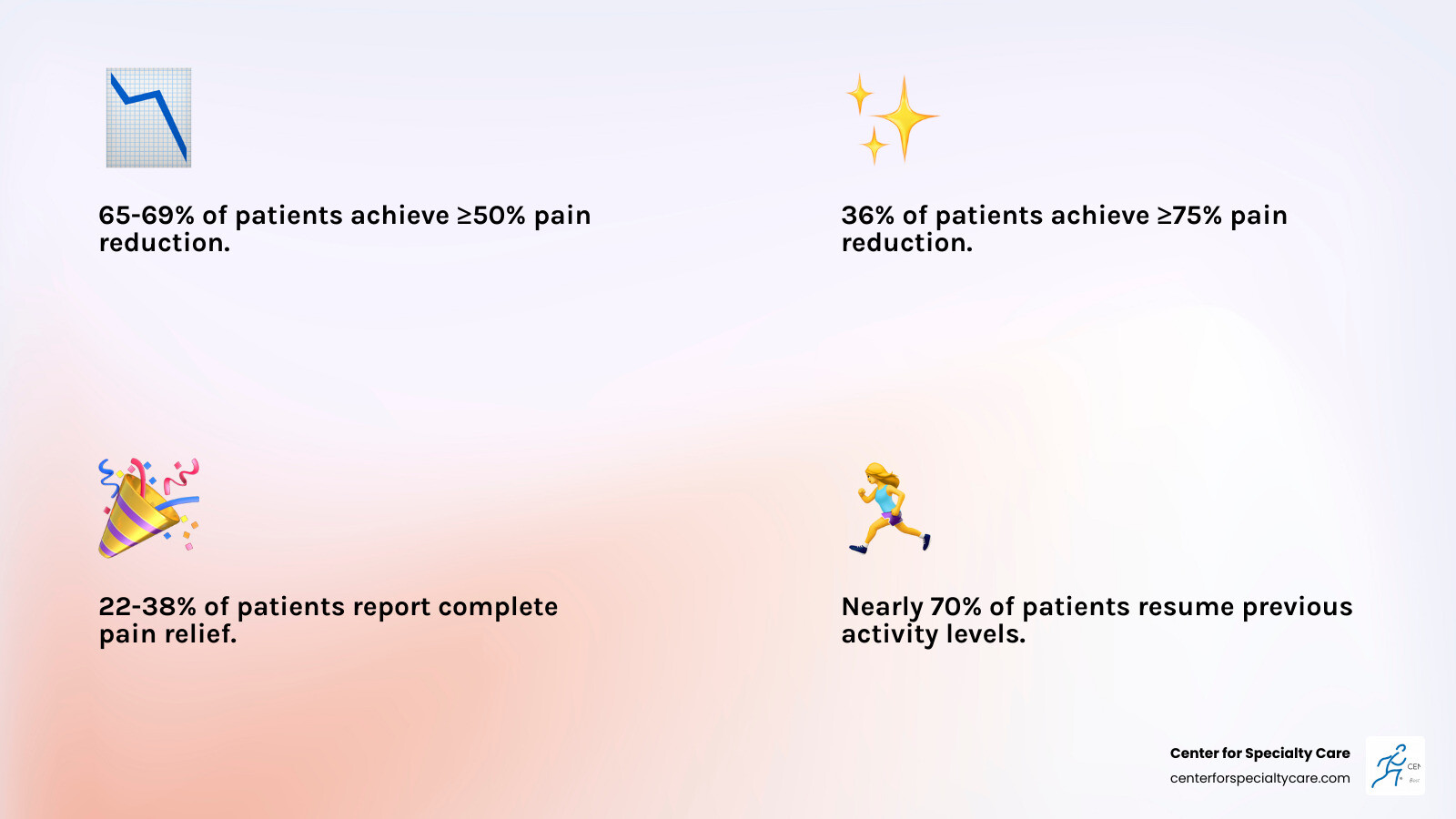
Dramatic Pain Reduction: Clinical studies show that 65-69% of patients achieve at least 50% pain reduction. This level of improvement can be the difference between struggling through daily activities and enjoying life again.
-
Profound Relief: Research shows 36.2% of patients experience at least 75% pain reduction, an improvement that often allows a return to work, hobbies, and family activities.
-
Complete Pain Relief: Remarkably, 22-38% of patients experience 100% pain relief. While not guaranteed, these numbers show complete pain elimination is a realistic possibility for many.
This pain reduction is not temporary, becoming apparent within weeks to months and lasting for years. For detailed evidence, you can review the Scientific research on BVN ablation outcomes.
Functional Improvement: Regaining Quality of Life
Beyond pain scores, what truly matters is getting back to life. The Intracept procedure helps people regain the ability to work, play, and engage with family without being held back by pain.
The Oswestry Disability Index (ODI) measures how back pain interferes with daily activities. With Intracept, 70-89% of patients experience a ≥15-point ODI improvement, a clinically meaningful reduction in disability. In everyday terms, this means nearly 70% of patients can resume the activity level they enjoyed before their back pain started.
A significant success indicator is reduced opioid dependence. The Intracept procedure helps break the cycle of chronic opioid use, with studies showing substantial reductions in opioid use—up to 73% at five years post-procedure. This means freedom from the side effects and dependency concerns of chronic opioid use. Our pain management team understands how important this is. More info about pain management options.
Long-Term Durability: What is the success rate of the Intracept procedure after 5 years?
A compelling aspect of what is the success rate of the Intracept procedure is its lasting effectiveness. Unlike temporary treatments, Intracept is designed for long-term relief, which is proven by five-year follow-up data.
Nearly 66% of patients maintain 50% or greater pain reduction at the five-year mark. For most, the initial relief is durable. Even more impressively, 34% of patients maintain complete pain resolution five years later.
Functional improvements are also durable. Five-year studies show that 77% of patients maintain clinically meaningful functional improvement (as measured by the ODI). This means choosing Intracept is an investment in a pain-free future. For a comprehensive analysis, see this A systematic review of BVN ablation effectiveness.
How Does Intracept Compare to Other Treatments?
If you’ve tried physical therapy, medications, and injections for chronic back pain without success, it can be exhausting. Fortunately, when we compare what is the success rate of the Intracept procedure to traditional treatments, the results are encouraging.

Clinical trials show superior outcomes for Intracept when compared head-to-head with sham procedures and standard conservative care. Intracept patients were 1.25 to 1.38 times more likely to succeed than sham-procedure patients and 2.32 to 4.16 times more likely to find relief than patients receiving only standard care.
The key difference is the treatment approach. Traditional care focuses on managing symptoms with exercises, medications, and injections, which often provide only temporary relief. In contrast, the Intracept procedure targets and eliminates the pain at its source by ablating the basivertebral nerve.
| Feature | Conservative Care | Intracept Procedure |
|---|---|---|
| Pain Reduction | Variable, often temporary | 65-69% achieve >50% reduction, 22-38% complete relief |
| Recovery Time | Ongoing management required | 2-3 days to resume activities, 1-2 weeks full recovery |
| Long-Term Results | May require continuous treatment | Proven effective up to 5 years |
| Invasiveness | Non-invasive to minimally invasive | Single minimally invasive procedure |
| Opioid Use | May reduce but often ongoing | Up to 73% reduction at 5 years |
Intracept is an appealing non-surgical alternative that requires no implants and has a short recovery. It doesn’t limit future treatment options if it doesn’t provide the desired relief.
Key Factors for a Successful Outcome
While success rates are high, they aren’t universal. Several factors are crucial for a successful outcome:
- Proper patient selection: The procedure targets only vertebrogenic pain, so a careful evaluation is necessary to ensure it’s the right fit for your specific condition.
- Modic changes on MRI: These specific changes in the vertebral endplates are a non-negotiable requirement to confirm that Intracept is an appropriate treatment.
- Physician skill and experience: Precise electrode placement is key to success. Our specialists at the Center for Specialty Care are extensively trained in this procedure. As one physician noted, “For the right patient with lower back pain, the Intracept procedure is life changing… it has delivered the most dramatic results for my patients.”
- Accurate procedural technique: Success depends on precisely targeting the basivertebral nerve, which requires a skilled and experienced medical team.
- No other major pain sources: Our thorough evaluation helps identify any other conditions before we recommend the procedure. More info about our services.
Is the Intracept Procedure Safe?
Safety is a primary concern, and the Intracept procedure has an excellent safety profile. The serious complication rate is less than 0.3%, which is remarkably low for any medical procedure.
Most patients experience only mild, temporary side effects, such as soreness at the incision site, which typically resolves within a few days. As an outpatient procedure, you go home the same day, avoiding the risks associated with hospital stays.
FDA clearance is based on rigorous data demonstrating both safety and effectiveness. We ensure our patients understand all potential risks and benefits. For additional information, the Cleveland Clinic provides a comprehensive overview: An overview from Cleveland Clinic.
Frequently Asked Questions about Intracept’s Efficacy
We understand that considering a new procedure like Intracept comes with many questions. Here are clear, honest answers about what is the success rate of the intracept procedure and what to expect.

How soon will I feel relief after the Intracept procedure?
The timeline is different for everyone. Some patients notice immediate improvement, but for most, the benefits unfold gradually. It takes time for the nerve to be fully desensitized and for the body to heal.
Most patients experience significant pain reduction within six weeks. The full effect, however, usually occurs between two weeks and three months, with some continuing to improve for up to a year. Patience is key, as temporary soreness at the incision site is a normal part of healing.
What if the Intracept procedure doesn’t work for me?
While success rates are high, no procedure is 100% effective. The key takeaway is that the Intracept procedure doesn’t limit your future options. Because it’s minimally invasive and doesn’t alter your spine’s structure or use implants, all other treatment pathways remain open.
If you don’t get the expected relief, we will conduct a thorough re-evaluation. The key is having the correct diagnosis from the start, which is why our initial evaluation is so comprehensive. Our commitment is to work with you to find the right solution for your chronic pain.
What is the recovery time for the Intracept procedure?
The recovery for the Intracept procedure is remarkably quick compared to traditional spine surgery. The procedure is done on an outpatient basis, and we recommend taking it easy for about 48 hours afterward.
Most patients can return to work and regular activities within 2-3 days, though those with physically demanding jobs may need a few extra days. Full recovery usually takes one to two weeks, during which you should avoid strenuous activity. Soreness can be managed with over-the-counter pain relievers.
Television host Carson Daly shared his positive experience with Intracept after 20 years of chronic back pain. His story of quick recovery and significant relief resonates with many of our patients and highlights the procedure’s potential.
Take the Next Step Towards a Pain-Free Life
If you’ve been struggling with chronic back pain and wondering what is the success rate of the intracept procedure, the clinical evidence speaks volumes. With 65-69% of patients experiencing at least 50% pain reduction and nearly 70% able to resume their previous activity levels, the Intracept procedure represents a genuine breakthrough for vertebrogenic pain sufferers.
The numbers tell a compelling story, but behind every statistic is a real person who has reclaimed their life. Whether it’s being able to play with grandchildren again, return to gardening, or simply sleep through the night without pain, the Intracept procedure has proven its ability to deliver life-changing results that last up to five years.
What makes this treatment particularly encouraging is that it offers hope when other treatments have failed. If you’ve tried months of physical therapy, countless medications, and various injections without meaningful relief, you’re not out of options. The Intracept procedure specifically targets the source of vertebrogenic pain—the basivertebral nerve—providing a targeted solution rather than just masking symptoms.
At the Center for Specialty Care, we understand that every patient’s journey with chronic pain is unique. That’s why our specialists take the time to conduct thorough evaluations, including detailed MRI analysis to identify those crucial Modic changes that indicate you’re a good candidate for this procedure. Our commitment to 100% patient satisfaction means we won’t recommend Intracept unless we truly believe it’s the right fit for your specific condition.
The beauty of this minimally invasive procedure is that it doesn’t burn bridges. If you’re concerned about trying something new, the Intracept procedure doesn’t involve permanent implants and doesn’t limit your future treatment options. It’s a targeted approach that can provide the relief you’ve been seeking without the risks and recovery time associated with major spinal surgery.
Ready to find out if you could be among the majority of patients who find significant relief? Our experienced team is here to guide you through every step of the process, from initial consultation through recovery and beyond. Request an appointment to discuss the Intracept Procedure today and take the first step toward reclaiming your quality of life.