
The Intracept Procedure: A Minimally Invasive Path to Back Pain Relief
September 11, 2025
Move Better, Pop Less: Physical Therapy for Shoulder Sounds
September 15, 2025
Rotator cuff tears and shoulder pain at night: Beat Pain 2025
Why Shoulder Pain Gets Worse When You Try to Sleep
Rotator cuff tears and shoulder pain at night disrupt sleep for millions. If you’re struggling with this frustrating cycle, you’re not alone; research shows only 11% of patients with rotator cuff tears report normal sleep.
Quick Relief Options for Nighttime Shoulder Pain:
- Sleep on your back with a pillow under your injured arm
- Apply ice for 15-20 minutes before bed to reduce inflammation
- Try gentle stretching an hour before sleep
- Take over-the-counter pain relievers like ibuprofen or acetaminophen
- Sleep in a recliner or use a wedge pillow if lying flat worsens pain
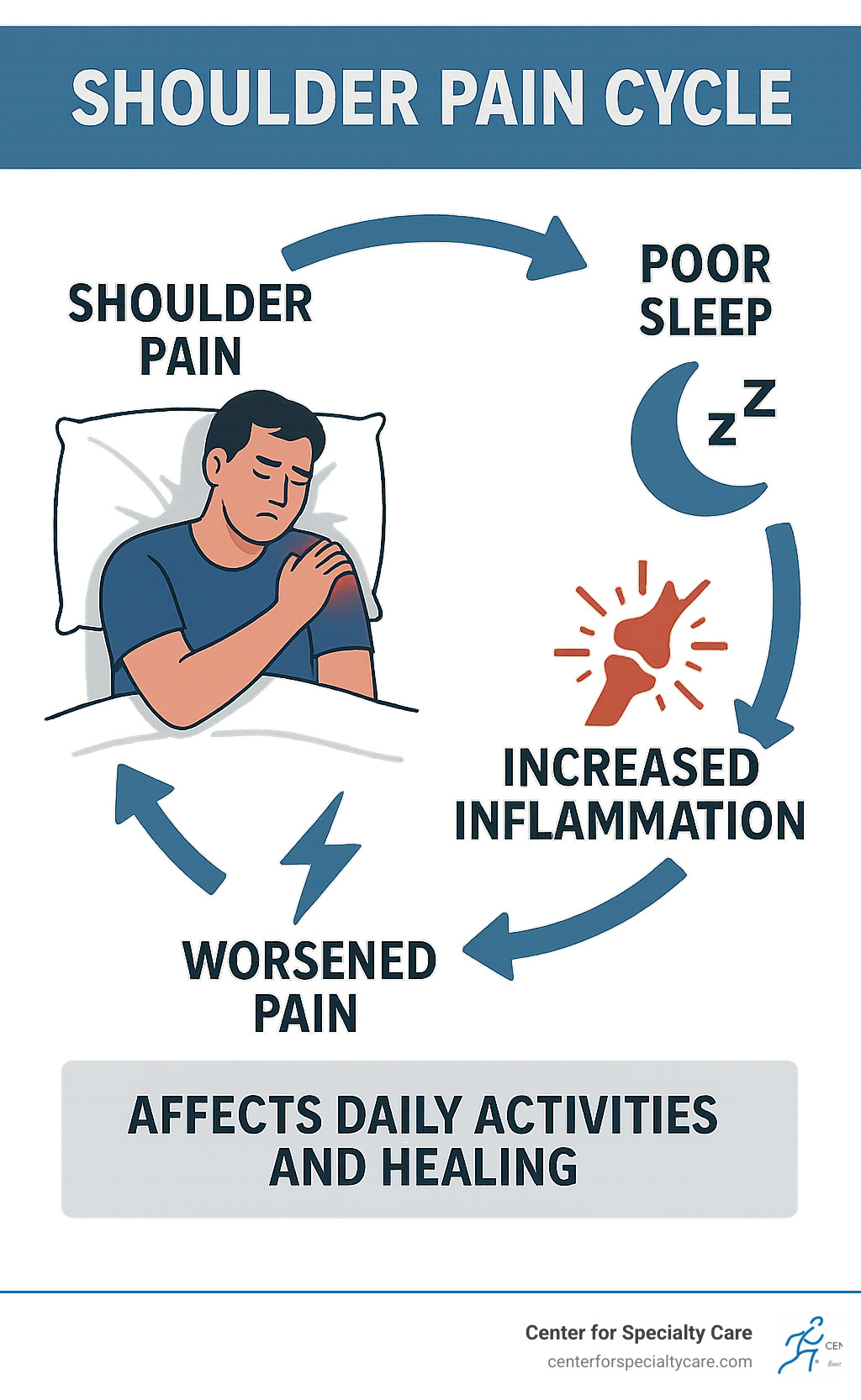
When the rotator cuff—the muscles and tendons stabilizing your shoulder—is injured, pain often worsens at night. This is due to factors like reduced blood flow, inflammatory processes, and pressure from your sleeping position. The pain is often a dull, deep ache that makes finding a comfortable position nearly impossible. This creates a vicious cycle: poor sleep slows healing, which leads to more pain and worse sleep.
The good news is that proven strategies can break this cycle.
I’m Dr. Corey Welchlin, a board-certified orthopedic surgeon and founder of the Center for Specialty Care. With over three decades of experience, I’ve helped countless patients overcome nighttime shoulder pain with both surgical and non-surgical treatments, changing their pain levels and sleep quality.
The Science Behind Why Your Shoulder Pain Worsens at Night
If your shoulder pain spikes the moment you lie down, you’re not imagining it. There are scientific reasons why rotator cuff tears and shoulder pain at night are so common. When the rotator cuff tissues are injured, they become highly sensitive. As noted by the Mayo Clinic, this often leads to a dull ache that intensifies at night for several key reasons:
- Inflammation: During the day, movement helps circulate inflammatory fluids. At night, when you’re still, these fluids can pool in the shoulder joint, increasing pain.
- Cortisol Levels: Your body’s natural anti-inflammatory hormone, cortisol, is at its lowest level at night, making you feel inflammation more intensely.
- Gravity and Pressure: Lying down puts direct pressure on the shoulder joint. The weight of your arm and body can compress irritated tissues, especially if you sleep on the injured side.
- Decreased Blood Flow: While you sleep, your heart rate and metabolism slow, reducing blood flow to the shoulder. This can lead to stiffness and pain.
- Inactivity and Stiffness: Lying still for hours allows the joint to stiffen. Even small movements in your sleep can then trigger sharp pain.
By understanding these factors, you can make small changes to your sleep habits for significant pain relief.
Adjusting Your Sleeping Position for Pain Relief
Changing your sleep position is one of the fastest ways to reduce nighttime shoulder pain. While it may take a few nights to adjust, the relief can be significant.

- Sleeping on your back: This neutral position avoids direct pressure. For added relief, place a small pillow under your injured arm’s elbow to reduce tension on the rotator cuff.
- The reclined position: Sleeping in a recliner or with a wedge pillow at a 45-degree angle uses gravity to reduce compression on the shoulder.
- Sleeping on your unaffected side: If you’re a side sleeper, lie on your unaffected side. Hug a pillow to support your injured arm and place another between your knees to align your spine.
Strategic pillow placement is key to keeping your shoulder stable and preventing painful movements during the night.
The Role of Your Mattress and Pillow
Your mattress and pillow are foundational to good sleep and play a key role in managing rotator cuff tears and shoulder pain at night.
- Mattress Firmness: A mattress should be medium-firm to support your body’s natural curves without creating pressure points. Too soft or too firm can misalign your spine and worsen shoulder pain.
- Pillow Selection: Pillow choice is also personal. Back sleepers often need a medium-height pillow, while side sleepers usually require a thicker one to maintain proper neck and shoulder alignment.
- Neck Alignment: Proper neck alignment is crucial, as neck tension can radiate to the shoulder. A supportive pillow reduces strain on the entire shoulder complex.
Investing in a good mattress and pillow creates an optimal healing environment and can mean the difference between waking up sore or rested.
Understanding Rotator Cuff Tears and Shoulder Pain at Night
Understanding what’s happening inside your shoulder is the first step to managing rotator cuff tears and shoulder pain at night. The rotator cuff is a group of four muscles (supraspinatus, infraspinatus, teres minor, and subscapularis) and their tendons. They work together to stabilize the shoulder joint and control arm rotation and elevation. Damage to this system can cause pain, weakness, and limited movement. The joint’s complexity is why specialized care is so important. For guidance, see our resource on finding the best shoulder doctor.
Common Causes and Risk Factors
Rotator cuff tears can develop in two main ways:
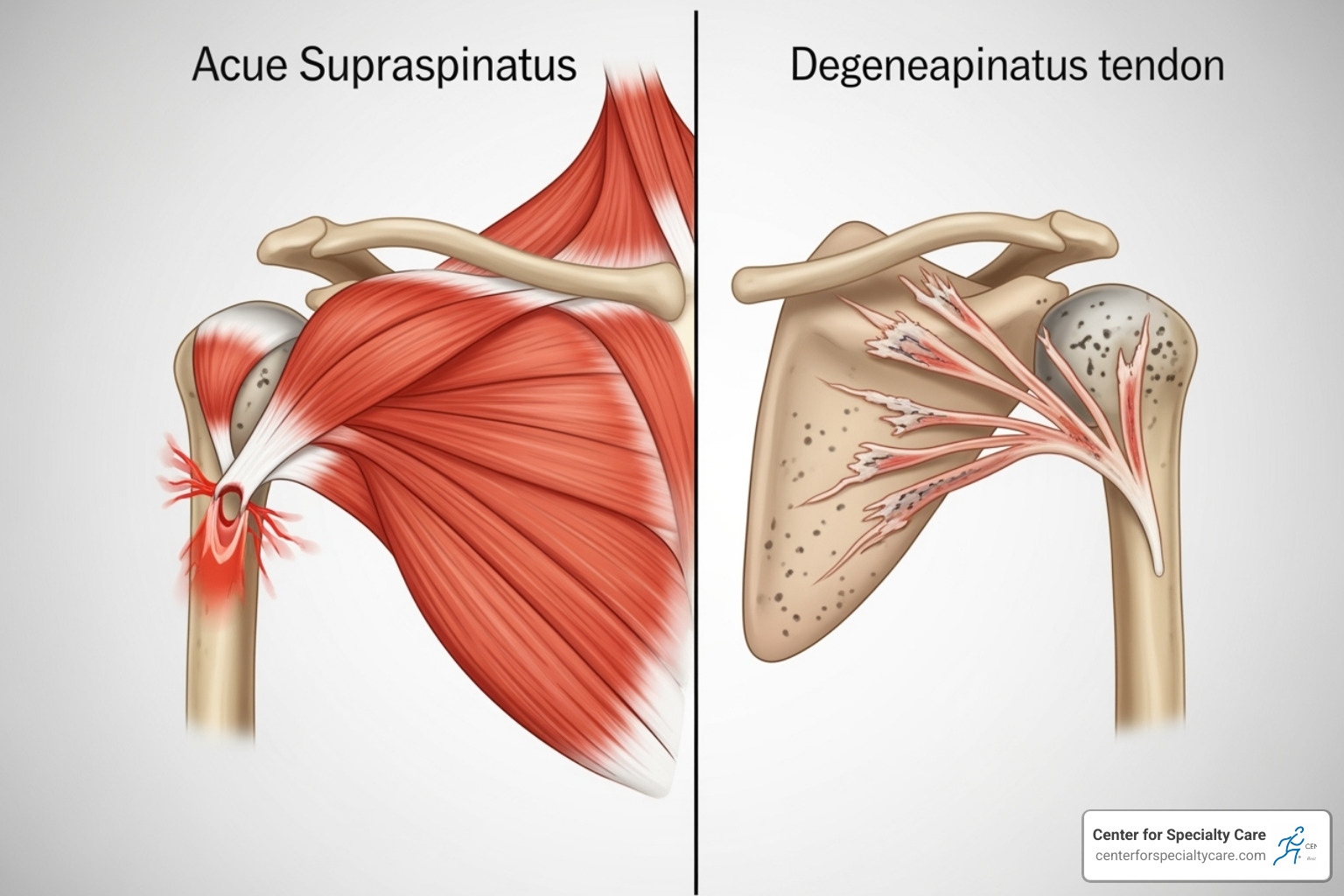
- Acute tears result from a sudden injury, like a fall or forceful lift. They cause immediate, intense pain and weakness.
- Degenerative tears are more common and develop gradually from overuse, age-related wear, or bone spurs that rub against the tendon (impingement). Repetitive overhead motions in jobs like painting or sports like swimming can cause the tendon to fray over time.
Key risk factors include age (over 40), occupations or sports with repetitive overhead motions, smoking (which impairs healing), and genetics.
Types of Tears and Common Symptoms of Rotator Cuff Tears and Shoulder Pain at Night
The type of tear influences your symptoms and treatment. Partial tears mean the tendon is damaged but not fully detached, and about 80% of cases improve with non-surgical treatment. Complete (full-thickness) tears mean the tendon is fully detached from the bone and often require surgery.
Common symptoms of a rotator cuff tear include:
- Dull, deep ache: Especially at night, which is a hallmark symptom that disrupts sleep. Research shows only 11% of patients with symptomatic tears report normal sleep.
- Pain with specific movements: Such as lifting your arm, reaching overhead, or reaching behind your back.
- Arm weakness: Difficulty lifting objects or rotating your arm.
- Clicking or popping sounds: During certain movements. Learn more at Shoulder Clicking and Pain: Causes and Effective Relief.
If you’re dealing with persistent pain, especially at night, your shoulder is telling you it needs attention.
How to Get Relief at Home and Improve Your Sleep
For rotator cuff tears and shoulder pain at night, several home remedies can provide significant relief. These non-surgical strategies focus on reducing inflammation and pain to help you get the restful sleep your body needs to heal. The Cleveland Clinic also offers detailed guidance on rotator cuff tears.
Heat and Ice Therapy
Knowing whether to use heat or ice is key to effective temperature therapy.

- Ice therapy is best for inflammation, swelling, and sharp pain. Applying a towel-wrapped ice pack for 15-20 minutes before bed can reduce inflammation and numb the area, helping you sleep.
- Heat therapy is ideal for stiffness and achiness. Warmth increases blood flow and relaxes tight muscles. Use a heating pad for 15-20 minutes or take a warm shower before bed to ease tension.
Never fall asleep with either ice or heat on your skin to avoid burns or frostbite.
Gentle Stretches and Staying Active
While rest is important, complete inactivity can cause stiffness. Stretching an hour before bed can reduce nighttime pain by promoting blood flow. Try these gentle stretches:
- Pendulum swing: Lean forward, let your affected arm hang, and gently swing it in small circles for 30 seconds in each direction.
- Doorway stretch: Stand in a doorway with forearms on the frame, elbows at 90 degrees. Lean forward gently to feel a stretch. Hold for 30 seconds.
- Crossover arm stretch: Bring your affected arm across your body, using your other hand to gently pull it closer to your chest.
During the day, continue with gentle, pain-free movements but avoid heavy lifting or sudden motions. Physical therapy is often crucial for recovery; learn more at Shoulder Treatment with Physical Therapy: Recovery and Pain Relief.
Over-the-Counter Pain Relievers
If home remedies aren’t enough, over-the-counter (OTC) medications can help manage pain.
- NSAIDs like ibuprofen (Advil) and naproxen (Aleve) reduce both pain and inflammation.
- Acetaminophen (Tylenol) targets pain but not inflammation and is a good alternative if you cannot take NSAIDs.
- Topical creams and gels provide localized relief when applied directly to the shoulder.
These medications are for short-term relief. Prolonged NSAID use carries risks like stomach or kidney problems. Always follow package directions and consult a doctor if you need them for more than a few weeks.
When to See a Specialist: Advanced Treatment Options
While home remedies help, some cases of rotator cuff tears and shoulder pain at night require professional medical attention. Knowing when to see a specialist can prevent months of suffering and lead to faster relief. It’s time to see a specialist if you experience:
- Persistent or worsening pain that lasts more than a few weeks despite home treatment.
- Significant weakness that interferes with daily activities like lifting, reaching, or dressing.
- Pain from a specific injury, especially after a fall or accident. For guidance on urgent situations, see Should I Go to Urgent Care for Shoulder Pain? Signs and Treatment Options.
- Severe sleep disruption from pain is a clear sign you need help to break the pain-sleep cycle.
Diagnosis and Professional Evaluation
A professional evaluation focuses on an accurate diagnosis to create an effective, personalized treatment plan.
- Physical Exam: We will assess your shoulder’s range of motion, strength, and areas of tenderness to pinpoint the injury.
- Imaging Tests: An X-ray can identify issues like bone spurs, while an MRI is the gold standard for viewing soft tissues and confirming the size and location of a tear. Ultrasound may also be used for a dynamic assessment.
An accurate diagnosis is crucial for effective treatment. Learn more at Finding the Best Orthopedic Shoulder Specialist Near Me.
Non-Surgical Medical Treatments
Non-surgical treatments are highly effective for many, especially those with partial tears or tendinitis. About 80% of patients with partial tears improve without surgery.
- Physical Therapy: This is a cornerstone of recovery. A physical therapist creates a custom program to restore motion, build strength, improve posture, and reduce pain. Consistent participation is vital for success.
- Corticosteroid Injections: These can provide powerful, short-term relief from severe pain and inflammation, allowing you to participate more effectively in physical therapy. Learn about our options at Types of Injections for Shoulder Pain Relief: Treatment Options.
Untreated rotator cuff problems can lead to permanent weakness or loss of motion, highlighting the importance of professional evaluation.
Understanding Surgical Repair and Recovery
When non-surgical treatments fail or for certain types of tears, surgery may be the best option for lasting relief. Surgery is typically considered for complete tears, acute traumatic tears, or when non-surgical treatments haven’t worked after several months.
- Surgical Technique: Arthroscopic surgery is a common, minimally invasive technique using small incisions and a camera to repair the tendon. This usually means less pain and a faster initial recovery than traditional open surgery.
- Recovery Timeline: Recovery is a significant commitment, involving a sling for 4-6 weeks followed by months of physical therapy. While functional improvement is often seen in 4-6 months, full recovery can take a year or more. Learn more at Will a Torn Rotator Cuff Heal on Its Own? Key Recovery Facts.
A major benefit of surgery is improved sleep. Research shows 89% of patients report better sleep 12 months post-surgery.
The long-term outlook is positive. With proper treatment, most people regain function and find freedom from nighttime shoulder pain.
Take Control of Your Shoulder Pain and Reclaim Your Sleep
Struggling with rotator cuff tears and shoulder pain at night is exhausting, but you have the power to break the cycle of pain and sleeplessness.
As we’ve discussed, night pain is a key sign that your rotator cuff needs attention. Simple home remedies—like adjusting your sleep position, using ice, and gentle stretching—can provide significant relief and help break the pain-sleep cycle.
When home remedies aren’t enough, a professional evaluation is crucial. An accurate diagnosis is the first step toward a personalized treatment plan, whether that involves physical therapy or surgical repair.
At the Center for Specialty Care, we specialize in personalized treatment plans. We know every injury is unique, and we are dedicated to finding the right path forward for you. Effective treatment doesn’t just reduce pain—it restores sleep. With the right care, restful nights are achievable again.
You don’t have to accept sleepless nights as your new normal. Our commitment to patient satisfaction and quick appointment availability means getting help is simple and stress-free.
Take the first step toward reclaiming your sleep and quality of life.