
Unlocking Intracept: Is This Procedure Covered by Medicare?
September 4, 2025
The Wobbly Shoulder: What is Subluxation?
September 8, 2025
Pt for Rotator Cuff Tears: Ultimate Guide 2025
Why Physical Therapy is Your First Line of Defense Against Rotator Cuff Tears
PT for rotator cuff tears is often the most effective first treatment, with research showing that about 75% of patients can successfully avoid surgery through structured physical therapy. This guide will help you understand your treatment options for a new injury or chronic shoulder pain.
Quick Answer for PT for Rotator Cuff Tears:
- Conservative PT Success Rate: 73-80% of patients improve without surgery
- Treatment Duration: 6-12 weeks for non-surgical cases, 4-6+ months post-surgery
- Primary Goals: Reduce pain, restore movement, strengthen supporting muscles
- Best Candidates: Partial tears, degenerative tears, older patients, those wanting to avoid surgery
- Key Exercises: Pendulum swings, resistance band work, scapular stabilization
- When Surgery May Be Needed: Failed 3-6 months of PT, acute traumatic tears, significant weakness
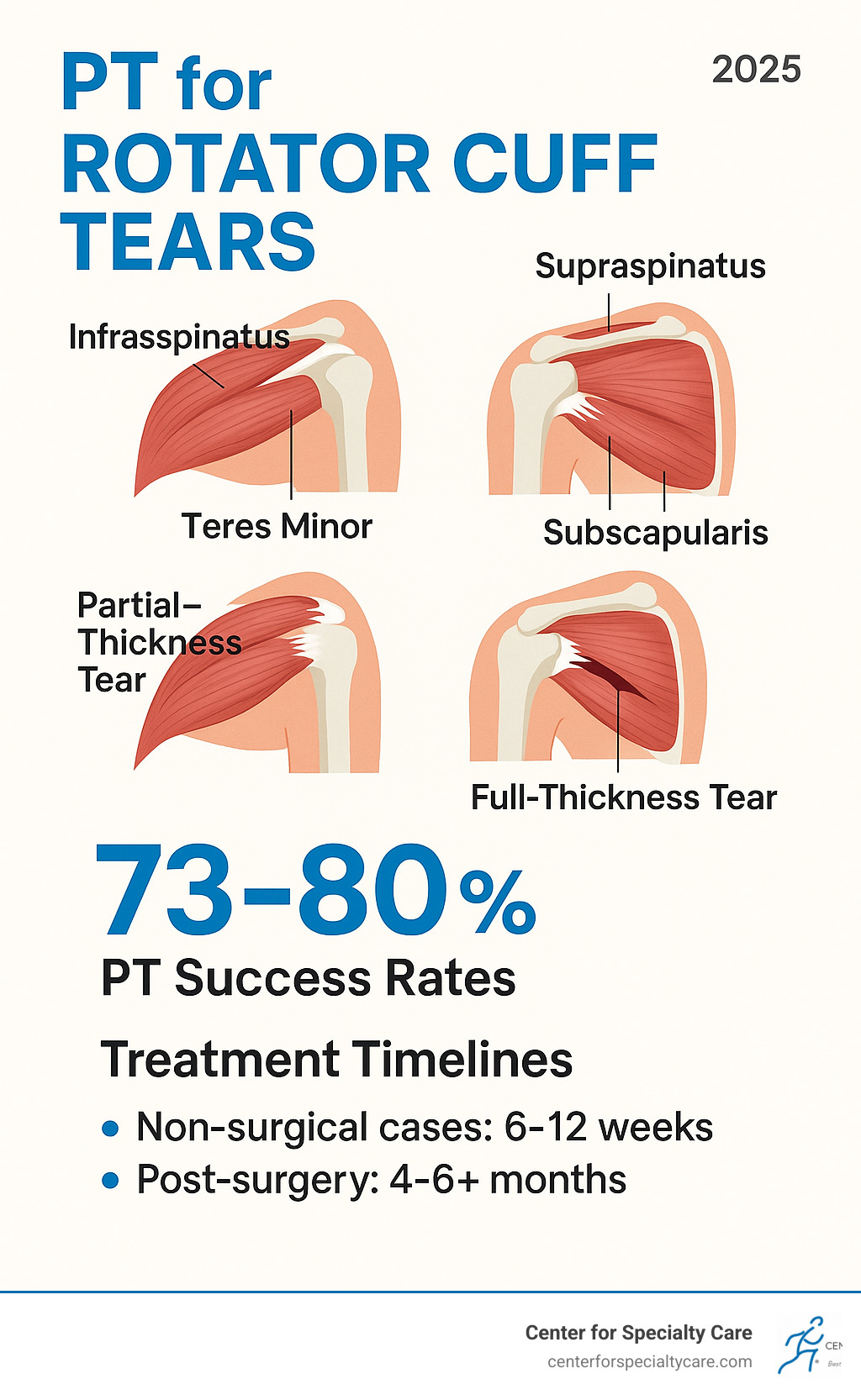
The rotator cuff is a group of four muscles and tendons that stabilize your shoulder. When these tissues tear from injury or wear, it can cause significant pain and weakness. Interestingly, studies show that 34% of people without shoulder pain have rotator cuff tears on imaging, highlighting how common this condition is.
Physical therapy is crucial in two ways: as a primary treatment to avoid surgery, or as an essential part of post-surgical recovery. Research from the Moon Shoulder Group found that only 26% of patients with full-thickness tears chose surgery after completing a PT program—meaning three out of four found relief without it.
At the Center for Specialty Care, our multidisciplinary team of physicians and physical therapists has seen how effective a personalized PT for rotator cuff tears plan can be.
Recognizing a Rotator Cuff Tear: When to See a Specialist
Shoulder pain affects up to 70% of adults, and the rotator cuff is often the culprit. Recognizing the signs early is the first step toward a faster, non-surgical recovery, as PT for rotator cuff tears is most effective when the problem is addressed promptly.
The most common sign is a dull ache deep in your shoulder that often worsens at night, especially when lying on the affected side. You might also notice arm weakness that makes simple tasks like lifting a cup or brushing your hair difficult. Some people also report a crackling or popping sensation with shoulder movement.
Rotator cuff tears rarely heal on their own and can worsen if you continue activities that cause pain. You should see a specialist if you experience:
- Persistent shoulder aches lasting more than a few days
- Pain that disrupts your sleep
- Weakness in your arm when lifting or rotating
- Trouble with overhead activities
- Any crackling or popping sensations
- Sudden, intense shoulder pain after an injury
Signs of an Acute vs. Degenerative Tear
Understanding how your tear occurred can guide treatment:
-
Acute tears happen suddenly from a specific event, like a fall or lifting something too heavy. The pain and weakness are immediate and intense. These tears require prompt medical attention.
-
Degenerative tears develop gradually over months or years from tendon wear, common in those over 40 or in jobs with repetitive overhead motions. The pain may start as mild discomfort and slowly worsen. Research shows that about half of asymptomatic tears eventually become painful, so it’s best not to ignore early signs.
The Diagnostic Process
When you visit the Center for Specialty Care, our goal is to get you an accurate diagnosis quickly.

Your evaluation starts with a physical examination. We will assess your shoulder for tenderness, test your range of motion, and check your strength to pinpoint the problem. We’ll also discuss your symptoms and how they affect your daily life.
If needed, imaging tests provide a clearer picture. X-rays can rule out issues like arthritis or bone spurs. Ultrasound allows us to see the rotator cuff in motion. For the most detailed view, an MRI scan shows the soft tissues, revealing the size and location of any tears.
Our collaborative approach between orthopedic specialists and physical therapists ensures you receive a comprehensive evaluation and a treatment plan custom specifically to you, leading to better outcomes and higher patient satisfaction.
The Power of Non-Surgical PT for Rotator Cuff Tears
Encouragingly, PT for rotator cuff tears is often the best first choice, not just a way to avoid surgery. Conservative treatment is highly effective, with 73% to 80% of patients finding significant relief without surgery and reporting high satisfaction with their results.
Research confirms that exercise therapy delivers outcomes comparable to surgery for many patients, allowing you to avoid the risks, costs, and long recovery of an operation. A key study by the Moon Shoulder Group found that even with full-thickness tears, three out of four patients achieved lasting success with non-operative management and chose not to have surgery.
Primary Goals of Conservative PT for Rotator Cuff Tears
Your PT program will focus on five key goals:
- Pain and Inflammation Reduction: Using techniques like ice and gentle movement to calm irritated tissues.
- Restoring Range of Motion: Using targeted stretches and mobilization to combat stiffness.
- Improving Muscle Strength: Strengthening the rotator cuff and supporting shoulder blade muscles to create a stable foundation.
- Restoring Daily Function: Focusing on movements that matter to you, from gardening to playing sports.
- Patient Education: Empowering you with knowledge on proper posture and activity modification to prevent re-injury.
Common Exercises and Stretches
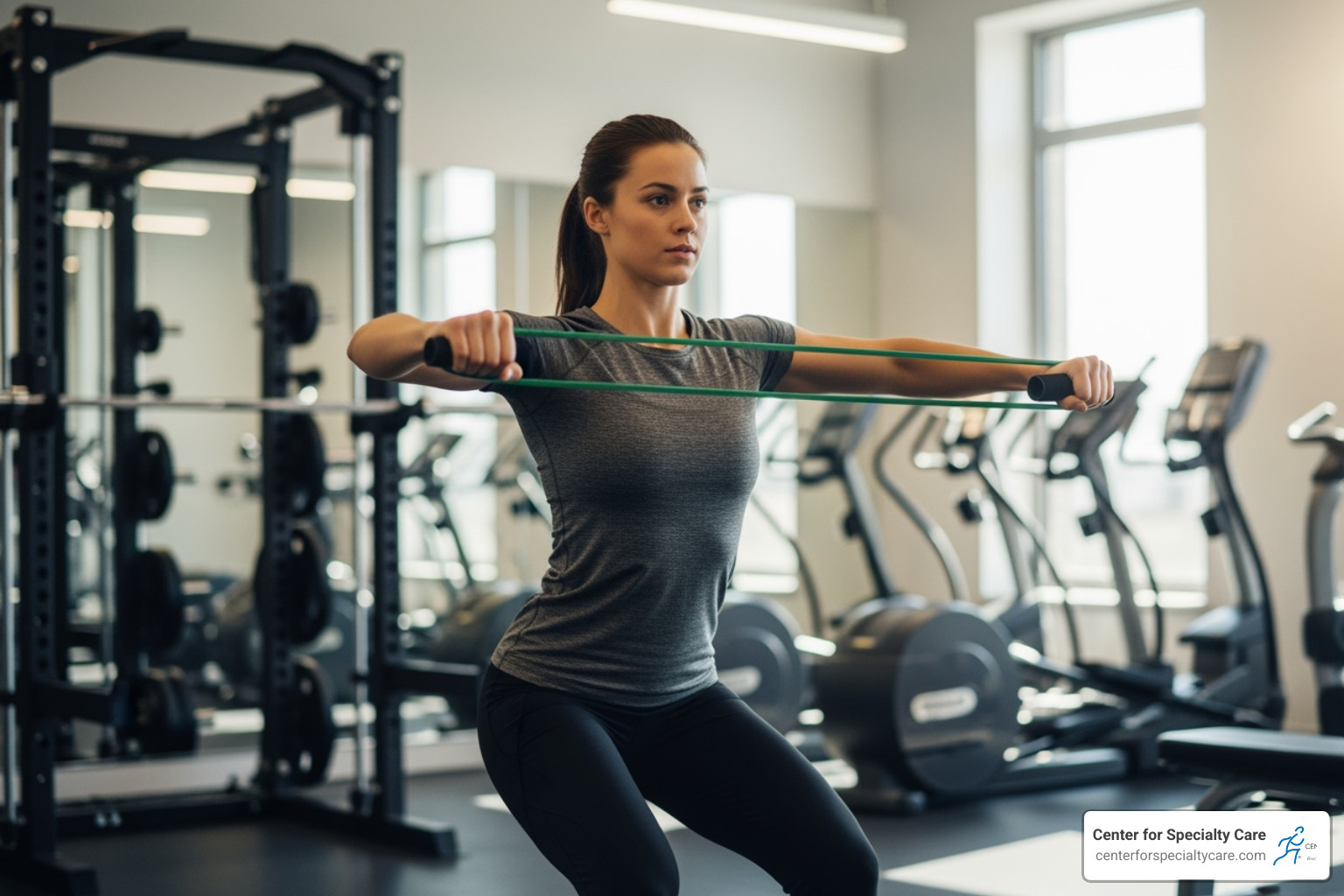
Your physical therapist will create a personalized program, which may include:
- Pendulum Swings: Gentle, passive motion to reduce stiffness and encourage blood flow.
- Crossover Arm Stretches: Targets tightness in the back of the shoulder to restore flexibility.
- Sleeper Stretch: A gentle stretch performed while lying on your side to improve rotation and comfort.
- Resistance Band Exercises: Light resistance for internal and external rotation to rebuild rotator cuff strength safely.
- Scapular Stabilization: Exercises like shoulder blade squeezes to strengthen the muscles that support the shoulder.
- Isometric Strengthening: Building muscle strength without joint movement, ideal for early stages of recovery.
Factors for Success with Conservative Treatment
Certain factors can increase your likelihood of success with non-surgical treatment:
- Preserved ability to rotate your arm outward
- Minimal pain during impingement tests
- Healthy muscle tissue with minimal atrophy
- An intact intramuscular tendon
- A tear size smaller than 1 cm²
- Symptoms present for less than one year
Even if your tear is larger or has been present longer, physical therapy can still provide substantial relief and improved function, potentially delaying or eliminating the need for surgery. At the Center for Specialty Care, we believe in giving conservative treatment a fair chance because the results speak for themselves.
Physical Therapy vs. Surgery: Making an Informed Decision
Deciding between physical therapy and surgery can feel overwhelming. At the Center for Specialty Care, we help you steer this choice by considering your lifestyle, goals, age, and the specific nature of your tear. Both pt for rotator cuff tears and surgery have their place; the key is finding the right fit for you.
| Feature | Physical Therapy (Non-Surgical) | Surgical Intervention |
|---|---|---|
| Recovery Time | 6-12 weeks for non-surgical cases, gradual return to activity | 4-6 months for modified return, 9-12 months for full return |
| Cost | Generally lower | Generally higher, includes surgical fees, anesthesia, hospital stay |
| Success Rate | 73-80% for appropriate cases, high patient satisfaction | Satisfactory outcomes for pain/function, but re-tear rates vary (20-94%) |
| Re-tear Risk | No surgical re-tear risk; tear may progress over time | 20-94% recurrence rate, higher in older patients and larger tears |
| Ideal Candidate | Partial tears, degenerative tears, older/less active patients, those avoiding surgery | Acute traumatic full-thickness tears, younger/active patients, failed conservative PT |
| Invasiveness | Non-invasive | Invasive (arthroscopic or open) |
| Anatomical Healing | Tears usually don’t “heal” (close) but function improves | Aims for anatomical healing, but not guaranteed (e.g., 43% healing over 65) |
Anatomical healing (closing the tear) isn’t always required for an excellent outcome. Many patients achieve full function and pain relief through PT by strengthening compensatory muscles. Your personal goals are paramount—whether you aim to return to competitive sports or simply sleep without pain.
When is Physical Therapy the Preferred Option?
We often recommend starting with pt for rotator cuff tears in these situations:
- Degenerative Tears: Tears that develop gradually often respond well to strengthening and movement training.
- Patients Over 60: Research, like the Kukkonen study, shows that for non-traumatic tears, outcomes for PT and surgery are often comparable, making PT a safer first choice.
- Partial-Thickness Tears: When the tendon is frayed but not completely severed, strengthening the remaining fibers is often highly effective.
- High Surgical Risk: For patients with medical conditions like heart disease or diabetes, PT is a safer path to recovery.
- Minimal Symptoms: If a tear isn’t causing significant pain or functional loss, PT and monitoring is a wise approach.
When Might Surgery Be Necessary?
Surgery may be the best choice in certain circumstances:
- Failed Conservative Treatment: If 3-6 months of dedicated PT doesn’t provide significant improvement.
- Acute Traumatic Tears: Sudden tears from an injury, especially in younger patients, often have better outcomes with timely surgical repair.
- Younger, Active Patients: For those under 60 who want to return to high-demand sports or labor, surgery may offer a more predictable path.
- Significant Weakness: If you cannot perform basic daily tasks like lifting your arm to get dressed, surgery may be needed to restore function.
- Progressing Tears: If a tear continues to grow larger despite PT, surgery may be required to prevent further damage.
Our team at the Center for Specialty Care is here to guide you. Whether you need our comprehensive shoulder problem services or want to start with conservative care, we provide quick access to the treatment you need.
Your Guide to Post-Operative PT for Rotator Cuff Tears
If surgery is your chosen path, post-operative pt for rotator cuff tears is absolutely essential for a successful recovery. This rehabilitation program acts as your roadmap, protecting the surgical repair while you safely rebuild strength and movement. Our physical therapists work closely with your surgeon, following proven protocols to manage recovery and prevent re-injury.
Rehabilitation follows a predictable progression through distinct phases, each building on the last to ensure your shoulder heals properly.
Phase 1: Protection and Passive Motion (Weeks 0-6)
This initial phase is about protecting the repair while managing pain and preventing stiffness. Patience here is key.
- Goals: Protect the healing tendon, minimize pain and swelling, maintain joint mobility.
- Activities: You will wear a sling for immobilization. Your therapist will guide you through gentle pendulum exercises and passive range of motion, where they move your arm for you. Regular icing (cryotherapy) is used to control pain and swelling.
Phase 2: Active Motion and Light Strengthening (Weeks 6-12)
Now, we begin to re-engage your muscles and restore active movement.

- Goals: Restore active shoulder motion, re-establish neuromuscular control.
- Activities: You’ll start active-assisted range of motion using your other arm or a pulley for support. Isometric strengthening (contracting muscles without moving the joint) and scapular stabilization exercises are introduced to gently wake up the muscles.
Phase 3: Progressive Strengthening and Return to Function (Weeks 12+)
This final phase focuses on regaining full strength and preparing you for a return to your normal activities.
- Goals: Regain full strength and endurance, prepare for return to sport, work, or demanding activities.
- Activities: We introduce progressive resistance with bands and light weights. Exercises become more complex, incorporating advanced strengthening and functional patterns that mimic real-life tasks. We’ll also include sport-specific or work-specific drills and proprioception training to improve stability and prevent future injuries.
Recovery timelines vary, with a modified return to activity around four months and a full return to demanding sports taking up to a year. Our personalized approach ensures your rehabilitation adjusts to your unique healing pace and goals.
Frequently Asked Questions about PT for Rotator Cuff Tears
How long does physical therapy take for a rotator cuff tear?
The timeline for pt for rotator cuff tears varies based on the individual and the tear.
- Non-Surgical Cases: Most patients see significant improvement within 6 to 12 weeks of consistent therapy. Continued maintenance exercises are recommended to prevent future issues.
- Post-Surgical Cases: Rehabilitation is a longer process, typically spanning 4 to 6 months, with a full return to high-demand activities taking up to a year. This extended timeline is crucial for protecting the surgical repair.
Factors like tear severity, adherence to the home exercise program, and your personal recovery goals all influence the duration.
Can physical therapy make a rotator cuff tear worse?
When performed under the guidance of a qualified physical therapist, it is highly unlikely that PT will worsen your tear. Therapists are experts in musculoskeletal health and design programs to strengthen supporting muscles without overstressing the injured tendon.
Pain is your guide—you should not feel significant pain during exercises. Communication with your therapist is key. If you experience increased pain, they can immediately modify your program to ensure it remains safe and effective. The exercises are carefully chosen and progressed to match your healing timeline.
Can a rotator cuff tear heal without surgery?
This depends on the type of tear.
- Partial-thickness tears often “heal” in the sense that symptoms resolve and full function returns. The surrounding muscles strengthen to compensate effectively.
- Full-thickness tears typically do not heal anatomically (the tendon does not reattach on its own). However, this does not mean surgery is always required for an excellent outcome.
Many patients with full-thickness tears achieve remarkable pain relief and functional improvement through PT alone. Therapy works by strengthening compensatory muscles (like the deltoid), improving shoulder biomechanics, and managing pain. The Moon Shoulder Group study showed that 75% of patients with these tears achieved such good results with PT that they chose to avoid surgery. So, while the tear may remain on an MRI, your shoulder can feel and function as if it has healed.
Conclusion: Your Path to a Pain-Free Shoulder
Your journey to recovery from a rotator cuff tear is filled with options, and physical therapy is often the best first choice, with success rates of 73-80% for appropriate cases. PT for rotator cuff tears can help you avoid surgery or, if an operation is needed, guide you to a full recovery.
Early intervention is your best friend. Addressing symptoms promptly leads to better outcomes. Since many tears exist without symptoms, any new shoulder pain is worth getting checked out.
At the Center for Specialty Care, our team of orthopedic specialists and physical therapists creates a personalized treatment plan custom to your goals and lifestyle. Whether you want to return to a sport or simply sleep without pain, we focus on what matters to you.
Our commitment to 100% patient satisfaction and quick appointment availability across our locations in Minnesota and Iowa means you can start your recovery without delay. Taking control of your shoulder health begins with the first step. Every exercise and therapy session brings you closer to a pain-free, functional shoulder.
Your shoulder pain doesn’t have to limit your life. With the right team and your dedication, a pain-free shoulder is an achievable goal.
Ready to start your recovery journey? Learn more about our comprehensive approach to shoulder care: More info about our physical therapy services.