
The Ultimate Guide to Physical Therapy for Rotator Cuff Tears
September 5, 2025
Is Your Heart Behind That Left Shoulder Blade Ache?
September 9, 2025
Shoulder Subluxation: Regain Stability in 2025
Understanding Shoulder Instability and What It Means for You
Shoulder subluxation occurs when the ball of your upper arm bone partially slips out of your shoulder socket before moving back into place. While this partial dislocation often self-corrects, it can cause significant pain, weakness, and a feeling of the shoulder “giving way.”
This issue is surprisingly common. It affects a wide range of people, from athletes in contact sports to individuals with naturally loose ligaments. Notably, up to 81% of stroke patients experience shoulder subluxation, and it accounts for the vast majority of sport-related shoulder instabilities.
The shoulder joint’s incredible mobility comes at the cost of stability. Its ball-and-socket structure is inherently less stable than other joints, making it prone to slipping when supporting muscles and ligaments are overwhelmed.
I’m Dr. Corey Welchlin, a board-certified orthopedic surgeon specializing in treating shoulder subluxation and instability. At Center for Specialty Care, I’ve helped many patients in southern Minnesota and northern Iowa regain shoulder function and confidence, often using minimally invasive arthroscopic techniques for same-day outpatient recovery.
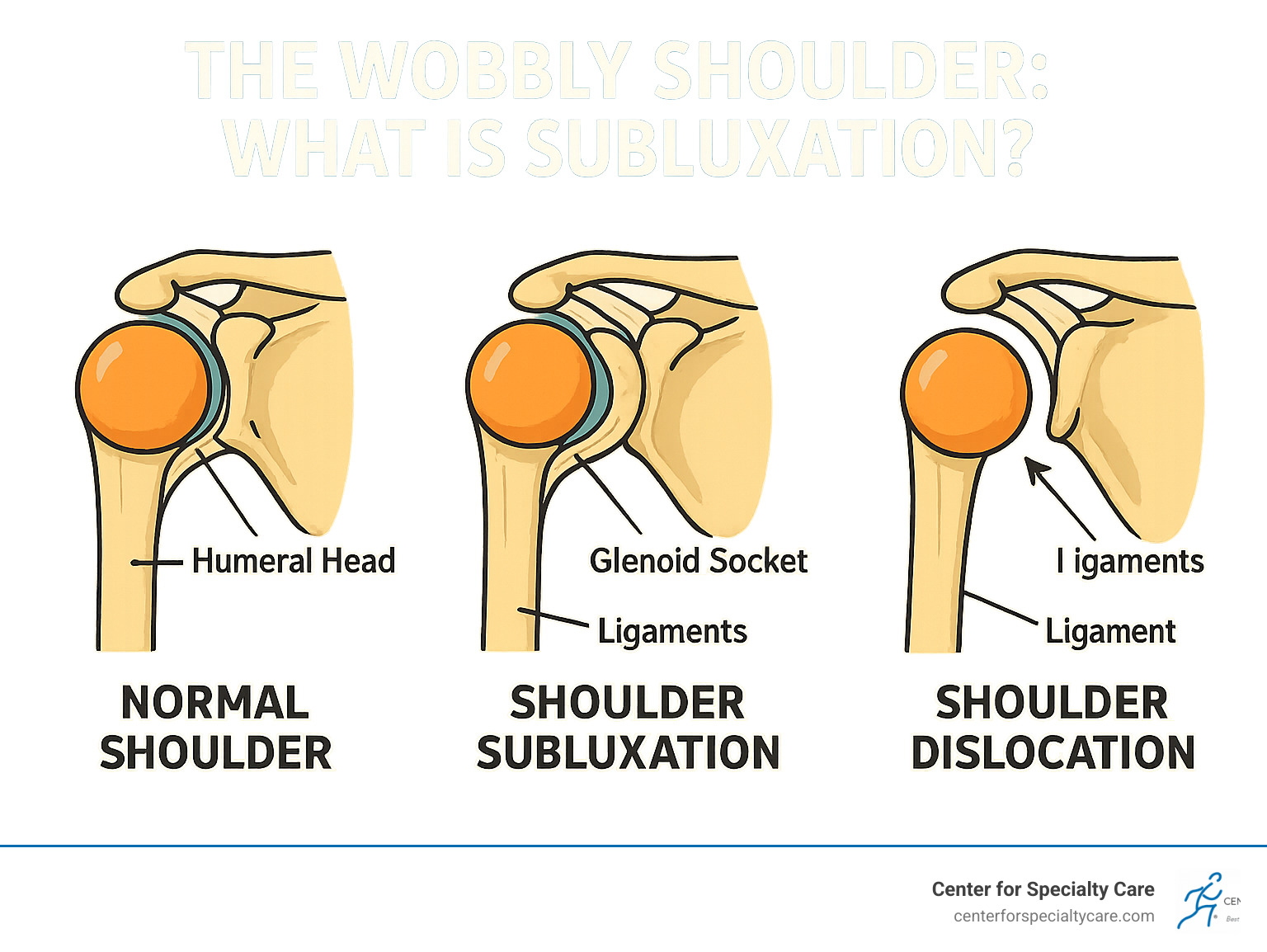
Understanding Your Unstable Shoulder: Subluxation vs. Dislocation
Your shoulder is the most mobile joint in your body, but this flexibility also makes it the most likely to slip out of place. The joint is a shallow ball-and-socket structure held together by ligaments, a joint capsule, and rotator cuff muscles. When this support system is damaged, the shoulder can become unstable.
Understanding the difference between a shoulder subluxation and a full dislocation is key to knowing how to respond. While both involve the joint moving incorrectly, their severity and treatment needs are very different.
| Feature | Shoulder Subluxation | Shoulder Dislocation |
|---|---|---|
| Definition | Partial displacement of the humeral head from the glenoid socket, with spontaneous reduction. | Complete separation of the humeral head from the glenoid socket. |
| Humeral Head | Partially slips out, then returns to its normal position. | Completely pops out of the socket. |
| Contact | Bones still touch, but not completely aligned. | Bones are no longer in contact. |
| Appearance | May appear temporarily deformed, but often resolves quickly. | Visibly deformed or out of place. |
| Pain Level | Can be mild to severe, often sharp and sudden. | Typically intense, excruciating pain. |
| Movement | May have limited movement, but some range possible. | Inability to move the arm. |
| Sound/Sensation | Often a “pop,” “click,” or “slip” sensation. | A distinct “pop” or “thud” with immediate loss of function. |
| Reduction | Often self-reduces (pops back in) on its own. | Requires medical intervention (closed reduction) to put it back. |
| Typical Treatment | Rest, ice, physical therapy, pain medication. | Immediate medical reduction, immobilization, then PT. |
| Complications | Can lead to chronic instability, labral tears, nerve damage. | Higher risk of fractures, significant soft tissue damage. |
Getting the right diagnosis is crucial. Our experienced team at Center for Specialty Care can help determine exactly what’s happening with your shoulder. More info about our shoulder specialists can guide you toward the most effective treatment plan.
What is a Shoulder Subluxation?
A shoulder subluxation is a partial dislocation where the upper arm bone slips to the edge of the socket and then pops back into place. This spontaneous reduction can make it seem less serious, but it can be painful and concerning. People often describe a “slipping” or “giving way” sensation, sometimes with a pop or click. A key concern is that the initial event can stretch the ligaments, making the joint more vulnerable to future episodes and chronic instability. If you’ve been experiencing these sensations, our guide on Why Is My Shoulder Popping? Common Causes and Solutions may be helpful.
How is a Dislocation Different?
A full shoulder dislocation is a more severe injury where the upper arm bone completely separates from the socket and does not go back on its own. The pain is typically intense and immediate, making it impossible to move the arm. The shoulder will often look visibly deformed. A dislocation is a medical emergency that requires a procedure called a closed reduction to maneuver the bone back into place. If you have these symptoms, seek immediate care. Our guide can help you decide: Should I Go to Urgent Care for Shoulder Pain? Signs, Treatment Options.
Common Causes and Who’s at Risk
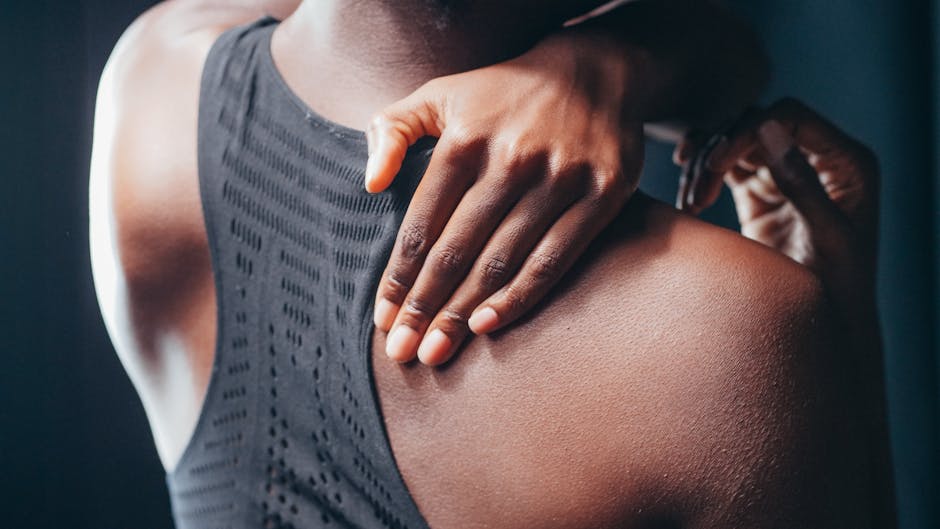
Your shoulder’s incredible mobility makes it vulnerable to injury. A shoulder subluxation typically happens from a traumatic injury, repetitive strain, or a neuromuscular condition that weakens the supporting muscles. Men are more than twice as likely as women to experience shoulder instability, and the risk of re-injury is especially high for active individuals under 25.
If you’ve recently been in an accident, understanding your symptoms is crucial. Learn more about Shoulder Pain After Car Accident: Causes and Recovery Tips.
Traumatic Injuries
Most subluxations are caused by a sudden, strong force. Sports injuries are the primary culprit, especially in contact sports like football and hockey or sports involving falls like gymnastics and skiing. In fact, 84.6% of sport-related shoulder instabilities are subluxations. Other common causes include falls onto an outstretched arm, car accidents, and direct blows to the shoulder. If you’re an athlete, our Sports Injury Specialist Near Me services can provide expert care.
Atraumatic and Repetitive Strain
Sometimes, instability develops without a specific injury. Some people are born with naturally loose ligaments (ligamentous laxity), making them more prone to subluxation. Repetitive overhead movements can also gradually wear down the shoulder’s stabilizing structures. This is common in swimmers, throwing athletes, and overhead workers like painters or electricians. Over time, this can lead to chronic strain and instability. Learn more about related symptoms in our guide to Shoulder Clicking and Pain: Causes and Effective Relief.
Neuromuscular Conditions
Stroke is a significant and often surprising cause of shoulder subluxation, affecting up to 81% of patients. After a stroke, weakness or paralysis (hemiplegia) on one side of the body can prevent the shoulder muscles from holding the arm bone securely in its socket. Gravity then pulls the arm downward, causing a subluxation. Other neuromuscular conditions like cerebral palsy and brachial plexus injuries can similarly affect muscle control and lead to instability. You can explore Research on post-stroke shoulder subluxation for more detailed information.
Symptoms, Diagnosis, and Potential Complications
The symptoms of a shoulder subluxation can range from a subtle “off” feeling to an alarming slip of the joint. Recognizing these signs is the first step toward getting the right help. Our team can help you find the right Doctor for Shoulder Problems: Your Guide to Specialized Care.
Recognizing the Symptoms
The most common experience is the sensation of the shoulder “slipping out of place,” often with a pop or click. This can cause sharp, sudden pain, followed by a dull ache. Other key symptoms include weakness in the arm, numbness or tingling (a “dead arm” sensation), and visible swelling or bruising. You may also notice a temporary visible deformity or gap in the shoulder, along with muscle spasms and a limited range of motion. If you’re hearing unusual sounds, learn more about Shoulder Joint Pain Popping: Causes and Effective Relief.
How Doctors Diagnose Shoulder Instability
Diagnosis begins with a discussion of your symptoms and medical history. A physical examination is then performed to test your shoulder’s range of motion, strength, and stability. We use specific maneuvers like the sulcus sign and apprehension test to assess how much the joint moves within the socket.
To get a complete picture, we often use imaging tests. X-rays are used to rule out fractures and check bone alignment. An MRI scan provides detailed images of soft tissues like ligaments, the joint capsule, and the labrum, helping us identify tears. A CT scan is useful for evaluating bone damage, such as dents in the bone from repeated subluxations. Finding the right specialist is key; consider our team when looking for an Orthopedic Surgeon Near Me: How to Find Expert Care for Your Bones and Joints.
Potential Long-Term Complications
A subluxation that “fixes itself” can still lead to long-term problems. The primary concern is chronic instability, where each episode stretches the supporting tissues and makes future subluxations more likely. This can lead to further damage, including labral tears (damage to the cartilage rim of the socket) and rotator cuff tears, causing chronic pain and weakness. In some cases, nerve or blood vessel injury can occur. Over time, the persistent instability and wear and tear can lead to arthritis. Prompt, appropriate care is the best way to prevent these complications. If you’re dealing with related discomfort, see our guide on How to Relieve Rotator Cuff Pain at Night: Expert Tips for Better Sleep.
Comprehensive Treatment for Shoulder Subluxation

At Center for Specialty Care, our goal is to relieve your pain, restore shoulder stability, and help you regain full function. We create personalized treatment plans because every shoulder subluxation is unique. Our approach often incorporates specialized Pain Management techniques to ensure your comfort during recovery. While many patients respond well to non-surgical care, we also offer advanced surgical options when needed.
Non-Surgical Treatment Options
For most first-time or mild subluxations, non-surgical treatment is highly effective. The initial steps include:
- Closed Reduction: If the shoulder hasn’t returned to place on its own, a provider will gently guide it back into the socket.
- Immobilization: A sling is used for a short period (a few days to a couple of weeks) to rest the joint and allow initial healing.
- RICE Method: Rest, Ice, Compression, and Elevation help manage pain and swelling in the first few days.
- Pain Medication: Over-the-counter NSAIDs like ibuprofen are often sufficient, though targeted injections can also provide relief. Learn about Types of Injections for Shoulder Pain Relief: Treatment Options.
Physical therapy is the cornerstone of non-surgical recovery. A custom program will focus on restoring range of motion, then strengthening the rotator cuff and other stabilizing muscles. This retraining is crucial for preventing future instability. Find out more at Shoulder Treatment with Physical Therapy: Recovery and Pain Relief.
When is Surgery Necessary?
Surgery may be the best option for long-term stability in certain cases. We consider surgery for:
- Recurrent instability despite proper rehabilitation.
- Failed conservative treatment after several months.
- Significant tissue damage, such as large labral tears or bone loss, visible on imaging.
- High-demand athletes or individuals in physically demanding jobs who require maximum shoulder reliability.
Surgical procedures aim to repair or tighten the damaged structures. Arthroscopic surgery, a minimally invasive technique, is often used for procedures like a Bankart repair (fixing a torn labrum) or a capsular shift (tightening the joint capsule). In cases with significant bone loss, an open repair may be required. Our expertise can help you find the right solution. Learn more at Rotator Cuff Surgeon Near Me: Your Guide to Finding Expert Shoulder Care.
Recovery, Rehabilitation, and Prevention
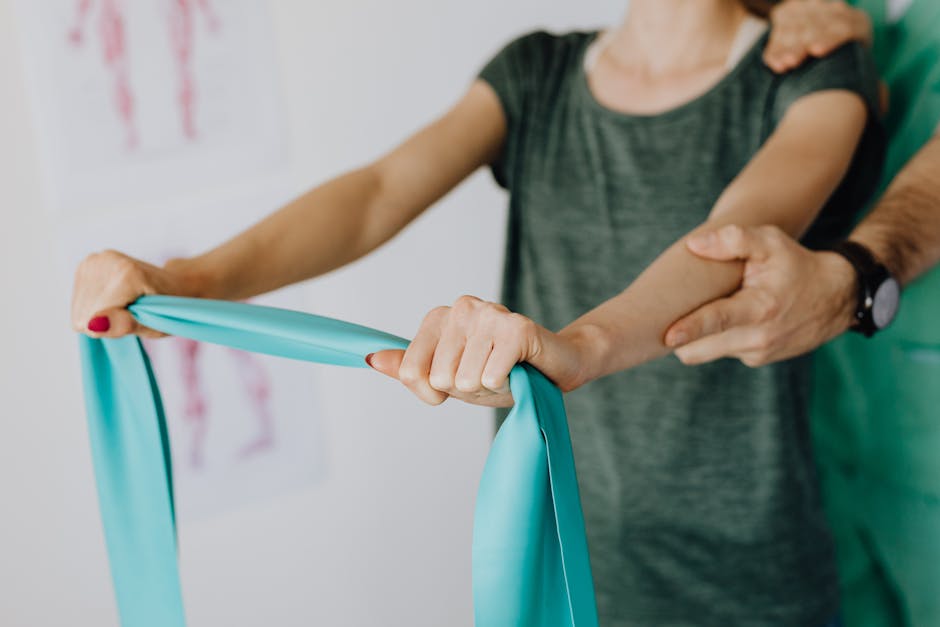
The journey back to full function after a shoulder subluxation requires patience and a dedicated rehabilitation plan. Whether you had surgery or not, the goal is to build a stronger, more stable shoulder. At Center for Specialty Care, we provide the Best Therapy for Shoulder Pain: Expert Solutions and Relief to guide you.
The Road to Recovery and Rehabilitation
Recovery timelines vary based on your age, activity level, and injury severity. A structured rehabilitation program is always essential.
-
Non-Surgical Recovery: After a brief period of rest in a sling, you’ll begin gentle, pain-free movements. Most people can return to light daily activities within a few weeks, but should avoid intense shoulder movements for about four weeks. Full recovery often takes several weeks to a few months of physical therapy.
-
Surgical Recovery: The timeline is more structured. It begins with an immobilization phase in a sling for 2-3 weeks, followed by a gradual progression of motion and strengthening exercises guided by a physical therapist. Strengthening typically begins around 6 weeks post-op. Return to normal activities is often possible within six months, though high-demand sports may take up to a year.
Our team follows established Rehabilitation guidelines for shoulder instability while tailoring your program through our Physical Therapy services.
Exercises to Prevent a Future Shoulder Subluxation
Once you’ve had a subluxation, strengthening the muscles around the joint is the best way to prevent another one. A targeted exercise program is key.
- Rotator Cuff Strengthening: Exercises like internal and external rotation with resistance bands help keep the ball of the joint centered in the socket.
- Scapular Stabilization: Strengthening the muscles around your shoulder blade (e.g., with rows and Y-T-W movements) creates a stable base for arm movement.
- General Strengthening: Progressive resistance training for the deltoid and other shoulder muscles builds overall power and endurance.
Consistency is more important than intensity. Building and maintaining shoulder strength is a lifelong commitment to an active, pain-free lifestyle. Your physical therapist will guide you on proper form and progression. For more tips, explore our guide on Shoulder Treatment: Physical Therapy Tips for Fast Recovery.
Frequently Asked Questions about Shoulder Subluxation
We understand that a shoulder subluxation can be confusing. Here are answers to some of the most common questions we hear from our patients.
Can a shoulder subluxation heal on its own?
While the joint often pops back into place on its own, the underlying injury does not heal without treatment. The ligaments and capsule that support the shoulder get stretched or damaged during a subluxation, leaving the joint unstable and prone to happening again. While a small percentage of patients may recover without intervention, most require a professional evaluation and a rehabilitation program to restore stability and prevent recurrence.
How long does it take to recover from a shoulder subluxation?
Recovery time varies. For a mild, non-surgical case, you can expect to avoid intense shoulder activity for about four weeks, with a full return to normal activities taking 6 to 12 weeks with dedicated physical therapy. If surgery is required, the timeline is longer. After about 2-3 weeks in a sling, you’ll begin several months of structured rehab. Most people can return to normal activities within six months, but a return to high-demand sports could take up to a year.
Will I need surgery for my shoulder subluxation?
Most people do not need surgery. We always begin with non-surgical treatments like physical therapy. Surgery is typically considered only if you experience repeated subluxations despite rehab, if conservative treatment fails to improve your stability, or if imaging reveals significant structural damage like a large tear. We also may discuss surgery earlier for young, high-level athletes who are at a very high risk of re-injury. The decision is always made collaboratively to fit your life and goals.
Regain Your Stability and Confidence
Living with a shoulder subluxation doesn’t mean accepting a life of discomfort. The key takeaway is that early intervention and a proper diagnosis are your best allies in recovery. Whether your instability is from a sports injury, overuse, or a neurological condition, understanding the cause allows for a treatment plan that works.
At Center for Specialty Care, Dr. Corey Welchlin and our team believe in personalized care. We take the time to understand your lifestyle and goals to create a plan that’s right for you. This may involve physical therapy, targeted injections, or minimally invasive surgery, all aimed at one goal: helping you return to your life without the worry of your shoulder “giving out.”
Don’t let shoulder subluxation limit you. Our team is ready to help you take the first step toward lasting stability and pain-free movement. Learn more about our comprehensive shoulder care and find how our orthopedic solutions can help you regain control.