
Pain Management Clinics: Your Roadmap to a Life with Less Pain
February 23, 2026
The A to Z of Rotator Cuff Surgery: From Diagnosis to Decision
February 25, 2026
Chronic Shoulder Pain: Ultimate 1st Step to Relief
Why Chronic Shoulder Pain Demands Your Attention
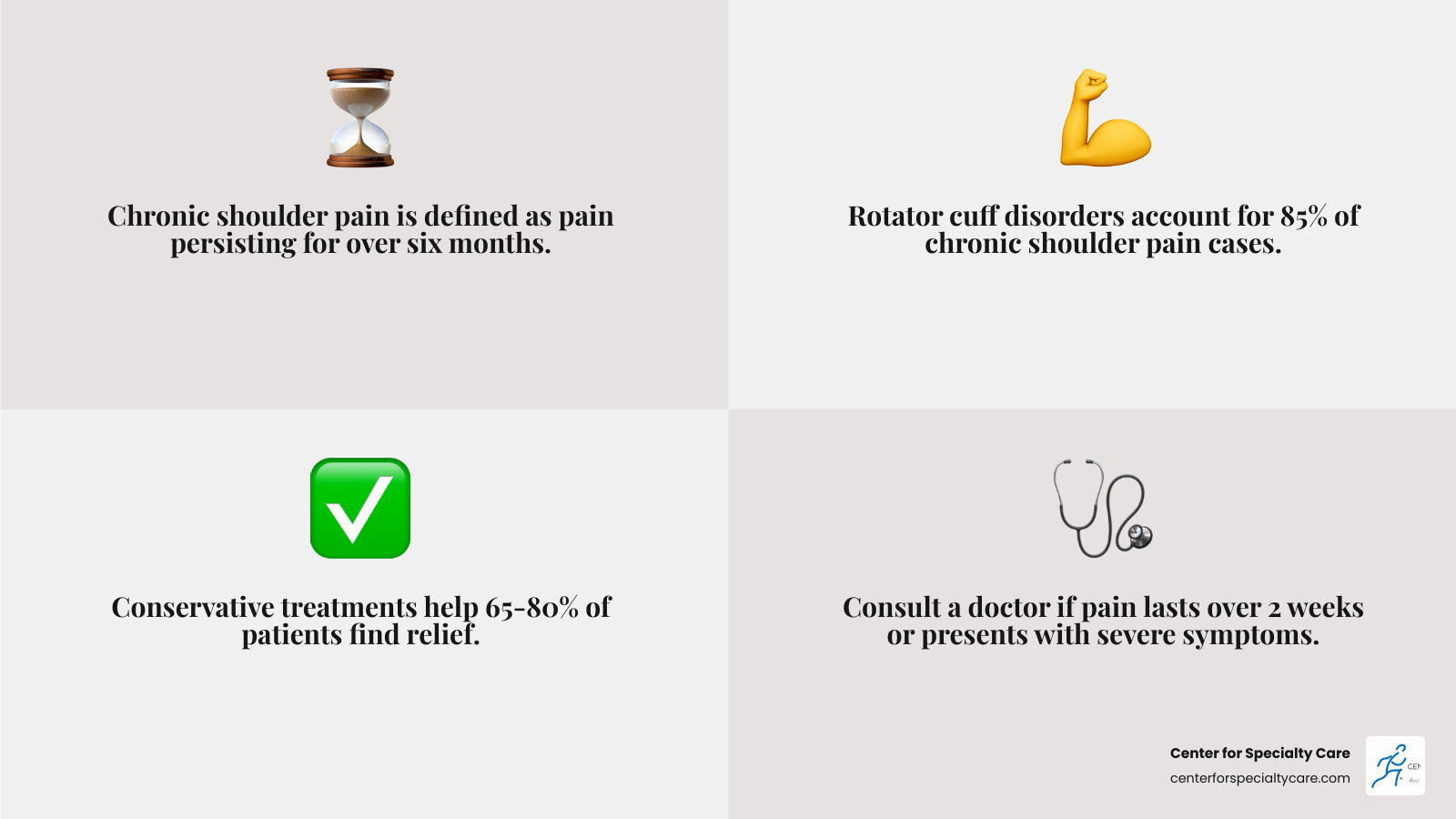
Chronic shoulder pain affects millions, making simple tasks like reaching for a coffee cup, getting dressed, or sleeping through the night feel impossible. If you have shoulder pain that has persisted for more than six months, you’re not alone, and you have options.
Your shoulder is the most movable joint in your body, but this remarkable range of motion comes at a cost. Its complex structure of bones, muscles, and tendons makes it vulnerable to injury and wear, leading to persistent pain that can disrupt sleep, work, and the activities you love. In fact, about 16% of musculoskeletal complaints in primary care involve the shoulder.
This guide will help you understand the causes of persistent shoulder pain, when to seek medical attention, and what treatments are available. We’ll explore the most common culprits, from rotator cuff disorders to arthritis, and outline a clear path from diagnosis to relief.
I’m Dr. Corey Welchlin, a board-certified orthopedic surgeon with over 30 years of experience. Since founding the Center for Specialty Care in 1990, I’ve helped countless patients in southern Minnesota and northern Iowa reclaim pain-free movement through advanced arthroscopic techniques and joint replacement surgery.
Similar topics to chronic shoulder pain:
- shoulder pain symptoms
- pinched nerve in shoulder blade
- comprehensive pain treatment
Understanding the Difference: Acute vs. Chronic Shoulder Pain
It’s crucial to distinguish between acute and chronic shoulder pain, as their duration, causes, and treatments differ significantly.
Here’s a quick comparison:
| Feature | Acute Shoulder Pain | Chronic Shoulder Pain |
|---|---|---|
| Duration | Sudden onset, resolves within days to weeks | Persistent for longer than six months |
| Typical Causes | Sudden injury, sprain, strain, impact, overuse | Degenerative conditions, untreated acute injuries, recurrent issues |
| Pain | Sharp, sudden, localized, often severe | Dull ache, throbbing, stiffness, persistent soreness, interferes with sleep |
| Treatment Goals | Pain relief, immediate healing, restoring function | Long-term pain management, functional improvement, improving quality of life |
What Defines Chronic Shoulder Pain?
Chronic shoulder pain is officially pain that has been present for longer than six months. This benchmark indicates the issue has moved beyond typical healing and requires a more comprehensive approach. The pain can be constant or recurrent, but it often brings challenging symptoms:
- Constant Ache: A persistent, nagging discomfort.
- Impact on Mobility: Difficulty lifting your arm, reaching overhead, or moving it freely.
- Stiffness: A feeling of tightness in the joint, especially after inactivity.
- Weakness: A noticeable decrease in arm or shoulder strength.
- Sleep Disturbance: Pain that worsens at night, leading to fatigue.
This persistent nature means chronic shoulder pain can profoundly affect your daily activities, work, and overall well-being.
How Acute Pain Can Become Chronic
A simple injury can evolve into chronic shoulder pain when acute pain isn’t properly addressed. This can happen through several pathways:
- Untreated or Incomplete Healing: A minor sprain or partial tendon tear can worsen if left untreated, leading to a more significant injury and chronic issues.
- Compensatory Movements: To avoid pain, you might alter how you move, like shrugging your shoulder or using your other arm more. These changes can strain other muscles and joints, creating new problems.
- Central Sensitization: Prolonged pain can make your nervous system hypersensitive, amplifying pain signals even after the initial injury has healed. Your body’s alarm system gets stuck in the “on” position.
Ignoring acute shoulder pain can lead to complications like reduced mobility, muscle atrophy (wasting), and a significant decrease in your ability to perform daily tasks. Our goal is to prevent acute pain from spiraling into a debilitating chronic condition.
At Center for Specialty Care, we understand that managing pain is complex. For more insights into comprehensive pain management strategies, please visit our page on More info about pain management.
Uncovering the Causes and Risks of Chronic Shoulder Pain
Understanding the “why” behind your discomfort is the first step toward effective treatment. The shoulder’s complexity makes it susceptible to a wide range of issues.
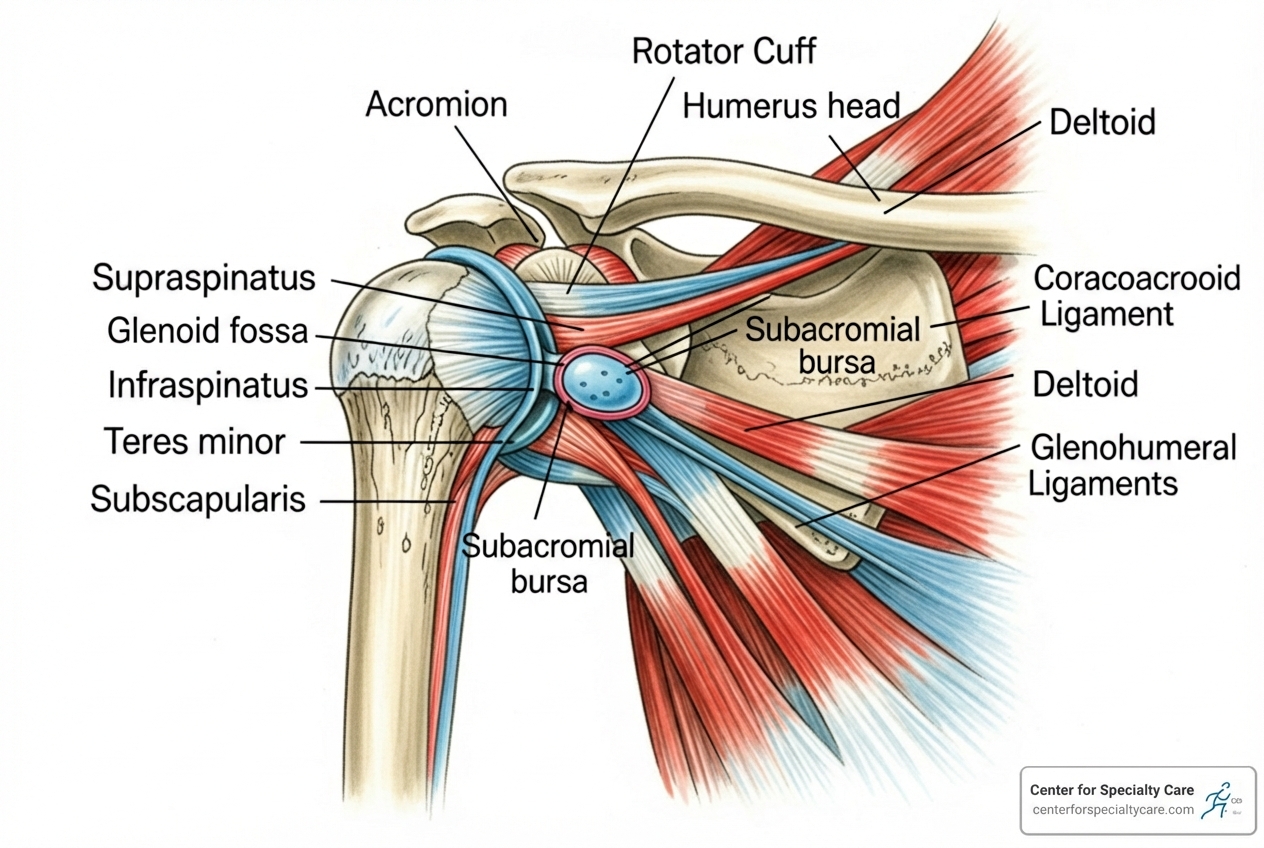
The most common causes of chronic shoulder pain we see in our clinics in Fairmont, Estherville, Buffalo Center, and St. James include:
- Rotator Cuff Disorders: Accounting for up to 85% of cases, these involve the muscles and tendons that stabilize the shoulder.
- Glenohumeral Disorders: Problems with the main ball-and-socket joint.
- Acromioclavicular (AC) Joint Pathology: Issues where the collarbone meets the shoulder blade.
- Referred Neck Pain: Pain that feels like it’s in the shoulder but originates in the neck.
For a broader perspective, you can explore An overview of shoulder pain causes.
Common Culprits Behind Persistent Discomfort
Specific conditions that often lead to chronic shoulder pain include:
- Rotator Cuff Tendinopathy and Tears: Inflammation (tendinopathy) or tearing of the rotator cuff tendons from repetitive overhead activities or age-related wear. Not all tears cause pain, but they can worsen over time. If you’re concerned about a rotator cuff injury, Learn about rotator cuff injuries.
- Osteoarthritis: “Wear-and-tear” arthritis where cartilage in the shoulder joint breaks down, causing gradual pain and loss of motion, especially in those over 50.
- Adhesive Capsulitis (Frozen Shoulder): Characterized by significant pain and stiffness (loss of range of motion). It can be associated with conditions like diabetes.
- Shoulder Impingement and Bursitis: Impingement occurs when part of the shoulder blade puts pressure on the rotator cuff. This can inflame the bursa (bursitis), a fluid-filled sac that cushions the joint, causing pain and swelling.
- Shoulder Instability: This happens when the arm bone is forced out of the shoulder socket (dislocation). It can become a chronic issue, leading to recurring pain and a feeling of unsteadiness, especially in younger patients.
- Referred Pain: Shoulder pain can sometimes be a symptom of issues in the neck, heart, or other systemic conditions, which is why a thorough medical exam is crucial.
Who Is Most at Risk and Why?
Certain factors increase your risk for chronic shoulder pain:
- Age: Natural wear and tear makes older adults more susceptible to rotator cuff tears and osteoarthritis.
- Repetitive Overhead Activities: Jobs (painters, electricians) and sports (tennis, swimming) that involve frequent overhead arm movements place significant stress on the shoulder.
- Incorrect Posture: Slouching or poor posture, especially when sitting, can alter shoulder mechanics and lead to muscle imbalances and stress.
- Occupational Hazards: Jobs involving heavy lifting or awkward postures can strain the shoulder.
Understanding these risk factors is key to prevention. If you fall into a high-risk category and have persistent shoulder pain, it’s important to seek professional evaluation.
Getting an Accurate Diagnosis: Your First Step to Relief
An accurate diagnosis is the compass that guides us to the most effective treatment for your chronic shoulder pain. At Center for Specialty Care, our meticulous approach combines a detailed medical history with a hands-on physical examination.

When to See a Doctor for Shoulder Pain
While minor aches can be common, certain symptoms warrant medical attention. See a doctor if you experience:
- Sudden, Severe Pain, especially after an injury.
- Inability to Move Your Arm through its normal range of motion.
- Noticeable Swelling or Bruising around the joint.
- Systemic Symptoms like fever or unexplained weight loss.
- Numbness or Weakness in the arm or hand.
- Pain Lasting More Than a Few Weeks with reduced mobility.
Note: If severe shoulder pain is accompanied by chest pain, dizziness, or shortness of breath, it could be a heart attack. Call 9-1-1 immediately.
For more guidance, please refer to When to consider urgent care for shoulder pain.
Diagnosing the Source of Your Chronic Shoulder Pain
Our diagnostic process is thorough and systematic:
-
Patient History: We’ll ask detailed questions about your pain’s onset, what it feels like, what makes it better or worse, and if it disrupts your sleep. We’ll also discuss your medical history, occupation, and activities.
-
Physical Examination: We perform a hands-on assessment, including:
- Inspection and Palpation: Looking for abnormalities like muscle wasting and feeling for specific points of tenderness.
- Range of Motion and Strength Tests: We assess both your active and passive movement to identify stiffness (a hallmark of frozen shoulder) and test muscle strength to pinpoint potential tendon issues.
- Provocative Tests: We use specific maneuvers (like the Hawkins’ and Empty Can tests) designed to reproduce your pain, which helps identify the injured structure, such as the rotator cuff or AC joint.
Our specialists are experts in interpreting these findings. To find out more about our team, visit Find a doctor for shoulder problems.
The Role of Diagnostic Imaging
While a physical exam is key, imaging provides crucial confirmation.
- X-rays: This is the first step to assess for bone issues like osteoarthritis, fractures, or bone spurs.
- MRI: This is the preferred test for a detailed look at soft tissues like the rotator cuff tendons, ligaments, and cartilage. It’s excellent for diagnosing tears and other complex issues.
- Ultrasound: A cost-effective alternative to MRI, ultrasound allows for dynamic assessment, meaning we can watch your tendons move in real-time.
- CT Scans: These are particularly useful for evaluating complex bony disorders, such as severe arthritis or fractures.
At Center for Specialty Care, we offer advanced diagnostic imaging to ensure a precise diagnosis. Learn more at More on our diagnostic imaging services. We only recommend imaging when it will clarify the diagnosis and guide your treatment plan.
Your Roadmap to Relief: A Guide to Treatment Options
Once we’ve pinpointed the cause of your chronic shoulder pain, we can create your personalized roadmap to relief. Our philosophy is to start with the least invasive treatments first, and we believe in shared decision-making to ensure you’re comfortable with every step.
For a comprehensive overview, consider reviewing An update on shoulder pain assessment and treatment.
Conservative Care and Self-Management
Many cases of chronic shoulder pain improve with conservative care. These are your first line of defense:
- Activity Modification: Temporarily stop or change activities that aggravate your pain, such as overhead work or heavy lifting, to give your shoulder a chance to rest.
- R.I.C.E. Method: For flare-ups, use Rest, Ice (15-minute intervals), Compression, and Elevation to reduce pain and inflammation.
- Over-the-Counter Pain Relievers: NSAIDs like ibuprofen or naproxen can help manage pain and reduce inflammation. Always follow dosage instructions.
- Posture and Ergonomics: Maintaining good posture and making ergonomic adjustments to your workspace can reduce strain on your shoulders.
- Simple, Safe Shoulder Stretches: Gentle stretching can improve flexibility. Try these, but stop if you feel sharp pain:
- Pendulum Swings: Lean forward, let your arm hang, and gently swing it in small circles.
- Cross-Body Arm Stretch: Use your good arm to gently pull your affected arm across your body.
- Doorway Stretch: Stand in a doorway, place your forearms on the frame, and lean forward.
The Power of Physical Therapy and Exercise
Physical therapy is a cornerstone of managing chronic shoulder pain, with a 65-80% success rate for many conditions. A custom program helps:
- Strengthen Rotator Cuff Muscles: Targeted exercises build strength and stability.
- Improve Flexibility and Range of Motion: Stretches and mobility exercises reduce stiffness.
- Manual Therapy: Our therapists may use hands-on techniques to mobilize the joint.
- Personalized Exercise Programs: We create customized plans that you can continue at home, which is just as effective as supervised therapy.
Physical therapy re-educates your body to move correctly, reducing the chance of recurrence. Learn more at Discover the benefits of physical therapy.
Medical and Surgical Interventions
If conservative measures don’t provide relief after 3-6 months, we may consider other options.
- Corticosteroid Injections: These powerful anti-inflammatory injections can provide significant, though often temporary, pain relief, especially for conditions like frozen shoulder. To learn more, Explore injection options for shoulder pain.
- Surgical Approaches: Surgery is considered when non-surgical treatments fail or for specific structural repairs. We always engage in shared decision-making.
- Arthroscopic Surgery: This minimally invasive technique uses a small camera for procedures like rotator cuff repair and cleaning out damaged tissue, allowing for a faster recovery.
- Shoulder Replacement: For severe arthritis or extensive rotator cuff damage, replacing the joint can dramatically improve pain and function.
- Rotator Cuff Repair: For significant tears that don’t respond to conservative care, we can surgically reattach the torn tendon to the bone.
We always discuss the latest evidence and tailor our recommendations to your unique situation. If surgery is a consideration, our expert surgeons specialize in advanced shoulder procedures. Find more information at Find a rotator cuff surgeon.
Conclusion: Take Control of Your Shoulder Health
Chronic shoulder pain can limit your independence, but it is a treatable condition with many options for relief. The journey to a pain-free shoulder begins with understanding its causes and knowing when to seek professional help.
A personalized diagnosis is the critical first step, leading to a custom treatment plan that can restore your movement and quality of life. This plan often starts with conservative care and physical therapy, progressing to medical or surgical interventions only when necessary.
At Center for Specialty Care, our team in Fairmont, Estherville, Buffalo Center, and St. James is dedicated to providing a precise diagnosis and a personalized plan to help you move past the pain. We partner with you every step of the way. Don’t let chronic shoulder pain dictate your life. Take the first step and explore our comprehensive shoulder care options.