
Say Goodbye to Pain: Effective Ingrown Toenail Fixes
February 21, 2026
When Your Shoulder Won’t Quit: A Guide to Persistent Pain
February 24, 2026
What does a pain management clinic do: Your #1 Relief
Understanding What a Pain Management Clinic Does for You
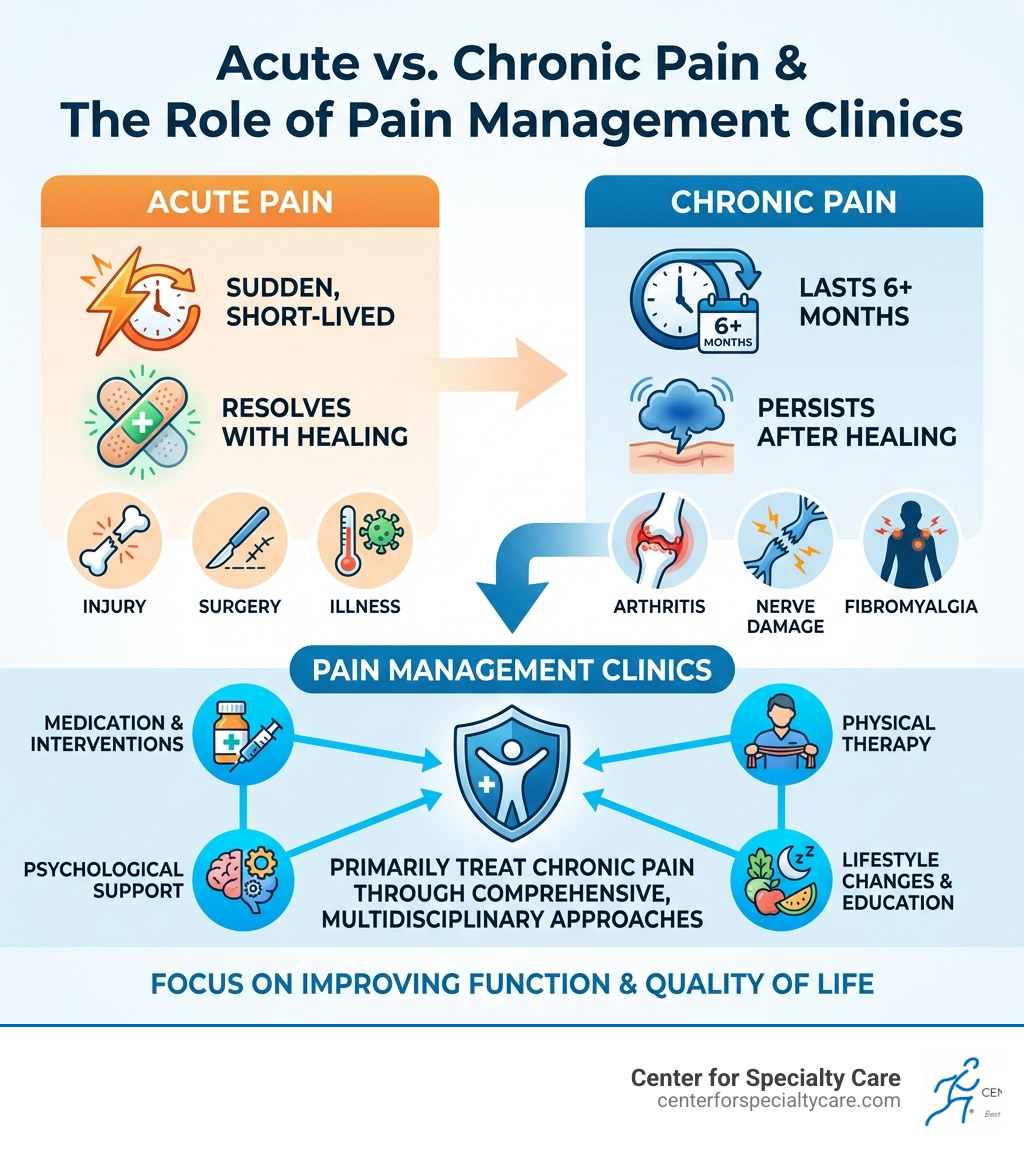
What does a pain management clinic do? A pain management clinic is a specialized healthcare facility that helps people with chronic or acute pain improve their quality of life through comprehensive diagnosis and treatment. These clinics use a multidisciplinary team approach that combines medications, physical therapy, psychological support, and interventional procedures to reduce pain and restore function—not just mask symptoms with pills.
Here’s what you can expect from a pain management clinic:
- Comprehensive evaluation – Physical exams, medical history review, and diagnostic imaging to pinpoint pain sources
- Personalized treatment plans – Custom care combining multiple approaches custom to your specific condition
- Team-based care – Access to pain specialists, physical therapists, psychologists, and other experts working together
- Multiple treatment options – From medication management and injections to therapy, lifestyle changes, and advanced procedures
- Focus on function – Goal is to help you return to daily activities, not just reduce pain numbers
- Long-term support – Ongoing care, follow-ups, and self-management strategies for lasting results
Chronic pain can rule your life, interfering with your ability to work, sleep, and enjoy your family and friends. Unlike the short-term pain you might feel after an injury or during a brief illness, chronic pain can last for months or even years. It continues even after an injury has healed.
The good news? Pain management clinics offer hope. They don’t promise to eliminate all pain, but they provide proven strategies to help you take back control of your life. Through education, therapy, and medical interventions, these specialized centers teach you the physical, emotional, and mental coping skills needed to manage pain effectively.
I’m Dr. Corey Welchlin, a board-certified orthopedic surgeon and sports medicine physician with over three decades of experience treating musculoskeletal pain in southern Minnesota and northern Iowa. As the founder of the Center for Specialty Care in Fairmont, I’ve helped thousands of patients understand what does a pain management clinic do and how it can transform their daily lives through comprehensive, personalized care. Our multidisciplinary approach addresses not just the symptoms of pain, but the underlying causes and the impact on your overall well-being.
Basic what does a pain management clinic do glossary:
Understanding the Role of a Pain Management Clinic
When chronic pain becomes a constant companion, impacting every aspect of your life, it’s natural to wonder, what does a pain management clinic do to help? We understand that living with persistent pain is exhausting, frustrating, and often isolating. Our goal at the Center for Specialty Care is to provide a roadmap to a life with less pain, focusing on restoring your function and improving your overall quality of life. We believe in an interdisciplinary approach, which means a team of experts works together to address all facets of your pain. This comprehensive strategy is widely recognized as the most effective for managing complex pain conditions.
A pain management specialist is a doctor who evaluates your pain and treats a wide range of pain problems, from sudden, sharp pains like headaches to long-lasting, chronic pain such as low back pain. They lead a multidisciplinary team, ensuring you receive care that considers your physical, emotional, and mental well-being. This team may include physical therapists, occupational therapists, pain psychologists, and other medical professionals, all collaborating to teach you coping skills and help you regain control.
Who benefits from pain management? Anyone experiencing pain that significantly impacts their daily life can benefit. Whether your pain is acute (short-term, often resolving with healing) or chronic (lasting months or years, even after an injury has healed), a pain management clinic can offer solutions. Our focus is on helping you return to daily tasks, enjoy your usual activities, and improve your overall functioning.
What is a Pain Clinic?
At its core, a pain clinic is a specialized healthcare facility dedicated to the diagnosis and treatment of various pain conditions. Unlike a general practitioner who might offer initial assessments, we provide a comprehensive care model custom specifically to the complexities of pain. Our team of experts includes specialists trained in various fields, ensuring that we look at your pain from every angle. This might mean working with pain psychologists to address the mental and emotional toll of chronic pain, or physical and occupational therapists to improve your movement and daily activity abilities. We focus on evidence-based approaches, meaning the treatments we offer are backed by scientific research and proven to be effective.
The Primary Goals of Pain Management
It’s important to clarify that our primary goals extend beyond simply reducing pain. While pain relief is certainly a significant objective, true pain management aims to improve your overall quality of life and functionality. We often distinguish between “pain reduction” and “pain management” because, for many chronic conditions, complete elimination of pain may not be realistic. Instead, we empower you to manage your pain effectively, so it no longer dictates your life.
Our key goals include:
- Improving Daily Function: Helping you engage in activities you love, whether it’s gardening, playing with grandchildren, or simply performing daily chores without debilitating discomfort.
- Enhancing Quality of Life: Addressing how pain affects your mood, sleep, and relationships, leading to a more fulfilling life.
- Reducing Reliance on Medication: Especially concerning with opioids, we strive to minimize the need for potentially addictive medications, focusing on sustainable, long-term strategies. Many pain clinics work with patients to taper off opioids, recognizing their high addiction potential and potential to worsen pain sensitivity over time.
- Emotional and Mental Coping Skills: Equipping you with tools to handle the psychological and emotional aspects of chronic pain, such as stress, anxiety, and depression.
- Long-Term Results: Our programs are designed to provide lasting benefits, with studies showing significant improvement in mood, quality of life, and physical outcomes observed even six months after attending a pain clinic.
Conditions Treated and the People Who Benefit
One of the most common questions we hear is, “What kinds of pain do you treat?” The answer is broad because pain is incredibly complex and affects everyone differently. Our pain management specialists are trained to diagnose and treat a wide array of conditions, helping individuals across Minnesota and Iowa find relief.
From widespread body pain to specific, localized discomfort, we are here to help. This includes managing pain that arises post-surgically, addressing various types of headaches and migraines, and even providing support for cancer-related pain, although our primary focus remains on orthopedic and musculoskeletal issues.
Musculoskeletal and Joint Pain
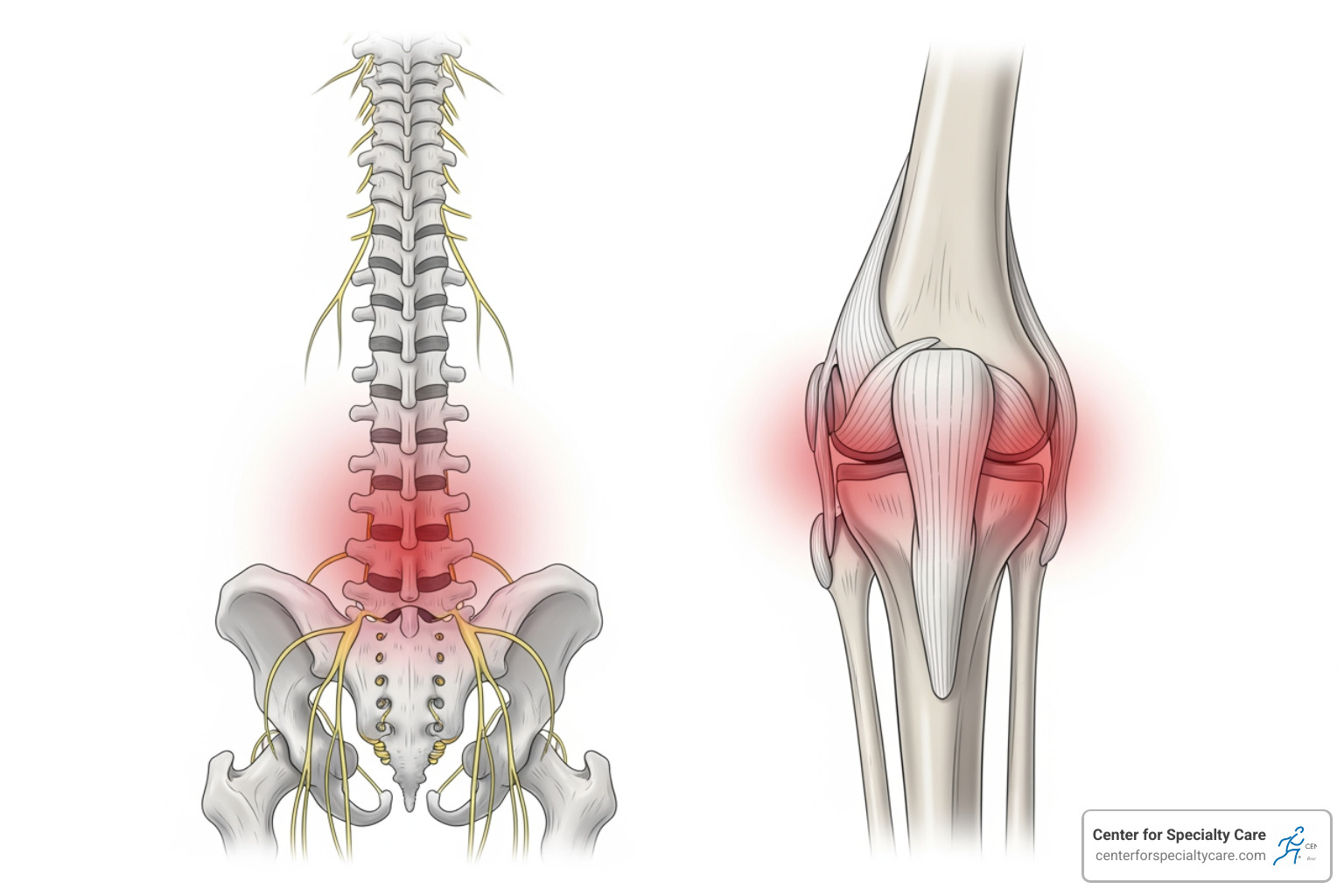
Musculoskeletal pain is one of the most frequent reasons people seek our help. This category encompasses pain affecting your muscles, bones, joints, ligaments, tendons, and nerves.
Common conditions we treat include:
- Back and Neck Pain: Often caused by conditions like degenerative disc disease, disc herniation, spinal stenosis, sciatica, or general low back and neck pain. These are among the most common reasons for seeking specialized pain care. Should I Go to Urgent Care for Back Pain? Signs, Treatment Options
- Arthritis: Including osteoarthritis and rheumatoid arthritis, which can cause significant joint pain and stiffness.
- Pain from Sports Injuries: Whether it’s a sprain, strain, or a more complex injury from athletic activity, we help athletes and active individuals recover and return to their passion. Sports Medicine
- Other Joint Pain: Such as sacroiliitis (inflammation of the sacroiliac joint) and other forms of joint discomfort.
Our expertise in Orthopedics means we are exceptionally well-equipped to handle these types of pain, providing both surgical and non-surgical solutions.
Neuropathic (Nerve) Pain
Nerve pain, also known as neuropathic pain, occurs when there is damage or dysfunction of the nervous system itself. This can result in burning, tingling, numbness, or shooting sensations.
Conditions we frequently treat include:
- Sciatica: Pain radiating along the sciatic nerve, typically down one leg.
- Pinched Nerves: When a nerve is compressed by surrounding tissues, causing pain, numbness, or weakness.
- Diabetic Neuropathy: Nerve damage caused by diabetes, often affecting the feet and hands.
- Complex Regional Pain Syndrome (CRPS): A chronic pain condition often affecting an arm or leg, usually after an injury, stroke, heart attack, or surgery.
- Radiating Pain: Pain that spreads from one area to another, often indicating nerve involvement. For tips on managing this, see our guide on Managing Radiating Pain: Tips for Relief.
What Does a Pain Management Clinic Do? A Look at Treatments and Therapies
So, what does a pain management clinic do once they’ve identified the source of your pain? We employ a step-wise treatment approach, always starting with the least invasive options and progressing as needed. Our goal is to create personalized care plans that combine various therapies to achieve the best possible outcome for you. Think of it as building your own “Pentagon” of treatment, addressing Sleep, Mental Health, Rehabilitation, Medications, and Interventions – a holistic model aimed at modifying, modulating, and disrupting pain signals.

Comprehensive Diagnosis and Personalized Plans
Your journey with us begins with a thorough and comprehensive diagnosis. This is crucial because accurate diagnosis is the foundation of effective treatment. During your initial consultation, we will:
- Review your medical history: We’ll dig into your past health, previous injuries, and any conditions that might contribute to your pain.
- Perform physical and neurological exams: These hands-on assessments help us understand your body’s mechanics and nerve function.
- Use diagnostic imaging: We may recommend imaging such as X-rays, MRI, or CT scans to pinpoint the exact source of your pain. In some cases, electrodiagnostic studies like nerve conduction studies (NCS) or electromyography (EMG) might be used to assess nerve health.
- Encourage pain journaling: We often suggest keeping a pain journal. This simple yet powerful tool helps you track pain levels (on a 0-10 scale), identify triggers, and observe patterns, greatly improving communication with your doctor. It can also help you become more aware of how pain impacts your mood and daily activities.
Based on this detailed evaluation, we collaborate with you to create a custom treatment plan. This plan is dynamic, meaning we’ll adjust it as your needs change and as you progress through therapy. Our pain management specialists are uniquely qualified to deliver precise diagnoses and innovative treatments.
What does a pain management clinic do for medication management?
Medication is often a component of a pain management plan, but it’s just one tool in our comprehensive toolbox. Our approach to medication management is cautious and strategic, prioritizing your long-term health and minimizing risks. We aim to prevent, reduce, or relieve pain using a variety of pharmacological options, always striving for the most effective yet least invasive solutions.
This may include:
- Non-steroidal anti-inflammatory drugs (NSAIDs): For inflammation and mild to moderate pain.
- Antidepressants and Muscle Relaxants: Certain classes of these medications can be very effective in managing chronic pain, even in individuals who are not depressed, by affecting pain pathways in the brain.
- Cautious Opioid Prescribing: We understand that opioids have a high addiction potential. Therefore, we aim to avoid their use whenever possible. If opioids are deemed necessary for a short period, we monitor their use very closely. Many pain clinics, including ours, work with patients to taper off opioids, recognizing that chronic pain medication can sometimes make pain worse by increasing brain sensitivity. Our commitment to Safe Prescribing Practices ensures your safety and well-being.
Interventional Procedures for Targeted Relief
When medications or conservative therapies aren’t enough, we offer a range of minimally invasive procedures designed to target pain directly. These interventions can provide significant relief and often allow patients to reduce their reliance on oral medications.
Some common interventional procedures include:
- Nerve Blocks: Injections of local anesthetic and sometimes steroids near specific nerves to block pain signals.
- Trigger Point Injections: Injections into muscle knots (trigger points) that can cause localized or referred pain.
- Epidural Steroid Injections: Commonly used for back and neck pain, these injections deliver anti-inflammatory medication directly into the epidural space around the spinal cord. Learn more about Understanding Epidural Steroid Injections: What You Need to Know.
- Radiofrequency Ablation (RFA): Uses radio waves to heat and destroy nerve tissue, interrupting pain signals from a specific area.
- Spinal Cord Stimulators: For severe, chronic pain that hasn’t responded to other treatments, a small device is implanted to deliver low-voltage electrical currents to the spinal cord, blocking pain signals.
- Other Advanced Procedures: Depending on your condition, we might also explore options like viscosupplementation for joint pain or, in some cases, consider Surgical options for pain when appropriate.
The Role of Rehabilitation and Therapy
A cornerstone of what a pain management clinic does is rehabilitation. We firmly believe that movement helps reduce pain. Getting you physically active and improving your body’s function is one of our main goals.
Our rehabilitation services often include:
- Physical Therapy: Our dedicated physical therapists work with you to strengthen muscles, improve flexibility, and increase your range of motion. This is especially critical for conditions like arthritis, where movement helps prevent stiffness and contractures. Our Physical Therapy program is designed to get you moving safely and effectively.
- Occupational Therapy: Occupational therapists help you adapt to daily activities, teaching you new ways to perform tasks with less pain and greater independence. This might involve modifying your home or work environment, or learning new techniques for self-care.
Addressing the Mind-Body Connection
Chronic pain isn’t just physical; it takes a significant emotional and mental toll. The constant discomfort can lead to stress, anxiety, depression, and feelings of hopelessness. Understanding this mind-body connection is a crucial part of what a pain management clinic does.
We integrate strategies to address these psychological aspects:
- Cognitive Behavioral Therapy (CBT): CBT is a highly effective therapy that helps you build skills to cope with the emotional load of chronic pain and any associated mental health conditions. It teaches you to reshape negative thought patterns and emotional responses that can intensify pain.
- Building Coping Skills: Through various techniques, we help you develop resilience and strategies to manage pain-related stress.
- Relaxation and Mindfulness Techniques: We introduce practices like Relaxation strategies and Mindfulness techniques to help you calm your nervous system, reduce tension, and improve your ability to live in the present moment despite pain. These tools empower you to take an active role in your pain management.
Your Journey Through a Pain Management Program
Starting on a pain management program is a journey towards empowerment and a life with less pain. We’re here to guide you every step of the way, focusing on self-management strategies that lead to long-term success.
How Do I Get Started with a Pain Clinic?
The first step is typically a referral from your primary care provider. Your family doctor or nurse practitioner plays a vital role in accessing specialized pain clinic services. Once referred, we’ll schedule your initial consultation.
To make your first visit as productive as possible, we recommend:
- Bringing a list of all your current medications: Including dosages and how often you take them.
- Gathering prior medical records: Especially any diagnostic imaging reports (X-rays, MRIs) related to your pain.
- Starting a pain journal: As mentioned earlier, this can be incredibly helpful for you to track and describe your pain patterns, triggers, and impact on daily life.
What does a pain management clinic do during a typical program?
The structure and duration of a pain rehabilitation program can vary, but many are outpatient, meaning you attend sessions and return home afterward. A typical program might involve a combination of therapies over several weeks. For instance, a day might include physical therapy, occupational therapy, pain education classes where you learn about how chronic pain works, and relaxation or mind-body therapy. Group therapy sessions are also common, providing a supportive environment where you can connect with others who understand your experience.
Throughout the program, we continuously monitor your progress and adjust your personalized plan. Follow-up care is crucial to ensure the lasting effectiveness of the treatments and coping strategies you’ve learned.
Potential Outcomes and Benefits
The hard work you put into a pain management program can yield significant and lasting benefits. Our aim is to help you achieve:
- Improved Mood and Physical Outcomes: Patients often report significant improvements in their emotional well-being and physical capabilities.
- Increased Activity Levels: Regaining the ability to participate in activities you had to give up due to pain.
- Better Sleep: Chronic pain often disrupts sleep, and effective pain management can lead to more restful nights.
- Reduced Pain Scores: While complete elimination isn’t always the goal, a significant reduction in pain intensity is a common outcome.
- Lasting Results: The coping skills and self-management strategies you learn are designed to provide long-term relief and control over your pain.
- Improved Quality of Life: Our most important goal is to help you live a fuller, more enjoyable life, free from the constant burden of debilitating pain.
Frequently Asked Questions about Pain Management Clinics
We know you have questions, and we’re here to provide clear answers about what does a pain management clinic do for you.
Is treatment at a pain clinic covered by insurance?
The cost of treatment at pain clinics and whether it’s covered by insurance can vary significantly. Generally, most pain management services are covered by health insurance plans, especially those deemed medically necessary. However, coverage specifics depend on your individual provider and plan. It’s always best to:
- Contact your insurance company directly: Inquire about your specific benefits for pain management services, including consultations, procedures, and therapies.
- Understand pre-authorization requirements: Some procedures or treatments may require pre-authorization from your insurance company. Our team can help you steer this process.
While some healthcare systems, like Canada’s OHIP, cover chronic pain clinic treatment with a doctor’s referral, in Minnesota and Iowa, you’ll need to check your specific insurance policy. We strive to provide transparent information about costs and assist you with insurance claims.
What is the difference between a pain clinic and my regular doctor?
While your primary care provider (PCP) is an invaluable first point of contact for many health concerns, what does a pain management clinic do differently? We offer a specialized and focused approach:
- Specialized Focus on Complex Pain: Our entire practice is dedicated to understanding, diagnosing, and treating pain. Our specialists have advanced training specifically in pain medicine.
- Multidisciplinary Team Approach: Unlike a single doctor’s office, we bring together a team of experts (pain specialists, physical therapists, occupational therapists, psychologists) under one roof to provide comprehensive care.
- Access to Advanced Procedures: We offer a wider range of interventional procedures, from nerve blocks to spinal cord stimulators, that are typically not available in a general practitioner’s office.
- Collaboration with Your PCP: We work closely with your primary care provider, ensuring seamless communication and integrated care. Your PCP remains an essential part of your healthcare team, and we keep them informed of your progress.
Will a pain clinic just give me pain medication?
Absolutely not. While medication can be a part of your treatment plan, it’s never the sole focus of what does a pain management clinic do. We employ a holistic approach, emphasizing functional improvement and long-term well-being. Our goal is to reduce your reliance on medication, especially opioids, due to their potential for addiction and side effects. We prioritize non-opioid treatments and therapies, such as physical therapy, interventional procedures, and psychological support, to empower you with sustainable pain management strategies. Medications are carefully managed and prescribed only when appropriate and as part of a broader, integrated plan.
Taking the First Step Towards a Life with Less Pain
Understanding what does a pain management clinic do is the first step towards reclaiming your life from chronic pain. We offer a path to empowerment, providing hope and effective strategies for managing even the most persistent discomfort. Our personalized care philosophy, combined with a commitment to 100% patient satisfaction and quick appointment availability, sets the Center for Specialty Care apart in Fairmont, Estherville, Buffalo Center, St. James, and across Minnesota and Iowa.
Don’t let pain define you. We are here to help you find relief, restore function, and improve your quality of life.
Learn more about our approach to Pain Management and find how we can help you. If you’re searching for a specialist, our guide on Pain Management Dr Near Me: A Comprehensive Guide can provide further insights.