
What patients really think about Intracept
May 8, 2026
Why Your Rotator Cuff Injury Hurts More at Night
May 14, 2026
Tendinitis Pain: Should You Apply Ice or Heat for Fast Relief?
Ice or Heat for Tendonitis? Here’s the Quick Answer
Do you use heat or ice for tendonitis depends on one key factor: how long you’ve had the pain.
| Condition | What to Use | Why |
|---|---|---|
| Acute tendonitis (0-72 hours, swelling present) | Ice | Reduces swelling and numbs pain |
| Chronic tendon pain (3+ days, stiffness, no swelling) | Heat | Boosts blood flow, relaxes muscles |
| Post-activity flare-up (chronic condition) | Ice after, heat before | Manage inflammation and prep tissue |
The wrong choice at the wrong time can slow your recovery — or even make things worse.
Tendon pain is frustrating. Whether it’s a sharp twinge in your elbow or a dull, nagging ache in your heel, the first thing most people reach for is either an ice pack or a heating pad. But which one actually helps?
The answer isn’t the same for everyone — and it isn’t the same for every stage of your injury.
I’m Dr. Corey Welchlin, a board-certified orthopedic surgeon and sports medicine physician with over 30 years of experience treating tendon injuries, and knowing do you use heat or ice for tendonitis is one of the most common questions I answer for patients dealing with acute and chronic tendon pain. In this guide, I’ll walk you through exactly when and how to use each — so you can start feeling better faster.
Do you use heat or ice for tendonitis helpful reading:
Understanding Your Pain: Tendonitis vs. Tendonosis
To answer the question of do you use heat or ice for tendonitis, we first have to understand what is actually happening inside your body. While most people use the term “tendonitis” for any tendon pain, medical professionals often distinguish between two different conditions: tendonitis and tendonosis.
Acute Inflammation: Tendonitis
True tendonitis is an acute condition. It involves actual inflammation of the tendon, usually caused by a sudden injury or a specific instance of overloading the tissue (like spending all weekend power-gardening after a long winter).
- Symptoms: Sharp pain, visible swelling, redness, and a feeling of warmth around the joint.
- Pathology: Your body is sending white blood cells and fluid to the area to begin the repair process. This is “fire” in the joint.
Chronic Degeneration: Tendonosis
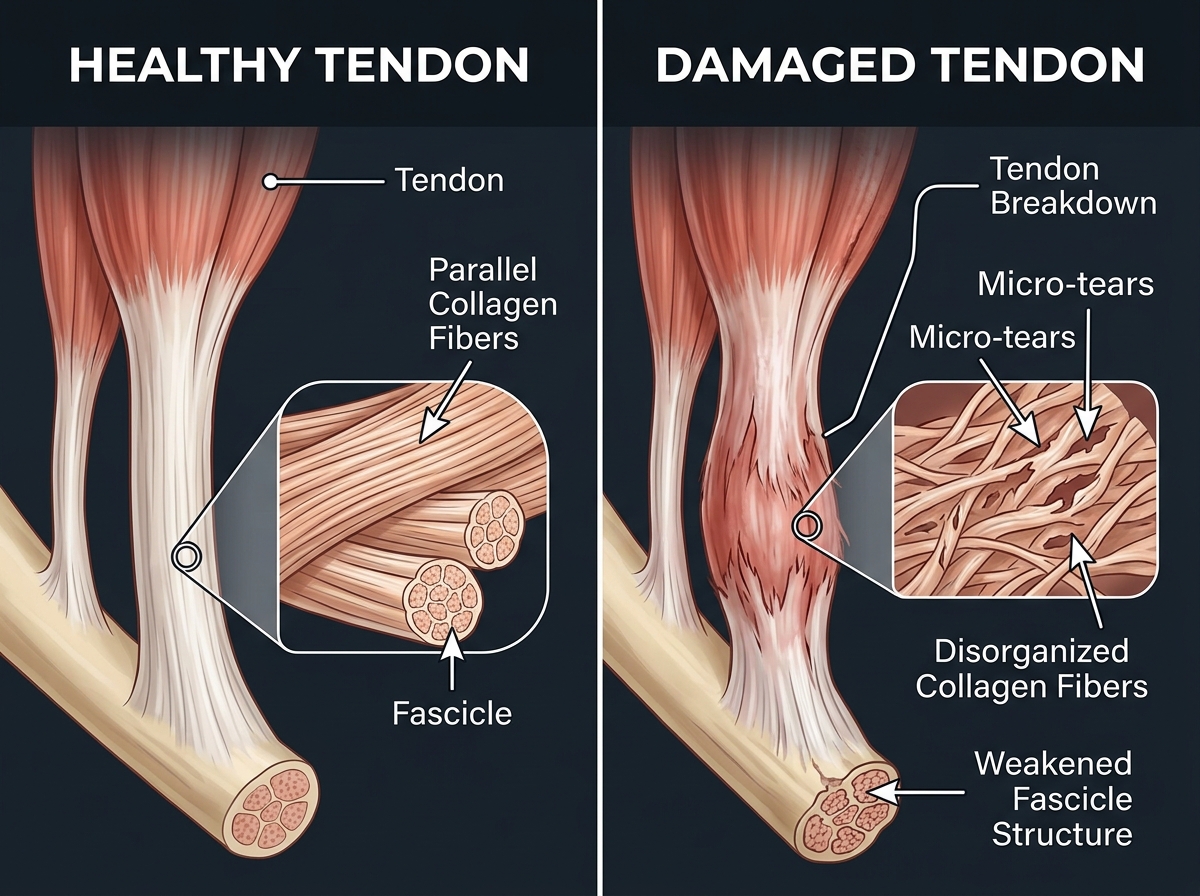
Tendonosis (often called chronic tendinopathy) is much more common than people realize. It isn’t about inflammation; it’s about the breakdown of collagen. Think of a healthy tendon like a shiny, tight, new rope. In tendonosis, that rope has become frayed and disorganized over months or years of repetitive stress.
- Symptoms: Dull, nagging ache, significant morning stiffness, and pain that “warms up” and feels better during light activity but hurts afterward.
- Pathology: There is a lack of inflammatory cells but a significant amount of tiny micro-tears and collagen degradation.
Understanding this difference is vital because treating “frayed rope” (tendonosis) with the same method as “fire” (tendonitis) won’t give you the results you want. According to the Mayo Clinic, identifying whether your pain is a sudden injury or an ongoing issue is the first step in choosing the right temperature therapy.
Do You Use Heat or Ice for Tendonitis? The Timing Rule
Timing isn’t just a suggestion; it’s the “golden rule” of tendon recovery. If you apply heat to a brand-new injury, you might increase the swelling and make the pain worse. Conversely, if you only use ice on a chronic, stiff tendon, you might be restricting the very blood flow that the tissue needs to heal.
The 48-72 Hour Window
For any new injury—whether you felt a “pop” during a tennis match or woke up with a swollen wrist after a day of heavy lifting—the first 48 to 72 hours are the “Ice Zone.” During this window, the goal is vasoconstriction. Ice narrows the blood vessels, which limits internal bleeding and keeps swelling under control.
Beyond the Initial Phase
Once the initial “heat” of the injury has cooled down (usually after day three), or if you are dealing with a condition that has lingered for weeks, you move into the “Heat Zone.” Here, we want vasodilation. Heat expands the blood vessels, bringing oxygen-rich blood to the area and helping to flush out metabolic waste.
As noted by Beacon Health System, ice is the champion for sudden injuries, while heat is often the better choice for chronic overuse because it relaxes the surrounding muscles that often seize up in response to tendon pain.
How to Apply Ice and Heat Safely for Fast Relief
Regardless of which one you choose, improper application can lead to skin damage, including “ice burns” (frostbite) or heat-induced burns. At the Center for Specialty Care, we always emphasize safety first.
The 15-20 Minute Rule
Neither ice nor heat should be applied indefinitely. The sweet spot is 15 to 20 minutes.
- Ice: If you leave it on too long, your body may actually trigger a “Hunting Response,” where it floods the area with blood to prevent frostbite, which increases swelling—the exact opposite of what you want!
- Heat: Long-term heat application can lead to skin mottling or burns, especially if you fall asleep with a heating pad.
Proper Barriers
Never place a chemical ice pack or a heating pad directly onto bare skin. Always use a thin towel or cloth as a barrier. This helps distribute the temperature evenly and protects the delicate nerve endings in your skin. For more detailed tips, check out our guide on does heat help tendonitis.
When to use ice for tendonitis symptoms
If you are asking do you use heat or ice for tendonitis and you see any of the following, reach for the ice:
- Visible Swelling: If the joint looks “puffy” compared to the other side.
- Sharp, Stabbing Pain: This usually indicates active irritation.
- Post-Activity Flare-ups: If you have chronic Achilles issues but it feels “angry” after a long walk, ice it immediately to calm the reaction.
- Redness or Warmth: These are classic signs of inflammation.
Ice provides a natural numbing effect by slowing down nerve conduction. It’s like a local anesthetic you have in your freezer. If you’re struggling with extensor tendonitis, icing the top of the foot can be particularly effective because the tendons are very close to the skin.
When to use heat for tendonitis stiffness
Heat is your best friend for the “grumpy” tendons that hurt more when you first wake up. Use heat for:
- Morning Stiffness: If you have to “limp” for the first ten minutes of the day, a heating pad can help loosen the tissue.
- Chronic Dull Aches: For pain that has been present for a month or more.
- Pre-Exercise Warm-up: Heat increases the elasticity of the tendon, making it less likely to “snap” or tear during activity.
- Muscle Relaxation: Often, the muscles attached to the tendon (like the calf muscle in Achilles issues) get tight. Heat helps them let go.
For those managing Achilles tendonitis, applying moist heat to the calf and heel area before doing your physical therapy stretches can significantly improve your range of motion.
Advanced Recovery: Contrast Therapy and Prevention
Once you’ve moved past the initial sharp pain, you don’t have to choose just one. Many athletes use Contrast Therapy—alternating between heat and cold.
The “Pumping” Action
By switching between heat (which opens blood vessels) and cold (which closes them), you create a physiological “pump.” This helps move fluid out of the injured area and brings fresh, healing blood in. A common cycle is 3 minutes of heat followed by 1 minute of cold, repeated four times, always ending on cold if there is any lingering swelling.
Prevention is the Best Medicine
While knowing do you use heat or ice for tendonitis is great for treatment, preventing a recurrence is the ultimate goal.
- Strengthening: Gradually build the strength of the muscles surrounding the tendon.
- Flexibility: Incorporate gentle stretching into your daily routine—not just when you’re hurt.
- Proper Equipment: Ensure your shoes or ergonomic office setups are supporting your body correctly.
- Activity Variation: Don’t do the same repetitive motion every single day. Give your tendons “rest days” to repair the micro-damage that naturally occurs during exercise.
Frequently Asked Questions about Tendon Pain
Can heat make tendonitis worse?
Yes, it can. If you apply heat during the “acute” phase (the first 48 hours), you are essentially adding fuel to the fire. Heat increases blood flow, which can lead to more swelling and more pressure on the nerve endings, resulting in increased pain. If the area is red and swollen, stay away from the heating pad.
How long should I apply ice or heat?
We recommend 15-20 minute sessions. You should wait at least two hours between sessions to allow the skin and underlying tissues to return to their normal temperature. Consistency is key; applying ice once won’t fix the problem, but applying it 3-4 times a day for several days can make a massive difference.
When should I see a doctor for tendonitis?
Self-treatment is great for minor strains, but you should visit us at the Center for Specialty Care if you experience:
- Severe Pain: Pain that prevents you from sleeping or performing basic daily tasks.
- Loss of Function: You cannot move the joint or bear weight on a leg.
- The “Pop”: If you heard or felt a distinct popping sound at the time of injury, you may have a full rupture.
- Persistent Symptoms: If your “tendonitis” hasn’t improved after two weeks of rest, ice, and heat.
- Fever or Extreme Redness: This could indicate an infection rather than a simple injury.
Conclusion
So, do you use heat or ice for tendonitis? The short answer is: ice for the “fire” of a new injury, and heat for the “stiffness” of a chronic ache.
At the Center for Specialty Care, we know that tendon pain can keep you from the activities you love. Whether you’re an athlete in Fairmont, MN, or a busy professional in Estherville, IA, our team is dedicated to providing personalized care that gets you back on your feet. We offer both surgical and non-surgical options, and we pride ourselves on quick appointment availability and 100% patient satisfaction.
Don’t let tendon pain become a permanent part of your life. If your pain is persistent, it’s time for a professional evaluation.
Schedule a consultation with our specialists today and take the first step toward a pain-free life!