
The Nerve of It! A Deep Dive into Ablation for Chronic Pain
December 30, 2025
Step Up Your Foot Care: A Guide to Optimal Foot Health
January 1, 2026
How to treat tendonitis: 3 Best Steps for Relief
Why Understanding How to Treat Tendonitis Matters
How to treat tendonitis effectively starts with understanding your options and taking action early. If you’re experiencing tendon pain, here’s what you need to know right away:
Quick Treatment Overview:
- Rest – Stop activities that aggravate the tendon for 2-3 days
- Ice – Apply ice packs for 15-20 minutes every 2-3 hours
- Compress – Use an elastic bandage or brace (snug, not tight)
- Lift – Keep the affected area raised when possible
- Pain Relief – Take over-the-counter NSAIDs like ibuprofen or naproxen
- Seek Professional Help – If symptoms don’t improve within a few weeks
Tendonitis occurs when the thick cords connecting your muscles to bones become inflamed. It can cause joint pain, stiffness, and difficulty moving the affected area. Most cases stem from repetitive motions at work or during exercise, sudden injury, or the natural aging process that makes tendons less flexible after age 40.
The good news? Tendonitis is treatable. While it won’t heal completely on its own, most people find relief through conservative therapies like rest, physical therapy, and targeted exercises. The key is addressing symptoms early, before temporary inflammation turns into chronic degeneration.
I’m Dr. Corey Welchlin, a board-certified orthopedic surgeon with over 30 years of experience treating tendon injuries in southern Minnesota and northern Iowa. At the Center for Specialty Care, we’ve helped thousands of patients understand how to treat tendonitis effectively through both conservative and surgical approaches, getting them back to the activities they love.
How to treat tendonitis word roundup:
Understanding Tendonitis: Symptoms, Types, and Diagnosis
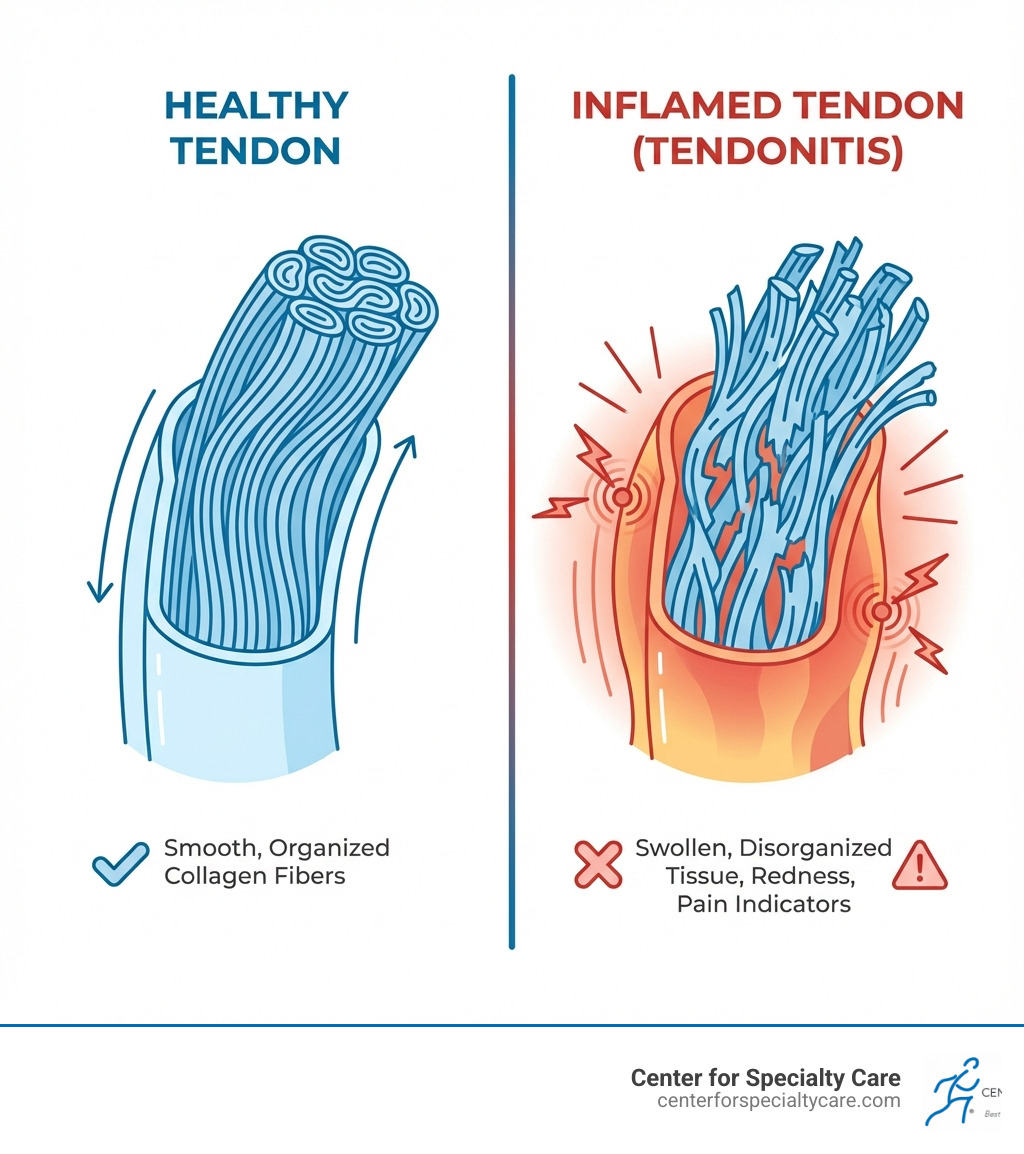
Tendons are amazing structures – strong, fibrous cords of tissue that connect your muscles to your bones. They act like ropes, allowing your muscles to pull on your bones and create movement. When these vital connections become inflamed or irritated, we call it tendonitis. This condition is one of the most common causes of musculoskeletal pain, often affecting areas around the shoulder, elbow, wrist, knee, and heel.
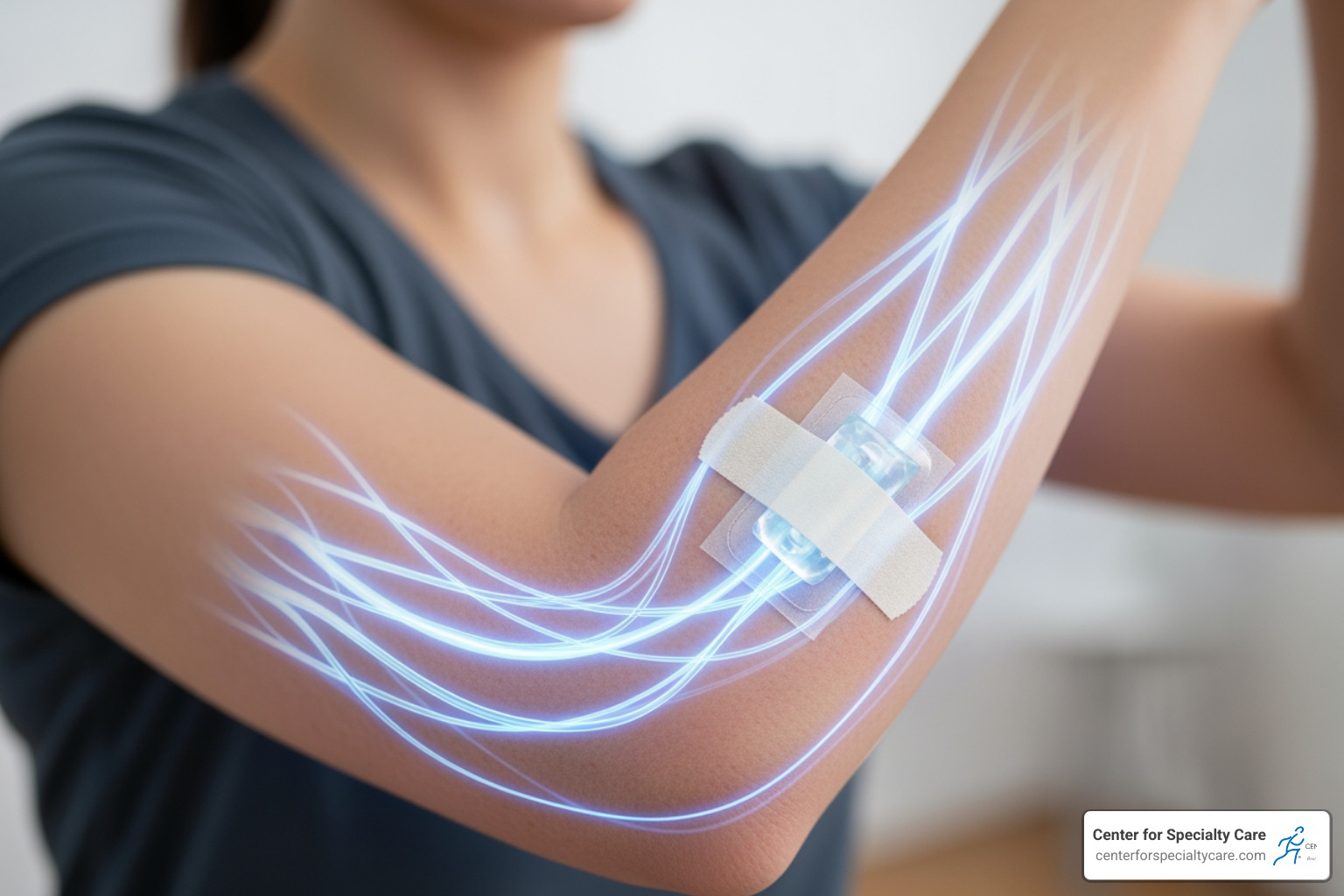
The primary culprits behind tendonitis are often repetitive motions, sudden injuries, or overuse. Think about the actions you repeat daily at work or during your favorite sports – these can put significant stress on your tendons. As we age, typically after 40, our tendons naturally become less flexible and less tolerant to stress, increasing our risk of developing tendonitis. Certain underlying medical conditions, such as diabetes or rheumatoid arthritis, can also make you more susceptible.
Common Symptoms and When to See a Doctor
Recognizing the symptoms of tendonitis early is crucial for effective treatment. You might experience:
- Pain with movement: This is the chief symptom, often worsening when you use the affected tendon.
- Dull ache: A persistent, nagging pain around the joint.
- Tenderness: The area around the tendon might be sore to the touch.
- Mild swelling, warmth, and redness: These are signs of inflammation.
- Grating or crackling sensation: You might feel or hear this when moving the joint.
- Stiffness: Difficulty moving the joint, especially in the morning.
While some mild cases might improve with self-care, it’s important to know when to seek professional help. We recommend seeing a doctor if your pain is severe, lasts longer than a few weeks, or significantly limits your movement. Ignoring persistent tendon pain can lead to more serious complications. If you’re experiencing a lot of pain or suspect you might have a ruptured tendon, get help from 111 online or contact us immediately.
Distinguishing Tendonitis from Tendinosis
While often used interchangeably, “tendonitis” and “tendinosis” refer to different stages of tendon injury. Understanding the difference is key to understanding how to treat tendonitis effectively.
| Feature | Tendonitis | Tendinosis |
|---|---|---|
| Definition | Inflammation of the tendon | Degeneration (breakdown) of the tendon tissue |
| Onset | Acute (sudden) | Chronic (develops over time) |
| Cause | Overuse, sudden injury, or infection | Long-term overuse, repetitive stress |
| Pathology | Inflammatory cells present | No significant inflammatory cells; disorganized collagen fibers, small tears |
| Symptoms | Pain, swelling, warmth, redness | Pain, stiffness, often without visible inflammation |
| Treatment Focus | Reducing inflammation, pain relief | Rebuilding tendon structure, strengthening |
Tendonitis is an acute inflammatory response, often the body’s first reaction to injury. If this inflammation isn’t properly addressed, or if the tendon continues to be overloaded, it can progress to tendinosis – a chronic condition characterized by degeneration and micro-tears without significant inflammation. This distinction guides our treatment approach, as what works for acute inflammation might not be sufficient for chronic degeneration.
Common Types of Tendonitis
Tendonitis can affect almost any tendon in your body. Here are some of the most common types we see at our clinics in Fairmont, Estherville, Buffalo Center, and St. James:
- Tennis Elbow (Lateral Epicondylitis): Causes pain on the outside of the elbow and forearm, often due to repetitive wrist extension and gripping. Despite the name, you don’t have to play tennis to get it! Many people with jobs involving repetitive forearm use, like painters or plumbers, are also at risk.
- Golfer’s Elbow (Medial Epicondylitis): Characterized by pain from the elbow to the wrist on the palm side, resulting from repetitive wrist flexion and gripping.
- Rotator Cuff Tendonitis: Affects the tendons around your shoulder, causing pain and difficulty with overhead movements. This is often seen in athletes like swimmers or baseball players, or individuals with jobs requiring frequent arm elevation.
- Achilles Tendonitis: Pain in the back of the ankle, often due to overuse in runners or sudden increases in activity.
- Patellar Tendonitis (Jumper’s Knee): Causes pain below the kneecap, common in athletes who perform a lot of jumping activities.
- De Quervain’s Tenosynovitis: Affects the tendons on the thumb side of the wrist, leading to pain and swelling. Common in new mothers, office workers, and anyone performing repetitive hand and wrist movements.
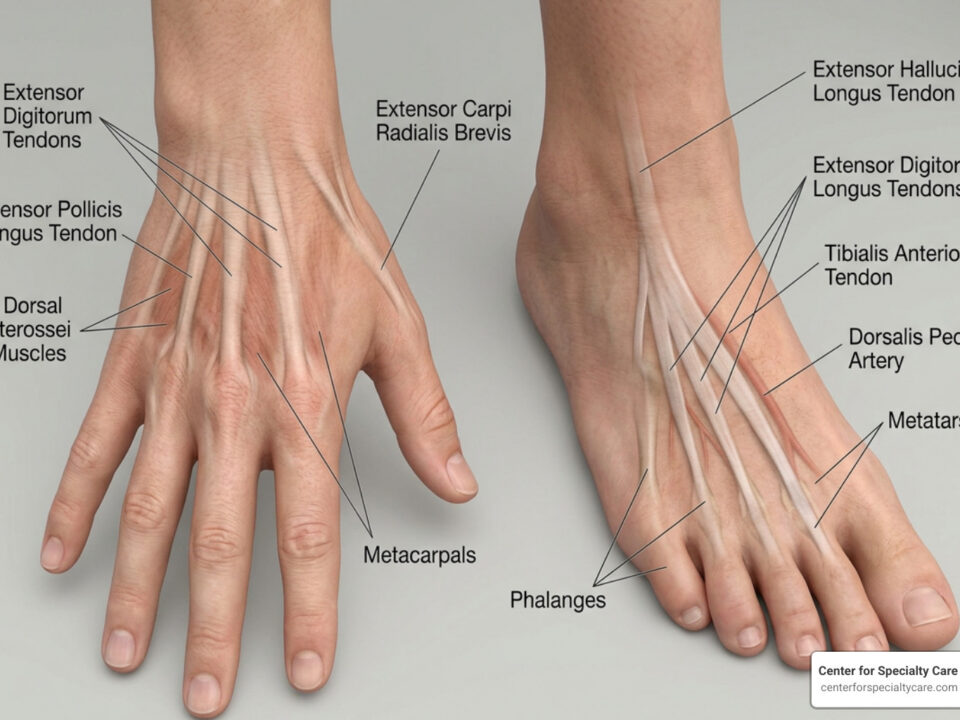
- Extensor Tendonitis: Inflammation of the tendons that straighten your fingers or toes, often in the foot or hand.
- Peroneal Tendinosis: Affects tendons on the outside of the ankle.
- Posterior Tibial Tendon Dysfunction (PTTD): Affects the tendon that supports the arch of the foot.
- Trigger Finger: Occurs when a tendon sheath in the finger becomes inflamed, causing the finger to catch or lock when bent.
How a Specialist Diagnoses Tendonitis
Accurate diagnosis is the first step in creating an effective treatment plan. When you visit us, we’ll begin with a thorough evaluation:
- Medical History Review: We’ll discuss your symptoms in detail, including when they started, what makes them better or worse, your activity levels, and any previous injuries or medical conditions.
- Physical Exam: Our orthopedic specialists will carefully examine the affected area, checking for tenderness, swelling, warmth, and assessing your range of motion and strength. We’ll perform specific tests to pinpoint which tendon is affected.
- Imaging Tests: While X-rays don’t show tendons directly, they can be useful to rule out other issues like fractures or arthritis, which can sometimes mimic tendonitis symptoms. For a more detailed view of your soft tissues, including tendons, ligaments, and muscles, we may recommend a Musculoskeletal MRI or Ultrasound. These imaging techniques allow us to assess the extent of inflammation or degeneration and guide our treatment decisions.
A Step-by-Step Guide on How to Treat Tendonitis at Home
For many mild to moderate cases of tendonitis, especially in the early stages, conservative home care can make a significant difference. This initial phase focuses on reducing pain and swelling, creating an environment for healing, and preventing further irritation.
The R.I.C.E. Method: Your First Response
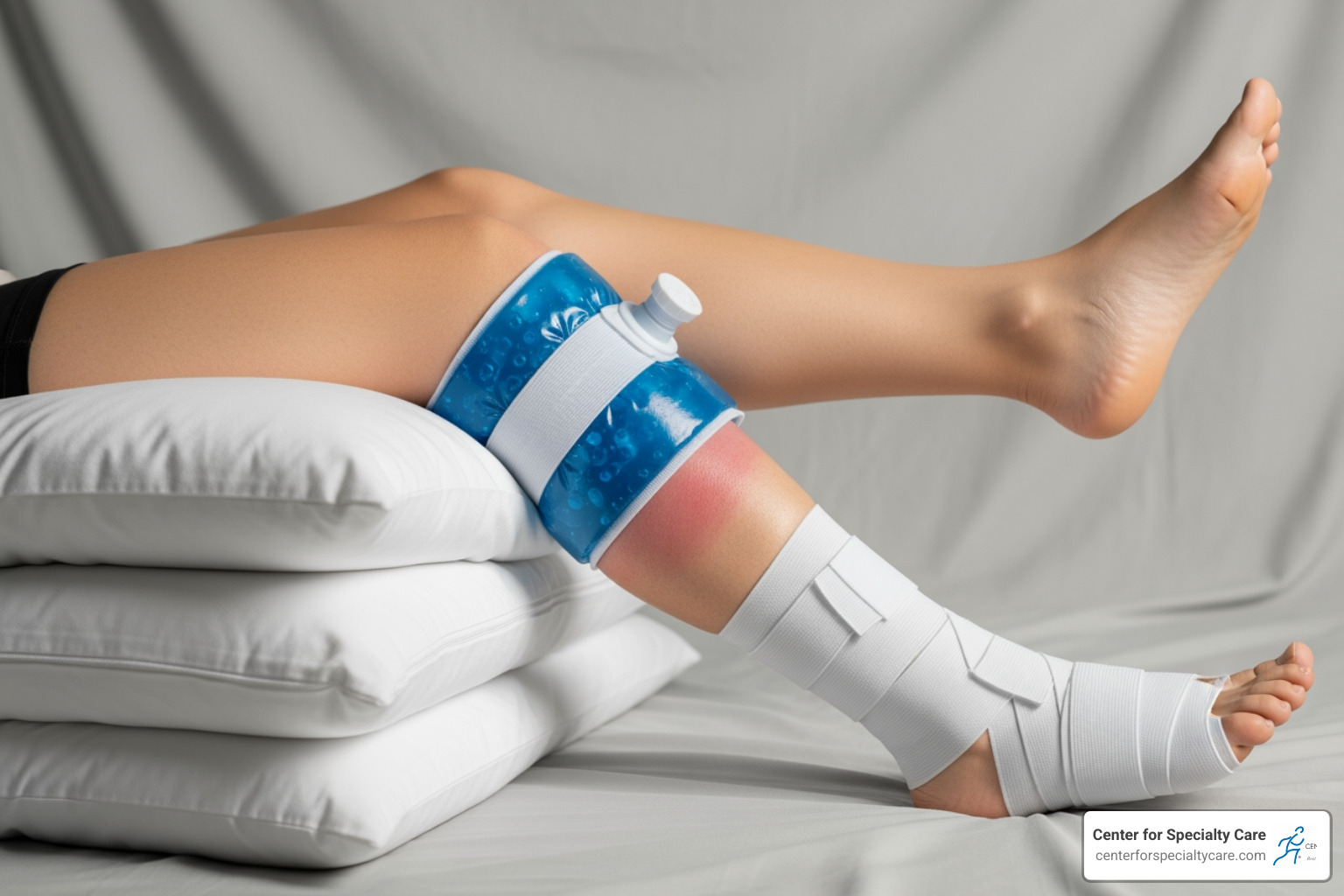
The R.I.C.E. method is a tried-and-true first-line treatment for many musculoskeletal injuries, including tendonitis:
- Rest: This is paramount. Stop or significantly reduce activities that aggravate the injured tendon. Experts recommend avoiding activities that stress the tendon for about 2 to 3 days, or even up to three weeks for more severe cases. Complete immobilization isn’t always necessary; gentle movement that doesn’t cause pain can be beneficial.
- Ice: Applying cold to the affected area helps reduce inflammation, swelling, and pain. We suggest applying an ice pack (wrapped in a thin cloth to protect your skin) for 15 to 20 minutes every 2 to 3 hours, especially during the first 24-48 hours after injury or when symptoms flare up.
- Compression: Using an elastic bandage, tube bandage, or soft brace can help reduce swelling and provide support to the injured area. Ensure it’s snug but not too tight – you should still be able to feel your pulse and have normal sensation. Remember to remove bandages or braces before going to bed.
- Elevation: If possible, lift the injured limb above your heart. This helps reduce swelling by allowing fluid to drain away from the affected area.
Over-the-Counter Pain Relief
Over-the-counter medications can be very helpful in managing the pain and inflammation associated with tendonitis:
- Nonsteroidal Anti-Inflammatory Drugs (NSAIDs): Medications like ibuprofen (Advil, Motrin IB) and naproxen (Aleve) can reduce both pain and inflammation. Always follow the dosage instructions on the package or as recommended by your doctor.
- Topical Pain Relievers: Gels or creams containing NSAIDs (like ibuprofen gel) can be applied directly to the skin over the painful area. These can offer localized relief with fewer systemic side effects than oral medications.
Regarding temperature therapy, some people find that using heat vs. ice for tendon pain depends on the stage of the injury. Ice is best for acute inflammation and recent injuries, while heat might provide relief for chronic stiffness or muscle soreness that accompanies tendonitis.
Activity Modification
One of the most critical aspects of self-care for tendonitis is intelligently modifying your activities. This means:
- Identifying and Avoiding Aggravating Movements: Pay close attention to which activities or motions trigger your pain. It could be a specific grip, lifting technique, or repetitive action. Temporarily avoiding these can give your tendon a much-needed break.
- Gradual Return to Activity: Once your pain subsides, don’t jump back into full activity too quickly. Gradually reintroduce movements and exercise, increasing intensity and duration slowly. This allows your tendon to adapt and rebuild strength without overloading it.
- Importance of Listening to Your Body: Your body often sends clear signals. If an activity causes pain, stop. Pushing through pain can turn an acute problem into a chronic one, or even lead to tendon rupture.
Professional Non-Surgical Treatments
While home care is a great starting point, sometimes tendonitis requires more specialized intervention. When conservative measures aren’t enough, our team at Center for Specialty Care offers a range of professional non-surgical treatments custom to your specific needs. Our goal is to help you understand how to treat tendonitis with advanced, personalized options.
How to treat tendonitis with Physical Therapy
Physical therapy is often the cornerstone of successful tendonitis recovery. Our expert physical therapists will work with you to:
- Strengthening Exercises: We’ll guide you through exercises designed to strengthen the muscles surrounding the affected tendon, providing better support and reducing strain on the tendon itself.
- Eccentric Training: This specialized type of exercise focuses on lengthening the muscle while it’s contracting. Eccentric exercises have shown great promise in relaxing tendons and relieving pain, particularly for conditions like Achilles and patellar tendonitis.
- Stretching for Flexibility: Improving flexibility in the affected muscles and joints can reduce tension on the tendon and improve range of motion.
- Improving Biomechanics: Our therapists will analyze your movement patterns in sports or daily activities and suggest modifications to improve your technique and reduce repetitive stress on your tendons.
For a deeper dive into the role of Physical Therapy in your recovery journey, we invite you to explore our dedicated services.
Injections for Pain and Inflammation
When pain and inflammation persist despite physical therapy and other conservative approaches, injections can offer targeted relief and promote healing:
- Corticosteroid Injections: These injections deliver a powerful anti-inflammatory medication directly to the affected area. They can provide significant short-term pain relief, allowing you to participate more effectively in physical therapy. However, we use them cautiously, as repeated injections or injections directly into certain tendons (like the Achilles) carry risks and may not offer long-term efficacy.
- Platelet-Rich Plasma (PRP) Therapy: This innovative treatment involves drawing a small sample of your own blood, concentrating the platelets (which contain growth factors), and then injecting this concentrated plasma back into the injured tendon. The goal is to promote natural tissue healing and regeneration. While still considered experimental for some conditions, PRP shows promise in accelerating recovery for certain tendinopathies.
If you’re considering injections, our Pain Management services can provide detailed information and determine if this is the right option for you. You can also learn more about Joint and Soft Tissue Injections from external resources.
Other Therapeutic Options
Beyond physical therapy and injections, several other treatments can assist in managing tendonitis:
- Splinting or Bracing: Immobilizing or supporting the affected area with a splint or brace can help rest the tendon, reduce movement, and protect it from further injury, especially during the initial healing phase.
- Ultrasound Therapy: Therapeutic ultrasound uses sound waves to stimulate blood flow and promote healing in the injured tissue. While some research on its effectiveness is limited, it is a low-risk option used to aid recovery.
- Extracorporeal Shockwave Therapy (ESWT): This treatment uses focused sound waves to stimulate a healing response in chronic tendon conditions, particularly for issues like Achilles tendinopathy or calcific tendonitis. ESWT is thought to break up scar tissue and stimulate blood flow.
- Deep Friction Massage: Performed by a physical therapist, this technique involves applying firm pressure across the tendon to break down adhesions and promote proper alignment of new collagen fibers. While it can be unpleasant during the procedure, it aims to improve tendon structure.
When Surgery Is Considered for Tendonitis
For the vast majority of patients, non-surgical treatments are highly effective in resolving tendonitis. However, there are instances when surgical intervention becomes a necessary step in understanding how to treat tendonitis that has become severe or chronic.
How to treat tendonitis that won’t go away
Surgery is typically considered a last resort, reserved for specific situations when conservative treatments have failed to provide lasting relief. We might discuss surgical options if you experience:
- Persistent Symptoms: Your pain and limitations continue for six months or longer despite consistent non-surgical treatment, including physical therapy, injections, and activity modification.
- Significant Limitation of Function: The tendonitis severely impacts your ability to perform daily activities, work, or participate in hobbies.
- Tendon Rupture: In cases where a tendon has partially or completely torn, surgery may be necessary to repair the damage and restore function. This can happen if chronic tendonitis (tendinosis) is left untreated, weakening the tendon over time.
Our orthopedic specialists prioritize your long-term well-being and will thoroughly evaluate your condition to determine if surgery is the most appropriate path forward.
Surgical Procedures for Tendonitis
If surgery is recommended, our team at Center for Specialty Care is skilled in a range of procedures designed to address tendon damage:
- Arthroscopic Surgery: This minimally invasive technique involves making small incisions and inserting a tiny camera (arthroscope) and specialized instruments. It allows us to visualize the tendon and surrounding structures, remove damaged tissue, release tension, or repair minor tears with less trauma to the surrounding area, leading to quicker recovery times compared to traditional open surgery.
- Open Surgery: In some cases, a larger incision may be necessary to directly access and repair more extensive tendon damage or to remove bone spurs that are irritating the tendon.
- Removing Damaged Tissue: Often, surgery involves debridement – removing inflamed or degenerated tissue from around the tendon to promote healing.
- Repairing Torn Tendons: For partial or complete tendon tears, the surgeon will reattach the torn ends or anchor the tendon back to the bone.
Recovery after surgery involves a period of rest, immobilization, and a structured physical therapy program to regain strength and mobility. We’ll work closely with you throughout this process, ensuring you understand each step of your rehabilitation.
Preventing Tendonitis from Recurring
Once you’ve successfully treated your tendonitis, the next crucial step is to prevent it from coming back. Preventing recurrence is just as important as the initial treatment for long-term tendon health.
Proper Technique and Ergonomics
Many cases of tendonitis are linked to how we move our bodies, especially during repetitive tasks. By focusing on proper technique and ergonomics, you can significantly reduce your risk:
- Warm-up and Cool-down: Always warm up your muscles before physical activity and gently stretch afterward. This prepares your tendons for action and helps them recover.
- Stretching Routines: Regular stretching helps maintain tendon flexibility and can prevent stiffness.
- Correcting Form in Sports and Work: Improper form in sports (like a tennis serve or golf swing) or poor posture at a workstation can place undue stress on tendons. Consider working with a coach, trainer, or occupational therapist to refine your technique and make ergonomic adjustments. For example, ensuring your computer monitor is at eye level and your keyboard and mouse are comfortably positioned can make a big difference for wrist and elbow tendons.
- Take Regular Breaks: During repetitive tasks, take short breaks to stretch and change positions.
Strengthening and Conditioning
Strong, balanced muscles protect your tendons. Here’s how to build resilience:
- Balanced Muscle Development: Work to strengthen all muscle groups around a joint, not just the dominant ones. This creates stability and distributes load more evenly across your tendons.
- Avoiding Over-Exercising: Don’t push your body too hard, too fast. Gradually increase the intensity and duration of your workouts to allow your tendons time to adapt. The “no pain, no gain” mentality can be misleading and lead to injury.
- Varying Workouts: Incorporate different types of exercises into your routine to avoid repeatedly stressing the same tendons. Cross-training can be an excellent way to maintain fitness while giving specific tendons a rest.
Our Sports Medicine specialists can provide guidance on safe training practices and injury prevention strategies custom to your athletic pursuits.
Frequently Asked Questions about Tendonitis Treatment
We often hear similar questions from our patients about tendonitis. Here are some of the most common ones, along with our answers, to help you better understand how to treat tendonitis.
Can tendonitis heal on its own?
Unfortunately, no, tendonitis typically cannot heal on its own without intervention. While the acute pain might subside with rest, the underlying inflammation or degeneration often persists. If left untreated, tendonitis can worsen and lead to more serious complications, such as chronic tendinosis (degeneration of the tendon) or even a complete tendon rupture. This is why early diagnosis and conservative therapies like rest, physical therapy, and anti-inflammatory medications are so important to promote healing and prevent long-term damage.
What is the fastest way to heal tendonitis?
There isn’t a single “fastest” way to heal tendonitis, as recovery time varies depending on the severity of the injury, the affected tendon, and individual factors. Tendon healing can take weeks to months. The most effective approach involves a combination of strategies:
- Prompt Action: Start with the R.I.C.E. method and activity modification as soon as symptoms appear.
- Professional Guidance: Follow a personalized treatment plan developed by an orthopedic specialist, which often includes targeted physical therapy exercises.
- Patience and Consistency: Healing takes time. Consistently adhering to your treatment plan and gradually returning to activity are key to a full recovery and preventing recurrence. Trying to rush the process can lead to re-injury or chronic problems.
What is the difference between tenosynovitis and tendonitis?
While closely related and often occurring together, tendonitis and tenosynovitis are distinct conditions:
- Tendonitis: This refers to the inflammation or irritation of the tendon itself – the thick fibrous cord that connects muscle to bone.
- Tenosynovitis: This is the inflammation of the lining of the tendon sheath, which is a protective layer that surrounds some tendons (especially in the hands and feet) and helps them glide smoothly.
When you have tenosynovitis, you might experience similar symptoms to tendonitis, including pain, swelling, and difficulty moving the affected joint. A classic example is De Quervain’s tenosynovitis, which affects the thumb and wrist. Both conditions are treated with similar conservative approaches, focusing on reducing inflammation, rest, and rehabilitation.
Take Control of Your Tendon Pain
Understanding how to treat tendonitis is the first step toward finding relief and regaining your active lifestyle. From initial self-care with the R.I.C.E. method and over-the-counter pain relief to professional non-surgical treatments like physical therapy and injections, and even surgical options for severe cases, a comprehensive approach is often the most effective.
Early diagnosis and personalized care are crucial for preventing acute tendonitis from becoming a chronic, debilitating condition. At Center for Specialty Care, we pride ourselves on offering 100% patient satisfaction, personalized care plans, and quick appointment availability at our locations in Fairmont, Estherville, Buffalo Center, and St. James. Our team of orthopedic and pain management specialists is dedicated to getting you back to the activities you love, with the least invasive and most effective treatments possible.
Don’t let tendon pain hold you back any longer. We’re here to help you steer your treatment journey with expertise and compassion.
Schedule an appointment with our Orthopedics team today and take the first step toward a pain-free life.