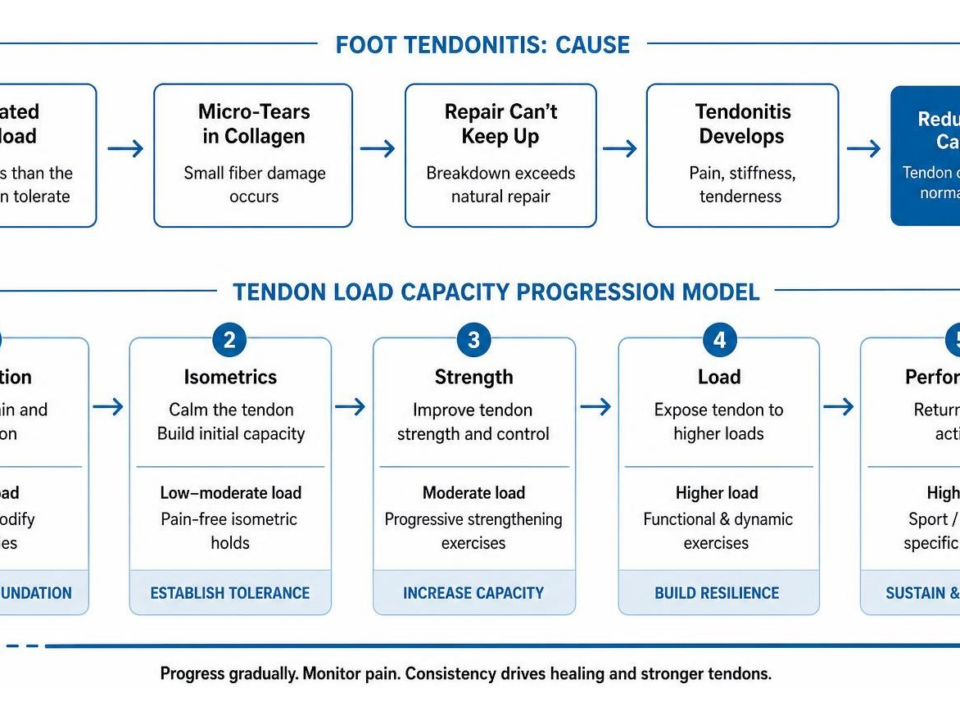

Say Goodbye to Tendonitis: Effective Treatment Strategies
December 31, 2025
How to Locate a Pain Management Doctor Near Me: A Comprehensive Search
January 2, 2026
Foot Health Tips: 7 Essential Steps for Optimal Wellness
Why Your Feet Deserve Your Attention
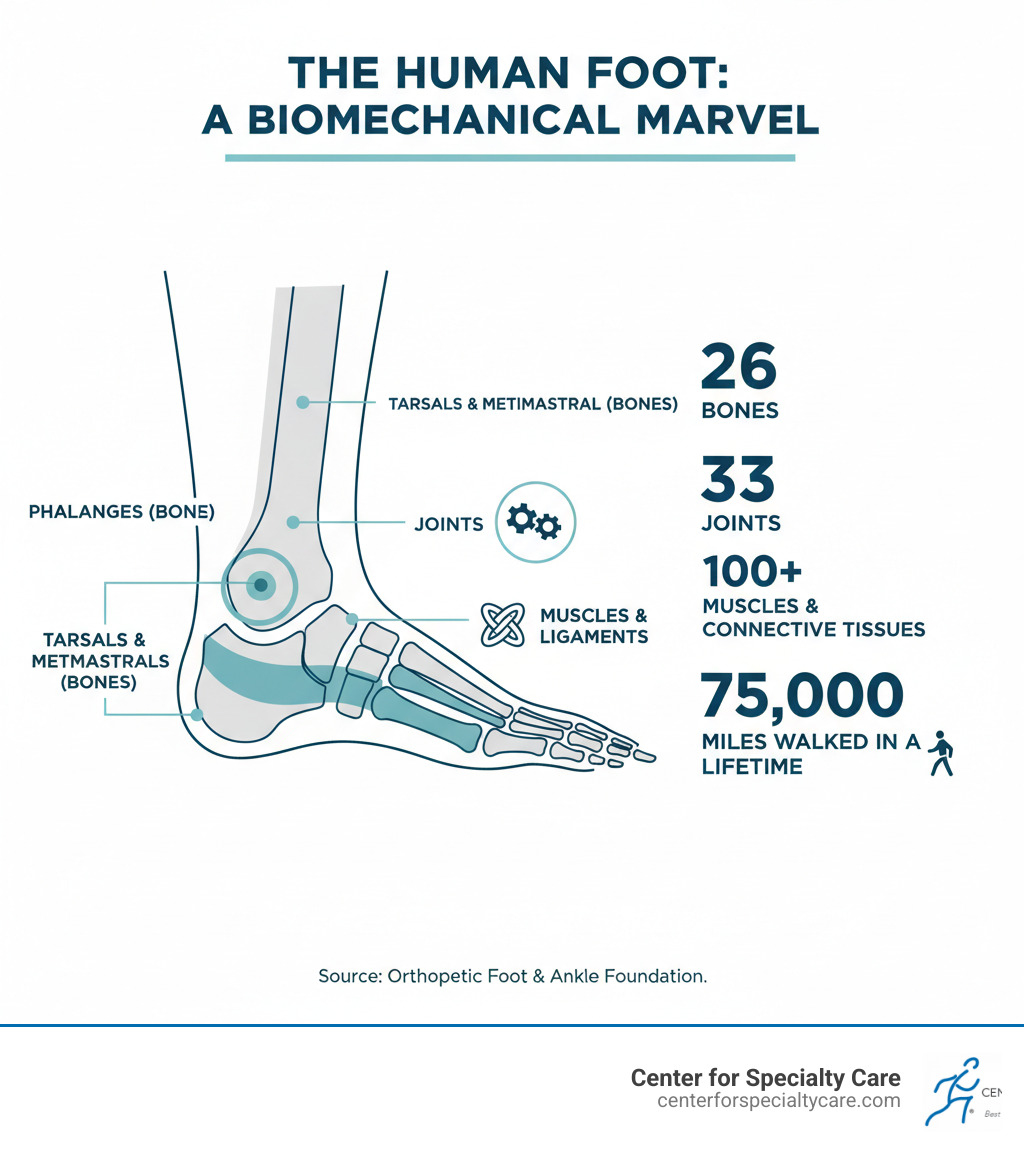
Foot health tips are essential for maintaining mobility and overall well-being. Most of us take our feet for granted, yet they carry us the equivalent of twice around the world in a lifetime. Each foot is a complex structure of 26 bones, 33 joints, and over 100 muscles, tendons, and ligaments.
Here are the most important practices to keep your feet healthy:
- Inspect your feet daily for cuts, blisters, swelling, or color changes.
- Wash and dry thoroughly every day, especially between the toes.
- Wear properly fitted shoes with adequate support and toe room.
- Trim toenails straight across to prevent ingrown nails.
- Moisturize dry skin to prevent cracking.
- Stay active with low-impact exercises and stretching.
- Seek professional care for persistent pain or problems.
When your feet hurt, your whole body can suffer. Foot problems may signal broader health issues like arthritis or diabetes and can cause pain in your knees, hips, and back. As a board-certified orthopedic surgeon with over 30 years of experience, I’ve seen how simple foot care prevents serious complications. My practice at the Center for Specialty Care emphasizes proactive care to keep you moving comfortably in southern Minnesota and northern Iowa.
Daily Foot Care and Inspection
Developing a simple daily foot care routine is a smart investment in your long-term mobility. It starts with good hygiene and a quick inspection to catch problems early.
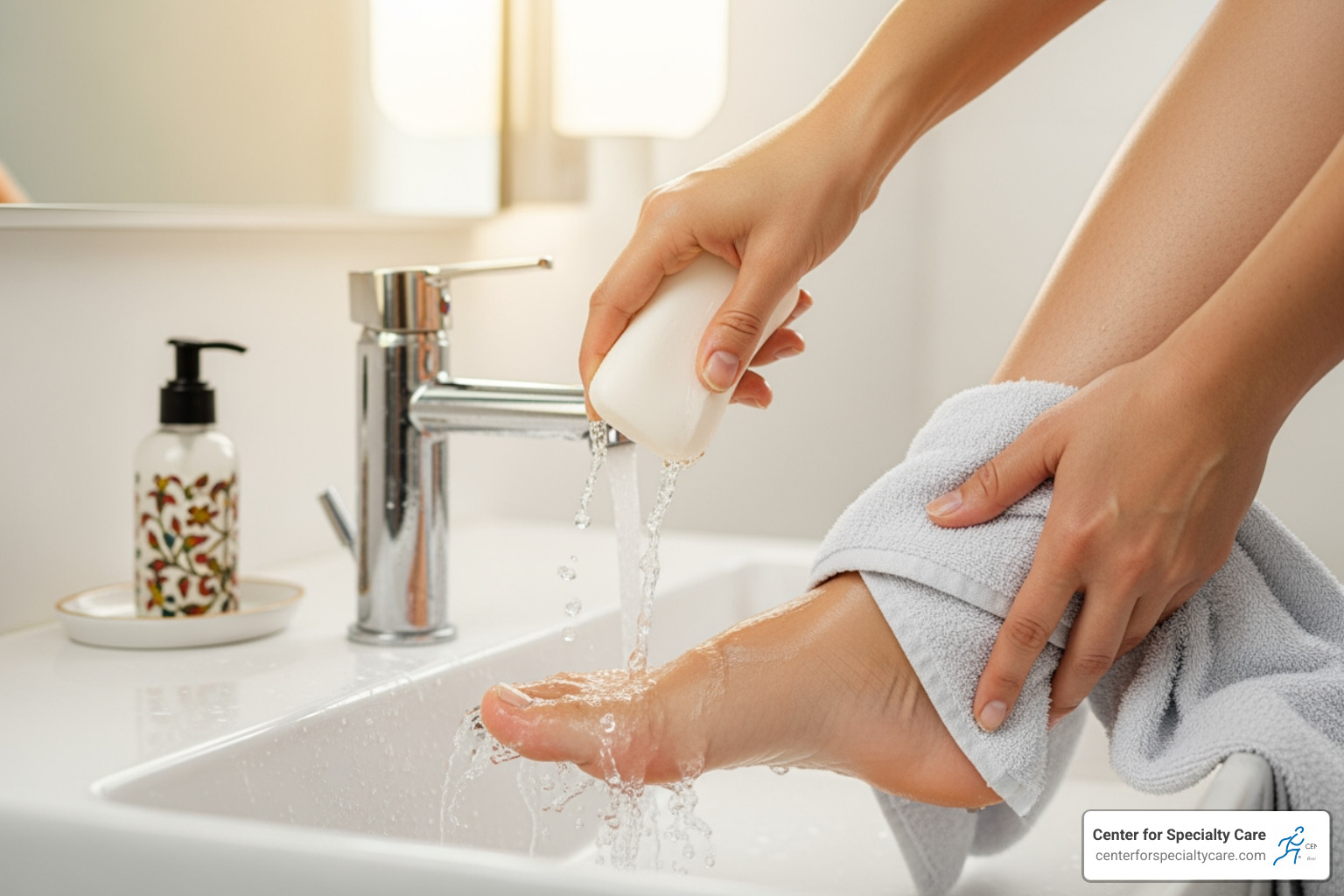
Wash your feet daily with soap and lukewarm water, as hot water can be drying. Afterward, take extra time to dry completely between each toe. Damp spaces are a breeding ground for athlete’s foot and other fungal infections.
Once dry, perform a quick daily inspection. Look for any cuts, scrapes, blisters, redness, swelling, or unusual color changes. Check for new sores or areas of dry, cracking skin. If you have trouble seeing the bottoms of your feet, use a mirror or ask for help. This is especially important for older adults or those with diabetes.
Apply a good moisturizing lotion to your heels and the balls of your feet to prevent cracked heels and keep skin supple. Avoid putting lotion between your toes to keep those areas dry.
For nail care, trim your toenails straight across and file any sharp edges. Cutting nails in a rounded shape or too short increases the risk of painful ingrown toenails. If your nails are thick or difficult to cut, a podiatrist can help. For more guidance, you can explore additional foot care practices from trusted medical sources.
Simple foot health tips for home care
Beyond daily washing, a few other habits make a big difference. Change your socks daily, choosing breathable materials like cotton or moisture-wicking blends. Alternate your shoes to let them dry out. Stay hydrated by drinking plenty of water to keep your skin from cracking. We also recommend avoiding walking barefoot in public areas to prevent infections and wearing supportive slippers at home for protection. Finally, apply sunscreen to your feet when they are exposed to the sun. These simple foot health tips take just a few minutes but can prevent significant problems.
The Foundation: Choosing the Right Footwear
Your shoes are the foundation for your entire body. Poor footwear can lead to everything from blisters and bunions to knee and back pain. Following a few key foot health tips can help you make choices that keep your feet happy.
Finding Your Perfect Pair
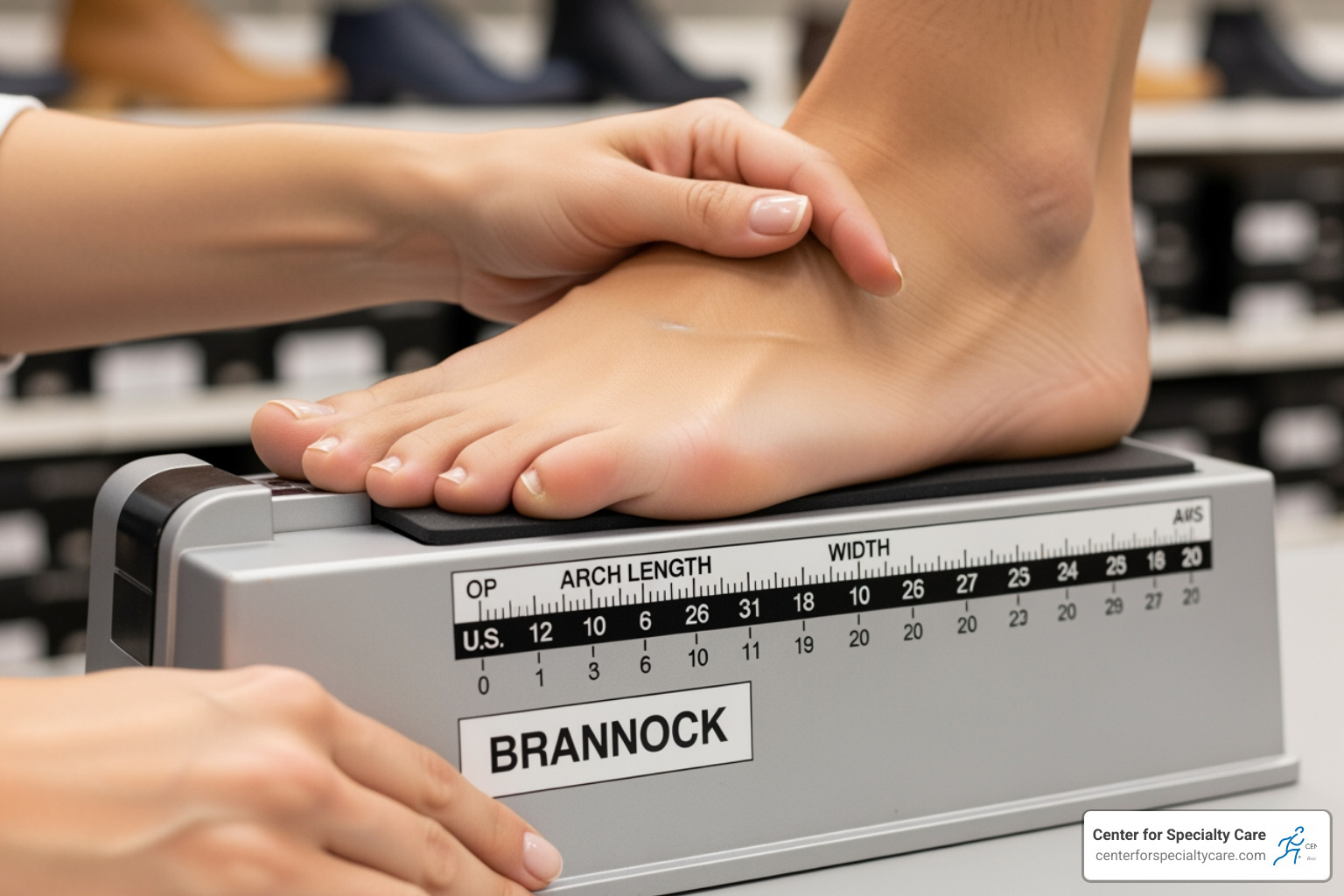
To find the best fit, shop for shoes in the afternoon or evening when your feet are naturally swollen. Since your foot size changes over time, have both feet measured every time you shop. When trying on shoes, ensure there is about a thumb’s width of space between your longest toe and the end of the shoe. Your toes need room to wiggle.
Arch support is crucial for distributing pressure evenly and can prevent conditions like plantar fasciitis. The soles should provide solid shock absorption to protect your joints from repetitive stress. A key rule is that shoes should feel comfortable immediately; don’t rely on a “break-in” period. For more guidance, explore expert recommendations at Tips for a proper shoe fit.
Avoid high heels and pointy-toed shoes for daily wear, as they put excessive pressure on the ball of your foot and squeeze your toes. Also, use activity-specific footwear—running shoes, walking shoes, and cross-trainers are designed with distinct support features that reduce injury risk.
When evaluating shoes, look for a snug heel fit, a cushioned and flexible forefoot, a non-slip sole, breathable materials, and a low to moderate heel height (under two inches).
Orthotics and When to Consider Them
Sometimes, even the best shoes aren’t enough. Over-the-counter inserts can provide basic cushioning and arch support for mild foot fatigue. For more complex issues, custom orthotics prescribed by a specialist like our team at Center for Specialty Care offer superior support. They are molded to your foot to correct specific biomechanical imbalances, relieve pressure, and are valuable for conditions like flat feet, high arches, and plantar fasciitis. By improving foot mechanics, orthotics can reduce strain on your ankles, knees, hips, and back. If you have persistent foot pain, discuss with our specialists if orthotics are right for you.
Essential Foot Health Tips for Movement and Exercise
Regular physical activity is essential for maintaining strong, flexible feet. Proper conditioning helps prevent injuries and allows your feet to perform at their best.

Strengthening and Flexibility: The Dynamic Duo
Strong feet are stable, while flexible feet adapt to surfaces and absorb shock. One of the best foot health tips is to incorporate simple exercises into your routine. Toe curls (scrunching a towel with your toes) and the marble pickup exercise (using your toes to pick up marbles) build strength and dexterity.
Flexibility is just as important. Ankle circles maintain range of motion. Calf stretches are crucial, as tight calves contribute to heel pain and plantar fasciitis. Stand facing a wall, place one foot back, and lean forward, keeping the back heel down. Hold for 20-30 seconds. For guidance on tendon pain that may arise from exercise, our team can help. More on managing tendon pain
Low-Impact Activities That Love Your Feet Back
Incorporate low-impact activities to give your feet movement without the punishment of high-impact sports. Walking is a perfect foot exercise, strengthening bones and promoting circulation. Swimming and cycling are also excellent choices, as they eliminate impact while providing a great workout. Mixing high- and low-impact activities gives your feet time to recover.
The Weight Connection
Every extra pound you carry multiplies the force on your feet with each step. Maintaining a healthy weight is one of the most practical foot health tips for reducing strain on your feet, ankles, knees, and hips. It is one of the most effective ways to prevent foot pain and conditions like plantar fasciitis and arthritis. Even modest weight loss can dramatically decrease pressure and improve comfort.
Recognizing and Managing Common Foot Problems
Even with good care, foot problems can develop. Most are manageable when caught early. Common issues include bunions (bony bumps at the base of the big toe), hammertoes (bent toes), corns and calluses (thickened skin from friction), ingrown toenails, and fungal infections like athlete’s foot. When pain persists or you notice changes in your foot’s shape or color, professional evaluation is essential. Our comprehensive guide explores these conditions in more detail: A guide to common foot problems.
Heel pain is especially prevalent. For more information, see our guide on Understanding heel pain.
Plantar Fasciitis and Heel Pain
If you experience a sharp, stabbing pain in your heel with your first morning steps, you may have plantar fasciitis. This condition is caused by inflammation of the plantar fascia, the thick band of tissue that supports your arch. The pain is often worst after rest and may improve with movement, but can return after long periods of standing.
Risk factors include carrying extra weight, inadequate footwear, age, flat feet or high arches, and tight calf muscles. Fortunately, many people find relief with simple foot health tips at home:
- Ice application: Apply an ice pack to your heel for 15-20 minutes several times a day to reduce inflammation.
- Stretching: Focus on stretching your calf muscles and the arches of your feet, especially before getting out of bed.
- Supportive footwear: Avoid walking barefoot on hard surfaces. Wear shoes with good arch support, even at home.
- Low-impact activities: Switch to swimming or cycling to give your heel time to heal.
It’s time to call us if your heel pain persists despite home care, gets worse, or limits your daily activities. Ignoring plantar fasciitis can lead to chronic pain and cause issues in your knees, hips, and back due to an altered gait. At Center for Specialty Care, we offer personalized treatment plans that may include physical therapy or custom orthotics. More on Plantar Fasciitis
Special Considerations for Lifelong Foot Health
Certain life stages and health conditions require a more personalized approach to foot care. Understanding these special considerations is key to maintaining mobility and preventing serious complications.
Advanced foot health tips for specific conditions
Diabetes and Foot Health
If you have diabetes, your feet require exceptional vigilance. Diabetes can cause nerve damage (neuropathy), which reduces your ability to feel pain, heat, or cold. A small cut or blister might go unnoticed and develop into a serious wound. The condition can also cause reduced blood flow, which impairs the body’s ability to heal and fight infection. A minor injury can quickly become a medical emergency.
For these reasons, daily foot checks are non-negotiable if you have diabetes. Every day, examine your feet for cuts, redness, swelling, blisters, or any changes. Use a mirror or ask for help to see the bottoms of your feet. This simple habit is one of the most powerful foot health tips for preventing diabetic foot ulcers.
Never attempt to treat corns or calluses yourself. Always wear well-fitting, protective shoes and socks, even indoors. We recommend that everyone with diabetes see a foot specialist at least once a year. At Center for Specialty Care, we provide comprehensive care to prevent complications. A tailored approach to diabetic foot care
Aging Feet
Our feet change as we age. The natural fat pads under the feet thin, skin becomes drier, and toenails can become thick and brittle. Reduced sensation can make it harder to detect injuries, and changes in balance increase fall risk. Arthritis also frequently affects the feet, causing pain and stiffness, while conditions like bunions and hammertoes can worsen.
For seniors, proper footwear is even more critical. Shoes should be stable, supportive, and have non-slip soles. Avoid walking in just socks or loose slippers. If reaching your feet is difficult, schedule regular appointments with a podiatrist for professional nail and foot care. Regular inspections remain essential. A proactive approach to foot health in your senior years helps maintain mobility and independence. For more information, explore resources on Information on foot health and aging
When to See a Podiatrist
Learning to listen to your feet is one of the most important foot health tips. While daily care is effective, some issues require professional help. Knowing when to see a specialist can prevent a small problem from becoming a long-term one.
It’s time to schedule an appointment if you experience any of the following:
- Persistent pain that lasts more than a few days and doesn’t improve with rest.
- Numbness or tingling (a “pins and needles” sensation), which can signal nerve or circulation problems.
- Non-healing sores or wounds, especially if you see signs of infection like redness, warmth, or swelling.
- Changes in your foot’s shape or appearance, such as new bumps, sudden swelling, or discoloration of skin or nails.
- Difficulty walking or balancing, which can lead to falls and compensatory pain in your knees, hips, and back.
- Severe swelling or redness, especially with warmth, which could indicate a serious infection or inflammation.
- An injury where you suspect a sprain or fracture.
At Center for Specialty Care, our orthopedic and podiatry specialists in Fairmont and our other locations in southern Minnesota and northern Iowa offer comprehensive diagnostics and personalized treatment plans. Our goal is to provide quick appointments and help you get back to your active life. If you’re wondering about potential treatments, we’ve created a helpful resource: When to consider podiatric surgery. Don’t let foot problems limit your quality of life.
Conclusion
Your feet are remarkable structures that work tirelessly to keep you moving. By implementing the essential foot health tips in this guide, you can maintain healthy, pain-free feet for life. Simple habits like daily inspection, choosing proper shoes, and regular stretching make a significant difference.
Foot pain is never normal. It’s a message from your body that something needs attention. Foot problems can also affect your knees, hips, and back, so addressing them early protects your entire musculoskeletal system. Your feet don’t just carry you—they communicate important information about your overall health.
At Center for Specialty Care, we have spent over 30 years helping people in southern Minnesota and northern Iowa walk comfortably. Our team develops personalized treatment plans for your specific needs. We believe in accessible care, offering quick appointment availability in Fairmont, Estherville, Buffalo Center, and St. James.
Don’t wait for a small problem to become a big one. If you’re experiencing persistent pain or have concerns about your foot health, reach out to us. Taking that first step toward professional care can keep you active and comfortable for years to come.
Schedule an appointment with our podiatry specialists and walk through life with confidence and comfort again.