From Rotator Cuffs to Tendons: Your Guide to Shoulder Health and Common Issues
January 31, 2026
Ice vs. Heat for Tendonitis: Which One Wins the Pain Battle?
February 4, 2026
Intracept Procedure Recovery: 1st Step to Lasting Relief
Your Path to a Pain-Free Life Starts Here
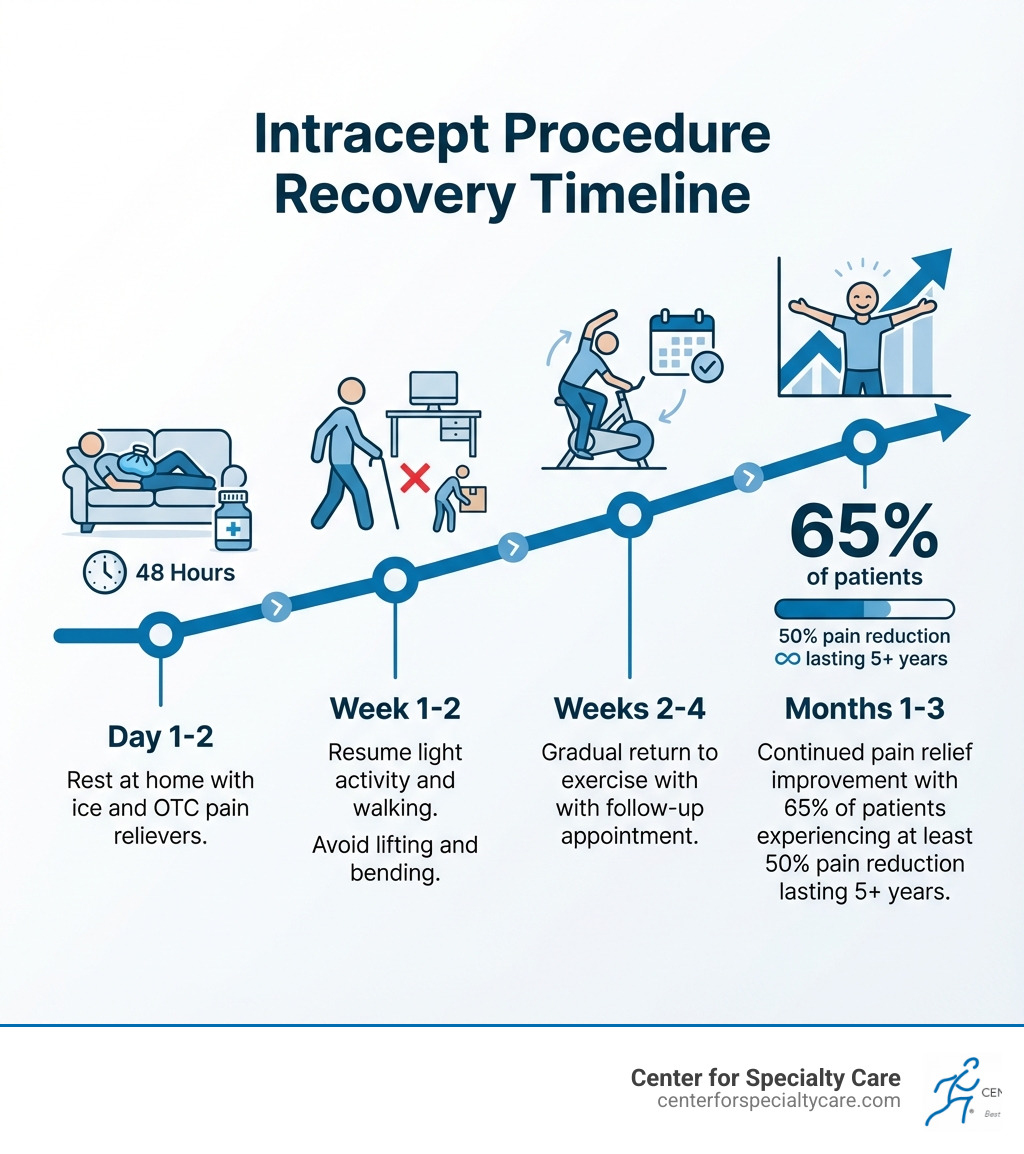
Intracept procedure recovery is typically quick and straightforward, with most patients returning to normal activities within one to two weeks. Here’s what you can expect:
Quick Recovery Overview:
- First 48 hours: Rest at home, minimal discomfort managed with over-the-counter pain relievers
- Week 1-2: Resume light activities like walking and desk work
- Weeks 2-4: Gradually return to exercise, avoid heavy lifting
- Full recovery: Most people fully recover within 1-2 weeks
- Pain relief timeline: Some feel relief within two weeks, continued improvement over three months
- Long-term results: 65% of patients report at least 50% pain reduction lasting five years or longer
The Intracept procedure—also called basivertebral nerve ablation—is a minimally invasive, one-time treatment for chronic vertebrogenic low back pain. Unlike traditional spine surgery, it requires no implants, involves only a small incision, and allows you to go home the same day.
This procedure uses radiofrequency energy to heat and ablate the basivertebral nerve inside your vertebrae. That nerve carries pain signals from damaged vertebral endplates to your brain. By disrupting those signals, the Intracept procedure can provide lasting relief when other treatments like physical therapy, injections, and medications haven’t worked.
Recovery is generally smoother than most people expect. You’ll spend the first couple of days resting, then gradually ease back into your routine. Strenuous activities should wait for 2-4 weeks, but light movement like walking is encouraged early on. Most patients experience little post-procedure pain—typically managed with ibuprofen or acetaminophen—and serious complications occur in less than 0.3% of cases.
As Dr. Corey Welchlin, a board-certified orthopedic surgeon with over three decades of experience in minimally invasive spine care, I’ve guided countless patients through their intracept procedure recovery at Center for Specialty Care. My team and I are committed to helping you understand each step of the process so you can return to the activities you love with confidence.
Intracept procedure recovery vocabulary:
Understanding the Intracept Procedure and Its Benefits
Chronic low back pain can be debilitating, often limiting daily activities and impacting overall quality of life. For many, the source of this persistent pain is vertebrogenic pain, which originates from damage to the vertebral endplates – the layers of bone and cartilage that interface with your spinal discs. When these endplates are damaged, they become inflamed, and the basivertebral nerve (BVN), which runs within the vertebrae and supplies these endplates, starts sending pain signals to the brain.
The Intracept procedure is designed to specifically target this source of pain. It’s a cutting-edge approach that involves basivertebral nerve ablation, a process where radiofrequency energy is used to heat and disrupt the pain signals sent by the basivertebral nerve. This effectively “turns off” the pain message, providing relief.
One of the key advantages of the Intracept procedure is its implant-free nature. Unlike some other spinal interventions, it leaves no permanent devices in your body. It’s also an outpatient procedure, meaning you can return home the same day. This aligns with our commitment at Center for Specialty Care to provide advanced, personalized solutions that prioritize your comfort and recovery.
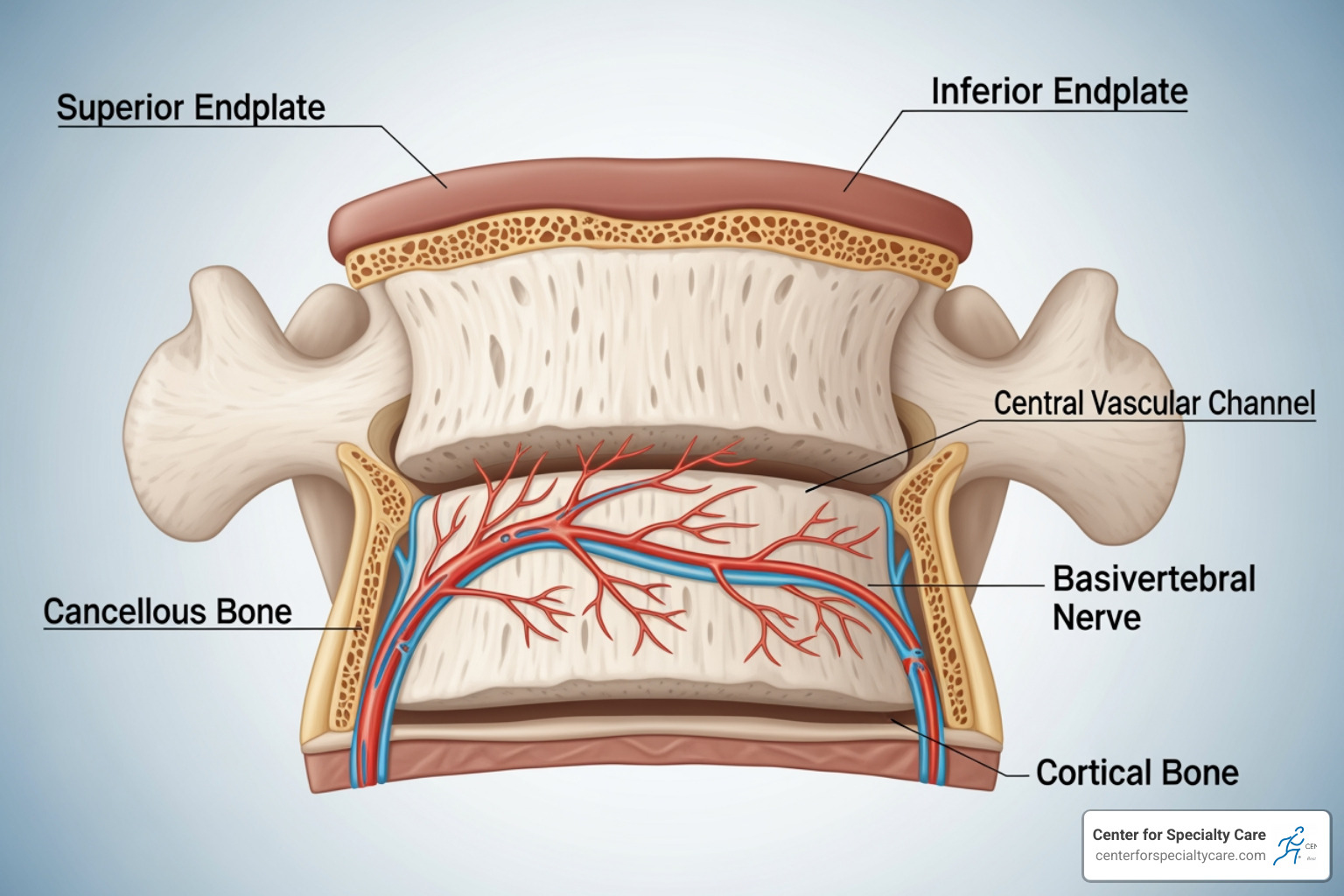
This procedure is particularly effective for patients whose MRI scans show Modic changes, which are specific indicators of inflammation or degenerative changes in the vertebral endplates and bone marrow. These changes are a clear sign that the basivertebral nerve might be the culprit behind your persistent low back pain. For a deeper understanding of spinal health and how conditions like this affect your back, explore a deep dive into spine health.
Who is a Good Candidate for Intracept?
We understand that choosing a medical procedure is a significant decision. The Intracept procedure is not for everyone, but it can be a life-changing option for carefully selected patients. You might be a good candidate if you meet the following criteria:
- Chronic Low Back Pain: You’ve experienced persistent low back pain for at least six months.
- Failure of Conservative Care: You’ve tried other non-surgical treatments for at least six months without significant relief. This often includes physical therapy, injections (like epidural steroid injections), and various medications. Our team at Center for Specialty Care excels in pain management services and can help you explore all options.
- MRI Evidence of Modic Changes: Your MRI scan clearly shows Modic Type 1 or Type 2 changes in your vertebral endplates. These changes are crucial for identifying vertebrogenic pain, which is precisely what Intracept targets.
Conversely, the Intracept procedure is not suitable for pain originating from other spinal issues, such as facet joint pain, sacroiliac joint pain, herniated discs, or advanced degenerative disc disease without endplate involvement. It’s also contraindicated for pregnant individuals, those with pacemakers or other implanted electronic medical devices, active infections, or significant heart or lung issues.
How Intracept Compares to Traditional Treatments
When exploring options for chronic back pain, you’ll encounter a spectrum of treatments, from conservative therapies to complex surgeries. The Intracept procedure stands out as a minimally invasive alternative that bridges the gap between these extremes.
Here’s how it compares:
- Minimally Invasive vs. Open Surgery: Traditional open back surgery often involves larger incisions, more tissue disruption, and a longer, more intensive recovery period. Intracept, with its small incision and targeted approach, significantly reduces surgical trauma. This means less pain and a quicker intracept procedure recovery for you.
- Faster Recovery Time: While traditional surgeries might require weeks or even months of downtime, most patients undergoing Intracept are back to light activities within a week or two, and full recovery often occurs within 2-4 weeks.
- Preservation of Spinal Structure: The Intracept procedure does not involve removing bone, fusing vertebrae, or implanting hardware. It preserves the natural anatomy of your spine, which is a major benefit for long-term spinal health. At Center for Specialty Care, we believe in solutions that support your body’s natural mechanics. You can learn more about our comprehensive approach to solutions for your bones and joints through our orthopedic solutions.
- No Implants: As mentioned, the procedure is implant-free, avoiding the potential complications associated with spinal implants.
- One-Time Procedure, Long-Lasting Relief: Unlike some other radiofrequency ablation techniques that may require repeat treatments, the Intracept procedure is typically a one-time treatment. Clinical studies show that pain relief and functional improvements can be sustained for five years or longer after a single treatment.
The Day of Your Procedure: A Step-by-Step Overview
When you arrive at our facility in Fairmont, MN, Estherville, IA, Buffalo Center, IA, or St. James, MN, for your Intracept procedure, our compassionate team will be there to guide you. The procedure is typically performed under general anesthesia, ensuring you are comfortable and pain-free throughout. We’ll ask you to arrange for a loved one to drive you home afterward, as the effects of anesthesia can linger.
Once you’re comfortably positioned, usually lying face down, a small incision (less than 1 cm) will be made in your lower back. Using advanced imaging technology called fluoroscopy, we’ll precisely guide a hollow tube, or cannula, through this incision and into the affected vertebra. This real-time X-ray guidance ensures accuracy and safety.
Next, small instruments are used to create a channel within the vertebra, leading to the basivertebral nerve. A specialized radiofrequency probe is then inserted through this channel. This probe delivers controlled heat to ablate, or “turn off,” the basivertebral nerve. The heat disrupts the nerve’s ability to transmit pain signals, providing the foundation for your relief. The ablation process itself typically takes about 7-15 minutes per treated spinal level.
The entire Intracept procedure usually takes between 60 to 90 minutes, though this can vary slightly depending on how many levels of your spine are being treated. Because it’s an outpatient procedure, once the probe and cannula are removed, the small incision is simply closed with Steri-strips or a sterile dressing. You’ll then recover from the anesthesia in our care before being discharged home the same day.
What to Expect Immediately After the Procedure
As you wake up from anesthesia, our team will monitor you closely. It’s normal to feel a bit groggy or disoriented initially. You might experience some minor soreness, bruising, or slight swelling around the incision site. This is a normal part of the healing process and is generally well-managed.
To ensure your safety and comfort, we recommend resting for at least 24 to 48 hours after the procedure. Your coordination and reflexes will be decreased due to the sedation, so it’s crucial to have someone drive you home and check on you for the first 12 hours. We’ll provide you with a list of immediate post-op instructions to help you steer this initial period:
- Do not operate a vehicle or heavy machinery for at least 24 hours.
- Avoid making critical decisions for at least 24 hours.
- Refrain from consuming alcoholic beverages for at least 24 hours.
- Resume your normal diet immediately, unless otherwise instructed.
- Continue all your regular medications as advised by your doctor.
- Keep the dressing dry and intact for the first 24 hours.
- Do not shower for 24 hours, and avoid bathing or swimming for 48 hours.
- Apply a covered ice pack to the incision area for 15 minutes at a time, a few times a day, to help manage discomfort and swelling.
- Take prescribed pain medication or muscle relaxers 2-3 hours after the procedure, as needed.
- Ensure someone can check on you for the next 12 hours, and keep a phone easily accessible.
Your Week-by-Week Intracept Procedure Recovery Timeline
We understand that a smooth and predictable intracept procedure recovery is important to you. While individual experiences may vary, most patients at Center for Specialty Care follow a general timeline that allows for a gradual return to normal activities. The key is to listen to your body and follow our personalized guidance.
During your intracept procedure recovery, managing any discomfort, progressing your activity levels, maintaining a healthy diet, and adhering to medication guidelines are all crucial for optimal healing.
The First 48 Hours: Rest and Initial Care
The first two days after your Intracept procedure are primarily about rest and allowing your body to begin the healing process. We emphasize taking it easy during this time.
- Rest is Key: Avoid any strenuous activity. Think of this as a mini-vacation for your back!
- Managing Discomfort: It’s normal to experience some mild soreness or a bruise-like ache at the incision site. This can usually be effectively managed with over-the-counter pain relievers such as acetaminophen (Tylenol) or ibuprofen (Advil, Motrin). Most patients require only minimal, if any, narcotic pain medications afterward.
- Ice Packs: Applying a covered ice pack to the treated area for 15 minutes at a time, several times a day, can significantly help reduce swelling and discomfort.
- Incision Care: Keep the small incision site clean and dry. You can remove any bandages after 24 hours, but if Steri-strips were used, leave them on for about 7 days. Watch for any signs of infection.
- Avoiding Strenuous Activity: This means no heavy lifting, vigorous exercise, or activities that put strain on your back. Gentle movements around your home are fine, but prioritize rest. If you’ve been dealing with pain that radiates, you know how important careful movement is. For more tips, refer to our guide on managing radiating pain.
Week 1-2: Gradual Return to Light Activity
As you move past the initial 48 hours, you can gradually start to reintroduce light activities into your routine. This phase is about gentle progression and listening to your body’s signals.
- Walking is Encouraged: Light walking is an excellent way to promote circulation and aid healing. Start with short, frequent walks and gradually increase the distance and duration as you feel comfortable.
- Resuming Desk Work: If your job is sedentary, you may be able to return to desk work as early as 2-3 days post-procedure, though many find it more comfortable to wait a full week.
- Avoiding Lifting, Bending, and Twisting: Continue to avoid heavy lifting (typically anything over 25 lbs), excessive bending, or twisting motions for the full two weeks. These movements can strain your healing back.
- Listening to Your Body: Pay attention to any increased pain or discomfort. If an activity causes pain, stop and rest. Your body is your best guide during intracept procedure recovery.
- Showering Guidelines: You can resume showering the day after your procedure. If you have Steri-strips, allow them to get wet but do not scrub them, and pat the area dry gently. Avoid baths or swimming until the incision is fully healed, usually around 7-14 days.
Our comprehensive approach to back and spine care means we’ll be with you every step of the way, ensuring your recovery is as smooth as possible.
Weeks 2-4 and Beyond: Building Strength and Resuming Life
This period marks a significant milestone in your intracept procedure recovery. Most people make a full recovery in about one to two weeks, but we recommend a cautious approach to strenuous activities for a bit longer.
- Avoiding Strenuous Activity for 2-4 Weeks: While light activities are typically fine, it’s generally recommended to avoid strenuous activity, heavy lifting, and vigorous exercise for 2-4 weeks after the procedure. This allows for complete healing and prevents any setbacks.
- Follow-up Appointment: You’ll have a follow-up appointment with your referring provider, typically 10-14 days after your procedure. This is a crucial check-in to assess your healing progress and discuss further activity guidelines.
- Role of Physical Therapy: Physical therapy is not always immediately recommended after the Intracept procedure. Its necessity will be determined at your follow-up appointment. If recommended, a custom physical therapy program can help you regain strength, improve flexibility, and safely return to all your desired activities.
- Gradual Return to Exercise: After 2-4 weeks, and with your doctor’s approval, you can gradually reintroduce more challenging exercises. Start slowly and progressively increase intensity.
- Resuming Normal Daily Life: By this stage, many patients are able to resume the activity levels they enjoyed prior to the onset of their low back pain. The goal is to get you back to living your life to the fullest.
Long-Term Outcomes: What the Data Shows
The most exciting aspect of the Intracept procedure is its potential for long-lasting relief. We’ve seen how this innovative treatment can transform lives, and clinical studies consistently support its effectiveness.
Clinical evidence shows that most patients experience significant improvements in both function and pain, with these benefits sustained for more than five years after a single treatment. This long-term efficacy is a major differentiator for the Intracept procedure compared to many other treatments for chronic low back pain. You can review more clinical evidence on long-term results.
We are proud that the Intracept procedure is the only FDA-cleared procedure specifically designed to treat chronic vertebrogenic low back pain. This level of validation speaks volumes about its safety and effectiveness.
Understanding the Success Rates
When considering any medical procedure, understanding the likelihood of success is paramount. The Intracept procedure has demonstrated impressive success rates in clinical trials:
- Significant Pain Reduction: Studies show that 65% of people reported at least a 50% reduction in back pain.
- Major Pain Reduction: Furthermore, 36.2% of people reported at least a 75% reduction in back pain.
- Complete Pain Relief: A remarkable 22.4% of people reported 100% pain relief six months after the procedure.
- Return to Activity: Roughly 70% of patients were able to resume the activity level they enjoyed prior to the onset of their low back pain.
These statistics underscore the profound impact the Intracept procedure can have on improving your quality of life and enabling you to return to activities you love.
When Will I Feel Pain Relief?
One of the most common questions we hear is, “How quickly will I feel better?” While individual experiences vary, here’s a general timeline for pain relief:
- Initial Relief: Some patients begin to feel pain relief within two weeks after the procedure.
- Gradual Improvement: Many continue to improve gradually over a period of three months as the nerve fully desensitizes and your body heals.
- Temporary Post-Procedure Soreness: You might experience some soreness or a temporary increase in pain for a week or two immediately after the procedure. This is normal as the treated nerve “powers down” and your body recovers from the minimally invasive intervention. This initial discomfort is usually manageable with over-the-counter medications and ice.
The Intracept procedure is unique because it typically only needs to be done once, offering a lasting solution without the need for repeat treatments often associated with other radiofrequency ablation procedures.
Navigating Your Recovery Safely
Your safety is our top priority throughout your intracept procedure recovery. While the Intracept procedure has an excellent safety profile, be aware of potential risks and know when to contact us. Serious complications are rare, reported at less than 0.3% in major trials. This low complication rate is a testament to the minimally invasive nature of the procedure and the precision of the technique.
We encourage open communication with your doctor and our team. If you have any questions or concerns during your recovery, please do not hesitate to reach out. We are here to support you every step of the way.
When to Contact Your Doctor After the Procedure
While most patients experience a smooth intracept procedure recovery, it’s crucial to be vigilant for any signs that might indicate a complication. Please contact us immediately if you experience any of the following:
- Fever over 101°F (38.3°C) or chills, which could indicate an infection.
- Increased redness, warmth, or drainage around the incision site, or if the redness is expanding.
- Worsening swelling at the incision site, especially after the first few days.
- Severe, uncontrolled pain that is not relieved by your prescribed or over-the-counter pain medications.
- New numbness or weakness in your legs or feet, or any other new neurological symptoms.
- Loss of bladder or bowel control, which is a rare but serious symptom that requires immediate medical attention.
These symptoms are uncommon, but knowing when to call us ensures we can address any issues promptly. For general guidance on managing sudden back pain or when to seek emergency care, our resource on when to seek urgent care for back pain can be helpful.
Frequently Asked Questions about Intracept Procedure Recovery
We often hear similar questions from our patients as they start on their intracept procedure recovery journey. We’ve compiled some of the most common ones here to provide you with clear, concise answers.
What is the typical intracept procedure recovery time?
Most patients make a full recovery in as little as one to two weeks. During this time, you’ll gradually increase your activity levels. Light activity, such as walking, can often resume within days of the procedure. However, we recommend avoiding strenuous activity, heavy lifting, and vigorous exercise for 2-4 weeks to allow your body sufficient time to heal completely. Your personal recovery timeline may vary slightly based on your overall health, the nature of your job, and how well you adhere to post-procedure instructions.
How can I manage pain during my intracept procedure recovery?
Discomfort during intracept procedure recovery is typically mild and manageable. Most patients find relief with over-the-counter medications such as acetaminophen (Tylenol) or ibuprofen (Advil, Motrin). Applying a covered ice pack to the incision site for 15 minutes at a time, a few times a day, can also be very effective in reducing soreness and swelling. We often find that most patients require only minimal, if any, prescription narcotic pain medications after the procedure, as the pain is generally well-controlled with simpler methods.
Does physical therapy play a role in the intracept procedure recovery?
Physical therapy is not always immediately recommended after the Intracept procedure. The need for physical therapy will typically be assessed and determined at your follow-up appointment, usually 10-14 days post-procedure. If recommended, physical therapy can be a valuable part of your long-term success. A custom program can help you strengthen your core muscles, improve flexibility, and safely guide you back to all the activities you love. Our goal is to ensure you not only achieve pain relief but also regain optimal function and confidence in your movements.
Take the Next Step Toward a Pain-Free Future
The Intracept procedure offers a proven, minimally invasive path to lasting relief from vertebrogenic back pain. A smooth intracept procedure recovery is your first step back to an active, fulfilling life. The expert team at Center for Specialty Care is dedicated to providing personalized guidance through every stage of your journey, from diagnosis to full recovery.
We pride ourselves on 100% patient satisfaction, personalized care, and quick appointment availability at our locations in Fairmont, MN, Estherville, IA, Buffalo Center, IA, and St. James, MN. If you’re ready to leave chronic back pain behind and explore how the Intracept procedure can help you reclaim your life, we’re here to help.
Learn more about the Intracept Procedure at Center for Specialty Care and schedule a consultation with Dr. Corey Welchlin and our dedicated team today.