
Post-Intracept Pain: Understanding Side Effects and Finding Relief
September 25, 2025
Beyond the Bones: Understanding Your Shoulder Capsule and Movement
September 29, 2025
Rotator cuff tear and treatment: Expert 2025 Relief
Understanding Rotator Cuff Injuries and Your Treatment Options
Rotator cuff tear and treatment is a concern for nearly 2 million Americans annually, making it a leading cause of shoulder pain and disability. Whether from a sudden injury or gradual wear-and-tear, understanding your options is the first step toward recovery.
Quick Treatment Overview:
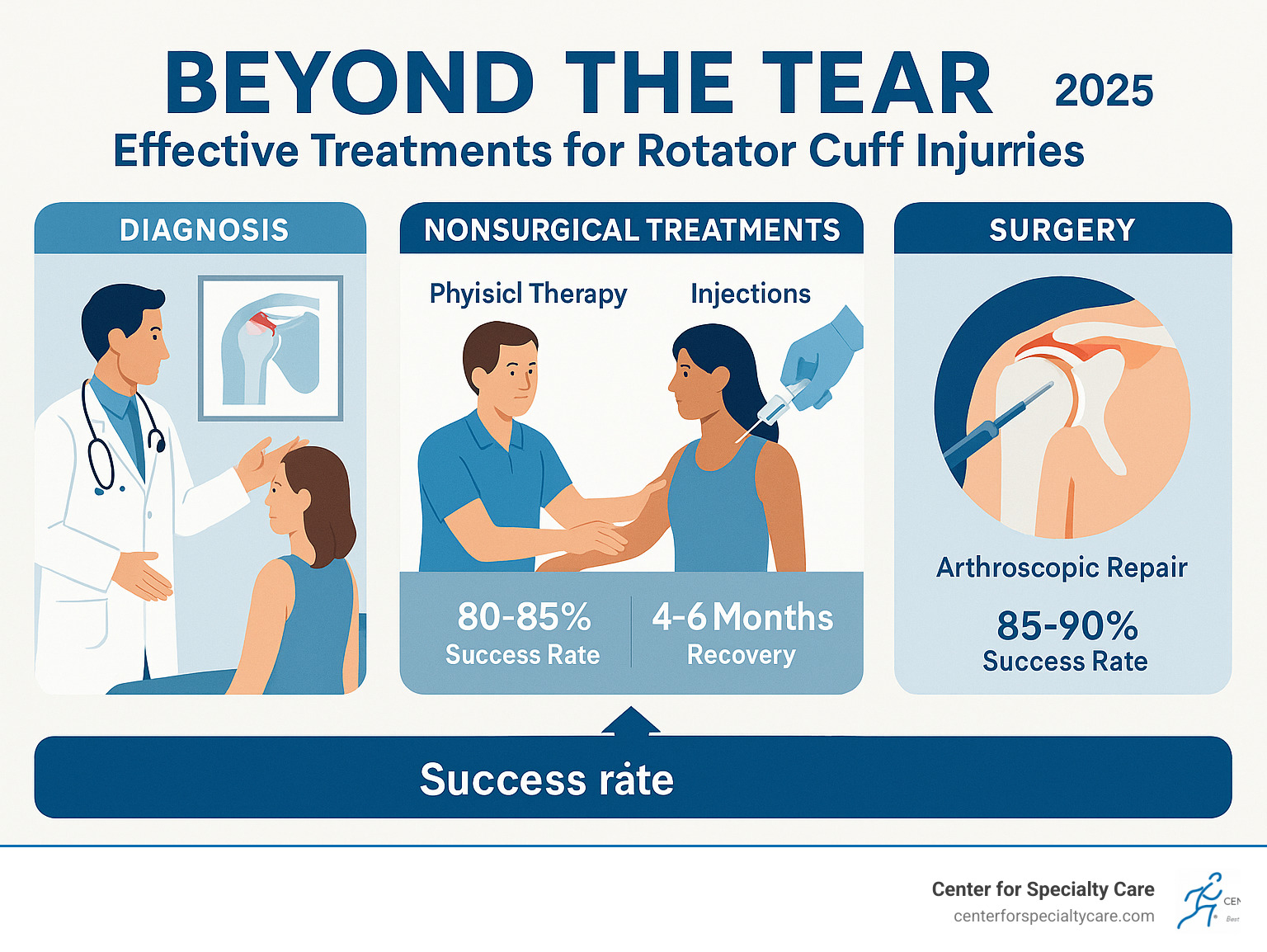
- Nonsurgical options are effective for 80-85% of patients and include rest, physical therapy, anti-inflammatory medications, and steroid injections.
- Surgery may be needed for large or complete tears, or if conservative treatment fails after 6-12 months.
- Recovery time is typically 4-6 months to regain function and strength.
- Success rates for surgery are high, with 85-90% of patients experiencing significant pain relief.
The rotator cuff is a group of four muscles and tendons that stabilize your shoulder and allow you to lift your arm. When these tissues tear, simple tasks like combing your hair become painful. The pain is often a dull ache that worsens when you sleep on the affected shoulder. This night pain, combined with weakness, signals it’s time to seek professional help.
Most rotator cuff problems can be successfully treated without surgery. When surgery is necessary, modern techniques offer excellent outcomes.
I’m Dr. Corey Welchlin, a board-certified orthopedic surgeon at the Center for Specialty Care. For over three decades, I have specialized in rotator cuff tear and treatment, helping thousands of patients in southern Minnesota and northern Iowa return to pain-free movement through arthroscopic repair and comprehensive rehabilitation.
Understanding Your Rotator Cuff Injury
Your shoulder has more range of motion than any other joint, but this flexibility makes it vulnerable to injury. The rotator cuff—a group of four muscles (supraspinatus, infraspinatus, subscapularis, and teres minor) and their tendons—keeps your arm bone in the shoulder socket, allowing you to reach, throw, and lift.

Rotator cuff tear and treatment becomes necessary when these tendons are damaged. Tears can be acute or degenerative.
- Acute injuries happen suddenly from a fall, a jerking lift, or a direct blow. They often cause immediate, intense pain and weakness and require prompt attention.
- Degenerative tears are more common and develop gradually from age and repetitive stress. These wear-and-tear injuries are more likely after age 40, and by age 60, many people have some degree of tearing, often without symptoms.
Risk factors include age, repetitive overhead activities (painting, carpentry), sports like baseball and tennis, and genetics. Poor posture and smoking can also contribute to tendon weakness.
For more information about general shoulder discomfort, check out our guide on shoulder joint pain & popping.
Common Causes and Symptoms
Recognizing the signs of a rotator cuff tear is key to getting the right rotator cuff tear and treatment. While some tears are asymptomatic, most cause disruptive symptoms:
- Pain at rest and at night: A deep, dull ache in the shoulder that worsens when you lie on it. For tips, see our article on relieving rotator cuff pain at night.
- Weakness: Difficulty with simple tasks like combing your hair, reaching behind your back, or lifting objects.
- Pain with movement: Discomfort when lifting or lowering your arm, especially with overhead activities.
- Crepitus: A crackling or popping sensation when moving the shoulder.
Types of Tears: Partial vs. Full-Thickness
Your rotator cuff tear and treatment plan depends on the type of tear.
- Partial-thickness tears damage the tendon without severing it completely, like a frayed rope. These are very common and often found in people over 40 without causing any pain.
- Full-thickness tears create a hole through the entire tendon, separating it from the bone.
Because many tears don’t cause pain, we focus on treating your symptoms, not just what an MRI shows. The type and severity of your tear, along with your symptoms and activity level, determine the best path forward. Learn more in our guide: Will a Torn Rotator Cuff Heal on Its Own? Key Recovery Facts.
Getting an Accurate Diagnosis
Knowing when to see a doctor is key. You should seek professional help for immediate weakness in your arm after an injury or for persistent shoulder pain that interferes with sleep and daily activities. At the Center for Specialty Care, we prioritize quick appointment availability to provide answers and effective treatment options. For guidance, see our resource on Finding the Best Orthopedic Shoulder Specialist Near Me.
Your appointment will start with a conversation about your symptoms and how they affect your life. The physical examination follows, where we’ll gently test your range of motion and perform strength tests to evaluate your rotator cuff function. These steps give us a strong indication of the problem before any imaging.
Imaging Tests for Confirmation
Imaging tests confirm the diagnosis and show the extent of the injury, helping us plan the best treatment.
- X-rays are a starting point to rule out other issues like bone spurs, arthritis, or fractures that could be causing your pain.
- MRI scans provide the most detailed picture of your rotator cuff, showing the exact size and location of any tears.
- Ultrasound allows us to see your shoulder in motion, which is helpful for assessing tendon movement and mechanics.
Combining your symptoms, our exam, and these imaging tests allows us to create the most effective rotator cuff tear and treatment plan for you. For more information, the American Academy of Orthopaedic Surgeons offers excellent resources at Rotator Cuff Tears – OrthoInfo – AAOS.
An accurate diagnosis is the foundation of successful treatment. The sooner we understand the cause of your pain, the sooner we can help you recover.
Comprehensive Rotator Cuff Tear and Treatment: Nonsurgical Options
Encouragingly, rotator cuff tear and treatment does not always mean surgery. We start with conservative approaches first, as they successfully relieve pain and restore function in about 80 to 85% of patients. Our goal is to relieve your pain, improve shoulder function, and help you return to the activities you love.
This approach is especially effective for partial tears and gradual wear-and-tear injuries. If your symptoms are mild, there’s an excellent chance you can avoid surgery. We can help you find the Best Therapy for Shoulder Pain: Expert Solutions & Relief for your situation.
Nonsurgical rotator cuff tear and treatment approaches
An effective rotator cuff tear and treatment plan often includes:
- Rest and activity modification: This crucial first step involves avoiding painful movements and finding temporary alternatives to give your shoulder a break.
- Anti-inflammatory medications: Over-the-counter drugs like ibuprofen or naproxen can significantly reduce pain and swelling.
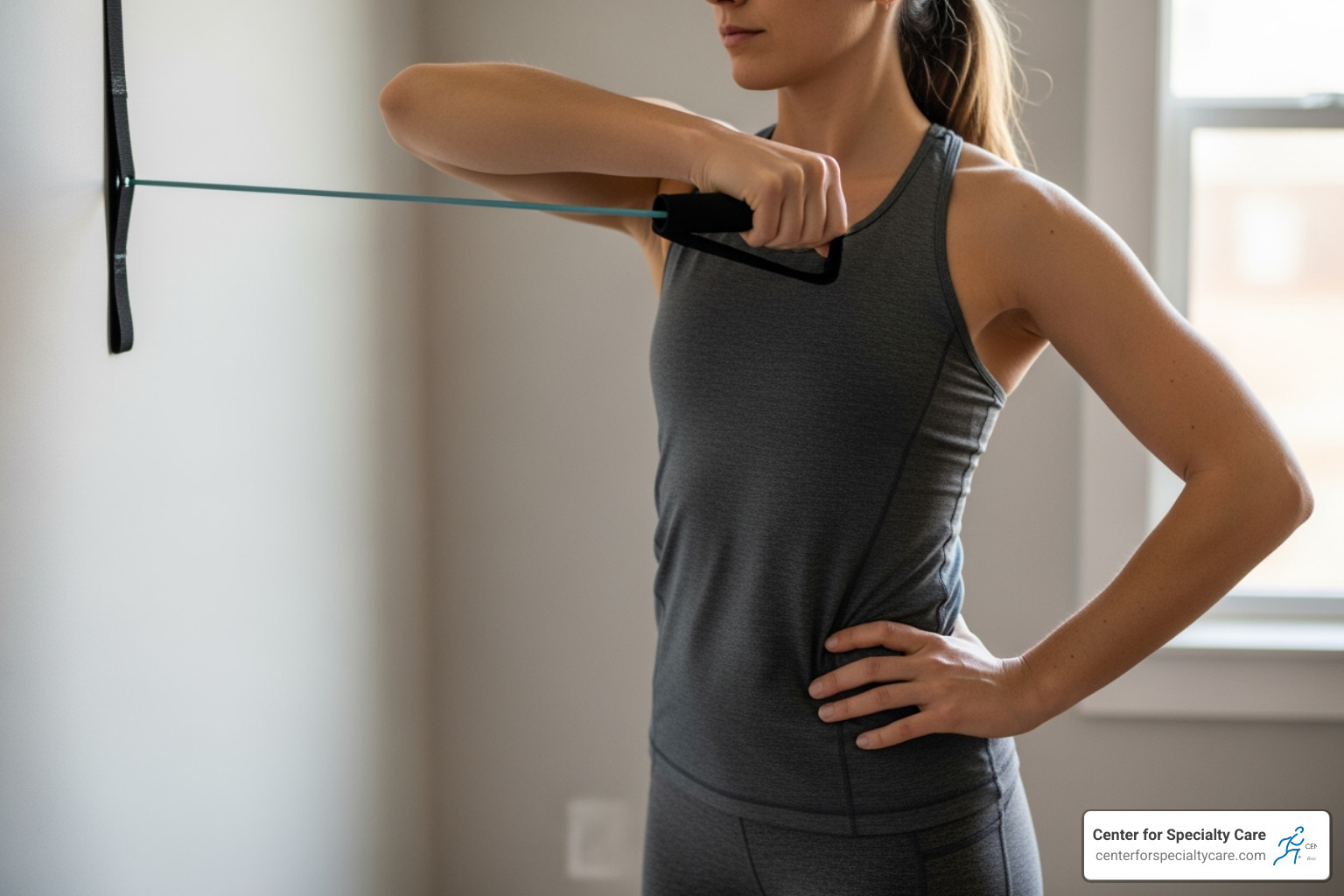
- Physical therapy: A custom program of exercises will restore flexibility and strengthen the muscles supporting your shoulder. Therapy should never be painful, and our therapists ensure proper form and progression. Learn more in our guide on Shoulder Treatment with Physical Therapy: Recovery & Pain Relief.
- Corticosteroid injections: When pain persists, these injections deliver powerful anti-inflammatory medication directly into the shoulder, providing significant relief for many patients. While they don’t repair the tear, they reduce inflammation so other treatments can work. Explore your options in our article on Types of Injections for Shoulder Pain Relief: Treatment Options.
Nonsurgical treatment requires patience, but the vast majority of our patients improve without surgery. We are committed to exploring every appropriate conservative option first.
When is Surgery Necessary for a Rotator Cuff Tear?
While most patients improve with nonsurgical care, surgery is sometimes the best path for rotator cuff tear and treatment. When your shoulder isn’t responding or the tear is too large to heal on its own, surgery can be life-changing.
We may recommend surgery if:
- Conservative treatment fails to provide relief after 6 to 12 months.
- You have a large tear greater than 3 centimeters.
- You have significant weakness that prevents daily activities.
- You are a younger, active individual with an acute traumatic tear.
Rotator cuff surgery has excellent success rates, with 85 to 90 percent of patients experiencing significant pain relief. If you’re exploring surgical options, our guide on Rotator Cuff Surgeon Near Me – Find Trusted Specialists in Your Area can help.
Surgical rotator cuff tear and treatment procedures
The goal of surgery is to reattach the torn tendon to the upper arm bone. We use advanced techniques for the best chance at a successful recovery.
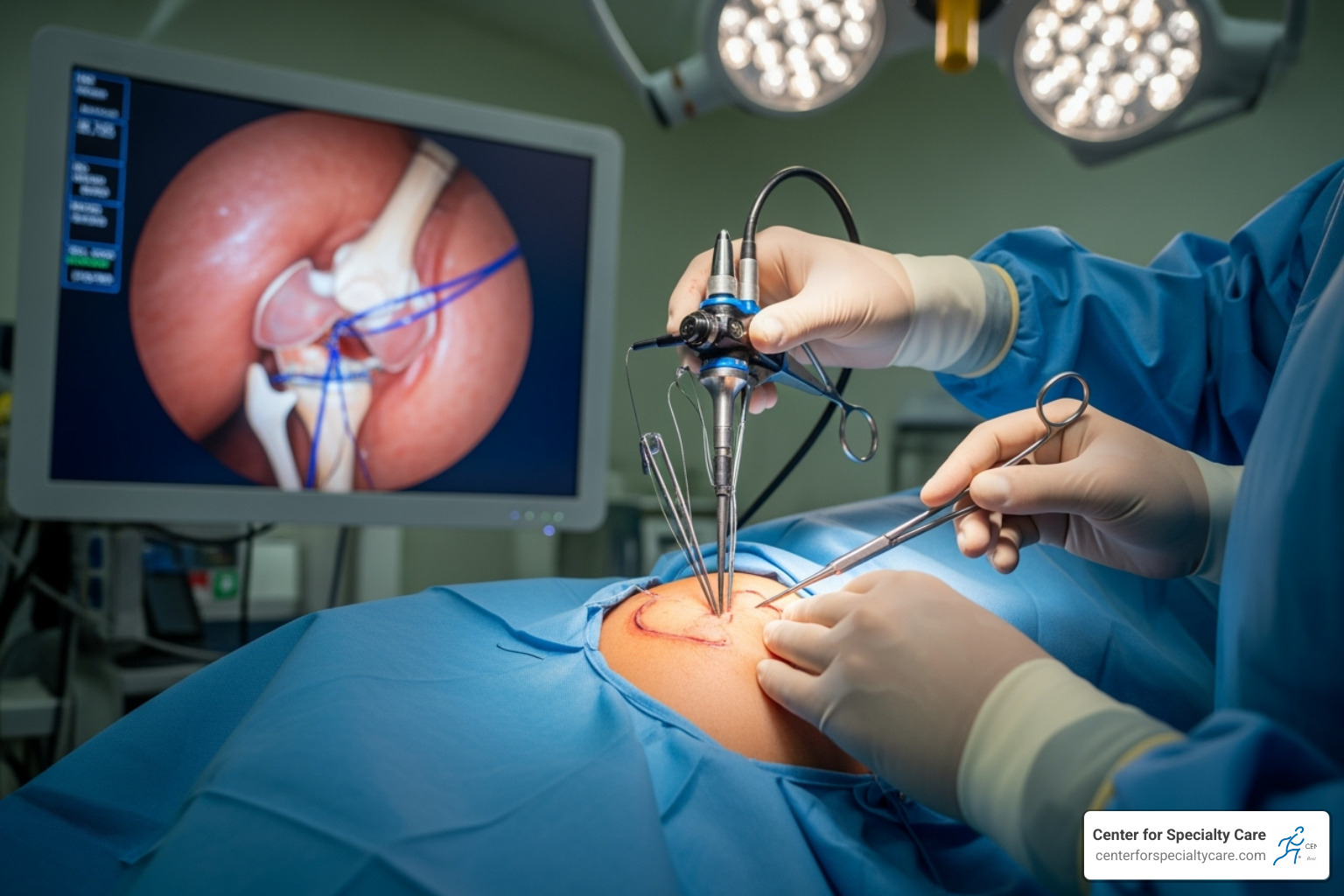
- Arthroscopic repair: Our preferred method, this minimally invasive approach uses a tiny camera and instruments inserted through small incisions, resulting in less pain and faster initial recovery.
- Open repair: Used for very large or complex tears, this technique involves a larger incision for direct access.
- Tendon transfer: If the original tendon is too damaged, we can use a healthy tendon from elsewhere in your body to take over its function.
- Reverse shoulder replacement: For massive, irreparable tears with arthritis, this innovative procedure reverses the shoulder’s ball-and-socket design, allowing other muscles to lift the arm.
For more medical information, you can reference resources like Management of rotator cuff tears.
Recovery and Rehabilitation After Surgery
Your commitment to rehabilitation after surgery is the key to success. The process determines how well your shoulder will function long-term.
- Immobilization (4-6 weeks): You’ll wear a sling to protect the healing tendon. Avoid lifting anything heavier than a coffee cup.
- Passive Exercise (starts within the first month): A physical therapist will gently move your arm to prevent stiffness while protecting the repair.
- Active Exercise (8-12 weeks post-op): You’ll begin moving your arm under your own power to regain control and motion.
- Strengthening (begins around 3 months): Once your range of motion improves, you’ll start rebuilding strength and stability.
Most patients regain significant function within four to six months, but full recovery can take up to a year or more. Following your physical therapy program is essential for the best outcome. For recovery advice, see our article on Shoulder Treatment Physical Therapy Tips for Fast Recovery. Trust the process and be patient with your body’s healing work.
Frequently Asked Questions about Rotator Cuff Tears
When dealing with shoulder pain, it’s natural to have questions. Here are answers to common concerns about rotator cuff tear and treatment.
Can a rotator cuff tear heal without surgery?
Yes, many tears can improve significantly without surgery. Partial-thickness tears often respond very well to nonsurgical treatments like physical therapy and medication, with 80-85% of patients finding relief. However, full-thickness tears, especially from an acute injury, often require surgery to restore full function and prevent the tear from worsening. The best approach depends on your specific tear, symptoms, and activity level.
How can I prevent a rotator cuff tear?
While not all tears are preventable, you can protect your shoulders from degenerative tears. Key strategies include:
- Regular stretching to maintain flexibility.
- Strengthening the rotator cuff and supporting shoulder muscles.
- Avoiding over-training in sports or jobs with repetitive overhead motions.
- Using proper form when lifting.
- Maintaining good posture to reduce stress on the shoulder.
What happens if a rotator cuff tear is left untreated?
Ignoring a rotator cuff tear can lead to worsening problems. The tear can enlarge, the pain can increase and become chronic, and you may experience progressive weakness and loss of motion. In some cases, an untreated tear can lead to a severe type of arthritis called cuff tear arthropathy. These complications are often preventable with proper rotator cuff tear and treatment, which is why seeking early evaluation for persistent shoulder pain is so important.
Your Path to a Pain-Free Shoulder
Navigating a rotator cuff tear and treatment can be challenging, but you don’t have to do it alone. Whether your path involves conservative care or surgery, the right medical team is crucial for your recovery.
At Center for Specialty Care, we believe every patient deserves personalized care custom to their unique goals. We see you, not just your injury. Our comprehensive approach begins with the least invasive treatments, which are successful for 80-85% of patients. If surgery is needed, our advanced techniques help 85-90% of patients achieve significant pain relief.
What sets us apart is our commitment to 100% patient satisfaction and quick appointment availability at our locations in Fairmont MN, Estherville IA, Buffalo Center IA, and St James MN. We know shoulder pain can’t wait.
Your shoulder doesn’t have to define your limitations. Effective treatment can relieve night pain, restore strength, and improve your range of motion. With proper care, most people return to full function and a pain-free life.
Ready to take control of your shoulder health? Take the first step toward shoulder pain relief by scheduling a consultation with our experienced orthopedic team. We’re here to create a treatment plan that gets you back to living life on your terms.