
Knots Be Gone! Your Guide to Self-Healing Shoulder Blade Muscle Knots
March 5, 2026
Ablation for Back Pain: A Comprehensive Overview
March 7, 2026
Your Shoulder’s Best Friend: Choosing an Orthopedic Specialist
Why Finding the Right Orthopedic Shoulder Specialist Matters
An Orthopedic shoulder specialist is a board-certified surgeon who focuses on diagnosing and treating conditions affecting the shoulder joint, rotator cuff, and surrounding structures. These physicians complete extensive fellowship training beyond orthopedic residency to manage everything from sports injuries and arthritis to complex reconstructive surgery.
What to look for when choosing a shoulder specialist:
- Board certification in orthopedic surgery
- Fellowship training specifically in shoulder and elbow surgery
- Professional memberships (American Academy of Orthopaedic Surgeons, American Shoulder and Elbow Surgeons)
- Conservative-first approach before recommending surgery
- Experience with both arthroscopic and open surgical techniques
Your shoulder is the most mobile joint in your body—but that flexibility comes at a cost. It’s also one of the most frequently dislocated joints. Whether you’re struggling to lift a bag of groceries, waking up with nighttime pain, or recovering from a fall, shoulder problems can seriously disrupt your daily life.
The good news? Most shoulder conditions respond well to treatment when you work with the right specialist. According to research from the MOON Shoulder Group, many patients with full-thickness rotator cuff tears improve significantly with conservative care alone—but only when guided by an expert who understands when surgery is truly needed and when it isn’t.
I’m Dr. Corey Welchlin, an Orthopedic shoulder specialist and the founder of the Center for Specialty Care in Fairmont, Minnesota. For over three decades, I’ve helped patients throughout southern Minnesota and northern Iowa recover from shoulder injuries using both minimally invasive arthroscopic techniques and comprehensive rehabilitation programs.
Simple guide to Orthopedic shoulder specialist:
When to See a Shoulder Specialist: Key Signs and Symptoms
We often take our shoulders for granted until they start to ache, click, or limit our movement. Because our shoulders are involved in so many daily activities—from reaching for a cup of coffee to throwing a ball—even minor discomfort can significantly impact our quality of life. Knowing when to transition from home remedies to seeking professional help from an Orthopedic shoulder specialist is crucial for preventing long-term complications and ensuring a swift recovery.
If you’re experiencing shoulder pain that interferes with your daily life, making simple tasks like dressing, lifting groceries, or even sleeping a challenge, it’s a clear sign that it’s time to consult with an expert. Don’t let shoulder pain linger, as ignoring it can often lead to further complications, more intense pain, and a longer recovery process.
Persistent Pain and Discomfort
Pain is your body’s way of telling you something is wrong. While minor aches might resolve with rest, persistent pain is a red flag. If you experience a dull ache that lingers for more than a few days, or sharp pain with certain movements, it’s time to pay attention. Pain that wakes you up at night or prevents you from getting a good night’s sleep is particularly concerning, as it often indicates an underlying issue that requires medical intervention.
Many of our patients come to us after trying to push through pain from activities like lifting weights. While we admire your dedication, continuing to exercise with improper form or an existing injury can exacerbate the problem. If you’re struggling with shoulder pain after your workouts, we have tips and exercises that can help you get back on track safely.
How to Get Rid of Shoulder Pain From Lifting Weights: Tips & Exercises
Mechanical Symptoms and Instability
Beyond just pain, your shoulder might be sending you other signals that it needs professional attention. Have you noticed a limited range of motion, making it hard to raise your arm overhead or reach behind your back? Perhaps you feel a weakness in your arm, struggling to lift objects you once handled with ease. These could be signs of muscle or tendon damage.
Another common complaint we hear is shoulder clicking or popping. While some occasional sounds might be normal, persistent clicking accompanied by pain, or a feeling of instability—like your shoulder might “give out” or dislocate—warrants immediate evaluation. This instability can be a sign of ligament damage or issues with the joint capsule. For more insights into these sensations, explore our guide on Shoulder Clicking When Raising Arm: Causes & Effective Relief.
Signs of Acute Injury
Sometimes, shoulder problems aren’t a gradual onset but occur suddenly due to an accident or fall. If you experience sudden, intense pain after a car accident, a fall, or a sports injury, it’s critical to seek prompt medical attention. Look for signs like visible swelling or bruising around the shoulder area, an obvious deformity (where the shoulder looks out of place), or numbness and tingling in your arm or hand. These symptoms could indicate a fracture, dislocation, or significant nerve damage.
In cases of severe trauma, such as after a car accident, shoulder injuries can range from sprains and strains to fractures and rotator cuff tears. Early diagnosis and treatment are vital for optimal recovery. For more information on post-accident shoulder pain and recovery, visit our resource on Shoulder Pain After Car Accident: Causes, Recovery Tips. If you have a joint that appears deformed, cannot use the joint, have intense pain, or sudden swelling, call 911 or visit the emergency room immediately.
For more on general shoulder joint pain and popping, including causes and effective relief, check out our dedicated guide: Shoulder Joint Pain & Popping: Causes & Effective Relief.
The Diagnostic Journey with an Orthopedic Shoulder Specialist
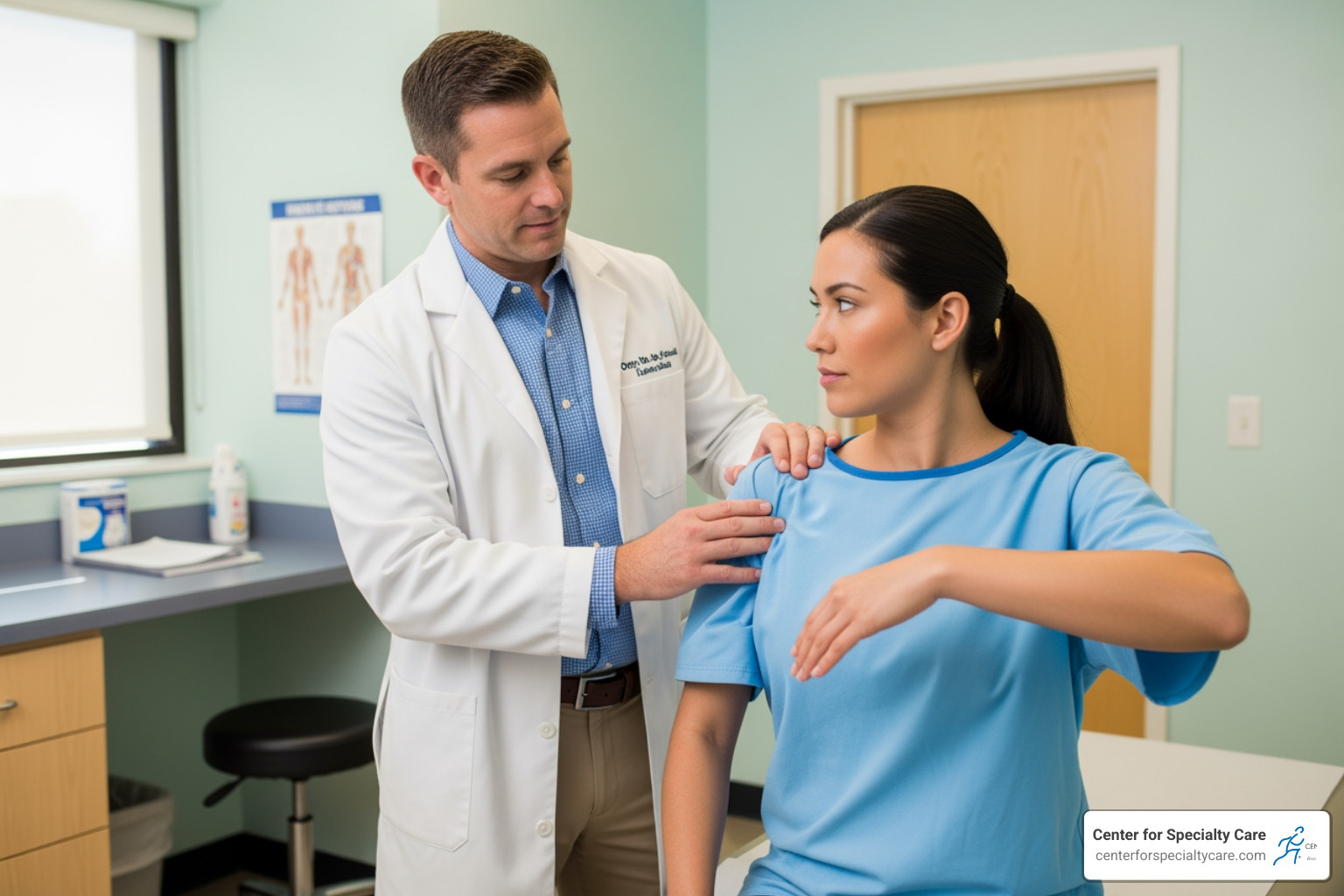
When you visit our clinic, your journey towards a pain-free shoulder begins with a thorough diagnostic process. Our goal as your Orthopedic shoulder specialist is to accurately identify the root cause of your discomfort, ensuring we develop the most effective treatment plan custom specifically for you. We believe in a personalized approach, starting with a comprehensive patient consultation and a detailed review of your medical history. This initial conversation is vital for us to understand your symptoms, how they affect your daily life, and any previous treatments you may have tried.
Common Shoulder and Elbow Conditions
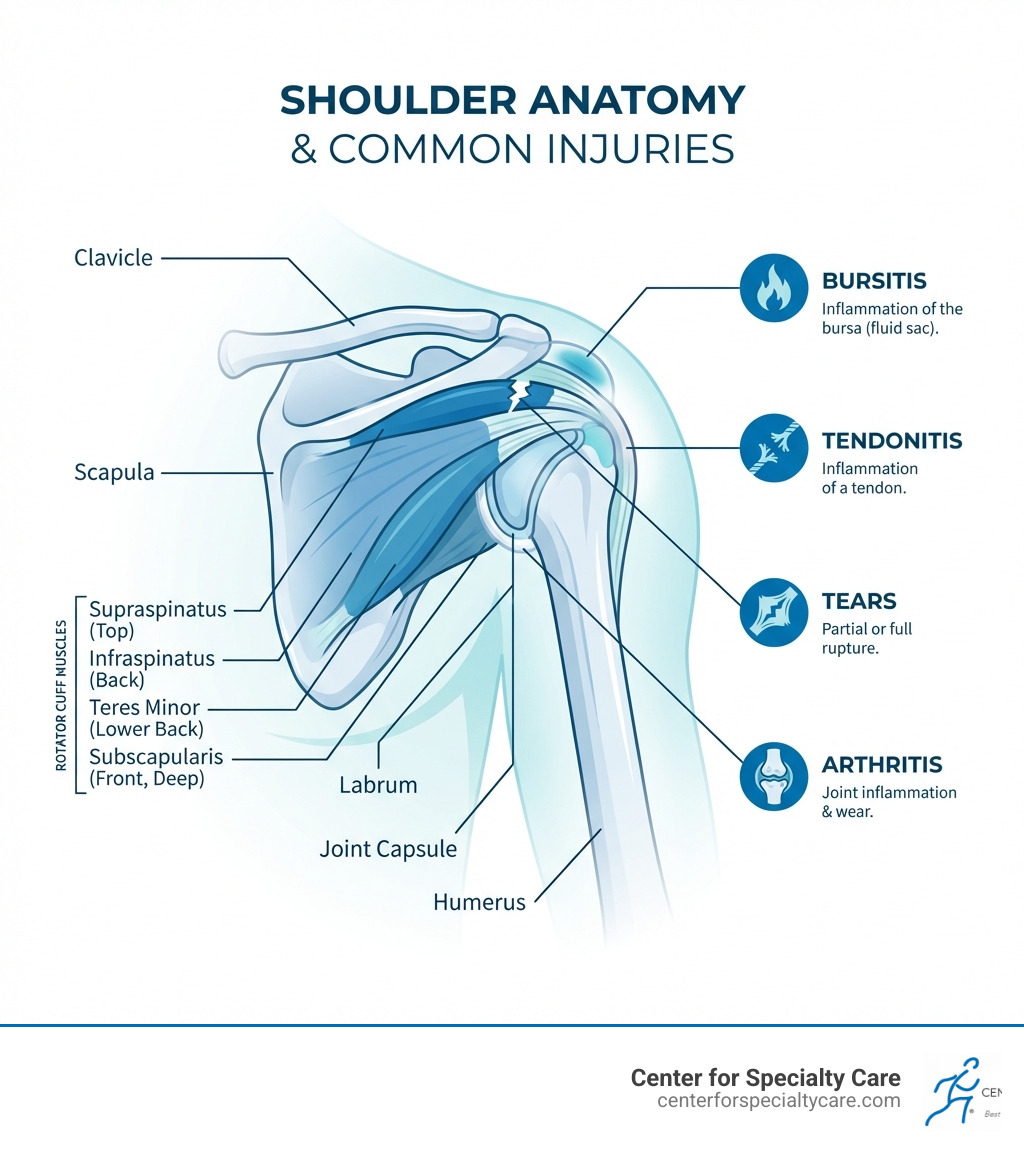
Our team of Orthopedic shoulder specialists is equipped to diagnose and treat a wide array of shoulder and elbow conditions. The shoulder joint, being the most mobile in the body, is also prone to a variety of issues. Some of the most common conditions we address include:
- Rotator Cuff Tears: These can range from partial to full-thickness tears in the group of muscles and tendons that stabilize your shoulder. They are particularly common in individuals over 50 and those with occupations requiring repetitive arm motions.
- Shoulder Arthritis: Often caused by wear and tear (osteoarthritis) or inflammatory conditions, arthritis can lead to pain, stiffness, and decreased range of motion.
- Frozen Shoulder (Adhesive Capsulitis): A condition characterized by stiffness and pain in the shoulder joint, gradually worsening over time.
- Shoulder Instability and Dislocation: Occurs when the head of the upper arm bone comes out of the shoulder socket, either partially (subluxation) or completely (dislocation).
- Bursitis and Tendonitis: Inflammation of the bursa (fluid-filled sacs that cushion joints) or tendons, often due to overuse or injury.
- Fractures (Collarbone, Humerus): Breaks in the bones that make up the shoulder, often resulting from falls or direct trauma.
- Tennis Elbow (Lateral Epicondylitis): While primarily an elbow condition, it’s often treated by upper extremity specialists due to its impact on arm function.
We treat a comprehensive range of musculoskeletal conditions, including those affecting the shoulder and elbow, with both surgical and non-surgical options. For more information about our general orthopedic services, please visit our Orthopedics page.
Advanced Diagnostic Methods
To get a clear picture of what’s happening inside your shoulder, we employ a combination of advanced diagnostic methods:
- Physical Examination: This is our first and often most informative step. We’ll assess your range of motion, strength, and identify specific points of pain or instability through various tests.
- Imaging Techniques:
- X-rays: Primarily used to evaluate bone issues, such as fractures, dislocations, and arthritis.
- MRI (Magnetic Resonance Imaging): Essential for visualizing soft tissues like tendons, ligaments, and cartilage. An MRI can clearly show rotator cuff tears, labral tears, and other soft tissue injuries. Studies, such as “Magnetic resonance imaging identification of rotator cuff retears after repair,” highlight the importance of MRI in accurate diagnosis. Magnetic resonance imaging identification of rotator cuff retears after repair
- CT Scans: While less common for shoulder soft tissues, CT scans are invaluable for providing detailed images of complex fractures or bone deformities.
- Diagnostic Arthroscopy: In some complex cases where non-invasive imaging doesn’t provide a definitive answer, a minimally invasive diagnostic arthroscopy might be recommended. This involves inserting a small camera into the joint to directly visualize the structures and identify the problem.
Our meticulous diagnostic approach ensures that we pinpoint the exact cause of your shoulder pain, setting the stage for a highly effective and targeted treatment strategy.
Crafting Your Treatment Plan: From Conservative Care to Surgery
Once we have a clear understanding of your shoulder condition, our Orthopedic shoulder specialist will work with you to craft a personalized treatment plan. Our primary goal is always to restore function, alleviate your pain, and help you return to the activities you love. We understand that every patient is unique, and your treatment plan will reflect your specific needs, lifestyle, and recovery goals. For a deeper dive into how we approach overall shoulder care, please visit our Shoulder page.
Conservative (Non-Surgical) Treatments
We always prioritize conservative, non-surgical approaches first. Many shoulder conditions respond incredibly well to these methods, often allowing you to avoid surgery altogether. Here’s a look at common conservative treatments we use:
- Rest, Ice, and Activity Modification: Often the first line of defense, this involves resting the shoulder, applying ice to reduce inflammation, and modifying activities to avoid pain. We can help you identify which movements to limit and suggest alternative ways to perform daily tasks.
- Physical Therapy: A cornerstone of non-surgical care, physical therapy focuses on targeted exercises to restore flexibility, improve range of motion, and strengthen the muscles supporting the shoulder joint.
- Medication Management: Over-the-counter anti-inflammatory medications (like ibuprofen or naproxen) can help reduce pain and swelling. In some cases, your doctor may recommend prescription medications.
- Corticosteroid Injections: For more significant inflammation and pain, a corticosteroid injection can provide powerful, targeted relief. This can reduce pain enough to allow you to participate more effectively in physical therapy. To learn more, read about the types of injections for shoulder pain relief & treatment options.