
The Fairmont Foot Guide: What to Look for in a Local Podiatrist
March 26, 2026
Knot Today! Banishing Those Pesky Shoulder Blade Knots for Good
March 31, 2026
How to Find a Pain Management Doctor Who Actually Listens
Finding a Pain Management Dr Near Me: Quick Answer
If you need a pain management dr near me right now, here’s where to start:
- Ask your primary care provider for a referral to a pain specialist
- Search your regional health system’s directory for pain medicine providers
- Look for board-certified specialists in anesthesiology, physiatry, or interventional pain medicine
- Call the clinic directly to confirm they are accepting new patients
- Ask about wait times – some clinics can start you within weeks, not years
Nearly 8 million Canadians live with chronic pain – and for many, the hardest part isn’t the pain itself. It’s not knowing where to turn.
You might have already tried your family doctor. Maybe you’ve searched online, clicked through directories, and still felt no closer to real answers. That frustration is real, and it’s common.
The good news? The right pain specialist does exist. And finding one who actually listens – one who looks at your whole picture instead of just your symptoms – can change everything.
This guide walks you through exactly how to find, evaluate, and prepare for care with a pain management specialist near you.
I’m Dr. Corey Welchlin, a board-certified orthopedic surgeon and sports medicine physician with over 30 years of experience treating musculoskeletal pain at the Center for Specialty Care in Fairmont, Minnesota – the same community I grew up in. Helping patients in southern Minnesota and northern Iowa cut through the confusion and find the right pain management dr near me is something I’ve dedicated my career to. Let’s break down exactly what you need to know.
Pain management dr near me vocab explained:
Understanding Chronic Pain and When to Seek Help

Chronic pain is generally defined as pain that lasts for more than three months, or past the normal time of healing. While acute pain serves as a vital warning sign (like pulling your hand away from a hot stove), chronic pain is more like a broken alarm system that keeps ringing long after the fire is out.
Living with chronic pain can have a drastic impact on your physical health, mental well-being, and your ability to enjoy life to the fullest. It isn’t just about the physical sensation; it often brings along unwanted “friends” like exhaustion, anxiety, and depression. Statistics show that nearly 8 million people in Canada alone live with this reality daily. In our region—from Fairmont, MN to Estherville, IA—we see many hardworking individuals who have pushed through the pain for years, often waiting up to 2 years for specialized treatment.
When should you stop “toughing it out” and look for a pain management dr near me?
- When your pain interferes with daily activities like sleeping, working, or playing with your grandkids.
- When your current medications or therapies are no longer providing relief.
- If you are experiencing radiating pain that travels down your arms or legs.
- If you feel like you’ve reached a plateau in your recovery after an injury or surgery.
Seeking help early is key. Many patients notice a significant improvement in their quality of life after just one or two visits to a specialist. For more information on how to navigate these challenges, you can explore Chronic Pain Services patient education resources.
Types of Pain Management Dr Near Me You Should Know
When you start your search for a pain management dr near me, you might encounter several different titles. It can feel like alphabet soup, but these specialists bring unique skill sets to the table:
- Anesthesiologists: While you might associate them with “going under” for surgery, many anesthesiologists specialize in pain medicine. They are experts in using medications and interventional procedures to block pain signals.
- Physiatrists (Physical Medicine and Rehabilitation Specialists): These doctors focus on the “whole person” and the restoration of function. They look at how pain affects your movement and use non-surgical methods to improve your mobility.
- Interventional Pain Specialists: These are often anesthesiologists or physiatrists who have completed extra fellowship training specifically in advanced procedures like injections, nerve blocks, and minimally invasive surgeries.
At the Center for Specialty Care, we believe in providing a comprehensive range of pain management services. Our goal is to find the least invasive path to relief that gets you back to the activities you love.
Comparing Treatment Options
To help you understand the landscape of care, here is a comparison of common approaches:
| Feature | Non-Surgical Treatment | Surgical Treatment |
|---|---|---|
| Examples | Physical therapy, medications, injections | Joint replacement, spinal fusion, arthroscopy |
| Recovery Time | Minimal to none | Weeks to months |
| Invasiveness | Low (needle-based or topical) | High (incisions and anesthesia) |
| Goal | Manage symptoms and improve function | Correct structural issues |
| When to use | First-line treatment for most conditions | When conservative care fails |
For those in the rural areas of Minnesota and Iowa, finding these resources locally is a game-changer for consistency in care.
Advanced Treatments Offered by a Pain Management Dr Near Me
The field of pain medicine has advanced rapidly. We no longer rely solely on heavy medications. Modern specialists offer a variety of targeted treatments:
- Epidural Steroid Injections: These are used primarily for back and neck pain. The doctor injects anti-inflammatory medication directly into the space around the spinal nerves. You can learn more about understanding epidural steroid injections to see if they are right for you.
- Regenerative Medicine: This exciting field uses the body’s own cells—like Platelet-Rich Plasma (PRP)—to help heal damaged tissues naturally.
- Nerve Blocks: These involve injecting medication near a specific nerve or group of nerves to “turn off” pain signals. This is often used for shoulder pain relief or chronic headaches.
- Radiofrequency Ablation: A procedure that uses heat to temporarily disable the nerves responsible for sending pain signals to the brain.
Preparing for Your Visit to a Pain Management Dr Near Me
To get the most out of your first appointment, a little homework goes a long way. Think of yourself as a detective and your doctor as your partner.
- Medical Records: Bring any recent X-rays, MRIs, or CT scan reports.
- Pain Diary: For a few days before your visit, jot down when your pain is worst, what activities trigger it, and what (if anything) makes it feel better.
- Medication List: Include dosages for all prescriptions, over-the-counter pills, and supplements.
- Referral Forms: Check if your insurance requires a formal referral from your primary care provider.
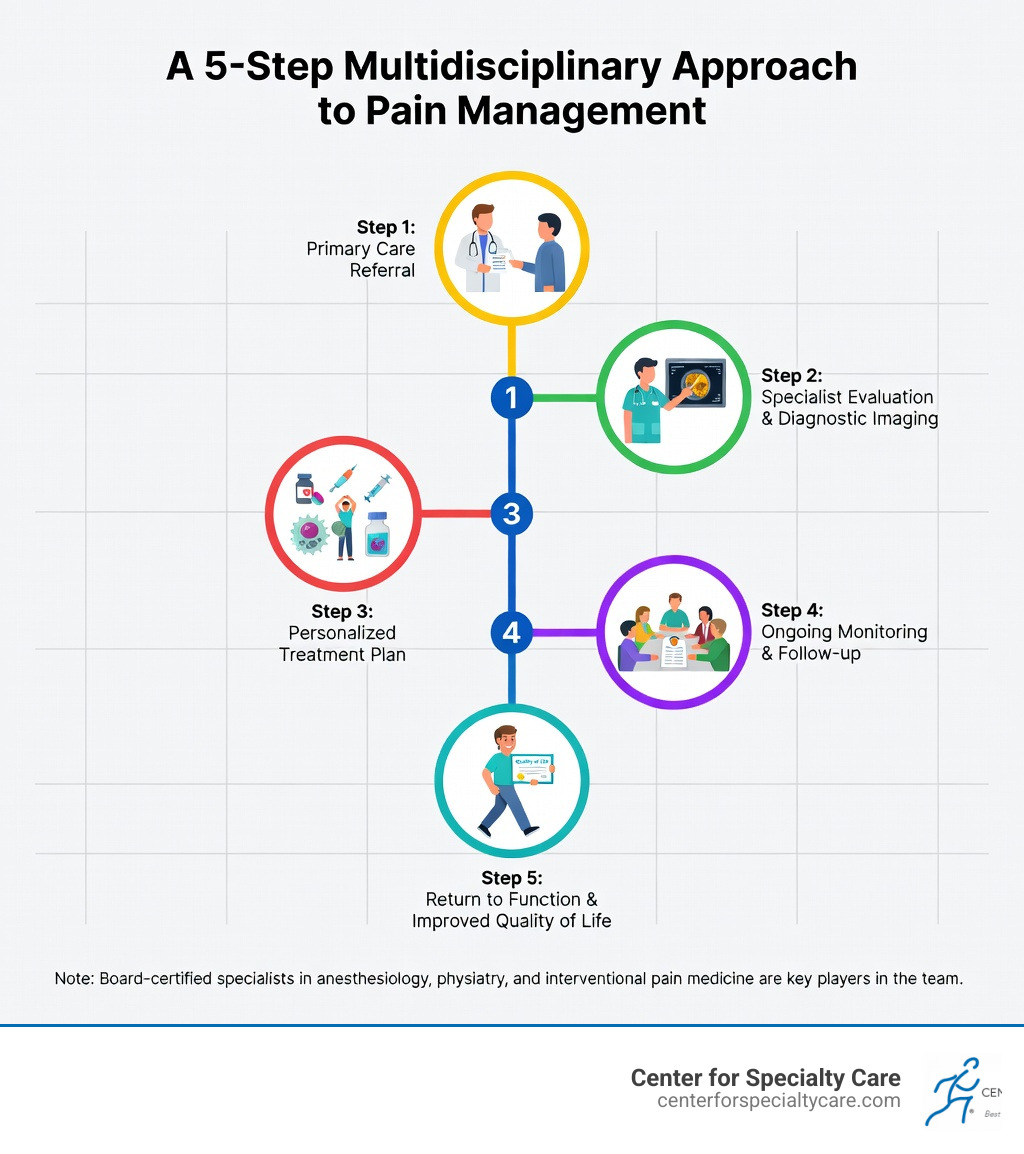
Meeting our providers is the first step toward a personalized plan. We pride ourselves on listening first and treating second.
What to Expect During Your First Consultation
Your first visit shouldn’t feel like a conveyor belt. It should be an in-depth conversation. Here is the typical flow:
- Patient Intake: You’ll fill out questionnaires about your history. (Pro tip: Be honest! We need to know about your mental health and stress levels too, as these impact pain).
- Physical Examination: We will test your range of motion, strength, and reflexes. We want to see how you move and where exactly it hurts.
- Diagnostic Imaging: If we don’t have recent images, we might order X-rays or an MRI to see the structural “why” behind your pain.
- Personalized Healing Plans: We don’t believe in “one size fits all.” Your plan might include a mix of physical therapy, lifestyle changes, and interventional procedures.
- Setting Goals: We focus on functional goals. Instead of just saying “I want less pain,” we aim for “I want to walk the dog for 20 minutes” or “I want to sleep through the night.”
Frequently Asked Questions about Pain Specialists
Do I need a referral from a primary care provider?
In many cases, yes. Most specialized pain clinics require a referral to ensure they have your full medical history. Furthermore, many insurance providers require a referral before they will cover the cost of a specialist visit. However, if you don’t have a family doctor, you can often call a clinic directly to ask about their specific intake process. At the Center for Specialty Care, we work closely with local family practices in Fairmont, St. James, and Buffalo Center to ensure a smooth transition of care.
What certifications should I look for in a pain doctor?
You want a doctor who has gone the extra mile. Look for Board Certification in their primary specialty (like Orthopedics, Anesthesiology, or Physical Medicine) and, ideally, a sub-specialty certification in Pain Medicine. Fellowship training is also a major plus—this means the doctor spent an extra year or more specifically studying the latest pain management techniques at an accredited institution.
Are virtual care or telehealth options available for consultations?
Yes! Telehealth has become a vital tool, especially for our patients in more remote parts of Minnesota and Iowa. While we can’t perform a physical exam or an injection over a computer screen, video visits are excellent for follow-up appointments, reviewing imaging results, and discussing how a new medication is working. It saves you the drive and keeps your treatment on track.
Conclusion
Finding a pain management dr near me who actually listens can feel like a daunting task, but you don’t have to do it alone. You deserve a care team that treats you like a person, not a chart number.
At the Center for Specialty Care, we are committed to 100% patient satisfaction. Whether you are in Fairmont, MN, Estherville, IA, or the surrounding communities, we offer quick appointment availability so you don’t have to wait years for relief. Our multidisciplinary approach combines the best of orthopedics and interventional pain medicine to help you reclaim your life.
Stop letting chronic pain dictate your schedule. Contact us to schedule your visit today and start your journey to a pain-free life. We’re here to listen, and more importantly, we’re here to help.