
How to Find a Pain Management Doctor Who Actually Listens
March 27, 2026
A Deep Dive into Rotator Cuff Muscles and Tendons
April 1, 2026
Knot Today! Banishing Those Pesky Shoulder Blade Knots for Good
That Nagging Knot Between Your Shoulder Blades Isn’t Something You Have to Live With
A constant knot in shoulder blade tissue is one of the most common complaints we see at Center for Specialty Care — and it’s more than just a minor annoyance.
What causes a constant knot in the shoulder blade? Here are the most common reasons:
- Poor posture — Hunching over a screen pulls the shoulder blade muscles into a stretched, strained position for hours at a time
- Muscle tension from stress — Your nervous system keeps muscles braced, even when there’s no physical threat
- Repetitive movements — Typing, lifting, or overhead reaching can overwork specific muscle fibers
- Neck problems — A pinched nerve in your cervical spine (neck) can send referred pain directly to the shoulder blade area
- Muscle imbalances — Weak upper back muscles combined with tight chest muscles create chronic strain
- Dehydration or nutrient deficiencies — Low magnesium and potassium make muscles more prone to cramping and trigger points
Up to 85% of people will experience a muscle knot at some point. With 17 different muscles attaching to the shoulder blade (scapula), it’s one of the most tension-prone areas in the entire body.
That tight, tender spot may feel like a small marble just under the skin. It might ache dully at rest, flare up sharply with movement, or even send pain radiating up into your neck or down your arm. Some people have been dealing with it for years — getting temporary relief from massage, only for the knot to return within days.
The frustrating truth? Rubbing the spot alone rarely fixes the real problem.
I’m Dr. Corey Welchlin, a board-certified orthopedic surgeon and founder of Center for Specialty Care, with over 30 years of experience treating musculoskeletal conditions — including patients whose constant knot in shoulder blade turned out to be something far more complex than a simple muscle strain. In this guide, I’ll walk you through exactly what’s happening in your tissue, why it keeps coming back, and what actually works to fix it for good.
Must-know constant knot in shoulder blade terms:
Understanding the Constant Knot in Shoulder Blade
To effectively banish a constant knot in shoulder blade, we first have to understand what it actually is. In the medical world, these “knots” are known as myofascial trigger points. They aren’t actually tangled muscles; rather, they are hyper-irritable spots within a taut band of muscle fibers.
The Physiology of a Knot
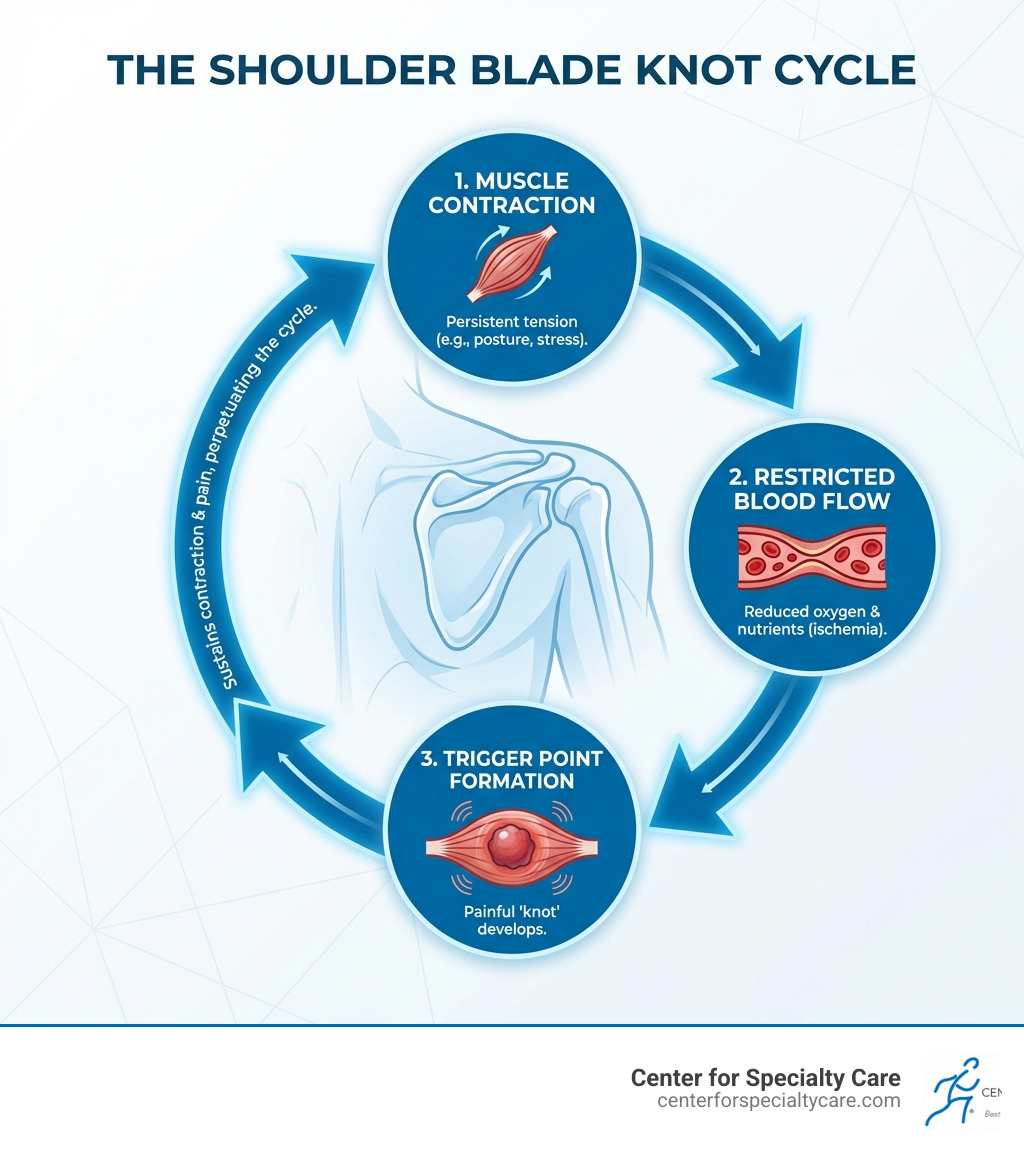
Inside your muscles are thousands of microscopic units called sarcomeres. These units contain filaments called actin and myosin that slide past each other to make the muscle contract and relax. When a trigger point forms, these filaments become “stuck” in a contracted state.
This creates a localized “energy crisis.” Because the muscle is stuck in a contraction, it compresses nearby capillaries, cutting off fresh blood and oxygen. Without oxygen, the muscle lacks the ATP (energy) required to actually release the contraction. It’s a vicious cycle: the muscle needs energy to relax, but the contraction itself prevents energy from reaching the area.
According to the Anatomy of the Scapula and its 17 muscle attachments, the shoulder blade is a complex hub where muscles from the neck, back, and arms converge. This high-traffic area is a prime target for these energy crises.
Is it a Knot or a Pinced Nerve?
It’s easy to confuse a muscle knot with a pinched nerve, but the sensations are quite different. We often use this table to help our patients at Center for Specialty Care differentiate their symptoms:
| Symptom | Muscle Knot (Trigger Point) | Pinched Nerve (Radiculopathy) |
|---|---|---|
| Sensation | Dull ache, deep pressure, “marble” feeling | Sharp, electric, burning, or stinging |
| Palpation | Tender to the touch; feels like a hard lump | No specific lump; touch may not change pain |
| Radiation | Referred pain (dull) to nearby areas | Radiating pain (sharp) down the arm/hand |
| Other Signs | Muscle stiffness | Numbness, tingling, or muscle weakness |
If you’re unsure which one you’re dealing with, you can find more info about shoulder pain causes to help narrow it down.
Common Causes and Triggers
Why does the body decide to lock up in the first place? Usually, it’s a response to modern life.
Postural Strain and “Tech Neck”
The human head weighs about 10–12 pounds. For every inch your head tilts forward—common when looking at a smartphone or a poorly positioned monitor—the effective weight on your neck and upper back muscles doubles. This chronic overstretching of the rhomboids and traps leads to protective tightening.
Stress and the Cortisol Connection
When you’re stressed, your body enters “fight or flight” mode. This causes a subconscious muscle guarding response where you shrug your shoulders toward your ears. Over time, high levels of cortisol keep these muscles in a state of semi-contraction, making trigger point development and myofascial pain almost inevitable.
Nutritional and Hydration Gaps
Muscles are roughly 75% water. Dehydration makes soft tissue stiff and less resilient. Furthermore, deficiencies in magnesium and potassium—minerals essential for muscle relaxation—can make you more prone to persistent knots.
For those in Fairmont or our Iowa clinics, we often see these issues flare up during seasonal changes when hydration habits slip. If you’ve recently felt a sudden “tweak,” you might find effective relief for shoulder kinks through targeted hydration and rest.
Why You Have a Constant Knot in Shoulder Blade: The Cinderella Hypothesis
There is a fascinating theory in ergonomics called the “Cinderella Hypothesis.” It suggests that during low-intensity tasks (like typing), the body recruits smaller muscle fibers first. These “Cinderella” fibers work continuously without rest, while the larger “big sister” fibers stay relaxed. Because these small fibers never get a break, they eventually become exhausted and form a constant knot in shoulder blade tissue.
The Hidden Link: Neck Issues and Scapular Pain
One of the most surprising things we tell our patients is that the pain in their shoulder blade might not be coming from the shoulder blade at all.
The Cloward Sign
In the 1950s, Dr. Ralph Cloward discovered that irritating certain discs in the neck would cause pain in very specific spots around the shoulder blade. This is known as the Cloward Sign. If you have a constant knot in shoulder blade that never goes away despite massage, it might actually be referred pain from the C4, C5, or C6 cervical discs.
Cervical Radiculopathy
A pinched nerve in the neck can cause pain that feels exactly like a deep, stubborn knot. According to Cervical Radiculopathy Incidence Rates and Data, this condition is more common than many realize, affecting over 100 per 100,000 men annually. This is why “smashing” the knot with a lacrosse ball often provides only temporary relief—you’re treating the symptom (the shoulder) rather than the source (the neck).
If your “knot” is accompanied by any arm weakness or tingling, finding the best shoulder doctor is a crucial next step to rule out spinal involvement.
Proven Strategies to Release Stubborn Knots
If you’re tired of that marble-sized ache, it’s time to move beyond simple rubbing.
At-Home Relief
- The Tennis Ball Trick: Place a tennis or lacrosse ball between your shoulder blade and a wall. Lean into it until you find the “sweet spot.” Hold steady pressure for 30–90 seconds. Don’t roll vigorously; the goal is to “starve” the trigger point of its contraction signal.
- Heat Therapy: Use a heating pad for 15–20 minutes. Heat increases blood flow, helping to break the “energy crisis” cycle we mentioned earlier.
- Corner Stretches: Stand in a corner, place your forearms on the walls, and lean in. This stretches the chest (pectorals), which are often the hidden culprits pulling your shoulder blades out of alignment.
For more detailed clinical approaches, you can read about the Diagnosis and Management of Trigger Points or explore physical therapy for shoulder recovery at our Fairmont location.
Professional Relief for a Constant Knot in Shoulder Blade
Sometimes, a knot has been there so long (chronic) that it requires professional intervention to “reset.”
- Dry Needling: A physical therapist inserts a thin filament needle into the trigger point. This causes a “local twitch response,” which neurologically resets the muscle and allows it to finally relax.
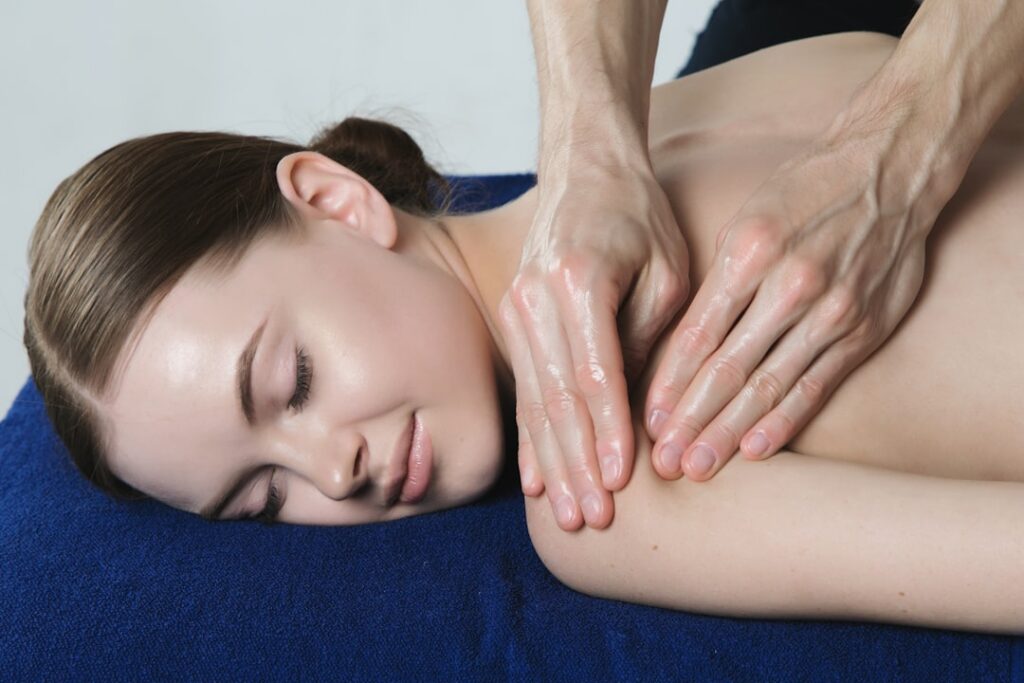
- Soft Tissue Mobilization: This isn’t just a massage. It involves specific, targeted pressure to break up adhesions and restore blood flow.
- Trigger Point Injections: For severe cases, a specialist can inject a local anesthetic or saline directly into the knot to provide immediate relief and break the pain cycle.
- Spinal Manipulation: If the knot is actually referred pain from a stiff joint in the neck or upper back, a quick adjustment can provide instant “circuit breaker” relief.
Check out our tips for fast shoulder recovery to see how these professional treatments fit into a long-term plan.
Prevention and Lifestyle Adjustments
Once you get rid of the knot, the goal is to keep it from coming back. This requires looking at your “ergonomic ecosystem.”
- The 45-Minute Rule: Never sit for more than 45 minutes without moving. Even a 30-second “scapular squeeze” (pulling your shoulder blades together like you’re trying to hold a pencil between them) can reset your posture.
- Monitor Height: Your eyes should be level with the top third of your screen. If you’re looking down at a laptop, you’re begging for a constant knot in shoulder blade recurrence.
- Sleep Hygiene: Avoid sleeping on your stomach, which forces your neck into a strained twist all night. Side sleeping with a supportive pillow that keeps your neck neutral is usually best.
- Hydration Habits: Aim for half your body weight in ounces of water daily, and consider a magnesium supplement if your doctor agrees.
Frequently Asked Questions
How long does it take for a shoulder blade knot to go away?
An acute knot (one that just appeared) can often be resolved in 3–7 days with rest, heat, and stretching. However, a constant knot in shoulder blade that has been present for months or years is considered chronic. These typically take 4–8 weeks of consistent physical therapy and lifestyle changes to fully resolve because we have to “unlearn” the muscle’s habit of staying tight.
Can a knot in my shoulder blade cause headaches?
Absolutely. Trigger points in the trapezius and levator scapulae (the muscles that connect your shoulder blade to your neck) frequently refer pain upward. This often manifests as a tension headache that feels like a tight band around your forehead or a throbbing at the base of your skull.
Can you over-massage a muscle knot?
Yes! More is not always better. If you aggressively “dig” into a knot for 20 minutes with a hard tool, you can actually cause bruising and further inflammation, leading to “muscle guarding” where the knot gets even tighter to protect itself. Limit self-massage to 2–5 minutes per spot, a few times a day.
Conclusion
A constant knot in shoulder blade doesn’t have to be your “new normal.” Whether your pain stems from a decade of desk work, a recent injury, or a hidden neck issue, there is a path to relief.
At Center for Specialty Care, we pride ourselves on being the orthopedic experts Fairmont and the surrounding Minnesota and Iowa communities trust. We don’t just treat the “spot” that hurts; we look at the whole system—from your cervical spine to your daily ergonomics—to ensure 100% patient satisfaction.
With our personalized care plans and quick appointment availability, you won’t have to wait months for relief. Schedule your shoulder consultation today and let’s get you moving pain-free again.