

Decoding Rotator Cuff Tears: Everything You Need to Know
November 17, 2025
Podiatrist Near Me: A Quick Guide to Local Foot Care
November 19, 2025
Ice or heat for tendonitis in wrist: 1 Ultimate Guide
Quick Answer: Ice or Heat for Your Wrist Pain?
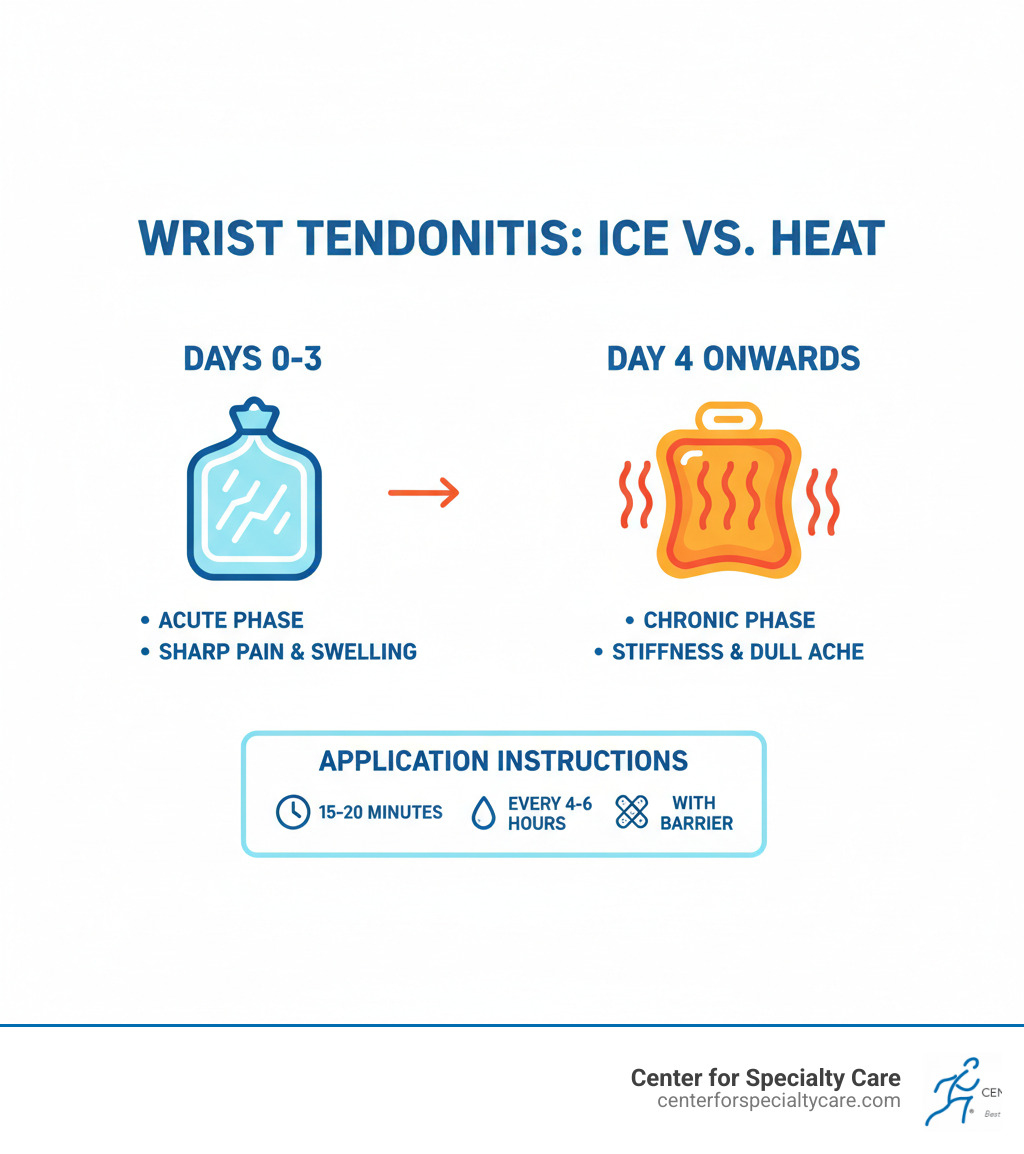
Ice or heat for tendonitis in wrist depends on whether your injury is new or ongoing:
| Use Ice When: | Use Heat When: |
|---|---|
| Injury happened in the last 2-3 days | Pain has lasted more than a week |
| You see visible swelling | Wrist feels stiff but not swollen |
| Pain is sharp and intense | Pain is dull and achy |
| After activities that cause flare-ups | Before activities to loosen up |
Quick rule: Ice for the first 72 hours after injury or flare-ups. Heat after swelling goes down and for chronic stiffness.
If you’re dealing with wrist pain, you’re likely wondering whether to use an ice pack or a heating pad. Using the wrong one can slow your recovery, but the answer is straightforward once you understand the difference.
Ice works best for new injuries (the first 2-3 days) because it reduces swelling and numbs pain. Apply it for 15-20 minutes every 4-6 hours.
Heat works best for ongoing pain (after swelling subsides) because it increases blood flow and relaxes tight muscles, making it ideal for stiffness.
Since wrist tendonitis can involve both acute flare-ups and chronic stiffness, you may need both ice and heat at different times.
I’m Dr. Corey Welchlin, a board-certified orthopedic surgeon with over 30 years of experience treating wrist tendonitis and other musculoskeletal conditions in southern Minnesota. I’ve helped countless athletes and workers with repetitive strain injuries steer the confusion about ice or heat for tendonitis in wrist. Let me guide you through what you need to know to start feeling better.
Understanding Wrist Tendonitis: Causes and Symptoms
Before deciding on ice or heat for tendonitis in wrist, it’s helpful to understand the condition.

Wrist tendonitis occurs when the tendons connecting your wrist muscles to bones become inflamed or irritated from overwork or injury, causing pain and swelling. You may also hear the term “tendinopathy,” which describes more chronic tendon issues that can involve structural changes, not just inflammation.
What Causes Wrist Tendonitis?
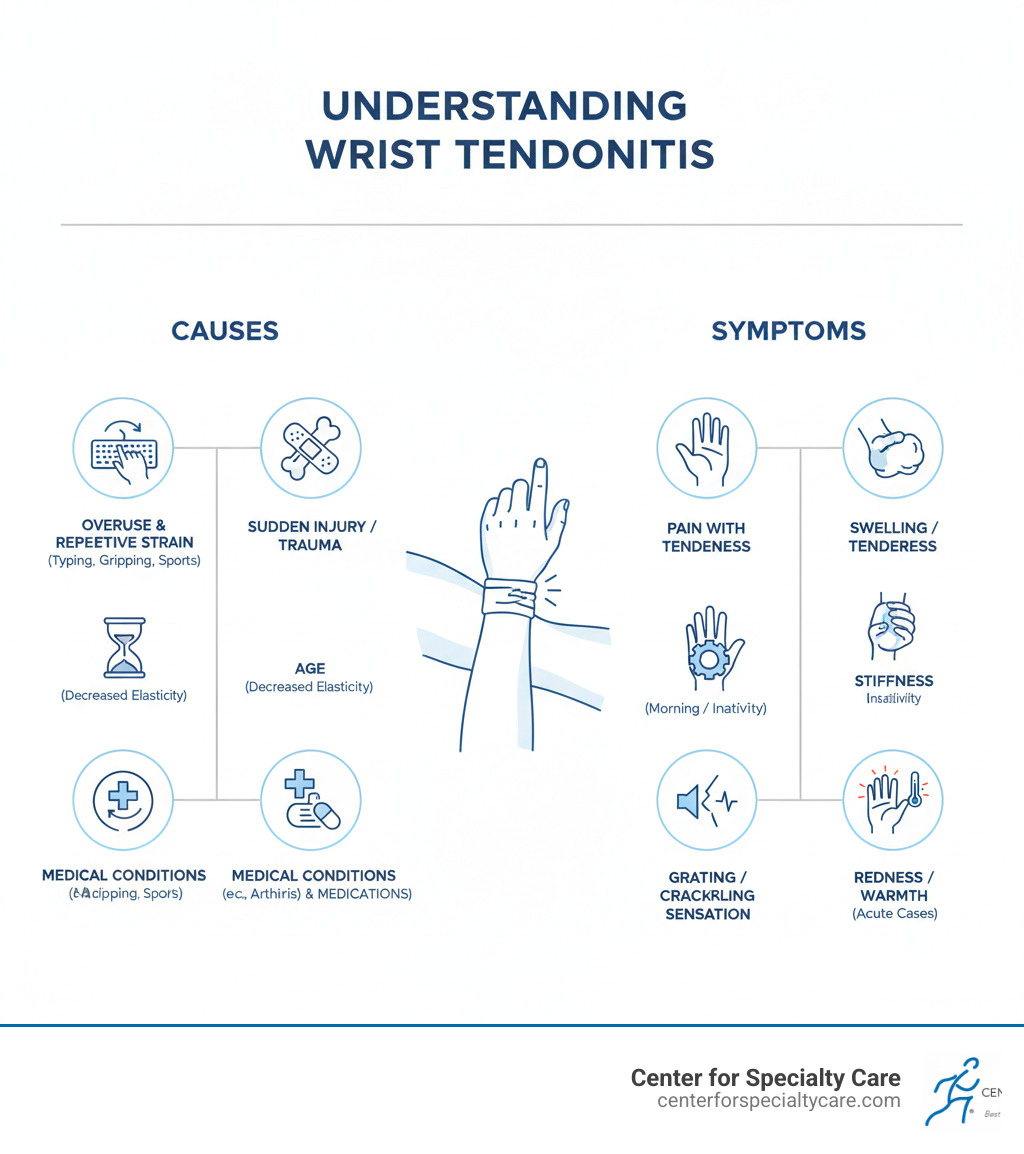
The primary causes of wrist tendonitis include:
- Repetitive Strain: Performing the same motions over and over—like typing, using tools, or playing sports—can cause tiny tears and inflammation in the tendons. This is often called a repetitive strain injury (RSI) or overuse injury.
- Sudden Injury: A fall, a sudden twist while lifting, or a direct blow to the wrist can cause immediate inflammation and pain.
- Other Factors: Age can reduce tendon elasticity, making them more prone to injury. Medical conditions like diabetes or arthritis, and even certain medications, can also increase your risk.
Recognizing the Symptoms
Symptoms of wrist tendonitis are usually clear and can include:
- Pain with movement, especially when gripping, twisting, or lifting.
- Swelling and tenderness around the affected tendon.
- Stiffness, particularly in the morning or after periods of inactivity.
- A grating or crackling sensation (crepitus) when you move your wrist.
- Redness or warmth over the tendon in acute cases, which is a key sign to use ice.
Understanding these causes and symptoms is the first step toward effective treatment. At Center for Specialty Care, we frequently treat wrist tendonitis and know how frustrating it can be. The good news is that with the right approach—including knowing when to use ice versus heat—most people find significant relief.
The Core Debate: Ice or Heat for Tendonitis in Wrist?
The key to deciding between ice or heat for tendonitis in wrist is whether your injury is acute (new) or chronic (ongoing).
Ice (cryotherapy) causes blood vessels to narrow (vasoconstriction). In a new injury, this is beneficial because it reduces blood flow, which in turn decreases inflammation, limits swelling, and numbs sharp pain. It’s your first line of defense.
Heat (thermotherapy) does the opposite, causing blood vessels to widen (vasodilation). This increases blood flow, bringing oxygen and nutrients to the area to promote healing. Heat also relaxes muscles, relieves stiffness, and soothes dull, aching pain.
An acute injury with inflammation is called tendonitis, and it responds best to ice. A chronic condition, often involving collagen breakdown without significant swelling, is called tendinopathy or tendinosis, and it responds better to heat.
| Feature | Ice (Cryotherapy) | Heat (Thermotherapy) |
|---|---|---|
| Injury Stage | Acute (new, sudden injury, first 24-72 hours) | Chronic (ongoing, after 72 hours, no active swelling) |
| Physiological Effect | Vasoconstriction (blood vessel narrowing) | Vasodilation (blood vessel widening) |
| Primary Benefit | Reduces inflammation, swelling, numbs pain | Increases blood flow, relaxes muscles, relieves stiffness |
| Symptoms Targeted | Sharp pain, visible swelling, redness, heat | Dull ache, stiffness, tightness, restricted movement |
| Tendon Condition | Tendonitis (inflammation) | Tendinopathy/Tendinosis (collagen deterioration) |
Using the wrong therapy can slow your recovery. At Center for Specialty Care, we help patients create personalized treatment plans. Learn more about our approach to wrist pain.
When to Choose Ice for Tendonitis in the Wrist
Reach for an ice pack during the acute phase, typically the first 24 to 72 hours after an injury or flare-up. Ice is your best choice when you experience:
- A sudden strain or twist.
- Visible swelling or puffiness.
- Sharp, intense pain.
- Redness or warmth over the skin.
- Pain after an activity that causes a flare-up.
The RICE protocol (Rest, Ice, Compression, Elevation) is highly effective for acute injuries. For more on the science, see this research on cold therapy for acute injuries.
When to Choose Heat for Tendonitis in the Wrist
Switch to heat after 72 hours, once any significant swelling has subsided. Heat is ideal for chronic conditions where stiffness and aching are the main problems. Use heat when you have:
- No visible swelling.
- Persistent stiffness, especially in the morning.
- A dull, aching pain that has lasted for weeks or months.
- A need to warm up muscles before physical activity to improve flexibility.
Applying a warm compress before you start your day can loosen a tight wrist and make daily tasks more comfortable. For more tips, see our guide on how heat helps chronic pain.
How to Properly Apply Ice and Heat
Applying ice or heat for tendonitis in wrist correctly is crucial for safety and effectiveness. Improper use can cause skin damage or slow your recovery.
Applying Ice: Best Practices for Tendonitis in the Wrist
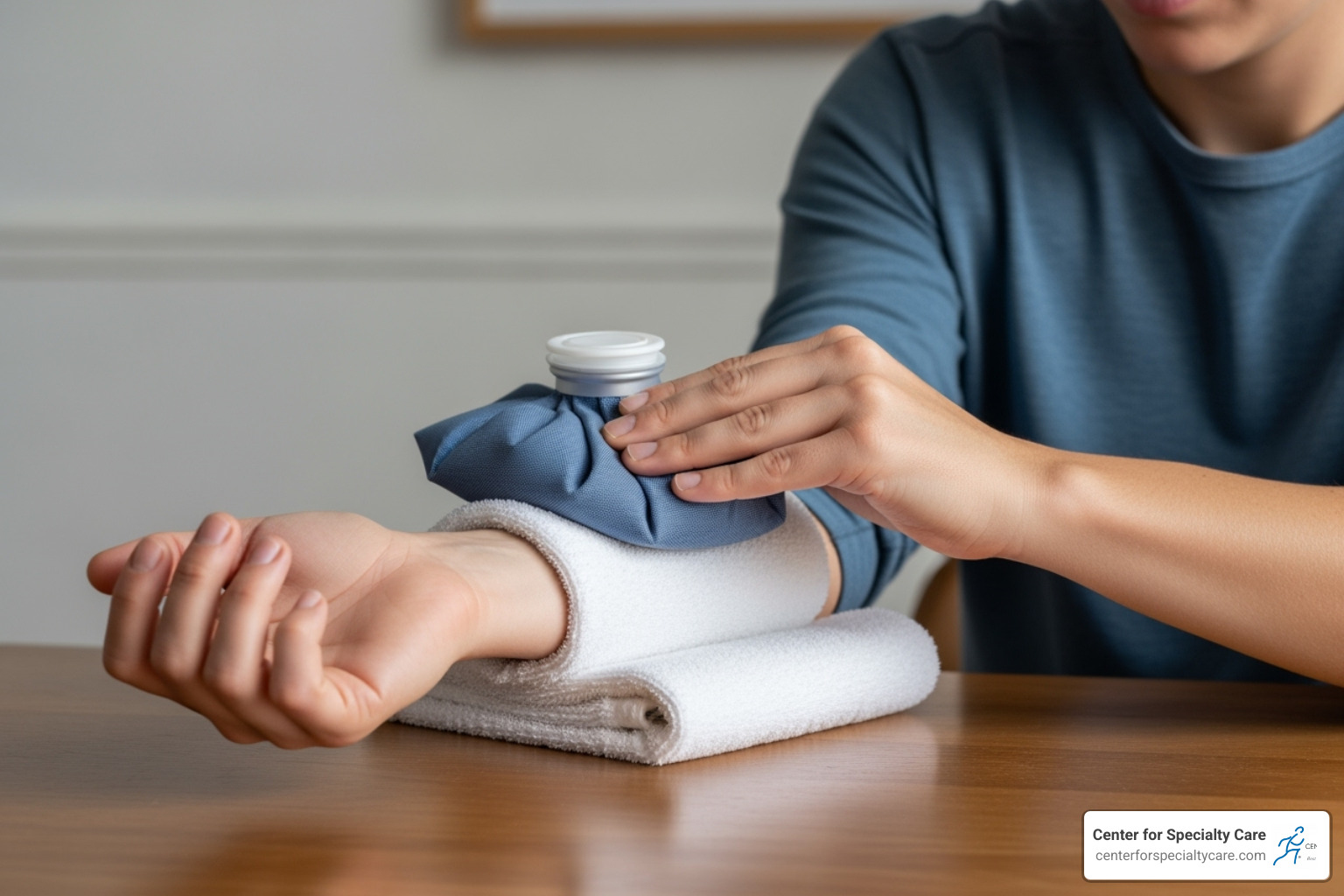
Good options include commercial ice packs, a bag of frozen vegetables, or an ice cube for a targeted massage.
- Duration & Frequency: Apply ice for 15-20 minutes at a time, every 4-6 hours during the first few days of an acute injury.
- Safety First: Always use a towel or cloth barrier between the ice and your skin to prevent frostbite or nerve damage. Never apply ice directly. Remove the ice if your skin feels numb.
Applying Heat: Best Practices for Tendonitis in the Wrist
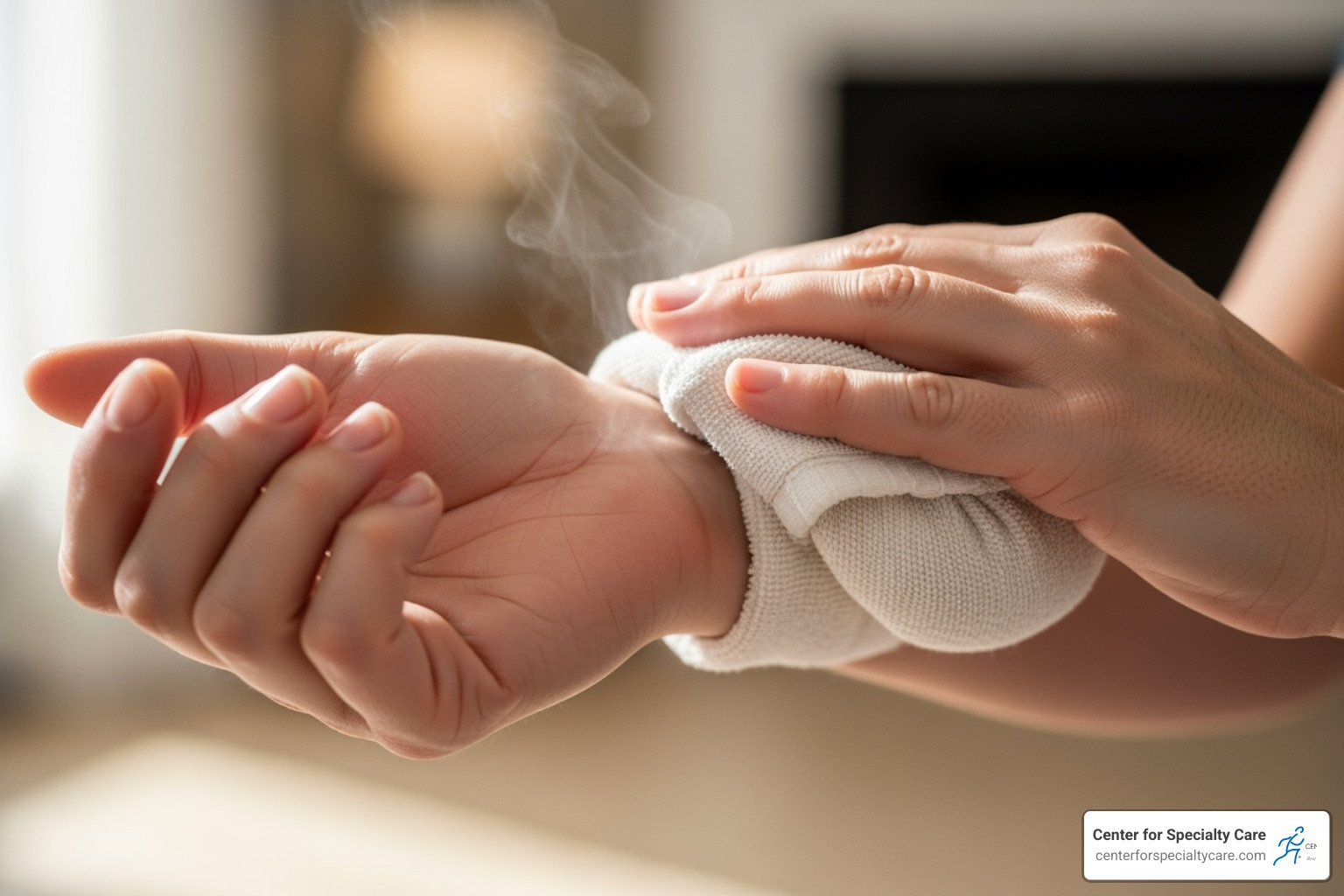
Use a warm, damp towel (compress), a heating pad, a hot water bottle, or take a warm bath or shower.
- Duration: Apply heat for 15-20 minutes. The warmth should be soothing, not painfully hot.
- Safety First: Use a cloth barrier between a heating pad and your skin to prevent burns. Never fall asleep with a heating pad on.
Can You Use Both? Contrast Therapy Explained
Alternating between hot and cold, known as contrast therapy, can be effective for minor swelling combined with stiffness. The alternating constriction and dilation of blood vessels creates a “pumping” action that can help flush out waste products and promote healing.
How to do it: You’ll need two basins, one with warm water and one with cold. Submerge your wrist in warm water for 3-4 minutes, then immediately switch to cold water for 1 minute. Repeat this cycle 3-5 times, always ending with cold. For more information on comprehensive treatment approaches, visit our approach to wrist pain.
Beyond Ice and Heat: Other Treatments and Prevention
While ice or heat for tendonitis in wrist are excellent for managing symptoms, they are often part of a larger treatment plan for lasting relief.
When to See a Doctor for Wrist Pain
Self-care is a great start, but you should seek professional evaluation if you experience any of the following:
- Pain that worsens or doesn’t improve after a few weeks of home treatment.
- Severe difficulty moving your wrist or performing daily tasks.
- A sudden pop followed by intense pain, which could indicate a tendon rupture.
- Numbness or tingling in your hand or wrist, suggesting possible nerve involvement.
- Severe, debilitating pain that affects your quality of life.
Our pain management services can help you find the right path to recovery.
Other Professional Therapies
At Center for Specialty Care, we create personalized treatment plans that may include:
- Rest and Immobilization: Giving the tendon a break from aggravating activities is crucial. A splint or brace can help by limiting movement and allowing the tendon to heal.
- Medications: Over-the-counter NSAIDs (like ibuprofen), available as pills or topical gels, can help reduce pain and inflammation.
- Physical Therapy: This is key for long-term recovery. A therapist will guide you through stretching and strengthening exercises to improve flexibility, build support around the wrist, and prevent future injuries.
- Corticosteroid Injections: For persistent pain, an injection can deliver powerful anti-inflammatory medication directly to the source for short-term relief.
- Surgery: In rare cases of a ruptured tendon or when conservative treatments fail, surgery may be needed to repair the damaged tissue. Our sports medicine expertise ensures you receive the highest level of care.
How to Prevent Wrist Tendonitis
Preventing wrist tendonitis is better than treating it. Since most cases are from repetitive strain, small changes can make a big impact.

- Improve Ergonomics: Position your keyboard and mouse so your wrists remain in a straight, neutral position.
- Take Regular Breaks: Step away from repetitive tasks every 30-60 minutes to stretch and rest your hands.
- Stretch Regularly: Gentle wrist and forearm stretches keep tendons flexible.
- Use Proper Form: During exercise or manual labor, focus on correct technique to avoid unnecessary wrist strain.
- Strengthen Forearm Muscles: Stronger muscles provide better support for your wrist joint.
- Listen to Your Body: Avoid pushing through pain. If an activity hurts, modify it or take a break.
Conclusion: Taking the Next Step for Your Wrist Pain
We’ve covered a lot, and hopefully, you now feel more confident about managing your wrist pain. The choice between ice or heat for tendonitis in wrist depends on timing and your symptoms.
To summarize:
- Use Ice for the first 72 hours of a new injury or flare-up to combat sharp pain and visible swelling.
- Use Heat after the acute phase for chronic stiffness and dull, aching pain, especially before activity.
Proper application is key: always protect your skin and limit sessions to 15-20 minutes. Most importantly, listen to your body.
At Center for Specialty Care, we put you first with personalized treatment plans and a commitment to 100% patient satisfaction. Our team has the expertise to guide you toward lasting relief, with quick appointment availability at our locations in Fairmont MN, Estherville IA, Buffalo Center IA, and St James MN.
Don’t wait if your pain worsens, you can’t move your wrist, or you experience numbness. Our physical therapy, pain management, and sports medicine teams are ready to help you get back to your life without limitations.
Don’t let wrist pain hold you back. Find expert orthopedic care for your wrist pain and let’s create a path forward together. You deserve to feel better, and we’re here to make that happen.