Decoding Your Discomfort: Understanding Shoulder Pain from Injury, Impingement, and Sleep
January 23, 2026
Is Heat Therapy Your Tendonitis Solution? What You Need to Know
January 27, 2026
Intracept Procedure Near Me: Reclaim Life 2025
Understanding the Intracept Procedure and Finding Qualified Providers
If you’re searching for an intracept procedure near me, you’re likely dealing with chronic low back pain that hasn’t responded to traditional treatments. Here’s what you need to know right away:
Quick Answer: Finding Intracept Providers
- What it treats: Vertebrogenic pain caused by damage to vertebral endplates
- Who performs it: Board-certified spine surgeons and interventional pain management physicians
- Candidacy requirements:
- Chronic low back pain for 6+ months
- Failed conservative treatments (physical therapy, medications, injections)
- MRI showing Modic changes (endplate inflammation)
- Procedure details: Minimally invasive, outpatient, 60-90 minutes, same-day discharge
- Expected results: Pain relief within 2-6 weeks, lasting 5+ years
Chronic low back pain affects millions of people and can dramatically limit your daily activities. When conservative treatments like physical therapy, medication, and injections fail to provide relief, it’s natural to feel frustrated and wonder what options remain.
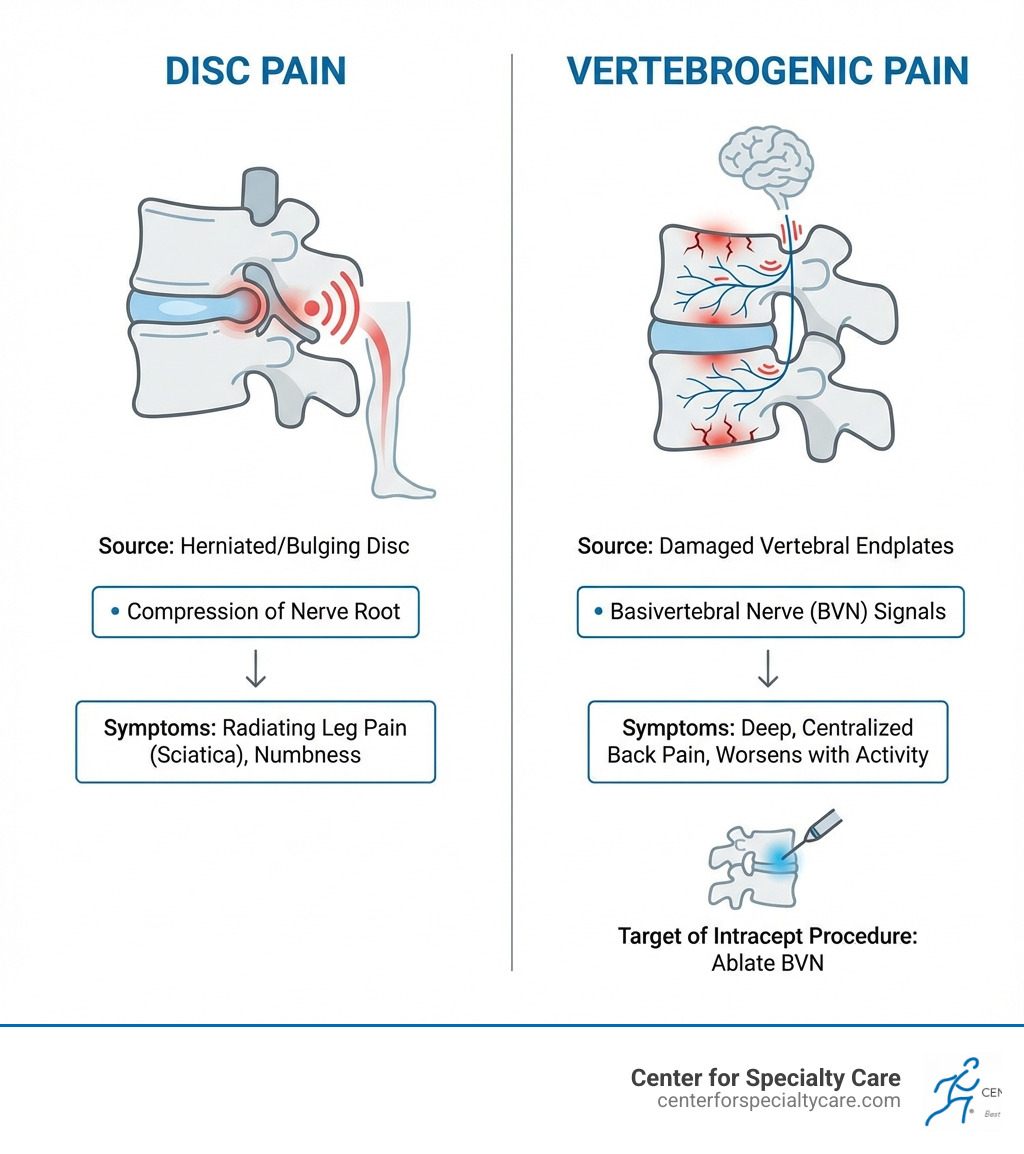
The Intracept Procedure represents a breakthrough for a specific type of back pain called vertebrogenic pain. Unlike pain from herniated discs or facet joints, vertebrogenic pain originates from damaged vertebral endplates—the protective tissue between your vertebrae and spinal discs. When these endplates become inflamed, a nerve called the basivertebral nerve (BVN) sends constant pain signals to your brain.
The Intracept Procedure uses radiofrequency energy to ablate (heat and disable) this specific nerve, interrupting those pain signals at their source. It’s minimally invasive, requires no implants, and preserves your spine’s natural structure. Clinical studies have shown that over 50,000 patients have been treated with this procedure, with significant pain reduction lasting five years or longer.
As Dr. Corey Welchlin, a board-certified orthopedic surgeon specializing in minimally invasive spinal procedures, I’ve witnessed how the intracept procedure near me has transformed outcomes for patients with chronic vertebrogenic pain. With over 30 years of experience bringing innovative treatments to southern Minnesota and northern Iowa, I’m committed to helping patients explore all available options for lasting relief.
Decoding Vertebrogenic Pain: The Target of the Intracept Procedure
When we talk about back pain, it’s easy to assume it’s all the same. However, chronic low back pain can stem from many different sources. Vertebrogenic pain is a distinct type that we’ve come to understand much better in recent years, thanks to advancements in diagnostics and targeted treatments like the Intracept Procedure. It’s a specific kind of low back pain caused by damage or aggravation to the vertebral endplate.
The vertebral endplates are incredibly important structures. Think of them as the protective layers of tissue that cover the top and bottom of each vertebral body, separating it from the adjacent spinal discs. These endplates aren’t just passive barriers; they play a crucial role in nourishing your spinal discs by allowing blood and nutrients to pass through. When these endplates become damaged, perhaps due to wear and tear or degenerative disc disease, they can become inflamed.
This inflammation triggers pain signals from a special nerve located inside each vertebra: the basivertebral nerve (BVN). The BVN runs through the bone of each vertebra and branches off to supply each endplate. When the endplates are injured or inflamed, the BVN becomes hyperactive, sending constant pain messages to your brain. This is the essence of vertebrogenic pain—pain that literally begins in the bone.
The Intracept Procedure works by directly addressing this source of pain. It uses radiofrequency ablation, a technique where controlled heat is delivered to the BVN. By heating and disrupting this nerve, we effectively stop it from sending those persistent pain signals. It’s like turning off a faulty alarm system that’s constantly blaring, even when there’s no fire. This targeted approach is what makes the Intracept Procedure so effective for patients who truly have vertebrogenic pain.
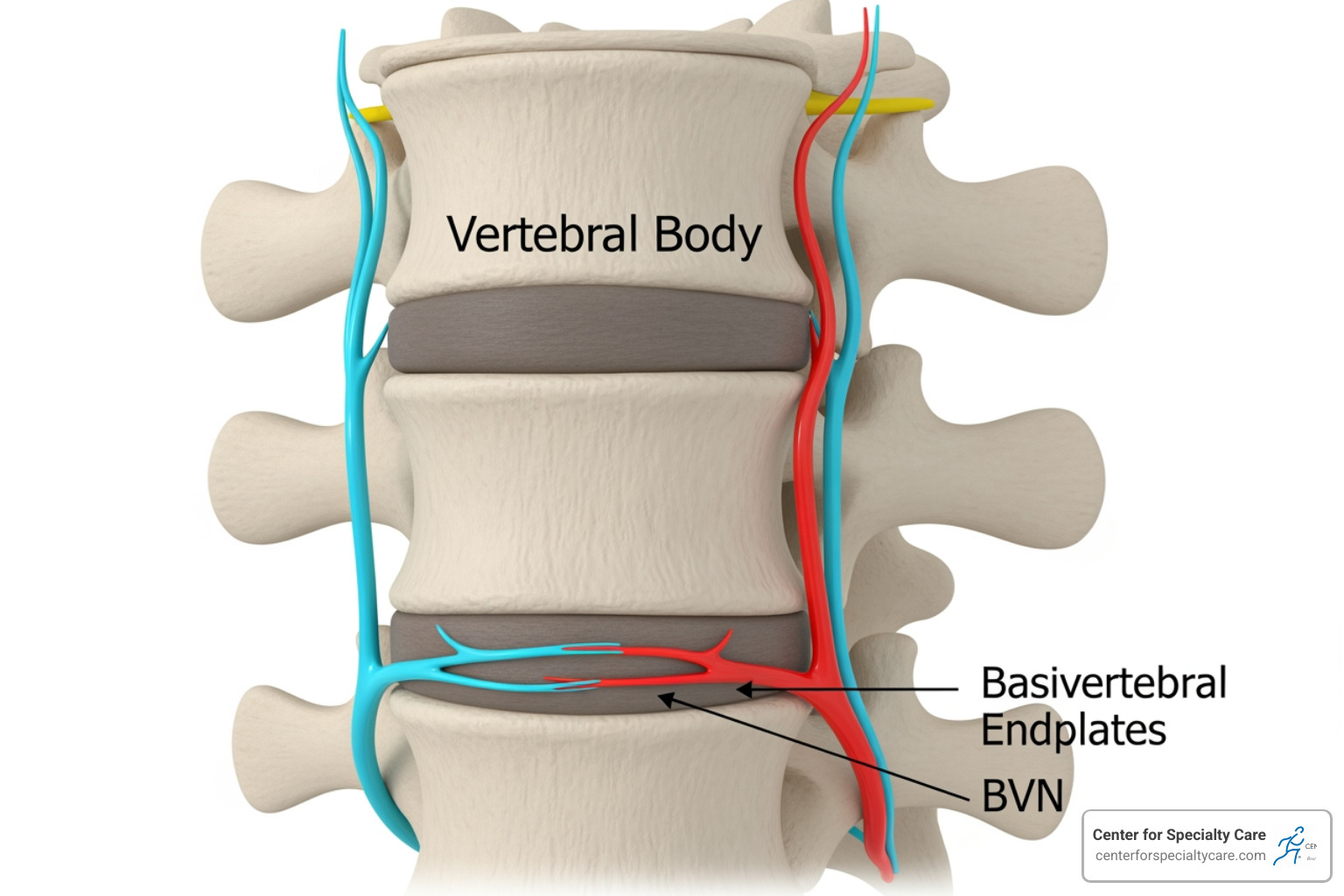
For a deeper dive into the structures that make up your spine, you can explore More info about Spinal Anatomy.
What are Modic Changes?
Understanding Modic changes is vital because they are the key to diagnosing vertebrogenic pain and determining if the Intracept Procedure is right for you. Modic changes are specific alterations visible on an MRI scan of your spine. They represent changes in the bone marrow of your vertebrae, typically adjacent to the endplates.
There are generally three types of Modic changes, but Type 1 and Type 2 are most relevant to vertebrogenic pain:
- Type 1 Modic Changes: These indicate acute inflammation and edema (swelling) within the bone marrow. They are often associated with active pain and are a strong indicator of vertebrogenic pain.
- Type 2 Modic Changes: These suggest chronic inflammation, where fatty infiltration has replaced the bone marrow. While not as acutely painful as Type 1, they still signify ongoing damage and can be a source of persistent discomfort.
The significance of Modic changes lies in their ability to pinpoint the origin of your back pain. If you’ve been experiencing chronic low back pain and your MRI shows these distinctive changes, it strongly suggests that your pain is vertebrogenic—meaning it’s coming from your vertebral endplates, not necessarily a herniated disc or facet joint issue. This diagnosis is crucial because it guides us towards the most appropriate and effective treatment, like the Intracept Procedure, which specifically targets this source of pain.
To learn more about various conditions that can affect your spine, visit More info about Common Spinal Conditions.
The Intracept Journey: What to Expect Before, During, and After
Deciding to undergo any medical procedure can feel daunting, but we want to assure you that the Intracept Procedure is designed to be as straightforward and comfortable as possible. It’s a minimally invasive, outpatient procedure, which means you’ll be able to return home on the same day.
The procedure typically takes between 60 to 90 minutes, though this can vary slightly depending on how many levels of your spine need treatment. The actual nerve ablation process, where the basivertebral nerve is heated, usually takes about 7 to 15 minutes for each treated spinal level. We typically perform the procedure under mild sedation, with a local anesthetic to numb the treatment area. This helps ensure you’re relaxed and comfortable throughout. In some cases, depending on your health and preferences, general anesthesia might be an option.
Here’s a general step-by-step overview of what happens during the Intracept Procedure:
- Preparation: Once you’re comfortably sedated, we’ll clean and numb the skin in the treatment area of your lower back.
- Access: A very small incision, often just a few millimeters, is made in your back.
- Guidance: Using advanced real-time X-ray imaging, called fluoroscopy, we precisely guide a thin tube, or cannula, through the soft tissues and into the appropriate vertebra. This imaging ensures accuracy and safety.
- Targeting the Nerve: A specialized probe is then inserted through the cannula, carefully advanced until it reaches the basivertebral nerve within the vertebra.
- Nerve Ablation: Once the probe is correctly positioned, radiofrequency energy is delivered through it. This controlled heat ablates (damages) the basivertebral nerve, effectively stopping it from transmitting pain signals.
- Completion: After the ablation is complete, the probe and cannula are carefully removed, and the tiny incision is closed, often with just a small bandage.

This precise targeting of the basivertebral nerve is key. Research, such as the Long-term study results published in NASSJ, demonstrates the sustained benefits of this intraosseous basivertebral nerve ablation for chronic low back pain.
Recovery and Long-Term Effectiveness
One of the significant advantages of the Intracept Procedure is the relatively quick recovery time. Because it’s a minimally invasive, outpatient procedure, most of our patients are able to return home the very same day. We’ll monitor you in a recovery area for a short period, usually up to 60 minutes, to ensure you’re feeling well before discharge. You will need a trusted friend or family member to drive you home, especially if you received sedation.
In the first few days to a week after the procedure, we recommend taking it easy. You might experience some tenderness, bruising, or minor swelling at the incision site, which can typically be managed with over-the-counter pain relievers and ice packs. While strenuous activities should be avoided for about six weeks, we actively encourage light walking as soon as you feel comfortable. Most patients are able to resume their normal daily activities within a few days to a week.
When can you expect to feel relief? While some individuals experience pain reduction as early as two weeks post-procedure, it’s more common to notice gradual improvement over about three months. The full benefits may take several weeks to materialize as the nerve ablation process completes. We’ve seen patients continue to improve significantly during this time.
The Intracept Procedure is considered low-risk, especially when compared to traditional spinal surgeries. However, as with any medical intervention, there are potential, albeit rare, risks. These can include infection, bleeding, or nerve damage. We will thoroughly discuss all potential risks and side effects with you during your consultation, ensuring you have a complete understanding.
The long-term effectiveness of the Intracept Procedure has been well-documented. Clinical evidence and real-world results in over 50,000 patients show that the majority experience significant improvements in function and pain that are sustained for more than five years after a single treatment. The basivertebral nerve, once ablated, has not shown an ability to grow back after treatment, which contributes to this long-lasting relief. This means you won’t typically need the procedure repeated.
For more information on the various services we offer for back and spine health, visit More info about our Back and Spine services.
Are You a Good Candidate for the Intracept Procedure?
Determining if the Intracept Procedure is the right path for your chronic low back pain is a careful process that we undertake with every patient. We consider several factors to ensure this innovative treatment offers you the best chance for lasting relief.
Here are the characteristics of an ideal candidate for the intracept procedure near me:
- Chronic Low Back Pain: You’ve been suffering from low back pain for at least six months. This isn’t for acute, sudden pain, but for persistent, long-term discomfort.
- Failed Conservative Care: You’ve diligently tried various non-surgical treatments for at least six months without significant, lasting relief. This often includes physical therapy, medications (oral pain relievers, muscle relaxers), chiropractic care, and spinal injections. We understand the frustration of trying multiple approaches that don’t work, and we’re here to offer new solutions.
- MRI Showing Modic Changes: This is a critical diagnostic criterion. Your MRI scan must show features consistent with Modic changes, specifically Type 1 or Type 2, indicating damage and inflammation at your vertebral endplates. This confirms that your pain is likely vertebrogenic.
- Characteristic Pain Symptoms: Your pain is typically described as being in the middle of your lower back, and it often worsens with physical activity, prolonged sitting, bending forward, or lifting. These symptoms align with pain originating from the vertebral endplates.
While the Intracept Procedure is a fantastic option for many, it’s not suitable for everyone. There are certain contraindications we must consider:
- Pregnancy: If you are pregnant or suspect you might be.
- Implanted Electronic Devices: If you have an active implanted electronic medical device, such as a pacemaker or defibrillator.
- Active Infection: If you have a systemic or local infection.
- Cardiovascular or Pulmonary Issues: If you have weakened cardiac or pulmonary function.
- Anatomical Concerns: If your spinal anatomy presents a risk of unintentional damage during the procedure.
- Skeletally Immature: Generally, individuals under 18 years of age are not candidates.
Our comprehensive evaluation process will include a thorough review of your medical history, a physical examination, and detailed analysis of your diagnostic imaging, particularly your MRI. We may also perform nerve tests or diagnostic nerve blocks to confirm the source of your pain. Our goal is to ensure that the Intracept Procedure is indeed the most appropriate and effective treatment for your unique situation.
For a broader understanding of how we approach chronic pain, you can explore More info about Pain Management.
Benefits Compared to Other Treatments
When considering treatment options for chronic low back pain, it’s essential to weigh the advantages of each. The Intracept Procedure stands out for several compelling reasons, particularly when compared to more traditional surgical interventions or other minimally invasive techniques.
Here are the key benefits that make the Intracept Procedure an attractive option for many of our patients:
- Minimally Invasive: Unlike open spinal surgery, which involves larger incisions and significant disruption to muscles and tissues, the Intracept Procedure uses a very small incision. This translates to less trauma to your body, reduced scarring, and typically a quicker recovery.
- Implant-Free: Many spinal procedures involve implanting devices like screws, rods, or spacers. The Intracept Procedure is entirely implant-free. Nothing is left inside your body, which can be a significant comfort to many patients.
- Preserves Spine Structure: The procedure does not alter the overall anatomical structure or stability of your spine. It specifically targets the nerve causing the pain without affecting the biomechanics of your back. This is a huge advantage over fusion surgeries or extensive decompressions.
- One-Time Treatment: For most patients, the ablation of the basivertebral nerve provides long-term relief and does not need to be repeated. Since the targeted nerve does not typically grow back, the pain relief can be sustained for many years.
- Quicker Recovery Than Open Surgery: While recovery from any procedure takes time, the Intracept Procedure generally allows for a much faster return to normal activities (days to a week) compared to the weeks or months often required for open spinal surgeries. This means less downtime and a quicker return to the activities you love.
- Low-Risk Profile: Compared to the more extensive risks associated with traditional spinal surgeries, the Intracept Procedure is considered to have a very low risk profile.
- Drug-Free Solution: For those looking to reduce reliance on pain medications, the Intracept Procedure offers a drug-free approach to managing chronic pain.
These benefits highlight why the Intracept Procedure is a valuable tool in our orthopedic and pain management arsenal, offering a targeted, effective, and less disruptive solution for vertebrogenic pain.
To learn more about our comprehensive approach to bone and joint health, visit More info about Orthopedics.
How to Find a Specialist for an Intracept Procedure Near Me
Finding the right specialist for an intracept procedure near me is a crucial step towards achieving lasting pain relief. At Center for Specialty Care, we are proud to offer this advanced treatment to our communities in Fairmont MN, Estherville IA, Buffalo Center IA, St James MN, and across Minnesota and Iowa. We understand that when you’re in pain, you want expert care that’s accessible and trustworthy.
What to Look for in a Provider
When you’re searching for a provider to perform an intracept procedure near me, it’s important to look beyond just proximity. You want a team that combines expertise with compassionate, personalized care. Here’s what we believe makes a difference:
- Board-Certified Specialists: Ensure your provider is a board-certified spine surgeon or interventional pain management physician. This certification signifies a high level of training, knowledge, and experience in their field. Our team includes specialists dedicated to bringing you the best care.
- Experience with Interventional Pain Management: The Intracept Procedure is a specialized interventional pain management technique. You want a doctor who has extensive experience with similar minimally invasive procedures and a deep understanding of spinal anatomy and pain mechanisms.
- Comprehensive Evaluation Process: A good provider won’t jump straight to a procedure. They’ll conduct a thorough evaluation, including a detailed medical history, a physical examination, and a careful review of all your diagnostic imaging (especially your MRI for Modic changes). This ensures an accurate diagnosis of vertebrogenic pain.
- Personalized Care Approach: We believe in treating each patient as if they were family. This means listening to your concerns, understanding your unique situation, and developing a treatment plan custom specifically for you. Our commitment to 100% patient satisfaction and quick appointment availability means you’ll always feel heard and valued.
Finding the right specialist can make all the difference in your treatment journey. To find an expert in bone and joint care, you can visit Find an Orthopedic Surgeon Near Me.
Preparing for Your Consultation for an intracept procedure near me
Once you’ve identified a potential provider, preparing for your initial consultation can help you make the most of your appointment and ensure all your questions are answered. Coming prepared allows us to get a complete picture of your condition and history.
Here are a few tips for preparing for your consultation for an intracept procedure near me:
- Gathering Medical Records: Bring all relevant medical records, especially any MRI reports and images, X-rays, or CT scans related to your back pain. These are invaluable for confirming Modic changes and other diagnostic indicators.
- Listing Prior Treatments and Their Effectiveness: Make a list of all conservative treatments you’ve tried (e.g., physical therapy, specific medications, types of injections, chiropractic care) and, importantly, describe how effective they were (or weren’t) for your pain. This helps us understand your journey and what hasn’t worked.
- Preparing Questions for Your Doctor: Don’t hesitate to write down any questions you have about the Intracept Procedure, recovery, potential risks, benefits, and what life might look like afterward. No question is too small!
- Discussing Insurance Coverage and Benefits: Our team at Center for Specialty Care will work closely with you and your insurance provider to help determine coverage for the Intracept Procedure and any potential out-of-pocket costs. It’s helpful if you have your insurance information ready.
The Importance of a Specialist for an intracept procedure near me
The complexity of chronic back pain, particularly vertebrogenic pain, underscores the vital role of a specialist. It’s not just about performing a procedure; it’s about accurate diagnosis, appropriate patient selection, and meticulous execution.
- Accurate Diagnosis of Vertebrogenic Pain: As we’ve discussed, vertebrogenic pain is distinct. A specialist has the expertise to correctly identify Modic changes on your MRI and differentiate this pain from other spinal conditions. This accurate diagnosis is the cornerstone of effective treatment.
- Expertise in Minimally Invasive Techniques: The Intracept Procedure requires precise placement of instruments within the vertebral body, guided by fluoroscopy. Specialists trained in interventional pain management and minimally invasive spine procedures possess the delicate skills and experience needed to perform this procedure safely and effectively.
- Ensuring Optimal Outcomes and Safety: Their expertise minimizes potential complications and maximizes the chances of a successful outcome, providing you with significant and lasting pain relief. We are committed to providing the highest standard of care in our Fairmont MN, Estherville IA, Buffalo Center IA, and St James MN locations.
If you’re seeking specialized care for your pain, finding a dedicated pain management doctor is essential. Visit Find a Pain Management Dr Near Me to learn more.
Conclusion: Reclaim Your Life from Chronic Back Pain
Living with chronic low back pain can feel like an unending battle, stealing your energy, limiting your activities, and dimming your outlook on life. But for those suffering from vertebrogenic pain, the Intracept Procedure offers a targeted, proven, and lasting solution. We’ve seen how this innovative, minimally invasive procedure can help patients reclaim their lives, enabling them to return to work, hobbies, and family activities without the constant burden of pain.
The Intracept Procedure provides targeted relief by addressing the specific nerve (basivertebral nerve) responsible for transmitting vertebrogenic pain signals. It’s a minimally invasive, implant-free, outpatient procedure with a relatively quick recovery, leading to sustained pain reduction for five years or longer in many patients. If you’ve tried conservative treatments without success and your MRI shows Modic changes, the intracept procedure near me might be the breakthrough you’ve been searching for.
At Center for Specialty Care, our dedicated team in Fairmont MN, Estherville IA, Buffalo Center IA, and St James MN is committed to providing personalized care, ensuring you receive a thorough evaluation and the most appropriate treatment plan. We believe in empowering our patients with knowledge and offering cutting-edge solutions to help you live a life free from debilitating pain.
Don’t let chronic low back pain define your life any longer. We invite you to explore whether the Intracept Procedure is the right option for you.
Schedule your Intracept Procedure consultation today and take the first step towards a future with less pain and more possibilities.