
The Ultimate Guide to Foam Rolling Away Shoulder Blade Pain
January 22, 2026
Your Path to Pain Relief: Discover Intracept Providers Nearby
January 24, 2026
Shoulder pain after injury: 72 Hours to Relief
Why Understanding Your Shoulder Pain Matters
Shoulder pain after injury can significantly disrupt your daily life, making simple tasks like reaching for a shelf, getting dressed, or even sleeping a painful challenge. Whether your pain stems from a sudden fall, a sports mishap, or gradual wear and tear, understanding what’s happening inside your shoulder is the first step toward effective treatment and recovery.
Quick Answer: Common Causes and What to Do
- Rotator cuff injuries (tears or tendinitis) – dull ache that worsens at night
- Dislocations or separations – sudden severe pain, visible deformity, inability to move arm
- Fractures – broken collarbone or upper arm bone from direct impact
- Bursitis or impingement – pain with overhead movements, swelling
- First aid: Rest, ice (15-20 minutes every 2-3 hours), lift, avoid heat for 72 hours
- Seek immediate care if: Unable to move arm, severe swelling, numbness, or signs of infection
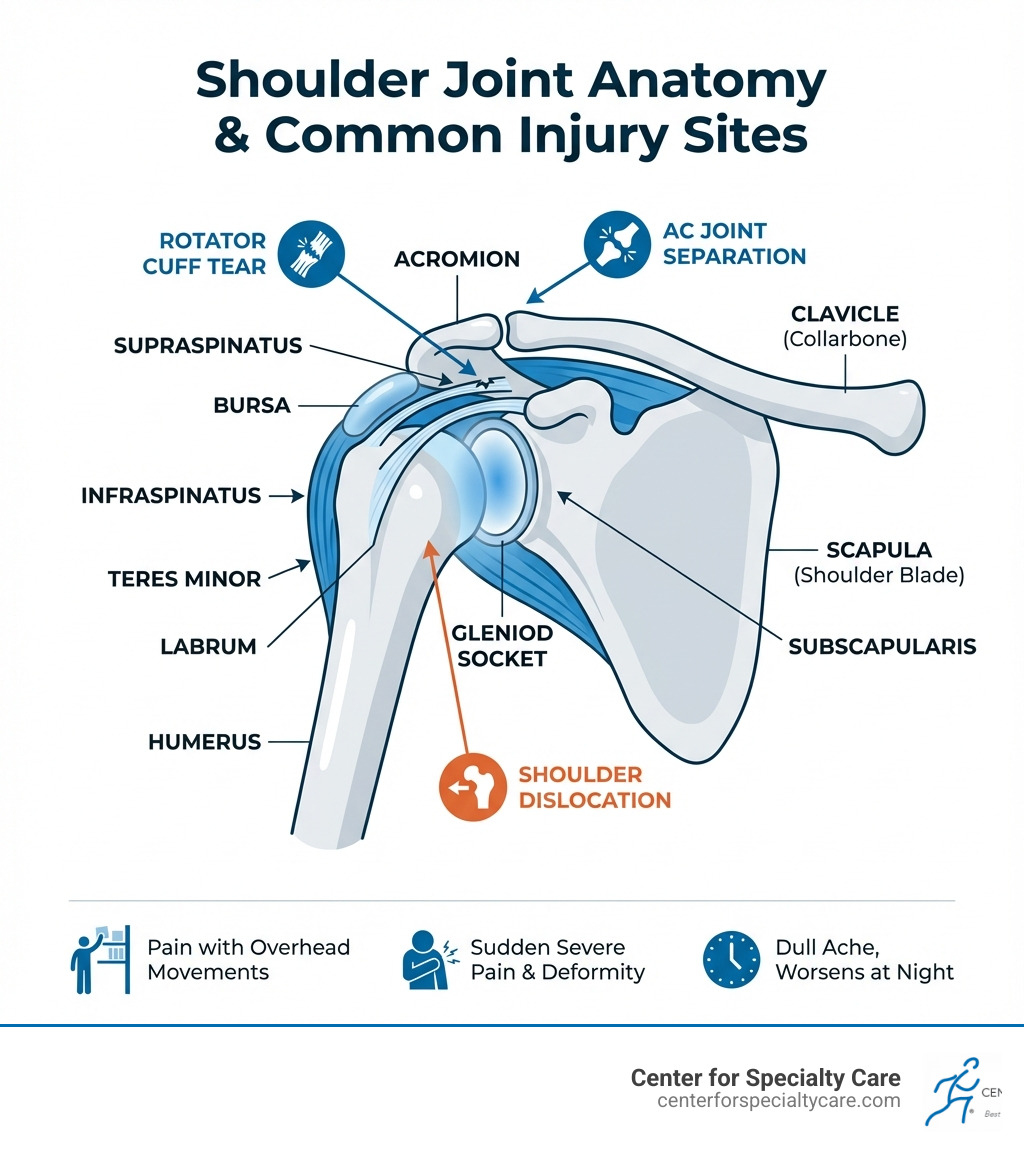
Your shoulder is the most movable joint in the human body, giving your arms their remarkable range of motion. This mobility comes at a cost—the shoulder joint is also the most frequently dislocated major joint and is particularly vulnerable to injury. The joint relies on a complex system of bones, the rotator cuff (four muscles and their tendons), ligaments, and bursae. When any of these are damaged, pain and limited function often follow.
For younger people, sports injuries are the main culprit. For the rest of us, normal wear and tear over time weakens shoulder tissues and leaves them vulnerable to injury. As we age, tendon tissue thins out—up to one-third of older adults with rotator cuff tendonitis actually have a tear.
I’m Dr. Corey Welchlin, a board-certified orthopedic surgeon who has specialized in treating shoulder pain after injury for over three decades in southern Minnesota and northern Iowa. As the founder of the Center for Specialty Care in Fairmont, I’ve helped thousands of patients recover from rotator cuff tears, dislocations, fractures, and chronic shoulder conditions using both conservative treatments and minimally invasive surgical techniques.
This guide will cover common causes, warning signs, and the full spectrum of treatment options, from first aid to surgery. Understanding your injury is the first step toward recovery.
Shoulder pain after injury definitions:
Why Does My Shoulder Hurt? Common Causes and Types of Injuries
When you experience shoulder pain after injury, it’s often a result of the shoulder’s incredible mobility. This allows for an extensive range of motion, but it also makes the shoulder inherently less stable and more susceptible to damage. Injuries can be categorized into acute (sudden) injuries and overuse (gradual) injuries, or simply from the natural wear and tear that comes with age.
Acute injuries typically occur from a specific event like a fall on an outstretched arm, a direct blow, or abnormal twisting. The pain may be sudden and severe. Overuse injuries develop gradually from repetitive stress, often from activities involving overhead arm motion. As we get older, tendon tissue thins out, making tears more likely even from minor incidents.
Rotator Cuff Injuries: Tears and Tendinitis
The rotator cuff is a group of four muscles and their tendons that stabilize the shoulder and enable its wide range of motion. Injuries to this critical area are a very common source of shoulder pain after injury.
Rotator cuff tendinitis refers to inflammation of these tendons. It often starts as a dull ache around the outside tip of the shoulder that worsens when you push, pull, reach overhead, or lift your arm to the side. Lying on the affected shoulder can also hurt, and the pain may wake you at night. This inflammation can sometimes lead to fraying or even tearing of the tendon tissue.
A rotator cuff tear can be partial or full-thickness. Symptoms often include persistent pain, especially a dull ache that worsens when sleeping on the affected shoulder, and arm weakness. It can become difficult to reach behind your back or lift your arm. While some minor tears can be managed conservatively, larger tears may require more intensive treatment. You might wonder, Will a Torn Rotator Cuff Heal on Its Own? Key Recovery Facts – the answer often depends on the severity and type of tear.
Dislocations, Separations, and Instability
A shoulder dislocation occurs when the ball of the upper arm bone (humerus) separates completely from the joint’s socket (glenoid). This usually requires a significant force and results in immediate, severe pain, inability to move the arm, and often a visibly deformed shoulder.
A shoulder separation, on the other hand, involves injury to the acromioclavicular (AC) joint, where the collarbone (clavicle) meets the shoulder blade (acromion). This type of injury often occurs from a fall directly onto the shoulder, causing pain and a bump on top of the shoulder.
After a dislocation, some individuals may experience chronic instability, where the shoulder feels loose or prone to slipping out of place again. This can lead to a popping or clicking sensation. Understanding the Common causes of shoulder dislocation and subluxation is crucial for prevention. If you’re experiencing a Shoulder Clicking and Pain – Causes, Effective Relief, it’s important to have it evaluated.
Fractures, Bursitis, and Other Conditions
Beyond soft tissue injuries, shoulder pain after injury can also stem from fractures. The most common shoulder fractures involve the collarbone (clavicle) or the upper arm bone (humerus). These usually result from high-impact trauma, such as a fall or car accident, and typically cause severe pain, swelling, bruising, and inability to move the arm. For instance, a Shoulder pain after car accident – Causes, Recovery Tips can be particularly complex.
Other conditions contributing to shoulder pain after injury include:
- SLAP Tears and Labrum Injuries: The labrum is a rim of cartilage that helps stabilize the shoulder socket. A SLAP (Superior Labrum Anterior to Posterior) tear is a specific injury to this cartilage, often seen in athletes.
- Bursitis: This is the inflammation of a bursa, a small, fluid-filled sac that cushions the shoulder joint. Bursitis often causes pain with overhead activities and tenderness.
- Impingement Syndrome: This occurs when the rotator cuff tendons or bursa get pinched between the bones of the shoulder, leading to pain and limited motion.
- Frozen Shoulder (Adhesive Capsulitis): While sometimes occurring without a clear cause, it can develop after an injury or surgery if the shoulder is immobilized for too long, leading to significant pain and stiffness.
From First Aid to Home Care: Managing Initial Shoulder Pain
Your initial response to shoulder pain after injury can significantly impact recovery. Proper first aid and home care can reduce pain and prevent further damage. The goal is to protect the area, minimize swelling, and let healing begin. We recommend the PRICE principle: Protection, Rest, Ice, Compression, and Elevation.
The First 72 Hours: Immediate Steps for a Shoulder Injury
The first 72 hours following a shoulder injury are critical for managing pain and inflammation.
- Protection: If the injury is severe, immobilize the arm with a sling to provide support and prevent further injury. However, don’t keep the shoulder immobilized for too long without a diagnosis, as this can lead to stiffness.
- Rest: Avoid activities that strain your shoulder. Gentle, pain-free movement can prevent stiffness, but give your body time to heal.
- Ice: Apply an ice pack to the injured area for 15 to 20 minutes at a time, every 1 to 2 hours for the first three days. Wrap the ice in a cloth to prevent frostbite.
- Compression: If there’s significant swelling, a gentle compression bandage can help, but ensure it’s not too tight.
- Elevation: Elevating the injured area can help reduce swelling. For shoulder injuries, sleeping with your head and torso propped up can be beneficial.
What to Avoid in the First 72 Hours:
It’s also crucial to avoid things that can worsen the injury. Do not apply heat, massage the area, or consume alcohol, as these can increase swelling and inflammation. Smoking should also be avoided as it hinders healing by reducing blood supply.
If your injury seems severe, it’s always best to seek professional advice. Should I Go to Urgent Care for Shoulder Pain? Signs, Treatment Options can help you determine the right course of action.
Effective Home Remedies and Self-Care
Once the initial acute phase has passed, or for less severe shoulder pain after injury, home care continues to play a vital role in recovery.
- Over-the-Counter Pain Relievers: Medications like ibuprofen (NSAIDs) or acetaminophen can help manage pain and reduce inflammation. Always follow dosage instructions.
- Gentle Range-of-Motion Exercises: Once the initial pain subsides, gentle movement is key to preventing stiffness. Simple exercises like pendulum swings (leaning forward and letting your arm hang down, gently swinging it in small circles) can improve blood flow and maintain mobility.
- Improving Posture: Poor posture can contribute to shoulder pain. Standing and sitting upright, with your shoulders relaxed and back, helps keep shoulder muscles and tendons in their correct positions.
- Sleep Positioning Tips: Lying on the affected shoulder is often painful. Many find relief by sleeping in a recliner or with their head and torso propped up by pillows. Placing a pillow under the injured arm can also provide support. For more tips, check out How to Relieve Rotator Cuff Pain at Night – Expert Tips for Better Sleep.
These home care strategies are for managing mild to moderate pain and are not a substitute for professional medical evaluation if your pain is severe or persistent.
When to See a Doctor for Shoulder Pain After Injury
While some minor aches resolve with home care, certain symptoms of shoulder pain after injury warrant immediate medical attention. Ignoring these warning signs can lead to long-term complications and a more difficult recovery.

Recognizing the Warning Signs
You should seek medical help if you experience any of the following:
- Severe, Sudden Pain: Pain that is intense and comes on abruptly after an injury.
- Inability to Move the Arm: If you cannot lift your arm or bear weight on it.
- Obvious Deformity or Swelling: A visibly misshapen shoulder, a prominent bump, or rapid, significant swelling.
- Numbness or Tingling: Sensations of pins and needles, or a loss of feeling in your arm, hand, or fingers.
- Signs of Infection: Redness, warmth, pus, or a fever accompanying your shoulder pain.
- Pain with Other Symptoms: If shoulder pain is accompanied by chest pain, shortness of breath, or dizziness, seek immediate emergency care.
- Persistent Pain: If pain doesn’t improve after 2-4 weeks of home treatment, or if it worsens.
For more detailed guidance, refer to When to contact a medical professional for shoulder pain.
The Diagnostic Process: What to Expect
When you visit our specialists at Center for Specialty Care in Fairmont, Estherville, Buffalo Center, or St. James, our priority is to accurately diagnose the cause of your shoulder pain after injury.
- Medical History: We’ll ask detailed questions about your injury, symptoms, medical background, and daily activities to understand the context of your pain.
- What causes your shoulder pain?
- How long have you been experiencing this pain?
- What activities make the pain worse or better?
- Have you noticed any weakness, numbness, or tingling?
- Have you had any previous shoulder injuries or surgeries?
- Physical Examination: Our specialists will examine your shoulder’s range of motion, strength, stability, and tenderness, using specific tests to identify injured structures.
- Imaging Tests: To get a clearer picture, we may recommend imaging studies:
- X-rays: To detect fractures, dislocations, or bone spurs.
- MRI (Magnetic Resonance Imaging): Provides detailed images of soft tissues like tendons, ligaments, and the labrum to identify tears or inflammation.
- Ultrasound: Can visualize tendons and muscles in real-time, useful for diagnosing rotator cuff tears or bursitis.
Our goal is a quick, accurate diagnosis to begin your recovery without delay. If you’re looking for Finding the Best Orthopedic Shoulder Specialist Near Me, our team is ready to provide expert care with quick appointment availability.
The Risks of Ignoring Shoulder Pain After Injury
Delaying treatment for shoulder pain after injury can lead to serious, long-lasting complications.
- Adhesive Capsulitis (Frozen Shoulder): Prolonged immobility or unchecked inflammation can cause the joint capsule to thicken and tighten. This leads to severe pain and restricted motion, a condition that can take months or years to resolve.
- Chronic Pain and Weakness: Untreated injuries can lead to persistent pain and weakness, severely impacting your quality of life.
- Joint Stiffness: Any untreated injury can result in a general loss of range of motion, making movements difficult and painful.
- Increased Risk of Re-injury: An improperly healed shoulder is more susceptible to future injuries. For instance, untreated impingement can worsen and lead to a rotator cuff tear.
- Post-Traumatic Arthritis: In some cases, prolonged inflammation and instability from fractures or dislocations can accelerate cartilage wear, leading to post-traumatic arthritis.
Addressing shoulder pain after injury promptly is essential to prevent these complications and ensure a full recovery.
Your Path to Recovery: Professional Treatment Options
At Center for Specialty Care, we take a comprehensive, patient-centered approach to shoulder pain after injury. Our team in Fairmont, Estherville, Buffalo Center, and St. James offers personalized plans combining non-surgical and surgical options for the best outcomes. Recovery timelines vary based on injury type, severity, age, health, and treatment adherence.
Non-Surgical Treatments
We always prioritize conservative treatments first, aiming to alleviate pain and restore function without surgery whenever possible.
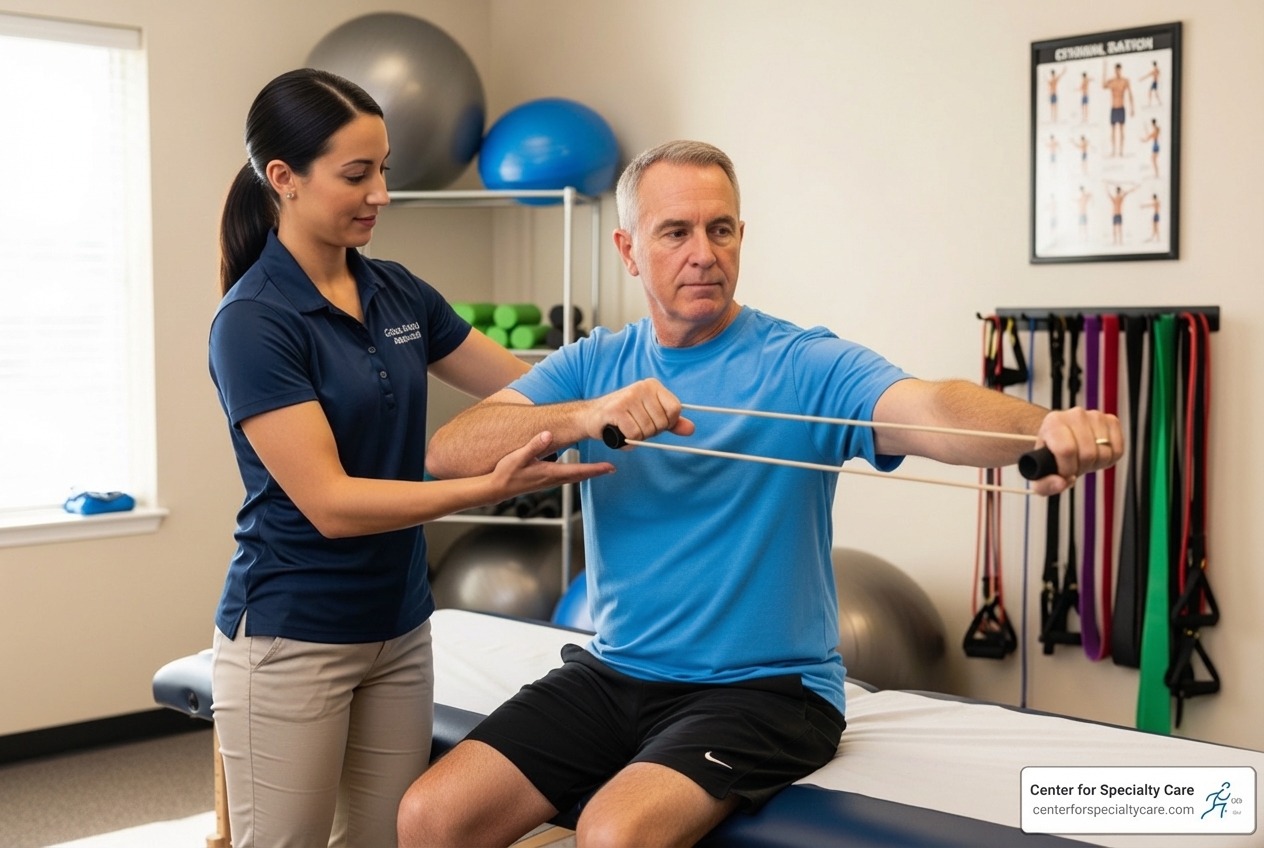
- Physical Therapy: This is a cornerstone of recovery. Our physical therapists will guide you through a custom program of:
- Strengthening Exercises: To rebuild muscle around the shoulder for improved stability.
- Stretching Routines: To restore flexibility and range of motion, crucial for preventing stiffness.
- Modalities: Techniques like ultrasound or manual therapy to reduce pain and inflammation.
Physical therapy is vital for long-term success. For expert solutions, explore Best Therapy for Shoulder Pain – Expert Solutions, Relief.
- Prescription Medications: We may prescribe stronger anti-inflammatory drugs or pain relievers to manage severe pain.
- Corticosteroid Injections: For persistent inflammation, a corticosteroid injection into the affected area can provide significant, though temporary, relief. This can reduce pain enough to allow you to participate more effectively in physical therapy. Learn more about Types of Injections for Shoulder Pain Relief – Treatment Options.
When Is Surgery Necessary?
While we strive for non-surgical solutions, some shoulder pain after injury cases are best treated with surgery, especially when conservative methods fail or the injury is severe.
- Severe Rotator Cuff Tears: Full-thickness tears that don’t respond to physical therapy may require surgical repair.
- Recurrent Dislocations: If your shoulder frequently dislocates, surgery can stabilize the joint by repairing damaged ligaments or labrum.
- Complex Fractures: Displaced fractures often require surgical fixation to realign and stabilize the bones.
- Failure of Conservative Treatment: When months of non-surgical treatment fail to provide relief, surgery may be the next step.
Common surgical procedures include:
- Arthroscopic Surgery: This minimally invasive technique uses a small camera and instruments for procedures like rotator cuff and labral repair.
- Open Surgery: A larger incision may be necessary for more complex repairs.
- Shoulder Replacement: For severe conditions like advanced arthritis or complex fractures, a shoulder replacement (arthroplasty) may be necessary. In cases of severe rotator cuff deficiency, a reverse shoulder replacement might be performed.
If surgery is being considered, our surgeons will discuss all options, risks, and expected outcomes with you. If you’re exploring options for a Rotator Cuff Surgeon Near Me – Your Guide to Finding Expert Shoulder Care, our team is here to provide exceptional care.
Frequently Asked Questions about Shoulder Pain After Injury
We understand that when you’re dealing with shoulder pain after injury, you have many questions. Here are some of the most common ones we hear from our patients in Fairmont, Estherville, Buffalo Center, and St. James:
How long does it typically take to recover from shoulder pain after an injury?
Recovery time for shoulder pain after injury varies greatly depending on the injury’s type and severity, your age, overall health, and treatment adherence. Minor strains may heal in a few weeks, while a severe tear or fracture requiring surgery could take 6 months or longer to fully recover.
Healing is a process, and patience combined with consistent effort is key.
Can I still exercise with a shoulder injury?
It depends on the injury and its severity. While it’s crucial to avoid activities that aggravate your shoulder pain after injury, complete immobilization can be detrimental, potentially leading to stiffness or frozen shoulder.
For many shoulder injuries, gentle, guided exercises are often crucial for recovery. These typically start with passive range-of-motion movements and progress to strengthening exercises. It’s vital to consult with a physical therapist or orthopedic specialist before starting any new exercise routine to ensure it’s appropriate for your specific injury. They can provide a custom exercise program to promote healing. For tips on recovery, see Shoulder Treatment – Physical Therapy Tips for Fast Recovery.
Why does my shoulder hurt more when I’m trying to sleep?
Many people with shoulder pain after injury find that their discomfort intensifies at night. There are several reasons for this:
- Increased Pressure: Lying down, especially on the affected side, can put direct pressure on the injured joint and inflamed tissues.
- Inflammation: At night, when you’re still, you become more aware of the inflammation and discomfort.
- Reduced Blood Flow: Certain sleeping positions may reduce blood flow to the shoulder, contributing to pain.
- Gravity: When you lie flat, gravity can pull on the shoulder, potentially putting tension on injured structures like the rotator cuff.
Elevating your head and torso with pillows, or sleeping in a recliner, can often help reduce nighttime pain by taking pressure off the shoulder.
Conclusion: Taking the Next Step Towards a Pain-Free Shoulder
Experiencing shoulder pain after injury can be a challenging journey, impacting everything from your work to your sleep. Your shoulder’s incredible mobility makes it susceptible to a wide array of injuries, from rotator cuff tears and dislocations to fractures and bursitis.
The good news is that understanding the cause of your discomfort is the first step toward effective treatment. A proper diagnosis is crucial. While immediate first aid can provide initial relief, it’s important to recognize when to seek professional medical help to prevent long-term complications like chronic pain or stiffness.
At Center for Specialty Care, our specialists in Fairmont, Estherville, Buffalo Center, and St. James offer comprehensive orthopedic and pain management solutions. We provide personalized care, from physical therapy and injections to advanced surgery. We are committed to patient satisfaction and offer timely, effective treatment with quick appointment availability.
Don’t let persistent shoulder pain after injury hold you back from the activities you love. We are here to guide you through every step of your recovery, from accurate diagnosis to a custom treatment plan designed to restore your comfort and mobility.
Begin your journey to recovery with our shoulder care experts