
Beyond the Ache: Unpacking What Pain Management Truly Means
January 20, 2026
Decoding Your Discomfort: Understanding Shoulder Pain from Injury, Impingement, and Sleep
January 23, 2026
Foam roller for shoulder blade knots: 7 Best Relief
Why Shoulder Blade Knots Keep Coming Back (And How to Finally Fix Them)
A foam roller for shoulder blade knots is one of the most effective self-care tools you can use at home. By applying targeted pressure to trigger points, foam rolling helps release muscle tension, increase blood flow, and reduce pain—often in just a few minutes.
Quick Answer: How to Use a Foam Roller for Shoulder Blade Knots
- Choose the right tool – Start with a smooth, medium-density roller or a massage ball for pinpoint relief.
- Target key muscles – Focus on the rhomboids, trapezius, lats, and chest muscles.
- Roll slowly – Spend 30-60 seconds on tender spots, breathing deeply to help muscles release.
- Roll regularly – Aim for 5-10 minutes daily or 3-5 times per week for best results.
- Combine with stretching – Add complementary stretches and strengthening exercises for lasting relief.
Does it feel like there’s a permanent knot lodged between your shoulder blades? You’re not alone. Studies suggest that 14-71% of adults experience neck pain at some point, and shoulder blade knots are a major contributor.
These knots—technically myofascial trigger points—form when muscle fibers contract and won’t release. They’re often caused by:
- Hunching over a desk or computer
- Poor posture from looking at your phone
- Stress and tension
- Repetitive overhead movements
- Overtraining at the gym
- Long hours of sitting or driving
The good news is that foam rolling is a simple, affordable way to restore muscle function. Research shows it may help increase blood flow and elasticity of muscle tissue, joints, and fascia—the connective tissue surrounding your muscles.
As Dr. Corey Welchlin, a board-certified orthopedic surgeon, I’ve seen countless patients in southern Minnesota and northern Iowa find relief with a foam roller for shoulder blade knots. At the Center for Specialty Care, we recommend foam rolling to complement professional treatment, empowering you to manage pain between appointments.
Simple guide to understanding your shoulder pain:
What Are Shoulder Blade Knots and Why Do They Hurt?
We’ve all experienced them: those nagging, sensitive spots in our muscles that feel like a tight, tangled rope. Medically, they’re called myofascial trigger points. This is a small patch of muscle tissue that stays contracted in an isolated spasm, becoming thick and tough.
These trigger points are connected to your body’s fascia, the web of connective tissue surrounding every muscle, bone, and organ from head to toe. When trigger points form, they can compromise this tissue, causing pain and inefficiency.
So, what causes these knots in our shoulder blades? It’s often a combination of daily factors:
- Poor Posture: Hunching over a computer or phone pulls your shoulders forward, causing chest muscles to tighten and back muscles to become overstretched and weak, yet feel tight.
- Repetitive Motion: Activities involving repeated arm or shoulder movements can overwork specific muscles, leading to fatigue and knots.
- Overtraining or Inactivity: Intense workouts without rest can cause muscle fatigue, while a sedentary lifestyle leads to stiffness.
- Stress and Tension: The body often holds stress in the shoulders and upper back, causing muscles to contract and form knots.
- Physical Trauma: A sudden injury or sleeping in an awkward position can create new trigger points.
These knots don’t just cause localized pain; they can restrict movement, alter posture, and refer pain to other areas. For instance, tight chest muscles can pull your shoulders forward, causing back pain. This leads to inefficient movement and chronic pain, making it crucial to address these knots for overall shoulder health. If you’re experiencing persistent discomfort, you might find more insights into specific causes and relief strategies for a Muscle Kink in Your Shoulder Blade.
How a Foam Roller for Shoulder Blade Knots Provides Relief
Using a foam roller for shoulder blade knots is a form of Self-Myofascial Release (SMR). This self-massage targets fascia and muscles to release tension, similar to a deep tissue massage.
Here’s how it works:
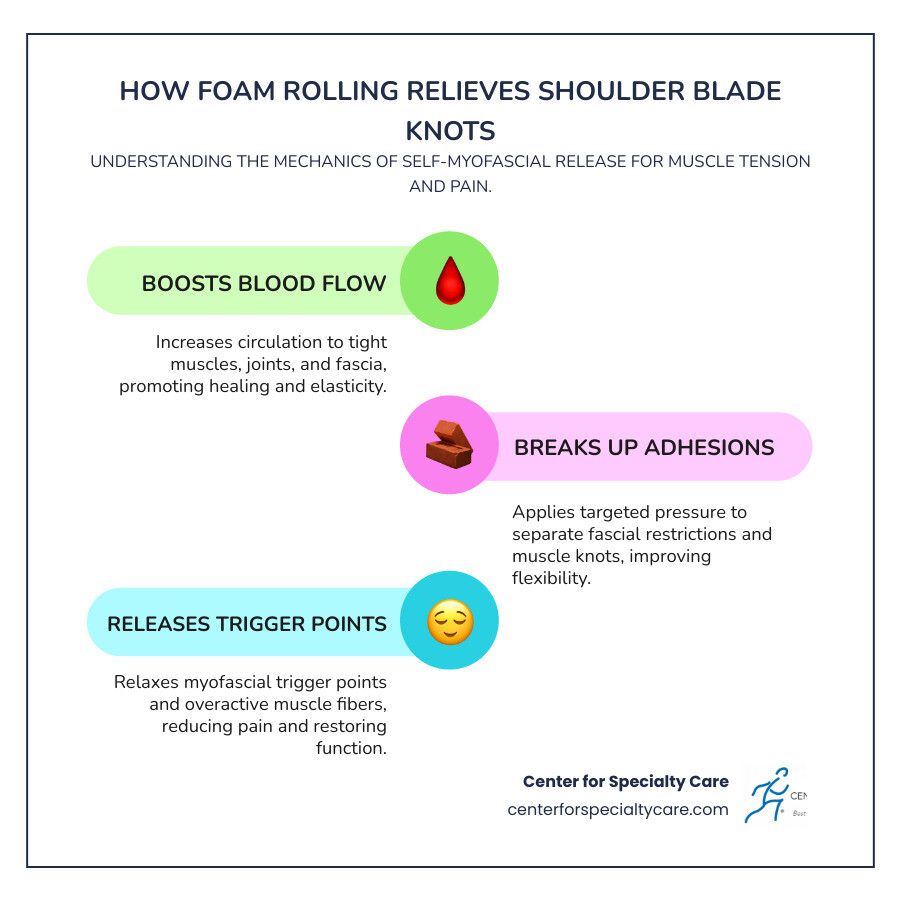
- Increased Blood Flow and Elasticity: Applying pressure with a foam roller stimulates muscles, increasing blood flow to the area. This brings vital oxygen and nutrients that improve the elasticity of muscle tissue, joints, and fascia, making them more pliable. Research confirms that foam rolling may help increase blood flow and elasticity.
- Breaking Up Adhesions: The targeted pressure helps physically break up adhesions (scar tissue) and trigger points, allowing muscle fibers to realign and stretch more effectively.
- Neuromuscular Relaxation: Sustained pressure on a trigger point signals your nervous system to relax the muscle, which is why holding on a tender spot is so effective.
Immediately, you may notice less soreness, decreased tension, and more flexibility. Long-term, regular foam rolling can lead to significant improvements in posture, mobility, and stability, which helps prevent future injuries. By releasing tight chest and back muscles, you counteract the rounded-shoulder posture from desk work. This makes a foam roller for shoulder blade knots a powerful tool for resetting your muscles. For a comprehensive look at how we approach shoulder pain, explore the Best Therapy for Shoulder Pain Expert Solutions Relief available at our clinics.
Choosing the Right Foam Roller
Selecting the right tool is key for effective self-massage on stubborn shoulder blade knots.
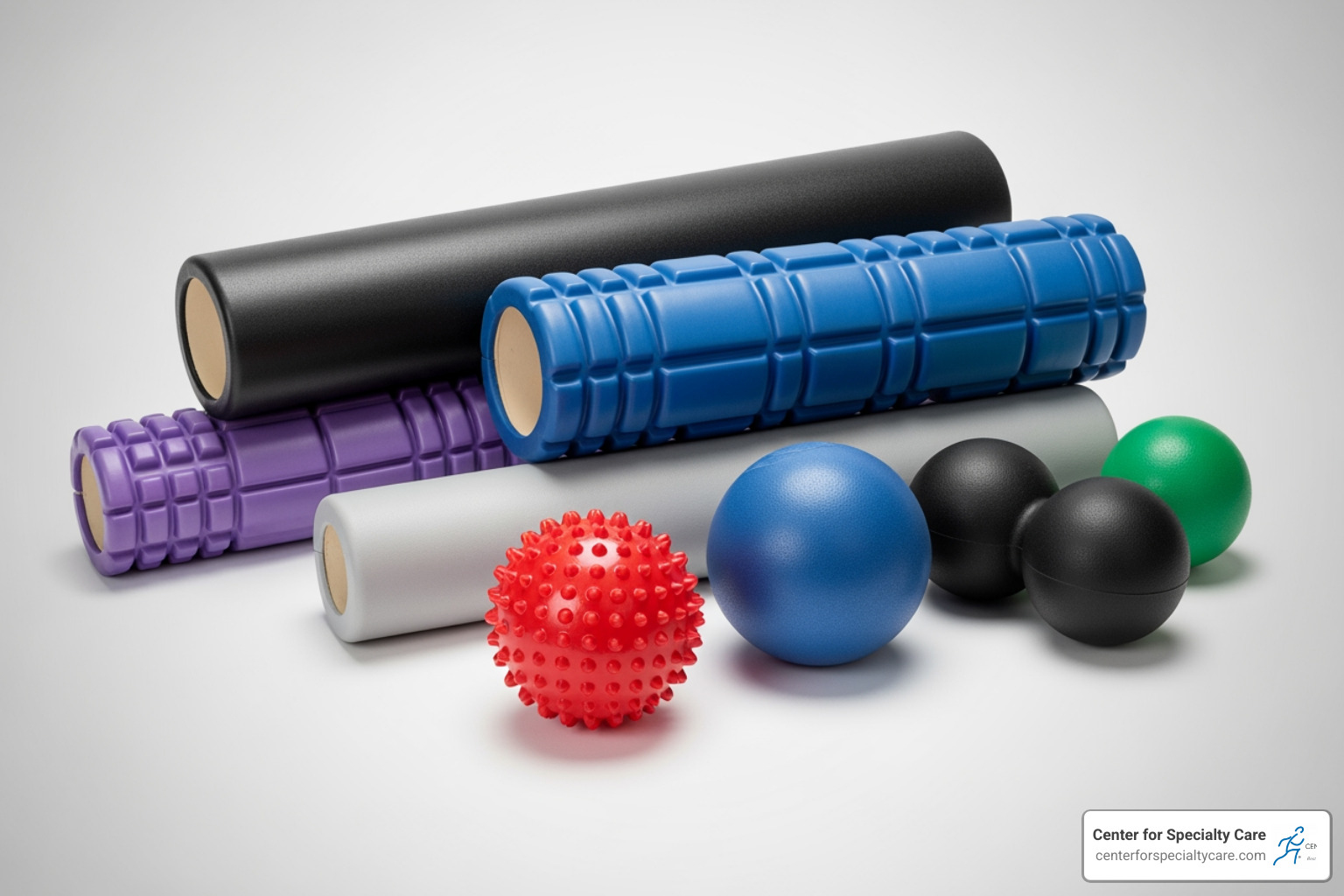
- Smooth Rollers: With a smooth, dense foam surface, these are best for beginners. They provide even, less intense pressure and are great for general use.
- Textured Rollers: Featuring ridges or knobs, these mimic a massage therapist’s fingers for deeper, more intense pressure on stubborn knots. Best for experienced users.
- Massage Balls (Lacrosse Balls): These are smaller and firmer, allowing you to apply highly concentrated pressure to pinpoint trigger points, especially between the shoulder blade and spine.
- Density and Size: Rollers come in soft, medium, and firm densities. Beginners should start with a softer option. Shorter rollers (12-24 inches) are more portable and easier to maneuver for targeted areas like the shoulder blades.
Our Recommendation for Shoulder Blade Knots:
We suggest starting with a medium-density smooth roller. However, for stubborn knots, a massage ball is often most effective for pinpointing deep trigger points. If a roll feels too intense, try a smaller or softer roller.
7 Best Foam Rolling Exercises for Shoulder Blade Knots
Ready to tackle those knots? These exercises target the muscles involved in shoulder blade pain, including your rhomboids, trapezius, pectorals, and lats. Improving scapular mobility and strengthening muscles like the serratus anterior will also contribute to lasting relief.
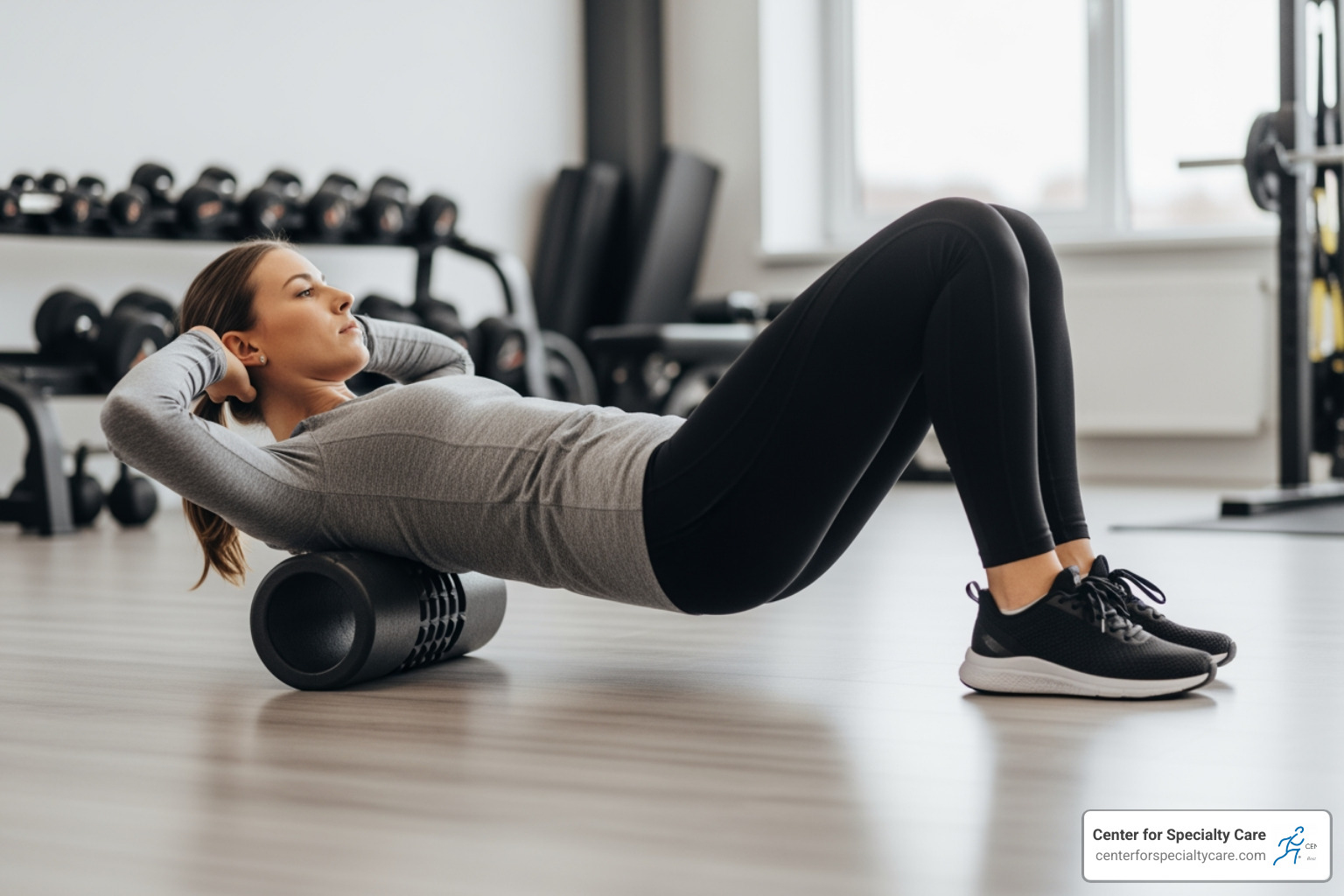
1. The Classic Upper Back Roll
This exercise releases general tension across your upper back.
How-to steps:
- Lie on your back with knees bent and feet flat on the floor.
- Place the foam roller horizontally across your upper back, below your shoulder blades.
- Support your neck by clasping your hands behind your head or crossing your arms over your chest.
- Lift your hips slightly, engaging your core.
- Slowly roll from the bottom of your shoulder blades up towards your lower neck.
- When you find a tender spot, pause for 30-60 seconds, breathing deeply to let the muscle release.
Tips: Avoid rolling on your neck or lower back; focus on your upper-mid back.
2. The Chest Opener
This stretch counteracts slouching by opening tight chest muscles that can contribute to shoulder blade pain.
How-to steps:
- Place the foam roller vertically along your spine, from your tailbone to your head.
- Lie back on the roller, ensuring your head is supported. Keep knees bent and feet flat for stability.
- Extend your arms out to the sides, palms up, letting gravity open your shoulders.
- To deepen the stretch, gently move your arms overhead and back down.
- Relax and hold for 30-60 seconds, focusing on deep breaths.
Tips: This is a gentle stretch. Place a towel under your head for more support if needed.
3. The Lat Roll
Tight lat muscles on your sides can pull on your shoulders. This roll releases that tension.
How-to steps:
- Lie on your side with the foam roller under your armpit.
- Extend your bottom arm overhead, using your top arm and legs for support.
- Gently roll from your armpit down towards your mid-back.
- When you find a tender spot, pause and hold for 30-60 seconds. You can also rock gently to work different angles.
- Repeat on the other side.
Tips: Control the pressure by adjusting how much body weight you put on the roller.
4. Targeted Scapula Roll with a Ball
A massage ball is more effective than a roller for stubborn, pinpoint knots.
How-to steps:
- Stand with your back against a wall.
- Place a massage ball between your upper back and the wall, on a tender spot near your shoulder blade.
- Lean into the ball, applying gentle pressure.
- Gently move your body to roll over the knot, or stay still on the spot for 30-60 seconds.
- For more pressure, pull the arm on the side of the knot across your chest.
Tips: You can also do this lying on the floor to use your body weight for more pressure.
5. Scapular Squeeze on a Foam Roller
This exercise releases tension while activating and strengthening key postural muscles.
How-to steps:
- Lie on your back with the foam roller horizontally between your shoulder blades.
- Raise both arms straight up towards the ceiling, palms facing each other.
- Gently squeeze your shoulder blades together around the roller.
- While squeezing, reach both hands slightly higher toward the ceiling, using only your shoulder blade muscles.
- Repeat 10 times, then perform 5-10 reps with each arm individually.
Tips: Focus on controlled movements to improve scapular control and posture.
6. Shoulder Stretch on a Foam Roller
This stretch lengthens shoulder and lat muscles to improve flexibility and ease tightness.
How-to steps:
- Kneel on the floor, sitting back on your calves.
- Place the foam roller horizontally in front of you.
- Place your palms on the roller, slightly wider than shoulder-width apart.
- Gently extend your arms, rolling the foam roller forward as you lower your chest towards the floor.
- Hold the stretch for 30-60 seconds, breathing deeply.
Tips: Keep your core engaged to protect your lower back and only go as far as is comfortable.
7. Foam Roller Wall Slides
This exercise improves scapular control and strengthens the serratus anterior for better shoulder stability.
How-to steps:
- Stand facing a wall, about a foot away.
- Place a foam roller vertically between your forearms at shoulder height.
- Gently push your elbows into the roller, feeling your shoulder blades move forward around your rib cage.
- Maintaining this pressure, slowly slide the roller up the wall.
- Control the movement as you slide the roller back down.
- Repeat 8-12 times, focusing on smooth, controlled movements.
Tips: Keep your core engaged and avoid shrugging your shoulders. This promotes proper scapular rhythm, as noted in studies on myofascial exercises for shoulder mobility.
Best Practices, Safety, and When to See a Doctor
While using a foam roller for shoulder blade knots is beneficial, it’s important to do it safely. Here are our best tips:
- Frequency and Duration: Aim for 5-10 minutes of foam rolling 3-5 times per week, or even daily. Spend 30-60 seconds on each tender spot. Consistency is key.
- “Good Pain” vs. Bad Pain: A “good pain” or discomfort on a tight spot is normal. However, stop immediately if you feel sharp, shooting, or intolerable pain. Never roll over acute injuries, broken bones, or bruises.
- Start Slow and Light: If you’re new to foam rolling, begin with lighter pressure. You can support more of your body weight with your hands or feet to reduce intensity. Gradually increase pressure as you get used to it.
- Breathe Deeply: Pause on tender spots and breathe deeply. This helps your muscles relax; holding your breath makes them tense up.
- Avoid Joints and Bones: Keep the roller on muscle tissue. Avoid rolling directly over joints like your neck vertebrae or other bony areas.
- Stay Hydrated: Drink plenty of water after foam rolling to help with muscle recovery and keep your fascia healthy.
- Contraindications: Avoid foam rolling if you have conditions like severe osteoporosis, advanced diabetes, deep vein thrombosis, or acute injuries, unless cleared by a doctor. Pregnant individuals should also consult their doctor first.
When to Seek Medical Advice:
Foam rolling is a great self-care tool, but it doesn’t replace professional medical attention. Contact us at the Center for Specialty Care if:
- Your pain interferes with your quality of life.
- You experience tingling, numbness, or weakness in your arm or hand.
- Your pain is sharp, constant, or worsens despite self-care.
- You suspect a more serious injury, like a muscle tear.
- Your pain persists for more than a few weeks.
Always talk to a doctor or physical therapist before starting a new routine, especially if you have a pre-existing condition. For more on serious issues, review Should I Go to Urgent Care for Shoulder Pain Signs Treatment Options.
Complementary Stretches and Exercises
For lasting relief, combine foam rolling with targeted stretches and strengthening exercises. Rolling releases tension, stretching maintains flexibility, and strengthening builds resilience.
Here are some complementary movements we recommend:
- Doorway Chest Stretch: Opens the chest to counteract the effects of prolonged sitting. Stand in a doorway, place your forearms on the frame, and gently lean forward. Hold for 30 seconds.
- Chin Tucks: Addresses forward head posture. Sit or lie down, then gently tuck your chin towards your chest to lengthen the back of your neck. Hold for a few seconds and repeat 10-15 times.
- Shoulder Blade Squeezes: Strengthens the muscles between your shoulder blades. Sit or stand tall and gently squeeze your shoulder blades together. Hold for 5-10 seconds and repeat 10-15 times.
- Resisted Rows: Use an exercise band to strengthen your upper back. Anchor a band at waist level and pull it back, squeezing your shoulder blades together. Repeat 8-12 times.
- Overhead Pull-downs (Band): Anchor a resistance band overhead. Pull the band down and back until your hands are at chin level in a “goalpost” position. Repeat 8-12 times.
Integrating these exercises with your foam roller for shoulder blade knots routine provides comprehensive relief. For a personalized program, our physical therapists at Center for Specialty Care can provide expert advice on Shoulder Treatment With Physical Therapy Recovery Pain Relief.
Frequently Asked Questions about Using a Foam Roller for Shoulder Blade Knots
We often get questions from our patients about using a foam roller for shoulder blade knots. Here are answers to the most common ones:
Is it okay to foam roll my shoulders every day?
Yes, daily foam rolling for 5-10 minutes is generally safe and beneficial. It improves muscle elasticity and blood flow. However, listen to your body. If you feel excessive soreness or pain, you may be using too much pressure. Take a rest day and consider a softer roller. For existing injuries, consult one of our physical therapists at Center for Specialty Care for personalized guidance.
Why does it hurt so much to use a foam roller for shoulder blade knots?
That “hurts so good” feeling is common. It means you’ve found a tight myofascial trigger point. The discomfort comes from applying pressure to contracted muscle fibers and sensitive nerve endings. As you hold the pressure, the muscle should relax and the pain subside. If it’s too intense, reduce the pressure or use a softer roller.
Can foam rolling make my shoulder pain worse?
If done incorrectly, yes. Improper technique, rolling too aggressively, or applying pressure directly on a joint or bone can aggravate conditions. Never foam roll an active injury like a muscle tear, strain, or fracture until cleared by a doctor.
We advise stopping immediately if you experience:
- Sharp, shooting, or increasing pain
- Numbness or tingling in your arm or hand
- Dizziness or nausea
If your shoulder pain worsens or is accompanied by these symptoms, please contact us. We can help determine if it’s a simple knot or a more serious injury.
Take Control of Your Shoulder Pain
Shoulder blade knots can disrupt your life, but a foam roller for shoulder blade knots is a powerful, accessible tool for relief and prevention. Consistent foam rolling releases tension, increases blood flow, improves posture, and helps prevent injuries, empowering you to take an active role in your muscle health.
At Center for Specialty Care, serving our communities in Fairmont MN, Estherville IA, Buffalo Center IA, and St James MN, we believe in empowering our patients with the tools to manage their pain. We pride ourselves on 100% patient satisfaction, personalized care, and quick appointment availability.
If foam rolling isn’t enough, or if your pain is severe, persistent, or accompanied by concerning symptoms, don’t hesitate to reach out to our team of experts. We offer advanced shoulder treatments to help you move better and live better.
Learn more about our advanced shoulder treatments and let us help you find lasting relief.