
Your Guide to Iowa Pain Clinics: Expert Care for Chronic Discomfort
November 3, 2025
Beyond General Pain: Heat Therapy for Specific Tendonitis
November 5, 2025
Knot Behind Left Shoulder Blade: Lasting 2025 Relief!
Understanding the Pain Behind Your Shoulder Blade
A knot behind left shoulder blade is a very common source of upper back discomfort. If you’re dealing with this issue, here’s what you need to know:
Quick Relief Steps:
- Apply heat – Use a heating pad for 15-20 minutes to relax tight muscles.
- Self-massage – Roll a tennis or massage ball between your back and a wall over the tender spot.
- Stretch – Perform doorway stretches and shoulder rolls to release tension.
- Move regularly – If you sit at a desk, take breaks every 30 minutes.
- Seek help – If pain persists beyond two weeks, consult a healthcare professional.
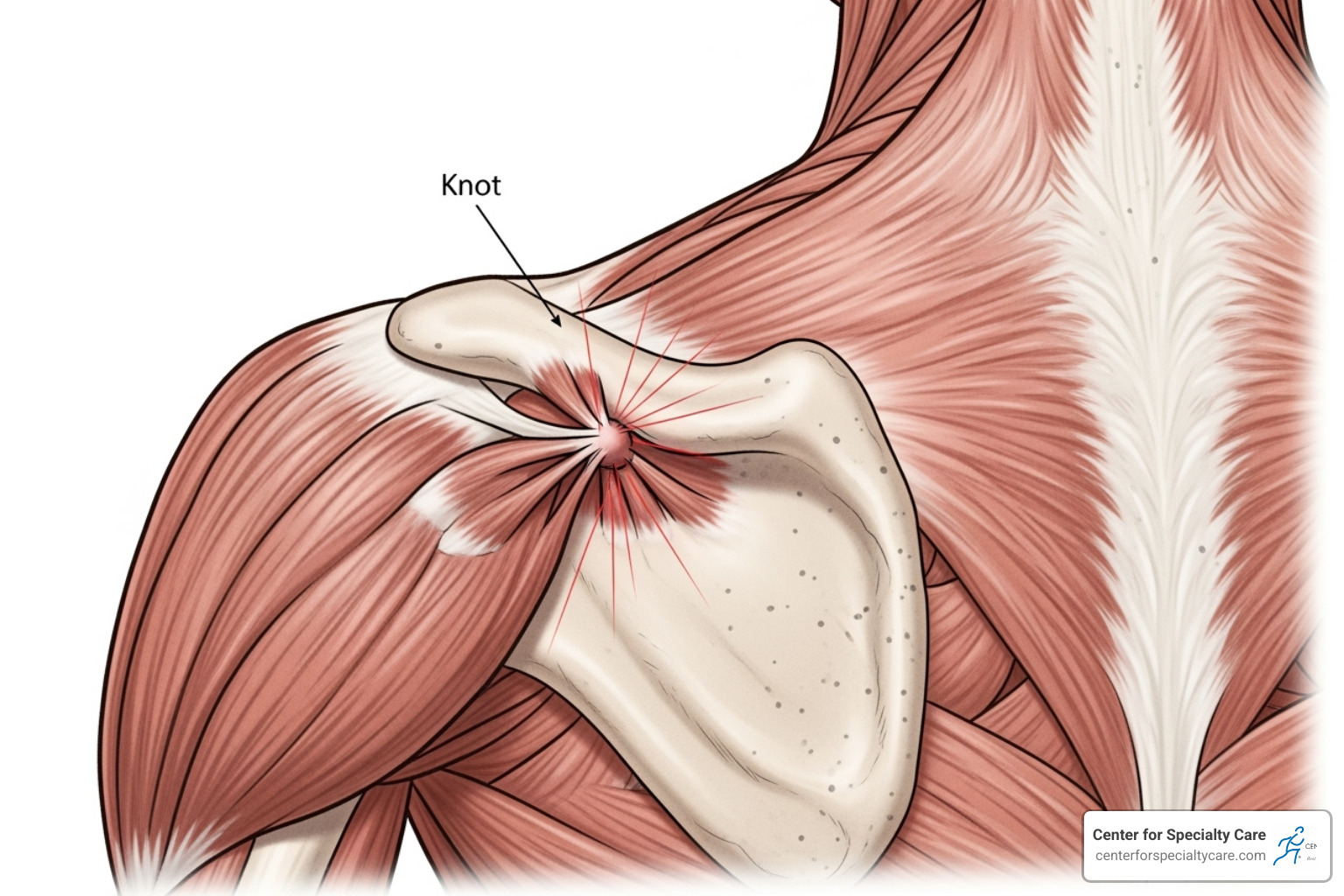
That tight, tender spot between your shoulder blade and spine can interfere with daily activities and disrupt sleep. The good news is that most muscle knots, medically known as myofascial trigger points, respond well to conservative treatment. They form when muscle fibers contract and can’t relax. The area behind your left shoulder blade is particularly vulnerable because many muscles attach there, and factors like prolonged sitting or poor posture can cause them to tighten into painful nodules.
I’m Dr. Corey Welchlin, a board-certified orthopedic surgeon at the Center for Specialty Care in Fairmont, Minnesota. With over three decades of experience, I’ve helped countless patients find relief from knots behind the left shoulder blade through both conservative treatments and advanced interventions.
Understanding What a Muscle Knot Is and Why It Forms
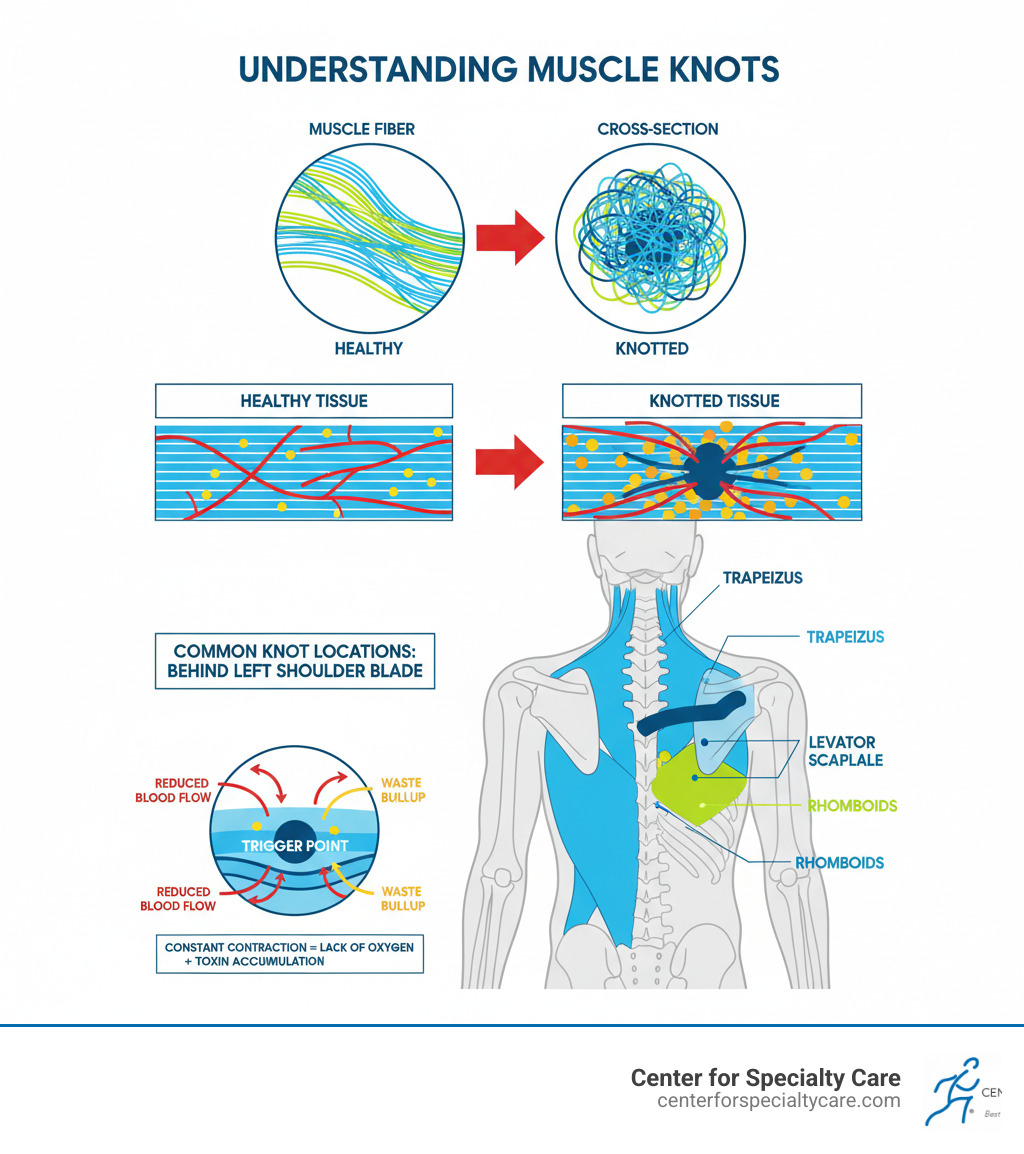
A “muscle knot,” or myofascial trigger point, is a small, hard nodule of muscle that gets stuck in a contracted state. Think of your muscle fibers, which contain smaller components called actin and myosin that slide past each other to create movement. Normally, these fibers contract and then relax. Sometimes, however, they get stuck in a sustained contraction and refuse to let go.
This creates a problem: the tight knot compresses tiny blood vessels, leading to reduced blood flow. Less oxygen reaches the tissue, and waste products build up. Without adequate blood flow, the muscle can’t get the energy it needs to relax, creating a vicious cycle of tension and pain. While muscle knots can form anywhere, the shoulder blade area is especially prone to them due to the complex network of muscles and the demands we place on them.
The Key Muscles Involved
A knot behind left shoulder blade typically involves one of these hardworking muscles:
- The rhomboids, located between your shoulder blades and spine, often develop knots from hunching over a desk or phone.
- The trapezius is a large, diamond-shaped muscle across your upper back and neck. The upper part is notorious for knots due to “tech neck” and stress.
- The levator scapulae runs from your neck to your shoulder blade and gets strained from holding your neck in awkward positions, often causing muscle tension and pain that radiates upward.
- The infraspinatus, a rotator cuff muscle on the back of your shoulder blade, can cause pain on the blade itself or referred pain down the arm.
Muscle Knot vs. Other Shoulder Issues
Not all shoulder pain is a muscle knot. The key difference is that you can usually feel a knot—a distinct, firm lump that is tender to the touch. The pain is often localized, though it can cause radiating pain and stiffness that improves with massage. Other conditions, like a rotator cuff tear or bursitis, feel different. An accurate diagnosis is the first step toward effective relief, as shoulder pain is a common problem with many potential causes.
| Feature | Muscle Knot (Myofascial Trigger Point) | Rotator Cuff Tear | Bursitis |
|---|---|---|---|
| Sensation | Localized tender spot, firm lump, achy. | Deep ache, weakness, pain with overhead movement. | Dull ache, tenderness, swelling, warmth. |
| Palpation | Can feel a distinct, tight band or lump. | May feel a “catch” or instability. No distinct lump. | May feel swollen, warm, or squishy. |
| Pain Pattern | Localized, may refer pain to neck, arm, or head. | Pain worsens with lifting or rotating arm. | Pain worsens with movement or pressure on the joint. |
| Range of Motion | Limited, stiff, sometimes painful. | Weakness, difficulty lifting arm. | Painful, but usually full passive range of motion. |
| Common Causes | Poor posture, overuse, stress, muscle imbalances. | Acute injury, degeneration, repetitive overhead activity. | Repetitive use, injury, infection. |
If you’re unsure about the cause of your pain, especially after an injury, it’s important to get a proper diagnosis. You can learn more about rotator cuff injuries or shoulder pain after a car accident to understand different possibilities.
Identifying the Causes and Symptoms of a Knot Behind Your Left Shoulder Blade
A knot behind left shoulder blade doesn’t appear randomly; it’s your body signaling that a daily habit needs to change. Shoulder pain is a common problem, and understanding its cause is the first step to fixing it.
Common Causes of a Knot Behind the Left Shoulder Blade
Your upper back muscles can get overworked, leading to knots. The most common culprits include:
- Poor posture: Slouching over a laptop or adopting a rigid stance forces your upper back muscles to work overtime to support your head’s weight.
- Desk work and “tech neck”: Static postures from staring at screens create tension that causes muscle fibers to tighten and form knots.
- Repetitive motions and muscle overuse: Activities like painting, swimming, or even typing can create micro-tears in muscle fibers that, without rest, tighten into trigger points.
- Emotional stress: Anxiety and feeling overwhelmed often lead to unconsciously hunching or tensing your shoulders, creating chronic tightness.
- Carrying heavy bags: An uneven load from a purse or laptop bag strains the muscles around your shoulder blade. Similarly, lifting weights improperly can cause imbalances.
- Dehydration: Lack of water and minerals like potassium and magnesium makes muscles more prone to cramping and spasms.
Sometimes, knots can also develop after trauma, such as from shoulder pain after car accidents.
Symptoms to Watch For
Muscle knot symptoms are usually distinctive. The hallmark sign is a tender, localized spot that hurts when you press on it. You might also feel a small, hard lump or a tight, rope-like band within the muscle.
Other common symptoms include:
- Stiffness and limited range of motion, making it hard to reach overhead or behind your back.
- Referred pain that radiates from the knot to your neck, head, or down your arm.
- A feeling of constant tightness in the muscle, which may twitch or spasm.
- Fatigue from the chronic discomfort and muscle tension.
If you’re also experiencing shoulder clicking and pain, it could indicate a different issue that needs investigation.
The Neck-Shoulder Connection: Referred Pain
Sometimes, the pain you feel behind your shoulder blade originates in your neck. A condition called cervical radiculopathy, or a “pinched nerve,” can occur when a nerve root in your neck is compressed. This can cause pain to radiate to your shoulder blade area, even if you feel little to no pain in your neck itself.
Key signs of a pinched nerve include numbness or tingling that travels down your arm or into your hand, along with possible weakness. This is why a comprehensive evaluation is so important. At the Center for Specialty Care, we consider your entire spine to ensure we diagnose the true source of your pain and provide the right treatment.
At-Home Techniques for Immediate Relief
You can often find relief from a knot behind left shoulder blade with simple at-home techniques. These self-care methods help coax tight muscle fibers to relax, improve blood flow, and break the pain-tension cycle. Consistency is key to giving you control over your own healing process.

Stretches for a Knot Behind the Left Shoulder Blade
Stretching is a powerful tool for releasing muscle knots. By gently lengthening tight muscles, you encourage blood flow and help the fibers let go. If you feel any sharp pain, ease off immediately.
- Shoulder rolls: Slowly roll your shoulders forward in large circles 5-6 times, then reverse. Focus on the movement originating from your shoulder blades.
- Doorway stretch: Stand in a doorway with your forearms on the frame, elbows bent at 90 degrees. Gently lean forward until you feel a stretch across your chest. Hold for 15-30 seconds.
- Cat-cow pose: On all fours, alternate between arching your back (lifting your head and tailbone) and rounding it (tucking your chin). Sync the movement with your breath.
- Chin tucks: Sit or stand tall and gently tuck your chin straight back, creating a double chin. You’ll feel a stretch at the base of your skull. Hold for five seconds and repeat 10 times.
- Thread the needle: From all fours, slide your left arm under your right, resting your left shoulder and head on the floor. Hold for 30 seconds, then switch sides.
Self-Massage and Myofascial Release
Direct pressure, or myofascial release, can help break up stubborn tension. A tennis ball or lacrosse ball is an excellent tool. Place it between your back and a wall, right on the tender spot. Lean into the ball with tolerable pressure and hold for 30-60 seconds or roll in small circles. For broader tension, a foam roller can be used by lying on your back and rolling it up and down your spine. You can also use your fingers to apply firm, circular pressure. Don’t overdo it; 15-20 minute sessions are sufficient. This gentle, consistent approach is also effective for a muscle kink in shoulder blade.
Hot and Cold Therapy
Temperature therapy is a time-tested method for pain relief. For a chronic knot behind left shoulder blade, heat therapy is usually best. Apply a heating pad or take a warm shower for 15-20 minutes to increase blood flow and relax the muscle.
Cold therapy is better for new injuries or inflammation. Apply an ice pack wrapped in a towel for about 10 minutes to reduce swelling and numb pain. Some people find that alternating between heat and cold provides the most relief. These principles are also useful for other conditions, like managing rotator cuff pain at night.
When to Seek Professional Help for Shoulder Blade Pain
While self-care is powerful, sometimes you need professional help. Knowing when to reach out can prevent prolonged discomfort.
It’s time to see a professional if your knot behind left shoulder blade comes with any of these red flags:
- Pain persists for more than two weeks despite home care.
- The pain is severe or progressively worsening.
- You experience noticeable weakness, numbness, or tingling in your arm or hand.
- The pain interferes with daily activities or sleep.
- The pain started after a trauma or accident.
If you’re experiencing these symptoms, it’s wise to get an evaluation. Our guide on when to go to urgent care for shoulder pain can also help you decide on the right course of action.
Professional Treatment Options
When home remedies aren’t enough, we offer several effective treatments for a knot behind left shoulder blade.
- Physical therapy is often the gold standard. A therapist assesses your posture and movement to create a personalized plan with manual therapy and targeted exercises. It’s often the best therapy for shoulder pain.
- Professional massage therapy uses expert techniques like trigger point therapy to release knots safely and effectively.
- Dry needling involves inserting thin needles into trigger points to elicit a twitch response that helps the muscle relax.
- Trigger point injections of a local anesthetic can provide significant and lasting pain relief, allowing the muscle to heal.
- Spinal manipulation can restore proper alignment and reduce muscle tension caused by spinal dysfunction.
Our pain management services and back and spine care offer a comprehensive approach to these interconnected issues.
Consulting an Orthopedic Specialist
At Center for Specialty Care, we focus on finding the root cause of your shoulder pain. Our comprehensive evaluation includes assessing your range of motion, strength, and, if necessary, imaging like an X-ray or MRI to rule out other conditions like rotator cuff injuries.
Once we have an accurate diagnosis, we develop a personalized treatment plan that fits your lifestyle and goals, always starting with conservative, non-surgical options. Our commitment to 100% patient satisfaction and quick appointment availability means you get the care you need, when you need it. If you’re ready to find relief, learn more about finding the best shoulder doctor and take the first step.
How to Prevent Knots from Coming Back
The best way to deal with a knot behind left shoulder blade is to prevent it from returning. Small, proactive lifestyle changes can protect your muscles from the strain that causes trigger points.

Ergonomics and Posture Correction
Since poor posture is a primary cause of knots, optimizing your environment is crucial.
- Adjust your workspace: Position your monitor at eye level and an arm’s length away. Your chair should support your lower back, with your feet flat on the floor and elbows at a 90-degree angle when typing.
- Take regular breaks: Stand up, walk, and stretch every 30 to 60 minutes. These “movement snacks” release tension before it builds.
- Practice mindful posture: Periodically check in with yourself. Relax your shoulders down and back, and align your head over your spine.
Strengthening and Conditioning
Strong, balanced muscles are your best defense against knots. A balanced fitness routine that includes resistance training, cardio, and stretching is ideal.
- Strengthen your upper back: Exercises like seated rows and resistance band pull-aparts target the muscles that pull your shoulders back, counteracting slouching.
- Build your core: A strong core provides a stable foundation for your entire upper body, reducing strain on your back and shoulder muscles.
- Stabilize your rotator cuff: Specific exercises improve shoulder mechanics and reduce unnecessary strain. Our shoulder treatment with physical therapy programs can guide you.
Stress Management and Lifestyle Habits
Your daily habits and emotional state directly impact muscle tension.
- Stay hydrated: Dehydration makes muscles more prone to cramping and knots. Drink water consistently throughout the day.
- Eat a balanced diet: Ensure you get enough magnesium, potassium, and calcium, which are vital for muscle function.
- Get adequate sleep: Aim for 7-9 hours of quality sleep, as this is when your body repairs muscle tissue.
- Use relaxation techniques: Deep breathing, meditation, or gentle yoga can reduce stress and the unconscious muscle tensing that leads to knots.
Frequently Asked Questions about Shoulder Blade Knots
How long does it take for a knot behind the shoulder blade to go away?
With consistent self-care, a minor knot behind left shoulder blade can resolve in a few days to a couple of weeks. However, chronic knots or those linked to underlying issues like poor posture may take longer and often benefit from professional treatment, such as physical therapy, to fully resolve.
Can a knot behind the shoulder blade be a sign of something serious?
In most cases, it’s a benign muscle issue. However, you should seek medical evaluation if the knot is accompanied by red flags like severe pain, weakness, numbness, or tingling in your arm, fever, or unexplained weight loss. These symptoms could indicate a more serious condition, such as a pinched nerve (cervical radiculopathy), that requires a professional diagnosis.
Can you over-massage a muscle knot?
Yes. Applying excessive pressure or massaging for too long can irritate the muscle and surrounding tissues, leading to more inflammation, bruising, and pain. It’s best to use firm but gentle pressure for about 15-20 minutes at a time. If you feel sharp pain, you’re pushing too hard and should ease up. A physical therapist can show you safe and effective self-massage techniques.
Your Path to a Pain-Free Shoulder
Living with a knot behind left shoulder blade doesn’t have to be your reality. The path to relief starts with understanding your body and making simple, consistent changes to your posture, daily movements, and self-care routines.
While home remedies are powerful, you don’t have to manage persistent pain alone. If your symptoms continue for more than a couple of weeks, or if you experience worrying signs like numbness or weakness, it’s time to seek professional help.
At Center for Specialty Care, our orthopedic and pain management experts are dedicated to diagnosing the root cause of your shoulder pain. We serve patients in Fairmont, Estherville, Buffalo Center, and St. James with personalized care, starting with conservative options to get you back to your life. Our commitment to 100% patient satisfaction and quick appointment availability means you won’t have to wait in discomfort.
Your shoulder health is too important to put on hold. Take control today by exploring our comprehensive shoulder care services and scheduling your consultation. You deserve to move through life without pain holding you back.