

Say Goodbye to Shoulder Blade Knots: Your Guide to Lasting Relief
November 4, 2025
Quick Relief: How Long is the Intracept Procedure?
November 6, 2025
Heating pad for achilles tendonitis: Ultimate Relief 2025
Should You Actually Use Heat for Achilles Tendon Pain?
Using a heating pad for achilles tendonitis is a common thought, but the answer isn’t simple. Here’s what you need to know before applying heat.
Quick Answer:
- For acute Achilles pain (first 48-72 hours, sharp pain, swelling): Do NOT use heat. Use ice instead.
- For chronic Achilles pain (weeks to months, stiffness, dull ache): Heat may help with stiffness before stretching.
- Medical Consensus: Heat is generally discouraged for Achilles issues as it can worsen inflammation.
- Best Practice: Use ice for pain, perform graded strength training for healing, and seek professional guidance.
If you’re struggling with nagging pain at the back of your heel from overuse, you’re not alone. Many assume heat helps any tendon pain, but the Achilles tendon is different. Applying heat to a recently injured or inflamed Achilles tendon can do more harm than good by potentially damaging the tissue. However, for chronic stiffness that has lingered for weeks or months without swelling, a heating pad might have a limited role in warming up the tendon before gentle stretching.
I’m Dr. Corey Welchlin, a board-certified orthopedic surgeon at the Center for Specialty Care in Fairmont, Minnesota. With over 30 years of experience, I’ve helped countless patients with Achilles pain. Understanding when to use treatments like a heating pad is critical for recovery. Let me guide you through what works—and what doesn’t—so you can make informed decisions about your care.
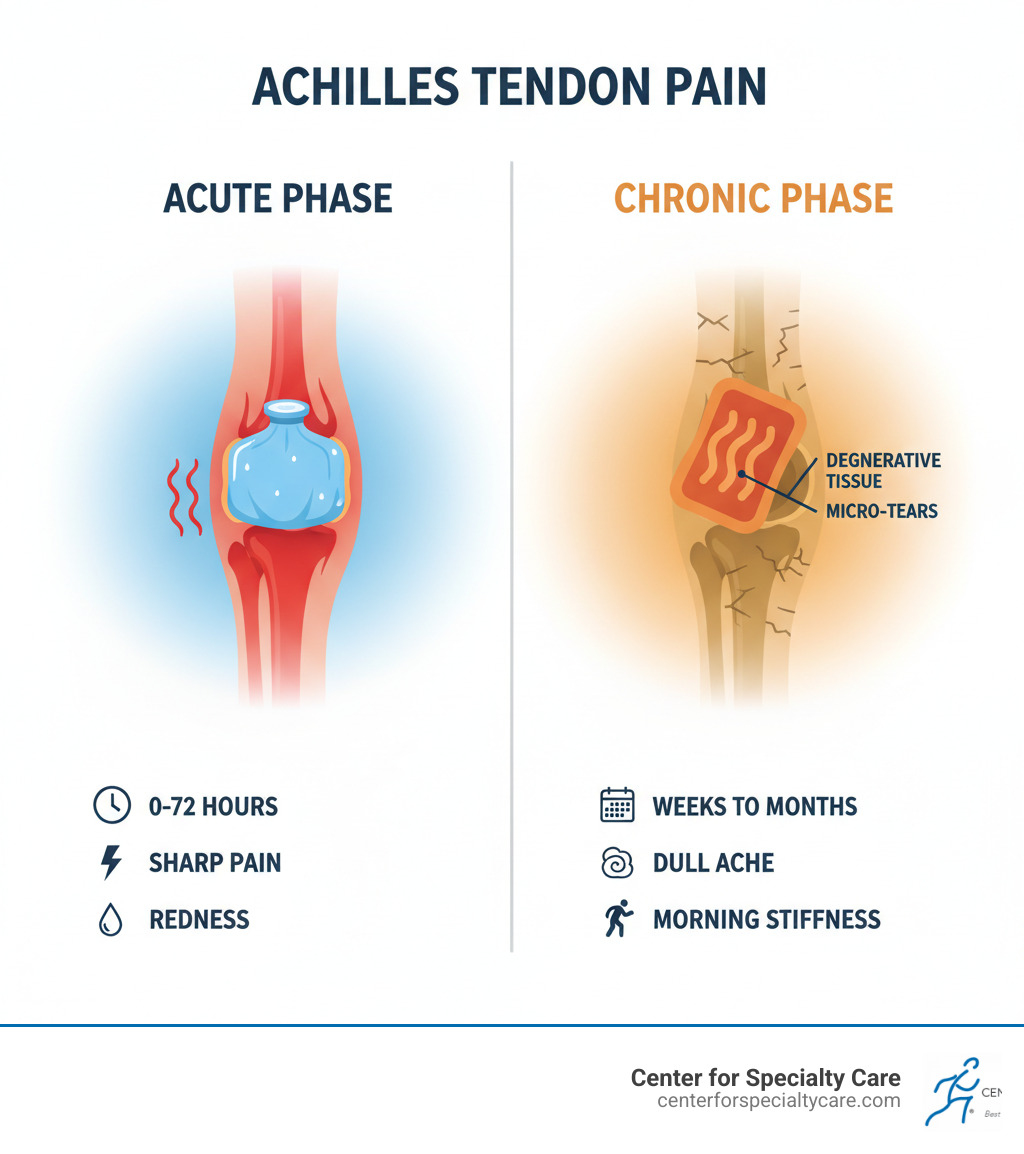
Understanding Achilles Tendonitis: Acute vs. Chronic Pain
Before using a heating pad for achilles tendonitis, it’s crucial to know if your pain is acute or chronic. This distinction determines the right treatment and helps you avoid setbacks.
Your Achilles tendon connects your calf muscles to your heel bone, and when it hurts, simple activities become a painful ordeal. For years, all Achilles pain was called “tendonitis,” implying inflammation. However, modern research, including studies in the British Medical Journal, shows that chronic cases are often “tendinosis”—a condition of tissue degeneration and micro-tears, not just inflammation. Understanding this difference is key to your treatment approach.
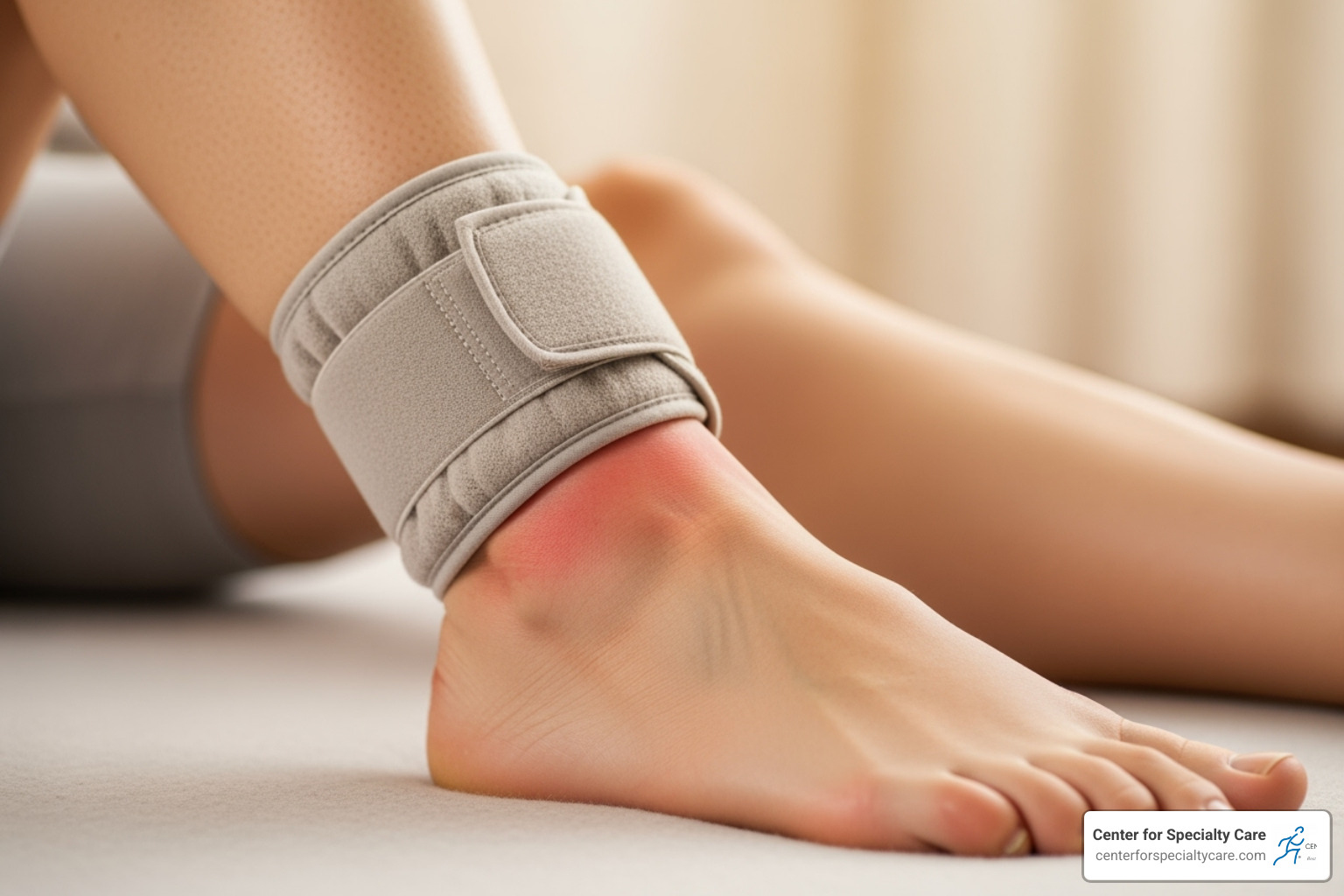
Achilles pain typically appears either where the tendon attaches to the heel bone (insertional Achilles tendonitis) or in the middle section above it (mid-portion Achilles tendonitis).
The Acute Phase: Inflammation and “Tendinitis”
If you experience a sudden, sharp pain at the back of your heel after an awkward step or pushing too hard, you’re in the acute phase. In these first 48 to 72 hours, your body triggers an inflammatory response. You’ll notice sharp pain, visible swelling, and sometimes redness. This is true inflammation. Your goal is to calm this response and reduce swelling. During this stage, ice is your best friend, not heat. Applying heat can increase blood flow and make inflammation worse.
The Chronic Phase: Degeneration and “Tendinosis”
If you’ve had a nagging dull ache in your Achilles for weeks or months, you’re likely in the chronic phase. The pain is often worst first thing in the morning but may improve as you warm up. This isn’t acute inflammation; it’s a sign of tendon degeneration. The collagen fibers have become disorganized, and micro-tears have developed. The stiffness after rest and pain that improves with warm-up are telltale signs of tendinosis. For these long-standing issues, heat might play a supportive role in preparing your tendon for gentle stretching, but it’s not a cure.
Understanding your phase is critical. For more guidance, see our guide on Achilles tendonitis.
The Great Debate: When to Use Heat vs. Ice for Tendon Pain
The choice between ice and heat depends entirely on whether your Achilles pain is acute or chronic. Using the wrong one at the wrong time can set back your recovery. At Center for Specialty Care, we emphasize understanding your specific condition first. Think of ice and heat as tools for the right job at the right time.
| Condition | Primary Goal | Mechanism | When to Apply |
|---|---|---|---|
| Acute Injury (0-72 hrs) | Reduce Swelling & Pain | Vasoconstriction | Immediately after injury, first 48-72 hours |
| Chronic Stiffness/Pain | Increase Flexibility | Vasodilation | After 48-72 hours, for stiffness before activity |
As the Mayo Clinic notes, ice is best for a new injury to reduce pain and swelling, while heat may help chronic tendon pain by increasing blood flow. For more on our approach, see our Achilles Tendonitis 101 guide.
Cold Therapy: Your First Response to Acute Injury
For a new Achilles injury, ice should be your immediate go-to. Cold therapy works through vasoconstriction (narrowing blood vessels), which reduces swelling and inflammation. It also decreases pain by numbing nerve endings. Apply an ice pack for 15 to 20 minutes at a time, every 4 to 6 hours during the first few days. Always use a cloth barrier between the ice and your skin to prevent skin damage.
Heat Therapy: A Tool for Chronic Stiffness and Pain
This is where the use of a heating pad for achilles tendonitis becomes nuanced. While ice is for fresh injuries, heat has a very specific role. The medical consensus leans toward avoiding heat for Achilles problems due to the risk of worsening inflammation.
However, for a chronic, non-inflamed, stiff tendon, heat can offer targeted benefits. This applies only to the chronic phase, weeks or months after the initial injury, when swelling is gone. Heat works through vasodilation (widening blood vessels), which increases blood flow and can relax tight calf muscles that contribute to Achilles tension. It also increases tissue flexibility, making the tendon more pliable before gentle stretching. But it’s a delicate balance, as explored in our article “Does Heat Help Tendonitis?“. Used correctly for chronic stiffness, heat can be a helpful tool; used incorrectly, it can cause a significant setback.
A Guide to Using a Heating Pad for Achilles Tendonitis
Let’s be clear: a heating pad for achilles tendonitis should only be considered for chronic, long-standing stiffness and dull aching—not for acute inflammation, swelling, or sharp pain. Using heat on an acutely inflamed tendon can make things worse.
If you’re battling persistent stiffness and your provider has approved heat therapy, a heating pad can help. The warmth can increase circulation, reduce stiffness, and prepare your tendon and muscles for crucial stretching exercises. Think of it as a warm-up tool, not a cure.
Features to Look for in a Heating Pad
When choosing a heating pad, look for these features for a safer, more effective treatment:
- Ankle Wrap Design: Conforms to your ankle to keep heat targeted on the Achilles area.
- Adjustable Temperature Settings: Essential for control. Your goal is gentle warmth, not intense heat.
- Automatic Shut-Off: A key safety feature to prevent overheating or burns if you lose track of time.
- Moist Heat Option: Can penetrate deeper into tissues and is often more soothing.
- Comfortable Material: Soft materials like polyester or neoprene feel better against the skin.
How to Safely Use a Heating Pad for Achilles Tendonitis
Safety is paramount when applying heat. Follow these steps:
- Consult your healthcare provider to confirm heat is appropriate for your condition.
- Ensure no acute symptoms like new swelling, redness, or sharp pain are present.
- Start with the lowest temperature setting. Your skin should feel pleasantly warm, never hot.
- Use a cloth barrier between the pad and your skin to prevent burns.
- Apply for 15-20 minutes only. Prolonged exposure can be counterproductive.
- Use heat before gentle stretching or light activity to prepare the tissues for movement.
- Listen to your body. Stop immediately if you feel increased pain or discomfort.
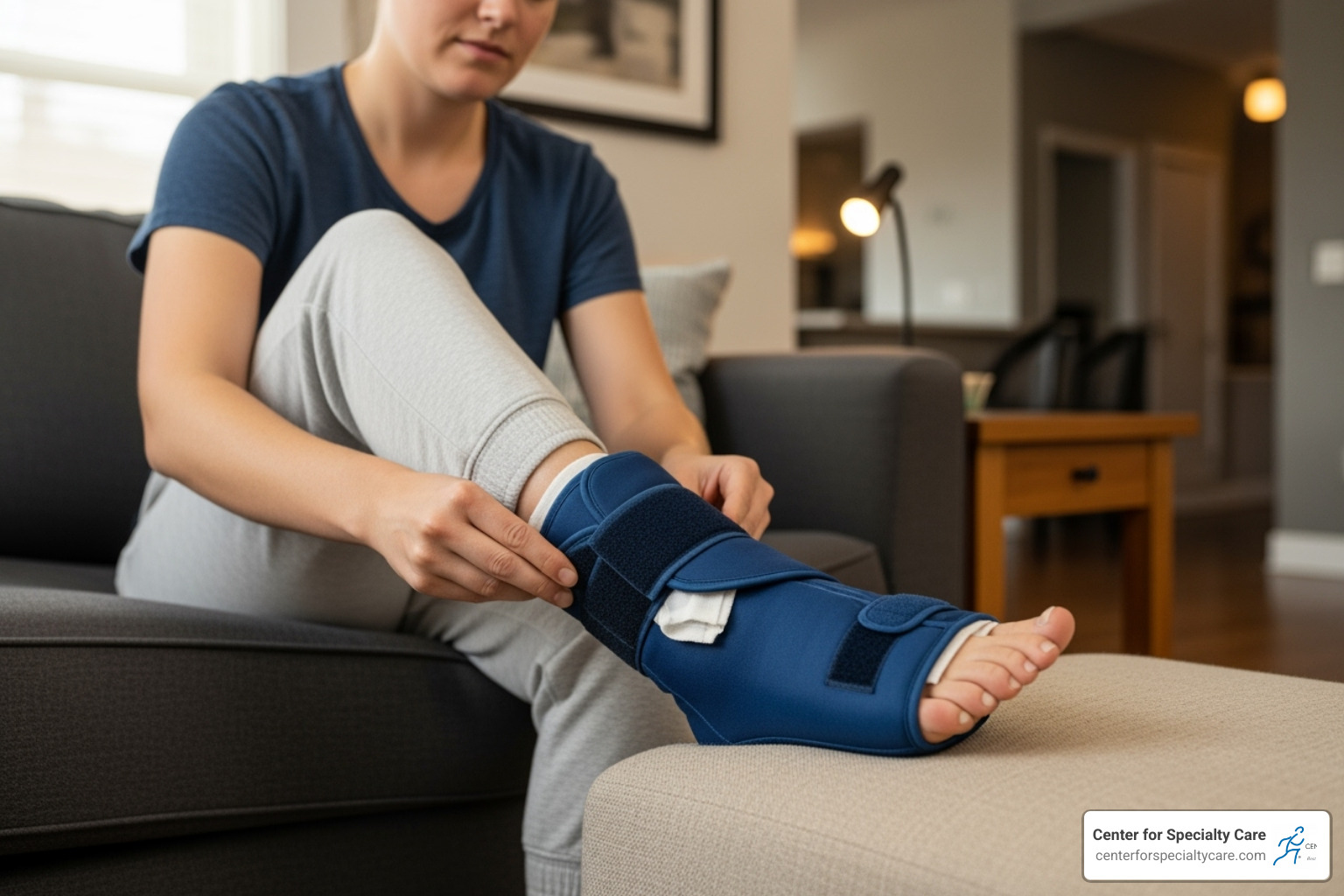
What Type of Heat is Best for a Heating Pad for Achilles Tendonitis?
Both moist and dry heat can be delivered by a heating pad for achilles tendonitis. Dry heat from standard electric pads is convenient. However, moist heat is often preferred because it may penetrate deeper, feel more soothing, and is less likely to dry out your skin.
You can create a moist heat effect with a standard pad: simply place a dampened (not dripping) towel between your skin and the heating pad. Microwaveable packs also provide moist heat naturally. For more tips, see our article on heat for tendonitis.
Integrating Heat Therapy with a Comprehensive Recovery Plan
A heating pad for achilles tendonitis is not a magic bullet. It’s a supporting player in a larger recovery plan. For chronic Achilles issues, a multi-faceted approach is necessary. Heat can help with stiffness, but it’s the combination of stretching, strengthening, and professional guidance that rebuilds your tendon’s strength.
Stretching and Eccentric Strengthening
Targeted exercises are your best friend for chronic Achilles pain. Using a heating pad for achilles tendonitis for 15-20 minutes before these exercises can be a great warm-up tool. The warmth increases tissue flexibility, making the tendon more pliable and receptive to stretching.
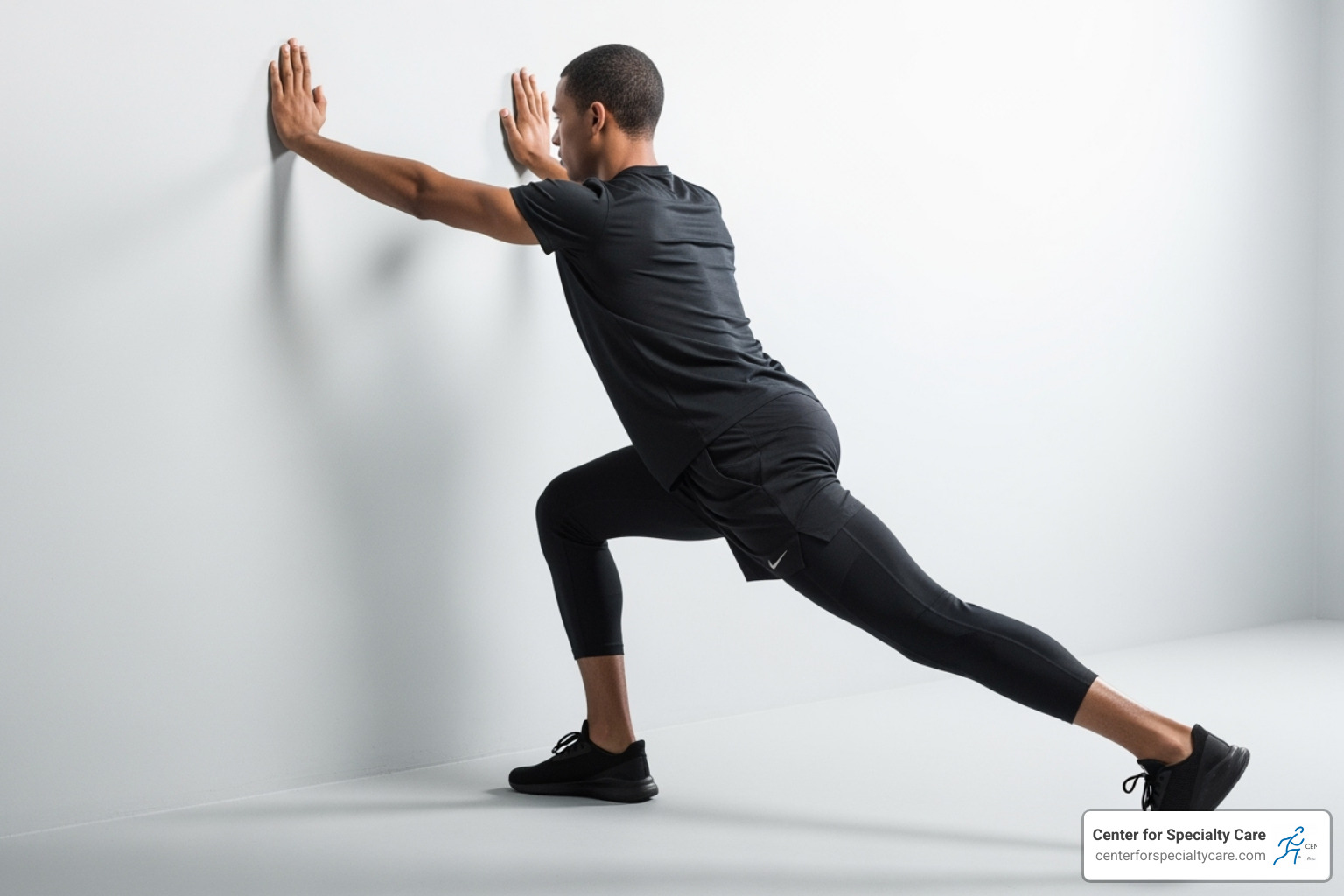
After warming up, perform gentle calf stretches. Face a wall, step back with the affected leg, keep your heel on the ground, and lean forward to feel a gentle stretch. Hold for 30 seconds and repeat.
The real magic for rebuilding tendon strength comes from eccentric heel drops, often called the Alfredson protocol. Stand on the edge of a step. Slowly raise up on your toes, then very slowly lower your heels below the step. This slow lowering (eccentric) phase is what stimulates tendon remodeling and healing. This protocol is demanding, often building up to many repetitions per day, but it is highly effective at increasing your tendon’s load tolerance.
The Role of Professional Guidance
Self-care is valuable, but it should be part of a plan developed with a healthcare professional. See a doctor if your pain is severe, not improving, or significantly impacting your daily activities. If you heard a “pop,” seek immediate medical attention.
At Center for Specialty Care, we create personalized treatment plans because every injury is unique. At our clinics in Fairmont, MN, Estherville, IA, Buffalo Center, IA, or St. James, MN, we perform a thorough evaluation to create a custom plan. We prioritize quick appointments because we know you want relief fast.
- Physical therapy is often a cornerstone of recovery, guiding you through exercises with proper form.
- Custom orthotics can address biomechanical issues like flat feet or overpronation that stress the tendon. Our Podiatry services can assess your foot mechanics.
- Pain management strategies can help control discomfort, allowing you to participate more fully in your rehabilitation. Our Pain Management specialists can help.
Heat is just one part of a comprehensive approach that addresses the root cause of your pain.
Risks and When to Avoid Heat Therapy
Misusing a heating pad for achilles tendonitis can be ineffective and potentially harmful. Understanding the risks is as important as knowing the benefits.
The primary concern is exacerbating inflammation. Applying heat to an acutely inflamed tendon increases blood flow, which can lead to more swelling and pain, prolonging the healing process. Think of it as adding fuel to a fire. Overheating tissue can also cause cellular damage. There is also a real risk of skin burns, especially if the heat is too high or applied for too long.
When NOT to Use a Heating Pad
To ensure a safe recovery, we strongly advise against using a heating pad in these situations:
- Acute injury phase (first 48-72 hours): If pain is sudden and sharp with swelling, use ice, not heat.
- Significant swelling or redness: These are clear signs of active inflammation.
- Open wounds or broken skin: Heat increases infection risk.
- Impaired sensation (neuropathy): Conditions like diabetes can prevent you from feeling if the pad is too hot, leading to severe burns.
- Poor circulation: This increases burn risk as your body can’t dissipate heat effectively.
Additionally, if your Achilles is sore after intense exercise, ice is the better choice to calm the inflammatory response. If you are ever unsure whether heat is appropriate, consult a healthcare professional at Center for Specialty Care first.
Frequently Asked Questions about Heat for Achilles Tendonitis
We hear many questions about managing Achilles pain. Here are answers to the most common ones regarding heat therapy.
Can a heating pad make my Achilles tendonitis worse?
Yes. If you apply a heating pad for achilles tendonitis during the acute phase (the first 48-72 hours) when the tendon is inflamed and swollen, you can increase pain and swelling, delaying your recovery. Heat should only be considered for chronic, non-inflamed stiffness, and even then, with caution.
Should I use heat before or after exercise?
Use heat before gentle stretching or light activity. For chronic stiffness, applying warmth for 15-20 minutes beforehand can increase tissue flexibility and prepare the tendon for movement. Use ice after activity if you experience pain or soreness, as this indicates inflammation that needs to be calmed down.
What’s better for the Achilles tendon, moist heat or dry heat?
Moist heat is often preferred. It can penetrate deeper into the tissue, reaching the tendon and surrounding muscles more effectively. Many people also find it more soothing. You can create a moist heat effect with a standard dry heating pad by placing a damp towel between the pad and your skin. Just remember, this is only for chronic stiffness, not acute injuries.
Conclusion
So, should you use a heating pad for achilles tendonitis? The answer depends on your symptoms. The takeaway is simple: ice is for acute pain, and heat has a limited role for chronic stiffness.
For a fresh injury with swelling and sharp pain, use cold therapy for the first 48-72 hours. Heat should only be considered cautiously for long-term, nagging stiffness before gentle stretching. The medical consensus often discourages heat for Achilles issues due to the risk of worsening inflammation.
What matters most is a correct diagnosis. Guessing at treatment can be a gamble with your mobility. A personalized plan with targeted stretching, strengthening, and professional guidance will always be more effective than any single home remedy.
At Center for Specialty Care, we’ve helped patients in Fairmont MN, Estherville IA, Buffalo Center IA, and St James MN overcome these challenges for over 30 years. We are committed to 100% patient satisfaction and providing the clear answers and effective treatment you deserve.
Don’t let Achilles pain hold you back. For a personalized evaluation, explore our orthopedic services and let the experts at Center for Specialty Care help you find relief.