
What’s That Sound? Understanding Your Noisy Shoulder
August 19, 2025
Is Your Shoulder Crying Out? Understanding Painful Clicks and Pops
August 21, 2025
Knot in Neck and Shoulder Blade: 7 Ways to Banish
Understanding Your Pain: What Causes Knots Between Your Neck and Shoulder Blade
A knot in neck and shoulder blade is a frustrating type of muscle pain. This tender, tight spot can make simple tasks like turning your head or reaching overhead feel impossible.
Quick Relief for Neck and Shoulder Knots:
- Apply heat – Use a heating pad for 15-20 minutes to relax tight muscles.
- Gentle stretching – Perform shoulder rolls and neck stretches throughout the day.
- Self-massage – Use a tennis ball against a wall to target trigger points.
- Improve posture – Keep your computer screen at eye level and take frequent breaks.
- Stay hydrated – Drink plenty of water to support muscle function.
- Manage stress – Practice deep breathing or meditation to reduce muscle tension.
These knots, or myofascial trigger points, are incredibly common, affecting up to 85% of the population. Research shows that 100% of people with neck pain have these trigger points.
The pain might not even originate from your shoulder blade. Often, a pinched nerve in the neck creates referred pain that feels like a knot, as your body sends mixed signals about the problem’s location.
I’m Dr. Corey Welchlin, a board-certified orthopedic surgeon at the Center for Specialty Care. With over three decades of experience, I’ve helped thousands of patients overcome knot in neck and shoulder blade pain using both conservative treatments and advanced interventions.
Understanding the “Knot”: What It Is and Why It Hurts
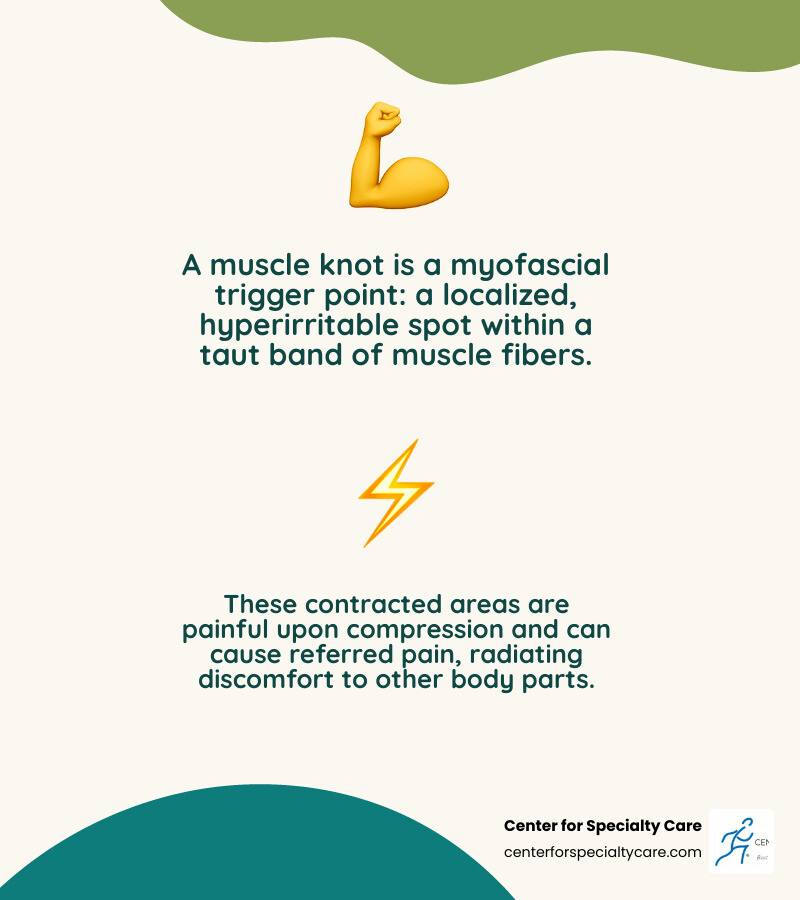
A painful knot in neck and shoulder blade isn’t a twisted muscle but a myofascial trigger point—a small area of muscle stuck in a contracted state.
Think of your muscle fibers like rubber bands that should stretch and contract smoothly. A trigger point is like a small section of that band that gets bunched up into a tight, tender spot.
These knots don’t always hurt where they’re located. They can cause referred pain, meaning the discomfort travels to other areas. A knot under your shoulder blade might be the real culprit behind a nagging headache or neck pain. These trigger points form taut bands of muscle that are tender to the touch and can restrict your movement. You can learn more about what muscle knots are and how they develop.
Common Symptoms of Knots
Recognizing the symptoms of a knot in neck and shoulder blade can help you address the problem early.
- Localized pain and tenderness: A specific, aching spot that feels like a marble under the skin, ranging from a dull ache to sharp, burning sensations.
- Stiffness and limited range of motion: Difficulty with simple movements like checking your blind spot while driving or reaching overhead.
- Referred pain: Discomfort that travels, causing tension headaches or pain shooting down your arm.
- Muscle tightness or spasms: A feeling of constantly clenched muscles, leading to frequent attempts to stretch for relief.
- Fatigue: Your muscles work overtime to compensate for the contracted knot, leaving you feeling drained.
- Numbness or tingling: Can occur in your arm or hand if the knot is pressing on nearby nerves. If you also experience clicking sounds, you might find helpful information about shoulder clicking and pain causes and effective relief.
Where Knots Typically Occur
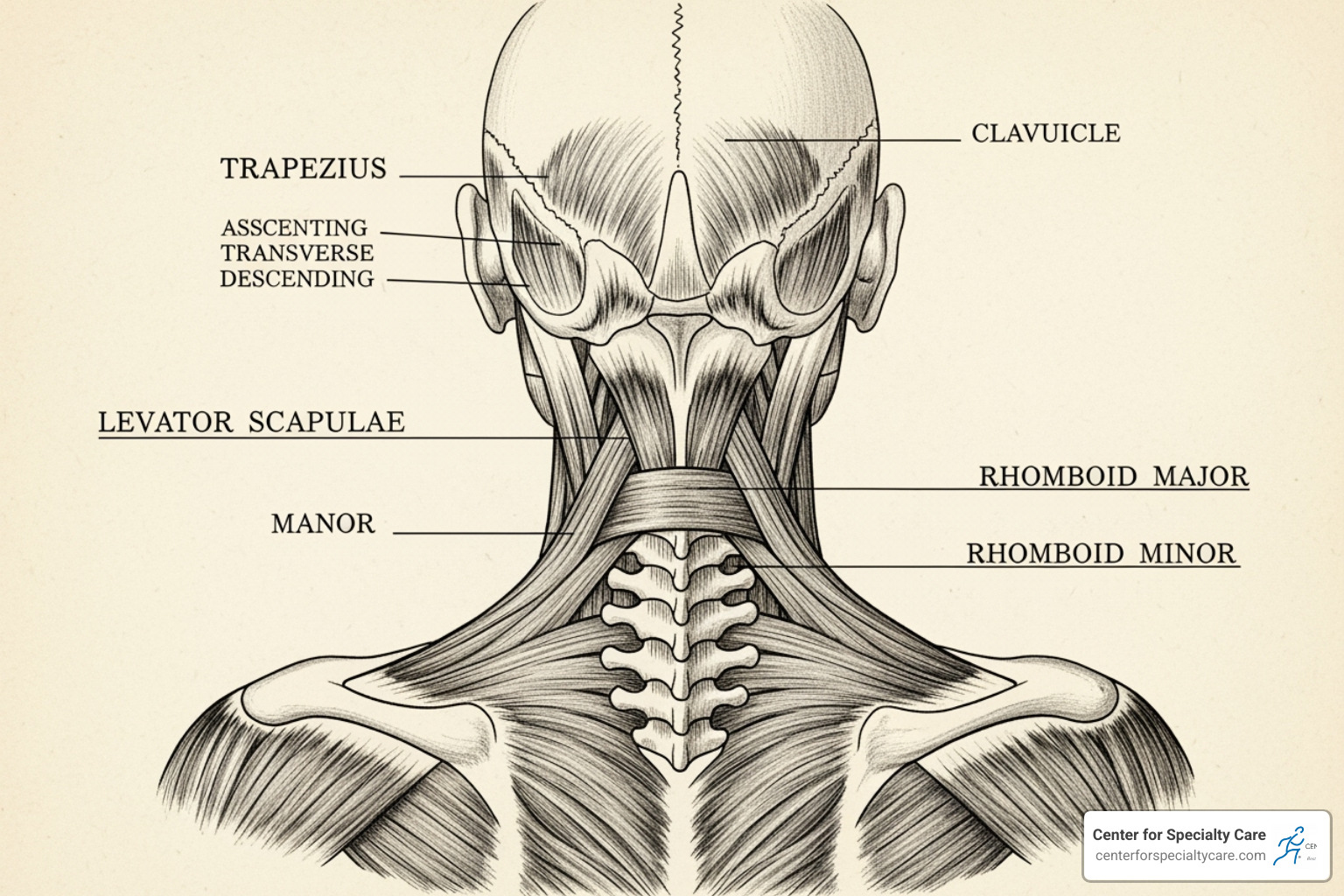
Certain muscles in the neck and shoulder area are prone to knots due to daily stress and posture.
- Trapezius muscles: Large, diamond-shaped muscles from the skull to the upper back that often tense up with stress.
- Levator scapulae: Runs from your neck to your shoulder blade, causing that classic “crick in the neck” feeling.
- Rhomboids: Located between your shoulder blades, these muscles are often strained by hunching over a computer.
- Infraspinatus: A rotator cuff muscle on the back of your shoulder blade. Knots here can cause pain down the arm.
- Muscles at the base of the skull: These small suboccipital muscles can create trigger points that lead to tension headaches.
These muscles work together to support your head and move your arms. When one develops a knot in neck and shoulder blade, it can create a cascade of tension and discomfort.
The Culprits: Common Causes of Knots in Your Neck and Shoulder Blade
That annoying knot in neck and shoulder blade doesn’t appear randomly. Understanding the cause is the first step toward lasting relief. Often, our modern lifestyles are the main culprits.
Common causes include:
- Postural strain: Hours spent hunched over a computer or phone puts neck and upper back muscles under constant strain.
- Repetitive motions: Activities like typing, painting, or playing tennis can fatigue specific muscle groups, leading to knots.
- Overuse and overexertion: Pushing too hard during exercise without a proper warm-up can cause muscles to tense up protectively.
- Stress and anxiety: When you’re stressed, your body tenses, especially in the shoulders and neck. This constant muscle guarding restricts blood flow and creates knots.
- Sedentary lifestyle: Muscles are designed to move. Long periods of inactivity can cause muscle fibers to “stick” together.
- Dehydration and poor nutrition: Muscles need water and nutrients like magnesium and potassium to function correctly.
Even sleeping in an awkward position can cause a stubborn knot. For more details, you can read about What causes muscle knots?.
How Poor Posture Creates Knots

Our relationship with technology often leads to “tech neck.” Your head weighs about 10-12 pounds, and for every inch it moves forward, the strain on your neck and upper back muscles increases dramatically.
This forward head position creates a muscle imbalance: the muscles in the back of your neck become overstretched and weak, while your chest muscles get tight. This tug-of-war causes your back muscles to fatigue, leading to slouching and, eventually, knots. It’s a frustrating cycle.
Another factor is thoracic spine inflexibility. When the middle part of your back is too stiff, your neck and shoulders must compensate by moving more than they should, leading to chronic strain. If you deal with morning stiffness, find tips in our guide on How to Relieve a Stiff Neck After Waking Up.
The Role of Stress and Overuse
Beyond posture, emotional stress and physical overuse are major factors in creating a knot in neck and shoulder blade.
Emotional tension often settles in your muscles. When you’re anxious, your shoulders may creep up toward your ears. This chronic “muscle guarding” restricts blood flow and creates the perfect conditions for trigger points.
Physical overuse from work, hobbies, or sports is another key contributor. Repetitive lifting or even cradling a phone between your ear and shoulder can irritate muscles. Athletes in sports with repetitive overhead motions like swimming or tennis often develop muscle imbalances that lead to knots. Poor training techniques or sudden increases in workout intensity can also trigger them.
At our practice, we understand the unique challenges of sports-related muscle problems. Learn more about our approach at Sports Injury Specialist. Both stress and overuse create a cycle where muscle fatigue leads to tension, which reduces blood flow and causes more knots.
At-Home Relief: 7 Proven Techniques to Untie Knots
When a knot in neck and shoulder blade strikes, many effective self-care strategies can provide relief at home. These techniques aim to increase blood flow, release muscle tension, and reduce pain. For more comprehensive information, see Muscle Kink in Shoulder Blade: Causes, Effective Relief.
1. Targeted Stretches and Exercises
Gentle movement helps lengthen tight muscle fibers and improve circulation. Perform these stretches several times a day.
- Chin Tucks: Sit or stand tall. Gently tuck your chin toward your chest, creating a double chin. Feel the stretch at the back of your neck. Hold for 5-10 seconds and repeat 10 times.
- Doorway Stretch: Stand in a doorway with your forearms on the frame, elbows at 90 degrees. Lean forward gently until you feel a stretch across your chest. Hold for 20-30 seconds.
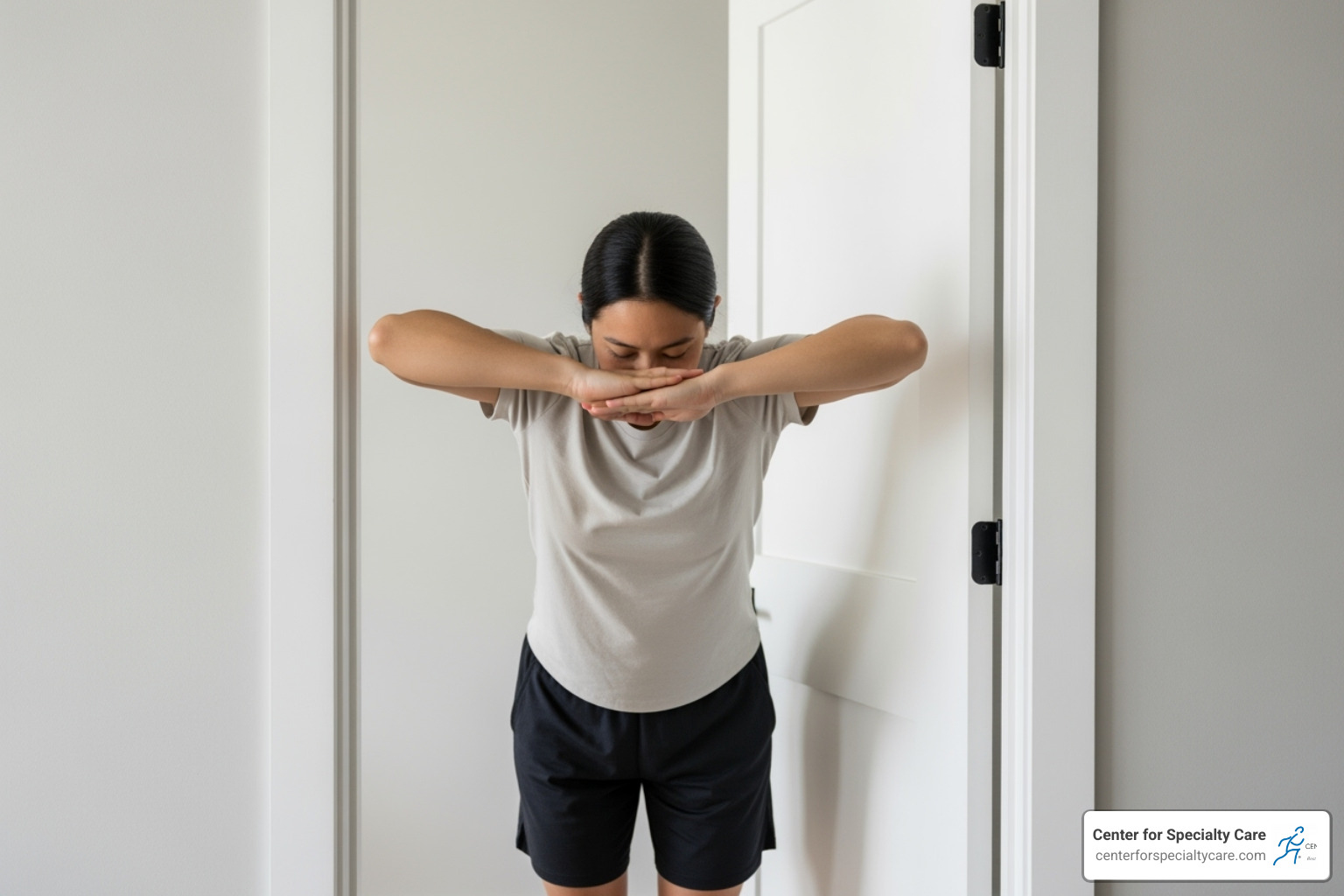
- Cat-Cow Pose: On your hands and knees, inhale as you drop your stomach and lift your chin (Cow). Exhale as you round your back and tuck your chin (Cat). Repeat for 1 minute to mobilize the spine.
- Shoulder Rolls: Sit or stand tall. Roll your shoulders forward 5-10 times, then reverse and roll them backward 5-10 times.
- Head-to-Hand Neck Release: Gently drop one ear toward your shoulder. Use the hand on the opposite side to gently deepen the stretch. Hold for 20-30 seconds, then repeat on the other side.
2. Self-Massage and Myofascial Release
Applying direct pressure, or trigger point therapy, can help a muscle knot release. The goal is to release tension, not cause more pain.
- Finger Massage: Use your fingers to apply firm, sustained pressure on the knot for 5-10 seconds. Release and repeat for 3-5 minutes.
- Tennis or Lacrosse Ball: For hard-to-reach spots, place a ball between your back and a wall. Lean into the ball, applying gentle pressure to the knot and rolling slightly to move it over the tender area. Find more tips at How to try a trigger point massage.
- Foam Roller: Lie on the floor with a foam roller under your upper back, perpendicular to your spine. Roll slowly up and down, pausing on tender spots.
3. Hot and Cold Therapy
Heat and cold serve different purposes for muscle knots. Always wrap ice packs in a towel to protect your skin.
| Therapy | Benefit | Application |
|---|---|---|
| Heat | Increases blood flow, relaxes tight muscles | Heating pad, warm towel, hot bath or shower for 15-20 minutes |
| Cold | Reduces inflammation and numbs pain | Ice pack (wrapped in a towel) for 15-20 minutes, several times a day |
Heat is generally best for chronic tightness, while cold is useful after an injury or for significant inflammation.
Preventing Future Pain: Lifestyle and Ergonomic Adjustments
The best way to deal with a knot in neck and shoulder blade is to prevent it from forming. This means addressing the root causes, from your workspace to your daily habits. For comprehensive solutions, explore Best Therapy for Shoulder Pain: Expert Solutions, Relief.
Ergonomic Workspace Setup
An ergonomic workspace is essential for preventing muscle strain.

- Monitor Position: Place your screen at eye level and about an arm’s length away to prevent forward head posture.
- Chair Selection: Use a chair with good lumbar support. Your feet should be flat on the floor with your knees at about 90 degrees.
- Keyboard and Mouse: Keep them close to your body so your elbows can hang naturally at a 90-degree angle.
- Movement Breaks: The most crucial element is movement. Set a timer for every 45-60 minutes to stand up, stretch, and do a few shoulder rolls. Even two minutes can reset your posture and boost circulation.
The Impact of Hydration, Nutrition, and Stress Management
Your overall lifestyle plays a huge role in muscle health.
- Hydration: Your muscles are about 75% water. Dehydration makes them prone to cramping and tension. Drink water consistently throughout the day.
- Nutrition: A balanced diet provides key nutrients for muscle health. Magnesium helps muscles relax, while potassium and calcium support proper function.
- Stress Management: Chronic stress leads to constant muscle tension. Practice relaxation techniques to prevent stress from settling into your muscles.
- Deep Breathing: Take slow, deep belly breaths to activate your body’s relaxation response.
- Yoga: This practice combines physical stretching with mental relaxation, targeting the neck and shoulders. Learn more about Yoga for neck and back relief.
- Quality Sleep: Sleep is crucial for muscle repair and recovery. Poor sleep makes you more susceptible to knots.
These prevention strategies work together to create a protective bubble around your neck and shoulders, making it much harder for knots to form.
When to See a Doctor for a Knot in Neck and Shoulder Blade
Sometimes, a stubborn knot in neck and shoulder blade requires professional help. Recognizing when to see a doctor can prevent chronic pain. Shoulder pain is an incredibly common orthopedic problem, and you are not alone in dealing with it. According to research, shoulder pain is one of the most common orthopedic problems.
Signs You Need Professional Help
It’s time to get a professional opinion if you experience any of the following:
- Persistent pain: The pain lasts more than two or three weeks despite trying home remedies.
- Severe pain: The discomfort disrupts your sleep or daily activities, like driving or working.
- Neurological symptoms: You feel numbness, tingling, or weakness in your arm or hand. This could indicate a pinched nerve.
- Pain after an injury: Any pain resulting from trauma should be evaluated by a professional to rule out a more serious injury.
If you’re experiencing these signs, our guide on Doctor for Shoulder Problems: Your Guide to Specialized Care can help you prepare for a visit.
Professional Treatment Options
At Center for Specialty Care, we create personalized plans that address the underlying causes of your knot in neck and shoulder blade.
- Physical Therapy: Our physical therapists design custom programs to strengthen weak muscles, stretch tight ones, and teach you better ergonomic habits. It’s like having a personal coach for your recovery. Learn more about our Physical Therapy.
- Professional Massage Therapy: Our trained therapists use specialized techniques like deep tissue massage and myofascial release to access and treat trigger points effectively.
- Dry Needling: When clinically appropriate, we use this technique where thin needles are inserted into the knot to create a “twitch response” that helps the muscle release its tension.
- Trigger Point Injections: For stubborn knots, these injections deliver medication directly to the problem area, providing significant pain relief and allowing the muscle to relax.
- Pain Management: For complex or chronic pain, our Pain Management specialists use advanced techniques and therapies to help you reclaim your comfort and function.
Combining these approaches can eliminate your current knot and prevent future ones. Seeking professional help is a proactive step toward taking control of your health.
Frequently Asked Questions about Neck and Shoulder Knots
Here are answers to the most common questions I hear from patients at Center for Specialty Care about their knot in neck and shoulder blade.
Can a knot in the neck and shoulder blade cause other problems?
Yes, absolutely. A knot can trigger a range of other issues because your body’s muscular and nervous systems are interconnected.
- Referred Pain: Discomfort can travel far from the knot, causing pain down your arm, into your hand, or even in your jaw.
- Tension Headaches: Tight muscles in the upper trapezius and at the base of the skull are a frequent cause of tension headaches.
- Dizziness or Vertigo: Severe neck knots can sometimes affect the delicate balance mechanisms in your inner ear.
- Limited Mobility: Stiffness and pain can make it difficult to turn your head, reach overhead, or find a comfortable sleeping position.
- Cervical Radiculopathy: A knot can irritate nerves exiting the neck, causing numbness, tingling, or weakness in the arm and hand. This condition is more common than many realize, affecting thousands of people annually according to Cervical radiculopathy incidence rates.
Addressing a knot early can prevent this cascade of problems.
How long does it take for a muscle knot to go away?
The timeline varies depending on several factors.
- Acute Knots: A knot that just formed may resolve in a few days to two weeks with consistent self-care like stretching and heat therapy.
- Chronic Knots: Knots that have been present for weeks, months, or years are more stubborn. They often require professional treatment and can take several weeks or months to resolve.
- Consistency of Treatment: Regular, daily attention to the problem significantly speeds up recovery.
- Addressing the Root Cause: This is crucial. The knot will likely return if you don’t fix the underlying issue, such as poor posture or chronic stress.
With the right approach, even the most stubborn knots can be resolved.
Can you over-massage a knot?
Yes, and it’s a common mistake. Being too aggressive can backfire.
Over-massaging can damage muscle fibers, leading to bruising, increased inflammation, and more pain. The key is gentle, sustained pressure, not forceful, painful rubbing. You should feel a “good pain”—uncomfortable but not excruciating.
Listen to your body. If you’re gritting your teeth, you’re pressing too hard. Limit self-massage on any single knot to about 5-10 minutes per session, then give the area a rest. Our professional therapists are trained to apply the right amount of pressure to promote healing without causing harm. When in doubt, consulting a specialist is the safest and most effective approach for your knot in neck and shoulder blade.
Conclusion
That nagging knot in neck and shoulder blade doesn’t have to be a permanent part of your life. Understanding that these knots are myofascial trigger points—small, contracted muscle fibers—is the first step to relief.
Your toolkit for relief includes targeted stretches, self-massage, and hot and cold therapy. Even more powerful is prevention. By creating an ergonomic workspace, staying hydrated, managing stress, and taking regular movement breaks, you can address the root causes of muscle knots.
However, if you’re dealing with persistent pain, numbness or tingling, or pain that disrupts your life, it’s time to see a professional. A stubborn knot may be a sign of a more complex issue.
At Center for Specialty Care, we don’t just treat symptoms; we find the root cause of your discomfort. Our team creates personalized treatment plans, from physical therapy to pain management, to fit your unique needs. We understand that every knot in neck and shoulder blade tells a different story, and we’re here to help you write a pain-free ending.
You deserve to move through life with comfort and mobility. If you’re in or near Fairmont, MN, Estherville, IA, Buffalo Center, IA, or St. James, MN, we’re here to help. Relief is possible.
Ready to say goodbye to that stubborn knot for good? Find expert shoulder care and take the first step toward feeling like yourself again.