
Knot in Neck? Here’s How to Fix It Fast
August 18, 2025
How to Banish Knots from Your Neck and Shoulder Blades
August 20, 2025
Shoulder Popping: Your 2025 Guide to Relief
Understanding Your Shoulder’s Mysterious Sounds
Shoulder popping is one of the most common joint sounds people experience, affecting up to 70% of adults at some point in their lives. Whether it’s a sharp crack when you reach overhead or a grinding sensation during movement, these sounds can range from completely harmless to a sign of something that needs attention.
Quick Answer for Shoulder Popping:
- Painless popping = Usually harmless (gas bubbles releasing)
- Painful popping = May indicate injury (bursitis, labral tear, rotator cuff issue)
- When to see a doctor = Pain, weakness, swelling, or popping after injury
- Common causes = Cavitation, tendon movement, cartilage tears, arthritis
Your shoulder is the body’s most flexible joint – a complex ball-and-socket structure that allows incredible range of motion. This mobility comes at a cost: the shoulder relies heavily on soft tissues like muscles, tendons, and ligaments for stability, making it prone to both injury and unusual sounds.
The key difference between normal and concerning shoulder popping isn’t the sound itself – it’s whether you feel pain. Painless popping, called crepitus, is often just gas bubbles releasing from joint fluid (similar to cracking your knuckles). But when popping comes with pain, weakness, or swelling, it can signal conditions like labral tears, bursitis, or rotator cuff injuries that need professional evaluation.
I’m Dr. Corey Welchlin, and over my three decades as an orthopedic surgeon, I’ve helped countless patients understand and treat shoulder popping and the underlying conditions that cause it. From my practice at the Center for Specialty Care in Fairmont, Minnesota, I’ve seen how proper diagnosis and treatment can transform a noisy, painful shoulder into one that moves quietly and comfortably.

Benign vs. Problematic: When Is a Noisy Shoulder a Concern?
Clicking, popping, or grinding sounds in your shoulder can be alarming, but they are not always a cause for concern. The key to understanding your shoulder’s chatter lies in one simple question: Does it hurt?
Pain is your body’s alarm system. If your shoulder popping is painless, it’s usually just normal joint function. However, when that popping is accompanied by pain, weakness, swelling, redness, limited range of motion, or a sensation of instability, your shoulder is signaling a potential problem that needs attention.
Harmless Shoulder Popping: What is Cavitation?
Often, that pop you hear is something called cavitation—and it’s perfectly normal. Your shoulder joint contains synovial fluid, a lubricant where tiny gas bubbles can form. When you move and stretch the joint, these bubbles can burst, creating a popping sound, similar to cracking your knuckles.
This type of painless popping is a sign of normal joint movement and is not a cause for concern. As long as there’s no pain involved, you can think of it as your joint’s way of releasing a little pressure.
Symptoms That Warrant a Doctor’s Visit
While most shoulder sounds are harmless, certain warning signs mean it’s time to see a specialist. Your shoulder might need professional attention if the popping comes with any of these symptoms:
- Pain with movement: If lifting your arm, reaching overhead, or rotating your shoulder consistently hurts when it pops, something beyond normal cavitation is likely happening.
- Constant ache: A persistent ache, even when you’re resting, suggests an underlying issue.
- Popping after an injury: This always deserves immediate attention, as a fall or sudden twist can cause hidden soft tissue damage.
- Feeling of the shoulder “giving way”: This sensation of instability means your joint isn’t handling daily activities safely.
- Difficulty with daily activities: If symptoms make it hard to dress, reach for items, or sleep, your quality of life is being affected.
- Warmth, redness, or swelling: These signs of inflammation require prompt evaluation.
Early diagnosis can prevent minor shoulder issues from developing into more serious problems like frozen shoulder. If you’re experiencing any of these warning signs, our team is here to provide clarity. For more guidance on when shoulder pain requires medical attention, visit our comprehensive guide on when to see a doctor for shoulder pain.
What Causes Painful Shoulder Popping?
When shoulder popping is accompanied by pain, it usually indicates an underlying issue within the joint, such as damaged cartilage, inflamed tissue, or wear and tear. These problems can result from overuse injuries, sudden trauma, or age-related changes, all of which disrupt the shoulder’s smooth movement. Let’s explore the most common causes.
Labral Tears
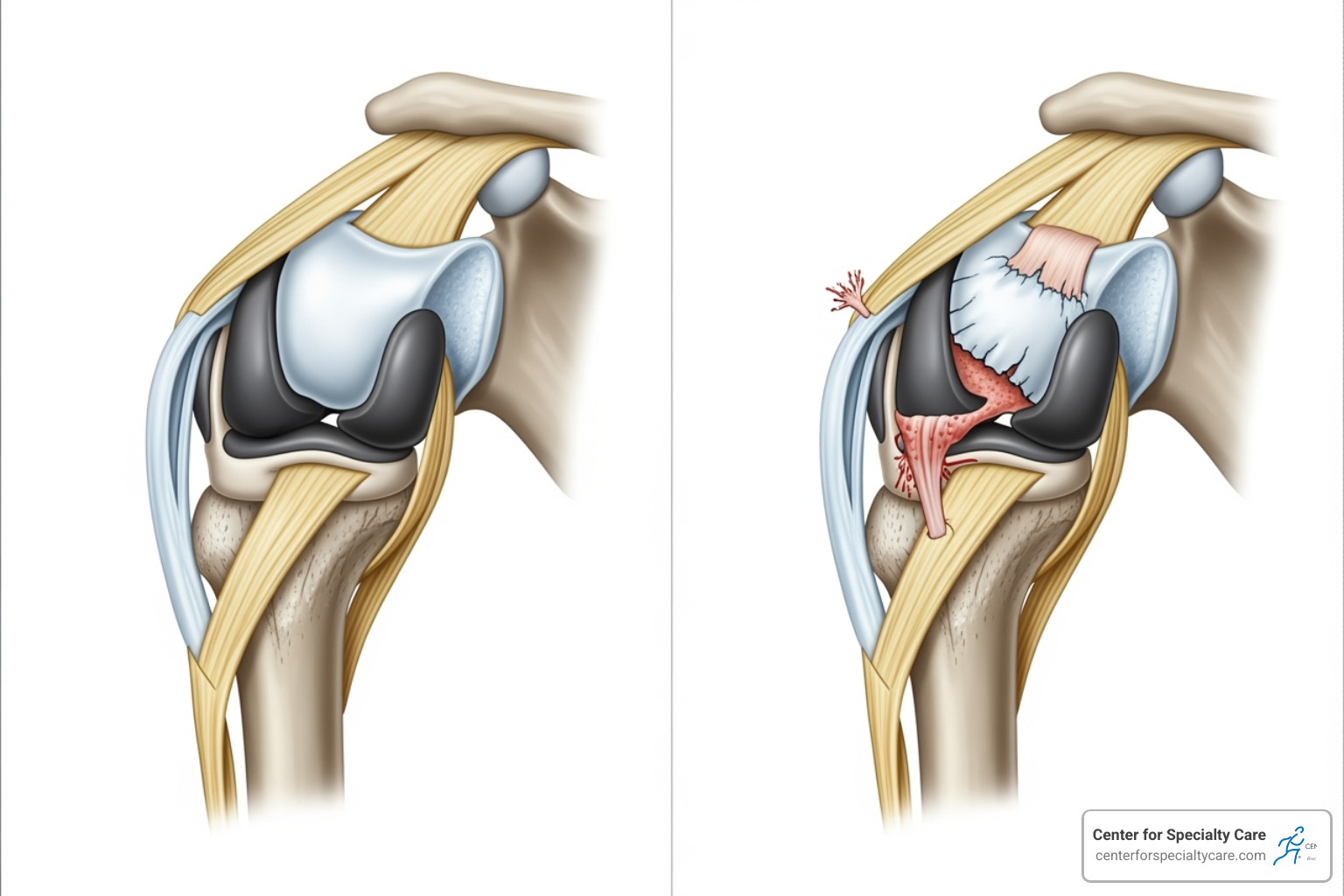
The labrum is a tough ring of cartilage that deepens your shoulder socket for stability. When this cartilage tears, the loose piece can catch during movement, creating a distinct popping or grinding sound with pain and a sense of instability.
Labral tears are common in athletes but can happen to anyone. A SLAP tear, affecting the top of the labrum where the biceps tendon attaches, is known for causing painful clicking with overhead movements. Even large tears can cause painful clicking without obvious instability.
For the scientific details on labral tears, you can check out this comprehensive study. And if you’re dealing with shoulder clicking and pain right now, our detailed guide on shoulder clicking and pain causes can help you understand what might be happening.
Bursitis (Snapping Scapula Syndrome)
Bursae are small, fluid-filled sacs that cushion your bones and soft tissues. When they become inflamed (bursitis), it can cause painful popping. Snapping Scapula Syndrome is a type of bursitis affecting the bursa between the shoulder blade and rib cage.
The inflammation causes a painful snapping sensation during arm movements, sometimes with stabbing pain or warmth. This condition is treatable once identified as the source of your shoulder popping. You can learn more about the research behind this condition in this detailed study on snapping scapula syndrome.
Rotator Cuff Injuries and Biceps Tendon Issues
The rotator cuff is a group of four muscles and tendons that stabilize the shoulder and allow you to lift and rotate your arm. When these tendons become inflamed or torn, they can rub against other structures, causing painful popping sounds.
Biceps tendon instability is another common cause. If the tissues holding the biceps tendon in its groove are damaged, the tendon can slip out, creating a painful clicking or popping sensation, especially with shoulder rotation. This pain is often felt during rotation, not bicep curls. Rotator cuff and biceps issues are more common after age 40 and in those who perform frequent overhead activities. The painful popping, along with a dull ache and weakness, signals that these tendons may need attention.
Osteoarthritis and Bone-Related Issues
Osteoarthritis is wear-and-tear arthritis where the smooth cartilage covering bone ends breaks down. This leads to rough surfaces and eventually bone-on-bone grinding, which creates painful cracking and popping sounds along with pain.
Other bone-related issues can also cause popping, such as a shoulder blade or rib fracture that healed improperly, creating uneven ridges that catch on soft tissues. A less common cause is an osteochondroma, a benign bone growth that can interfere with normal movement and cause cracking sounds when you raise your arm.
The key thing to remember is that while these conditions might sound intimidating, most of them are very treatable when caught early. That’s why we always encourage patients not to ignore painful shoulder popping – the sooner we can identify what’s causing it, the sooner we can get you back to comfortable, quiet movement.
How a Specialist Diagnoses and Treats a Noisy Shoulder
When you have painful shoulder popping, getting an accurate diagnosis is the crucial first step toward effective treatment. At Center for Specialty Care, we take a thorough, personalized approach to understand your unique situation. Most conditions that cause painful popping respond well to early treatment, and we always start with the most conservative options, only recommending surgery when it’s the best path for your long-term health.

The Diagnostic Process
Our diagnostic process begins with a detailed discussion of your symptoms and medical history. This is followed by a physical exam, where we assess your range of motion and use specific tests to pinpoint the source of the sound. To get a clearer picture, we may use imaging tests:
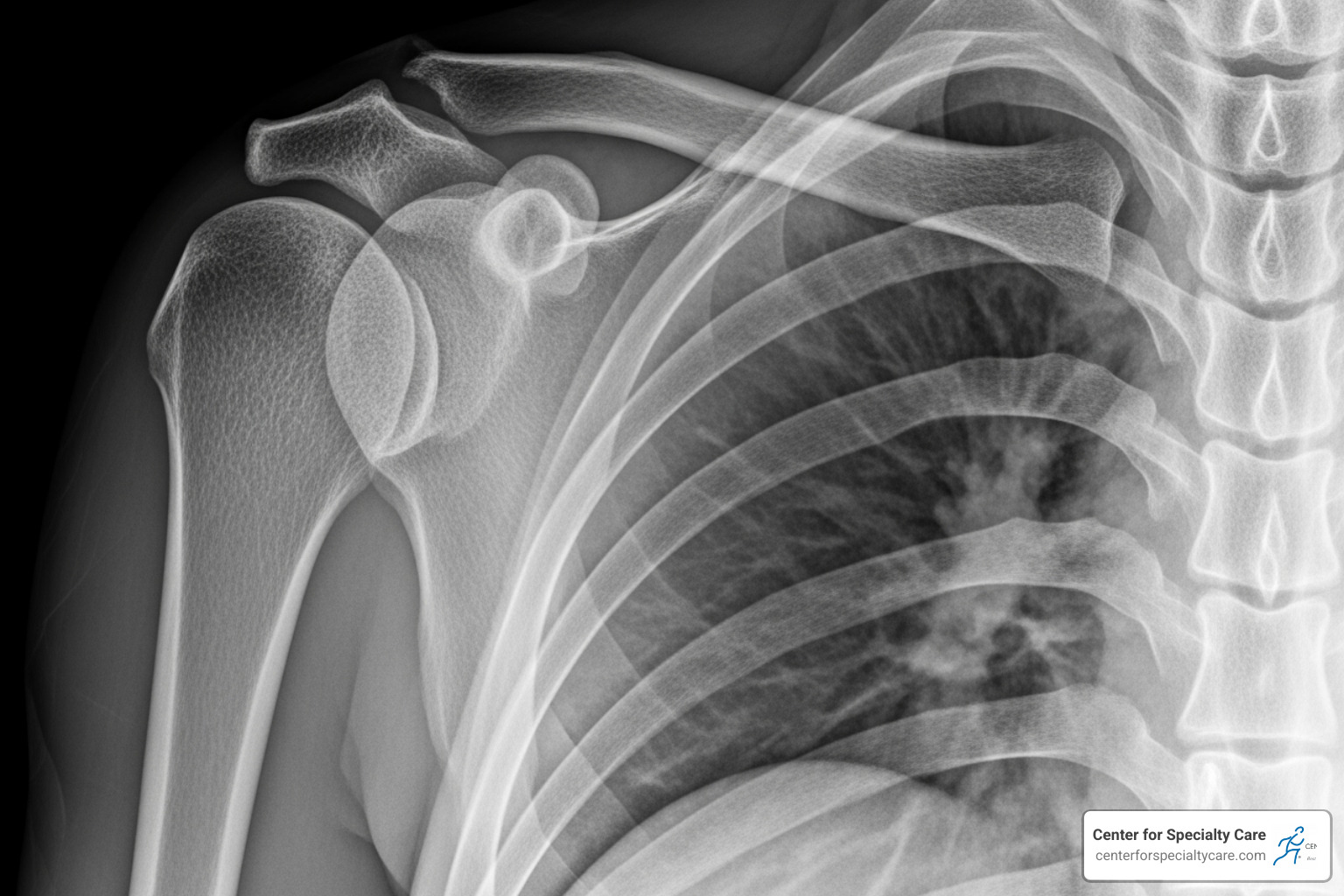
- X-rays show bone-related issues like fractures or arthritis.
- MRI scans provide detailed images of soft tissues like tendons, cartilage, and ligaments.
- Ultrasound allows us to see your shoulder structures in real-time, which is useful for diagnosing issues like biceps tendon instability.
This comprehensive approach helps us create the most effective treatment plan for you. Finding the right specialist is essential, and you can learn more in our guide to Finding the right shoulder specialist.
Non-Surgical Treatment Options
Most cases of painful shoulder popping can be treated without surgery. Conservative treatments give the body the support it needs to heal.
- Rest and activity modification: We help you identify and avoid movements that aggravate your shoulder while suggesting safe alternatives.
- Ice therapy and anti-inflammatory medications: These are used to reduce pain and swelling.
- Physical therapy: A cornerstone of conservative care, physical therapy strengthens supporting muscles, improves flexibility, and restores proper movement patterns. You can explore more about how physical therapy can transform your shoulder pain at Best therapy for shoulder pain.
- Corticosteroid injections: For persistent inflammation, these powerful anti-inflammatories are injected directly into the problem area to provide significant relief. An ultrasound-guided injection can be particularly effective for conditions like biceps instability. Learn more about your injection options at Types of injections for shoulder pain.
When Is Surgery Recommended?
Surgery is recommended only when we believe it will significantly improve your quality of life or prevent further damage. Key indicators for surgery include:
- Failure of conservative treatment: If non-surgical options haven’t provided relief after several months.
- Severe tears or damage: Large rotator cuff or labral tears and complex fractures often require surgical repair to heal correctly.
- Significant instability: If your shoulder frequently feels like it will dislocate, surgery can restore stability and confidence.
We use advanced, minimally invasive techniques whenever possible. Arthroscopic surgery uses a small camera and tiny incisions for faster recovery. For biceps tendon instability, a biceps tenodesis can secure the tendon and eliminate popping. In cases of severe arthritis, a shoulder replacement can provide years of pain-free function. If surgery is recommended, we will explain the procedure, its necessity, and the recovery process in detail. For those considering rotator cuff surgery specifically, our comprehensive guide on Finding a rotator cuff surgeon provides valuable insights into what to expect.
Frequently Asked Questions about Shoulder Popping
We understand that shoulder popping can raise many questions, especially when you’re not sure if those sounds are normal or something to worry about. Over the years, we’ve heard these same concerns from countless patients, and we’re here to put your mind at ease with clear, honest answers.
Why does my shoulder pop when I lift my arm?
When you lift your arm and hear that distinctive pop, you’re experiencing one of the most common shoulder phenomena. The good news? If it’s completely painless, it’s usually just cavitation – those harmless gas bubbles releasing from your joint fluid, much like cracking your knuckles.
However, when shoulder popping comes with pain during arm lifting, it tells a different story. This often points to structures that are rubbing or catching where they shouldn’t. The most common culprits include bursitis (inflammation of the cushioning sacs), labral tears (damage to the cartilage ring), or tendinitis affecting your rotator cuff or biceps tendon.
Think of it this way: your shoulder is like a well-oiled machine. When everything’s working smoothly, you might hear some normal operational sounds. But when there’s friction or damage, those sounds become accompanied by the “alarm bell” of pain, letting you know something needs attention.
Can a popping shoulder heal on its own?
This is one of our most frequently asked questions, and the answer really depends on what’s causing the popping in the first place. If your shoulder popping stems from harmless cavitation or a minor muscle strain from overdoing it at the gym, time and gentle care often do the trick. These situations typically resolve with rest, avoiding aggravating activities, and maybe some ice after workouts.
But here’s where it gets more serious: if the popping comes from a significant injury like a labral tear, rotator cuff damage, or persistent inflammation, your shoulder will likely need professional help to heal properly. These conditions rarely improve on their own and can actually worsen over time without proper treatment.
We’ve seen too many patients who tried to “tough it out” only to develop more complex problems like frozen shoulder or accelerated arthritis. The key is recognizing that your body is trying to tell you something through pain – and listening to that message early can save you from much bigger problems down the road.
Is painless shoulder popping something to worry about?
Here’s some reassuring news: painless shoulder popping is incredibly common and usually nothing to worry about! This type of crepitus happens to most people and is simply part of how your joints naturally function. It’s caused by gas bubbles releasing from your joint fluid or tendons and ligaments moving normally over bone surfaces.
Many of our patients are surprised to learn that these sounds are often just the soundtrack of a healthy, active joint. Your shoulder is the most mobile joint in your body, and with all that movement, some sounds are perfectly normal.
The magic word here is painless. As long as your shoulder feels strong, moves freely, and doesn’t hurt, those pops and clicks are typically just your joint’s way of saying “hello” during movement. It’s only when pain, weakness, swelling, or that unsettling feeling of instability joins the party that we recommend getting things checked out.
Your peace of mind matters to us. If you’re ever unsure about what your shoulder is telling you, we’re always here to listen and provide the clarity you need.
Conclusion: Your Path to a Quiet, Pain-Free Shoulder
Understanding your shoulder popping doesn’t have to be complicated. Throughout our discussion, we’ve learned that the key difference between normal and concerning sounds is surprisingly simple: pain is the deciding factor. If your shoulder pops but feels perfectly fine, you can usually breathe easy – it’s likely just those harmless gas bubbles doing their thing.
But when shoulder popping comes with discomfort, that’s when your body is trying to tell you something important. Whether it’s a labral tear causing instability, bursitis creating inflammation, or a rotator cuff issue affecting your daily activities, these conditions respond best to early diagnosis and proper treatment.
At Center for Specialty Care, we’ve seen how transformative the right care can be. From our clinic in Fairmont, we’ve helped patients throughout Minnesota and Iowa move from painful, noisy shoulders to quiet, comfortable ones. Our approach is always personalized care – because your shoulder issue is as unique as you are.
We believe in starting with the gentlest treatments first, whether that’s physical therapy to strengthen your rotator cuff, targeted injections to reduce inflammation, or simple activity modifications that give your shoulder time to heal. When surgery is needed, our minimally invasive techniques help you get back to your life as quickly as possible.
The beauty of addressing shoulder problems early is that we can often prevent them from becoming bigger issues down the road. A small labral tear caught early might need just some targeted therapy, while one left untreated could lead to ongoing instability or even arthritis.
Your shoulder health is too important to leave to chance. Whether you’re dealing with painful clicking, grinding sensations, or just want peace of mind about those mysterious pops, we’re here with quick appointment availability and comprehensive diagnostic tools to get you answers.
Don’t let shoulder uncertainty keep you from enjoying life’s activities. Take control of your shoulder health today and find what it feels like to move with confidence again. After all, the best sound your shoulder can make is no sound at all – just smooth, pain-free movement that lets you focus on what matters most to you.