
The Wobbly Shoulder: Why It Feels Out of Place But Isn’t Fully Dislocated
August 15, 2025
What’s That Sound? Understanding Your Noisy Shoulder
August 19, 2025
Knot in Neck? 3 Fast Relief Tips!
Why That Knot in Neck Won’t Go Away
A knot in neck can make daily activities a painful challenge. Here’s what you need to know for fast relief:
Quick Relief Methods:
- Gentle stretching – Chin tucks and neck rotations (hold 10-15 seconds)
- Self-massage – Apply firm pressure to the knot for 30-60 seconds
- Heat therapy – Use a heating pad for 15-20 minutes to relax muscles
- Cold therapy – Apply an ice pack for acute pain and inflammation
When to See a Doctor:
- Pain persists beyond 2 weeks
- Numbness or tingling in arms
- Severe headaches or dizziness
- Weakness in hands or arms
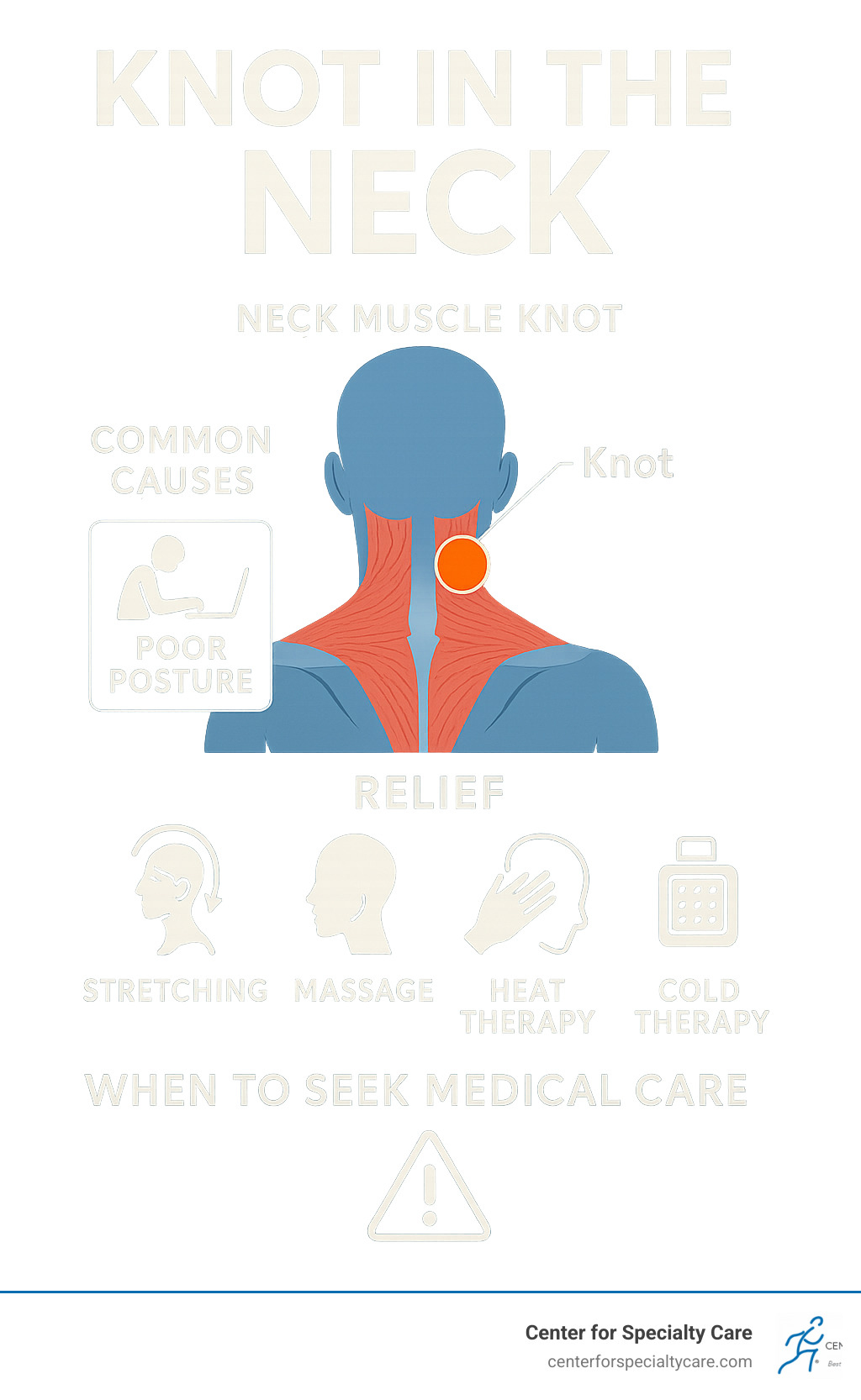
That tight, painful bump in your neck is your body telling you something needs attention. These “knots” are areas where muscle fibers stay contracted, creating a hard, tender spot. They often form from poor posture, stress, or repetitive movements like hunching over a computer.
Most neck knots respond well to simple self-care techniques. However, persistent knots may signal deeper issues that need professional evaluation.
I’m Dr. Corey Welchlin, a board-certified orthopedic surgeon with over three decades of experience treating musculoskeletal conditions, including chronic neck pain and muscle knots. At the Center for Specialty Care, I’ve helped thousands of patients find lasting relief from knot in neck pain through both conservative treatments and advanced interventions when needed.
Understanding the “Knot in Your Neck”
Ever wondered what that annoying knot in neck actually is? The answer might surprise you.
That hard, tender bump isn’t a true knot. It’s a myofascial trigger point—a small area where muscle fibers are stuck in a contracted state.
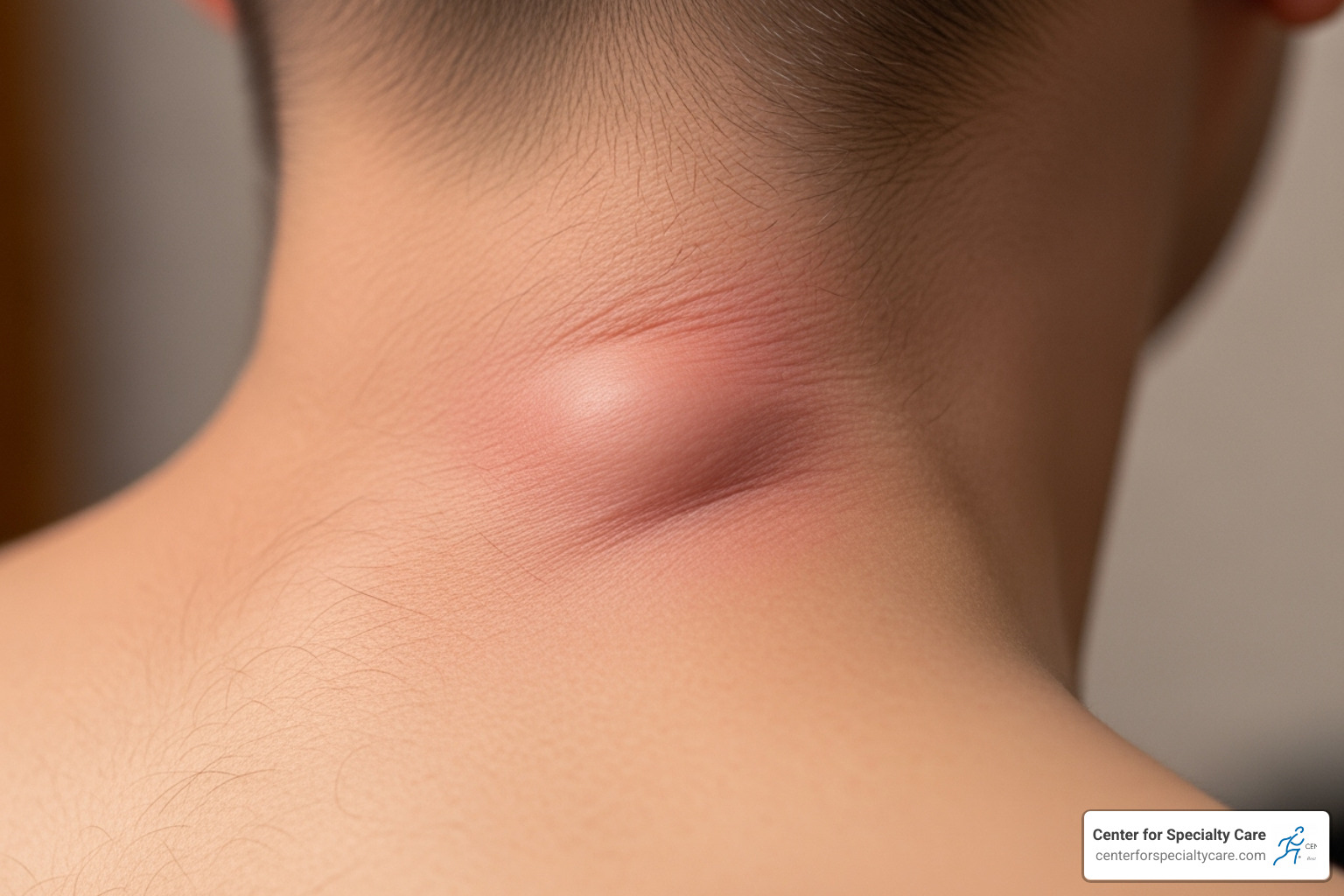
Think of it as a tiny, persistent muscle cramp. These tense muscle fibers form a hard bump, and when blood flow is reduced, the tissue becomes irritated. Pressing on it causes tenderness and a deep, aching sensation. This is called referred pain, which can cause discomfort in your shoulder, arm, or even trigger headaches.
There are two types: Active trigger points hurt even at rest, while latent trigger points only hurt when pressed. Both can cause a persistent knot in neck.
You’ll typically find these knots in predictable spots like the base of your skull, the side of your neck (in the upper trapezius muscle), and the top of your shoulders.
Scientific research on trigger points shows that nearly 85% of people experience muscle knots, and they are present in almost 100% of neck pain cases. Understanding what’s happening is the first step toward relief. These knots are treatable, and the right approach can help you move freely again.
What’s Causing That Persistent Knot in Neck?
Wonder why that knot in neck won’t go away? Our modern lifestyle often creates the perfect conditions for these stubborn muscle knots. When muscles lack oxygen from poor blood flow, waste products build up, and fibers get stuck in a contracted state.
The Role of Posture and Repetitive Strain
Poor posture is a primary cause. Many of us are hunched over screens, leading to “tech neck.”

Your head weighs 10-12 pounds. When tilted forward, your neck muscles work overtime to support it. Desk jobs are notorious for this, as hours of sitting in one position leads to muscle overuse. Repetitive movements, like looking at a phone or sleeping in an awkward position, also cause knots. Improving your ergonomics by adjusting your monitor height and taking breaks can make a huge difference.
If you’re dealing with pain that spreads beyond your neck, you might find helpful information about managing radiating pain.
How Stress Creates Knots in Your Neck
Your neck and shoulders often hold stress and tension. When stressed, your body tenses up, shoulders hunch, and breathing becomes shallow. This constant muscle tension is a survival response that doesn’t distinguish between real threats and daily stressors. Cortisol, the stress hormone, also increases inflammation and muscle tension.
Other Common Culprits
Several other factors can contribute to a knot in neck:
- Dehydration: Muscles are mostly water; a lack of it makes them stiff.
- Muscle injuries: Accidents or improper lifting can create lasting trigger points.
- Poor sleep: Sleeping in an awkward position puts stress on your neck. If you often wake up with neck pain, see our guide on how to relieve a stiff neck after waking up.
- Sedentary lifestyle: Inactivity leads to weak, stiff muscles prone to knots.
- Underlying joint issues: Neck joint problems can cause muscles to overcompensate, leading to tension.
Understanding these causes is the first step to finding relief.
Fast At-Home Relief for Neck Knots
When a knot in neck causes pain, you can find relief at home. Simple techniques can increase blood flow, relax tense muscles, and restore motion. Consistency is key; a little daily effort can prevent a small knot from becoming a major problem.
Stretches and Gentle Movement
Movement is medicine for a knot in neck. Gentle stretching breaks up contracted fibers and improves circulation.

- Chin tucks: Sit tall and pull your chin back toward your neck. Hold for 10-15 seconds and release. This realigns your head and stretches muscles at the base of your skull. Repeat 5-10 times daily.
- Gentle neck rotations: Slowly turn your head to look over one shoulder, hold for 10-15 seconds, then repeat on the other side. Move slowly to allow muscles to release.
- Shoulder shrugs: Breathe in and lift your shoulders toward your ears. Hold for 5-10 seconds, then exhale and let them drop completely. This helps relax the upper trapezius muscles.
Self-Massage and Trigger Point Release
Self-massage can directly address a knot in neck. Applying pressure breaks up contracted fibers and boosts blood flow.
- Using your fingertips: Locate the tender spot and apply firm, comfortable pressure for 30-60 seconds. Use small circular motions or hold steady pressure until the knot softens.
- The tennis ball technique: For hard-to-reach spots, place a tennis ball between your neck/shoulder and a wall. Lean into it with firm pressure for 30-60 seconds, then gently roll the ball over the area. For detailed guidance, see how to try a trigger point massage.
- Foam rollers: Use a foam roller on your upper back and shoulders to relieve surrounding muscle tension.
If you’re dealing with knots in related areas, our guide on muscle kink in shoulder blade: causes, effective relief offers additional techniques.
Hot and Cold Therapy
Heat or ice for a knot in neck? Both can help, depending on the situation.
- Heat therapy: For chronic knots and stiffness, apply a heating pad for 15-20 minutes. Heat increases blood flow and helps muscles relax.
- Cold therapy: For acute pain or inflammation, apply an ice pack (wrapped in a towel) for 15-20 minutes. Cold numbs pain and reduces swelling.
With consistent use, these techniques should provide relief within a few days.
When to Seek Professional Treatment
When self-care doesn’t resolve a stubborn knot in neck, it’s time to see a professional. Persistent pain is a red flag. If a knot lasts over two weeks despite home treatment or worsens, a professional evaluation is crucial to uncover any underlying issues.

Red Flag Symptoms: When a Knot in Neck is More Serious
While most knots are harmless, some “red flag” symptoms suggest a more serious issue and should not be ignored:
- Numbness, tingling, or weakness spreading down your arm or into your fingers could indicate a compressed nerve.
- Severe or unusual headaches, especially with neck pain, dizziness, or blurry vision may indicate effects on blood flow or nerve function.
- Urgent symptoms: Seek immediate medical care for difficulty swallowing, trouble breathing, or a high fever with neck stiffness, as these can signal serious conditions.
If pain disrupts your sleep or daily activities, professional help can provide faster relief.
Effective Professional Therapies
At the Center for Specialty Care, we offer a range of professional treatments custom to your needs:
- Physical therapy: A therapist identifies imbalances, teaches targeted exercises, and uses hands-on techniques like manual therapy to release knots.
- Therapeutic massage: Professional techniques like deep tissue and trigger point therapy release stubborn knots and improve circulation.
- Dry needling: An effective option for persistent knots where a thin needle is inserted into the trigger point to help the muscle release.
- Trigger point injections: For severe cases, a specialist injects a local anesthetic (sometimes with a corticosteroid) into the knot for immediate relief.
- Chiropractic care: Gentle adjustments can restore spinal alignment and reduce strain on neck muscles.
Our comprehensive approach addresses the root cause of your pain. Through our Pain Management services and expert Physical Therapy programs, we’re committed to helping you achieve lasting relief.
Seeking professional help is taking control of your health.
Frequently Asked Questions about Neck Knots
Dealing with a knot in neck brings up many questions. Here are answers to common concerns we hear from patients.
What is the connection between a knot in neck and headaches?
Surprisingly, a knot in neck can cause frequent headaches through “referred pain.” Tight trigger points in neck and shoulder muscles send pain signals to your head, causing tension headaches or sharp pain at the base of your skull, temples, or behind your eyes. Releasing these neck knots often alleviates the headaches as well.
How can I prevent neck knots from coming back?
Preventing recurring neck knots involves making small, consistent changes:
- Improve posture: Keep your head aligned over your spine. At a desk, your monitor should be at eye level.
- Take movement breaks: Stand and stretch every hour to boost circulation.
- Stay hydrated: Dehydration makes muscles stiff and prone to knots.
- Manage stress: Use techniques like deep breathing or hobbies to combat chronic muscle tension.
- Exercise regularly: Strengthen the muscles that support your neck.
- Sleep smart: Use a supportive pillow and avoid sleeping on your stomach.
Can a knot in the neck be a sign of something else?
Most of the time, a knot in neck is a muscular issue. However, it can sometimes be a symptom of a deeper problem like cervical radiculopathy (a pinched nerve) or facet joint problems. These conditions can cause muscle tension and spasms that feel like knots.
It’s also important to distinguish a muscle knot from other lumps like enlarged lymph nodes or cysts. Have a “knot” evaluated by a professional if it’s hard, immobile, changes size, or is accompanied by other symptoms like fever or difficulty swallowing. Trust your instincts; if something doesn’t feel right, get it checked out.
Conclusion: Taking the Next Step Towards a Pain-Free Neck
A knot in neck doesn’t have to be a constant problem. As we’ve learned, these are treatable areas of contracted muscle fibers. You now have the tools to fight back, from gentle chin tucks to the tennis ball technique.
Relief starts with consistent self-care. Regular stretching, trigger point pressure, heat/cold therapy, and prevention strategies like better ergonomics and movement breaks are key.
However, if self-care doesn’t help after a few weeks, or if you experience red flag symptoms like numbness or severe headaches, it’s time to see a professional. Professional treatment is a smart choice. Therapies like physical therapy or trigger point injections may be needed, especially if the root cause is a deeper issue that requires expert evaluation.
At Center for Specialty Care, our specialists understand that every knot in neck is unique. We are committed to providing personalized care that gets to the root of your pain, helping you find lasting relief with our 100% patient satisfaction guarantee.
Don’t let neck pain control your life. Find expert care for your neck and shoulder pain and take the next step toward feeling like yourself again.