
Choosing between Intracept and standard nerve ablation
April 9, 2026
Shoulder Blade Knots: Why Your Back Is Acting Like a Pre-Tangled Slinky
April 11, 2026
Heat Therapy for Tendonitis: Your Guide to Soothing Aches and Promoting Healing
Is Heat Good for Tendonitis? Here’s What You Need to Know First
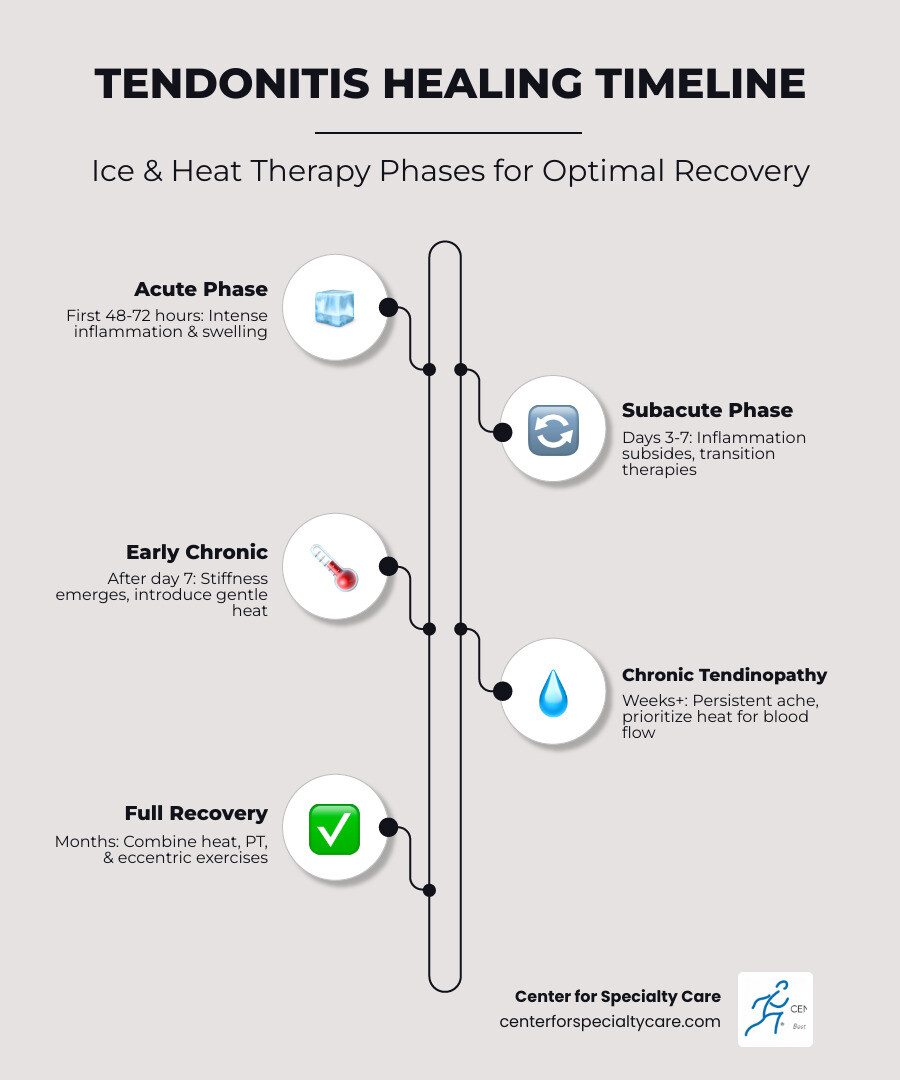
Is heat good for tendonitis — and the short answer is: it depends on timing.
| Phase | Timeframe | Best Treatment |
|---|---|---|
| Acute (new injury) | First 48-72 hours | Ice to reduce swelling |
| Subacute | Days 3-7 | Transition carefully |
| Chronic (ongoing stiffness) | After 72 hours | Heat to improve blood flow |
Heat can genuinely help tendonitis — but only after the initial inflammation has calmed down. Applying heat too early, when swelling is still active, can make things worse.
Tendons are the tough, fibrous bands that connect your muscles to your bones. When they become inflamed or irritated — from overuse, repetitive movements, or sudden strain — the result is tendonitis. You’ll typically feel pain, stiffness, and limited movement around the affected joint.
That stiffness is exactly where heat therapy shines. Once the acute phase passes, warmth helps loosen tight tissue, increase blood flow, and ease that nagging, chronic ache that can linger for weeks.
I’m Dr. Corey Welchlin, a board-certified orthopedic surgeon with over 30 years of experience treating musculoskeletal conditions — including the full spectrum of tendonitis cases — at the Center for Specialty Care in Fairmont, Minnesota. Patients frequently ask me is heat good for tendonitis, and the answer requires understanding exactly where you are in the healing process, which is what this guide will walk you through.
Quick look at is heat good for tendonitis:
Understanding Tendonitis and Its Common Causes
To understand why we use heat or ice, we first have to look at what’s actually happening inside your body. Tendons are remarkably strong, fibrous cords of tissue. Think of them like the high-tension cables on a suspension bridge; they transmit the power from your muscles to your bones to create movement.
However, despite their strength, tendons have a bit of an Achilles’ heel (sometimes literally): their blood supply. Compared to muscles, which are rich with blood vessels and heal relatively quickly, tendons have a much more limited blood supply. This means when they get “angry” or damaged, they take longer to settle down.
Tendonitis is essentially the irritation or inflammation of these cords. While “itis” implies active inflammation, many chronic cases are actually “tendinosis”—a state where the tendon is more degraded and stiff than it is “inflamed.”
Why Does It Happen?
Most of our patients in Fairmont and Estherville come in with tendonitis due to one of the following:
- Repetitive Strain: This is the most common culprit. Doing the same motion over and over—whether it’s swinging a hammer, typing, or a tennis serve—creates microscopic tears.
- Overuse Injuries: Suddenly increasing the intensity of your workout or starting a new sport without proper conditioning.
- Aging: As we get older, our tendons become less elastic and more prone to injury.
- Sudden Trauma: A sharp, unexpected movement can overstretch the tendon.
According to Orthoinfo: American Academy of Orthopaedic Surgeons on Achilles Tendinitis, conditions like Achilles tendonitis often stem from a mix of tight calf muscles and sudden increases in activity.
Common Areas Affected
While you have tendons all over your body, certain “high-traffic” joints are more susceptible:
- Rotator Cuff (Shoulder): Often seen in swimmers, painters, or anyone doing overhead reaching.
- Tennis Elbow (Lateral Epicondylitis): Pain on the outside of the elbow, common in racquet sports and manual labor.
- Jumper’s Knee (Patellar Tendonitis): Common in athletes who do a lot of jumping or running on hard surfaces.
- Achilles Tendon: The large tendon at the back of your ankle.
- Wrist Tendonitis: Increasingly common due to repetitive office work and smartphone use.
Is Heat Good for Tendonitis? Knowing When to Use It
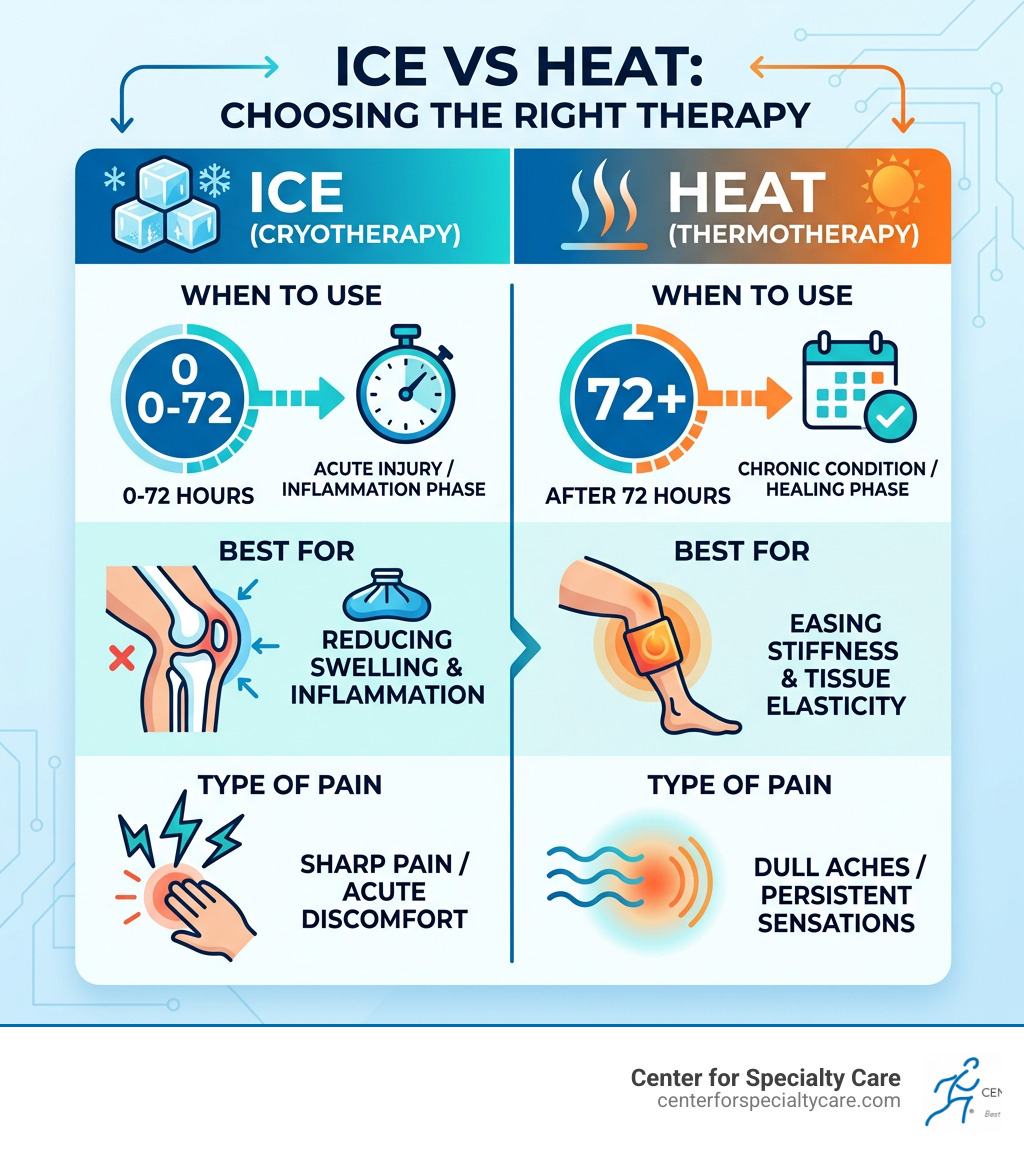
If you’ve just tripped and your ankle is the size of a grapefruit, put the heating pad away! In the acute phase (the first 48 to 72 hours), your body is flooding the area with fluid to protect it. Adding heat at this stage is like adding fuel to a fire—it increases blood flow to an area that is already overcrowded, potentially worsening the swelling and pain.
However, once that initial “red alert” phase has passed—usually after three days—the conversation changes. This is the subacute or chronic phase. At this point, the primary problem isn’t usually swelling; it’s stiffness, restricted movement, and a lack of fresh, nutrient-rich blood reaching the tissue to help it repair.
This is when we answer the question “is heat good for tendonitis” with a resounding yes.
The Science of Warmth
When you apply heat to a chronic injury, several physiological changes occur:
- Vasodilation: Your blood vessels widen. This allows more oxygen and nutrients to reach the damaged tendon, which is crucial for repair.
- Muscle Relaxation: Heat helps soothe the “guarding” muscles around the joint that often tighten up in response to pain.
- Tissue Elasticity: Warmth makes the collagen fibers in your tendons more pliable, making it easier to stretch and move without pain.
The Mayo Clinic: Should I apply ice or heat for tendinitis? confirms that while ice is the king of acute injuries, heat is the preferred tool for chronic tendinopathy to boost circulation.
Benefits of Thermotherapy
At the Center for Specialty Care, we often recommend heat as a precursor to physical therapy. By warming the area for 15 minutes before you do your prescribed stretches, you’re essentially “pre-heating” the engine. This reduces the risk of further micro-tears during exercise.
If you’re struggling with persistent joint pain, you can learn more about our orthopedic services and how we integrate these therapies into a total recovery plan.
Ice vs. Heat: Choosing the Right Therapy for Your Recovery
Choosing between a bag of frozen peas and a warm towel can feel like a guessing game, but it follows a logical timeline.
The 48-72 Hour Rule
The general rule of thumb used in sports medicine is the 72-hour window.
- 0-72 Hours: Use Ice. Think of ice as a “numbing agent” and a “constrictor.” It narrows blood vessels to keep swelling down and slows down the pain signals being sent to your brain.
- After 72 Hours: Use Heat. Once the swelling has stabilized, heat becomes the “healer.” It opens the gates for blood flow and helps flush out metabolic waste products that accumulate in stagnant, injured tissue.
Interestingly, research on the “tendinitis” myth suggests that many chronic cases don’t actually have much inflammation at all; they involve tissue breakdown. This is why icing a chronic injury indefinitely can actually be counterproductive—it keeps the blood flow low in an area that desperately needs it.
When to Use Contrast Therapy
Sometimes, the best answer isn’t “one or the other,” but “both.” This is called Contrast Therapy. By alternating between hot and cold, you create a “pump” effect.
- Cold constricts the vessels.
- Heat dilates them.
This back-and-forth action helps move fluid through the area, which can be incredibly effective for stubborn, chronic stiffness in the wrist or ankle. A typical protocol is 3 minutes of heat followed by 1 minute of cold, repeated three times, always ending on the temperature that feels most comfortable for your specific stage of recovery.
How to Safely Apply Heat Therapy for Maximum Relief
Applying heat seems simple, but there is a “sweet spot” for safety and effectiveness. You want the tissue to be warm, not toasted!
Best Practices for Application
- Moist vs. Dry Heat: We generally recommend moist heat (like a damp warm towel or a specialized moist heating pad). Moist heat penetrates deeper into the tissues than dry heat from a standard electric pad, reaching the tendon more effectively.
- The 20-Minute Limit: Apply heat for 15 to 20 minutes at a time. Anything longer can actually cause “rebound” inflammation or skin irritation.
- Use a Barrier: Never apply a heat source directly to the skin. Always wrap your heating pad or gel pack in a thin towel to prevent burns.
- Frequency: You can repeat this process 2 to 3 times a day, ensuring you give your skin at least an hour to return to normal temperature between sessions.
A Note on Exercise and Cooling
It’s important to note that while we love heat before activity, you should be careful with cooling after strength training. Research on how cooling can blunt training responses has found that routinely icing muscles immediately after a workout can actually reduce the gains you get from that exercise. If your physical therapy involves strengthening the tendon, talk to us about the best timing for your ice or heat.
Risks of Incorrect Heat Use
Heat isn’t for everyone. You should avoid heat therapy if:
- The area is currently swollen, red, or hot to the touch.
- You have poor circulation or peripheral neuropathy (common in diabetes), as you might not be able to feel if the skin is burning.
- You have an open wound or skin infection in the area.
Specialized Considerations for Shoulder and Achilles Tendonitis
Not all tendons are created equal. The way we treat a shoulder is different from how we treat a heel.
Shoulder Tendonitis (Rotator Cuff)
The shoulder is the most mobile joint in your body, which makes it incredibly complex. When the rotator cuff tendons become stiff, it can affect your ability to sleep or even get dressed. For the shoulder, we often recommend heat applied to the front and top of the joint for 15 minutes, followed immediately by gentle pendulum stretches. This “warm and stretch” combo is a cornerstone of non-surgical shoulder care.
Achilles Tendonitis
The Achilles tendon is thick and has a notoriously poor blood supply at its midpoint. Because it’s so thick, dry heat often struggles to reach the core of the tendon. This is where warm water soaks or moist heat packs are particularly beneficial. However, because the Achilles carries your entire body weight, heat should always be combined with “eccentric” exercises (controlled lengthening of the muscle) for the best results.
If conservative treatments like heat, ice, and therapy aren’t providing the relief you need, we offer advanced interventions. For example, you can learn about advanced surgical options like the TightRope procedure for certain types of ligament and tendon stability.
Expert Guidance
At the Center for Specialty Care, we believe in personalized medicine. You aren’t just a “shoulder case” or a “knee case.” For a truly tailored recovery plan, you can consult with Dr. Thomas Carpenter or any of our specialists to see which combination of heat, therapy, or advanced treatments is right for you.
Frequently Asked Questions about Heat for Tendonitis
Is heat good for tendonitis during a sudden flare-up?
Generally, no. A “flare-up” usually involves a return of acute inflammation. If the area feels “angry,” throbbing, or looks swollen, stick to ice for the first 48 hours. Once the sharp pain transitions into a dull, stiff ache, you can move back to heat.
How long should I use heat for tendonitis to see results?
Heat therapy provides immediate temporary relief for stiffness, but for long-term healing, consistency is key. Most patients see a significant improvement in mobility within 2 to 3 weeks of consistent heat application combined with proper stretching. If you don’t see progress in that timeframe, it’s time to see a specialist.
Can heat make tendonitis worse?
Yes, if used at the wrong time. Applying heat to an acutely inflamed tendon can increase swelling and pain. Additionally, if you have a suspected tendon rupture (which often comes with a “popping” sound and inability to move the joint), do not apply heat. Instead, seek urgent advice for suspected tendon rupture or visit our clinic immediately.
Conclusion: Finding Relief at the Center for Specialty Care
So, is heat good for tendonitis? When used correctly—during the chronic phase and as a tool to improve flexibility—it is one of the most effective and soothing home treatments available. It bridges the gap between the initial injury and your return to full activity.
At the Center for Specialty Care, we serve patients across Fairmont, MN, Estherville, IA, and the surrounding regions with a commitment to 100% patient satisfaction. Whether you need a simple guided home exercise program or advanced surgical intervention, our team is here to provide personalized care that gets you back to the activities you love.
Don’t let tendon pain dictate your lifestyle. If your aches aren’t improving with home care, reach out to us. You can schedule an appointment for expert tendonitis relief today at any of our convenient locations in Minnesota and Iowa. Let’s get you moving again—pain-free.