
Relieve Rotator Cuff Pain at Night: Tips for a Better Sleep
November 21, 2025
Decoding Your Discomfort: A Comprehensive Guide to Foot and Ankle Pain
November 25, 2025
Wrist Tendonitis: Ultimate 2025 Pain Relief Guide
Understanding Wrist Tendonitis: What You Need to Know
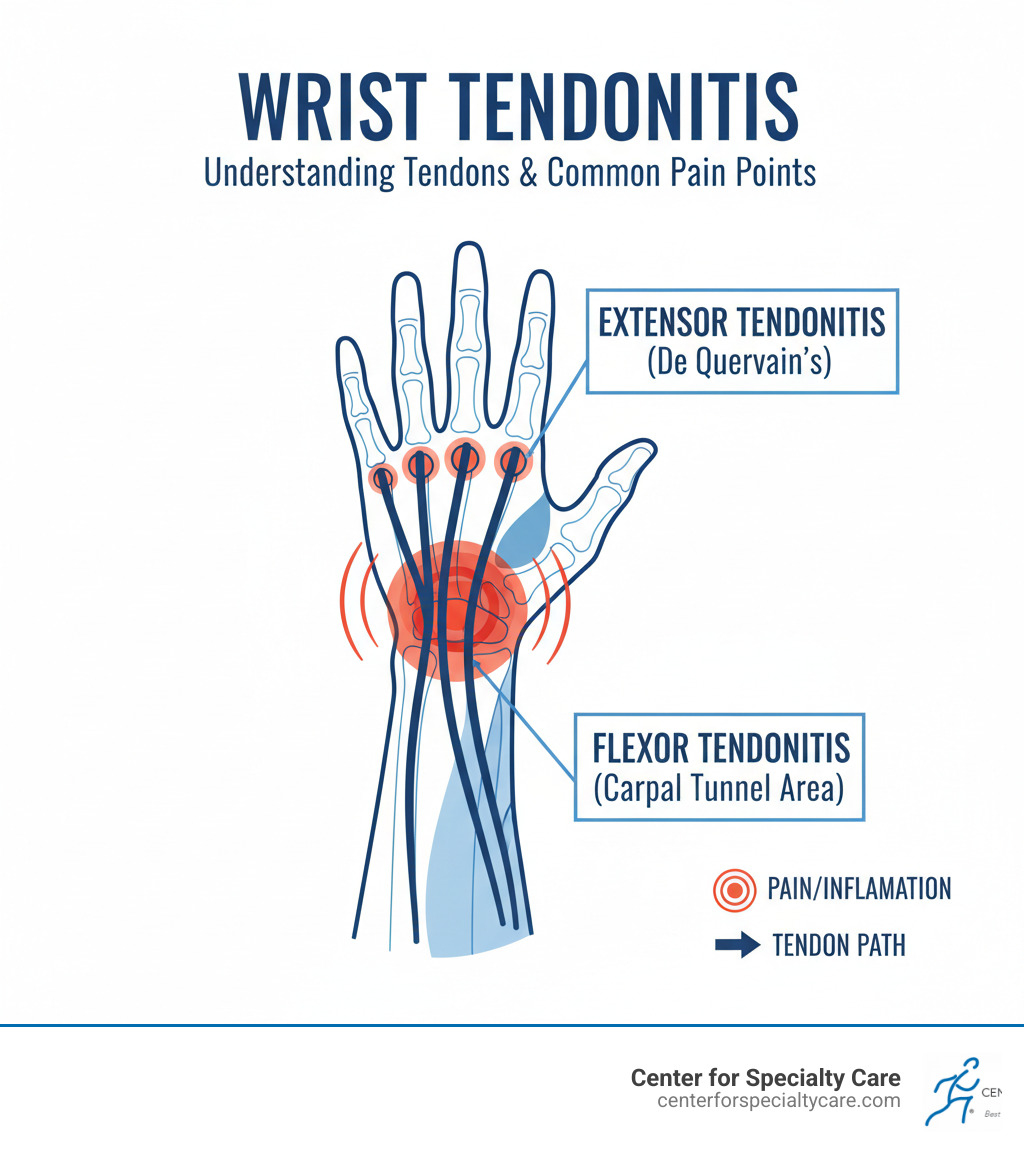
Wrist tendonitis is the inflammation of tendons connecting your forearm muscles to your hand and finger bones. When these thick, fibrous cords become irritated—usually from overuse—they cause pain, swelling, and difficulty with everyday tasks.
Quick Overview:
- What it is: Inflammation of wrist tendons.
- Common causes: Repetitive motions (typing, sports), sudden injury, aging, or arthritis.
- Key symptoms: Pain with movement, tenderness, swelling, and weakness.
- Treatment: Rest, ice, splinting, medication, and physical therapy. Surgery is for severe cases.
- Prognosis: Most cases improve with conservative treatment in 6-8 weeks.
Persistent wrist pain is a common overuse injury, but the good news is that most people can achieve a full recovery with proper care. The condition develops from microscopic tears in the tendon, which triggers an inflammatory response. Without rest, this can lead to chronic pain.
I’m Dr. Corey Welchlin, a board-certified orthopedic surgeon with over 30 years of experience. At the Center for Specialty Care, I help patients in southern Minnesota and northern Iowa recover from overuse injuries like wrist tendonitis using conservative treatments and, when needed, minimally invasive surgery.
Handy wrist tendonitis terms:
- ice or heat for strained tendon
- ice pack for tendonitis
- is heat or ice better for patellar tendonitis
What is Wrist Tendonitis and What Causes It?
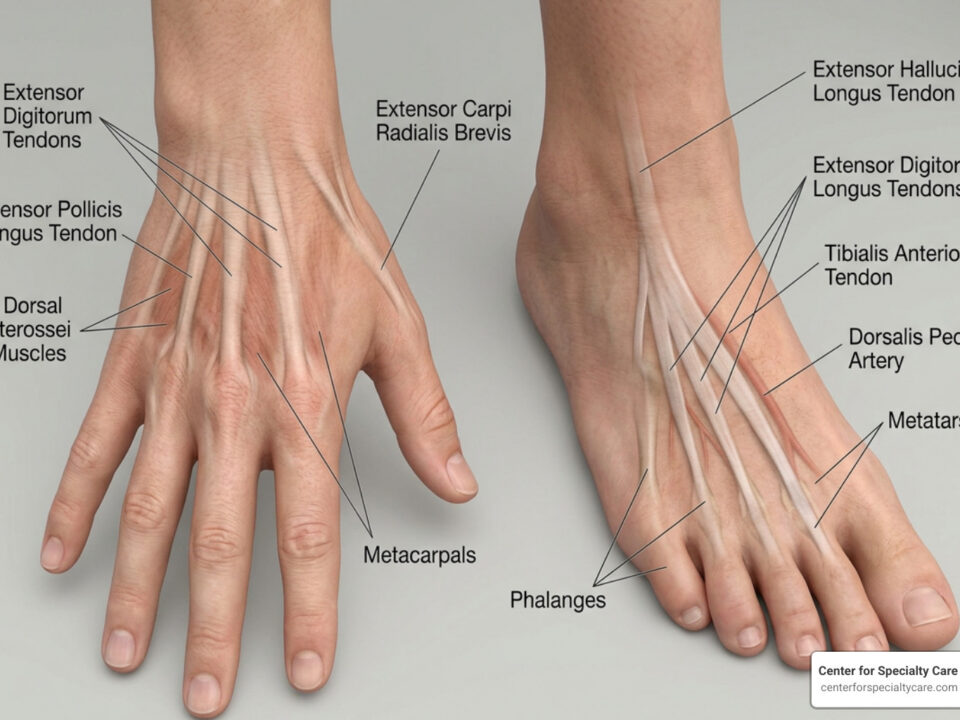
Tendons are the tough, fibrous cords that connect your muscles to your bones, allowing for movement. In the wrist, they control everything from delicate finger motions to powerful grips.
How Tendon Damage Develops
Wrist tendonitis begins with microscopic tears in the tendon fibers. These tiny injuries usually result from repetitive motions or sudden strain. The body responds with inflammation, causing the swelling, pain, and tenderness associated with the condition.
You may hear the term tendinitis used for this acute inflammation. A more chronic condition, where the tendon degenerates over time without significant inflammation, is called tendinosis. We’ll use wrist tendonitis as it’s the inflammation that usually prompts a clinic visit.
Common Causes of Wrist Tendonitis
Repetitive Motion: This is the most common cause. When you perform the same wrist movements repeatedly without adequate rest, the microscopic tears don’t have time to heal.
- Work-related activities: Jobs involving typing, using a mouse, operating power tools, or performing assembly line tasks put people at higher risk. For more information on supporting your wrist and arm, visit our Arm care page.
- Sports and hobbies: Activities like tennis, golf, playing guitar, and knitting all involve repetitive wrist movements that can lead to overuse.
Other Contributing Factors:
- Sudden Injury: A fall, a direct blow, or a forceful movement can cause acute tendon inflammation.
- Age: As we age, tendons lose flexibility and become more prone to injury.
- Medical Conditions: Certain conditions increase your risk. Diabetes can interfere with tendon health and healing. Inflammatory conditions like rheumatoid arthritis, lupus, and gout can also directly affect tendon tissue.
Understanding these causes helps you identify risk factors and take preventive action. The earlier you address wrist tendonitis, the better the outcome.
Key Symptoms and Professional Diagnosis
Recognizing the symptoms of wrist tendonitis is the first step toward recovery. While they may start subtly, they can become persistent if ignored.
What Does Wrist Tendonitis Feel Like?
Common symptoms include:
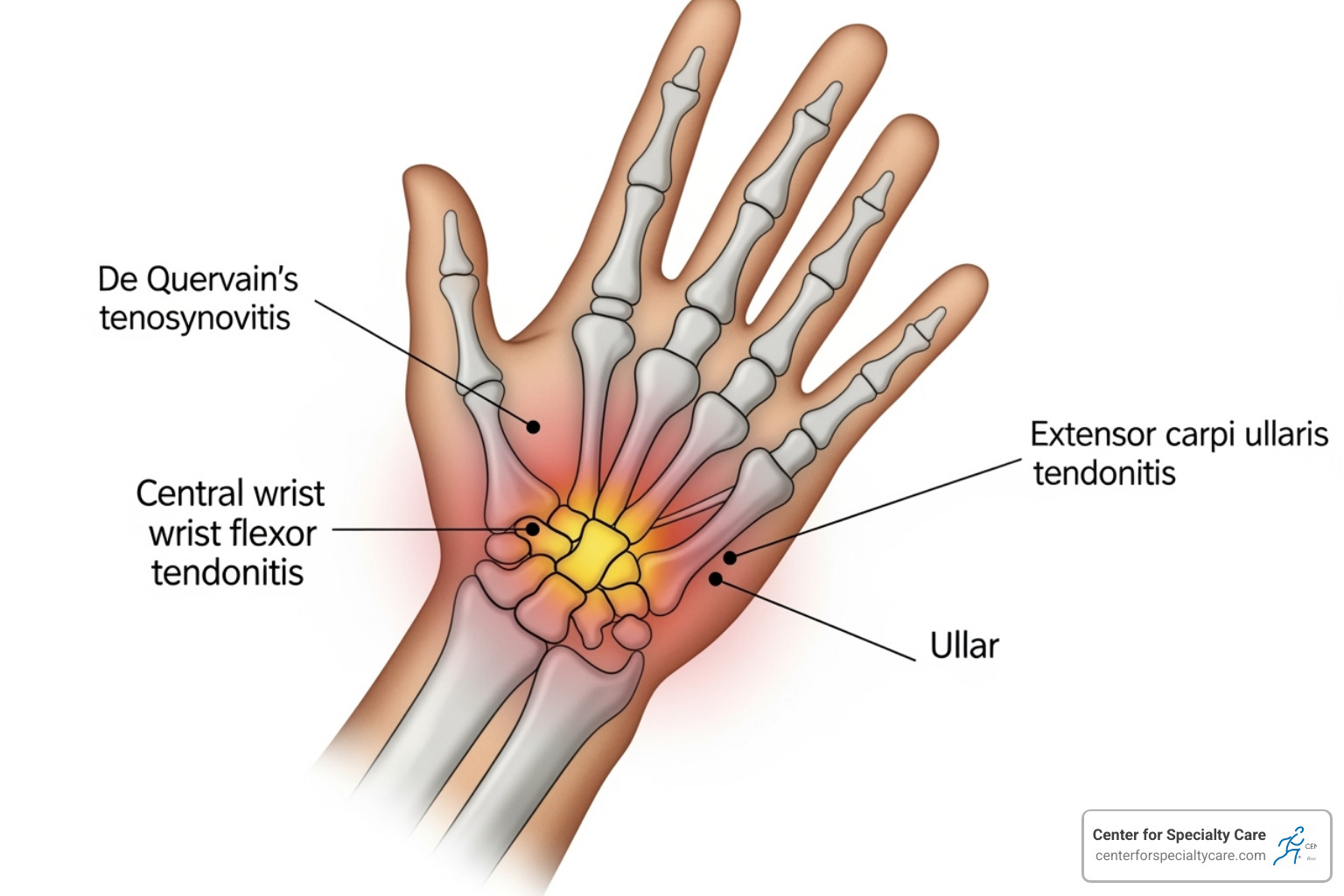
- Pain that worsens with movement: A dull ache that sharpens when you grip, twist, or type. The pain is often localized over the affected tendon.
- Tenderness: The area over the inflamed tendon may be sore to the touch.
- Swelling and warmth: The wrist might look puffy or feel warm, signaling inflammation.
- Weakness: You may notice a diminished grip strength, making it hard to open jars or hold objects.
- Reduced range of motion: Stiffness in the wrist, especially in the morning, can make movement difficult.
- Crepitus: A grinding or popping sensation when moving the wrist. This occurs as the inflamed tendon moves through its sheath.
Getting a Professional Diagnosis
If your symptoms persist or interfere with daily life, it’s time to see a professional. At the Center for Specialty Care, our diagnostic process is thorough and personalized.
A diagnosis typically involves:
- Medical History and Physical Exam: We’ll discuss your symptoms, activities, and medical history. We will then carefully examine your wrist, checking for tenderness, swelling, and limited range of motion.
- Specific Tests: For certain types, like De Quervain’s tenosynovitis, we may use the Finkelstein test. This involves making a fist with your thumb inside and then bending your wrist, which will cause pain on the thumb side if the test is positive.
- Imaging Tests: While often not necessary for a diagnosis, imaging can rule out other problems or assess severity.
- X-rays can identify bone issues like fractures or arthritis.
- Ultrasound provides real-time images of soft tissues, showing tendon inflammation or tears. This is a quick, painless way to visualize tendon issues.
- MRI scans offer the most detailed view of soft tissues for complex cases.
This comprehensive approach ensures we create a treatment plan that is right for you.
Effective Treatment Options for Wrist Tendonitis
The good news is that most cases of wrist tendonitis respond well to non-surgical treatments. At the Center for Specialty Care, we start with the gentlest, most effective approaches to get you back to your life.
Non-Surgical Treatments for Wrist Tendonitis

The goal of non-surgical treatment is to reduce inflammation and allow the tendon to heal. Common strategies include:
- The R.I.C.E. Method: Rest the wrist, apply Ice to reduce swelling, use Compression with a bandage, and Elevate the wrist above your heart.
- Activity Modification: We help you identify and adjust movements that cause pain, such as changing your workstation setup or grip technique.
- Bracing and Splinting: A splint immobilizes the wrist in a neutral position, preventing irritating movements, especially during sleep or painful activities.
- Medication: Over-the-counter nonsteroidal anti-inflammatory drugs (NSAIDs) like ibuprofen can help manage pain and inflammation.
- Physical Therapy: This is a key component of recovery. Our therapists create personalized programs with stretching and strengthening exercises to restore flexibility and prevent future issues. Learn more about our Physical Therapy services.
- Corticosteroid Injections: For persistent pain, an injection of a powerful anti-inflammatory medication directly into the tendon sheath can provide significant relief, creating a window for physical therapy to be more effective. Our Pain Management team can provide these advanced options.
You can find additional Information on Tendonitis treatments from other medical institutions.
When is Surgery Considered?
Surgery for wrist tendonitis is rare and only considered after conservative treatments have failed to provide relief after 6-12 months. It may be the best option for patients with debilitating chronic pain, a tendon rupture, or severe constriction of the tendon sheath (as in some cases of De Quervain’s tenosynovitis).
When necessary, we often use minimally invasive procedures like Wrist arthroscopy, which uses small incisions for faster recovery. Post-surgery rehabilitation with physical therapy is crucial for rebuilding strength and restoring function.
Our team at the Center for Specialty Care is with you every step of the way. Explore our full range of Services to see how we can support your recovery.
Prevention, Recovery, and When to See a Doctor
You have the power to prevent wrist tendonitis and to recover fully if you’re already experiencing it. Smart adjustments and knowing when to seek help are key.

Proactive Steps for Prevention
Simple changes can protect your tendons from overuse:
- Ergonomic Adjustments: Set up your workspace so your wrists remain in a neutral, comfortable position. An ergonomic keyboard or wrist rest can help.
- Proper Form: Use correct technique during sports, work, or hobbies to reduce stress on your tendons.
- Warm-ups and Cool-downs: Gently stretch your wrists and fingers before and after repetitive activities.
- Regular Breaks: Take short breaks every 30-60 minutes to stretch and shake out your hands.
- Strengthening: Build up the muscles in your forearms and hands to provide better support for your tendons.
Can Wrist Tendonitis Be Fully Healed?
Yes, most people fully recover from wrist tendonitis, especially with early and consistent treatment. Most patients see significant improvement within six to eight weeks with conservative care. However, ignoring the pain can lead to a chronic problem or even a tendon tear. The goal of recovery is not just to eliminate pain but also to prevent recurrence. Our specialized Wrist care is designed to help you achieve this.
When to Seek Professional Medical Help
While mild cases may improve with self-care, you should see a doctor if you experience:
- Pain that persists for more than a week or two despite rest.
- Significant swelling, redness, or warmth around the wrist.
- Weakness or inability to grip objects.
- A reduced range of motion or stiffness.
- Numbness or tingling in your hand or fingers.
- A grinding or popping sensation (crepitus).
- Inability to perform daily tasks due to pain.
Seek emergency care for sudden, severe pain after an injury, a visible deformity, or an inability to move your wrist or fingers.
At the Center for Specialty Care, we offer quick appointment availability because we know that when you’re in pain, you can’t wait. Let us help you take control of your recovery.
Frequently Asked Questions about Wrist Pain
Here are answers to some of the most common questions we hear from patients with wrist pain at the Center for Specialty Care.
What is the difference between wrist tendinitis and carpal tunnel syndrome?
This is a frequent question, as symptoms can overlap. The key difference is the affected structure. Wrist tendonitis is inflammation of the tendons (which connect muscle to bone), causing localized pain, tenderness, and swelling that worsens with movement. Carpal tunnel syndrome is compression of the median nerve, causing numbness, tingling, and burning in the fingers, often worse at night.
Here’s a quick comparison:
| Feature | Wrist Tendonitis | Carpal Tunnel Syndrome |
|---|---|---|
| Affected Structure | Tendons | Median Nerve |
| Primary Symptoms | Localized pain, swelling, weakness | Numbness, tingling, burning |
| Typical Pain Pattern | Worse with movement | Often worse at night |
A proper diagnosis is crucial, as treatments differ. We can help distinguish between these conditions.
How long does it take for wrist tendonitis to heal?
Healing time varies. With diligent conservative treatment, mild cases often improve significantly within 6 to 8 weeks. More severe or chronic cases can take several months to fully resolve. Factors like the injury’s severity, your adherence to the treatment plan, age, and overall health all influence your recovery timeline. It’s important not to rush back to activities, as this can cause a setback.
Should I use ice or heat for my wrist tendonitis?
The general rule is: ice for new injuries and heat for chronic stiffness.
- Use Ice: For the first few days of an injury or after an activity that causes a flare-up. Apply an ice pack (wrapped in a towel) for 15-20 minutes to reduce swelling and numb pain.
- Use Heat: For lingering stiffness or before stretching. Apply a heating pad or warm towel for 10-15 minutes to relax muscles and improve flexibility. Never use heat on a new injury with significant swelling.
For more guidance, the Mayo Clinic offers expert advice on using ice or heat. If you’re unsure, we can provide personalized recommendations.
Take Control of Your Wrist Pain
You don’t have to live with wrist tendonitis. As we’ve covered, this condition is often caused by overuse but is highly treatable, especially when addressed early.
Key Takeaways:
- Listen to your body: Pain, swelling, and weakness are signs to take action.
- Early diagnosis is key: It helps prevent chronic issues.
- Conservative treatment works: Most cases improve with rest, physical therapy, and activity modification.
- Prevention is powerful: Simple ergonomic changes and regular breaks make a big difference.
At the Center for Specialty Care, we have over 30 years of experience helping patients in Fairmont, St. James, Buffalo Center, and Estherville overcome wrist tendonitis. We create personalized treatment plans because we know your goals are unique. Our commitment to 100% patient satisfaction and quick appointment availability means you get the expert care you need, when you need it.
Don’t let wrist pain hold you back. Schedule an appointment with our Orthopedics team today and take the first step toward a pain-free life.