
Wrist Tendonitis: Symptoms, Causes & Treatment
November 24, 2025
Don’t Just Endure: Locate Your Perfect Back Pain Doctor
November 26, 2025
Foot and ankle pain: Ultimate Relief 2025
Why Foot and Ankle Pain Deserves Your Attention
Foot and ankle pain affects millions of Americans. Studies show that up to 37% of adults over 45 experience foot pain, while approximately 15% report ankle pain in any given month. This isn’t just a minor annoyance—foot and ankle pain can significantly reduce physical function, limit mobility, and diminish your quality of life.
Quick answers for immediate relief:
- What causes it? Overuse injuries, ankle sprains, arthritis, plantar fasciitis, improper footwear, acute trauma, tendinitis, and systemic conditions like diabetes or gout.
- When to seek emergency care: Inability to bear weight, severe swelling, open wounds, signs of infection (fever, redness, warmth), or an obvious deformity.
- First-line treatment: The RICE method (Rest, Ice, Compression, Elevation), over-the-counter pain relievers, and proper footwear.
- When to see a doctor: Pain lasting more than 2-3 weeks, persistent swelling, burning or numbness, or pain that limits daily activities.
Your feet and ankles are complex structures, with each foot containing 26 bones, 33 joints, and over 100 muscles, tendons, and ligaments. When something goes wrong in this intricate system, it can cause problems throughout your body, affecting your knees, hips, and back.
I’m Dr. Corey Welchlin, a board-certified orthopedic surgeon who has specialized in treating foot and ankle pain for over three decades. At the Center for Specialty Care, I’ve helped thousands of patients in southern Minnesota and northern Iowa regain their mobility. We offer comprehensive diagnostics and personalized treatment plans, from conservative therapies to minimally invasive surgical options.
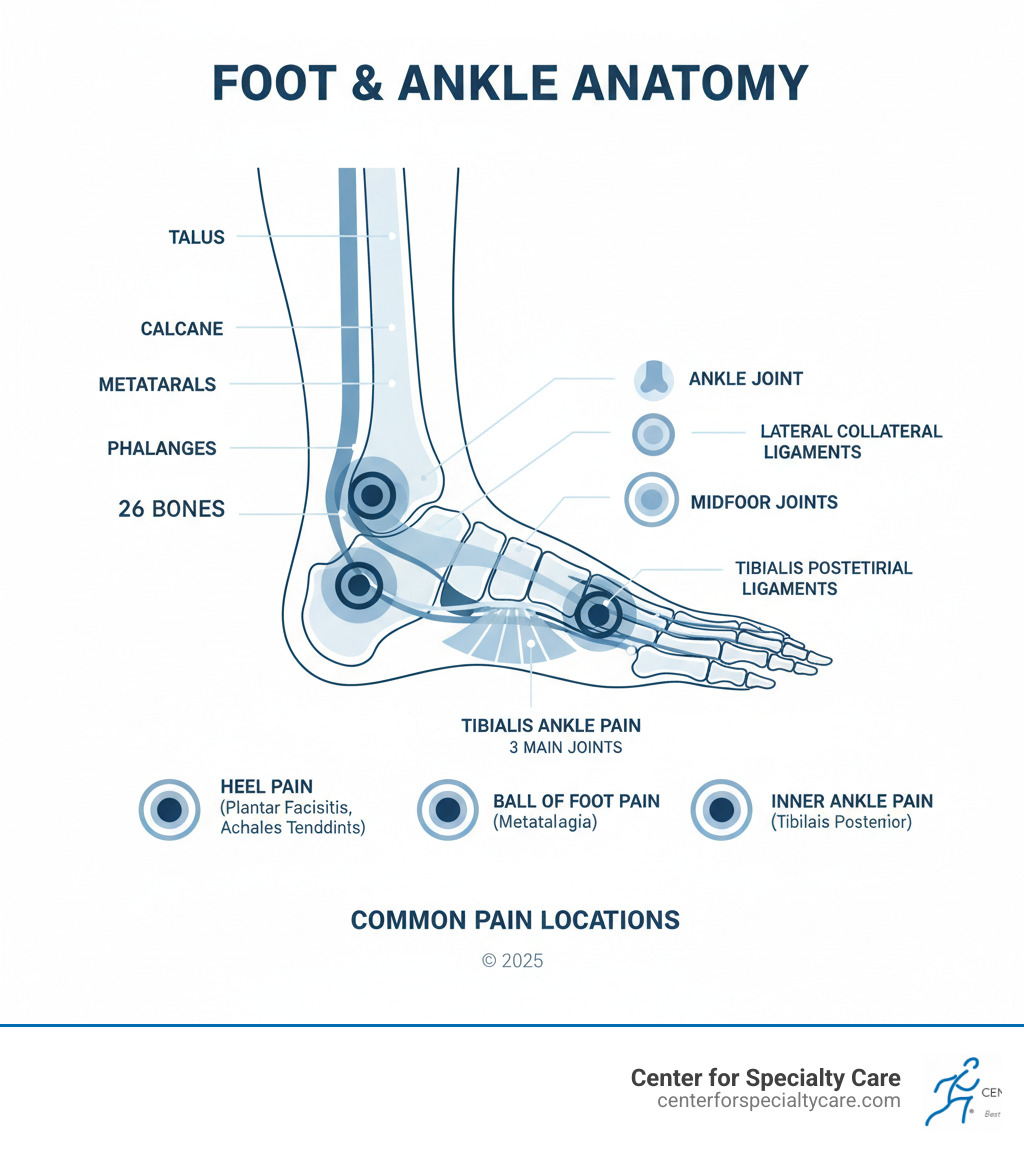
Understanding the Source: Common Causes and Conditions
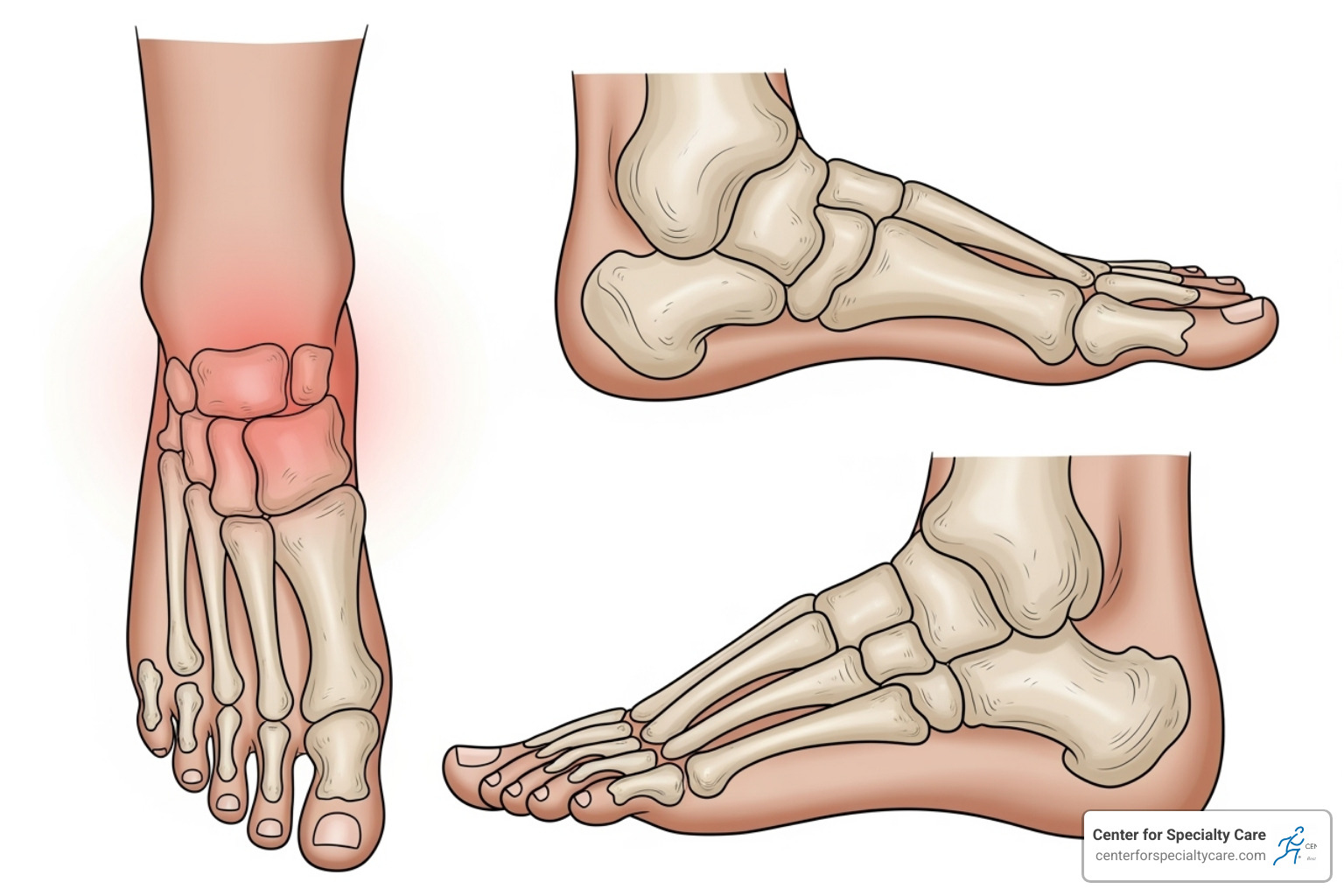
Common Causes of Foot and Ankle Pain
Pinpointing the source of foot and ankle pain is essential for effective treatment. The most common causes I see include:
- Overuse injuries: Repeatedly stressing your feet and ankles without adequate rest can lead to conditions like Achilles tendinitis, stress fractures, or plantar fasciitis. Runners, dancers, and people who stand for long hours are particularly vulnerable.
- Acute trauma: Sudden events like rolling an ankle, dropping something on your foot, or a hard fall can result in sprains, fractures, or dislocations.
- Improper footwear: Shoes that are too tight, lack support, or have high heels force your feet into unnatural positions, disrupting your biomechanics and leading to chronic pain.
- Age-related changes & Biomechanics: As we age, our tendons and ligaments experience wear and tear. Structural issues like flat feet or high arches can also affect how weight is distributed, creating a domino effect of pain in the knees and hips.
Specific Injuries and Conditions
- Plantar fasciitis: A leading cause of heel pain, affecting roughly two million patients annually. It causes a sharp, stabbing pain in the bottom of the foot, especially with the first steps in the morning.
- Achilles tendinitis: An overuse injury of the large tendon connecting the calf muscles to the heel. It’s common in middle-aged individuals starting new exercise routines and can lead to tears if untreated.
- Ankle sprains: These account for over 80% of all ankle injuries. While minor sprains heal with rest, severe ones can lead to chronic ankle instability.
- Stress fractures: Tiny cracks in a bone caused by repetitive force, common in runners and athletes.
- Bunions (Hallux Valgus): Bony bumps at the base of the big toe, often exacerbated by tight, narrow shoes.
- Hammertoes: A bend in the toe joint, often caused by ill-fitting shoes or muscle imbalances.
- Morton’s neuroma: A thickening of nerve tissue between the toes, creating a sensation of standing on a pebble. Learn more in my guide: Understanding Morton’s Neuroma: An Orthopedic Guide to Foot Pain and Treatment.
- Ankle osteoarthritis: A degenerative joint disease where cartilage wears away. It is most often post-traumatic, developing years after an injury like a fracture or severe sprain.
The Impact of Systemic Health Conditions
Sometimes, foot pain is a symptom of a broader health condition.
- Rheumatoid arthritis (RA): An autoimmune disease where the body attacks joint linings. Foot pain is a very common symptom, with 35.4% of individuals reporting it as their first symptom.
- Gout: An inflammatory arthritis caused by a buildup of uric acid crystals, often targeting the big toe with sudden, intense pain.
- Diabetes: High blood sugar can cause nerve damage (peripheral neuropathy) and reduce circulation. This leads to numbness or burning pain and increases the risk of non-healing ulcers. We offer specialized services for this condition: Diabetic Foot Care: A Tailored Approach to Keeping Your Feet Healthy.
- Peripheral neuropathy & Circulatory Issues: Nerve damage from other causes or poor blood flow from conditions like peripheral arterial disease (PAD) can also cause significant foot and ankle pain.
At the Center for Specialty Care, we take a comprehensive approach to address both your foot pain and any underlying health conditions. Learn more about our services: More info about our comprehensive orthopedic care.
Getting a Diagnosis: What to Expect
Getting the right diagnosis is the first step toward relief. At the Center for Specialty Care, we take the time to understand the root cause of your foot and ankle pain.
The Initial Consultation and Your Medical History
Your visit begins with a detailed conversation about your pain: its location, onset, what makes it better or worse, and any previous injuries. We’ll also review your lifestyle and medical history, as systemic conditions like diabetes or arthritis can manifest as foot pain. These details help us distinguish between acute injuries and chronic conditions.
The Clinical Examination Process
The physical exam is a hands-on assessment to read the signs your body is giving us. This process includes:
- Visual inspection: We look for swelling, bruising, redness, or deformities like bunions.
- Palpation: We gently press on different areas to locate specific points of tenderness or warmth.
- Range of motion tests: We assess stiffness, instability, or pain patterns by moving your foot and ankle.
- Muscle strength testing: We check for weakness in the muscles supporting your foot and ankle.
- Gait analysis: Simply watching you walk reveals volumes about your foot mechanics and how your body compensates for pain.
- Provocative tests: We may use specific maneuvers to reproduce your pain in a controlled way to confirm a diagnosis. For more on these techniques, see this Scientific research on foot and ankle assessments.
Advanced Diagnostic Imaging
When a physical exam isn’t enough, we use advanced imaging to see beneath the surface.
- X-rays are our go-to for visualizing bones, showing fractures, arthritis, bone spurs, and alignment issues.
- MRI scans provide detailed views of soft tissues like ligaments, tendons, and cartilage, which is crucial for diagnosing sprains, tendinitis, or a neuroma.
- CT scans offer more detail for complex fractures or bone deformities, helping us plan for surgery if needed.
- Ultrasound is useful for evaluating tendons and ligaments in real-time, allowing us to see them move and assess for inflammation or tears.
This thorough diagnostic process ensures we create a treatment plan that works for you.
Pathways to Relief: Effective Treatment Options for Foot and Ankle Pain
Once we have a diagnosis, we create a treatment plan custom to you, starting with the most conservative approaches. Surgery is always a last resort.
At-Home and Non-Pharmacological Care
Many cases of foot and ankle pain respond well to simple self-care.
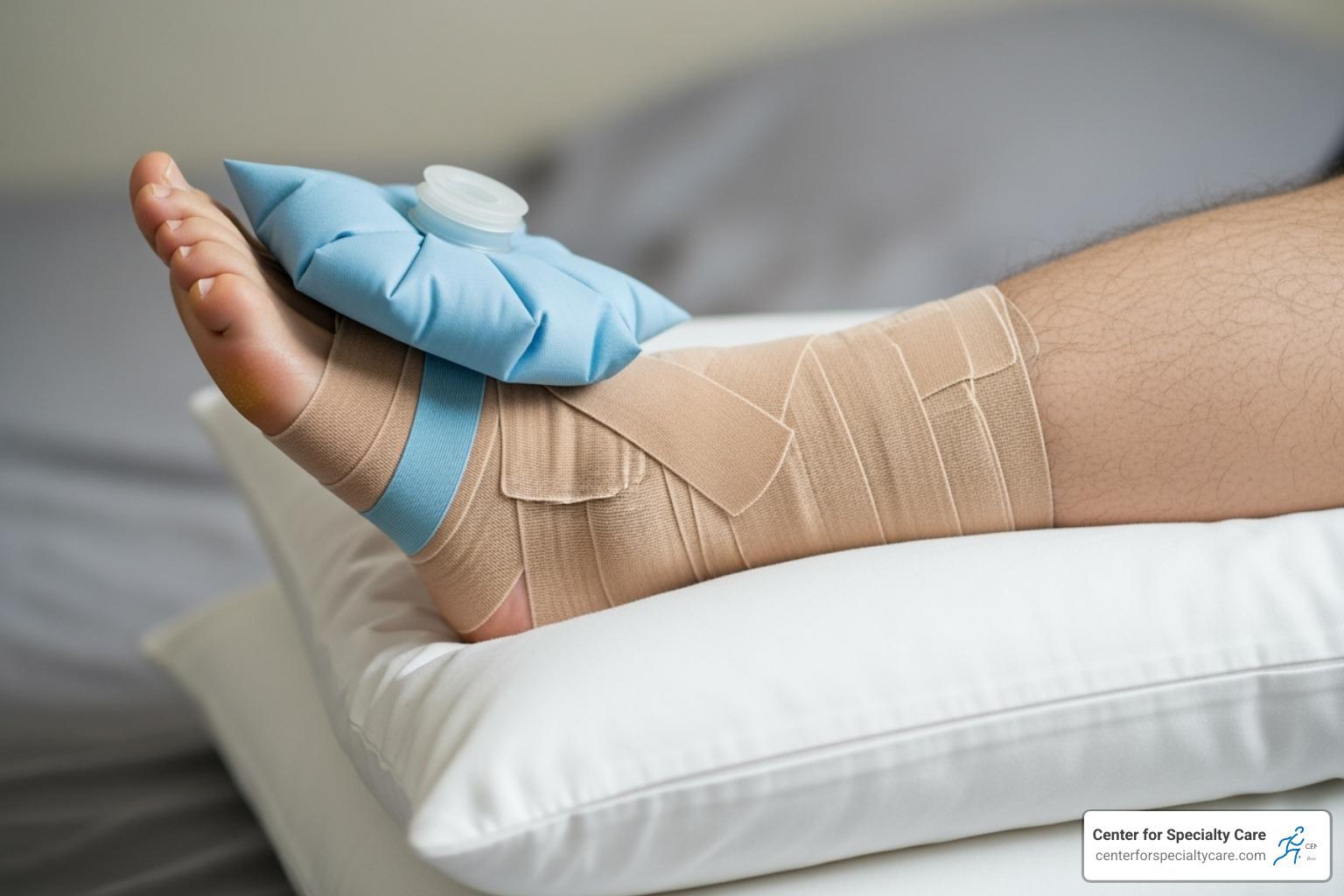
The R.I.C.E. method is highly effective for acute injuries: Rest the affected area, apply Ice for 15 minutes at a time to reduce inflammation, use Compression with a bandage to control swelling, and Lift your foot above heart level. For tips on icing, check this guide on using a cold compress effectively. Over-the-counter pain relievers, gentle stretching (especially for the calves and plantar fascia), and activity modification are also effective first steps.
Non-Surgical Treatments for Foot and Ankle Pain
When home care isn’t enough, we offer a range of non-surgical treatments:
- Physical therapy: A skilled therapist can help strengthen muscles, improve flexibility and balance, and correct your gait.
- Custom orthotics: These prescription shoe inserts are designed for your feet to correct biomechanical imbalances and redistribute pressure.
- Corticosteroid injections: A powerful anti-inflammatory medication delivered directly to the source of pain for temporary but significant relief.
- Bracing or splinting: An ankle brace, splint, or walking boot can provide the support and rest needed for healing. Night splints are especially helpful for plantar fasciitis.
- Taping techniques: Methods like low-dye taping can provide immediate support and pain relief by altering foot mechanics.
Our podiatry team specializes in these and other treatments. More info about our podiatry services.
When is Surgery Considered?
We only recommend surgery when it’s the best path to restoring function and eliminating severe foot and ankle pain. This is typically considered for:
- Severe fractures or dislocations that require internal fixation to heal correctly.
- Chronic ligament instability from repeated ankle sprains that hasn’t responded to physical therapy.
- Advanced arthritis when conservative treatments no longer provide relief.
- Painful deformities like severe bunions that limit mobility.
- When conservative treatments fail after several months and your quality of life is significantly impacted.
Prevention and Proactive Care

Proactive care can save you from significant discomfort and keep you mobile for years. Preventing foot and ankle pain is always better than treating it.
The Role of Footwear and Orthotics
Your shoes are your most important tool for preventing foot and ankle pain.
- Choose shoes for your activity: Running shoes are for forward motion, while court shoes provide lateral support. Using the wrong shoe for an activity can lead to injury.
- Ensure a proper fit: Shoes should be comfortable immediately, with a wide toe box that lets your toes spread. There is no single “best” shoe; it depends on your foot and comfort.
- Prioritize arch support: Proper support helps distribute pressure evenly across your foot, reducing strain on the plantar fascia.
- Replace worn-out shoes: Athletic shoes lose their cushioning and support over time. Replace them every 300-500 miles or every 6-12 months.
- Custom vs. over-the-counter orthotics: While OTC inserts can provide basic support, custom orthotics are designed to correct your specific biomechanical issues and gait patterns.
Lifestyle and Exercise Tips for Healthy Feet
Your daily habits play a huge role in foot and ankle health.
- Maintain a healthy weight: Every extra pound adds significant force to your feet and ankles with each step. Even modest weight loss can reduce pain.
- Warm-up and cool-down: Always prepare your muscles with dynamic stretching before activity and cool down with static stretching afterward to improve flexibility.
- Strengthen your ankles: Simple exercises like calf raises and ankle circles improve stability and help prevent sprains.
- Focus on flexibility: Regularly stretch your calf muscles and plantar fascia. Tight calf muscles are a common contributor to many foot problems.
- Cross-train to avoid overuse: Vary your exercise routine by incorporating low-impact activities like swimming or cycling to give your feet a break from repetitive stress.
When to See a Doctor
While many cases of foot and ankle pain respond to home care, knowing when to seek professional help is crucial to prevent minor issues from becoming major problems. At the Center for Specialty Care, we serve patients throughout Fairmont, Estherville, Buffalo Center, St. James, and the surrounding communities, and we encourage you to reach out if you experience any red flags.
Schedule an appointment with us if you have:
- Inability to bear weight on your foot or ankle after an injury.
- Severe pain and swelling that doesn’t improve after a few days of the RICE method.
- An obvious deformity or open wound, which requires urgent evaluation.
- Signs of infection, such as spreading redness, warmth to the touch, or a fever.
- Burning pain, numbness, or tingling sensations, which could indicate nerve involvement.
- Pain that persists or worsens after 2-3 weeks of home care.
Your feet are your foundation. Don’t dismiss persistent foot and ankle pain as something you have to live with. We pride ourselves on quick appointment availability to provide the personalized care you need to get back on your feet and back to the activities you love.
Conclusion
Your feet and ankles are remarkable structures, and when foot and ankle pain disrupts their function, it can throw your entire life off balance. The causes are complex, ranging from common injuries like ankle sprains to systemic conditions like diabetes or arthritis. A proper diagnosis is the foundation of effective treatment.
The good news is that you have options. Many people find relief through conservative approaches like the R.I.C.E. method, physical therapy, and custom orthotics. When these treatments aren’t enough, surgical interventions can provide lasting solutions for severe conditions.
Here’s what I want you to remember most: you don’t have to live with pain. Too many people accept foot and ankle discomfort as a normal part of life, but that is simply not true. With the right care, most cases of foot and ankle pain can be effectively managed or resolved.
At the Center for Specialty Care, we are committed to 100% patient satisfaction through personalized care. We create individualized treatment plans based on your specific condition, lifestyle, and goals. Serving communities across southern Minnesota and northern Iowa, including Fairmont, Estherville, Buffalo Center, and St. James, we’re here to help you take that first step toward relief.
Your feet have carried you this far. Let us help them carry you even further, pain-free. Take the first step toward relief and schedule your appointment today.